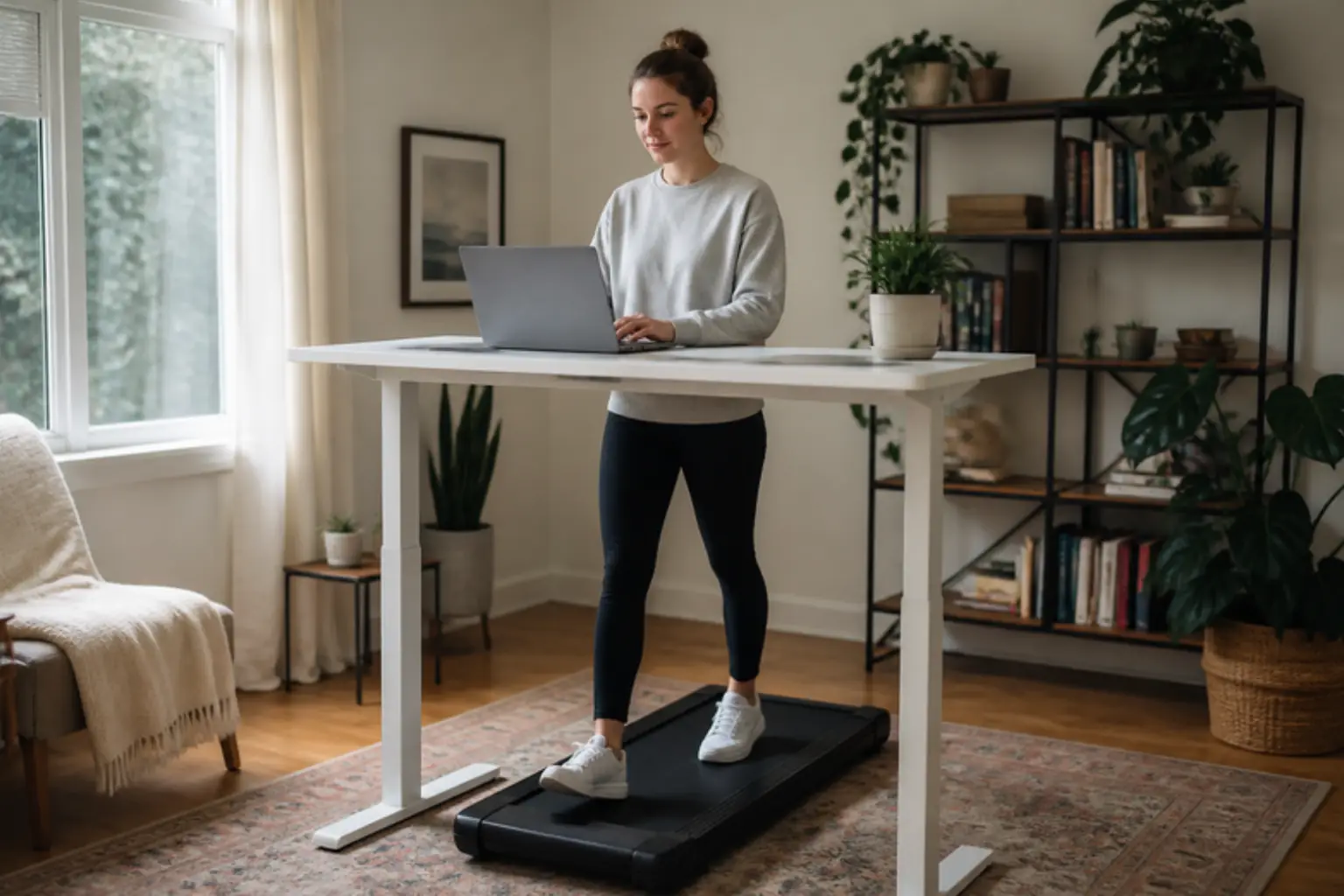
Treadmill for cats at a glance
Possible for calm cats with you at the controls; a self-paced wheel suits most cats better.
From the APOP survey, VCA and the walking pads we rank. Details and sources below.
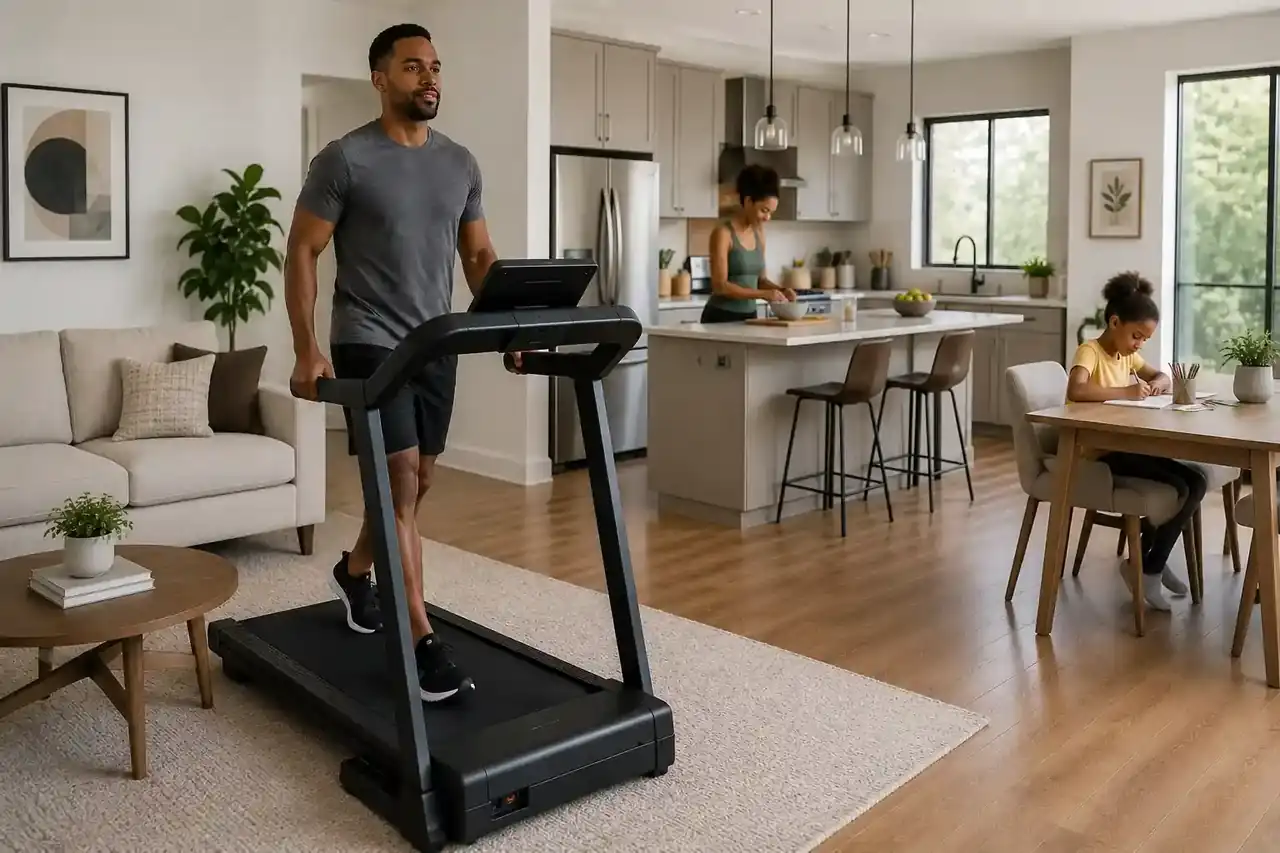
Short answer
A treadmill for cats is possible but rarely the best tool: some calm cats will walk on a human treadmill or walking pad at the slowest speed with you at the controls, while most cats take better to a self-paced cat exercise wheel or to short daily play sessions.
Key takeaways
- Some calm cats can walk on a walking pad at the slowest speed, with you at the controls.
- Most cats do better on a self-paced exercise wheel or with short daily play.
- Keep the rear roller clear, tie nothing to the machine and unplug it after use.
- Underwater treadmills belong in veterinary rehab clinics.
If you also have a dog, see our can dogs use a human treadmill guide.
Treadmill for Cats: Can Cats Use a Treadmill? The Short Version
A cat can walk on a treadmill, and some confident cats will. The question is whether a motorized belt is the right tool. A human treadmill or walking pad sets the pace for the cat, cannot be stopped by the cat, and starts faster than a slow cat walk. A cat exercise wheel turns the other way round: the cat moves it, sets the speed and steps off when it wants.
For a healthy, curious adult cat, a short supervised walk on a walking pad at the slowest setting may be fine if the cat chooses to stay on. For a nervous cat, a kitten, a senior, an overweight cat or a cat with joint, heart or breathing issues, talk to your veterinarian first and start with play or a wheel.
- Can work: calm, healthy adult cat; slowest speed; you at the controls the whole time.
- Better first step: wand-toy play in short bursts, or a self-paced cat wheel.
- Never: a harness or leash tied to the machine, a cat left alone with a running belt, incline or speed increases during training.
Cat Treadmill vs Cat Exercise Wheel
When people search for a cat treadmill, they often mean a cat exercise wheel: an upright wheel, open on one or both sides, that the cat runs inside. It has no motor and no speed setting. A motorized treadmill or walking pad is a different machine built for people, with a flat belt driven at a set speed.
The table sets the options side by side. A wheel suits cats that like to run on their own terms; a motorized belt only suits cats that stay calm while you control it; an underwater treadmill is a clinic tool.
| Option | Who sets the pace | Can the cat stop it | Where it fits |
|---|---|---|---|
| Cat exercise wheel | The cat | Yes, at any time | At home, voluntary play |
| Walking pad | The machine (from about 0.5 mph) | No; you stop it | At home, short supervised walks |
| Full-size treadmill | The machine | No; you stop it | Rarely: open sides, high step-up |
| Underwater treadmill | Rehab staff | Staff stop it | Veterinary rehab clinic |
Why Indoor Cats Need More Activity
Weight is the main reason owners look at exercise for cats. In the 2022 survey by the Association for Pet Obesity Prevention, 61% of US cats were classed as overweight or obese. VCA Animal Hospitals describes a cat as obese at 20% or more above its ideal body weight, and pairs more daily activity with a calorie-controlled diet chosen with your veterinarian.
Cats move in short bursts. VCA advises short, frequent play built around the hunting instinct: wand toys, treats at the end of a chase, food puzzles and kibble tossed down a hallway, with exercise wheels as a fun addition. A treadmill session, if your cat accepts one, fits the same pattern: a minute or two, not a long walk.
Pro tip: Exercise supports weight loss, but diet does most of the work. Ask your veterinarian for a target weight and a calorie plan before you add a machine.
Safety on a Human Treadmill or Walking Pad
The rear roller is the part to respect. A cat that sits, lies down or turns while the belt keeps moving is carried toward the back, where paws, a tail or fur can be caught. In a 2021 warning about one home treadmill, the CPSC reported children and a pet injured beneath the machine, and advised unplugging it and keeping the safety key away from it when not in use.
Cats also explore machines when you are not around. A walking pad on the floor is an easy place to nap, so unplug it after every session and keep the key or remote out of reach. Never start the belt with a cat on it unless you placed the cat there yourself and are watching.
Speed is the other limit. The walking pads we rank start at 0.5 to 0.6 mph, and most full-size treadmills at 0.5 mph or more. That is a slow stroll for a person and a steady trot for many cats, so the first sessions should be seconds, not minutes.
- You stand at the controls with your hand by the stop button or remote for the whole session.
- Slowest speed, zero incline, and nothing tied to the machine.
- Keep the floor behind the belt clear and other pets out of the room.
- Stop at once if your cat flattens its ears, crouches, pants or tries to jump off.
Watch out: Never clip a harness or leash to any treadmill. If your cat stops while the belt moves, a fixed lead can drag it toward the rear roller.
How to Introduce a Cat to a Treadmill or Wheel
Go slowly and let the cat choose. Veterinarians interviewed by dvm360 about cat running wheels point to positive-reinforcement training, and one warns that laser pointers, often used to lure cats onto wheels, can make some cats obsessive, so vary the lure. The same approach works for a walking pad.
- Machine off: let your cat sniff and walk on the still belt or wheel, with treats.
- Sound first: switch a walking pad on with your cat beside it, not on it, and reward calm behavior.
- A few seconds: at the slowest speed, lure your cat forward with a wand toy or treat, then stop the belt.
- Short bursts: build up only while your cat stays relaxed; a minute or two is a full session.
- Wheels: roll it a little by hand while your cat stands inside, then let your cat move it.
- Check the limits: wheels list a maximum cat weight; one model reviewed by veterinarians is rated to 25 lb.
Underwater Treadmills: Veterinary Rehab, Not Home Use
An underwater cat treadmill is a clinic machine: a glass tank with a belt at the bottom that fills with warm water. Veterinary practices use them for dogs and cats in recovery after surgery, for arthritis and for weight loss, as dvm360 reports of one hospital that trained a staff member in veterinary rehabilitation before offering it.
Ask your veterinarian for a referral to a rehabilitation clinic if your cat is recovering from surgery or has joint problems. It is not a home project: a dry treadmill with a tub of water is not the same thing and is not safe.
Signs Your Cat Is Enjoying It, or Not
Cats show stress quietly, so watch the body as much as the feet. A relaxed cat walks with its head and tail up, looks around and stays on the belt or wheel without being held. If it keeps choosing to step back on after a break, the activity is working for it.
Stop the session at once if you see flattened ears, a low crouch, a twitching or tucked tail, dilated pupils, open-mouth breathing or attempts to jump off. Cats are not built for long, steady efforts, and panting in a cat is a reason to stop and let it rest somewhere cool. If it happens often, talk to your veterinarian before you try again.
- Good signs: head and tail up, steady pace, curiosity, returning to the belt or wheel by choice.
- Stop signs: ears back, crouching, hissing, trying to jump off, panting.
Building an Active Routine Around Play
For most indoor cats, the best exercise plan is a handful of short play sessions spread through the day, built on the hunt: stalk, chase, pounce and a small food reward. A wand toy, a ball tossed down a hallway or kibble hidden around a room all fit that pattern, and they need no machine at all.
If your cat takes to a wheel, it becomes one more option in the routine rather than the whole plan. Place it in a quiet spot near where your cat already likes to play, keep a favorite toy nearby, and let your cat use it on its own schedule. Rotate toys every few days so they stay interesting, and pair activity with the portion plan your veterinarian sets.
Which Option Fits Your Cat?
Match the option to your cat’s temperament and health, not to the machine you already own.
- Playful, food-motivated cat: wand toys and food puzzles first; a cat wheel if it loves to run.
- Calm, confident cat and a walking pad at home: a few supervised seconds at the slowest speed, if your cat chooses to stay on.
- Nervous cat: skip motorized belts; use play and a wheel the cat controls.
- Overweight cat: start with your veterinarian and a diet plan, then short play sessions.
- After surgery or with arthritis: ask about an underwater treadmill at a rehab clinic.
- Dog and cat at home: see our best treadmill for dogs guide for machines with side panels and remotes.
Checklist Before You Buy
6 checks
Tap a number to check off that step.
- 01
Ask your veterinarian first for kittens, seniors, overweight cats and cats with health issues.
- 02
Start with the machine off and treats.
- 03
Slowest speed, zero incline, seconds at first.
- 04
Stay at the controls the whole time.
- 05
Tie nothing to the machine.
- 06
Unplug and remove the key after every session.
Common Mistakes to Avoid
Mistake 1Starting the belt with the cat already on it at a walking speed.
Mistake 2Clipping a harness or leash to the treadmill.
Mistake 3Leaving a walking pad plugged in where a cat naps.
Mistake 4Using only a laser pointer as a lure.
Mistake 5Treating exercise as a substitute for a diet plan.
Mistake 6Building a home underwater treadmill.
The Bottom Line
- 61% of US cats were classed as overweight or obese in the 2022 APOP survey.
- Cats play in short bursts, so a few brief sessions suit them better than one long one.
- A cat exercise wheel has no motor: the cat sets the pace and can stop at any time.
- The slowest speed on the walking pads we rank is 0.5 to 0.6 mph, still a brisk pace for a cat.
- Underwater treadmills for cats are used in veterinary rehab clinics, under trained staff.
Frequently Asked Questions
Some calm, healthy cats will walk on a treadmill or walking pad at the slowest speed for short bursts, with you at the controls. Many cats prefer a self-paced exercise wheel or play.
Usually a cat exercise wheel: a motor-free upright wheel the cat runs inside at its own pace. Motorized treadmills are built for people.
Only with close supervision at the slowest speed and nothing tied to the machine. The cat cannot stop the belt, so you must stay at the controls and unplug it after use.
Start with the machine off and treats, then let your cat hear it running from the side. Lure it forward for a few seconds at the slowest speed, and stop at any sign of stress.
They add activity for cats that like them, which supports weight loss alongside a diet plan from your veterinarian. They are not a substitute for that plan.
A veterinary rehabilitation machine: a water tank with a belt, used for dogs and cats recovering from surgery, with arthritis or losing weight, under trained staff.
A minute or two at most at first. Cats move in short bursts, so several brief sessions suit them better than one long walk.
Some do, especially young, energetic cats that like to run. Others ignore them. Introduce a wheel slowly with treats and play, and do not force a cat that is not interested.
There is no single number, but cats move in short bursts, so several brief play sessions a day suit them better than one long one. Your veterinarian can help you set goals if your cat needs to lose weight.
Only for short, supervised walks at the slowest speed, with you at the controls and nothing tied to the machine. Unplug it after every session, because a pad on the floor is an inviting place for a cat to nap.
It can add activity for a cat that accepts it, but diet does most of the work. Start with a plan from your veterinarian, then add short play sessions or a wheel the cat controls.
A cat wheel is much larger, usually open on one or both sides and built for the weight and stride of a cat. A small rodent wheel is far too small and unsafe for a cat.
More on Pets and Treadmills
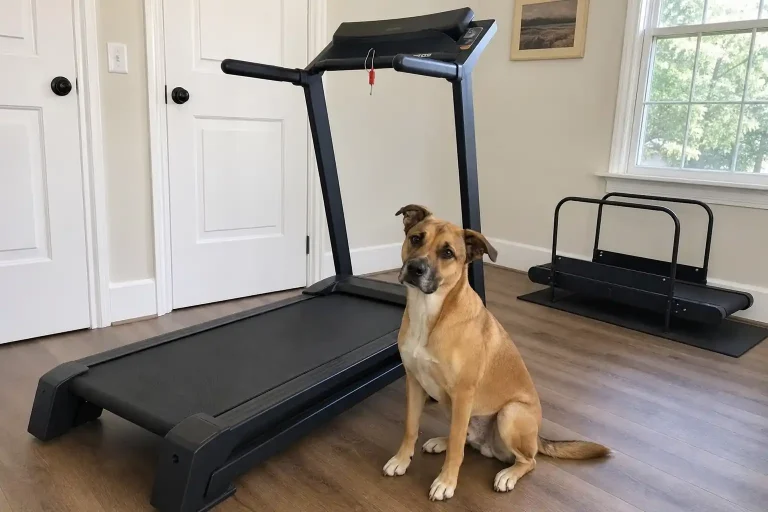
Can Dogs Use a Human Treadmill? (2026) Risks, Fit and Safer Options
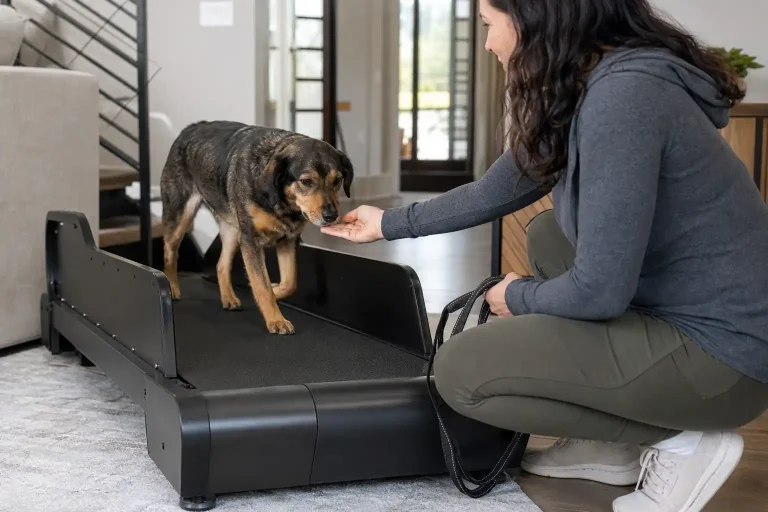
How to Train a Dog on a Treadmill (2026): A Step-by-Step Guide
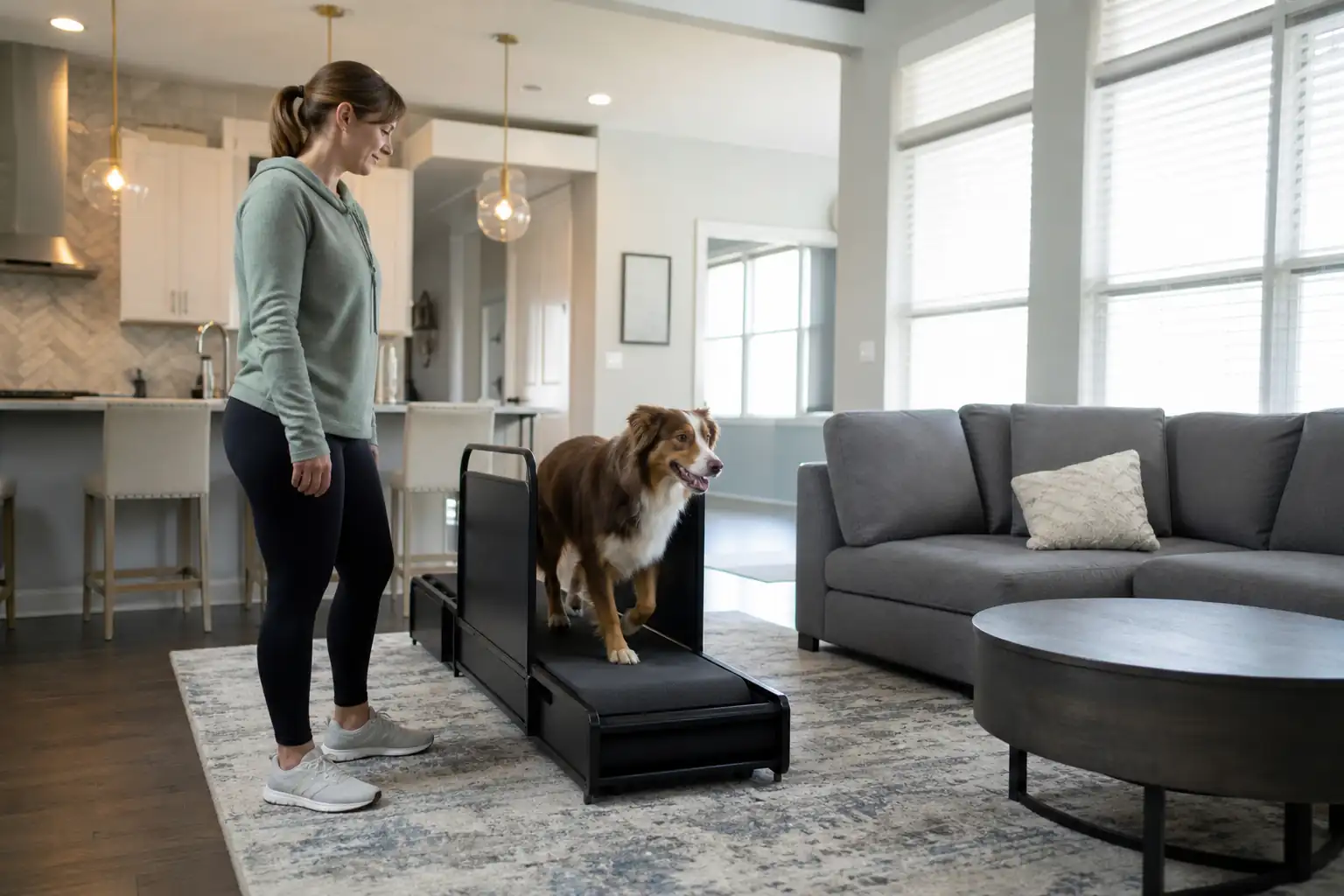
Best Treadmill for Dogs (2026): 5 Indoor Picks for Small and Medium Dogs
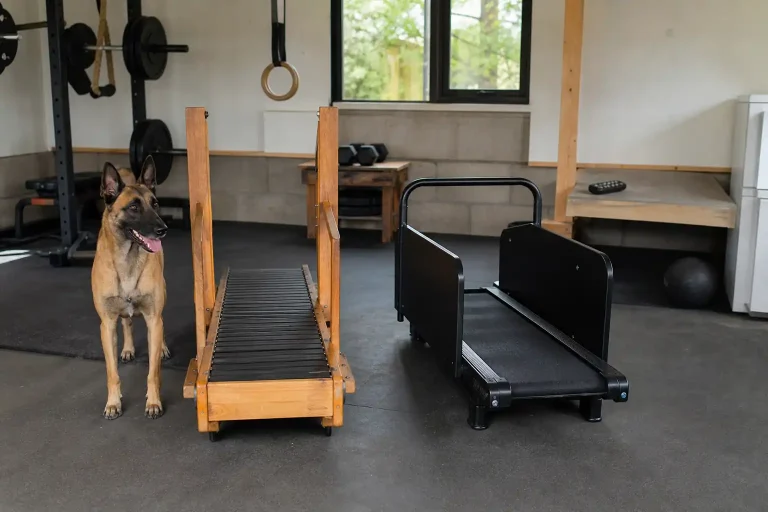
Manual vs Motorized Dog Treadmill (2026): Which Is Right for Your Dog?
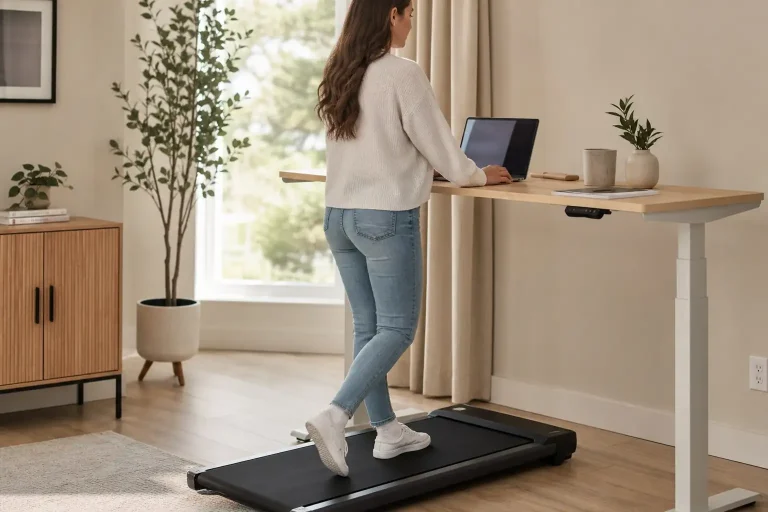
What Is a Walking Pad? (2026): Types, Specs and How to Choose One