

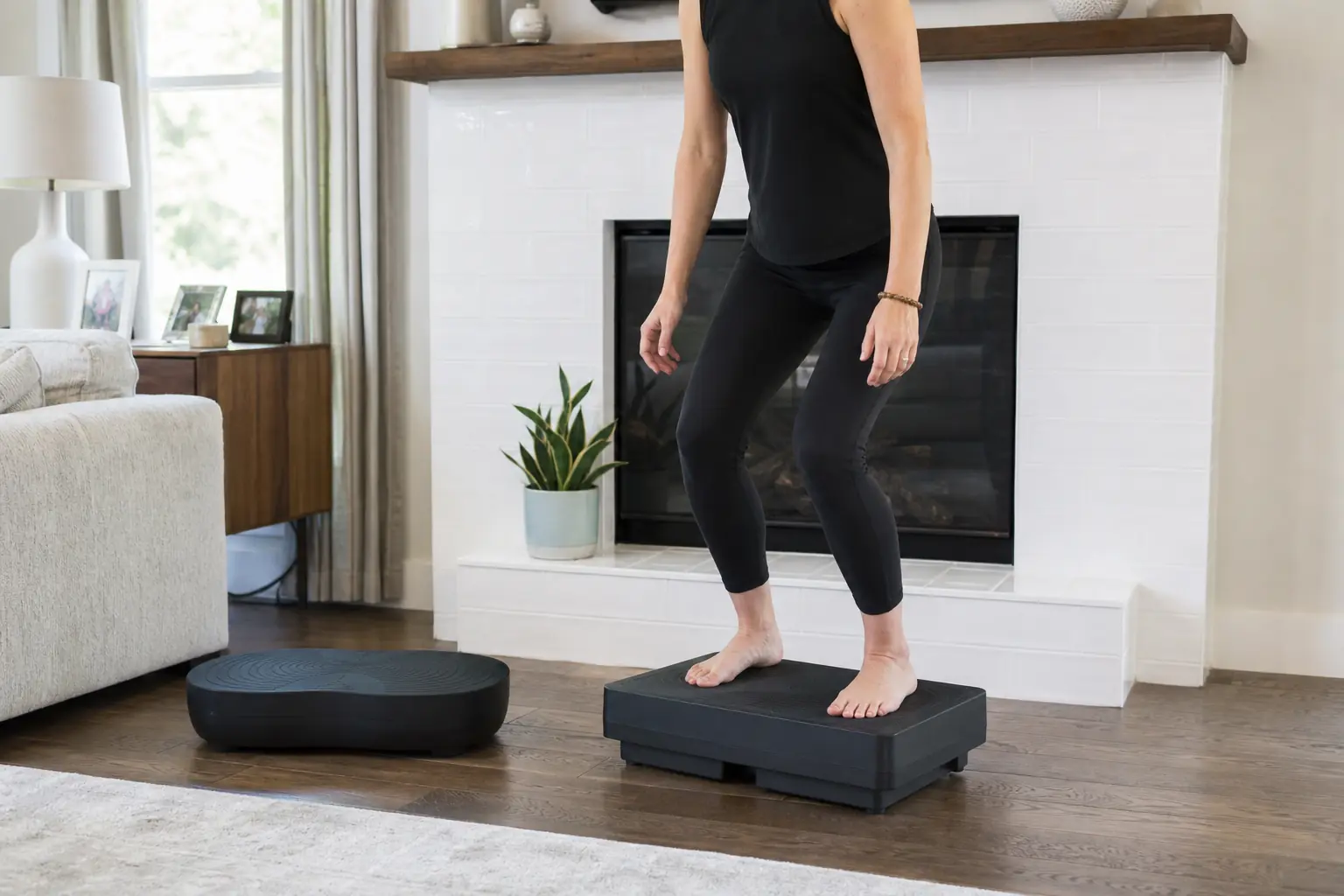
Short answer
In the oscillating vs linear vibration plate choice, pick an oscillating plate if you want a gentler, rocking feel that sends less vibration to your head, a large range of travel and a low starting point. Pick a linear plate if you want the faster, straight up-and-down vibration used in many strength studies, usually at 30 to 40 Hz. A combined 3D or 4D plate does both. In a 2007 lab test, vertical vibration sent 71% to 189% more vibration to the upper body and head than side-alternating vibration.
Quick facts
- Oscillating plates tip side to side like a seesaw; linear plates move straight up and down.
- Of the oscillating-only plates in our database that state a frequency, 8 of 9 stop at 15 Hz or below.
- Of the linear-only plates, 4 of 5 reach 35 Hz or more.
- Vertical vibration sent 71% to 189% more vibration to the upper body and head than side-alternating vibration in a 2007 study.
- 11 of the 44 plates we track combine both motions (sold as 3D, 4D or 5D).
Key takeaways
- Oscillating plates rock side to side; linear plates move up and down.
- Oscillating plates in our database mostly stop at 15 Hz or below; linear plates mostly reach 30 Hz or more.
- Vertical vibration sent 71-189% more vibration to the head in a lab test.
- Studies used both: vertical often for strength, side-alternating in several balance studies.
- A 3D or 4D plate combines both if you want to switch.
Plate listings use a lot of labels: oscillating, linear, vertical, pivotal, 3D, 4D, even 5D. Under the marketing there are only two basic motions, and they feel and behave differently enough to matter for your choice.
This guide compares the two on movement, settings, feel, what studies used each for, and the specs of the 44 plates in our database. For ranked picks, see our best oscillating vibration plate, best linear vibration plate and best 4D vibration plate guides.
Oscillating vs Linear Vibration Plate at a Glance
The main differences, from the plates we rank and from lab studies.
| Oscillating (side-alternating) | Linear (vertical) | |
|---|---|---|
| Movement | Tips side to side around a center pivot; one foot rises as the other drops | Whole platform moves straight up and down |
| Typical stated frequency | 6-34.6 Hz top speed in our database | 14-60 Hz top speed in our database |
| Travel (amplitude) | Larger, and greater the wider you stand | Smaller, the same across the platform |
| Feel | Rocking, like walking in place quickly | Fast buzz through the whole body |
| Vibration reaching the head | Lower in lab tests | Higher in lab tests (71-189% more) |
| Plates in our database | 20 oscillating only | 5 linear only |
| Ranked guide | Best oscillating vibration plate | Best linear vibration plate |
Check Amazon for current pricing and availability.
How Each Plate Moves
An oscillating plate pivots on a central axis. When your left foot goes up, your right foot goes down, so your hips rock slightly with each cycle. The farther your feet are from the center, the more they travel: a narrow stance is gentle, a wide one is strong.
A linear plate lifts the whole surface up and down at once, so both feet move the same distance in the same direction. The travel is usually small, a few millimeters, but the frequency is usually higher.
The reporting recommendations of the International Society of Musculoskeletal and Neuronal Interactions treat these as two different stimuli and ask studies to say which one they used, with the frequency and the peak-to-peak displacement. Listings rarely give all three, so read the specs carefully.
Settings: Frequency and Amplitude
The stated specs of the plates we rank show how differently the two types are built. Oscillating-only plates mostly stop between 6 and 15 Hz and advertise large travel, up to 17 mm on a plate. Linear-only plates mostly top out between 35 and 60 Hz; of the three that state their travel, two give 2 to 2.6 mm and one 10.5 mm.
Both numbers change how hard the body works. In a 2002 study in the International Journal of Sports Medicine, oxygen uptake during vibration rose in a straight line as frequency went from 18 to 34 Hz, and rose more than proportionally as amplitude went from 2.5 to 7.5 mm. So a slow oscillating plate with deep travel and a fast linear plate with short travel can both feel strong, in different ways.
| Plate | Motion | Stated range |
|---|---|---|
| Lifepro Rhythm | Oscillating | 2-6 Hz |
| Merach CV30 Pro | Oscillating | 7-9.6 Hz |
| Merach CV40 | Oscillating | 7-9.6 Hz |
| Merach CV30 | Oscillating | 8-11.5 Hz |
| Lifepro Waver Mini | Oscillating | 4-12 Hz |
| Lifepro VibraRed | Oscillating | 8-12 Hz |
| Lifepro Waver | Oscillating | 4-12 Hz |
| Lifepro Hovert 3D | Oscillating | 4-15 Hz |
| Bluefin Fitness 4D | Oscillating | 11.3-34.6 Hz |
| Lifepro Vibra Voice & Thermo | Linear | 7-14 Hz |
| Power Plate Personal | Linear | 35-35 Hz |
| Vibration Therapeutic VT007 | Linear | 10-40 Hz |
| Power Plate MOVE | Linear | 30-40 Hz |
| VibePlate Rev | Linear | 10-60 Hz |
Comfort: How Much Vibration Reaches Your Head
This is the clearest measured difference. In a 2007 study in Medicine & Science in Sports & Exercise, 16 adults did slow squats on a side-alternating plate and on a vertical plate, both at 30 Hz and 4 mm. Head acceleration was higher on the vertical plate at every knee angle, and 71% to 189% more vibration reached the upper body and head. The authors credited the rocking of the pelvis on the side-alternating plate with damping it.
For a home user that means an oscillating plate usually feels gentler at the head and neck, which is why our FitScore gives the oscillating-only motion the highest comfort points. On either type, bending your knees about 26 to 30 degrees cut head acceleration in that study.
What Studies Used Each One For
Both motions appear in the research. Many strength and weight studies used vertical platforms at 25 to 40 Hz. In balance research, a 2011 review of 15 papers and 933 older adults found that side-alternating vibration seemed to help dynamic balance, while the overall evidence was weak to moderate and protocols varied.
So neither type is “the one that works”. A linear plate is closer to the frequencies of most strength studies; an oscillating plate is closer to the side-alternating platforms used in several balance studies, and gentler to stand on.
What About 3D, 4D and 5D Plates?
These labels mean a plate combines motions: usually oscillating plus linear, sometimes a “spiral” or circular blend. 11 of the 44 plates we track have both oscillating and linear motion. They let you start on a gentle oscillating mode and switch to linear for a firmer session, at the cost of a heavier base and more buttons.
There is no agreed meaning for 4D or 5D, so check which motions the listing actually names. Our best 4D vibration plate guide only ranks plates whose listing names both oscillating and linear motion.
One Plate of Each Type
The top pick of each of our three motion-type guides. Each FitScore is the one of the guide named, with that guide’s weights.
Top oscillating pick

Merach CV40
FitScore 69.4/100
Side-to-side only, with a stated 13 mm amplitude, 7 to 9.6 Hz, a curved deck and a 440 lb rating. Owners like the strong, adjustable levels; noise and durability reports are mixed. Ranked #1 in our best oscillating vibration plate guide, FitScore 69.4 for that intent.
Check Price on AmazonTop linear pick

Lifepro Vibra Voice & Thermo
FitScore 58/100
Vertical only, 7 to 14 Hz with a stated 10.5 mm, 10 programs and voice control. Linear plates publish few specs, so the FitScores in this category stay low. Ranked #1 in our best linear vibration plate guide, FitScore 58 for that intent.
Check Price on AmazonTop combined pick

Merach CV55 4D
FitScore 77/100
Oscillating and linear in one plate, with the widest stated range we track among the top picks (5 to 45 Hz), bands and a 440 lb rating. Ranked #1 in our best 4D vibration plate guide, FitScore 77 for that intent.
Check Price on AmazonWhich Should You Choose?
Match the motion to how you will use the plate.
- Gentle sessions, older users, sensitive to the buzz: oscillating.
- Strength work at the frequencies most studies used: linear.
- Not sure, or several people in the house: a combined 3D/4D plate.
- Small space: check weight and length first; our best compact vibration plate guide ranks plates of 25 lb or less.
- Any health condition or pregnancy: ask your doctor first, whichever type you choose.
Checklist Before You Choose a Motion Type
6 checks
Tap a number to check off that step.
- 01
Does the listing name the motion (oscillating, linear or both)?
- 02
Is a frequency range stated, in Hz?
- 03
Is the amplitude stated, and in mm?
- 04
Is the platform long enough for a wide stance?
- 05
Does it have a handlebar if you need support?
- 06
Is the weight rating above your body weight?
Common Mistakes to Avoid
Mistake 1Assuming 4D or 5D means a specific motion.
Mistake 2Comparing speed levels across brands as if they were hertz.
Mistake 3Buying a linear plate if you dislike a buzz in the head.
Mistake 4Standing with straight knees on either type.
Mistake 5Choosing on motion type alone and ignoring the weight rating.
Our Top Picks
 Top oscillating pickMerach CV40FitScore69.4/100Check on Amazon
- Top linear pickLifepro Vibra Voice & ThermoFitScore58/100Check on Amazon
- Top combined pickMerach CV55 4DFitScore77/100Check on Amazon
Frequently Asked Questions
Neither is better for everyone. Oscillating plates feel gentler and send less vibration to the head; linear plates run at the higher frequencies most strength studies used. Pick oscillating for comfort, linear for lab-style strength work, or a combined plate to switch.
A plate whose whole surface moves straight up and down, so both feet move together. Linear plates usually run at 30 to 60 Hz with a few millimeters of travel.
A plate that pivots around its center, lifting one foot as the other drops. It usually runs at lower frequencies with more travel, and the travel grows as you widen your stance.
Usually both: 3D, 4D and 5D are marketing labels for plates that combine oscillating and linear motion, sometimes with a circular blend. Check which motions the listing names.
Oscillating plates with a handlebar are the usual choice: they feel gentler and sent less vibration to the head in lab tests. Older adults should ask their doctor first.
They feel sharper, a fast buzz through the whole body, and more of it reaches the head. Oscillating plates can feel just as strong at a wide stance, but as a rocking movement.
Explore More Vibration Plate Guides
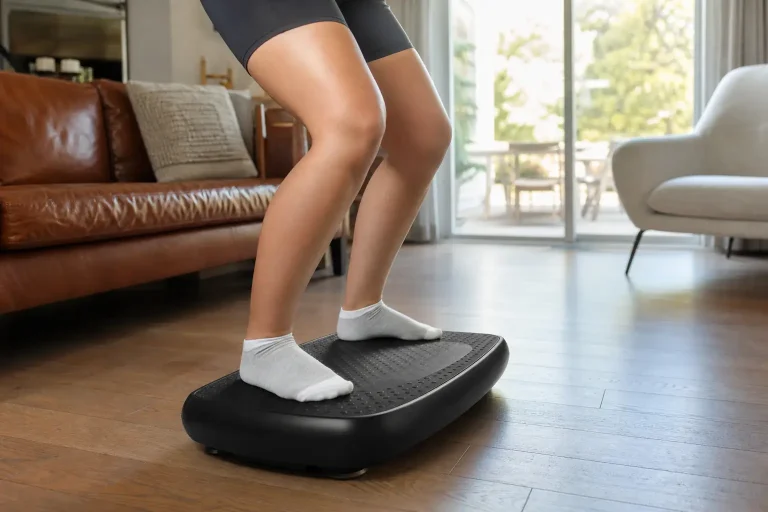
Best Oscillating Vibration Plate (2026): 5 Side-Alternating Picks
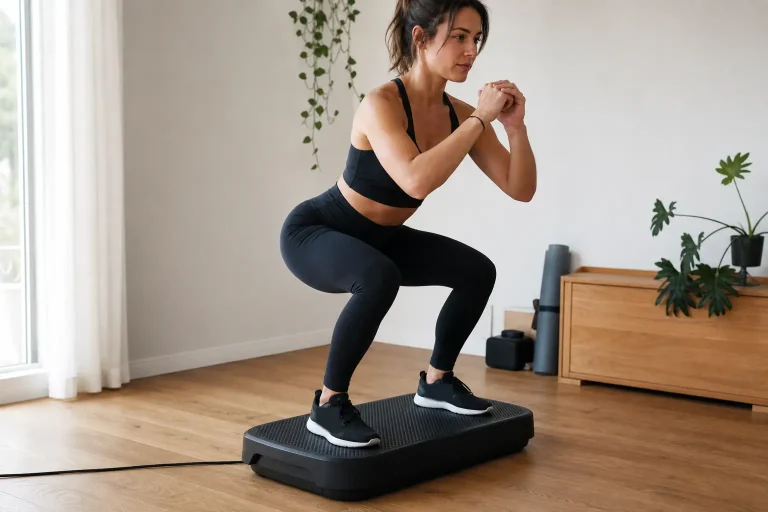
Best Linear Vibration Plate (2026): 5 Vertical Vibration Picks
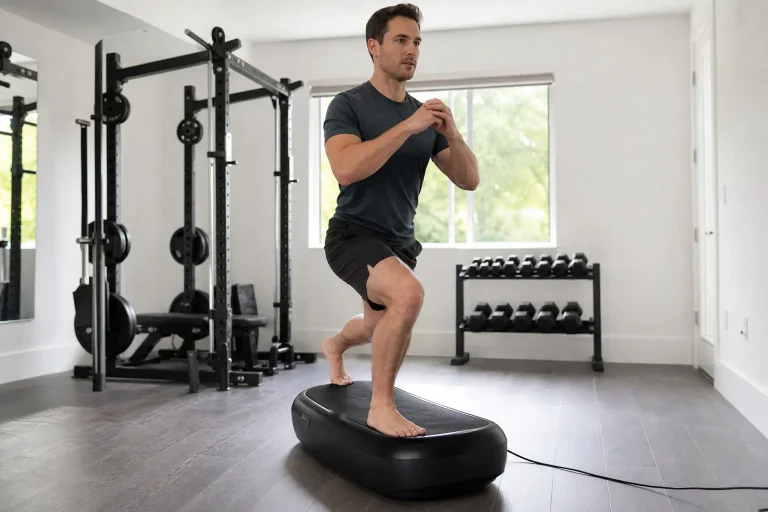
Best 4D Vibration Plate (2026): 5 Multi-Motion Picks, Ranked
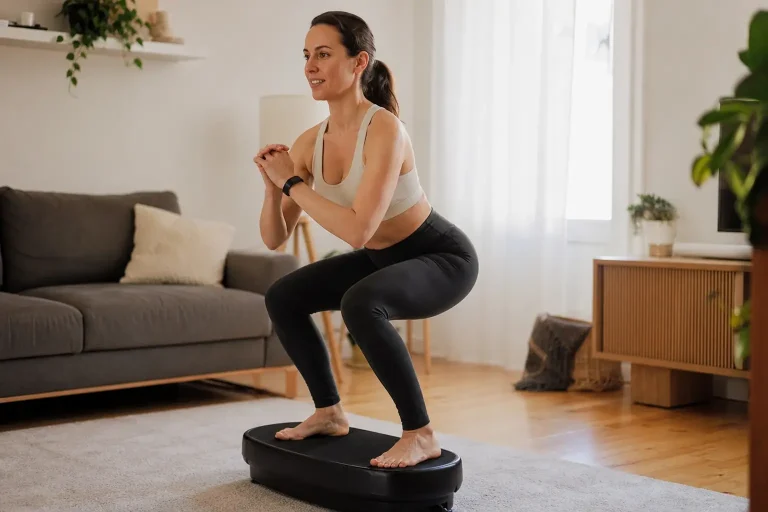
Best Vibration Plate (2026): 5 Top Picks for Home, Ranked
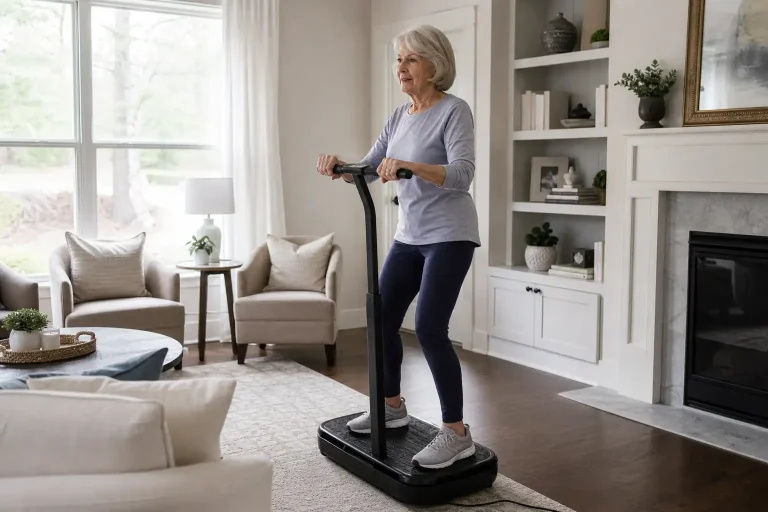
Best Vibration Plate for Seniors (2026): 5 Picks With Handlebars
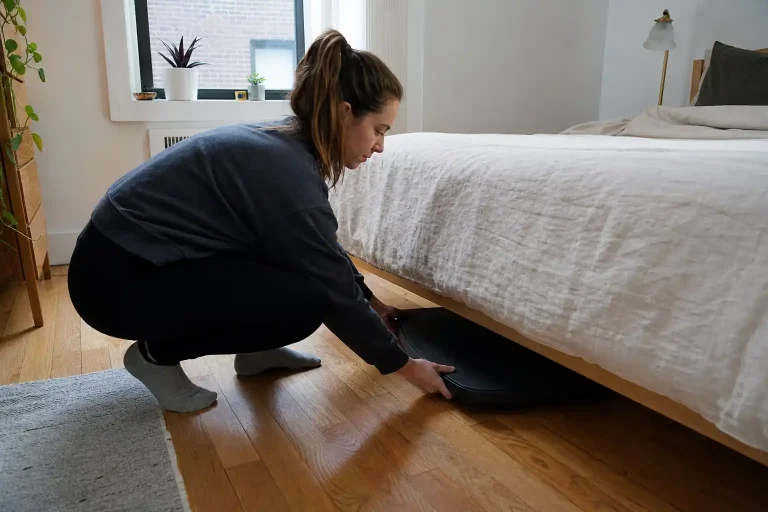
Best Compact Vibration Plate (2026): 5 Light, Easy-to-Store Picks
This article contains affiliate links. If you click through and make a purchase, we may earn a small commission at no extra cost to you. As an Amazon Associate, we earn from qualifying purchases. We do not show prices because they change constantly: product details and availability can change at any time, so please check the current price and details directly on Amazon. Learn more. Amazon and the Amazon logo are trademarks of Amazon.com, Inc. or its affiliates.
