

Treadmill cushioning at a glance
Elastomers under the deck do most of the work; width, rails and a quick stop matter more for joints.
From the Arthritis Foundation and the specs of the treadmills we recommend.
Short answer
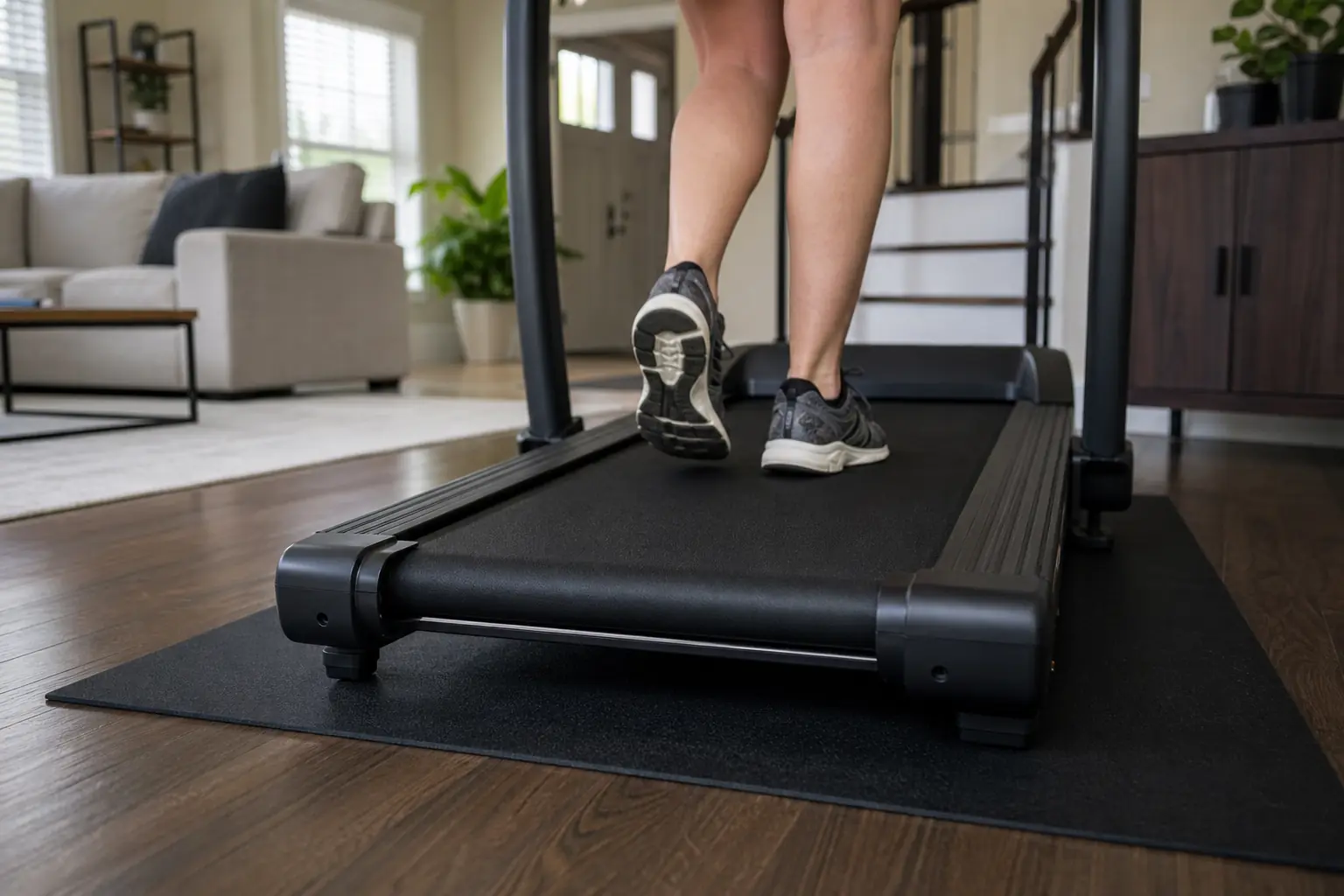
Treadmill cushioning is the give built into the deck, usually rubber elastomers between the deck and frame, sometimes zoned or adjustable. It softens each footstrike compared with pavement, but it adds comfort rather than treating joint pain.
Key takeaways
- Fixed, zoned and adjustable systems all work; adjustable suits mixed walking and running.
- Research shows treadmills absorb more shock than tracks, and runners adapt their leg stiffness to any surface.
- Deck size, frame stability and safety features matter as much as softness.
- Pair cushioning with a wide, long deck and good shoes.
For a softer deck, see our best cushioned treadmill for walking guide.
How Treadmill Cushioning Works
A motorized treadmill is a layered system. The belt runs over a flat deck board, the deck sits on the frame, and the parts that connect the deck to the frame decide most of the give you feel. On most home treadmills those parts are elastomers: rubber or polyurethane bumpers, sometimes called isolators or shock absorbers, placed at several points along each side of the deck. When your foot lands, the deck compresses those bumpers slightly and then springs back.
The deck board and belt add a little more give. Frame stiffness matters more than most buyers expect: a frame that twists under load feels soft in a bad way, with wobble rather than controlled compression. That is why a sturdy, heavy machine with modest cushioning often feels better than a light one with a soft deck.
Placement also matters. Zoned designs use softer elastomers where most people land, near the front of the deck, and firmer ones toward the back where you push off. Horizon’s 3-Zone Variable Response system on the Horizon 7.4 AT works this way, and testers describe it as comfortable without being soft, with subtle flex underfoot.
| Component | What it does | What to look for |
|---|---|---|
| Elastomers / isolators | Compress under the deck to absorb each footstrike | A named system, several contact points, zoned or adjustable options |
| Deck board | Flexes slightly and spreads the load | A solid, full-length deck that does not creak |
| Belt | Adds a thin layer of give and grip | A full-size belt in good condition, correctly tensioned |
| Frame | Keeps the deck stable so cushioning feels controlled | High weight capacity and a heavy, rigid build |
| Rollers and motor | Keep belt speed smooth on each landing | A strong motor that does not stutter under load |
Check Amazon for current pricing and availability.
Types of Treadmill Cushioning Systems
Fixed cushioning is the most common type. The elastomers are set at the factory and the feel does not change. Fixed does not mean firm: some fixed decks are quite soft and others are deliberately stiff. XTERRA lists XTRASoft cushioning on the TR75 as built in and not adjustable, and Sole lists a cushioned deck without settings on the F65, with testers of earlier Sole models describing the feel as firm.
Zoned or variable-response cushioning is a refinement of the fixed type. Different elastomers along the deck give a softer landing zone and a firmer push-off zone. Horizon uses this approach on the 7.0 AT and 7.4 AT. It suits runners who want some give without a mushy push-off.
Adjustable cushioning lets you change the feel. NordicTrack’s SelectFlex, found on the NordicTrack T Series 16 and T Series 10, lets you set the deck from soft to firm. The usual pattern is a softer setting for walking and recovery days and a firmer one for faster running, when a stiff surface feels closer to the road. Adjustable decks are also useful in households where one person walks and another runs.
An orthopedic belt is a thicker belt with a softer top layer that adds give at the surface; check to confirm a model has one. Slat-belt treadmills, including most curved manual models, use rubber-topped slats that provide the give themselves, and air or spring suspension shows up mostly on commercial machines.
| System | How it works | Best for | Trade-off |
|---|---|---|---|
| Fixed elastomers | Factory-set bumpers under the deck | Most walkers and joggers | One feel; cannot be changed |
| Zoned / variable response | Softer landing zone, firmer push-off zone | Runners who want controlled give | Still fixed overall |
| Adjustable (soft to firm) | A control changes how much the deck flexes | Mixed walking and running, shared homes | More parts; the firm setting may feel stiff |
| Orthopedic belt | Thicker belt with a softer top layer | Walkers who want surface softness | Less common; check before you buy |
| Slat belt | Rubber-topped slats on bearings | Curved and commercial treadmills | Bulky and heavy |
Best overall

NordicTrack T Series 16
FitScore 90.5/100
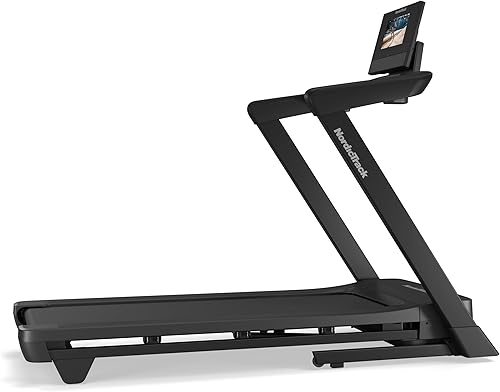
SelectFlex cushioning you can set from soft to firm on a 20 × 60-inch deck, with a 3.6 HP motor, 0–12% incline and a 16-inch tilting touchscreen for iFIT.
Ranked in our Best Treadmill With Cushioning guide
Read our NordicTrack T Series 16 review
Check Price on AmazonBest cushioning alternative
NordicTrack T Series 10
FitScore 90.1/100
The same SelectFlex system and 20 × 60-inch deck with a 3.0 HP motor and a smaller 10-inch touchscreen, for walkers and joggers who want adjustable give.
Ranked in our Best Treadmill With Cushioning guide
Read our NordicTrack T Series 10 review
Check Price on AmazonBest stability

Horizon 7.4 AT
FitScore 78.2/100
A wide 22 × 60-inch deck with 3-zone cushioning, a 3.5 CHP motor and a 350-lb capacity; firm and controlled rather than soft.
Ranked in our Best Treadmill With Cushioning guide
Read our Horizon 7.4 AT review
Check Price on AmazonWhat Cushioning Does and Does Not Do for Your Joints
Treadmills already absorb more shock than most surfaces. A study of 77 treadmills measured how much shock each surface absorbed, how far it deformed and how much energy it returned, using a standardized impact device and found treadmills had the highest shock absorption of the surfaces tested, ahead of artificial turf and athletics tracks. The same study found meaningful differences between treadmill models, so not every deck feels the same.
Your body also adjusts to the surface. Runners in a classic lab study changed their leg stiffness to match the surface and kept similar running mechanics on soft and hard ground. In another small experiment on a treadmill fitted with adjustable-stiffness platforms, the softest surface lowered runners’ metabolic rate by about 12% while leg stiffness rose and support mechanics stayed essentially the same. A treadmill study of surface stiffness found runners adapted on stiffer surfaces in ways that appeared to favor energy cost over lower impact shock.
Softer surfaces do reduce one loading measure. A systematic review and meta-analysis of 25 studies found lower peak tibial (shin-bone) acceleration on softer surfaces, while impact force peaks, loading rate and time on the ground were statistically similar on hard and soft surfaces. The authors suggest softer surfaces are probably justified for reducing impact stress on the tibia. A systematic review of running injury risk factors found the strongest evidence for a history of previous injury, and surface showed up only as a sex-specific factor (running on concrete).
For people with arthritis, the Arthritis Foundation describes a cushioned belt as a helpful extra because it softens the jolt to your knees, ankles and hips, and adds that a gentle incline can also ease joint impact. The CDC notes that physical activity can improve physical function and reduce pain among adults with arthritis, and walking is the most common activity they report. In short, cushioning adds comfort and may trim some impact, but it does not replace sensible training or medical advice.
Watch out: If you have a diagnosed joint condition, recent surgery or pain that changes how you walk, ask your doctor or physical therapist how to start treadmill exercise. Stop if you feel sudden or severe joint pain.
How to Judge Treadmill Cushioning From the Specs
Home treadmill brands rarely publish a stiffness figure, and shock-absorption percentages seldom come with a test method. The spec sheet still tells you a lot.
Start with the name of the cushioning system and whether it is adjustable. A treadmill that only advertises a “cushioned deck” usually means fixed elastomers. Next, check deck size: a full 60-inch length and a 22-inch width give you room to land naturally without drifting toward the motor hood or the side rails, which matters more for comfort than an extra bit of softness. The Arthritis Foundation suggests a belt at least 22 inches wide and 50 inches long for people with arthritis.
Weight capacity and motor power are indirect clues: a higher capacity usually means a heavier frame, and a strong motor keeps belt speed steady on each landing. Heavier users should read our best treadmill for heavy people guide, where frame rigidity matters as much as cushioning. Finally, read what owners and testers say about feel: soft, firm, bouncy or wobbly.
| Treadmill | Cushioning system | Adjustable | Deck (in) | Capacity | Motor |
|---|---|---|---|---|---|
| NordicTrack T Series 16 | SelectFlex | Yes | 20 × 60 | 325 lb | 3.6 HP |
| NordicTrack T Series 10 | SelectFlex | Yes | 20 × 60 | 325 lb | 3.0 HP |
| Horizon 7.4 AT | 3-Zone Variable Response | No | 22 × 60 | 350 lb | 3.5 CHP |
| Horizon 7.0 AT | 3-Zone Variable Response | No | 20 × 60 | 325 lb | 3.0 HP |
| XTERRA TR75 | XTRASoft | No | 20 × 60 | 350 lb | 3.0 HP |
| Sole F65 | Cushioned deck | No | 20 × 60 | 350 lb | 3.25 HP |
Compare decks and capacity with our free tools
Who Needs More Cushioning and Who Needs Less
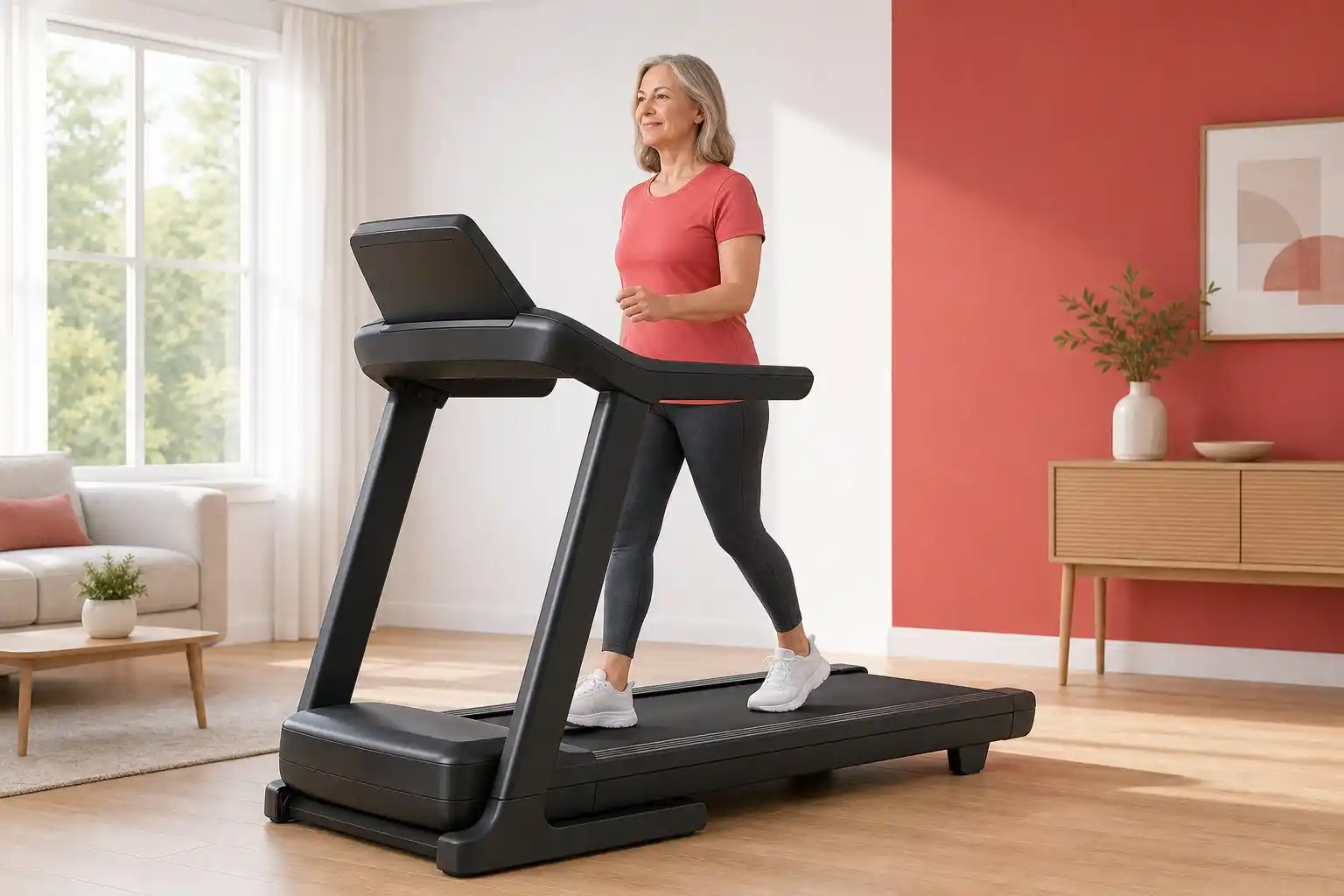
Walkers who log long sessions, beginners easing into exercise and people with sensitive knees or hips usually prefer a softer deck, as long as it is stable. Adjustable systems are a good fit here because you can start soft and firm things up later. Our best treadmill for walking guide focuses on comfort at walking speeds.
Runners training for races often prefer a firmer setting or a firm fixed deck. A very soft surface can feel slow on push-off and less like the road. Zoned decks like Horizon’s, and the firm setting on SelectFlex, suit faster running; see our best treadmill for running and best treadmill for marathon training guides.
Heavier users need cushioning that does not bottom out, which means a sturdy frame and a high weight capacity matter as much as softness. Seniors and anyone with balance concerns should weigh stability, side handrails, a low step-up height and an easy stop control alongside cushioning; our best treadmill for seniors guide covers those points. If you are pregnant, our best treadmill for pregnant women guide favors adjustable cushioning and wide decks.
Best traditional alternative
Horizon 7.0 AT
FitScore 77.7/100
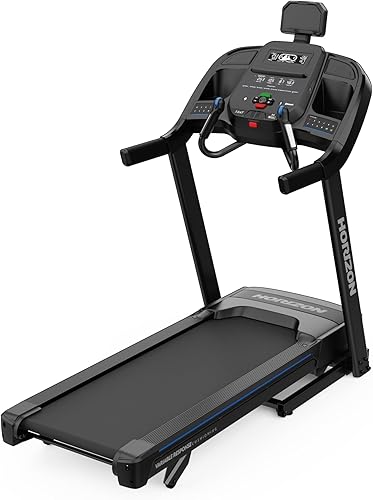
Zoned 3-Zone Variable Response cushioning on a 20 × 60-inch deck, a 3.0 HP motor and 0–15% incline, with no subscription required; buyers describe a sturdy build and smooth operation.
Ranked in our Best Treadmill With Cushioning guide
Read our Horizon 7.0 AT review
Check Price on AmazonBest value

XTERRA TR75
FitScore 73.5/100
Built-in XTRASoft cushioning, a 350-lb capacity and 0–12% incline; testers describe the deck as stable and comfortable during fast or long runs.
Ranked in our Best Treadmill for Bad Knees guide
Read our XTERRA TR75 review
Check Price on AmazonBest stability pick

Sole F65
FitScore 74/100
A 20 × 60-inch cushioned deck, 350-lb capacity and 0–15% incline; expect a firmer feel than adjustable decks.
Ranked in our Best Treadmill for Seniors guide
Read our Sole F65 review
Check Price on AmazonHow to Test Cushioning at Home
Judge cushioning in the first week, while the return window is open. Walk easy, then brisk, then jog if you plan to. Notice whether the deck feels controlled or bouncy, whether the console shakes, and whether you hear the deck slap or creak on each step. A small amount of flex is normal; side-to-side wobble or a loud thud is not.
If your treadmill has adjustable cushioning, try each setting at the same speed. Many users settle on the softer setting for walking and the firmer one for running. Then try a slight incline: the Arthritis Foundation notes that walking on a gentle incline can ease the load on your joints, so add incline gradually and see how your joints respond. Keep shoes in mind too. Worn-out shoes can make any deck feel harsh, and very soft shoes on a very soft deck can feel unstable.
Check the setup before blaming the deck. A treadmill on an uneven floor or a thick, soft rug can rock, and a loose belt can slip on each landing. Level the machine, put it on a firm equipment mat and set belt tension as the manual describes. Our best quiet treadmill guide covers mats and noise.
Cushioning Maintenance and Deck Care
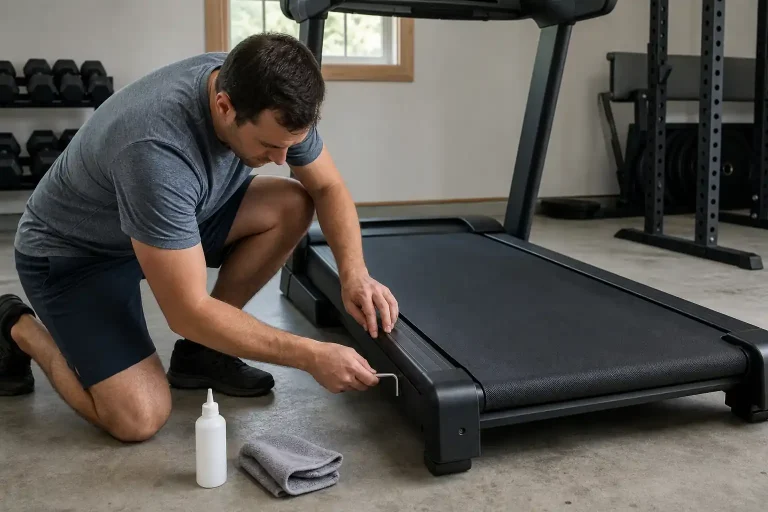
Cushioning only feels right when the belt glides smoothly over the deck. A dry deck adds friction, which can make each landing feel grabby and puts extra load on the motor. Follow the lubrication interval in your owner manual and use the product it specifies, usually 100% silicone; our guide on how to lubricate a treadmill walks through the steps.
Elastomers can harden or compress over years of use. If an older treadmill starts to feel harsher, louder or uneven, the isolators may be worn; ask the manufacturer about replacement isolators or a deck before you take anything apart. Read the parts warranty before you buy, since deck and cushioning parts usually fall under parts coverage rather than the frame or motor warranty.
Dust under the belt wears the deck, so vacuum around the treadmill and wipe under the belt edges regularly. Our full treadmill maintenance guide covers belt tension, alignment and motor care.
Treadmill Cushioning Checklist
8 checks
Tap a number to check off that step.
- 01
Find the name of the cushioning system.
- 02
Check whether the cushioning is adjustable, zoned or fixed.
- 03
Choose a 60-inch deck for jogging or running; 22 inches wide if you have room.
- 04
Pick a weight capacity well above the heaviest user.
- 05
Confirm side handrails and an easy-to-reach stop control.
- 06
Read what owners and testers say about soft, firm or wobbly feel.
- 07
Check the parts warranty, which usually covers deck and cushioning parts.
- 08
Test every cushioning setting during the return window.
Common Mistakes to Avoid
Mistake 1Choosing the softest deck available and ignoring frame stability.
Mistake 2Believing a shock-absorption percentage without a stated test method.
Mistake 3Expecting cushioning to fix knee or back pain on its own.
Mistake 4Skipping deck lubrication and blaming the cushioning for a grabby feel.
Mistake 5Running in worn-out shoes and judging the deck by how they feel.
The Bottom Line
- Most home treadmills cushion with elastomers or isolators under the deck; the belt and deck add a little more give.
- Adjustable systems such as NordicTrack SelectFlex let you switch between a softer and a firmer feel; zoned systems are fixed.
- The Arthritis Foundation calls a cushioned belt nice to have and points to side rails, a 22-inch belt and a quick-stop control as priorities.
- Deck lubrication, belt tension and a level floor keep cushioning feeling the way it did on day one.
Our Top Picks
 Best overallNordicTrack T Series 16FitScore90.5/100Check on Amazon
- Best cushioning alternativeNordicTrack T Series 10FitScore90.1/100Check on Amazon
- Best stabilityHorizon 7.4 ATFitScore78.2/100Check on Amazon
- Best traditional alternativeHorizon 7.0 ATFitScore77.7/100Check on Amazon
- Best valueXTERRA TR75FitScore73.5/100Check on Amazon
- Best stability pickSole F65FitScore74/100Check on Amazon
Frequently Asked Questions
Yes, for comfort. Treadmills already absorb more shock than tracks, and a softer deck lowers peak shin-bone acceleration, but your body also adapts to the surface, so cushioning is not a cure for joint pain.
A cushioned treadmill is softer than pavement or concrete, and the Arthritis Foundation notes that a cushioned belt can reduce impact on the knees, ankles and hips. Training load and gradual progress still matter more.
An adjustable or soft-to-medium deck on a stable frame, with a wide belt and side rails. The NordicTrack T Series 16 ranks first in our best treadmill for bad knees guide.
It is worth it if you both walk and run or share the treadmill. You can use a softer setting for walking and a firmer one for faster running.
Not much. You can keep the deck lubricated, replace worn isolators if your manufacturer sells them, level the machine and wear supportive shoes, but you cannot turn a firm deck into a soft one.
Most have modest cushioning because the deck is thin and low. See our best walking pad guide for walking-only options.
Explore More Treadmill Guides
Best Treadmill With Cushioning (2026): 5 Shock-Absorbing Picks
Best Treadmill for Bad Knees: 5 Picks for a Comfortable Home Workout
Best Treadmill for Seniors: 5 Supportive Home Models Worth Buying in 2026
The Best Treadmill For Heavy People: 5 High-Capacity Picks for 2026
How to Maintain a Treadmill (2026): The Complete Home Care Guide
Treadmill Buying Guide (2026): How to Choose the Right Home Treadmill
This article contains affiliate links. If you click through and make a purchase, we may earn a small commission at no extra cost to you. As an Amazon Associate, we earn from qualifying purchases. We do not show prices because they change constantly: product details and availability can change at any time, so please check the current price and details directly on Amazon. Learn more. Amazon and the Amazon logo are trademarks of Amazon.com, Inc. or its affiliates.
