

Vibration plate vs walking pad at a glance
A walking pad moves you more; a plate adds a short, low-impact session in less space.
Study figures and our database medians. Details below.
Short answer
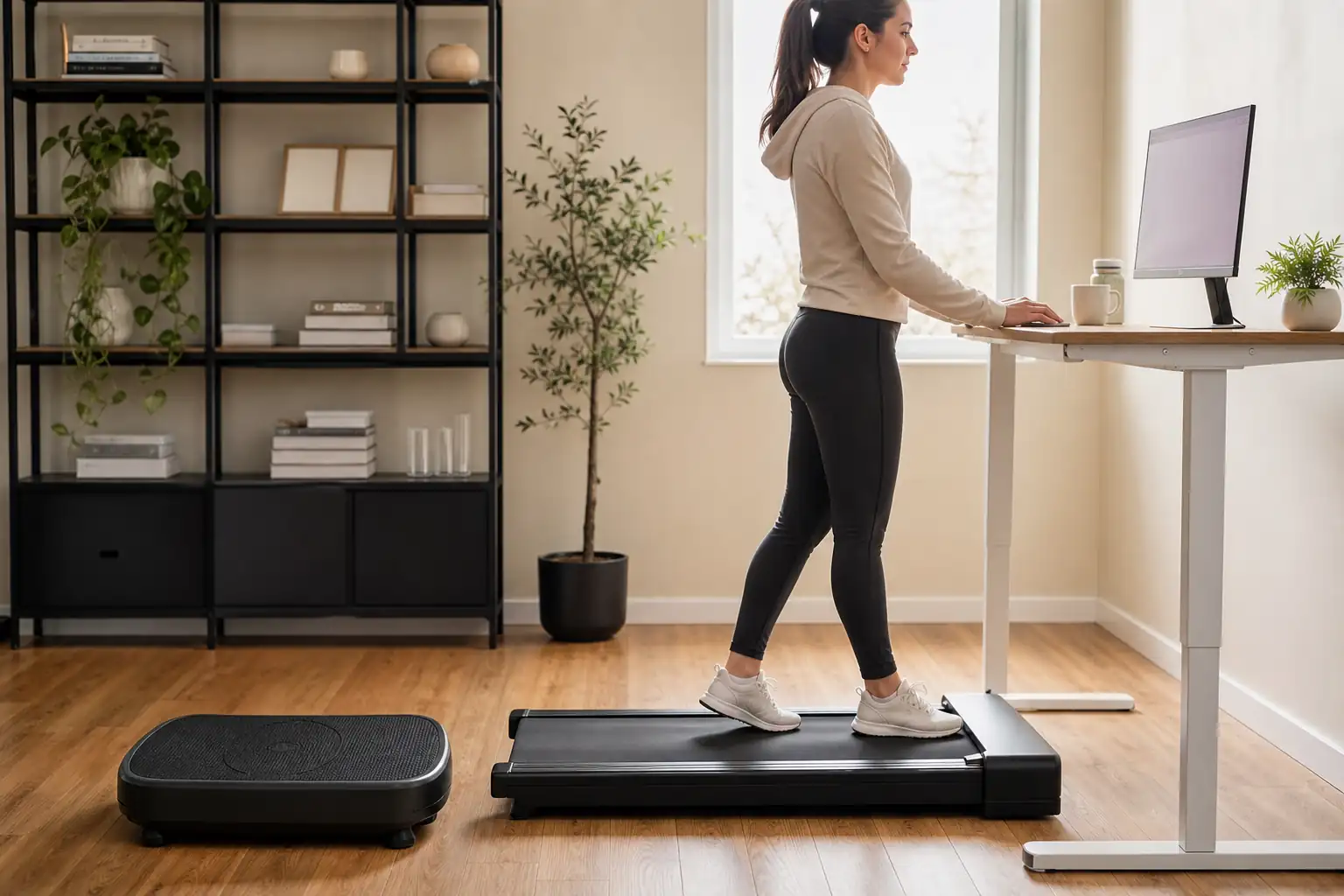
In the vibration plate vs walking pad choice, a walking pad moves you far more and counts toward weekly activity guidelines. A vibration plate is smaller and adds a short, low-impact standing session.
Key takeaways
- A walking pad moves you far more: about 168 kcal an hour at 1 mph against 81 sitting.
- A vibration plate adds a light load to a standing or squat session; it does not replace walking.
- The CDC asks for 150 minutes of moderate activity a week: that is walking-pad territory.
For models, see our best vibration plate and best walking pad rankings.
Vibration Plate vs Walking Pad at a Glance
They solve different problems: one adds steps, the other adds a short strength session.
| Vibration plate | Walking pad | |
|---|---|---|
| What you do | Stand or squat on a moving platform | Walk on a flat belt, often at a desk |
| Movement it adds | Light: about 4.5 mL O2/kg/min over standing (2001 study) | About 168 kcal/h at 1 mph against 81 sitting (2017 study) |
| Counts toward 150 weekly minutes | No: it is not aerobic activity | Yes, at a pace that raises your breathing |
| Session length | Short: advocates suggest about 15 minutes, 3 times a week | Long: it is built to run while you work |
| Size | Median 24.215 in long, 23.45 lb in our database | A longer, heavier belt that needs floor space behind you |
| Noise | A hum and a buzz through the floor | Motor and footfalls; quieter pads exist |
| Typing while using it | No | Yes at a slow pace, with practice |
Check Amazon for current pricing and availability.
What Each One Adds to Your Day
A 2017 study of 26 adults in Frontiers in Physiology measured walking at 1 mph at about 168 kcal an hour, against about 81 sitting still. That is a slow, desk-friendly pace, and it more than doubles energy use. Add up an afternoon of calls and it is real movement.
On a vibration plate you stand, so you add less. In a 2001 study in the European Journal of Applied Physiology, 12 adults used 4.5 mL of oxygen per kg per minute more with vibration (26 Hz, 6 mm) than standing or squatting without it. That is roughly 1.3 times the resting rate added, for a session of minutes. It is a light load on top of a squat, not a workout replacement.
What the Guidelines and Research Say
The CDC adult guidelines recommend at least 150 minutes of moderate aerobic activity a week plus muscle strengthening on 2 days. A walking pad helps with the first; whether a vibration plate counts toward the second is not settled.
The Mayo Clinic says research on whole-body vibration is lacking, that it may bring some strength gains, and that weight loss comes only with cutting calories. If you have a health condition or are pregnant, ask your doctor before using one.
Space, Noise and Setup
A vibration plate is the easier one to fit: the median plate in our database is 24.215 in long and 23.45 lb, and many store flat under a bed or sofa. You use it on a hard floor, ideally not on an upper-story floor you share with neighbors, because it hums.
A walking pad needs a clear run behind you, a desk at the right height if you work on it, and a power outlet. Our walking pad desk guide explains the height. Our treadmill vs walking pad comparison covers the step up to a full treadmill.
One Plate and One Pad to Start From
The top pick of each ranking. Each FitScore is from the guide named.
Top vibration plate

Merach CV55 4D
FitScore 72.9/100
The top plate of our main ranking: a curved 4D plate with oscillating and linear motion and resistance bands. Ranked #1 in our best vibration plate guide, FitScore 72.9 for that intent.
Check Price on AmazonTop walking pad

Trisomy D2
FitScore 66.5/100
The first pick of our best walking pad guide, FitScore 66.5: a flat belt you walk on at a slow pace, at a desk or in front of a screen.
Read our Trisomy D2 review
Check Price on AmazonWhich Should You Choose?
- You sit all day: a walking pad. It adds the most movement per hour.
- You want a few minutes of low-impact standing work: a vibration plate, with the doctor’s approval.
- Tight on space: the plate, or a walking pad that folds; check the footprint in both.
- You want to hit 150 weekly minutes: the walking pad, at a pace that raises your breathing.
- You want both: they fit together: walk through the day, use the plate for a short session.
Checklist Before You Buy
5 checks
Tap a number to check off that step.
- 01
Do you want steps all day, or a short session?
- 02
Is the floor space measured, including the clearance around it?
- 03
Is the weight rating above your body weight?
- 04
Is the noise acceptable for your neighbors and your calls?
- 05
Have you asked your doctor if you have a health condition?
Common Mistakes to Avoid
Mistake 1Buying a vibration plate to replace walking.
Mistake 2Expecting a walking pad to build strength.
Mistake 3Skipping the floor-space and noise check.
Mistake 4Using either one for the first time at full speed or full level.
The Bottom Line
- A 2017 study measured walking at 1 mph at about 168 kcal an hour, against about 81 sitting still.
- Standing on a vibration plate added about 4.5 mL of oxygen per kg per minute in a 2001 study of 12 adults.
- The CDC guidelines for adults ask for 150 minutes of moderate activity a week.
- The median vibration plate in our database weighs 23.45 lb and is about 24.215 in long.
Our Top Picks
 Top vibration plateMerach CV55 4DFitScore72.9/100Check on Amazon
- Top walking padTrisomy D2FitScore66.5/100Check on Amazon
Frequently Asked Questions
For movement and the 150 weekly minutes, the walking pad. For a short, low-impact standing session in a small space, the vibration plate. They do different jobs.
No. A vibration plate adds a light load while you stand or squat; it is not aerobic activity, and the Mayo Clinic says research on it is lacking.
Yes. Walking at 1 mph used about 168 kcal an hour in a 2017 study, against about 81 sitting. Vibration added about 4.5 mL O2/kg/min to standing in a 2001 study.
The vibration plate: the median plate in our database is 24.215 in long and 23.45 lb. A walking pad needs a longer clear run.
Yes. Walk during the day and use the plate for a short session. Ask your doctor first if you have a health condition or are pregnant.
Explore More Vibration Plate Guides
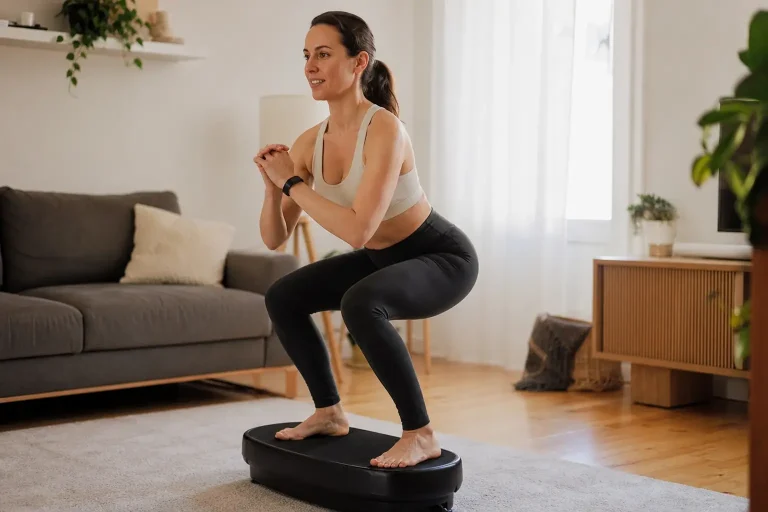
Best Vibration Plate (2026): 5 Top Picks for Home, Ranked
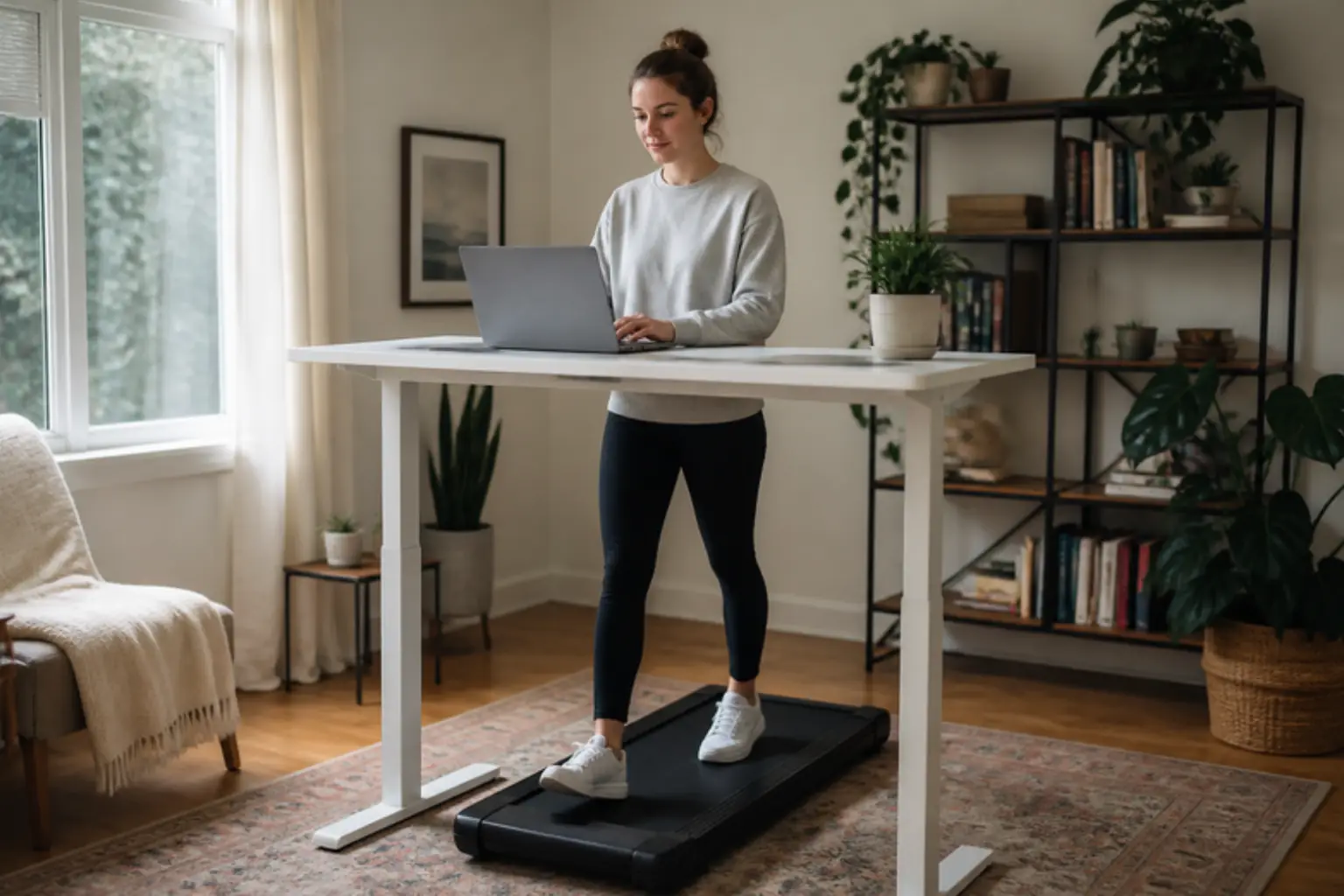
Best Walking Pad (2026): 5 Picks for Home and Under-Desk Walking

Treadmill vs Walking Pad (2026): Which One Fits Your Home and Goals?
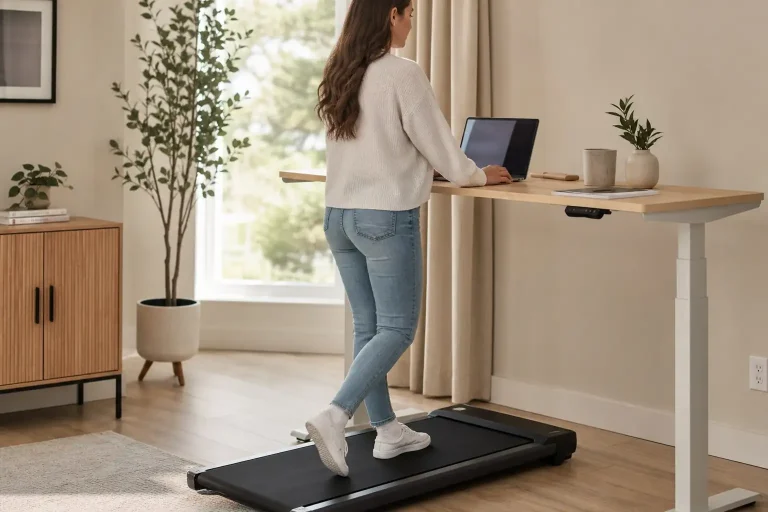
Best Walking Pad Desk (2026): 5 Picks and How to Get the Height Right
Do Vibration Plates Work? A Goal-by-Goal Verdict From the Studies (2026)
Vibration Plate vs Rebounder (2026): Effort, Impact, Space and Which to Buy
This article contains affiliate links. If you click through and make a purchase, we may earn a small commission at no extra cost to you. As an Amazon Associate, we earn from qualifying purchases. We do not show prices because they change constantly: product details and availability can change at any time, so please check the current price and details directly on Amazon. Learn more. Amazon and the Amazon logo are trademarks of Amazon.com, Inc. or its affiliates.
