

Short answer
Start with how you will use it. Walkers can choose a walking pad or a 20 × 55-inch treadmill with a 2.0–2.5 CHP motor. Runners need a 20 × 60-inch belt, 3.0+ CHP and 10–12 mph. Then check weight capacity, room and ceiling height, subscription costs and the motor and parts warranty.
Key takeaways
- Pick the type first: full-size for running, walking pad for desk walking, manual for short self-powered sessions.
- Runners need a 60-inch belt and at least 3.0 CHP; walkers can use 50–55 inches and 2.0–2.5 CHP.
- Leave at least a 50-lb margin on weight capacity.
- Measure the room, the ceiling and the delivery path before you buy.
- Decide between a class membership and free apps before choosing a brand.
- Compare parts and labor coverage and check the current warranty on the product page.
- Use the safety key every time and keep children and pets away from a moving belt.
A home treadmill is one of the largest pieces of equipment most people bring into a house, and the wrong one tends to end up as a clothes rack. This treadmill buying guide walks through every spec that changes how a machine feels and how long it lasts: the type of treadmill, motor power, belt size, speed, incline, cushioning, weight capacity, footprint, noise, apps, warranty and safety.
Each section explains what the number means, what range fits walkers, joggers and runners, and which of our tested picks match. When you know what you need, jump to the matching guide, such as the best treadmill for home, the best treadmill for running or the best walking pad. Every pick on fitgearhq.com carries a FitScore out of 100 that weighs specs, build, warranty and owner feedback for that specific use.
Start With the Right Type of Treadmill
There are four kinds of home treadmills, and choosing the type first removes most of the wrong options. A motorized folding or non-folding treadmill is the default for most homes. It has a motor that drives the belt, a set speed, usually a motorized incline, and a deck long enough for running on full-size models.
A walking pad, also sold as an under-desk treadmill, is a low, flat motorized deck without full handrails on most models. Belts are short and narrow (often about 15–16 inches wide and 38–40 inches long), and top speeds usually sit between 4 and 7.5 mph. Walking pads are built for walking, often at a standing desk, and slide under a bed or sofa. See the best under-desk treadmill if you plan to walk while you work.
A manual treadmill has no motor. Flat manual models move only when you push the belt with your feet, usually on a fixed incline, and suit short walking sessions. A curved manual treadmill uses a concave deck that you push with each stride: step forward to speed up, drift back to slow down. A small study of team-sport athletes found running on a curved non-motorized treadmill cost about as much effort as running on a motorized treadmill set to a 6–8% grade at the same speed. Our best manual treadmill and best curved treadmill guides cover both styles.
| Type | Motor | Typical belt | Best for | Main trade-off |
|---|---|---|---|---|
| Motorized full-size | Yes (2.0–4.25 HP in our picks) | 20 × 55 to 22 × 60 in | Walking, jogging, running, incline work | Large footprint and heavy |
| Walking pad | Yes (low speed) | About 15–16 × 38–40 in | Desk walking, small spaces | No running; short belt |
| Flat manual | None (self-powered) | About 13 × 42 in | Short walks on a fixed incline | Hard to keep a steady pace |
| Curved manual | None (self-powered) | About 17–18 × 59 in | Sprints and high-effort intervals | Bulky, demanding for easy walks |
Check Amazon for current pricing and availability.
Best for Running

Horizon 7.4 AT
FitScore 89.9/100
A 3.5 CHP motor, 22 × 60-inch deck, 0–15% incline and quick-change controls, with no subscription required.
Ranked in our Best Treadmill for Running guide
Check Price on AmazonBest Walking Pad

Acezoe P14
FitScore 66.3/100
A longer-than-average 40-inch walking belt, 300-lb capacity and 2% or 10% incline settings in a pad that stores flat.
Ranked in our Best Walking Pad guide
Check Price on AmazonBest Manual

Sunny Health & Fitness SF-T1407
FitScore 71.7/100
A self-powered flat manual treadmill with a fixed 14% incline and 330-lb capacity for short, no-electricity walks.
Ranked in our Best Manual Treadmill guide
Check Price on AmazonMotor Power: Continuous Horsepower vs Peak Horsepower
The motor rating tells you how much load the treadmill can handle for long sessions without overheating. Continuous horsepower (CHP), sometimes listed as continuous duty, is what the motor can sustain. Peak horsepower is a brief maximum and always reads higher, which is why two machines with the same headline number can feel very different. When a listing gives only “HP” without saying continuous or peak, treat it with caution and look for the CHP figure in the manual or spec sheet.
Heavier users and daily runners load the motor more, so add about 0.5 CHP to the ranges below if either applies to you. A stronger motor also tends to run cooler and quieter at walking speeds because it is working well below its limit. Our best treadmill for heavy people and best treadmill for heavy runners guides prioritize 3.0 CHP and up.
Manual treadmills have no motor (self-powered), so the motor question does not apply. Walking pads often list peak horsepower, so compare them by belt length, top speed and weight capacity instead.
| Main use | Suggested motor | Example from our reviews |
|---|---|---|
| Walking, under 3.5 mph | 2.0–2.5 CHP | Horizon T101 (2.5 HP) |
| Brisk walking and incline walking | 2.5–3.0 CHP | NordicTrack T Series 7 (2.6 HP) |
| Jogging several times a week | 3.0 CHP | Schwinn Fitness 815 (3.0 HP) |
| Daily running and intervals | 3.0–4.0 CHP | Horizon 7.4 AT (3.5 CHP) |
| Heavy runners and marathon training | 4.0 HP and up | Sole TT8 (4.0 HP) |
Belt Size by Height and How You Train
Belt length is the spec that most often decides whether a treadmill feels safe. Your stride gets longer as you speed up, so a deck that is fine for walking can feel cramped once you jog. A short belt makes you shorten your stride or drift toward the rear roller, and a narrow belt leaves less margin if your feet wander or you look at a screen.
Use the table as a starting point, then go one size up if you are taller than about 6 feet 2 inches or have a long stride. Width matters too: 20 inches is standard, and 22 inches gives heavier users, wide-gait runners and anyone who feels unsteady more room. Our best treadmill for tall runners and best walking pad for tall people guides filter for belt length first.
| Use | Minimum belt | Better | Notes |
|---|---|---|---|
| Desk walking (walking pad) | 15 × 38 in | 16 × 40 in or longer | Keep speeds under about 4 mph |
| Walking | 18 × 50 in | 20 × 55 in | Longer if you are over 6 ft |
| Jogging | 20 × 55 in | 20 × 60 in | Stride lengthens past 5 mph |
| Running | 20 × 60 in | 22 × 60 in | Sprint and tall runners need 60 in |
| Heavy users or unsteady walkers | 20 × 55 in | 22 × 60 in | Width adds a safety margin |
Speed Range: What Walkers and Runners Actually Need
Most full-size home treadmills top out at 10 or 12 mph. Ten mph is a 6:00 per mile pace and covers nearly all walkers and joggers. Twelve mph is a 5:00 per mile pace, which matters for runners doing short, fast intervals. Walking pads typically stop between 4 and 7.5 mph; a few 2-in-1 models fold up a handrail to allow light jogging.
How quickly the belt changes speed matters as much as the top speed. Interval runners should look for one-touch speed buttons or handlebar controls, because pressing an up arrow 30 times between sprints breaks a workout. Our best treadmill for HIIT picks were scored on how fast and easily speed changes.
If you mainly walk, a lower top speed is not a drawback. The CDC recommends that adults get at least 150 minutes of moderate-intensity activity a week, and brisk walking counts. A walker gets more from a longer deck, a sturdy handrail and incline than from a 12 mph motor.
Incline, Decline and Incline Trainers
Incline raises the front of the deck to simulate a hill. It increases effort at a lower speed, which is why incline walking is popular with people who want a harder workout without running. Most full-size treadmills offer motorized incline from 0 to 10, 12 or 15 percent. Budget and compact models may have only a few manual incline settings that you change by hand while the treadmill is off.
Decline tilts the deck downward, usually by up to 3 to 6 percent, and helps runners prepare for downhill races. It is less common: the Sole F89 and Sole TT8 both offer 0–15% incline with 6% decline, and the NordicTrack Commercial 2450 runs from -3% to 12%. Incline trainers go much steeper, often to 30 or 40 percent, for steep hiking-style walks. See the best incline trainer if steep walking is your main goal.
Walking pads with incline usually tilt the whole deck a fixed amount or offer a short auto-incline range. That adds effort, but check the belt length first, because a tilted short belt feels even shorter. Our best walking pad with incline covers these models.
Pro tip: Incline raises the front of the treadmill and your head with it. If you plan to use 10% or more, include the extra rise when you check ceiling height.
Cushioning and Deck Feel
Cushioning systems use elastomers, springs or flexible deck mounts to absorb some of the landing force. A well-cushioned deck feels softer underfoot than pavement, but more cushioning is not always better. Very soft decks can feel unstable during fast running, and runners who race on roads often prefer a firmer push-off. Some brands use zoned cushioning that is softer where you land and firmer where you push off, and a few let you switch between soft and firm settings.
Manufacturers rarely publish comparable cushioning numbers, so judge cushioning by the design, the deck thickness and owner feedback. If you have joint concerns, talk with your clinician about the kind of exercise that suits you, and see our best treadmill for bad knees for decks that owners describe as forgiving. Our treadmill cushioning guide explains each cushioning system in detail, and the best treadmill with cushioning ranks the softest decks we have reviewed.
Walking pads have thin decks and little cushioning by design, which keeps them low and light. A shock-absorbing mat underneath helps protect the floor more than your joints.
Weight Capacity and Frame Build
The maximum user weight rating is a quick proxy for how strong the frame, rollers and motor are. Choose a treadmill rated at least 50 lb above the heaviest person who will use it. Running adds more force than walking, so runners should keep a wider margin. Treadmills near their weight limit tend to wear belts, decks and motors faster and feel less stable.
In our reviews, compact and budget treadmills are often rated 250 to 300 lb, mainstream folding models 300 to 350 lb, and heavy-duty decks such as the Sole TT8 and NordicTrack Commercial 2450 at 400 lb. Some walking pads also carry high ratings, such as the Trisomy D2 at 450 lb, but a high rating does not lengthen a short belt. Shoppers who need 300 lb or more can start with the best treadmill with 300-lb capacity or the best walking pad for plus-size users.
Other signs of solid build are larger rollers, a heavier unit weight, a longer frame and motor warranty, and a deck that does not flex visibly during a jog. Heavier treadmills are harder to move, so weigh stability against how often you plan to fold or relocate the machine.
Footprint, Ceiling Height and Folding
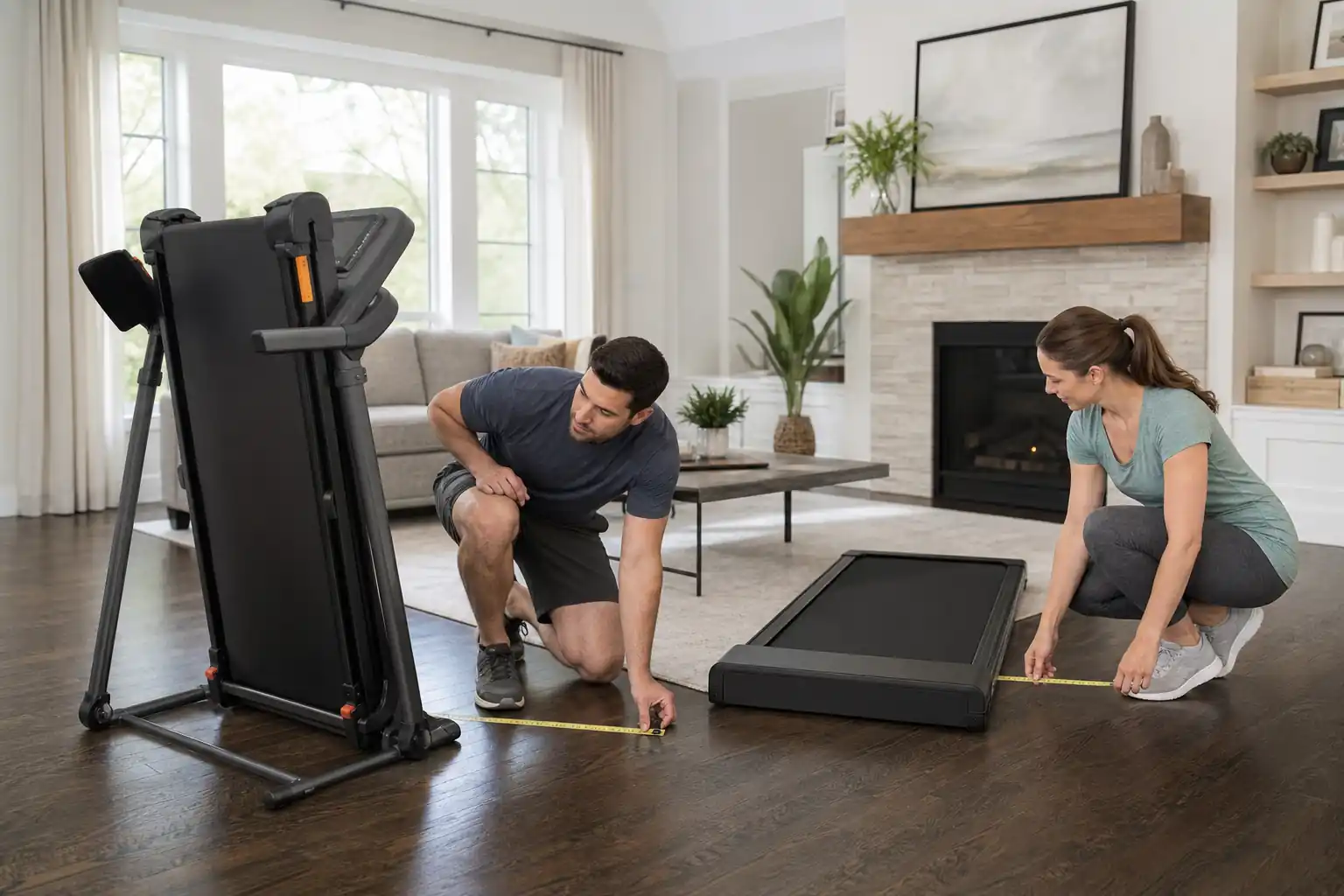
Measure the floor space before you shortlist anything. Take the treadmill length and width from the spec sheet, then add the clearance your manual requires. Most manuals call for open space on each side and a larger clear zone behind the deck so a user who slips can step off safely. Clearance distances vary by brand, so check the specific owner manual before you buy.
Ceiling height is the measurement people forget. Add your height, the deck height (the step-up height from the floor to the belt) and a few inches for the natural bounce of jogging, then add the extra rise from incline if you use it. Tall runners in basements with low ceilings often need a low-deck treadmill or a walking pad.
Folding treadmills lift the deck vertically to reduce floor space, and most use a gas-assist strut to make lifting easier. A folded treadmill still needs a spot to stand, and a heavy deck is awkward to wheel around. Walking pads fold flat or in half and slide under furniture. See our best folding treadmill, best treadmill for small spaces, best treadmill for low ceilings and best folding treadmill under bed guides for space-first picks.
Watch out: Measure your doorways, stairwell turns and hallway before delivery. A boxed full-size treadmill is long and heavy, and some do not fit down narrow basement stairs.
Best for Small Spaces

XTERRA Compact Series – TR150
FitScore 72.6/100
A light folding frame with a 16 × 50-inch belt and 0.5–10 mph, built for walking and light jogging in tight rooms.
Ranked in our Best Treadmill for Small Spaces guide
Check Price on AmazonBest Folding
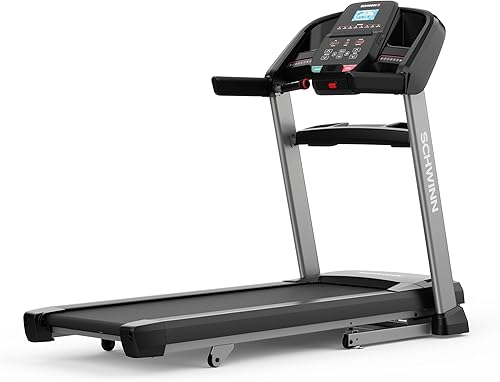
Schwinn Fitness 815
FitScore 75.9/100
A 3.0 HP motor and full 20 × 60-inch deck that folds, with a 325-lb capacity and 10-year motor coverage.
Ranked in our Best Folding Treadmill guide
Check Price on AmazonBest for Walkers

Horizon T101
FitScore 71.8/100
A simple folding treadmill with a 20 × 55-inch belt, 0–10% incline and a lifetime frame and motor warranty.
Ranked in our Best Treadmill for Small Spaces guide
Check Price on AmazonNoise and Apartment Living
Treadmill noise comes from three sources: the motor, the belt sliding over the deck, and your feet striking it. Footfall is usually the loudest and travels through the floor to the neighbors below. Walking makes far less impact noise than running, which is why many apartment owners choose a walking-focused treadmill or a walking pad.
To cut noise, place the treadmill on a dense rubber mat, keep the belt tensioned and lubricated as the manual describes, and avoid running late at night if someone lives below you. A motor with more continuous power often sounds calmer at walking speeds because it is not straining. Our best quiet treadmill, best quiet treadmill for apartment and best quiet walking pad guides favor models with published or measured low noise.
If several people share the machine or it lives in a living room, think about how it looks, how quickly it folds and how simple the controls are. The best treadmill for shared spaces and best treadmill for apartment guides weigh those factors.
Consoles, Apps and Subscriptions
Consoles range from a basic LCD with speed, time and distance to a large touchscreen that streams instructor-led classes and can adjust speed and incline for you. Decide early whether you want a built-in class platform, because it changes which brands fit. NordicTrack and ProForm treadmills are built around iFIT, a paid membership, and the Peloton Tread is built around Peloton classes. Without a membership, these machines offer limited manual use at best, so check current brand terms for what works without one.
Many treadmills instead connect over Bluetooth to apps on your own phone or tablet, such as Zwift or Kinomap, or to a free brand app. Horizon, Sole and XTERRA models in our reviews work this way. If you would rather not pay a monthly fee, start with the best treadmill without subscription. If classes keep you consistent, compare platforms in the best treadmill with classes and best treadmill with screen guides.
Before you buy, check the current membership terms on the brand site, whether a membership is required for the touchscreen to show anything useful, and whether the treadmill works with third-party apps. Membership terms, included trial periods and app compatibility change often, so treat any listing claim as a starting point.
| Model | Built-in platform | Works without a membership |
|---|---|---|
| NordicTrack Commercial 2450 | iFIT (membership) | Manual mode only |
| ProForm Pro 9000 | iFIT (membership) | Limited; check current terms |
| Bowflex T7 | JRNY (optional) | Yes |
| Sole F65 and F80 | SOLE+ app | Yes |
| Horizon 7.0 AT and 7.4 AT | Third-party apps over Bluetooth | Yes |
| XTERRA TR75 | XTERRA Fitness app and third-party apps | Yes |
No Subscription

XTERRA Sport Series – TR75
FitScore 80.8/100
A 3 HP motor, 20 × 60-inch deck and 350-lb capacity that pairs with free apps, with lifetime frame and motor coverage.
Ranked in our Best Treadmill Without Subscription guide
Check Price on AmazonBest Classes

Peloton Tread
FitScore 88.8/100
Built around the Peloton class library, for users who stay consistent with instructor-led runs and walks.
Ranked in our Best Treadmill With Classes guide
Check Price on AmazonBest Immersive

NordicTrack Commercial 2450
FitScore 86.7/100
A 4.25 HP motor, -3% to 12% incline and a large touchscreen for iFIT classes that control speed and incline.
Ranked in our Best Treadmill With Classes guide
Check Price on AmazonWarranty, Delivery and Assembly
A treadmill warranty usually splits into four parts: frame, motor, parts and labor. Frame and motor coverage often sound generous, but parts such as the console, rollers and belt, and the labor to replace them, are what wear first. Compare the parts and labor terms side by side, and read what the warranty excludes. The FTC explains how to read a warranty and what full and limited warranties mean on its consumer warranty page.
Warranty patterns vary widely by brand and price tier. In our reviews, established home brands such as Horizon, Sole and XTERRA often pair lifetime frame and motor coverage with one to five years of parts. NordicTrack and ProForm models vary by model. Many walking pads and entry-level folding treadmills offer one year or less on parts. Warranty terms change, so check the current warranty on the product page before you buy.
Full-size treadmills are heavy: the Horizon 7.4 AT, for example, weighs about 318 lb. Plan who will carry the box, whether the seller offers in-home delivery or assembly, and whether that service costs extra. Assembly usually means attaching the uprights and console and routing a cable or two, which takes two people. Walking pads usually arrive nearly assembled. See how this plays out by budget tier in the best budget treadmill, best value treadmill and best premium treadmill guides.
| Model | Frame | Motor | Parts | Labor |
|---|---|---|---|---|
| Horizon 7.4 AT | Lifetime | Lifetime | 5 years | 2 years |
| Sole F89 | Lifetime | Lifetime | 3 years | 1 year |
| XTERRA TR75 | Lifetime | Lifetime | 2 years | 1 year |
| NordicTrack Commercial 2450 | 10 years | Lifetime | 2 years | 1 year |
| Schwinn Fitness 815 | 10 years | 10 years | 1 year | 1 year |
| THERUN X1 (walking pad) | 1 year | 1 year | 1 year | 1 year |
| Sunny Health & Fitness SF-T1407 (manual) | 3 years | None (self-powered) | 180 days | 180 days |
Treadmill Safety at Home
Treadmills can seriously injure children and pets. In a 2021 recall of the Peloton Tread+, the U.S. Consumer Product Safety Commission reported a child death and dozens of incidents of people, pets or objects being pulled under the rear of the treadmill. CPSC advised owners to keep children and pets away while the treadmill is in use, keep balls and other objects away from it, and unplug it and keep the safety key out of children’s reach when not in use. That advice is sensible for any treadmill.
Always clip the safety key to your clothing so the belt stops if you fall back. Start the belt at a slow speed before stepping on, straddle the side rails while it starts, and leave the clearance behind the deck that your manual specifies. Follow the manual on electrical setup, since many treadmills should be plugged directly into a wall outlet rather than an extension cord.
Beginners, older adults and anyone recovering from an injury should favor full handrails, a wide belt, a low step-up height and a low starting speed. Pregnant users should follow ACOG guidance and check with their ob-gyn before starting or changing an exercise routine. Our best treadmill for beginners, best treadmill with handle and best treadmill for pregnant women guides favor stable, easy-to-use designs.
- Clip the safety key to your clothing every session.
- Keep children and pets out of the room while the belt is moving.
- Unplug the treadmill and store the safety key out of reach when you are done.
- Keep the clear zone behind the deck free of furniture, toys and weights.
- Follow the manual for lubrication, belt tension and electrical setup.
Checklist Before You Buy
- Decide on walking, jogging or running as your main use.
- Choose the type: full-size motorized, walking pad, flat manual or curved.
- Confirm the motor rating is continuous horsepower and fits your use.
- Check belt length and width against your height and stride.
- Pick a weight capacity at least 50 lb above the heaviest user.
- Confirm the speed and incline range match your workouts.
- Measure floor space plus the clearance in the manual.
- Check ceiling height with your height, deck height and incline rise.
- Measure doorways and stairs for delivery.
- Decide whether you want a class membership or free apps.
- Compare parts and labor warranty terms, not just frame and motor.
- Plan a dedicated outlet and a place to store the safety key.
Common Mistakes to Avoid
- Buying a short walking belt and planning to run on it later.
- Comparing peak horsepower instead of continuous horsepower.
- Ignoring ceiling height in a basement or attic room.
- Choosing a treadmill rated right at your body weight.
- Assuming a lifetime frame warranty covers the parts that wear out.
- Buying a touchscreen model without checking the ongoing membership requirement.
- Skipping the safety key or leaving the treadmill plugged in around children.
The Bottom Line
- Belt length matters most: about 50–55 inches for walking, 60 inches for running.
- Compare continuous horsepower (CHP), not peak horsepower.
- Pick a weight capacity at least 50 lb above the heaviest user.
- Add your height, the deck height and a few inches of bounce room to check your ceiling.
- Read the parts and labor warranty, not just the frame and motor coverage.
Our Top Picks
 Best for RunningHorizon 7.4 ATFitScore89.9/100Check on Amazon
- Best Walking PadAcezoe P14FitScore66.3/100Check on Amazon
- Best ManualSunny Health & Fitness SF-T1407FitScore71.7/100Check on Amazon
- Best for Small SpacesXTERRA Compact Series – TR150FitScore72.6/100Check on Amazon
- Best FoldingSchwinn Fitness 815FitScore75.9/100Check on Amazon
- Best for WalkersHorizon T101FitScore71.8/100Check on Amazon
- No SubscriptionXTERRA Sport Series – TR75FitScore80.8/100Check on Amazon
- Best ClassesPeloton TreadFitScore88.8/100Check on Amazon
- Best ImmersiveNordicTrack Commercial 2450FitScore86.7/100Check on Amazon
Frequently Asked Questions
Look at belt size, continuous motor power, weight capacity and warranty first. Then match speed, incline, footprint and app features to how you plan to train.
Walkers can use a 20 × 55-inch belt, and runners should choose at least 20 × 60 inches. Tall runners and heavier users benefit from a 22-inch width.
About 2.0–2.5 CHP is enough for walking, 3.0 CHP for regular jogging, and 3.0–4.0 CHP for daily running. Compare continuous horsepower, not peak horsepower.
A walking pad works well for walking at a desk or in a small room, but it is not built for running. Its belt is shorter and narrower and its top speed is lower than a full-size treadmill.
Flat manual treadmills suit short, self-powered walks on a fixed incline. Curved manual treadmills suit sprints and intense intervals, but both are harder to use for long, steady sessions.
Add your height, the treadmill deck height and a few inches for bounce, plus any rise from incline. Low ceilings often call for a low-deck model or a walking pad.
No. Most treadmills run without a subscription, though iFIT and Peloton models rely on a membership for their full touchscreen classes. Many other brands work with free or third-party apps.
Look beyond the frame and motor to the parts and labor coverage, since those parts wear first. Warranty terms change, so check the current warranty on the product page.
Not necessarily. Many folding models in our reviews have 20 × 60-inch decks and 325–375 lb capacities, but non-folding decks are usually the heaviest and most stable.
Explore More Treadmill Guides
Best Treadmill for Home (2026): Top Picks Ranked for Faster, Smarter Buying
Best Treadmill for Running (2026): Top 5 Picks
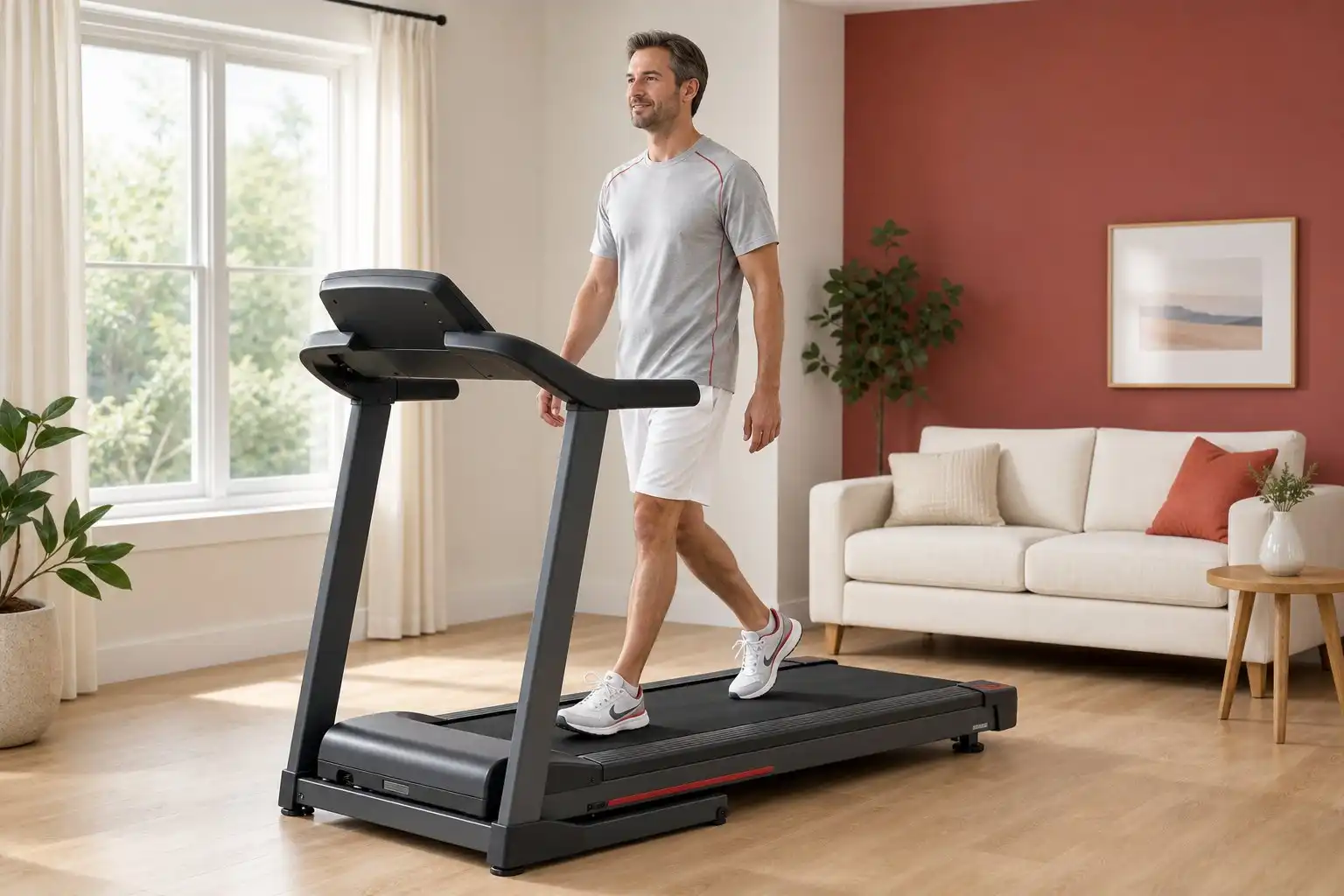
Best Treadmill for Walking: 5 Standout Home Picks for 2026
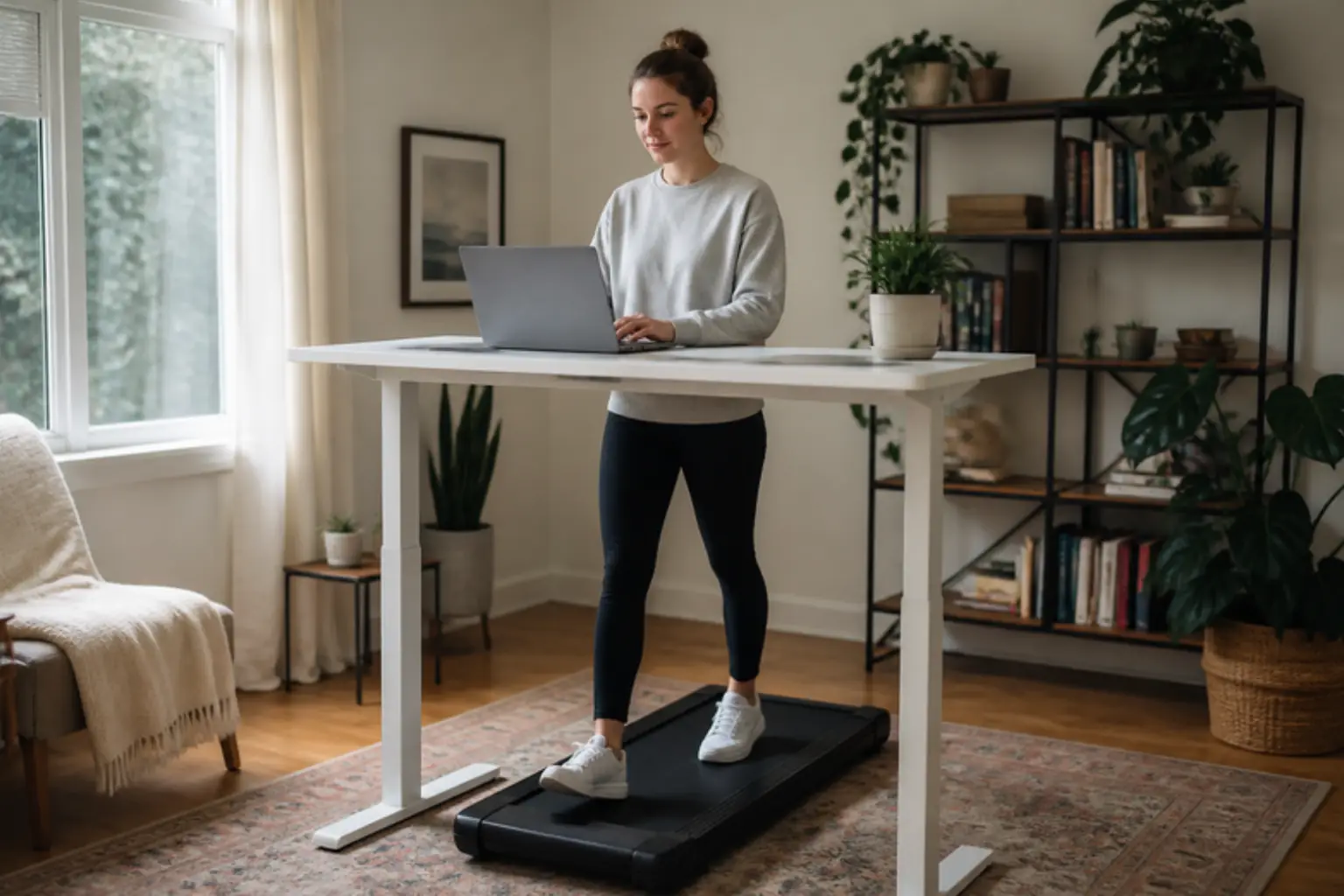
Best Walking Pad (2026): 5 Picks for Home and Under-Desk Walking
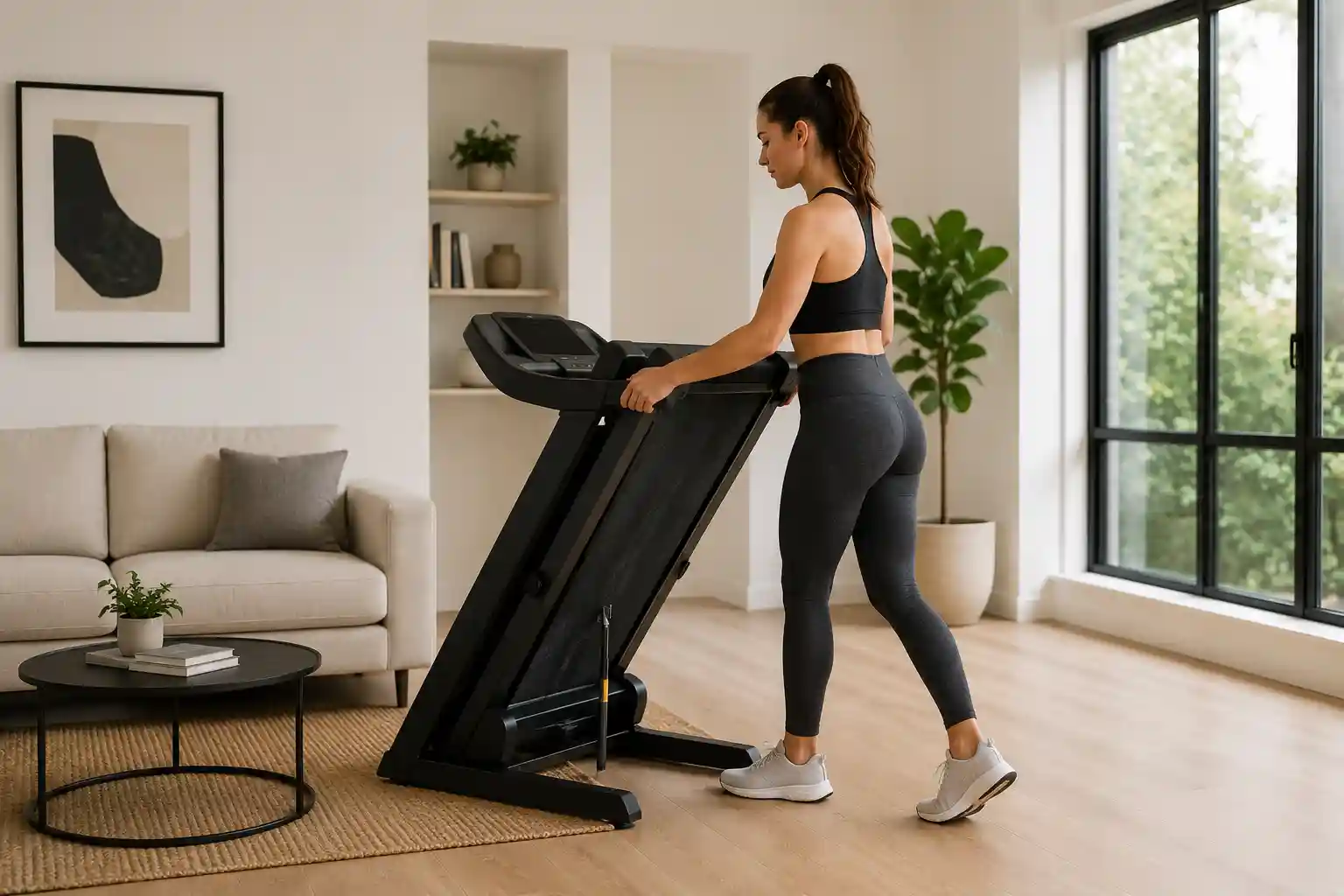
Best Folding Treadmill (2026): 5 Space-Saving Picks That Make the Decision Easy
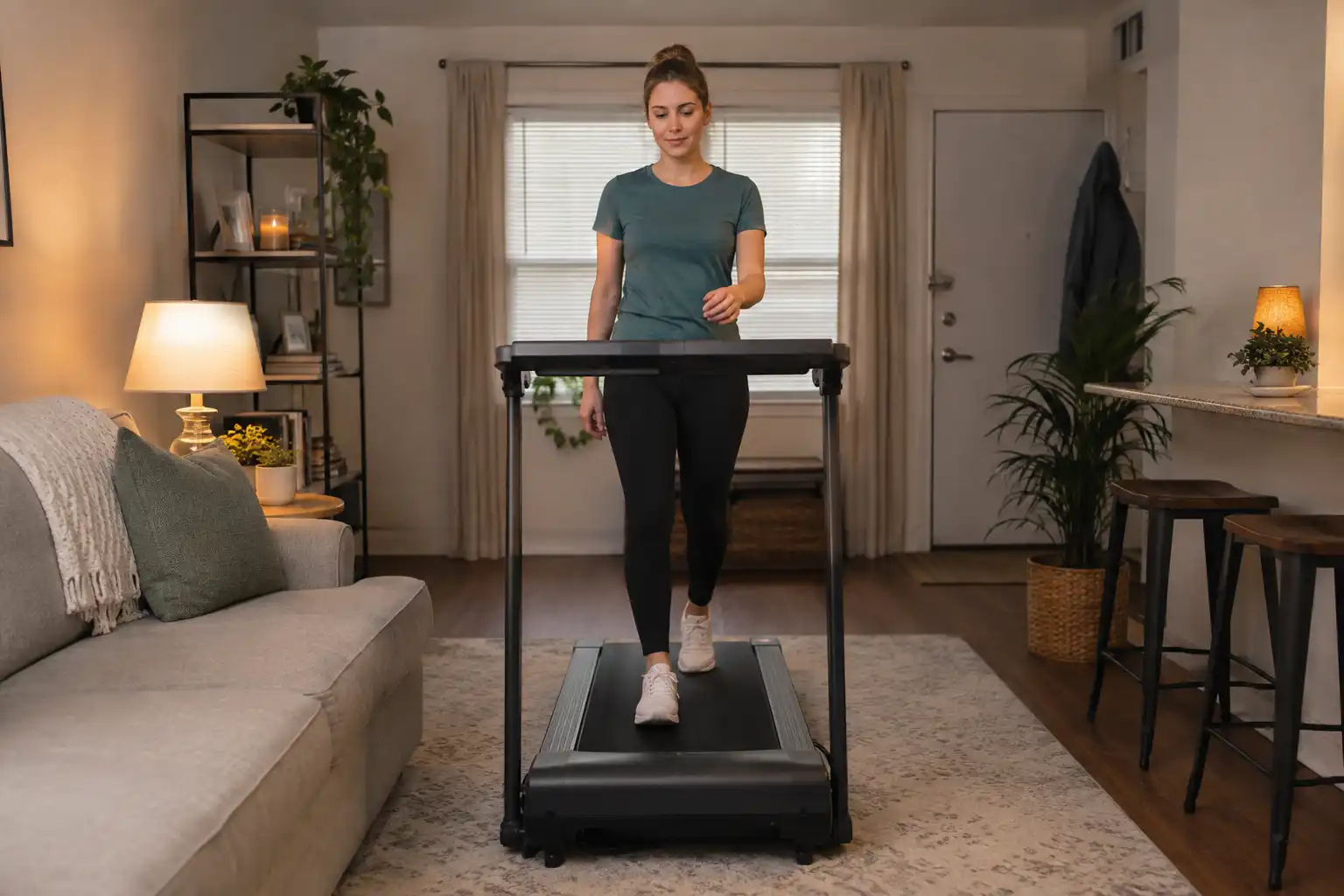
Best Budget Treadmill (2026): 5 Affordable Picks Ranked
This article contains affiliate links. If you click through and make a purchase, we may earn a small commission at no extra cost to you. As an Amazon Associate, we earn from qualifying purchases. We do not show prices because they change constantly: product details and availability can change at any time, so please check the current price and details directly on Amazon. Learn more. Amazon and the Amazon logo are trademarks of Amazon.com, Inc. or its affiliates.
