

Short answer
A treadmill pace chart converts belt speed in mph into running pace. Divide 60 by your speed to get minutes per mile: 6.0 mph is a 10:00 mile, 7.5 mph is 8:00 and 10.0 mph is 6:00. For minutes per kilometer, divide 37.28 by your mph. Add 1% incline to better match outdoor effort.
Quick facts
- Minutes per mile = 60 ÷ mph. Minutes per kilometer = 60 ÷ (mph × 1.609344).
- Every chart below was calculated from those formulas and rounded to the nearest second.
- Most home treadmills change speed in 0.1 mph steps, so set the closest value from the goal-pace table.
- A 1% incline matched the energy cost of outdoor running between about 6.5 and 11.2 mph in a small lab study of trained runners.
- Incline makes the same belt speed harder; it does not change the pace shown on the console.
Key takeaways
- Pace per mile equals 60 divided by mph; pace per kilometer equals 37.28 divided by mph.
- Use the reverse table to set the closest 0.1 mph value for your goal pace.
- A 1% incline is a reasonable way to match outdoor running effort at running speeds.
- Incline and pace are separate: use effort or heart rate on hill days.
- Check your treadmill top speed against the fastest pace you plan to run.
Treadmills in the US show speed in miles per hour, while running plans, race results and most watches talk in minutes per mile or minutes per kilometer. That mismatch is why so many runners stand on the belt doing mental math. A pace chart removes the guesswork: find your speed, read your pace, and see what that pace means for a 5K, 10K, half marathon or marathon.
This guide gives you exact conversion tables for walking and running speeds, a reverse table that turns a goal pace into the speed to type into the console, and a short explanation of how incline fits in. If you are still choosing a machine, our best treadmill for running guide ranks the models with the speed range and deck length that faster paces need.
How to Read a Treadmill Pace Chart
Speed and pace are the same information written two ways. Speed tells you distance per hour; pace tells you time per distance. Because there are 60 minutes in an hour, pace in minutes per mile is simply 60 divided by mph. At 6.0 mph you cover a mile every 10 minutes, at 8.0 mph every 7.5 minutes, which is 7:30 per mile.
For metric pace, convert miles to kilometers first. One mile is exactly 1.609344 km, so minutes per kilometer equal 60 divided by (mph × 1.609344), or about 37.28 divided by mph. At 6.0 mph that gives 6:13 per kilometer. If your treadmill can switch to km/h, the math is even simpler: 60 divided by km/h is your minutes per kilometer.
The decimal part of the result is a fraction of a minute, not seconds. A result of 8.57 minutes is 8 minutes and 34 seconds (0.57 × 60), not 8:57. That small trap is the most common reason runners think their treadmill and their watch disagree. All tables on this page already convert fractions to minutes and seconds.
- Minutes per mile = 60 ÷ mph
- Minutes per kilometer = 37.28 ÷ mph (or 60 ÷ km/h)
- mph = 60 ÷ minutes per mile (use decimal minutes, so 7:30 is 7.5)
- km/h = mph × 1.609344
Walking Pace Chart: 2.0 to 4.5 mph
Walking speeds on a treadmill usually sit between 2 and 4.5 mph. The CDC lists walking at 2.5 mph or faster as an example of moderate-intensity activity, and its adult guidelines call for 150 minutes of moderate-intensity activity a week. The last column shows how far you cover in a 30-minute session, which makes it easy to plan a weekly total.
Walking pace is personal. Stride length, leg length and fitness all change what feels brisk, so use the chart to track progress rather than to hit a number someone else chose. For incline walking at slower belt speeds, our best treadmill for walking guide covers decks and motors that stay smooth below 4 mph.
| Speed (mph) | Speed (km/h) | Pace per mile | Pace per km | Miles in 30 min |
|---|---|---|---|---|
| 2.0 | 3.2 | 30:00 | 18:38 | 1.00 |
| 2.5 | 4.0 | 24:00 | 14:55 | 1.25 |
| 3.0 | 4.8 | 20:00 | 12:26 | 1.50 |
| 3.5 | 5.6 | 17:09 | 10:39 | 1.75 |
| 4.0 | 6.4 | 15:00 | 9:19 | 2.00 |
| 4.5 | 7.2 | 13:20 | 8:17 | 2.25 |
Check Amazon for current pricing and availability.
Running Pace Chart: 5.0 to 12.0 mph
This is the core treadmill pace chart. Each row shows a common belt speed in 0.5 mph steps, the matching pace per mile and per kilometer, and your finish time for a 5K (3.107 miles) and a 10K (6.214 miles) if you held that speed the whole way. Twelve mph is the top speed of most full-size home treadmills, which is a 5:00 mile.
If your speed falls between two rows, you can estimate the pace in the middle or use the formulas above. At 6.8 mph, for example, 60 ÷ 6.8 = 8.82 minutes, or 8:49 per mile. Runners who train at paces faster than 6:00 per mile will want a treadmill above 10 mph with a long deck; see our best treadmill for tall runners guide for 60-inch decks.
| Speed (mph) | Speed (km/h) | Pace per mile | Pace per km | 5K time | 10K time |
|---|---|---|---|---|---|
| 5.0 | 8.0 | 12:00 | 7:27 | 37:17 | 1:14:34 |
| 5.5 | 8.9 | 10:55 | 6:47 | 33:54 | 1:07:47 |
| 6.0 | 9.7 | 10:00 | 6:13 | 31:04 | 1:02:08 |
| 6.5 | 10.5 | 9:14 | 5:44 | 28:41 | 57:21 |
| 7.0 | 11.3 | 8:34 | 5:20 | 26:38 | 53:16 |
| 7.5 | 12.1 | 8:00 | 4:58 | 24:51 | 49:43 |
| 8.0 | 12.9 | 7:30 | 4:40 | 23:18 | 46:36 |
| 8.5 | 13.7 | 7:04 | 4:23 | 21:56 | 43:52 |
| 9.0 | 14.5 | 6:40 | 4:09 | 20:43 | 41:25 |
| 9.5 | 15.3 | 6:19 | 3:55 | 19:37 | 39:15 |
| 10.0 | 16.1 | 6:00 | 3:44 | 18:38 | 37:17 |
| 10.5 | 16.9 | 5:43 | 3:33 | 17:45 | 35:30 |
| 11.0 | 17.7 | 5:27 | 3:23 | 16:57 | 33:54 |
| 11.5 | 18.5 | 5:13 | 3:15 | 16:13 | 32:25 |
| 12.0 | 19.3 | 5:00 | 3:06 | 15:32 | 31:04 |
Half Marathon and Marathon Finish Times by Treadmill Speed
Long-distance runners often train on a treadmill at goal race pace. The table below converts steady speeds into finish times for a half marathon (13.109 miles) and a marathon (26.219 miles). The times assume an even pace with no stops, so treat them as targets for pacing practice rather than predictions.
Holding race pace for an hour or more puts steady load on a treadmill motor and deck. A continuous-duty motor, a 22 × 60-inch deck and good cooling matter more here than screen size. Our best treadmill for marathon training guide ranks the models built for long runs, led by the Sole F89.
| Speed (mph) | Pace per mile | Half marathon | Marathon |
|---|---|---|---|
| 5.0 | 12:00 | 2:37:19 | 5:14:38 |
| 5.5 | 10:55 | 2:23:01 | 4:46:01 |
| 6.0 | 10:00 | 2:11:06 | 4:22:11 |
| 6.5 | 9:14 | 2:01:01 | 4:02:01 |
| 7.0 | 8:34 | 1:52:22 | 3:44:44 |
| 7.5 | 8:00 | 1:44:53 | 3:29:45 |
| 8.0 | 7:30 | 1:38:19 | 3:16:38 |
| 8.5 | 7:04 | 1:32:32 | 3:05:04 |
| 9.0 | 6:40 | 1:27:24 | 2:54:48 |
| 10.0 | 6:00 | 1:18:39 | 2:37:19 |
Goal Pace to Treadmill Speed: What to Set on the Console
Most training plans give you a pace, not a speed. Use this reverse table to find the exact speed for a target pace and the value to enter on a treadmill that adjusts in 0.1 mph steps. The exact column shows why rounding matters: a 7:00 mile is 8.57 mph, so setting 8.6 mph runs slightly fast (6:59) and 8.5 mph slightly slow (7:04).
Metric runners can read the same table from the kilometer rows. If your console switches to km/h, use the last column directly. The Horizon 7.4 AT and other treadmills with dial or one-touch speed controls make it easier to hold a precise value during a run.
| Goal pace | Exact mph | Set to (0.1 mph) | km/h |
|---|---|---|---|
| 12:00 /mile | 5.00 | 5.0 | 8.0 |
| 11:00 /mile | 5.45 | 5.5 | 8.8 |
| 10:00 /mile | 6.00 | 6.0 | 9.7 |
| 9:00 /mile | 6.67 | 6.7 | 10.7 |
| 8:30 /mile | 7.06 | 7.1 | 11.4 |
| 8:00 /mile | 7.50 | 7.5 | 12.1 |
| 7:30 /mile | 8.00 | 8.0 | 12.9 |
| 7:00 /mile | 8.57 | 8.6 | 13.8 |
| 6:30 /mile | 9.23 | 9.2 | 14.9 |
| 6:00 /mile | 10.00 | 10.0 | 16.1 |
| 7:00 /km | 5.33 | 5.3 | 8.6 |
| 6:00 /km | 6.21 | 6.2 | 10.0 |
| 5:30 /km | 6.78 | 6.8 | 10.9 |
| 5:00 /km | 7.46 | 7.5 | 12.0 |
| 4:30 /km | 8.28 | 8.3 | 13.3 |
| 4:00 /km | 9.32 | 9.3 | 15.0 |
Treadmill Incline and Pace: Should You Use 1%?
A treadmill belt moves under you, so there is no air resistance and running feels slightly easier than on the road at the same speed. In a classic study, nine trained male runners ran at speeds from about 6.5 to 11.2 mph on a treadmill at different grades and outdoors. A 1% treadmill grade most accurately matched the energy cost of outdoor running over runs of about five minutes. The study was small and used trained runners, so treat 1% as a practical starting point, not a rule.
Incline does not change your pace. At 7.5 mph you still cover a mile in 8:00 whether the deck is flat or set to 6%; the incline only makes that pace harder. That is why hill workouts use effort, heart rate or perceived exertion instead of pace. At walking speeds, many people skip the 1% correction because air resistance matters much less.
If you plan steep incline walking or hill repeats, choose a treadmill that reaches at least 12% to 15%. Our best treadmill with incline guide compares the models, and the best incline trainer guide covers machines that go steeper.
Pro tip: Run easy days at 1% and the pace from the chart. For hill days, keep the speed you can talk at and raise the incline instead of chasing a pace number.
How to Use the Chart in Your Workouts
Start with a pace you can hold while speaking in full sentences. The CDC describes moderate effort as being able to talk but not sing, and vigorous effort as not being able to say more than a few words without pausing for a breath. Find that comfortable speed on the chart, note the pace, and use it as your easy-run baseline.
From there, the chart helps you plan structured sessions. A tempo run uses a pace that is hard but controlled for 15 to 30 minutes. Intervals use short repeats faster than your 5K pace with recovery jogs in between. Writing each session as speeds, not paces, saves you from converting on the move. Treadmills with quick speed controls, such as the models in our best treadmill for HIIT guide, make those changes faster and safer.
Track pace over weeks, not days. If the same speed starts to feel easier, or your heart rate at that speed drops, your fitness is improving. Increase speed in small steps of 0.1 to 0.2 mph rather than jumping a full row on the chart.
- Easy runs: a speed you can talk at, usually 1% incline.
- Tempo runs: 15 to 30 minutes at a hard but steady pace.
- Intervals: short faster repeats with full recovery jogs or walks.
- Long runs: goal race pace only for part of the run until you are used to it.
Why Your Treadmill Pace May Not Match Your Watch
A treadmill calculates speed from the rotation of its rollers, while a watch indoors estimates speed from arm movement and stride. Neither is perfect. Watches often need a few treadmill runs to calibrate, and a belt that slips or a treadmill that was never calibrated can read slightly high or low. If the difference is large and consistent, check the manual for a calibration procedure or contact the manufacturer.
Belt condition also matters. A loose or dry belt can hesitate under each footstrike, which makes your real speed drop below the display. Our guide on how to maintain a treadmill covers belt tension and lubrication. Finally, remember that speed limits shape what you can train: many compact and folding models top out at 8 to 10 mph, which is a 7:30 to 6:00 mile, while full-size running treadmills usually reach 12 mph.
If you want a treadmill that holds precise paces for years, these running picks combine 12 mph or more, long decks and strong motors.
Best for Pace Work

Horizon 7.4 AT
FitScore 89.9/100
A 3.5 CHP motor, 0.5 to 12 mph, a 22 × 60-inch deck and QuickDial controls for fast, precise speed changes. Read our Horizon 7.4 AT review.
Ranked in our Best Treadmill for Running guide
Check Price on AmazonBest for Long Runs

Sole TT8
FitScore 89.2/100
A 4.0 HP motor, a 400-lb capacity, 15% incline and 6% decline on a non-folding frame built for steady miles. See the Sole TT8 review.
Ranked in our Best Treadmill for Running guide
Check Price on AmazonFastest Top Speed

NordicTrack Commercial 2450
FitScore 86.3/100
Reaches 14 mph, about a 4:17 mile, with a 4.25 HP motor and -3% to 12% incline; smart features need iFIT. See the NordicTrack Commercial 2450 review.
Ranked in our Best Treadmill for Running guide
Check Price on AmazonCommon Mistakes to Avoid
- Reading decimal minutes as seconds, for example treating 8.57 minutes as 8:57 instead of 8:34.
- Assuming incline changes your pace; it changes effort, not the time per mile.
- Jumping a full 0.5 mph row at once instead of progressing in 0.1 to 0.2 mph steps.
- Trusting a watch over the treadmill, or the reverse, without calibrating either.
- Buying a compact treadmill that tops out below the paces your plan asks for.
Our Top Picks
 Best for Pace WorkHorizon 7.4 ATFitScore89.9/100Check on Amazon
- Best for Long RunsSole TT8FitScore89.2/100Check on Amazon
- Fastest Top SpeedNordicTrack Commercial 2450FitScore86.3/100Check on Amazon
Frequently Asked Questions
6.0 mph is exactly a 10:00 mile, or about 6:13 per kilometer. A 5K at that speed takes about 31:04.
A 9:00 mile is 6.67 mph. On a treadmill that changes speed in 0.1 mph steps, set 6.7 mph, which is about 8:57 per mile.
Divide 37.28 by your speed in mph. For example, 7.5 mph gives 4.97 minutes, which is about 4:58 per kilometer.
The distance is the same, but the treadmill removes air resistance and terrain. A small study found a 1% grade best matched outdoor running effort at typical running speeds.
The CDC lists walking at 2.5 mph or faster as moderate-intensity activity. Many adults walk briskly between 3.0 and 4.0 mph, which is a 20:00 to 15:00 mile.
10 mph is a 6:00 mile or about 3:44 per kilometer. Holding it for a 5K would finish in about 18:38.
Only if you run faster than about a 6:00 mile during intervals. Many compact models stop at 8 to 10 mph; our best treadmill for running guide lists models that reach 12 mph or more.
Explore More Treadmill Guides
Best Treadmill for Running (2026): Top 5 Picks
Best Treadmill for Marathon Training (2026): Top 5 Picks
Best Treadmill With Incline (2026): Top 5 Picks
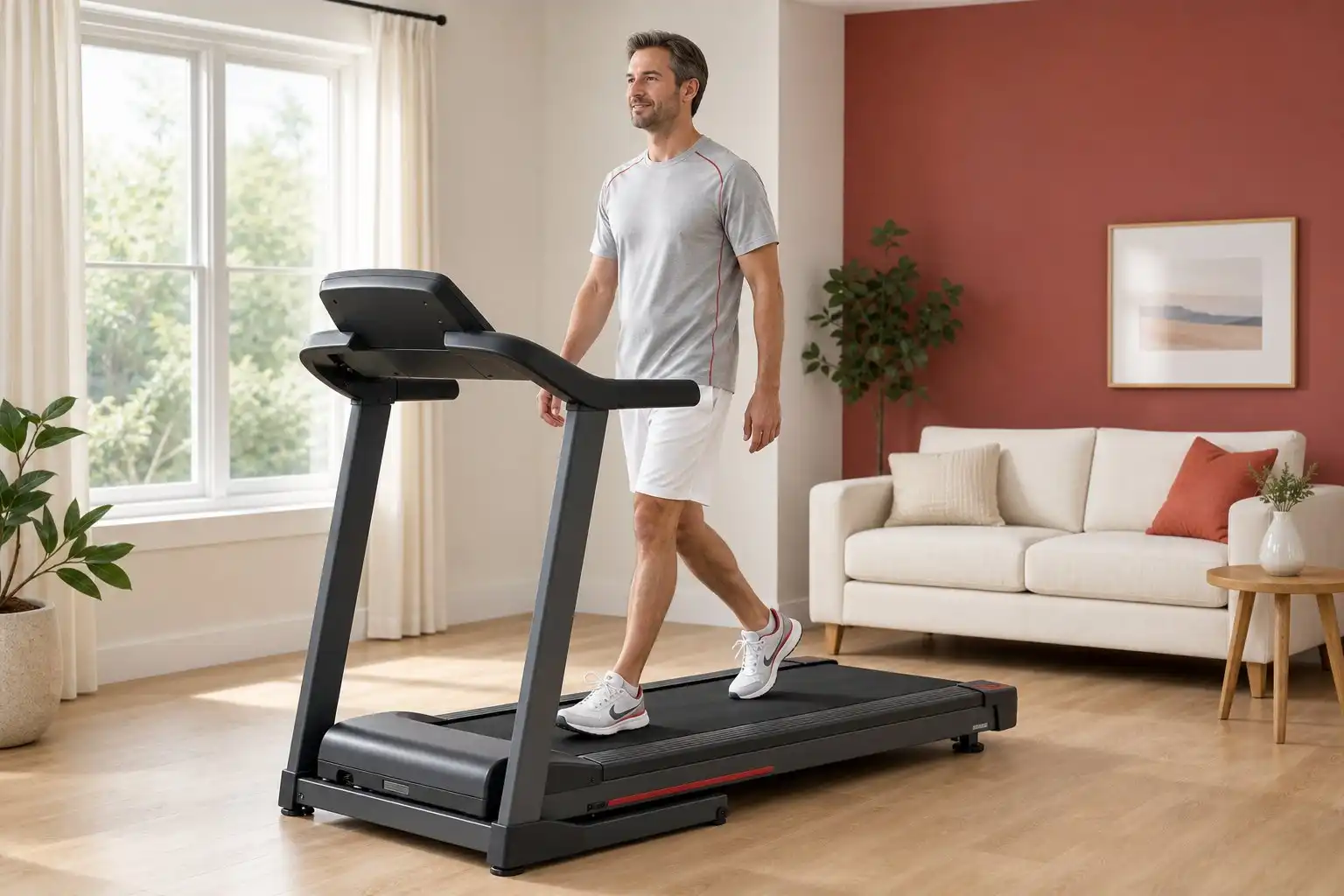
Best Treadmill for Walking: 5 Standout Home Picks for 2026
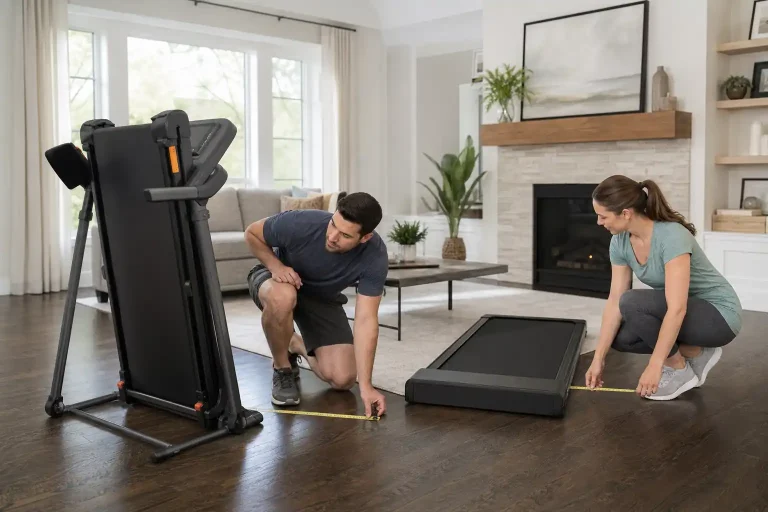
Treadmill Buying Guide (2026): How to Choose the Right Home Treadmill
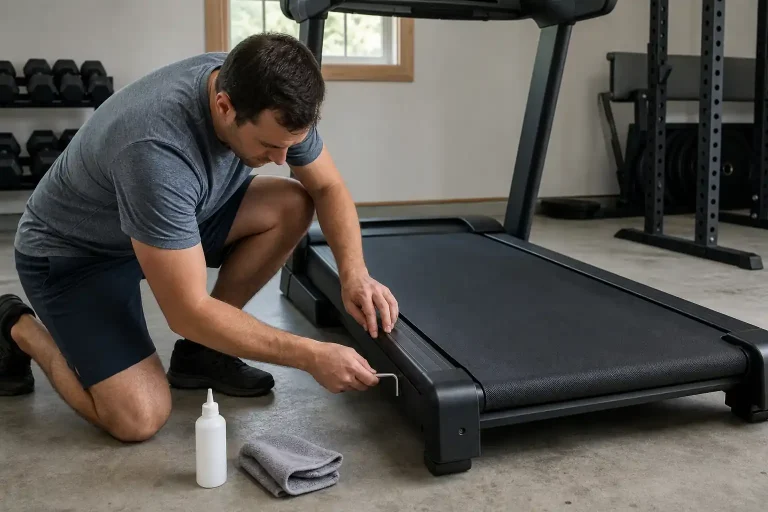
How to Maintain a Treadmill (2026): The Complete Home Care Guide
This article contains affiliate links. If you click through and make a purchase, we may earn a small commission at no extra cost to you. As an Amazon Associate, we earn from qualifying purchases. We do not show prices because they change constantly: product details and availability can change at any time, so please check the current price and details directly on Amazon. Learn more. Amazon and the Amazon logo are trademarks of Amazon.com, Inc. or its affiliates.
