

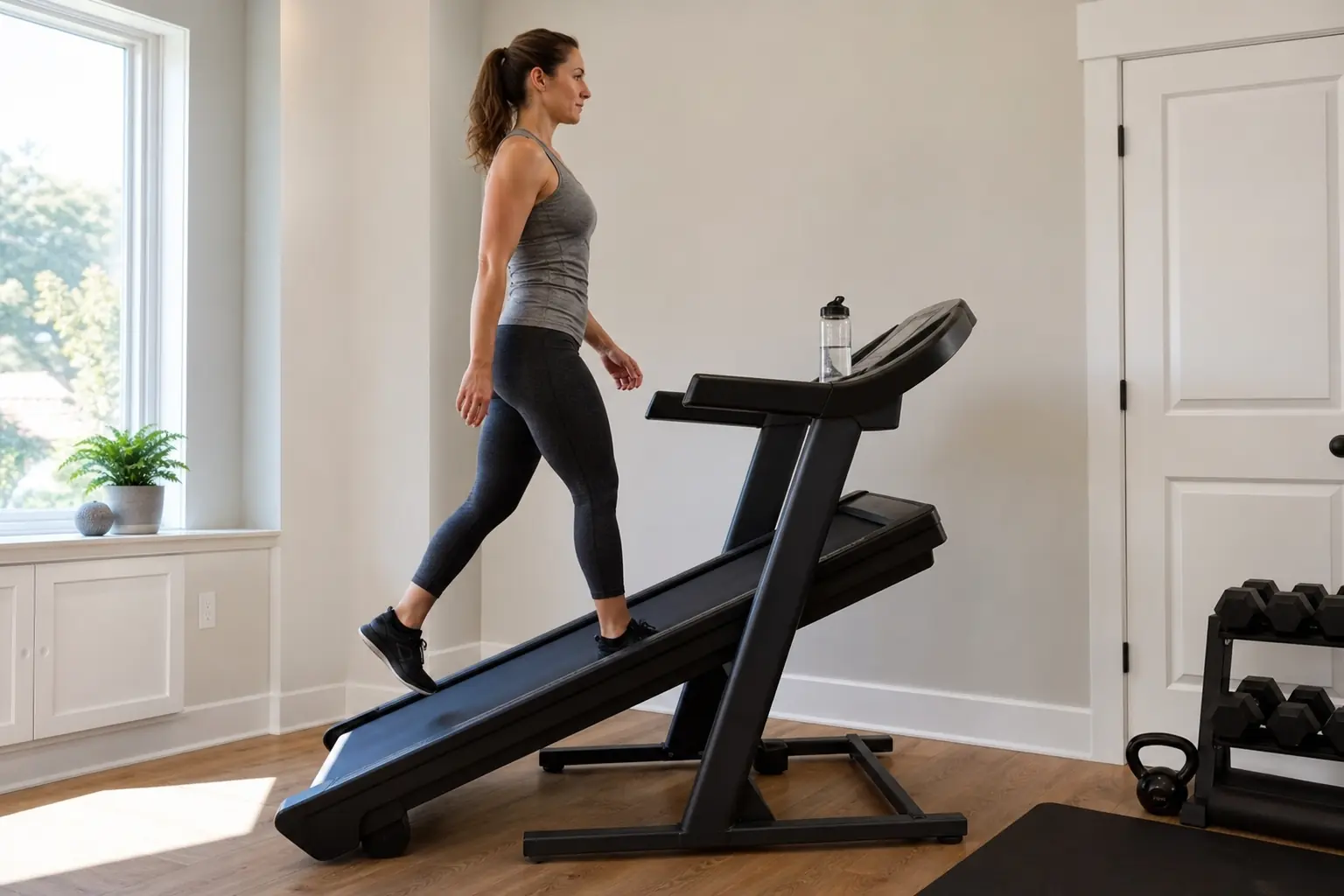
Short answer
The 12-3-30 treadmill workout is walking at a 12% incline and 3 mph for 30 minutes. In a lab study, recreationally active adults burned about 308 calories on average per session. Build up over several weeks from a lower incline, avoid leaning on the rails, and use a treadmill that reaches at least 12%, ideally 15%.
Key takeaways
- 12-3-30 means 12% incline, 3 mph and 30 minutes of steady walking.
- In a lab study it burned about 308 calories on average, about 10 per minute.
- Running burns the same energy faster; 12-3-30 is the lower-impact option, not a shortcut.
- Build up from 4% to 6% incline and add time and grade week by week.
- Check with your doctor first if you have heart, lung, metabolic or joint conditions or are pregnant.
- A treadmill rated to 15% with a 50- to 60-inch deck gives room to progress safely.
The 12-3-30 workout spread through YouTube and TikTok because it is easy to remember and needs no running: set the incline to 12%, the speed to 3 mph and walk for 30 minutes. Fans like that it feels hard without the pounding of running. Critics point out that a steep, fixed workout is not right for every beginner.
This guide explains what the 12-3-30 really is, what the first peer-reviewed study found, how to build up to it safely, how to progress once it feels easy and which treadmills from our guides handle 12% at 3 mph. If you are shopping for an incline machine, start with our best treadmill with incline guide.
What Is the 12-3-30 Treadmill Workout?
The 12-3-30 is a single, steady incline walk: 12% grade, 3 mph (about 4.8 km/h) and 30 minutes, with no intervals. According to the University of Nevada, Las Vegas research team, it was popularized by influencer Lauren Giraldo, who described doing it about five days a week. The appeal is simplicity: one setting, one duration, nothing to program.
At 3 mph, a mile takes 20 minutes, so a full session covers 1.5 miles. The work comes from climbing: a 12% grade means the deck rises 12 units for every 100 units of horizontal distance. Over 1.5 miles that adds up to a lot of vertical effort for your calves, hamstrings and glutes. Thirty minutes five days a week also equals the CDC goal of 150 minutes of moderate-intensity activity per week, though the 12-3-30 is often harder than moderate for new exercisers.
What the Research Says About 12-3-30
The first peer-reviewed study of the routine, published in the International Journal of Exercise Science in 2025, tested 16 regularly active adults with a mean age of about 25. Fourteen completed both sessions. Participants did a full 12-3-30 without holding the handrails, then ran at their own pace on a flat treadmill until they burned the same number of calories. The results were clear: 12-3-30 burned about 308 calories in 30 minutes, or about 10.2 calories per minute, while running burned the same amount in about 24 minutes at about 13.1 calories per minute.
The incline walk used a higher share of fat for fuel, about 41% versus 33% for running. The authors stress that this does not mean more fat loss on its own: weight loss depends mainly on total energy balance. They also note that the sample was small and mostly college-aged, that the study measured single sessions rather than long-term results, and that holding the rails, which the original program allows, could change the intensity.
In plain terms, 12-3-30 is a solid, joint-friendly calorie burn, but running gets the same energy cost done faster. If you prefer walking, have no running background or want lower impact, it is a reasonable choice. Our best treadmill for weight loss guide covers machines suited to both styles.
Pro tip: The 308-calorie figure is an average for participants weighing about 166 lb. In the same study, women averaged about 254 calories and men about 337, so treat any calorie number on your console as an estimate.
How Hard Is 12-3-30? Intensity by Incline
Exercise intensity is often expressed in METs, where 1 MET is resting energy use. The American College of Sports Medicine walking equation estimates oxygen use from treadmill speed and grade, and it has been shown to stay reasonably accurate at higher grades. We used it to calculate the table below. The numbers are estimates for an average person and assume you do not hold the rails.
The jump is striking. Walking flat at 3 mph is about 3.3 METs. Raising the deck to 12% at the same speed more than doubles it, to about 8.3 METs. That is why 12-3-30 can feel easy for the first five minutes and very hard by minute 20, and why building up gradually makes sense.
| Speed | Incline | Estimated METs |
|---|---|---|
| 3.0 mph | 0% | 3.3 |
| 3.0 mph | 4% | 5.0 |
| 3.0 mph | 8% | 6.6 |
| 2.5 mph | 12% | 7.1 |
| 3.0 mph | 10% | 7.4 |
| 3.0 mph | 12% | 8.3 |
| 3.5 mph | 12% | 9.5 |
| 3.0 mph | 15% | 9.5 |
Check Amazon for current pricing and availability.
How to Start: A 4-Week Build-Up to 12-3-30
If you are new to incline walking, do not start at 12% for 30 minutes. A gradual ramp lets your calves, Achilles tendons and lower back adapt and keeps the first sessions enjoyable. The plan below is an example, not a prescription: hold the speed at 3 mph and add incline and time only when the previous week felt controlled.
Use the CDC talk test as your guide. At moderate effort you can talk but not sing; at vigorous effort you cannot say more than a few words without pausing for breath. If you hit that point early in a session, lower the incline by 2% and finish the time. Warm up for three to five minutes on a flat or 1% to 2% deck first, and cool down the same way.
- Do three sessions a week with a rest or easy day between them.
- Walk tall and take shorter steps rather than leaning forward.
- Keep your hands off the rails except for balance, then let go again.
- Wear supportive shoes and keep water within reach.
| Week | Speed | Incline | Duration | Est. METs (top incline) |
|---|---|---|---|---|
| Week 1 | 3.0 mph | 4% to 6% | 15 to 20 min | 5.4 |
| Week 2 | 3.0 mph | 6% to 8% | 20 to 25 min | 6.2 |
| Week 3 | 3.0 mph | 8% to 10% | 25 to 30 min | 7.0 |
| Week 4 | 3.0 mph | 10% to 12% | 30 min | 7.9 |
| Week 5+ | 3.0 mph | 12% | 30 min | 8.3 |
12-3-30 Progressions Once It Feels Easy
After a few weeks the standard routine may stop feeling challenging. Change one variable at a time so you can tell what made the difference. The most common progressions are a higher incline, a slightly faster speed or a longer session. By the ACSM equation, 3 mph at 15% or 3.5 mph at 12% both work out to about 9.5 METs, a meaningful step up from 8.3.
You can also mix in short incline intervals: two minutes at 14% to 15%, then two minutes at 10%, repeated through the 30 minutes. This keeps the average close to 12% while adding harder blocks. On a treadmill with handlebar controls, such as the QuickDial speed and incline dials on the Horizon 7.0 AT, these changes take a second and no menus.
More is not always better. Doing the full 12-3-30 every day leaves little recovery for the calves and Achilles. Many people do better with three to four incline days plus a flat walk, a bike session or strength work. The CDC also recommends muscle-strengthening activity at least two days a week.
- Incline: 12% to 13% to 15% at 3.0 mph.
- Speed: 3.0 to 3.2 to 3.5 mph at 12%.
- Duration: 30 to 35 to 40 minutes at 12% and 3.0 mph.
- Intervals: 2 minutes at 14% to 15%, 2 minutes at 10%, for 30 minutes.
Who Should Be Careful With 12-3-30
The 12-3-30 is low impact, but it is not low effort. If you have a heart condition, high blood pressure, diabetes, lung disease or have been inactive for a long time, talk with your doctor before starting a steep incline routine. The UNLV study excluded people with conditions such as diabetes, coronary heart disease and kidney disease, so its results describe healthy, active adults only.
Pregnant women should discuss exercise with their ob-gyn first. ACOG states that healthy pregnant women can usually continue or start regular activity, and it lists warning signs to stop exercising and call the ob-gyn, including dizziness, chest pain, shortness of breath before exercise and calf pain or swelling. Anyone with calf, Achilles, knee or lower-back pain should start at a lower incline and stop if pain builds during or after sessions; our best treadmill for bad knees guide covers cushioned decks.
Stop immediately and call 911 if you feel chest discomfort, pain spreading to the arm, back, neck or jaw, unusual shortness of breath, a cold sweat, nausea or lightheadedness. The American Heart Association lists these as warning signs of a heart attack.
Watch out: Always clip the safety key to your clothing. If you lose your footing on a steep deck, the key pulls out and stops the belt before you drift off the back.
Which Treadmills Handle 12% Incline at 3 mph
Any treadmill that reaches 12% incline and runs at 3 mph can do the workout, but a few details matter. A model that tops out at 12% keeps you at its maximum every session, with no room for the progressions above. A deck of at least 50 inches gives a comfortable stride on a steep grade, and a strong motor and frame handle the steady load of daily incline work. The table lists treadmills from our Best guides that reach at least 12%.
Incline type matters less for 12-3-30 than for intervals, because you set the grade once. Still, motorized incline you can change while walking is safer than a manual setting you must adjust off the belt. For full-size models with long decks, these three picks stand out.
| Treadmill | Max incline | Speed range | Belt | Max user weight |
|---|---|---|---|---|
| Horizon 7.0 AT | 15% | 0.5–12 mph | 20 × 60 in | 325 lb |
| Sole F65 | 15% | 0.5–12 mph | 22 × 60 in | 350 lb |
| Sole F89 | 15% (6% decline) | 0.5–12 mph | 22 × 60 in | 375 lb |
| XTERRA TR75 | 12% | 0.5–12 mph | 20 × 60 in | 350 lb |
| NordicTrack Commercial 1250 | 12% (3% decline) | 0–12 mph | 22 × 60 in | 400 lb |
| Schwinn 815 | 12% | 0.5–12 mph | 20 × 60 in | 325 lb |
| ECHANFIT CTM5518 | 20% | 0.6–12 mph | 20 × 50 in | 500 lb |
| ECHANFIT 5519 | 15% | 0.6–10 mph | 18.1 × 47.2 in | 400 lb |
| BORGUSI CTM5103 | 15% | 0.5–8.5 mph | 17.5 × 45.3 in | 300 lb |
| Trisomy D2 (walking pad) | 15% | 0.6–6 mph | 16 × 37.5 in | 450 lb |
Best for Daily 12-3-30

Sole F65
FitScore 87.7/100
15% incline leaves room to progress, and the wide 22 × 60-inch deck and 350-lb capacity feel stable on steep walks. Read the Sole F65 review.
Ranked in our Best Treadmill With Incline guide
Check Price on AmazonBest Incline Walking
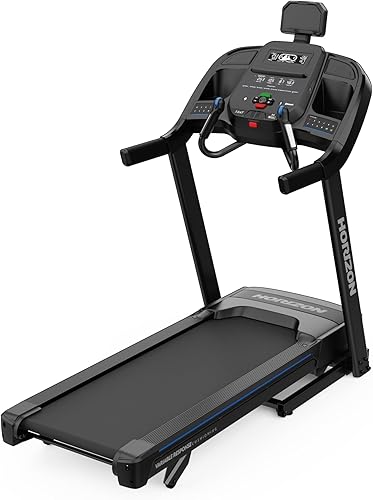
Horizon 7.0 AT
FitScore 77.2/100
Reaches 15% with a 20 × 60-inch cushioned deck and no subscription requirement. See the Horizon 7.0 AT review.
Ranked in our Best Treadmill for Walking guide
Check Price on AmazonBest Value

XTERRA TR75
FitScore 85.5/100
Exactly 12% incline on a 20 × 60-inch deck with a 350-lb capacity, a fit if you will stay at the standard routine. See the XTERRA TR75 review.
Ranked in our Best Treadmill With Incline guide
Check Price on AmazonCompact and Steeper Options for Incline Walking
If space is tight or you want steeper grades than 15%, compact incline treadmills are worth a look. They trade deck length and top speed for footprint, which matters less at 3 mph than it does for running. The ECHANFIT CTM5518 reaches 20%, which turns 12-3-30 into a starting point rather than a ceiling.
Walking pads with incline, such as the Trisomy D2, can also reach 15%, but their short belts, often under 40 inches, leave less room for a natural stride on a steep grade. Our best compact treadmill with incline and best walking pad with incline guides compare them in detail.
Steepest Progression

ECHANFIT CTM5518
FitScore 81.7/100
Motorized incline to 20%, a 20 × 50-inch belt and a 500-lb rating give the most headroom beyond 12%.
Ranked in our Best Incline Trainer guide
Check Price on AmazonBest Compact Pick

ECHANFIT 5519
FitScore 81.8/100
Automatic incline to 15% and 0.6 to 10 mph in a smaller frame with an 18 × 47-inch belt.
Ranked in our Best Compact Treadmill With Incline guide
Check Price on AmazonBest Budget Pick

BORGUSI CTM5103
FitScore 78.2/100
Automatic incline to 15% on a folding frame for walkers who do not need running speeds. Read the BORGUSI CTM5103 review.
Ranked in our Best Compact Treadmill With Incline guide
Check Price on AmazonCommon Mistakes to Avoid
- Starting at 12% for 30 minutes on day one instead of building up over a few weeks.
- Hanging on the handrails, which changes your posture and the workout you are actually doing.
- Doing the full routine every day with no recovery for calves and Achilles tendons.
- Trusting the console calorie number as exact; it is an estimate.
- Buying a treadmill that maxes out at 12% if you plan to progress beyond the standard routine.
The Bottom Line
- The workout is fixed: 12% incline, 3.0 mph, 30 minutes, usually three to five days a week.
- A 2025 University of Nevada, Las Vegas study measured about 10.2 calories per minute and 308 calories per session on average.
- By the ACSM walking equation, 3 mph at 12% is about 8.3 METs, far harder than flat walking at about 3.3 METs.
- Running burned the same calories about six minutes faster in that study, so 12-3-30 is not more efficient, just lower impact.
- Choose a treadmill rated to 15% if you want room to progress; on a 12% model you will train at its maximum.
Our Top Picks
 Best for Daily 12-3-30Sole F65FitScore87.7/100Check on Amazon
- Best Incline WalkingHorizon 7.0 ATFitScore77.2/100Check on Amazon
- Best ValueXTERRA TR75FitScore85.5/100Check on Amazon
- Steepest ProgressionECHANFIT CTM5518FitScore81.7/100Check on Amazon
- Best Compact PickECHANFIT 5519FitScore81.8/100Check on Amazon
- Best Budget PickBORGUSI CTM5103FitScore78.2/100Check on Amazon
Frequently Asked Questions
It can be, but most beginners should build up to it. Start at 4% to 6% incline for 15 to 20 minutes and add incline and time each week until 12% for 30 minutes feels controlled.
A 2025 lab study measured about 308 calories on average for active adults weighing about 166 lb. Lighter people burn less and heavier people more.
Not for calorie burn per minute. In the same study, self-paced running burned the same calories about six minutes faster. 12-3-30 is lower impact and easier to keep up for people who do not like running.
Three to five times a week is common. Five 30-minute sessions match the CDC goal of 150 minutes of moderate activity a week, but leave easier days for recovery.
Use them only for balance. The research measured hands-free walking, and the authors note that holding the rails could change the intensity.
One that reaches at least 12% incline and runs at 3 mph. A 15% model, such as those in our best treadmill with incline guide, leaves room to progress.
Incline walking is low impact, but it loads the calves, Achilles and hips. If you have knee or back pain, start at a lower incline and talk with your doctor or physical therapist.
Explore More Treadmill Guides
Best Treadmill With Incline (2026): Top 5 Picks
Best Incline Trainer (2026): 5 Steep-Incline Picks for Home
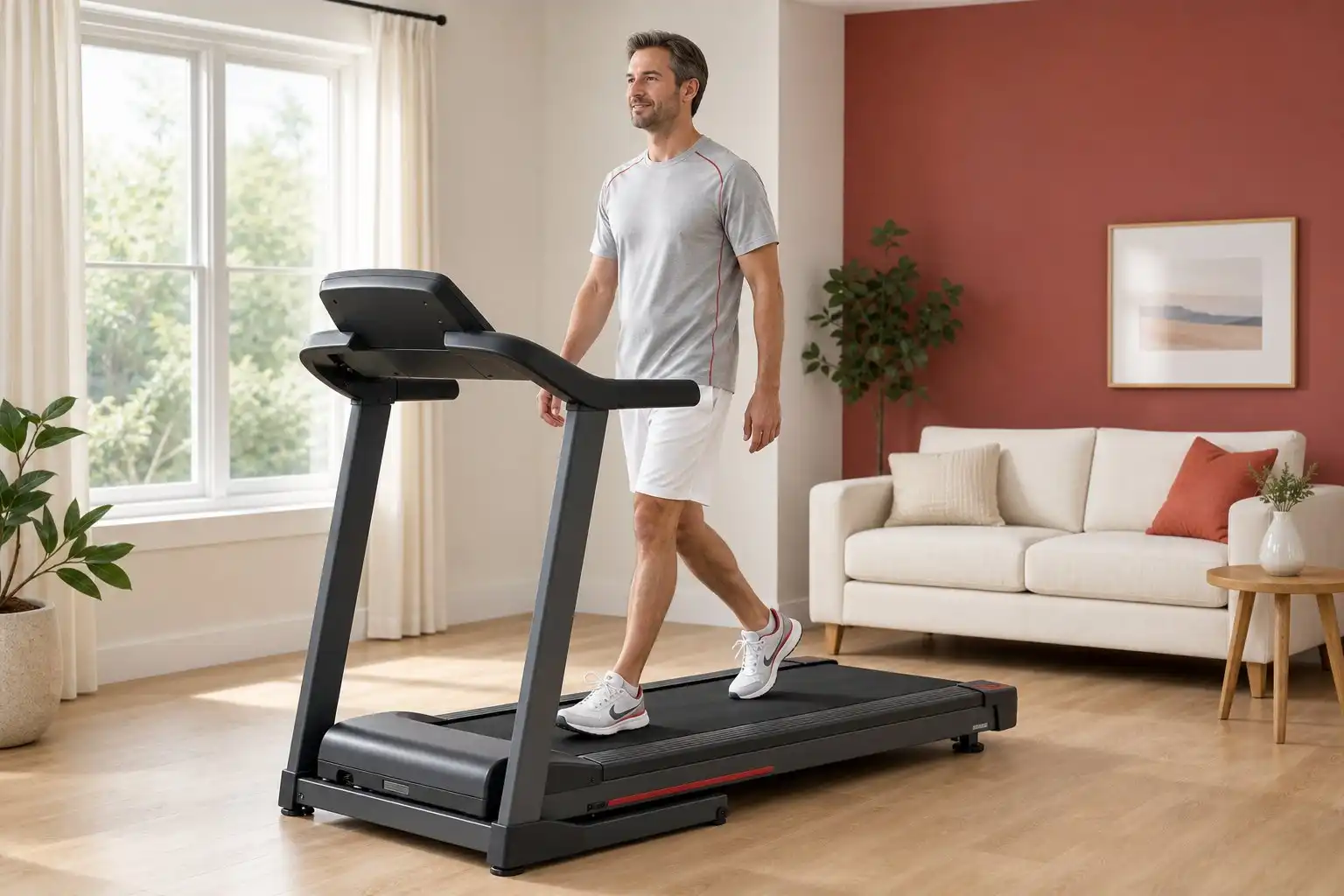
Best Treadmill for Walking: 5 Standout Home Picks for 2026
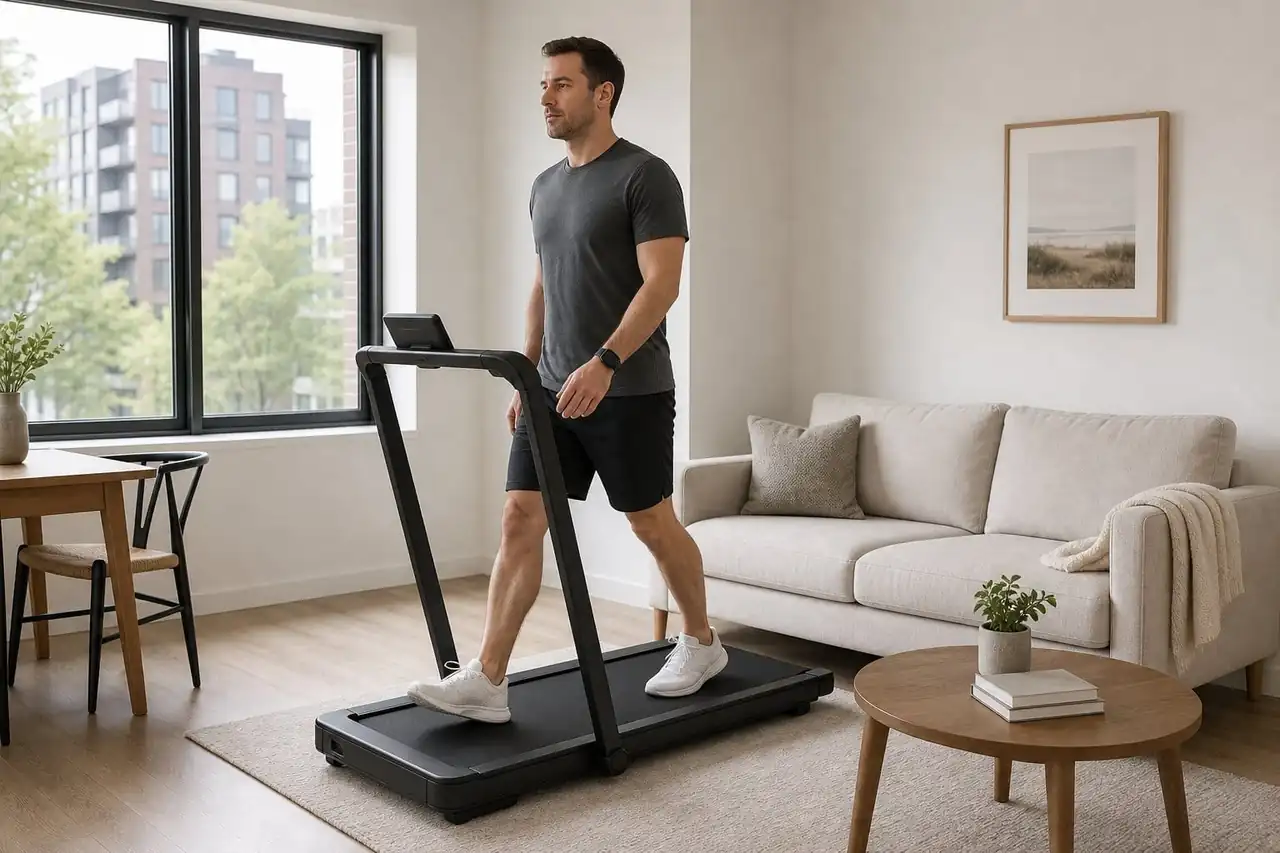
Best Compact Treadmill With Incline (2026): 5 Space-Saving Picks
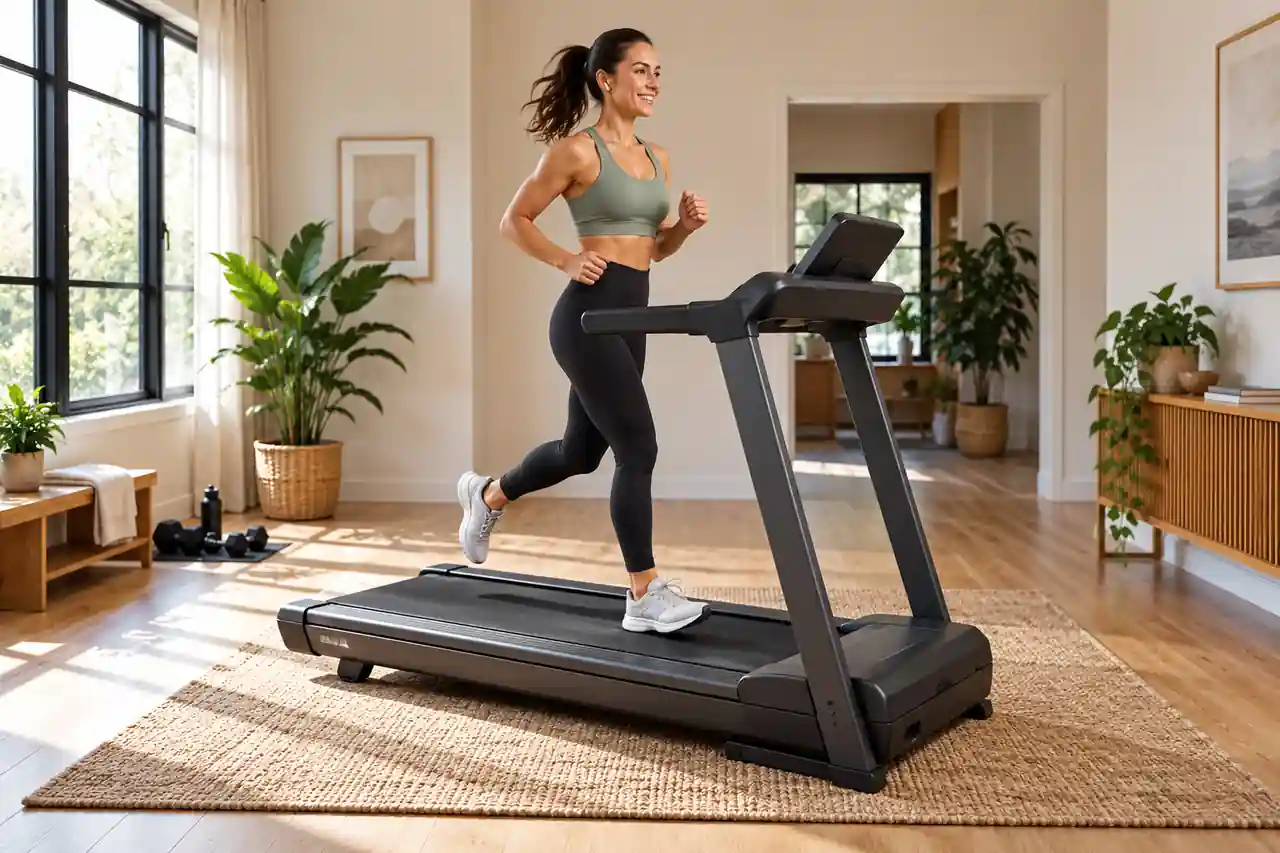
Best Treadmill for Weight Loss (2026): 5 Cardio-Focused Picks
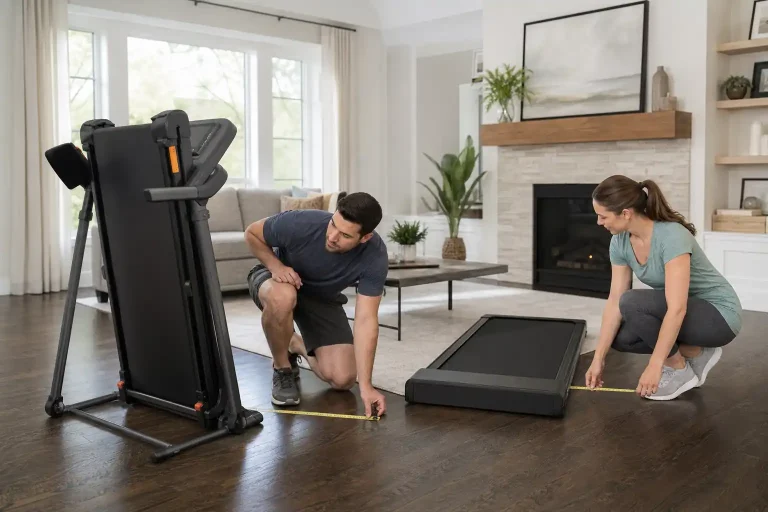
Treadmill Buying Guide (2026): How to Choose the Right Home Treadmill
This article contains affiliate links. If you click through and make a purchase, we may earn a small commission at no extra cost to you. As an Amazon Associate, we earn from qualifying purchases. We do not show prices because they change constantly: product details and availability can change at any time, so please check the current price and details directly on Amazon. Learn more. Amazon and the Amazon logo are trademarks of Amazon.com, Inc. or its affiliates.
