


Short answer
To lose weight on a treadmill, build up to at least 150 minutes a week of brisk walking or 75 minutes of running, then add more time or incline as you adapt. Federal guidelines say many people need more than 150 minutes, and exercise works best combined with healthy eating, which a healthcare professional can guide.
Key takeaways
- Build up to at least 150 minutes of brisk walking or 75 minutes of running a week.
- Many people need more than 150 minutes to maintain weight, and more than 300 to lose a substantial amount.
- Incline walking raises effort without the impact of running.
- Increase time, speed or incline gradually, one at a time.
- Add two strength sessions a week to help preserve lean mass.
- Pair the treadmill with healthy eating guided by a healthcare professional.
A treadmill is one of the most practical tools for weight loss because it removes the usual excuses: weather, darkness, traffic and uneven sidewalks. What it cannot do is work by itself. The people who see results are the ones who use it often, build up gradually and pair the exercise with eating habits they can keep. This guide sticks to what public health agencies actually recommend and turns it into weekly treadmill plans you can follow.
You will find activity targets from the Centers for Disease Control and Prevention (CDC), a 12-week plan for walkers, a run-walk plan for runners, a section on incline walking and the safety points that matter most. We do not give diet or calorie-deficit targets here; that part belongs with your doctor or a registered dietitian. If you still need a machine, start with our best treadmill for weight loss guide.
What a Treadmill Can and Cannot Do for Weight Loss
Exercise helps with weight in two ways: it raises the number of calories your body uses, and it helps you keep weight off once you lose it. The CDC puts it plainly on its physical activity and weight page: getting to and staying at a healthy weight requires both regular physical activity and healthy eating patterns. The Physical Activity Guidelines for Americans add that combining calorie restriction with physical activity tends to work better for weight loss than either one alone.
So treat the treadmill as the activity half of the plan, the half it makes easier to do consistently. The same guidelines stress that regular activity brings major health benefits no matter how body weight changes.
Be skeptical of anything that sounds too good. The National Institutes of Health (NIH) warns about weight-loss programs that promise results such as large losses in a few weeks or weight loss without diet or exercise. A treadmill routine is slower and less dramatic, and that is the point: it is something you can keep doing for years.
How Much Treadmill Exercise Do You Need?
Start with the baseline. The CDC activity guidelines for adults call for at least 150 minutes a week of moderate-intensity activity such as brisk walking, or 75 minutes of vigorous activity such as jogging or running, or an equal mix of the two. They also recommend muscle-strengthening activity on at least 2 days a week.
For weight loss, the baseline is often not enough. The Physical Activity Guidelines say many people need more than the equivalent of 150 minutes of moderate activity a week just to maintain their weight, and that people who want to lose a substantial amount of weight (more than 5 percent of body weight) or keep it off may need more than 300 minutes a week. They also note that vigorous activity can be more time-efficient for burning calories than moderate activity.
In treadmill terms, 150 minutes is five 30-minute brisk walks, and 300 minutes is about 45 minutes on six or seven days. Nobody needs to start there; the plans below build up over 12 weeks, and some activity is better than none. Our best treadmill for walking guide covers machines comfortable enough for long sessions.
| Goal | Moderate (brisk walking) | Vigorous (jogging or running) | Example treadmill week |
|---|---|---|---|
| Health baseline | 150 min/week | 75 min/week | 5 × 30 min brisk walk |
| Maintaining weight (many people) | More than 150 min/week | More than 75 min/week | 5 × 40 min, or 3 walks + 2 jogs |
| Losing a substantial amount or keeping it off | More than 300 min/week (may be needed) | More than 150 min/week | 6 × 50 min, or 4 walks + 2 longer jogs |
| Strength (all goals) | At least 2 days/week | At least 2 days/week | Two 20 to 30 min bodyweight or weight sessions |
Check Amazon for current pricing and availability.
Setting Your Intensity: Speed, Incline and the Talk Test
The Physical Activity Guidelines define walking at 2 mph or slower as light intensity, brisk walking at roughly 2.5 to 4 mph as moderate, and jogging or running as vigorous. Those speeds are a guide, not a rule: a less fit person can reach moderate effort at a lower speed, especially with some incline.
The simplest check is the talk test from the same guidelines: during moderate activity you can talk but not sing, and during vigorous activity you cannot say more than a few words without pausing for breath. A heart rate monitor helps if you like numbers; our best treadmill with heart rate monitor guide covers models with chest strap support.
| Intensity | Talk test | Example treadmill settings | Counts toward |
|---|---|---|---|
| Light | Easy conversation, could sing | 1.5–2.0 mph, 0–1% incline | Warm-up, cool-down, sitting less |
| Moderate | Can talk, cannot sing | 2.5–4.0 mph flat, or 2.0–3.0 mph with 3–8% incline | 150 to 300 min weekly target |
| Vigorous | Only a few words per breath | Jogging or running, or steep incline walking | Each minute counts as about two moderate minutes |
Pro tip: Change one variable at a time. Add 0.1 to 0.2 mph or 1 to 2% incline, hold it for a week, then decide whether to add more.
A 12-Week Treadmill Walking Plan for Weight Loss
This plan is for beginners and anyone returning after a break. It follows the guidelines advice to start with short, light or moderate sessions and increase gradually over weeks to months. If week 1 feels like too much, use the guidelines own example: 5 minutes of walking several times a day, building to 10 minutes three times a day.
Warm up and cool down with 3 to 5 minutes of easy walking. Speeds and inclines are examples; set your own with the talk test and repeat any block you are not ready to leave. Week 6 reaches the 150-minute baseline.
- Split sessions are fine: two 20-minute walks count the same as one 40-minute walk.
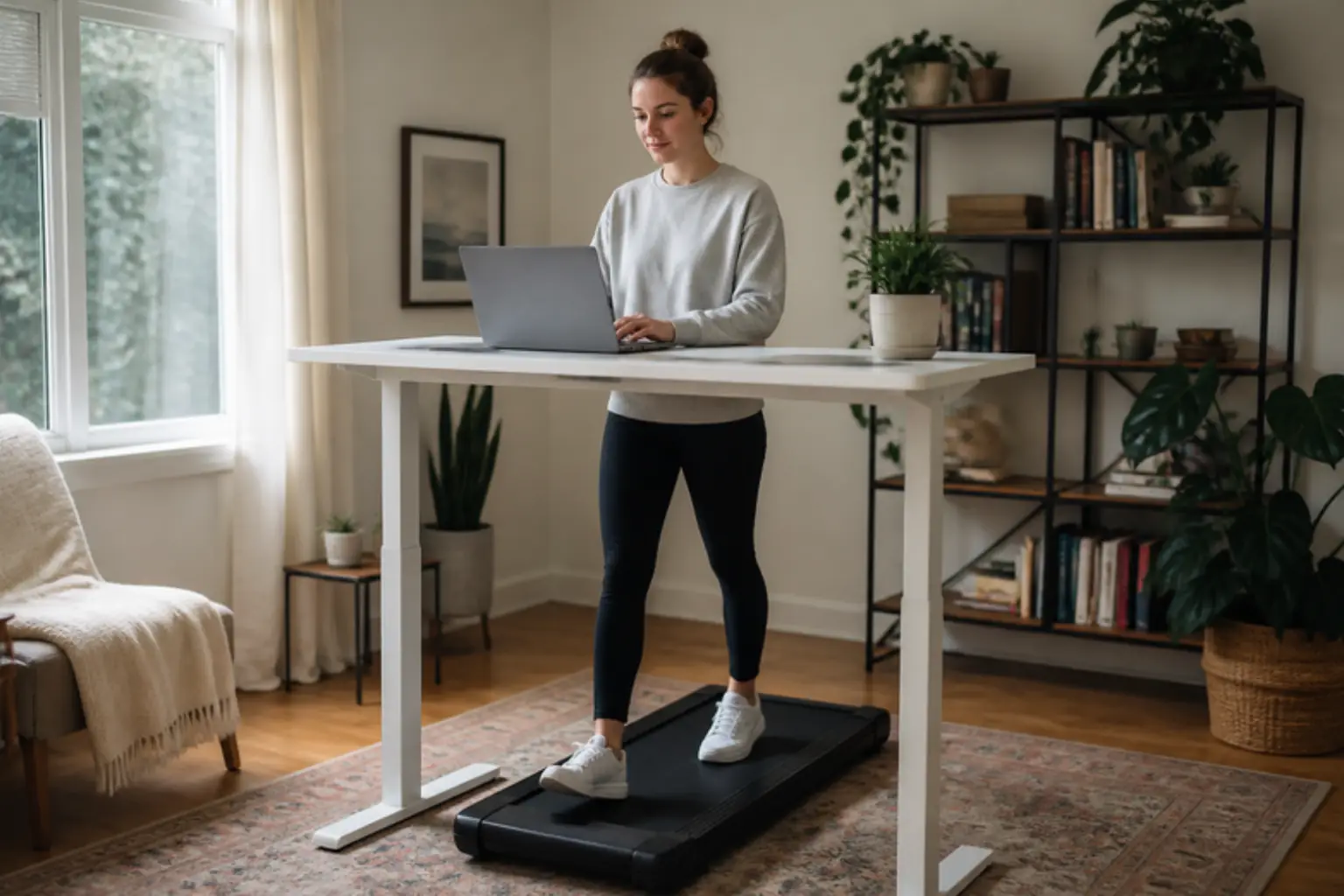
- A walking pad under a desk adds light activity but does not replace brisk walks.
| Weeks | Sessions per week | Each session | Approx. weekly minutes |
|---|---|---|---|
| 1–2 | 5 | 10–15 min easy to brisk walk, 2.0–2.5 mph, 0–1% incline | 50–75 |
| 3–4 | 5 | 20 min brisk walk, 2.5–3.0 mph, 1% incline | 100 |
| 5–6 | 5 | 30 min brisk walk, 2.8–3.3 mph, 1–2% incline | 150 |
| 7–8 | 5 | 35 min; on 2 days add 3 × 3 min at 4–6% incline | 175 |
| 9–10 | 5–6 | 40 min; on 2 days alternate 2 min at 6–8% incline with 2 min at 1% | 200–240 |
| 11–12 | 5–6 | 45–50 min; one longer walk of 60 min if it feels good | 225–300 |
Best for Walking
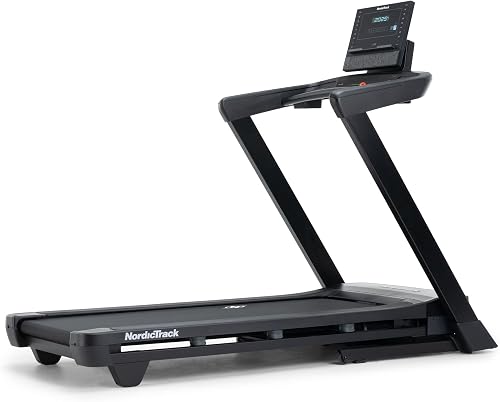
NordicTrack T Series 7
FitScore 78.9/100
Our top walking pick: a 2.6 HP motor and 20 x 55-inch belt with a 300 lb capacity; iFIT classes need a paid membership.
Ranked in our Best Treadmill for Walking guide
Check Price on AmazonBest Incline Walking
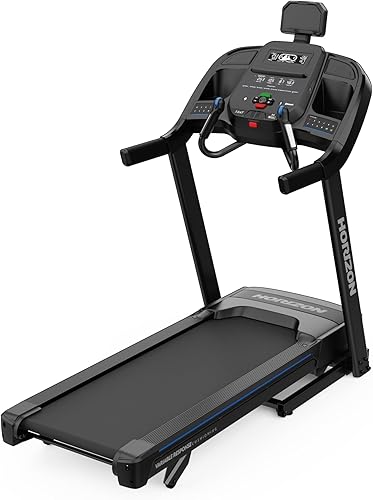
Horizon 7.0 AT
FitScore 77.2/100
A 3 HP motor and 20 x 60-inch belt, lifetime frame and motor coverage, and no subscription required.
Ranked in our Best Treadmill for Walking guide
Check Price on AmazonLightest Pick
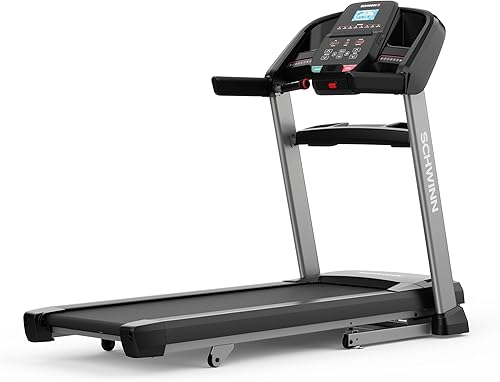
Schwinn Fitness 815
FitScore 75.5/100
A folding 3 HP treadmill with a 20 x 60-inch belt and 325 lb capacity that works with third-party apps.
Ranked in our Best Treadmill for Walking guide
Check Price on AmazonA Treadmill Plan for Runners and Run-Walkers
Running uses more energy per minute than walking, which is why the guidelines count each vigorous minute as roughly two moderate minutes. It is also harder on the body. Start this plan once you can walk briskly for 30 minutes without trouble, and keep two brisk walks in the week for extra minutes with less impact.
The run-walk method alternates short jogs with walking breaks so your legs can adapt. If a session leaves you sore for more than a day or two, repeat the previous week. A 20 x 60-inch deck and good cushioning help; see our best treadmill for running and best treadmill with cushioning guides.
| Weeks | Run sessions (3 per week) | Other days | Approx. weekly load |
|---|---|---|---|
| 1–2 | 8 × (1 min jog at 4.5–5.0 mph + 2 min walk) | 2 brisk walks of 30 min | ~75 min mixed + 60 min walking |
| 3–4 | 8 × (2 min jog + 1 min walk) | 2 brisk walks of 30 min | ~75 min mixed + 60 min walking |
| 5–6 | 5 × (4 min jog + 1 min walk) | 2 brisk walks of 30–40 min | ~75 min mixed + 70 min walking |
| 7–8 | 20 min continuous easy jog | 2 brisk walks or incline walks | 60 min running + 70 min walking |
| 9–10 | 25–30 min easy jog; one session as 6 × (1 min faster + 2 min easy) | 2 incline walks of 40 min | ~85 min running + 80 min walking |
| 11–12 | 30–40 min easy jog; keep one interval session | 2 incline walks of 40–45 min | ~100 min running + 85 min walking |
Watch out: Do not add speed, incline and session length in the same week. Sudden jumps in training load are a common route to sore shins and knees. Stop and seek care for chest pain, dizziness or unusual shortness of breath.
Best for Running

Horizon 7.4 AT
FitScore 89.9/100
A 3.5 HP motor and roomy 22 x 60-inch deck with lifetime frame and motor coverage and 5-year parts.
Ranked in our Best Treadmill for Running guide
Check Price on AmazonBest Overall for Weight Loss

XTERRA Sport Series TR75
FitScore 80.8/100
Our top weight-loss pick: a 3 HP motor, 20 x 60-inch belt and 350 lb capacity with lifetime frame and motor coverage.
Ranked in our Best Treadmill for Weight Loss guide
Check Price on AmazonBest Stability Pick

Sole F65
FitScore 78.9/100
A wide 22 x 60-inch belt, 3 HP motor and 350 lb capacity for steady run-walk sessions.
Ranked in our Best Treadmill for Weight Loss guide
Check Price on AmazonIncline Walking: Work Harder Without Running
Incline is the most useful setting for weight-loss walking. Lifting your body uphill takes extra energy at the same speed, so you can reach moderate or even vigorous effort without the impact of running. The American College of Sports Medicine (ACSM) walking equation, reproduced in a 2020 validation study, reflects this: it adds a vertical term that grows with both speed and grade.
Using that equation, a 160 lb person walking at 3.0 mph burns an estimated 126 calories in 30 minutes on a flat belt and about 220 calories at a 6% incline. Treat these as rough estimates, not promises; real values vary with fitness, body composition and walking style. The same study notes that equation-based estimates run high when people lean heavily on the handrails, so let go once you are steady.
Steep grades load the calves, Achilles tendons and lower back, so build up over several weeks. For very steep walking, see our best incline trainer and best treadmill with incline guides.
- Start at 1–3% and add 1–2% per week if the talk test allows.
- Shorten your stride and stay upright rather than leaning forward.
- Lower the speed when you raise the incline; steep and slow is still hard work.
Consistency, Recovery and Strength Training
Results come from months of steady work, not one hard week. Keep the treadmill where you will see it, plan sessions like appointments and log weekly minutes. Watching minutes climb is more within your control than daily weigh-ins.
Strength training belongs in the plan too. The guidelines recommend muscle-strengthening activity on at least 2 days a week and note that it helps maintain lean body mass during weight loss. Two short sessions of squats, lunges, push-ups and rows on non-running days are enough to start.
Good shoes, one easier day a week and enough sleep reduce the soreness that derails plans. If space or noise gets in the way, our best quiet treadmill and best folding treadmill guides cover machines for apartments and shared homes.
Safety and When to Talk to a Healthcare Professional
The Physical Activity Guidelines say healthy adults who increase activity gradually generally do not need to see a doctor first. People with chronic conditions or symptoms, and people who are pregnant, should be under the care of a healthcare provider and can ask what types and amounts of activity suit them.
For eating, the NIH suggests talking with your healthcare professional, who may refer you to a registered dietitian; that is the place for questions about calories or meal plans. If food, weight or exercise starts to feel compulsive or distressing, tell your doctor; support is available.
Treadmill safety matters at home. Clip the safety key to your clothing, straddle the belt when you start it and keep children and pets away from the machine. The U.S. Consumer Product Safety Commission documented children and pets pulled under a treadmill and advised owners of that model to unplug it and store the safety key out of reach when not in use. For heavier users, a frame rated well above your weight adds stability; see our best treadmill for heavy people guide.
Treadmill Weight-Loss Checklist
- Set a weekly minutes goal, starting where you are and building toward 150 minutes or more.
- Use the talk test to keep walking days at a moderate effort.
- Change only one variable per week: speed, incline or time.
- Add incline walking once 30-minute brisk walks feel easy.
- Schedule two strength sessions a week.
- Talk to a healthcare professional about diet and any health conditions.
- Clip on the safety key and keep children and pets away from the belt.
Common Mistakes to Avoid
- Starting with long, fast or steep sessions and quitting after a sore week.
- Holding the handrails tightly on incline, which lowers the effort and strains posture.
- Relying on console calorie numbers as exact figures.
- Expecting exercise alone to offset eating habits.
- Judging progress by daily weigh-ins instead of weeks of consistent activity.
The Bottom Line
- CDC baseline: 150 minutes of brisk walking or 75 minutes of jogging a week.
- Federal guidelines note that losing a substantial amount of weight may take more than 300 minutes of moderate activity a week.
- Brisk walking at roughly 2.5 to 4 mph counts as moderate intensity; adding incline raises the effort without running.
- Muscle-strengthening work on at least 2 days a week helps preserve lean mass during weight loss.
- No treadmill program replaces eating habits; ask a healthcare professional or registered dietitian about diet.
Our Top Picks
 Best for WalkingNordicTrack T Series 7FitScore78.9/100Check on Amazon
- Best Incline WalkingHorizon 7.0 ATFitScore77.2/100Check on Amazon
- Lightest PickSchwinn Fitness 815FitScore75.5/100Check on Amazon
- Best for RunningHorizon 7.4 ATFitScore89.9/100Check on Amazon
- Best Overall for Weight LossXTERRA Sport Series TR75FitScore80.8/100Check on Amazon
- Best Stability PickSole F65FitScore78.9/100Check on Amazon
Frequently Asked Questions
Aim for at least 150 minutes a week of brisk walking, such as 30 minutes five days a week. Federal guidelines note many people need more than that, and losing a substantial amount of weight may take more than 300 minutes a week.
Both work. Running uses more energy per minute, so it is more time-efficient, while brisk or incline walking is easier on the joints and easier to sustain. The best choice is the one you will do consistently.
Incline walking raises the energy cost of walking at the same speed, so it helps you reach moderate or vigorous effort without running. Build up the grade gradually to protect your calves and back.
Exercise helps, but the CDC says reaching and keeping a healthy weight takes both regular activity and healthy eating. A healthcare professional or registered dietitian can help with the eating side.
They are estimates based on formulas and the weight you enter, if any. Use them to compare your own sessions, not as exact numbers.
Healthy adults who build up gradually usually do not, according to federal guidelines. Talk to a healthcare provider first if you have a chronic condition, symptoms such as chest pain or are pregnant.
Explore More Treadmill Guides
Best Treadmill for Weight Loss (2026): 5 Cardio-Focused Picks
Best Treadmill for Walking: 5 Standout Home Picks for 2026
Best Incline Trainer (2026): 5 Steep-Incline Picks for Home
Best Treadmill for Beginners: 5 Reliable Home Models for 2026
Best Walking Pad (2026): 5 Picks for Home and Under-Desk Walking
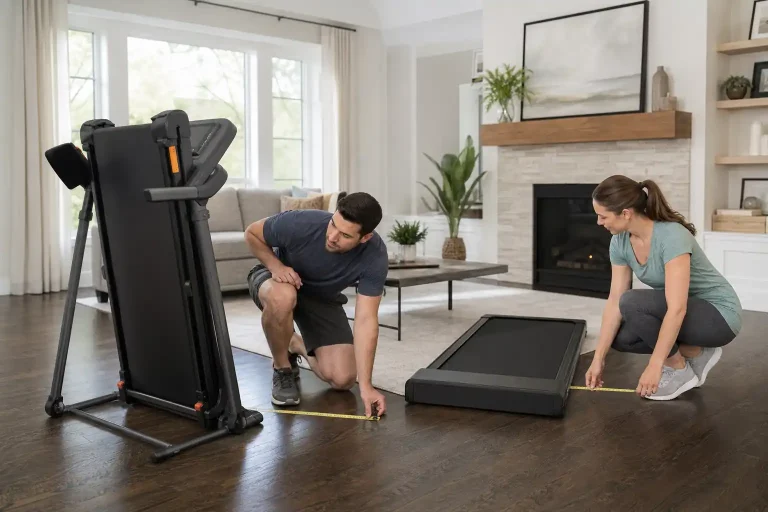
Treadmill Buying Guide (2026): How to Choose the Right Home Treadmill
This article contains affiliate links. If you click through and make a purchase, we may earn a small commission at no extra cost to you. As an Amazon Associate, we earn from qualifying purchases. We do not show prices because they change constantly: product details and availability can change at any time, so please check the current price and details directly on Amazon. Learn more. Amazon and the Amazon logo are trademarks of Amazon.com, Inc. or its affiliates.
