

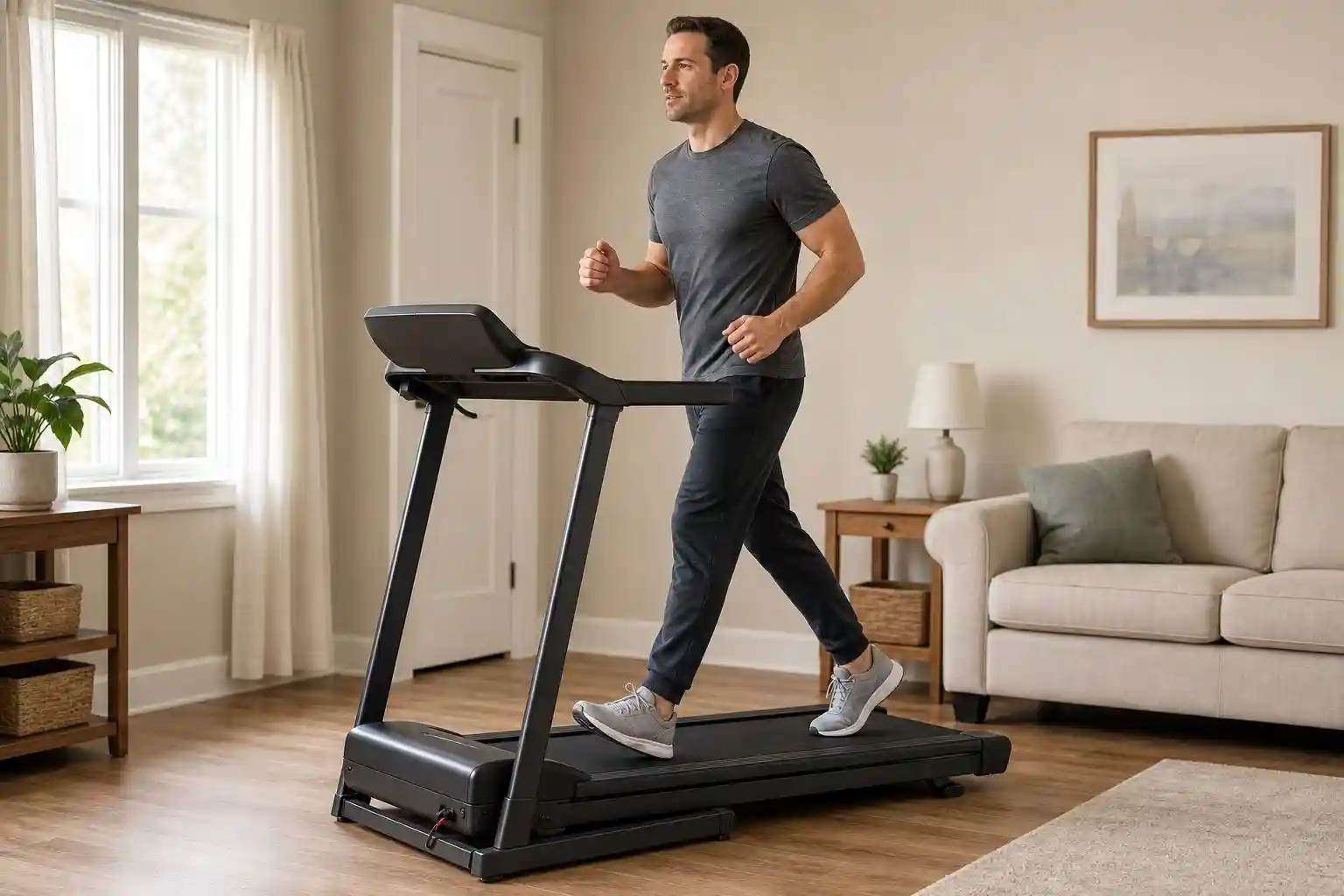
The Best Treadmill for Cardio should support both steady aerobic sessions and harder efforts without forcing you to compromise on deck space or durability. Sole F89 ranks first here at 86.6/100, followed by Horizon 7.4 AT at 84.6. For most buyers, the decision comes down to whether you want the F89’s stronger all-around performance and feature package or the Horizon’s especially strong durability and stability profile.
If your main goal is lower-intensity consistency, compare our best treadmills for running. If you are building from a lower training base, the marathon-training treadmills may be the better starting point. For broader household use, see our best home treadmills. Buyers who expect more running should also compare the treadmills for heavy runners.
The CDC defines aerobic activity as activity that makes you breathe harder and raises your heart rate. Adults should generally aim for at least 150 minutes of moderate-intensity aerobic activity or 75 minutes of vigorous activity each week, plus muscle-strengthening activity. Regular physical activity is associated with a range of cardiovascular and broader health benefits.
Comparison Table
Sole F89 | Horizon 7.4 AT | NordicTrack Commercial 1750 | XTERRA Sport Series TR75 | ProForm Pro 9000 | |
|---|---|---|---|---|---|
 | 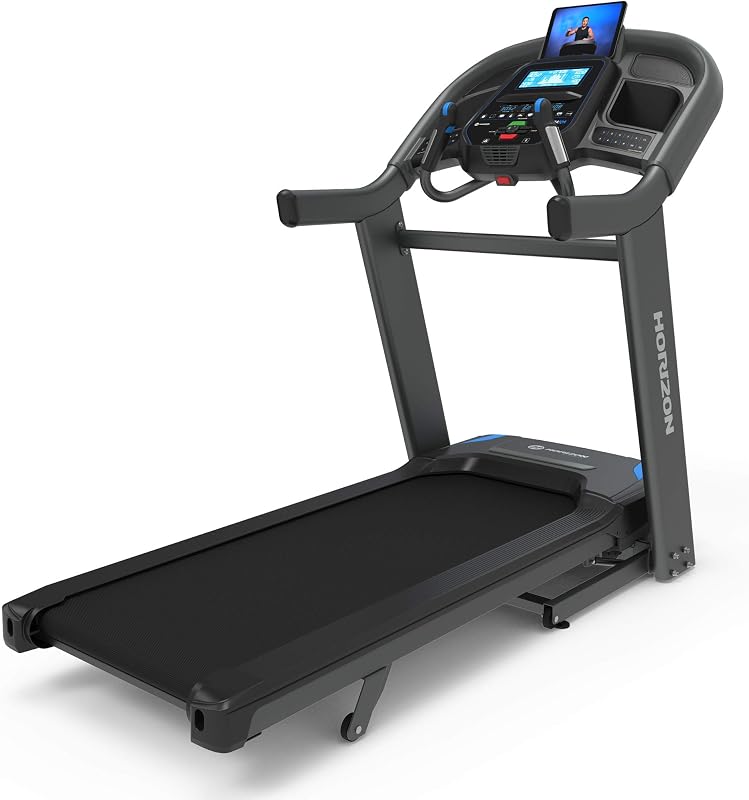 |  |  |  | |
Best For | Best Overall | Best Stability | Best Cushioned Alternative | Best Value | Best Large-Screen Alternative |
FitScore | 86.6/100 | 84.6/100 | 82.1/100 | 81.9/100 | 81.0/100 |
Motor | 4 HP | 3.5 HP | 4.25 HP | 3 HP | 3.6 HP |
Top Speed | 12 mph | 12 mph | 12 mph | 12 mph | 12 mph |
Incline | 15% | 15% | 12% | 12% | 12% |
Running Surface | 22 × 60 in | 22 × 60 in | 22 × 60 in | 20 × 60 in | 20 × 60 in |
Capacity | 375 lb | 350 lb | 400 lb | 350 lb | 350 lb |
Cushioning | Very Good Cushion Flex Whisper Deck | Very Good 3-Zone Variable Response | Very Good RunFlex | Good XTRASoft | Very Good ProShox |
Check Amazon for current pricing and availability.
Key Takeaways
- Best Overall: Sole F89 stands out for steady aerobic sessions.
- Best Stability: Horizon 7.4 AT stands out for steady aerobic sessions.
- Best Cushioned Alternative: NordicTrack Commercial 1750 stands out for steady aerobic sessions.
- Best Value: XTERRA Sport Series TR75 stands out for steady aerobic sessions.
- Best Large-Screen Alternative: ProForm Pro 9000 stands out for steady aerobic sessions.
- How to decide: favor Sole F89 when 4 HP motor gives strong performance headroom matters most; compare Horizon 7.4 AT when 3.5 HP motor supports demanding cardio is the higher priority.
- Before buying: verify the exact model, dimensions, user-weight capacity, warranty terms, and current Amazon availability for the version you are considering.
Best Overall: Sole F89
Sole F89 is the Best Overall because it delivers the strongest overall FitScore for treadmill for cardio with few major compromises. Its FitScore is 86.6/100.
FitScore for Cardio
How this FitScore was calculated
This FitScore combines the six category scores using the weights defined for this guide.
Why Choose This Treadmill
Sole F89 takes the #1 spot because its strengths line up especially well with the buying criteria that matter in this guide. It is especially well suited to steady aerobic sessions, tempo and threshold work, and mixed walking, jogging, and running. It is also a strong fit for most buyers targeting this guide and users wanting full-size cardio capability. The practical advantages that support this position are 4 HP motor gives strong performance headroom, wide 22 × 60 in running surface, and 15% maximum incline expands intensity options. It is a weaker fit for homes where the treadmill must be moved frequently and buyers who want to avoid connected-screen ecosystems. Its main trade-offs are 314 lb item weight makes relocation demanding and wide deck needs more floor space than compact treadmills. Taken together, that balance is why we prefer it as the default choice in this comparison: it covers the core use case more completely than the more specialized alternatives, provided those limitations are not deal-breakers for you.
Best Usage
- Steady aerobic sessions
- Tempo and threshold work
- Mixed walking, jogging, and running
Key Specs
- Motor: 4 HP
- Top speed: 12 mph
- Incline: 15%; decline: 6%
- Running surface: 22 × 60 in
- Weight capacity: 375 lb
For
- Most buyers targeting this guide
- Users wanting full-size cardio capability
- Households expecting regular weekly use
Pros
- 4 HP motor gives strong performance headroom
- Wide 22 × 60 in running surface
- 15% maximum incline expands intensity options
Not For
- Homes where the treadmill must be moved frequently
- Buyers who want to avoid connected-screen ecosystems
- Buyers whose main priority is the smallest possible footprint
Cons
- 314 lb item weight makes relocation demanding
- Wide deck needs more floor space than compact treadmills
- Cushioning is not adjustable
Best Stability: Horizon 7.4 AT
Horizon 7.4 AT is the Best Stability because its durability profile, 350-lb capacity, and 22 × 60-inch deck make stability its clearest advantage. Its FitScore is 84.6/100.
FitScore for Cardio
How this FitScore was calculated
This FitScore combines the six category scores using the weights defined for this guide.
Why Choose This Treadmill
Horizon 7.4 AT earns its place in this shortlist because it solves a more specific set of needs particularly well. It is especially well suited to steady aerobic sessions, tempo and threshold work, and mixed walking, jogging, and running. It is also a strong fit for frequent cardio users and buyers prioritizing a substantial frame. The practical advantages that support this position are 3.5 HP motor supports demanding cardio, wide 22 × 60 in running surface, and 15% maximum incline expands intensity options. It is a weaker fit for homes where the treadmill must be moved frequently and buyers who consider a large touchscreen essential. Its main trade-offs are 318 lb item weight makes relocation demanding and wide deck needs more floor space than compact treadmills. That is why it can be a better choice than the #1 pick when these specific strengths match your priorities more closely, while remaining a less universal choice when they do not.
Best Usage
- Steady aerobic sessions
- Tempo and threshold work
- Mixed walking, jogging, and running
Key Specs
- Motor: 3.5 HP
- Top speed: 12 mph
- Incline: 15%
- Running surface: 22 × 60 in
- Weight capacity: 350 lb
For
- Frequent cardio users
- Buyers prioritizing a substantial frame
- Users wanting a 22-inch belt
Pros
- 3.5 HP motor supports demanding cardio
- Wide 22 × 60 in running surface
- 15% maximum incline expands intensity options
Not For
- Homes where the treadmill must be moved frequently
- Buyers who consider a large touchscreen essential
- Buyers whose main priority is the smallest possible footprint
Cons
- 318 lb item weight makes relocation demanding
- Wide deck needs more floor space than compact treadmills
- Cushioning is not adjustable
Best Cushioned Alternative: NordicTrack Commercial 1750
NordicTrack Commercial 1750 is the Best Cushioned Alternative because it combines a full 22 × 60-inch deck with Very Good RunFlex cushioning and strong running capability. Its FitScore is 82.1/100.
FitScore for Cardio
How this FitScore was calculated
This FitScore combines the six category scores using the weights defined for this guide.
Why Choose This Treadmill
NordicTrack Commercial 1750 earns its place in this shortlist because it solves a more specific set of needs particularly well. It is especially well suited to steady aerobic sessions, tempo and threshold work, and mixed walking, jogging, and running. It is also a strong fit for most buyers targeting this guide and users wanting full-size cardio capability. The practical advantages that support this position are 4.25 HP motor gives strong performance headroom, wide 22 × 60 in running surface, and 12% incline supports hill-based training. It is a weaker fit for buyers who need an ultra-light portable treadmill and buyers who want to avoid connected-screen ecosystems. Its main trade-offs are 265.7 lb item weight is not especially easy to move and wide deck needs more floor space than compact treadmills. That is why it can be a better choice than the #1 pick when these specific strengths match your priorities more closely, while remaining a less universal choice when they do not.
Best Usage
- Steady aerobic sessions
- Tempo and threshold work
- Mixed walking, jogging, and running
Key Specs
- Motor: 4.25 HP
- Top speed: 12 mph
- Incline: 12%; decline: 3%
- Running surface: 22 × 60 in
- Weight capacity: 400 lb
For
- Most buyers targeting this guide
- Users wanting full-size cardio capability
- Households expecting regular weekly use
Pros
- 4.25 HP motor gives strong performance headroom
- Wide 22 × 60 in running surface
- 12% incline supports hill-based training
Not For
- Buyers who need an ultra-light portable treadmill
- Buyers who want to avoid connected-screen ecosystems
- Buyers whose main priority is the smallest possible footprint
Cons
- 265.7 lb item weight is not especially easy to move
- Wide deck needs more floor space than compact treadmills
- Cushioning is not adjustable
Best Value: XTERRA Sport Series TR75
XTERRA Sport Series TR75 is the Best Value because it preserves full-size cardio capability while scoring much better on affordability than the premium leaders. Its FitScore is 81.9/100.
FitScore for Cardio
How this FitScore was calculated
This FitScore combines the six category scores using the weights defined for this guide.
Why Choose This Treadmill
XTERRA Sport Series TR75 earns its place in this shortlist because it solves a more specific set of needs particularly well. It is especially well suited to steady aerobic sessions, tempo and threshold work, and mixed walking, jogging, and running. It is also a strong fit for buyers balancing performance and affordability and users who do not need a premium touchscreen. The practical advantages that support this position are 3 HP motor supports varied home cardio, full-length 20 × 60 in running surface, and 12% incline supports hill-based training. It is a weaker fit for buyers who need an ultra-light portable treadmill and buyers who consider a large touchscreen essential. Its main trade-offs are 216 lb still requires planning for room-to-room moves and 20-inch belt is narrower than the 22-inch leaders. That is why it can be a better choice than the #1 pick when these specific strengths match your priorities more closely, while remaining a less universal choice when they do not.
Best Usage
- Steady aerobic sessions
- Tempo and threshold work
- Mixed walking, jogging, and running
Key Specs
- Motor: 3 HP
- Top speed: 12 mph
- Incline: 12%
- Running surface: 20 × 60 in
- Weight capacity: 350 lb
For
- Buyers balancing performance and affordability
- Users who do not need a premium touchscreen
- Full-size treadmill shoppers
Pros
- 3 HP motor supports varied home cardio
- Full-length 20 × 60 in running surface
- 12% incline supports hill-based training
Not For
- Buyers who need an ultra-light portable treadmill
- Buyers who consider a large touchscreen essential
- Buyers who specifically want the widest 22-inch belt
Cons
- 216 lb still requires planning for room-to-room moves
- 20-inch belt is narrower than the 22-inch leaders
- 5.5-inch LCD is functional rather than immersive
Best Large-Screen Alternative: ProForm Pro 9000
ProForm Pro 9000 is the Best Large-Screen Alternative because its 16-inch touchscreen gives screen-focused buyers a distinct connected-training option. Its FitScore is 81.0/100.
FitScore for Cardio
How this FitScore was calculated
This FitScore combines the six category scores using the weights defined for this guide.
Why Choose This Treadmill
ProForm Pro 9000 earns its place in this shortlist because it solves a more specific set of needs particularly well. It is especially well suited to steady aerobic sessions, tempo and threshold work, and mixed walking, jogging, and running. It is also a strong fit for buyers who want a 16-inch touchscreen and iFIT-oriented households. The practical advantages that support this position are 3.6 HP motor supports demanding cardio, full-length 20 × 60 in running surface, and 12% incline supports hill-based training. It is a weaker fit for buyers who need an ultra-light portable treadmill and buyers who want to avoid connected-screen ecosystems. Its main trade-offs are 218.1 lb still requires planning for room-to-room moves and 20-inch belt is narrower than the 22-inch leaders. That is why it can be a better choice than the #1 pick when these specific strengths match your priorities more closely, while remaining a less universal choice when they do not.
Best Usage
- Steady aerobic sessions
- Tempo and threshold work
- Mixed walking, jogging, and running
Key Specs
- Motor: 3.6 HP
- Top speed: 12 mph
- Incline: 12%
- Running surface: 20 × 60 in
- Weight capacity: 350 lb
For
- Buyers who want a 16-inch touchscreen
- iFIT-oriented households
- Users who still want full-size running capability
Pros
- 3.6 HP motor supports demanding cardio
- Full-length 20 × 60 in running surface
- 12% incline supports hill-based training
Not For
- Buyers who need an ultra-light portable treadmill
- Buyers who want to avoid connected-screen ecosystems
- Buyers whose main priority is the smallest possible footprint
Cons
- 218.1 lb still requires planning for room-to-room moves
- 20-inch belt is narrower than the 22-inch leaders
- Cushioning is not adjustable
How We Selected the Best Treadmills for Cardio
Every treadmill in this shortlist is scored on the same six categories: Performance, Durability, Comfort, Practicality, Features, and Affordability. For this guide the weights are 35% Performance, 15% Durability, 15% Comfort, 10% Practicality, 20% Features, and 5% Affordability. We excluded unavailable products, products carrying an avoid-level trust/editorial flag, and walking pads that do not match the intended treadmill use case. We also keep one model per brand in the Top 5 so the comparison remains genuinely useful.
How to Choose the Best Treadmill for Cardio
- For mixed cardio, prioritize a machine that reaches at least 12 mph and offers meaningful incline adjustment.
- A 60-inch belt is the practical baseline if your cardio may include regular running.
- Choose a wider 22-inch belt if lateral room and running comfort matter more than compactness.
- Connected screens are useful only if they actually change how consistently you train; they are not a substitute for core mechanical capability.
Decision Shortcuts
- Best Overall: Choose Sole F89 if steady aerobic sessions is a priority; look at another pick if homes where the treadmill must be moved frequently applies to you.
- Best Stability: Choose Horizon 7.4 AT if steady aerobic sessions is a priority; look at another pick if homes where the treadmill must be moved frequently applies to you.
- Best Cushioned Alternative: Choose NordicTrack Commercial 1750 if steady aerobic sessions is a priority; look at another pick if buyers who need an ultra-light portable treadmill applies to you.
- Best Value: Choose XTERRA Sport Series TR75 if steady aerobic sessions is a priority; look at another pick if buyers who need an ultra-light portable treadmill applies to you.
- Best Large-Screen Alternative: Choose ProForm Pro 9000 if steady aerobic sessions is a priority; look at another pick if buyers who need an ultra-light portable treadmill applies to you.
Final Verdict
Sole F89 remains our #1 pick in this guide. It offers the strongest overall balance around 4 HP motor gives strong performance headroom, wide 22 × 60 in running surface, and steady aerobic sessions, which is why it is the best starting point for most readers comparing these five models. Horizon 7.4 AT is the alternative to favor when 3.5 HP motor supports demanding cardio matters more than the broader balance of the top pick. The main reason to pass on Sole F89 is if homes where the treadmill must be moved frequently applies to you; in that case, use the Decision Shortcuts above to match a more specialized model to your needs. Otherwise, Sole F89 is the treadmill we would check first.
Frequently Asked Questions About the Best Treadmill for Cardio
A strong cardio treadmill should support the speeds and incline levels you will actually use, provide enough belt space for your stride, and be durable enough for repeated weekly sessions.
Sole F89 ranks first at 86.6/100 because its 4 HP motor, 15% incline, 6% decline, 22 × 60-inch belt, 375-lb capacity, and strong feature set create the best overall balance.
Yes. Horizon 7.4 AT is the better fit when durability, a 350-lb capacity, and a 22-inch-wide deck matter more than the F89’s larger touchscreen and decline range.
No. A touchscreen can improve the training experience, but speed, incline, deck dimensions, comfort, and durability matter more for the underlying workout capability.
XTERRA Sport Series TR75 is the value pick because it combines 12 mph speed, 12% incline, a 350-lb capacity, and a 20 × 60-inch deck with a strong overall FitScore.
Federal guidance generally calls for at least 150 minutes of moderate aerobic activity or 75 minutes of vigorous aerobic activity per week, or an equivalent combination.
This article contains affiliate links. If you click through and make a purchase, we may earn a small commission at no extra cost to you. As an Amazon Associate, we earn from qualifying purchases. Product information, prices, and availability are collected manually and may change at any time. For the most accurate and current details, please check directly on Amazon. Learn more. Amazon and the Amazon logo are trademarks of Amazon.com, Inc. or its affiliates.
