

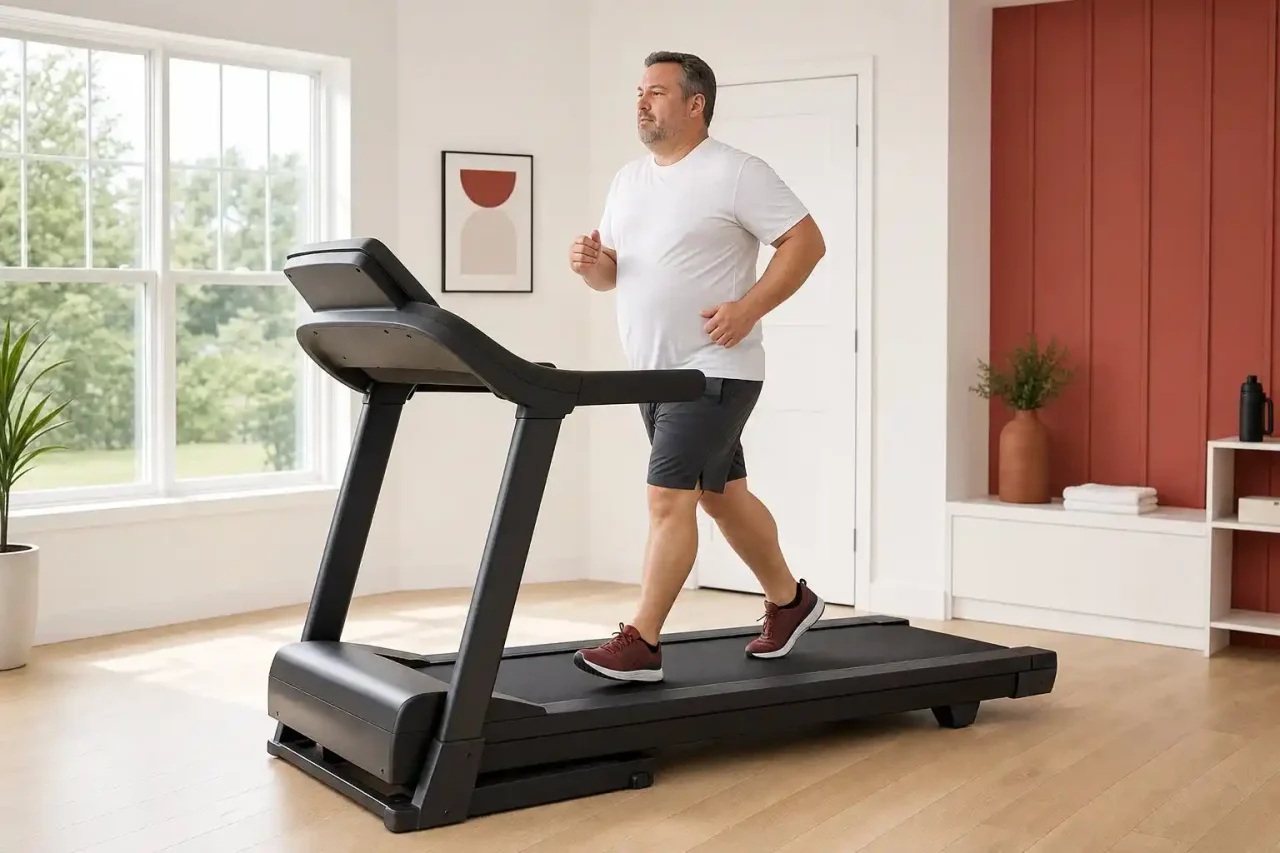
Horizon 7.4 AT is our top treadmill for heavy runners, with a 89.4/100 FitScore in this comparison. User-weight capacity, room for your stride, and suitability for regular running matter more than choosing by maximum speed alone. Compare our treadmills for heavy people when capacity is the primary constraint.
FitScore combines six categories with weights tailored to this guide. Compare scores within this shortlist, then use each model's strengths, limitations, and dimensions to decide which fits your needs. Check the linked Amazon listing for the exact version and current availability.
Comparison Table
Horizon 7.4 AT | Sole TT8 | NordicTrack Commercial 2450 | ProForm Pro 9000 | XTERRA Sport Series TR75 | |
|---|---|---|---|---|---|
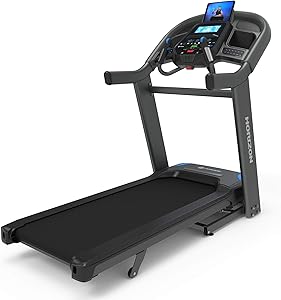 |  |  |  |  | |
Best For | Best Overall | Best Heavy-Duty | Best Smart Treadmill | Best Large-Screen Alternative | Best Value |
FitScore | 89.4/100 | 88.3/100 | 86.3/100 | 83.3/100 | 82.6/100 |
Motor | 3.5 HP | 4 HP | 4.25 HP | 3.6 HP | 3 HP |
Speed | 12 mph | 12 mph | 14 mph | 12 mph | 12 mph |
Incline | 15% | 15% | 12% | 12% | 12% |
Running Surface | 60 in x 22 in | 60 in x 22 in | 60 in x 22 in | 60 in x 20 in | 60 in x 20 in |
Weight Capacity | 350 lb | 400 lb | 400 lb | 350 lb | 350 lb |
Foldable | Folding | Non-Folding | Folding | Folding | Folding |
Check Amazon for current pricing and availability.
Key Takeaways
- Best Overall: Horizon 7.4 AT (89.4/100) stands out for frequent weekly runs.
- Best Heavy-Duty: Sole TT8 (88.3/100) stands out for regular home running.
- Best Smart Treadmill: NordicTrack Commercial 2450 (86.3/100) stands out for interactive running sessions.
- Best Large-Screen Alternative: ProForm Pro 9000 (83.3/100) stands out for regular home running.
- Best Value: XTERRA Sport Series TR75 (82.6/100) stands out for home running and jogging.
- How to decide: favor Horizon 7.4 AT when full-width running belt matters most; compare Sole TT8 when balanced heavy-runner specification package is the higher priority.
- Before buying: verify the exact model, dimensions, user-weight capacity, warranty terms, and current Amazon availability for the version you are considering.
Best Overall: Horizon 7.4 AT

Horizon 7.4 AT ranks #1 in this comparison with a 89.4/100 FitScore. Its strongest scoring category is Performance, while Affordability is the main scoring trade-off. It is our Best Overall. For a broader performance comparison, see our running treadmill guide.
FitScore for Heavy Runners
How this FitScore was calculated
This FitScore combines the six category scores using the weights defined for this guide.
Why Choose This Treadmill
Horizon 7.4 AT takes the #1 spot because its strengths line up especially well with the buying criteria that matter in this guide. It is especially well suited to frequent weekly runs, incline training, and interval sessions. It is also a strong fit for runners at or below 350 lb and buyers wanting a 22-inch belt. The practical advantages that support this position are full-width running belt, very good fixed cushioning, and 15% incline training range. Its intent-specific FitScore is 89.4/100, but that score is most useful when read alongside these practical strengths and limitations rather than as a universal rating. It is a weaker fit for runners above 350 lb and people frequently moving equipment. Its main trade-offs are lower capacity than top two and 318-lb machine weight. Taken together, that balance is why we prefer it as the default choice in this comparison: it covers the core use case more completely than the more specialized alternatives, provided those limitations are not deal-breakers for you.
Best Usage
- Frequent weekly runs
- Incline training
- Interval sessions
Key Specs
- Motor: 3.5 HP for regular running.
- Speed: 12 mph for intervals.
- Incline: 15% for steeper workouts.
- Running Surface: 60 in × 22 in for stride room.
- Weight Capacity: 350 lb sets the user limit.
For
- Runners at or below 350 lb
- Buyers wanting a 22-inch belt
- Users valuing training variety
Pros
- Full-width running belt
- Very good fixed cushioning
- 15% incline training range
Not For
- Runners above 350 lb
- People frequently moving equipment
- Buyers prioritizing touchscreen classes
Cons
- Lower capacity than top two
- 318-lb machine weight
- Small 8.25-inch LCD
Best Heavy-Duty: Sole TT8

Sole TT8 ranks #2 in this comparison with a 88.3/100 FitScore. Its strongest scoring category is Performance, while Affordability is the main scoring trade-off. It is our Best Heavy-Duty. Taller athletes can also compare our treadmills for tall runners.
FitScore for Heavy Runners
How this FitScore was calculated
This FitScore combines the six category scores using the weights defined for this guide.
Why Choose This Treadmill
Sole TT8 earns its place in this shortlist because it solves a more specific set of needs particularly well. It is especially well suited to regular home running, incline workouts, and long-stride training. It is also a strong fit for runners needing up to 400-lb capacity and buyers with dedicated floor space. The practical advantages that support this position are balanced heavy-runner specification package, very good fixed cushioning, and higher incline than NordicTrack. Its intent-specific FitScore is 88.3/100, but that score is most useful when read alongside these practical strengths and limitations rather than as a universal rating. It is a weaker fit for small-room users needing folding storage and buyers wanting a 24-inch touchscreen. Its main trade-offs are premium positioning and non-folding 3,135-sq-in footprint. That is why it can be a better choice than the #1 pick when these specific strengths match your priorities more closely, while remaining a less universal choice when they do not.
Best Usage
- Regular home running
- Incline workouts
- Long-stride training
Key Specs
- Motor: 4 HP for running.
- Speed: 12 mph for faster sessions.
- Incline: 15% for steeper efforts.
- Running Surface: 60 in × 22 in for stride room.
- Weight Capacity: 400 lb for broader fit.
For
- Runners needing up to 400-lb capacity
- Buyers with dedicated floor space
- Users prioritizing hardware over classes
Pros
- Balanced heavy-runner specification package
- Very good fixed cushioning
- Higher incline than NordicTrack
Not For
- Small-room users needing folding storage
- Buyers wanting a 24-inch touchscreen
- Value-focused buyers
Cons
- Premium positioning
- Non-folding 3,135-sq-in footprint
- 296-lb machine is difficult to reposition
Best Smart Treadmill: NordicTrack Commercial 2450

NordicTrack Commercial 2450 ranks #3 in this comparison with a 86.3/100 FitScore. Its strongest scoring category is Performance, while Affordability is the main scoring trade-off. It is our Best Smart Treadmill.
FitScore for Heavy Runners
How this FitScore was calculated
This FitScore combines the six category scores using the weights defined for this guide.
Why Choose This Treadmill
NordicTrack Commercial 2450 earns its place in this shortlist because it solves a more specific set of needs particularly well. It is especially well suited to interactive running sessions, high-speed workouts, and guided home training. It is also a strong fit for buyers wanting immersive programming and runners needing 400-lb capacity. The practical advantages that support this position are immersive 24-inch touchscreen, very good fixed cushioning, and smaller footprint when folded. Its intent-specific FitScore is 86.3/100, but that score is most useful when read alongside these practical strengths and limitations rather than as a universal rating. It is a weaker fit for buyers avoiding membership ecosystems and users prioritizing 15% incline. Its main trade-offs are premium positioning and iFIT uses a membership system. That is why it can be a better choice than the #1 pick when these specific strengths match your priorities more closely, while remaining a less universal choice when they do not.
Best Usage
- Interactive running sessions
- High-speed workouts
- Guided home training
Key Specs
- Motor: 4.25 HP for demanding runs.
- Speed: 14 mph for faster intervals.
- Incline: 12% for hill work.
- Running Surface: 60 in × 22 in for running room.
- Weight Capacity: 400 lb for broader fit.
For
- Buyers wanting immersive programming
- Runners needing 400-lb capacity
- Users who value a large display
Pros
- Immersive 24-inch touchscreen
- Very good fixed cushioning
- Smaller footprint when folded
Not For
- Buyers avoiding membership ecosystems
- Users prioritizing 15% incline
- People expecting lightweight portability
Cons
- Premium positioning
- iFIT uses a membership system
- 268.2-lb weight limits mobility
Best Large-Screen Alternative: ProForm Pro 9000
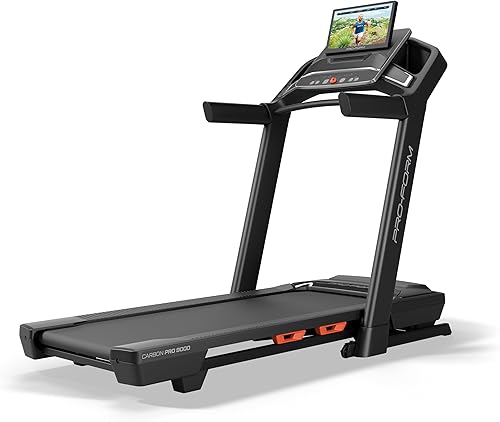
ProForm Pro 9000 ranks #4 in this comparison with a 83.3/100 FitScore. Its strongest scoring category is Performance, while Affordability is the main scoring trade-off. It is our Best Large-Screen Alternative.
FitScore for Heavy Runners
How this FitScore was calculated
This FitScore combines the six category scores using the weights defined for this guide.
Why Choose This Treadmill
ProForm Pro 9000 earns its place in this shortlist because it solves a more specific set of needs particularly well. It is especially well suited to regular home running, connected workouts, and fold-away home training. It is also a strong fit for value-focused buyers and runners at or below 350 lb. The practical advantages that support this position are strong running capability for the value tier, compact 1,211-sq-in folded footprint, and very good fixed cushioning. Its intent-specific FitScore is 83.3/100, but that score is most useful when read alongside these practical strengths and limitations rather than as a universal rating. It is a weaker fit for runners requiring 400-lb capacity and users wanting a 22-inch belt. Its main trade-offs are narrower than 22-inch decks and lower incline than Sole and Horizon. That is why it can be a better choice than the #1 pick when these specific strengths match your priorities more closely, while remaining a less universal choice when they do not.
Best Usage
- Regular home running
- Connected workouts
- Fold-away home training
Key Specs
- Motor: 3.6 HP for running.
- Speed: 12 mph for faster workouts.
- Incline: 12% for hill sessions.
- Running Surface: 60 in × 20 in for standard strides.
- Weight Capacity: 350 lb sets the limit.
For
- Value-focused buyers
- Runners at or below 350 lb
- Users wanting a larger touchscreen
Pros
- Strong running capability for the value tier
- Compact 1,211-sq-in folded footprint
- Very good fixed cushioning
Not For
- Runners requiring 400-lb capacity
- Users wanting a 22-inch belt
- Buyers avoiding iFIT memberships
Cons
- Narrower than 22-inch decks
- Lower incline than Sole and Horizon
- 218.1 lb remains cumbersome
Best Value: XTERRA Sport Series TR75

XTERRA Sport Series TR75 ranks #5 in this comparison with a 82.6/100 FitScore. Its strongest scoring category is Performance, while Practicality is the main scoring trade-off. It is our Best Value.
FitScore for Heavy Runners
How this FitScore was calculated
This FitScore combines the six category scores using the weights defined for this guide.
Why Choose This Treadmill
XTERRA Sport Series TR75 earns its place in this shortlist because it solves a more specific set of needs particularly well. It is especially well suited to home running and jogging, incline walking and jogging, and basic app-connected workouts. It is also a strong fit for budget-focused buyers and users at or below 350 lb. The practical advantages that support this position are budget-focused positioning, full 60-inch belt length, and bluetooth and third-party app support. Its intent-specific FitScore is 82.6/100, but that score is most useful when read alongside these practical strengths and limitations rather than as a universal rating. It is a weaker fit for runners requiring 400-lb capacity and buyers wanting premium cushioning. Its main trade-offs are lowest motor output here and good rather than very good cushioning. That is why it can be a better choice than the #1 pick when these specific strengths match your priorities more closely, while remaining a less universal choice when they do not.
Best Usage
- Home running and jogging
- Incline walking and jogging
- Basic app-connected workouts
Key Specs
- Motor: 3 HP meets a running baseline.
- Speed: 12 mph supports intervals.
- Incline: 12% adds hill work.
- Running Surface: 60 in × 20 in supports running.
- Weight Capacity: 350 lb defines fit.
For
- Budget-focused buyers
- Users at or below 350 lb
- Shoppers accepting simpler technology
Pros
- Budget-focused positioning
- Full 60-inch belt length
- Bluetooth and third-party app support
Not For
- Runners requiring 400-lb capacity
- Buyers wanting premium cushioning
- Users needing a large display
Cons
- Lowest motor output here
- Good rather than very good cushioning
- 1,750-sq-in folded footprint
How We Selected the Best Treadmills for Heavy Runners
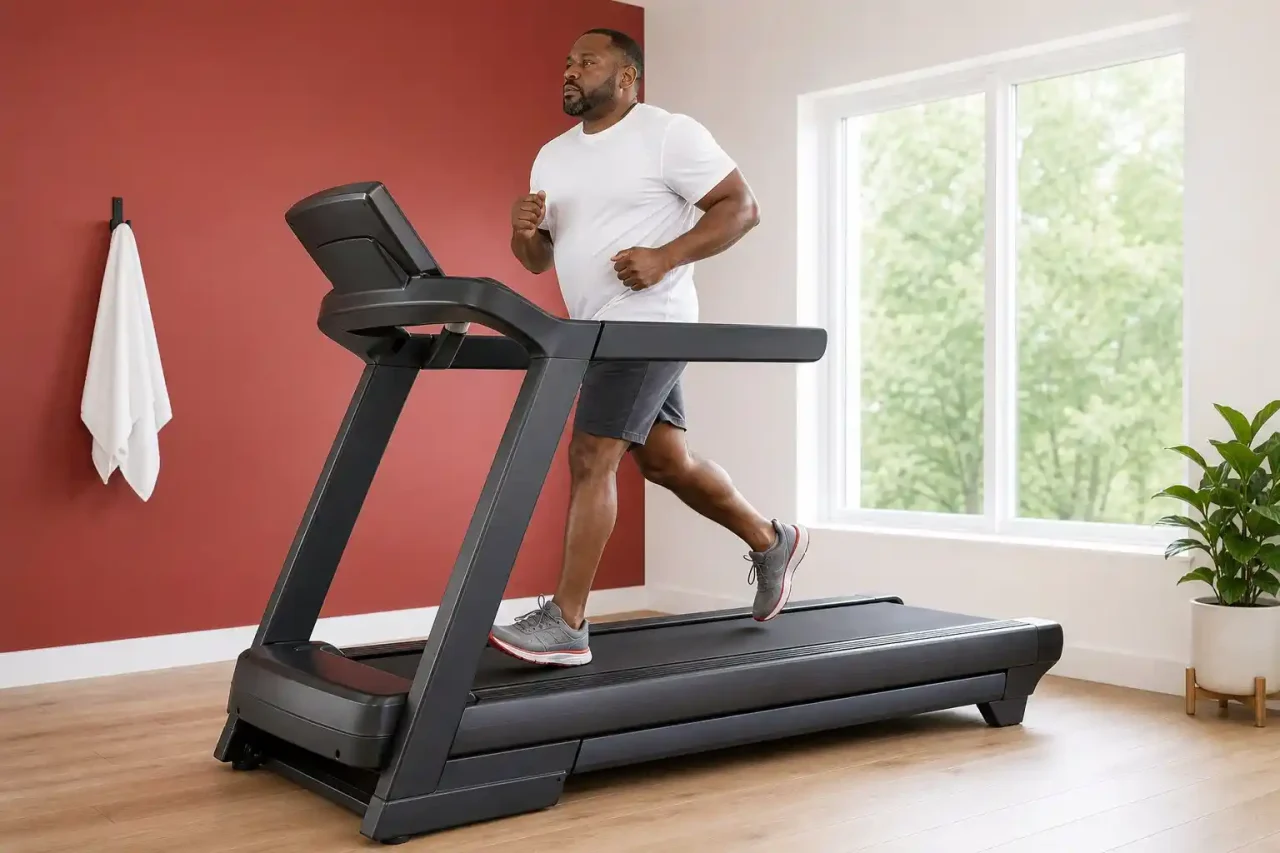
The best treadmills for heavy runners combine capacity with running capability instead of winning on one oversized number. We compared motor power, maximum speed, incline, belt dimensions, weight capacity, cushioning assessment, price, and storage demands. Our Treadmill Statistics 2027 research provides broader benchmarks for capacity, deck size, speed, incline, and price.
A 400-lb rating was an advantage, but capacity alone didn’t prove comfort or long-term durability. We also looked for a 60-inch belt because running generally demands more stride room than walking.
We also compared motor output in the context of intended use: sustained running and faster sessions generally place greater demands on a treadmill than walking, so motor specification was considered alongside speed, belt size, capacity, and overall design rather than as a standalone cutoff.
Space mattered as a complete calculation. A folding treadmill weighing 300 lb remains difficult to move, even if its stored footprint is smaller. Our broader treadmill picks for heavy people similarly emphasize the relationship among capacity, deck size, and motor, not capacity in isolation.
How to Choose the Best Treadmill for Heavy Runners
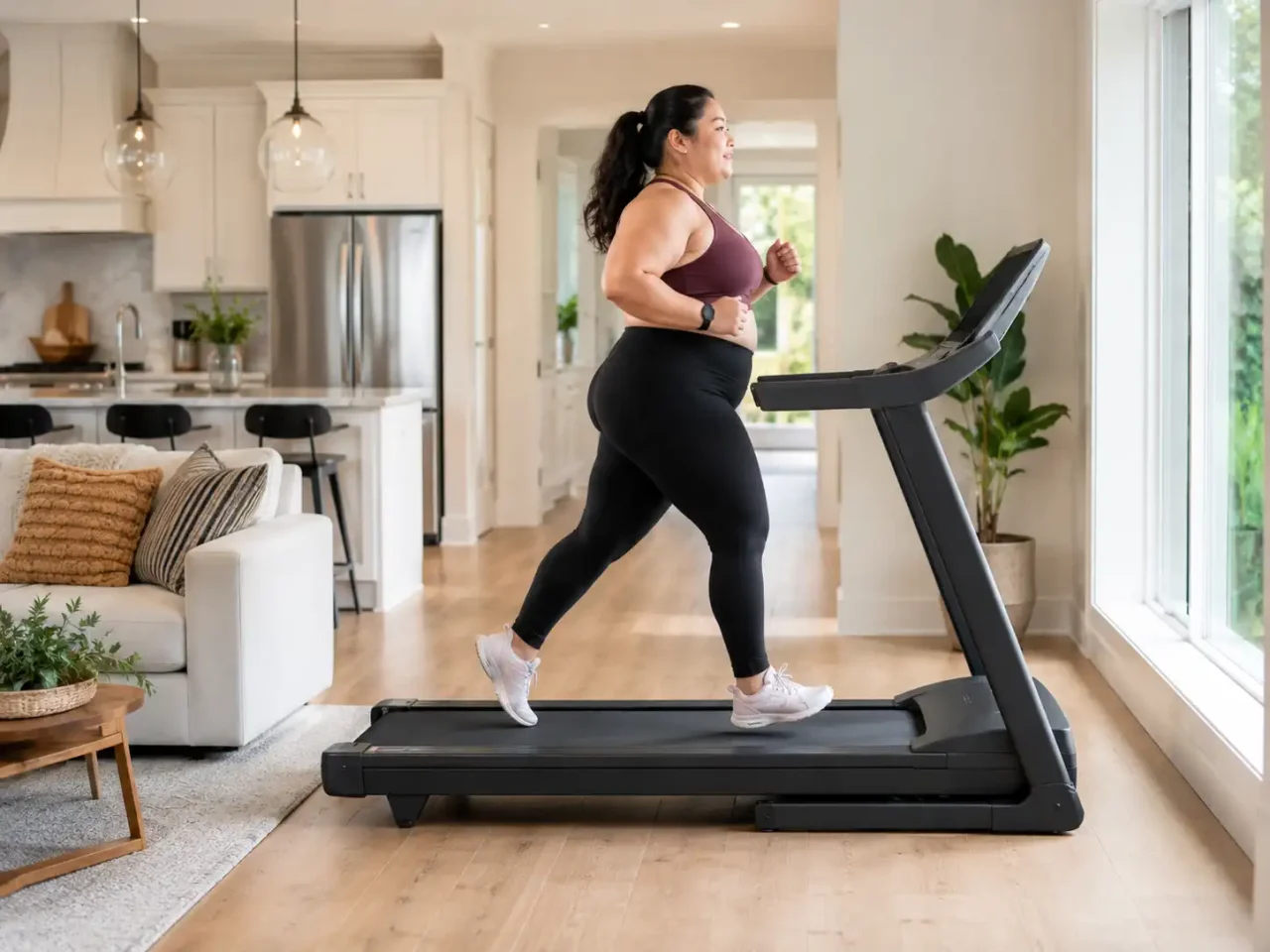
Choose a treadmill by matching your body weight, running frequency, stride needs, and available floor space to documented specifications. Start with capacity: the listed limit should accommodate the intended user. Anyone above 350 lb should narrow this comparison immediately to the Sole TT8 or NordicTrack Commercial 2450.
For runners who are inactive or returning to exercise, the NIDDK’s guidance on staying active at any size recommends starting slowly, increasing workout duration and frequency gradually, and consulting a healthcare professional when health, balance, or joint concerns could affect exercise.
Next, measure the room. If you can’t dedicate at least 82.5 by 38 in, the non-folding Sole TT8 won’t fit as intended. Folding models reduce storage area, but none here is lightweight: the range is 216 to 318 lb. Homes with tighter floor plans should compare our best treadmill for small spaces guide before choosing solely on folded dimensions.
For running, every selected model provides a 60-inch-long belt. Choose 22 in of width if lateral room is a priority; choose 20 in if saving money or space matters more. Taller runners should also consult our best treadmill for tall runners guide, where deck dimensions and stride accommodation receive greater weight.
And don’t overbuy a screen. A touchscreen is worthwhile when guided programming will be used, but it doesn’t substitute for capacity, belt size, or motor output.
The CDC’s physical activity guidelines for adults classify jogging and running as vigorous-intensity exercise and use 75 minutes per week as the aerobic benchmark, alongside muscle-strengthening activity on at least two days.
Decision Shortcuts
- Best Overall: Choose Horizon 7.4 AT if frequent weekly runs is a priority; look at another pick if runners above 350 lb applies to you.
- Best Heavy-Duty: Choose Sole TT8 if regular home running is a priority; look at another pick if small-room users needing folding storage applies to you.
- Best Smart Treadmill: Choose NordicTrack Commercial 2450 if interactive running sessions is a priority; look at another pick if buyers avoiding membership ecosystems applies to you.
- Best Large-Screen Alternative: Choose ProForm Pro 9000 if regular home running is a priority; look at another pick if runners requiring 400-lb capacity applies to you.
- Best Value: Choose XTERRA Sport Series TR75 if home running and jogging is a priority; look at another pick if runners requiring 400-lb capacity applies to you.
Final Verdict
Horizon 7.4 AT remains our #1 pick in this guide with a FitScore of 89.4/100. It offers the strongest overall balance around full-width running belt, very good fixed cushioning, and frequent weekly runs, which is why it is the best starting point for most readers comparing these five models. Sole TT8 is the alternative to favor when balanced heavy-runner specification package matters more than the broader balance of the top pick. The main reason to pass on Horizon 7.4 AT is if runners above 350 lb applies to you; in that case, use the Decision Shortcuts above to match a more specialized model to your needs. Otherwise, Horizon 7.4 AT is the treadmill we would check first.
Frequently Asked Questions About the Best Treadmill for Heavy Runners: 5 High-Capacity Picks for 2026
Horizon 7.4 AT ranks first among these five products with an intent-specific FitScore of 89.4/100. It is classified as Best Overall, while every product in the shortlist is scored with the same article-specific weighting.
Sole TT8 ranks second at 88.3/100 and is classified as Best Heavy-Duty. It is the closest alternative in the current FitScore ranking for this guide.
Best Heavy-Duty: Sole TT8 (88.3/100); Best Smart Treadmill: NordicTrack Commercial 2450 (86.3/100); Best Large-Screen Alternative: ProForm Pro 9000 (83.3/100); Best Value: XTERRA Sport Series TR75 (82.6/100). These labels describe the main use case each model fills in this shortlist.
FitScore combines Performance, Durability, Comfort, Practicality, Features, and Affordability. The six categories are weighted for the search intent of this specific guide, so scores are comparable within this article rather than being a universal rating for every buyer.
Not necessarily. The highest FitScore is the strongest overall match for this article intent, but a lower-ranked model can still be the better choice when a hard constraint such as dimensions, user capacity, folding design, deck size, incline range, or budget matters more to you.
Confirm the exact model and Amazon ASIN, current availability, assembled dimensions, user-weight capacity, folding or storage requirements, warranty terms, and the features that matter for your intended training. Product listings can change, so verify the live listing before purchase.
This article contains affiliate links. If you click through and make a purchase, we may earn a small commission at no extra cost to you. As an Amazon Associate, we earn from qualifying purchases. Product information, prices, and availability are collected manually and may change at any time. For the most accurate and current details, please check directly on Amazon. Learn more. Amazon and the Amazon logo are trademarks of Amazon.com, Inc. or its affiliates.
