Short answer
People who should not use a vibration plate without first checking with their doctor include anyone who is pregnant, has a pacemaker or other implanted device, has had recent surgery or a joint replacement, has or has had blood clots, or has a heart condition or uncontrolled blood pressure. Mayo Clinic says whole-body vibration can be harmful in some situations and advises a doctor’s check first, especially in pregnancy or with any health problem. Side effects reported in studies were uncommon and mild, such as knee or back pain.
Key takeaways
- Pregnancy, implanted devices, recent surgery, blood clots and heart conditions call for a doctor’s OK first.
- Mayo Clinic advises a doctor’s check with any health problem.
- Side effects reported in studies were uncommon and mild.
- Bent knees and an oscillating mode reduce the vibration reaching the head.
- Older adults can often use a plate, with a handlebar and medical clearance.
A vibration plate is a low-impact device, and most healthy adults can use one. But it shakes the whole body many times a second, and for some people that movement is a reason to talk to a doctor first.
This guide lists who should check before using a plate, why the caution is given, and the side effects studies reported. It is not medical advice: only your doctor knows whether a plate suits you. If you get the go-ahead, our best vibration plate for seniors and best vibration plate for beginners guides rank plates with a handlebar and gentle starting levels.
Who Should Not Use a Vibration Plate Without a Doctor’s OK
These are the situations that Mayo Clinic and plate makers’ own safety pages flag. In each case the advice is the same: ask your doctor or specialist before you use a plate, and follow what they say.
| Situation | Why caution is advised | What to do |
|---|---|---|
| Pregnancy | Named by Mayo Clinic; makers advise avoiding plates unless a prenatal provider says otherwise | Ask your prenatal provider |
| Pacemaker, defibrillator or other implanted device | Makers ask for a specialist’s clearance | Ask your cardiologist or device specialist |
| Recent surgery, joint replacement or spinal procedure | Healing tissue and implants | Ask your surgeon or physical therapist |
| Blood clots, past or present, or a clotting disorder | Makers advise avoiding plates without medical clearance | Ask your doctor |
| Heart condition, arrhythmia or uncontrolled blood pressure | Makers ask for stable, managed symptoms and clearance | Ask your cardiologist |
| Epilepsy or frequent migraines | Listed by plate makers | Ask your doctor |
| Dizziness, balance or inner-ear problems | Vibration and a moving surface can worsen unsteadiness | Ask your doctor; use a handlebar if cleared |
| Recent fracture, hernia or open wound | Listed by plate makers | Wait for your doctor’s OK |
| Diabetes with nerve damage in the feet | Listed by plate makers; reduced feeling in the feet | Ask your doctor |
| Any other health condition or new symptom | Mayo Clinic advises a check with any health problem | Ask your doctor |
Watch out: Stop at once and seek medical advice if you feel chest pain, faintness, a severe headache or new numbness during or after a session.
Why Vibration Needs Extra Care
Vibration is a mechanical load that travels from the feet up through the body. A 2007 study in Medicine & Science in Sports & Exercise measured how much of it reached the head while 16 adults squatted at 30 Hz and 4 mm. On a vertical plate, 71% to 189% more vibration reached the upper body and head than on a side-alternating plate. On both plates, head acceleration was lowest with the knees bent about 26 to 30 degrees.
The same authors found that 10-minute sessions at those settings exceeded the caution limit of ISO 2631-1, the international standard for vibration exposure at work. That standard was written for long daily exposure on vehicles and machines, so it is not a direct verdict on a few minutes of exercise. It is a reason to keep sessions short, keep the knees bent and choose a gentler plate if you are unsure.
Vibration Plate Side Effects Reported in Studies
Serious problems are rarely reported in exercise studies, but the studies screened their participants first. A 2018 systematic review in PLOS ONE of 18 studies in adults with obesity found only isolated cases: inflammation of a vein in the lower leg, mild knee pain and back pain. The same review noted that in 7 of the 18 studies, the daily exposure would count as “unsafe” under the occupational ISO limit, and that long-term effects are not known.
At home, the most common sign that a setting is too strong is a buzzing feeling in the head, which is vibration reaching the head: bend your knees more or lower the level. Stop and ask your doctor if pain, swelling or numbness lasts after you step off.
Older Adults: Usually Possible, With Precautions
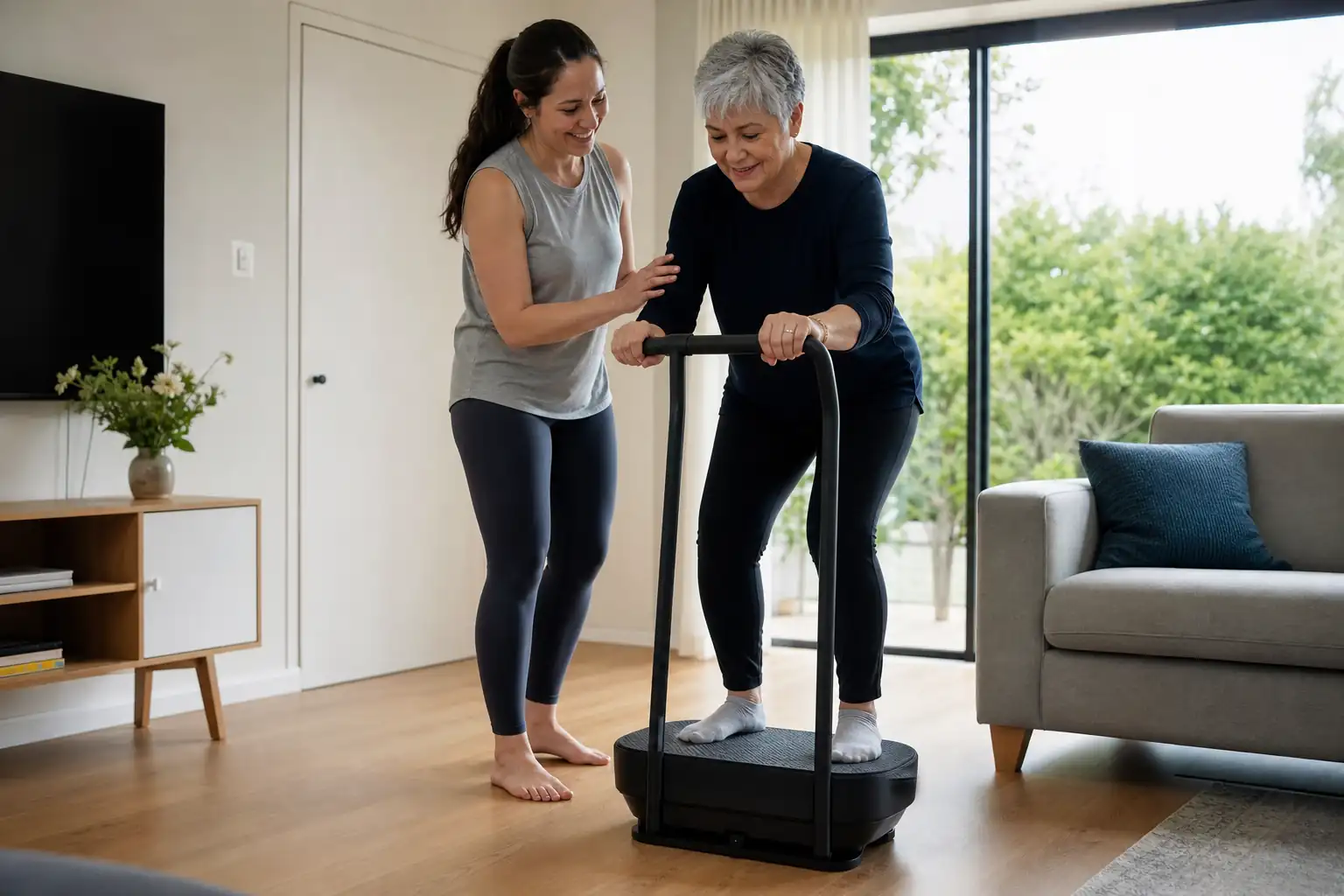
Age alone is not a reason to avoid a plate. Many balance and strength studies were done in older adults, usually supervised and with a handlebar. The precautions are the ones above: check with your doctor first, especially with heart, joint or balance conditions, and choose a plate with a handlebar.
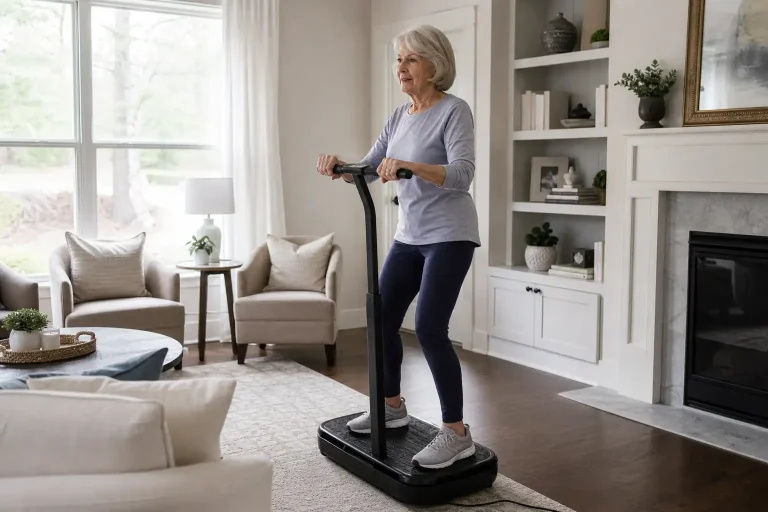
Only 7 of the 44 plates in our database have a handlebar, fixed or removable. Our best vibration plate for seniors guide ranks only those.
Weight Limits Are a Safety Rule Too
Every plate has a maximum user weight. In our database the median rating is 330 lb, and ratings range from 220 lb to 1000 lb. Stay under the rating of your plate, counting anything you hold. If you are close to it, our best vibration plate for heavy people guide ranks plates rated for 400 lb or more.
If You Get the Go-Ahead: Safer Ways to Start
Our how to use a vibration plate guide covers setup, settings and session length step by step.
- Start at the lowest level with 30-second bouts and rest in between.
- Keep your knees slightly bent in every standing position.
- Hold a handlebar, or stand next to a wall or sturdy counter.
- Prefer an oscillating (side-to-side) mode, which sent less vibration to the head in lab tests.
- Never put your head on the plate or lie on it at high levels.
- Keep sessions to about 10 minutes at first, three times a week.
Safety Checklist Before Your First Session
7 checks
Tap a number to check off that step.
- 01
Asked your doctor if you are pregnant or have any health condition.
- 02
Checked that you are under the plate’s weight rating.
- 03
Plate on a hard, level floor with space around it.
- 04
A handlebar, wall or counter within reach.
- 05
Lowest level and short bouts planned.
- 06
Remote within reach to stop at once.
- 07
A plan to stop if you feel unwell.
Common Mistakes to Avoid
Mistake 1Assuming “low impact” means safe for every condition.
Mistake 2Skipping the doctor’s check during pregnancy or after surgery.
Mistake 3Using a plate with locked knees.
Mistake 4Exceeding the plate’s weight rating.
Mistake 5Ignoring dizziness or chest symptoms and carrying on.
The Bottom Line
- Mayo Clinic advises checking with a doctor before whole-body vibration, especially if you are pregnant or have a health problem.
- Plate makers ask for medical clearance for pregnancy, implanted devices, recent surgery, blood clots and heart conditions.
- In 18 studies of adults with obesity, reported side effects were isolated: lower-leg vein inflammation, mild knee pain and back pain.
- Vertical vibration sent 71% to 189% more vibration to the upper body and head than side-alternating vibration in a 2007 study.
- Keeping the knees bent about 26 to 30 degrees reduced head acceleration in the same study.
Frequently Asked Questions
Check with your doctor before using one if you are pregnant, have a pacemaker or other implant, have had recent surgery or a joint replacement, have or had blood clots, or have a heart condition, epilepsy, or balance problems. Mayo Clinic advises a doctor’s check with any health problem.
Studies reported few side effects: isolated cases of lower-leg vein inflammation, mild knee pain and back pain. A buzzing head usually means the knees are too straight or the level too high: bend your knees and lower the level.
Mayo Clinic says whole-body vibration can be harmful in some situations, which is why it advises checking with a doctor first. For healthy adults, short sessions with bent knees at moderate levels are the usual approach.
Often, with precautions. Many studies were done in older adults, usually supervised and with a handlebar. Ask your doctor first, especially with heart, joint or balance conditions.
Plate makers ask for explicit clearance from your cardiologist or device specialist. Do not use one until they say it is safe.
Only with your surgeon’s or physical therapist’s clearance. Plate makers list recent joint replacement and spinal procedures among the situations that need it, and your surgeon knows how your implant and healing are progressing.
Explore More Vibration Plate Guides
Best Vibration Plate for Seniors (2026): 5 Picks With Handlebars
Best Vibration Plate for Beginners (2026): 5 Easy-to-Start Picks
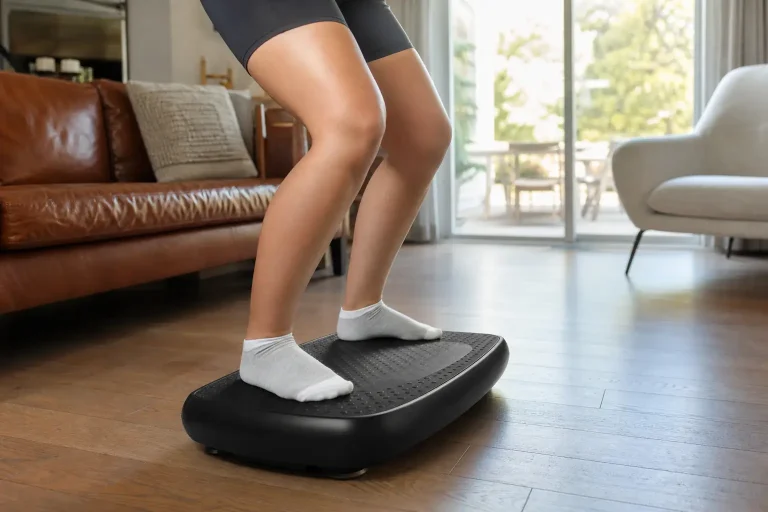
Best Oscillating Vibration Plate (2026): 5 Side-Alternating Picks
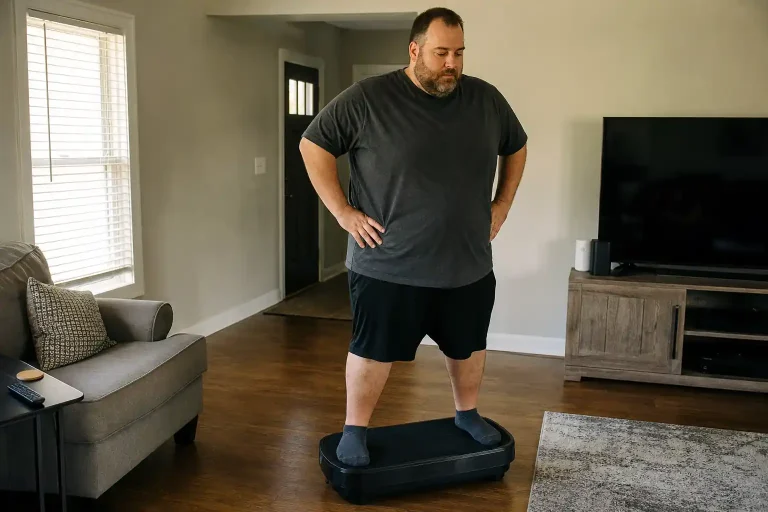
Best Vibration Plate for Heavy People (2026): 5 Picks Rated 400 lb+
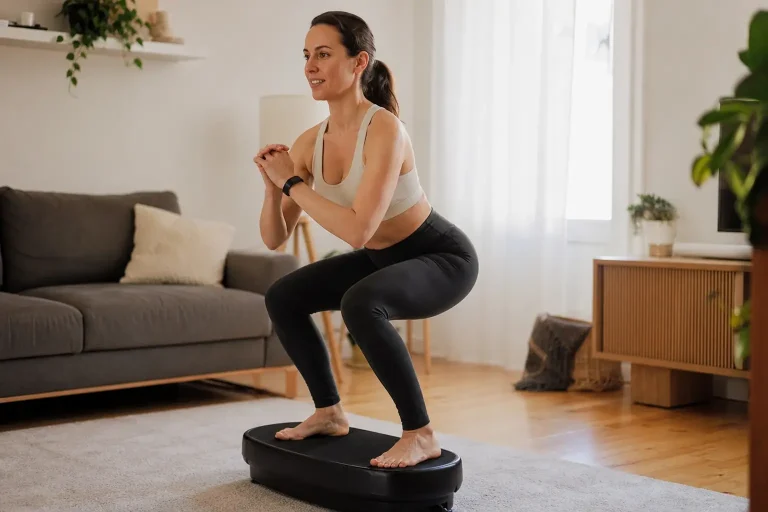
Best Vibration Plate (2026): 5 Top Picks for Home, Ranked