

Short answer
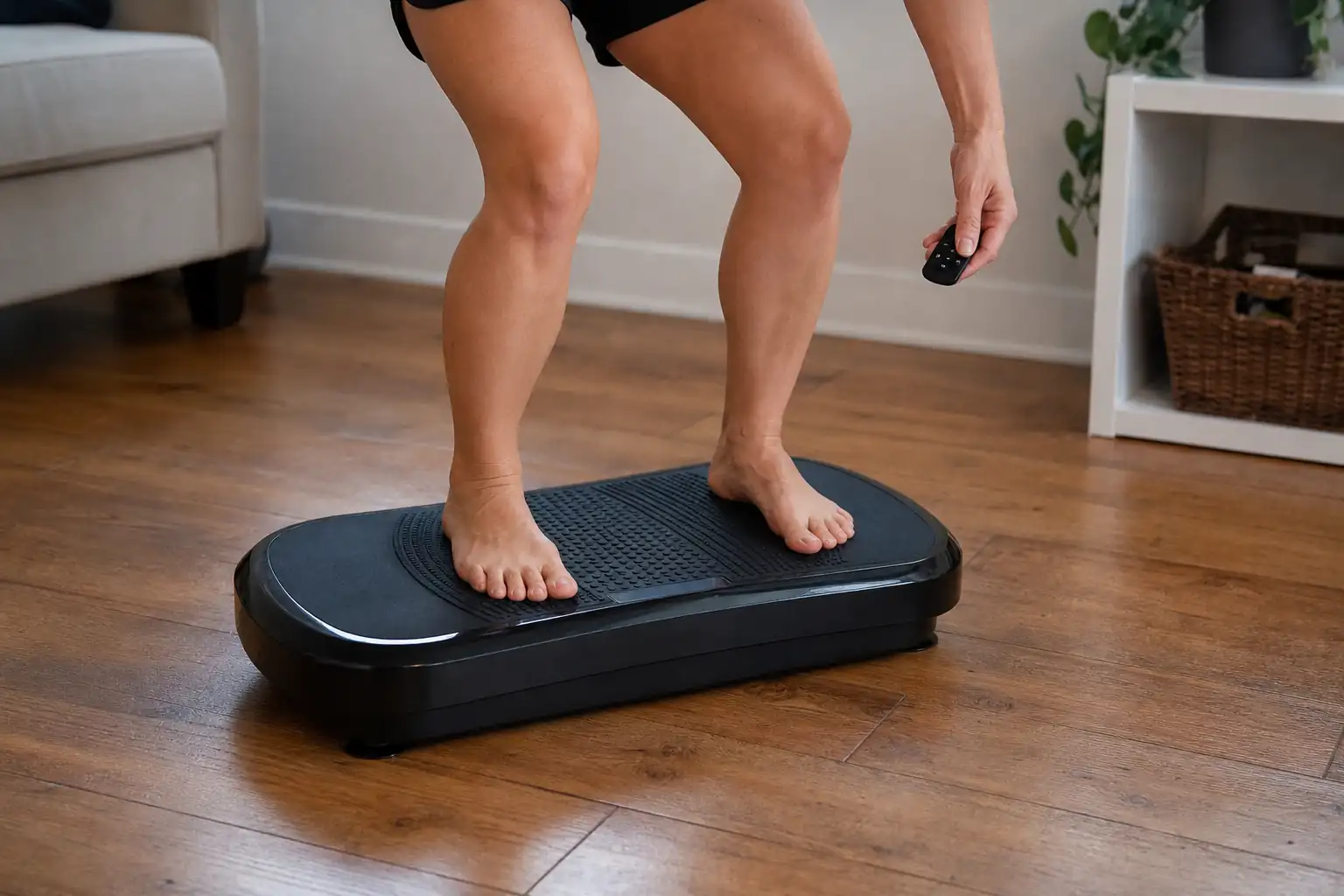
How to Use a Vibration Plate: To use a vibration plate, put it on a hard, level floor, stand in the middle with your feet hip-width apart and your knees slightly bent, start at the lowest level, and exercise in short bouts of 30 to 60 seconds with rests in between. Build to about 10 to 15 minutes, around three times a week. Never lock your knees or rest your head on the plate, and check with your doctor first if you are pregnant or have a health condition.
Key takeaways
- Hard floor, centered feet, soft knees, lowest level: that is how to start.
- Work in 30 to 60 second bouts and build toward 10 to 15 minutes.
- About three sessions a week matches most studies.
- A slight knee bend sent the least vibration to the head in lab tests.
- Ask your doctor first if you are pregnant or have a health condition.
A vibration plate looks simple: you plug it in and stand on it. Using it well takes a few more decisions: where it goes, which mode and level to choose, how to stand, how long to stay on and how often to come back.
This guide walks through each step, using lab measurements for posture and timing and the specs of the plates we rank for the settings. For exercise ideas, see our vibration plate exercises guide; to choose a plate, start with our best vibration plate for beginners guide.
How to Use a Vibration Plate in 6 Steps
Here is the short version. Each step is explained below.
| Step | What to do | Why |
|---|---|---|
| 1. Place it | Hard, level floor, 2 to 3 feet clear on every side | Carpet absorbs the movement; plates can creep |
| 2. Pick a mode | Oscillating for a gentler feel, linear for a firmer buzz | They move differently and transmit differently |
| 3. Stand right | Feet hip-width, centered, knees slightly bent | Bent knees damp vibration before it reaches the head |
| 4. Start low | Lowest level or the easiest preset | Let your body get used to the feel |
| 5. Go in bouts | 30 to 60 seconds on, 30 to 60 seconds off | Matches study protocols |
| 6. Build slowly | Toward 10 to 15 minutes, about 3 times a week | Typical of studies and of Mayo Clinic’s note |
Check Amazon for current pricing and availability.
Step 1: Where to Put Your Vibration Plate
Use a hard floor: wood, tile or a firm exercise mat on a hard floor. Deep carpet absorbs part of the movement and lets the plate wander. Keep 2 to 3 feet clear on every side, so a step off the plate lands on the floor and not on a table edge.
Plates in our database weigh from 11.5 to 105 lb, with a median of about 23 lb. Lighter plates are easy to store but can shift at high levels; a heavier base stays put. Only a few have wheels, so plan where it lives if you will move it daily.
Step 2: Understand the Settings
Most home plates show “speed levels” rather than hertz. The 41 plates in our database that list levels range from 2 to 200, with a median of 99. Level 50 on one plate is not level 50 on another, so read the manual for the frequency each level maps to, when it is given.
Two numbers describe what you feel: the frequency (cycles per second, Hz) and the amplitude (how far the plate travels, mm). The reporting standard of the International Society of Musculoskeletal and Neuronal Interactions asks studies to state both, plus whether the plate is side-alternating or vertical, because results depend on them. Listings are less precise: many do not say whether their amplitude is measured peak to peak, so compare plates of the same brand rather than across brands.
Mode buttons usually switch between oscillation (side-to-side tipping), linear or vertical vibration, and on 3D/4D plates a combined or “spiral” mode. Presets cycle through levels automatically, which is the easiest way to start.
Step 3: How to Stand on a Vibration Plate
Stand in the middle, feet hip-width apart, weight spread over the whole foot, knees slightly bent and hips back a little, as if you were about to sit. Hold the handlebar if your plate has one.
The knee bend is the most important detail. In a 2007 study in Medicine & Science in Sports & Exercise, 16 adults squatted slowly on two plates at 30 Hz. Head acceleration was lowest with the knees bent about 26 to 30 degrees and higher when they stood straighter. The same study found more vibration reached the head on the vertical plate than on the side-alternating one.
On an oscillating plate, foot width changes the intensity: feet near the center move less, feet near the edges move more. Start near the center and widen your stance as you get used to it.
Watch out: Do not put your head, face or neck on the plate, and do not sit or lie on it at high levels. Step off if you feel dizzy, numb or unwell.
Steps 4 to 6: Your First Sessions
Begin at the lowest level or with the gentlest preset. Hold a half squat for 30 seconds, step off or stand still for 30 seconds, and repeat three to five times. That is a complete first session.
Over the next weeks, lengthen the holds to 45 to 60 seconds, add moves such as calf raises and wide squats, and raise the level one step at a time. Change the exercise before you raise the level: a deeper squat adds more work than a faster plate.
| Minute | Move | Level |
|---|---|---|
| 0-1 | Stand with soft knees, get used to the feel | Lowest |
| 1-3 | Half squat holds, 30 s on / 30 s off | Low |
| 3-5 | Calf raises, 30 s on / 30 s off | Low |
| 5-7 | Wide squat holds, 30 s on / 30 s off | Low to medium |
| 7-9 | Band rows in a half squat | Low to medium |
| 9-10 | Stand with soft knees, then step off | Lowest |
How Long and How Often to Use a Vibration Plate
Mayo Clinic notes that advocates suggest as little as 15 minutes a day, three times a week, and that it is not clear vibration matches the benefits of regular exercise. Study programs looked similar: about three sessions a week, with short bouts adding up to roughly 10 to 15 minutes.
More is not better. The 2007 study above found that 10-minute regimens at 30 Hz and 4 mm already exceeded the caution limit of the international standard for vibration exposure at work, which was written for daily jobs on machines, not for exercise. That is a reason to keep sessions short and the knees bent, not to give up the plate.
Any time of day works. Many owners use the plate in the morning or before a walk; avoid a hard session right after a large meal. Leave a day between demanding leg sessions.
Who Should Check With a Doctor First
Mayo Clinic says whole-body vibration can be harmful in some situations and advises checking with a doctor first, especially if you are pregnant or have any health problem. Plate makers ask the same for implanted devices such as pacemakers, recent surgery or joint replacement, blood clots and heart conditions. Our who should not use a vibration plate guide lists these in detail.
Easy Plates to Learn On
A plate is easier to use well when it has a remote, clear presets and enough room to stand wide. These three come from our ranked guides.
Best first plate

Merach MR-2490H1 4D
FitScore 72.3/100
7 presets, 120 levels, a remote and a display, both motion modes and a 28.1 inch deck for a wide stance. Bands are included. Ranked #1 in our best vibration plate for beginners guide, FitScore 72.3 for that intent.
Check Price on AmazonMost room to stand

JOROTO JV80 4D
FitScore 68/100
A 28 by 17 inch flat platform, oscillating and linear motion, a remote and Bluetooth. Owners like the several vibration types and the adjustability; the review pool is still small. Ranked #3 in our best vibration plate for beginners guide, FitScore 68 for that intent.
Check Price on AmazonEasiest to store

Merach CV30 Pro
FitScore 74.3/100
At 16.27 lb and 23 inches long it slides under a bed or sofa, yet it is rated for 400 lb. Oscillating only, with a stated 7 to 9.6 Hz. Ranked #1 in our best compact vibration plate guide, FitScore 74.3 for that intent.
Check Price on AmazonBefore You Switch the Plate On
7 checks
Tap a number to check off that step.
- 01
Hard, level floor and 2 to 3 feet of clear space.
- 02
Read which hertz your levels map to, if the manual gives it.
- 03
Barefoot or thin-soled shoes.
- 04
Feet hip-width, centered, knees slightly bent.
- 05
Lowest level and 30-second bouts for the first week.
- 06
Remote within reach so you can stop at once.
- 07
Doctor check first if you are pregnant or have a health condition.
Common Mistakes to Avoid
Mistake 1Standing with straight, locked knees.
Mistake 2Starting at the top level because it “feels like more”.
Mistake 3Staying on for one long, continuous session.
Mistake 4Putting the plate on thick carpet.
Mistake 5Lying with your head on the plate.
The Bottom Line
- Bent knees matter: head acceleration was lowest with the knees bent about 26 to 30 degrees in a 2007 lab study.
- Mayo Clinic notes advocates suggest about 15 minutes, three times a week.
- Home plates use speed levels, not hertz: the 41 plates in our database that list levels range from 2 to 200 (median 99).
- 41 of the 44 plates we track come with a remote.
- Linear and oscillating modes feel different: oscillating tips side to side, linear moves straight up and down.
Our Top Picks
 Best first plateMerach MR-2490H1 4DFitScore72.3/100Check on Amazon
- Most room to standJOROTO JV80 4DFitScore68/100Check on Amazon
- Easiest to storeMerach CV30 ProFitScore74.3/100Check on Amazon
Frequently Asked Questions
Start with 30-second bouts adding up to 2 to 3 minutes, then build to about 10 to 15 minutes per session over a few weeks. Short bouts with rests are better than one long stretch.
About three times a week is what most studies used, and Mayo Clinic notes advocates suggest 15 minutes three times a week. Leave a rest day between hard leg sessions.
Barefoot or thin-soled shoes are best: thick, cushioned soles absorb part of the movement. Socks can slip, so bare feet on the grip mat are a good default.
The lowest level or the gentlest preset. Raise it one step at a time once a 45 to 60 second hold feels easy, and change the exercise before you raise the speed.
Some people sit on a chair with their feet on the plate, which sends less vibration up the body. Sitting directly on the plate, or lying with your head on it, sends vibration toward the spine and head and is best avoided.
Any time that fits your routine. Avoid a hard session right after a large meal, and do not use it when you feel dizzy or unwell.
Explore More Vibration Plate Guides
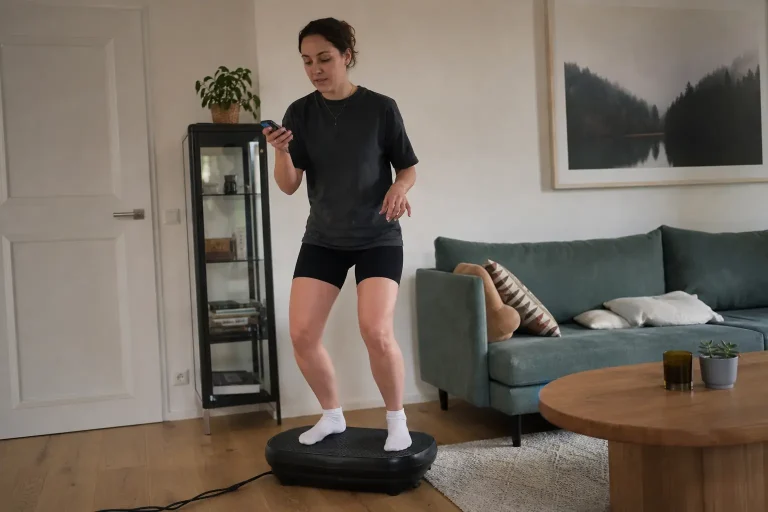
Best Vibration Plate for Beginners (2026): 5 Easy-to-Start Picks
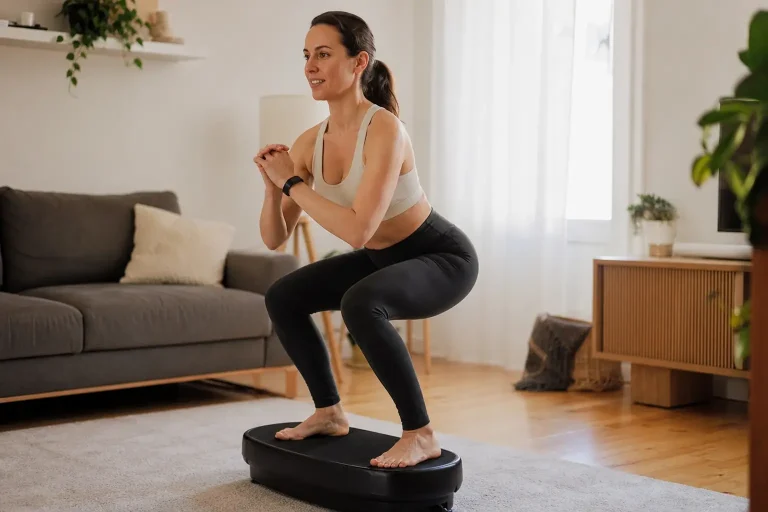
Best Vibration Plate (2026): 5 Top Picks for Home, Ranked
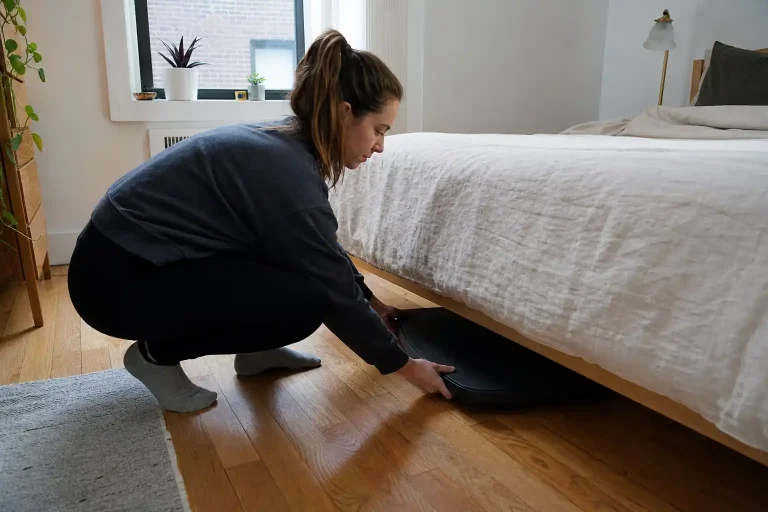
Best Compact Vibration Plate (2026): 5 Light, Easy-to-Store Picks
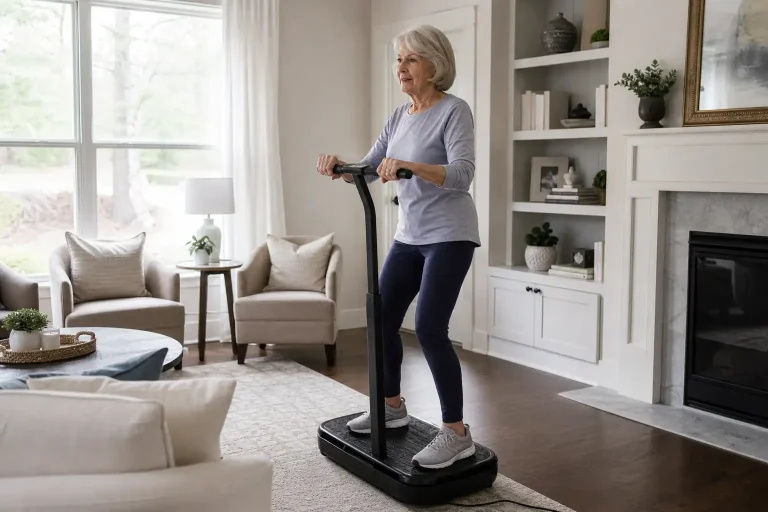
Best Vibration Plate for Seniors (2026): 5 Picks With Handlebars
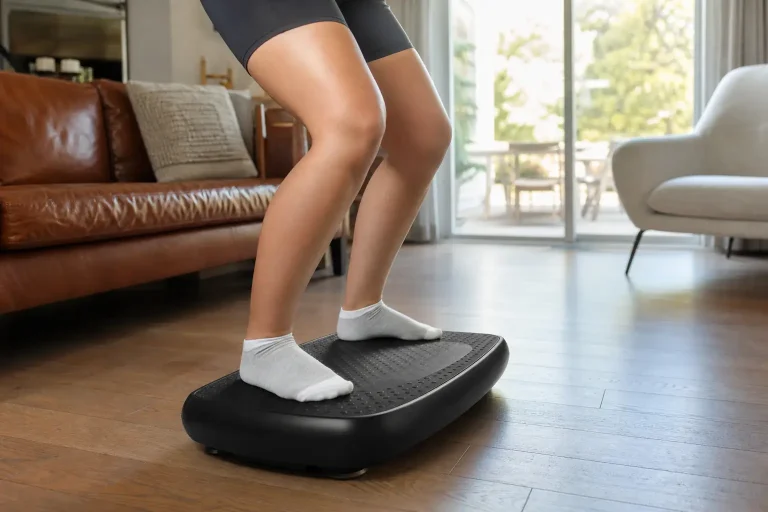
Best Oscillating Vibration Plate (2026): 5 Side-Alternating Picks
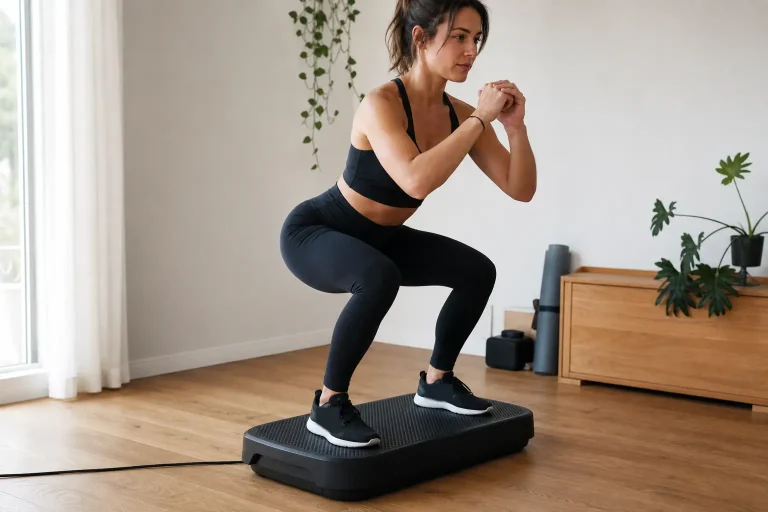
Best Linear Vibration Plate (2026): 5 Vertical Vibration Picks
This article contains affiliate links. If you click through and make a purchase, we may earn a small commission at no extra cost to you. As an Amazon Associate, we earn from qualifying purchases. We do not show prices because they change constantly: product details and availability can change at any time, so please check the current price and details directly on Amazon. Learn more. Amazon and the Amazon logo are trademarks of Amazon.com, Inc. or its affiliates.
