Heart Rate Zone Calculator
1Your heart rate
Your easy endurance zone (zone 2)
–
Your five zones, in bpm
Estimates for healthy adults. Some medicines, such as beta blockers, lower heart rate: ask your doctor for your zones if you take them or have a heart condition.

Free tool · Updated November 1, 2026
Train in the right heart rate zone
Enter your age and resting heart rate, pick how to estimate your maximum, and get five training zones in beats per minute, with a matching treadmill session for each.
Short answer
Heart rate zones split the range between your resting and maximum heart rate into five bands, from easy recovery to all-out effort. With the Karvonen method, each zone is your resting heart rate plus a share of your heart rate reserve: for a 40-year-old resting at 62 bpm, zone 2 is about 133 to 145 bpm.
Key takeaways
- The Karvonen method uses your resting heart rate, so it fits fit and less fit people better than a plain percentage of maximum.
- Your maximum heart rate is the weakest link: a measured value beats any age formula.
- Most easy training belongs in zones 1 and 2; keep zones 4 and 5 for short, planned sessions.
- On a treadmill, incline is an easy way to raise heart rate without running faster.
Training by heart rate keeps easy days easy and hard days hard. A zone is simply a range of beats per minute that matches an intensity, so you can pace a walk, a run or an interval session on the treadmill without guessing.
This calculator uses the Karvonen method, also called heart rate reserve. It needs two numbers: your resting heart rate, which you can measure at home, and your maximum heart rate, which you can measure or estimate from your age. The zones and the method are explained under the result.
How the Karvonen Method Works
Your heart rate reserve is the gap between your maximum and resting heart rate. Each zone takes a share of that reserve and adds it back to your resting rate: target = resting HR + (max HR – resting HR) x intensity. The method was described by the Finnish physician Martti Karvonen in the 1950s and is still used in exercise guidelines, including those of the American College of Sports Medicine.
A plain percentage of maximum ignores your resting rate, so it sets the same zones for a beginner and a trained runner of the same age. The table compares the two methods for one person: the Karvonen zones sit higher in the low zones, which better matches how easy running feels.
| Zone | Intensity% | Karvonen (reserve)Karvonen | Percent of max only% of max |
|---|---|---|---|
| Zone 1 · Recovery | 50-60% | 121-133 bpm | 90-108 bpm |
| Zone 2 · Endurance | 60-70% | 133-145 bpm | 108-126 bpm |
| Zone 3 · Tempo | 70-80% | 145-156 bpm | 126-144 bpm |
| Zone 4 · Threshold | 80-90% | 156-168 bpm | 144-162 bpm |
| Zone 5 · Max effort | 90-100% | 168-180 bpm | 162-180 bpm |
Which Maximum Heart Rate Formula to Use
The old 220 – age rule is easy to remember but tends to underestimate the maximum of adults over 40. The Tanaka formula (208 – 0.7 x age), from a large review of studies published in 2001, and the Gellish formula (207 – 0.7 x age), from a long-term study of adults, fit better on average.
Every formula can be off by 10 beats or more for one person. If your zone 5 feels easy or your zone 2 feels hard, your real maximum is probably different: use the highest heart rate you have seen during a hard, well-warmed-up effort, or ask a professional for a supervised test.
How to Train Each Zone on a Treadmill
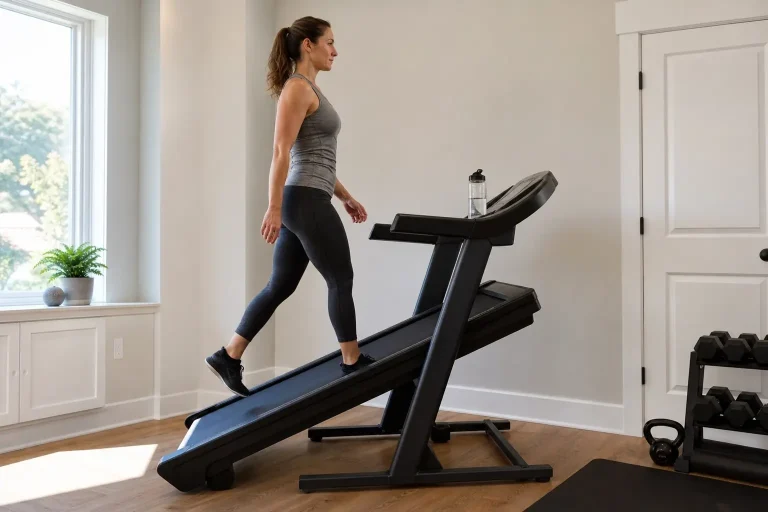
- Zones 1 and 2: walk briskly or jog easily, and use incline to raise the effort without impact; the 12-3-30 workout is a classic zone 2 session.
- Zone 3: steady runs of 20 to 40 minutes; set the speed from a pace with the treadmill pace converter.
- Zones 4 and 5: intervals with full recoveries; see our treadmill HIIT workouts.
- Heart rate lags: it takes one to two minutes to settle after a speed change, so judge short intervals by effort, not by the number.
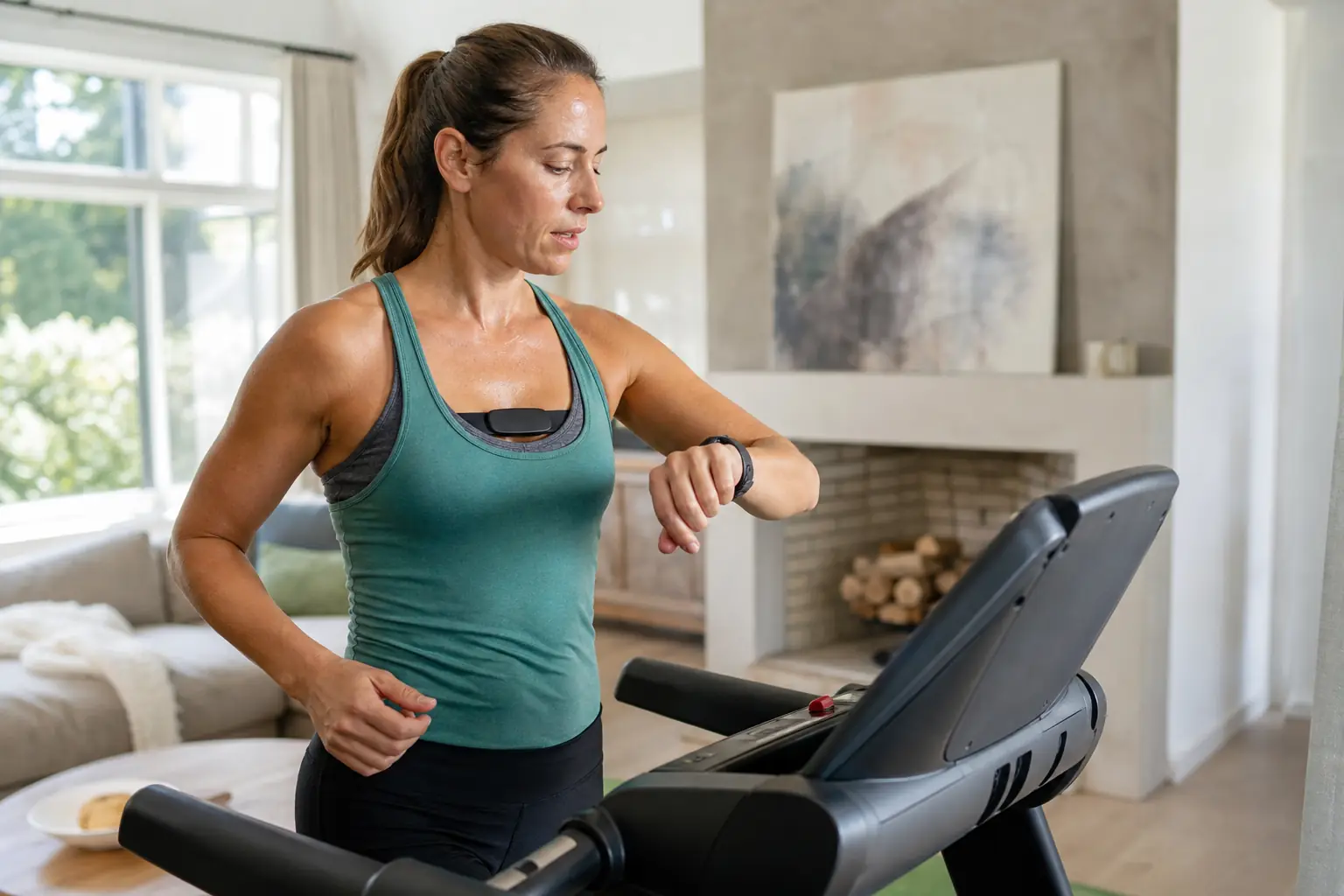
- Choosing a treadmill for zone training? Look for a chest-strap or Bluetooth heart rate connection; the treadmill finder matches models to how you train.
Share, Embed or Cite This Calculator
Link to the calculator from a training plan or club page; the result link keeps your numbers.
Share this calculator
Send it to a friend, a training partner or your followers. These buttons share the calculator itself, not your results.
Use this calculator like an app
Put Heart Rate Zone Calculator on your phone’s home screen: it opens full screen in one tap, like a native app, with no download from a store.
- iPhone (Safari)Tap Share , then Add to Home Screen, then Add.
- Android (Chrome)Tap the menu ⋮, then Add to home screen or Install app.
- ComputerBookmark the page, or in Chrome and Edge use the install icon in the address bar.
Embed the interactive calculator
For websites and blogs. Paste this code where you want the calculator: your visitors use it right on your page. It resizes itself and shows a credit link to FitGearHQ.
Add a link card
For blogs, newsletters and pages that do not allow scripts: a clean card with a picture and one link.
Cite this calculator
- TitleHeart Rate Zone Calculator
- PublisherFitGearHQ
- URLhttps://fitgearhq.com/heart-rate-zone-calculator/
- Updated
More Free Fitness Tools
See them all on Fitness Calculators, Treadmill Tools or every free fitness tool.
Checklist Before You Train by Heart Rate
4 checks
Tap a number to check off that step.
- 01
Measure your resting heart rateIn bed after waking, for a full minute, on three mornings; use the average.
- 02
Pick or measure your maximumA measured maximum beats any formula.
- 03
Use a chest strap for intervalsWrist sensors can lag or misread during fast changes.
- 04
Check your medicinesSome, such as beta blockers, change heart rate; ask your doctor for your zones.
Common Mistakes to Avoid
Mistake 1Trusting 220 – age blindly
Instead: It can be off by 10 to 20 beats, often too low after 40.
Mistake 2Doing every run in zone 3
Instead: Easy days too hard leave you tired for the hard days.
Mistake 3Chasing the number in short intervals
Instead: Heart rate lags behind effort; use pace or feel for short repeats.
Mistake 4Measuring resting heart rate after coffee
Instead: Caffeine, stress and poor sleep raise it.
The Bottom Line
- Formula: target = resting HR + (max HR – resting HR) x intensity.
- Max HR options: Tanaka, Gellish, 220 – age or your measured value.
- Five zones from 50 to 100% of heart rate reserve.
- Free to use, share, link and embed.
Frequently Asked Questions
Subtract your resting heart rate from your maximum, multiply by the zone intensity, and add your resting rate back: that is the Karvonen method the calculator uses.
Zone 2 is 60 to 70% of your heart rate reserve: an easy effort where you can still talk in sentences.
It is more personal than a plain percentage of maximum because it uses your resting heart rate, but it is only as good as the maximum you enter.
Tanaka (208 – 0.7 x age) and Gellish (207 – 0.7 x age) fit adults better on average than 220 – age; a measured maximum is best.
Lower zones use a higher share of fat, but total calories matter more for weight loss; see how to lose weight on a treadmill.
Yes. Pair a chest strap or watch, then adjust speed or incline to stay in the zone.