

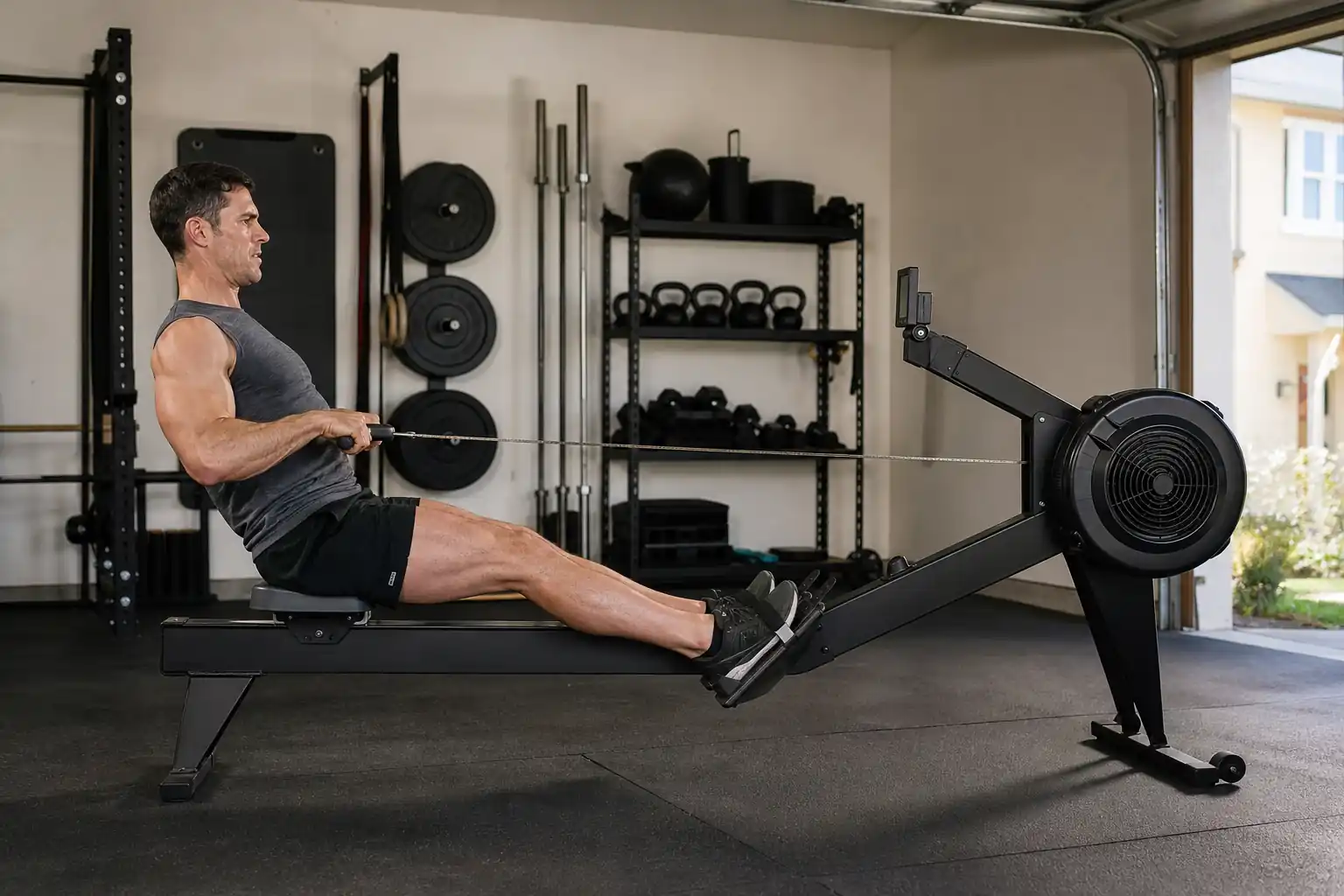
Short answer
Rowing machine muscles worked: the legs (quadriceps, glutes, hamstrings, calves) start every stroke, the core and lower back carry that force into the handle, and the upper back and arms (lats, rhomboids, rear shoulders, biceps, forearms) finish it. A study that recorded 23 muscles on a rowing machine found nearly all of them working harder as power went up. Rowing builds endurance across the whole body; for real muscle growth, pair it with strength training.
Key takeaways
- Rowing works the legs, glutes, core, back, shoulders and arms in one movement.
- The legs and hips do most of the work; the arms finish the stroke.
- The core braces on the drive and pulls you forward on the recovery.
- Rowing builds endurance; strength training builds more muscle.
- Good form decides which muscles do the work.
A rowing machine looks like an arm and back exercise. It is mostly a leg exercise. Each stroke starts with a hard push of the feet against the footplate, the hips and trunk pass that force along, and the arms add the last few inches. Get that order right and the work spreads across almost every major muscle group. Get it wrong and your lower back and biceps do a job meant for your legs.
This guide walks through the four phases of the stroke, the muscles that work in each one and what the research measures. It also answers the questions people search most: does a rowing machine work your abs, can it build muscle, and what does it leave out. If you are shopping, our best rowing machine guide ranks the top home rowers by FitScore.
What Muscles Does a Rowing Machine Work?
A rowing stroke is a chain. The legs push, the hips open, the trunk swings back and the arms pull the handle to the ribs. Every link in that chain is a muscle group, so the short answer is that a rowing machine works the legs, glutes, core, back, shoulders and arms in one movement.
What matters is the share each group takes. On a well-rowed stroke the legs and hips do most of the work, because they are the largest muscles and they move first. The back keeps the spine firm and swings the trunk. The arms finish. Coaches describe the drive as legs, then body, then arms, and that order is what makes rowing a lower-body-led exercise.
Research backs up the full-body picture. A 2011 study in the European Journal of Applied Physiology recorded electrical activity in 23 muscles of beginners and trained rowers on a rowing machine at three power levels. Activity rose with power in 22 of the 23 muscles, while the timing and shape of each muscle’s activity stayed almost the same. In plain terms: rowing harder makes the same muscles work harder, in the same order.
| Muscle group | Main muscles | Role in the stroke |
|---|---|---|
| Legs | Quadriceps, hamstrings, calves | Push the footplate away; the biggest source of force |
| Hips | Gluteus maximus, hamstrings | Open the hips and swing the trunk back |
| Core | Abdominals, obliques, deep trunk muscles | Brace the trunk so leg force reaches the handle; pull you forward on the recovery |
| Lower back | Erector spinae | Hold the spine long and help the body swing |
| Upper back | Latissimus dorsi, rhomboids, middle trapezius | Draw the handle in and squeeze the shoulder blades |
| Shoulders and arms | Rear deltoids, biceps, forearm flexors | Finish the pull and hold the handle |
Check Amazon for current pricing and availability.
Rowing Machine Muscles Worked in Each Phase of the Stroke
Rowers split the stroke into four phases: the catch, the drive, the finish and the recovery. Knowing which muscles lead in each one helps you feel the right work and spot when the wrong muscles take over.
- The catch is the setup. Your ankles bend, your shins come close to vertical and your hamstrings and glutes are stretched and ready. A long, firm spine here protects your lower back.
- The drive is the work. The quadriceps straighten the knees, the glutes and hamstrings open the hips, and the calves press through the footplate. Only once the legs are nearly straight do the back and arms join in.
- The finish is short. The lats, rhomboids and biceps bring the handle to the lower ribs while the core holds a slight lean back.
- The recovery is the rest, but not a passive one. The abdominals and hip flexors pull the trunk forward and the seat back up the rail. It should take about twice as long as the drive.
| Phase | What your body does | Muscles doing most of the work |
|---|---|---|
| Catch | Shins near vertical, arms straight, body leaning slightly forward | Calves and shins (ankle bend), hamstrings and glutes loaded under stretch, lats set |
| Drive: legs | Feet push the footplate; seat slides back | Quadriceps, glutes, hamstrings, calves; core braces |
| Drive: body | Hips open; trunk swings back to a slight lean | Glutes, hamstrings, erector spinae; abdominals hold the brace |
| Drive: arms | Handle comes to the lower ribs, elbows pass the body | Lats, rhomboids, middle trapezius, rear deltoids, biceps, forearms |
| Finish | Legs long, slight lean back, handle at the ribs | Abdominals and back muscles hold the position |
| Recovery | Arms away, body forward, knees bend, seat slides forward | Abdominals and hip flexors pull you forward; shin muscles and hamstrings draw the seat in |
Pro tip: If your arms burn long before your legs, the order has slipped. Say “legs, body, arms” on the drive and “arms, body, legs” on the way back for a few minutes.
Legs and Glutes: The Engine of Every Stroke
The leg drive is the reason rowing feels so different from a seated row in the gym. You press your feet into the footplate much like the push of a leg press or the top half of a squat, but at a quick pace and for hundreds of strokes.
The quadriceps on the front of the thigh straighten the knee. The glutes and hamstrings straighten the hip. The calves, which bend the ankle at the catch, push through the ball of the foot as the legs extend. Together they move the heaviest load of the stroke, which is why a hard rowing session leaves your thighs as tired as your back.
Because the seat moves, rowing also asks the hamstrings and glutes to stretch under control at the catch. People with tight hamstrings often feel it there first. If you cannot reach a comfortable catch without rounding your back, shorten the slide a little and build range over time.
- Quadriceps: knee extension during the drive.
- Gluteus maximus: hip extension and the body swing.
- Hamstrings: hip extension in the drive; they also help draw the seat forward on the recovery.
- Calves: ankle bend at the catch and push through the foot in the drive.
Core and Back: Does a Rowing Machine Work Your Abs?
Yes, but not in the way a crunch does. During the drive, the abdominals, obliques and the deep muscles around the spine brace the trunk so the force from your legs reaches the handle instead of leaking through a soft middle. On the recovery, the abdominals help pull your trunk forward and bring you back up the slide. That is steady, repeated work for the whole midsection.
The erector spinae, the long muscles along each side of the spine, hold your back straight and help swing the trunk from a slight forward lean to a slight lean back. In a good stroke they work hard but do not pull alone. When they do, the lower back takes over from the legs.
A 2014 study in the Journal of Sports Science and Medicine looked at muscle coordination in people new to rowing during six minutes of maximal rowing. On a standard fixed rowing machine, these untrained subjects relied more on their back and upper body muscles during the drive. It is a useful reminder: beginners tend to row with their back, and the fix is to lead with the legs.
Visible abs are a separate question. They depend on overall body fat, not on one exercise. Our rowing machine for weight loss guide covers what rowing can and cannot do there.
Watch out: Lower back pain after rowing usually points to a rounded back at the catch or to pulling with the back before the legs finish. Slow down, shorten the stroke and check your form before adding effort.
Upper Back, Shoulders and Arms
The upper body finishes what the legs start. The latissimus dorsi, the broad muscles under the armpits, draw the handle in toward the ribs. The rhomboids and middle trapezius squeeze the shoulder blades together. The rear deltoids, at the back of the shoulder, help bring the elbows past the body. The biceps bend the elbows, and the forearm muscles hold the handle.
These muscles move less load than the legs, so they tire if they start too early. Keep your arms straight until your legs are almost flat, then let the elbows travel back close to your body. A relaxed grip, with the wrists flat, keeps the forearms from burning out after a few minutes.
This upper back work is one reason many people like rowing alongside desk work. The pull trains the muscles that draw the shoulders back. Good form still matters more than any posture claim: sit tall at the finish and do not shrug.
Will a Rowing Machine Build Muscle?
Rowing builds muscular endurance in a lot of muscles at once. Whether it builds much muscle size depends on where you start. Each stroke uses a moderate load repeated many times, which is closer to cardio than to heavy lifting. People new to exercise often notice firmer legs and a stronger back in the first weeks, but rowing alone will not add size the way progressive strength training does.
Federal guidance treats the two as different jobs. The CDC activity guidelines for adults ask for 150 minutes a week of moderate aerobic activity, or 75 minutes of vigorous activity, plus muscle-strengthening work on 2 or more days a week that covers all major muscle groups. Rowing fits the first part well. For the second, add a few sets of squats, lunges, push-ups, rows with weights or bands, or similar work.
If you want more force per stroke, short, hard intervals at a higher resistance load the muscles more than long, easy pieces. Raise the resistance in steps and keep the stroke clean; heavier is not better if your form breaks down. Our planned rowing machine workouts guide covers interval sessions.
| Trains well | Trains a little | Leaves out |
|---|---|---|
| Legs and glutes (pushing) | Calves, forearm grip | Chest (pushing with the arms) |
| Upper back (pulling) | Biceps | Triceps (pressing) |
| Core bracing | Hip flexors | Side-to-side and twisting movements |
| Heart and lungs | Shoulder stability | Heavy, low-rep strength work |
Pro tip: Rowing is a pulling movement. Balance it with pushing exercises such as push-ups or presses two days a week.
How Form Changes Which Muscles Work
Two people on the same machine can work different muscles. The difference is technique. A clean stroke spreads the load from the legs to the back to the arms. A rushed one piles it on the lower back and arms.
Online you may see one number for the share of muscles rowing uses, such as “85 percent.” The studies we read measure activity in specific muscles and do not give a single figure, so treat that number as a slogan. What the research does show is that the pattern of muscle activity stays stable as effort rises, which means good habits learned at an easy pace carry over to hard sessions.
- Arms bend too early: biceps and shoulders tire, legs do less. Keep the arms straight until the legs are nearly flat.
- Back opens before the legs: the lower back takes the load. Push with the legs first, then swing.
- Rounded back at the catch: the spine, not the hips, takes the stretch. Sit tall and hinge from the hips.
- Too much lean back: extra strain on the lower back with little gain. A small lean is enough.
- Resistance set too high: slow, grinding strokes that load the back. A medium setting builds a better stroke.
Pick a Rower That Fits Your Training
Any well-built rower works the same muscles. What changes is the feel of the resistance, the data you see and how well the machine fits your body. Air rowers, like the Concept2 RowErg, get heavier the harder you pull and suit intervals. Magnetic rowers are quiet and let you set a fixed level. Water rowers give a smooth, building pull with a soft swish. Our type guides explain each one: best air rowing machine, best magnetic rowing machine and best water rowing machine.
Tall users need a long rail so the legs can fully extend: see our best rowing machine for tall people guide. FitScores below come from the Best guide named on each card; how we score explains the method.
Best overall

Concept2 RowErg
FitScore 78.9/100
The top pick in our best rowing machine guide. Air resistance rises with your effort, so it suits hard leg-driven intervals. The listing gives a 500 lb capacity and a monitor that shows 500 m split, stroke rate and watts. It is long, at 96 inches in use, but separates in two for storage.
Ranked in our Best Rowing Machine guide
Check Price on AmazonQuiet magnetic pick

Sunny Health & Fitness Smart Magnetic Rowing Machine SF-RW523021
FitScore 79.9/100
Ranked first in our best magnetic rowing machine guide. Sixteen magnetic levels make it easy to keep a steady load while you work on form, and the monitor shows stroke rate and 500 m split. It takes users up to 300 lb and stands upright.
Ranked in our Best Magnetic Rowing Machine guide
Check Price on AmazonBest water feel

YOSUDA Foldable Water Rowing Machine
FitScore 79.9/100
Ranked first in our best water rowing machine guide. The water tank gives a pull that builds through the drive, with a 400 lb capacity and a stated maximum user height of 78 inches. The monitor is basic: time, distance, strokes and calories.
Ranked in our Best Water Rowing Machine guide
Check Price on AmazonMuscle-Smart Rowing Checklist
7 checks
Tap a number to check off that step.
- 01
Lead every drive with the legs; keep the arms straight until the knees are nearly flat.
- 02
Sit tall at the catch and hinge from the hips, not the lower back.
- 03
Finish with the handle at the lower ribs and a slight lean back.
- 04
Hold the handle loosely with flat wrists.
- 05
Use a medium resistance while you learn the stroke.
- 06
Add two strength sessions a week, including pushing exercises.
- 07
Stretch the hamstrings and hips if the catch feels cramped.
Common Mistakes to Avoid
Mistake 1Pulling with the arms first, which tires the biceps and wastes the legs.
Mistake 2Rounding the lower back at the catch to reach farther.
Mistake 3Setting the resistance to the maximum and grinding out slow strokes.
Mistake 4Expecting rowing alone to build large muscles.
Mistake 5Skipping pushing exercises and training only the pulling muscles.
Mistake 6Ignoring lower back pain instead of checking form.
The Bottom Line
- The drive goes legs, then body, then arms; the recovery reverses it: arms, body, legs.
- The legs and hips produce the biggest share of each stroke; the arms only finish it.
- In one study of 23 muscles, activity rose with power output in 22 of them while the timing stayed the same.
- Rowing mostly trains pulling muscles; chest and triceps get little work, so add pushing exercises.
- The CDC asks adults for muscle-strengthening work on 2 or more days a week on top of cardio.
Our Top Picks
 Best overallConcept2 RowErgFitScore78.9/100Check on Amazon
- Quiet magnetic pickSunny Health & Fitness Smart Magnetic Rowing Machine SF-RW523021FitScore79.9/100Check on Amazon
- Best water feelYOSUDA Foldable Water Rowing MachineFitScore79.9/100Check on Amazon
Frequently Asked Questions
The legs and hips: quadriceps, glutes and hamstrings. They start every drive and move the heaviest load. The upper back (lats, rhomboids, middle trapezius) and the core come next, and the arms finish the stroke. A study that recorded 23 muscles found nearly all of them working harder as power output rose.
Yes. The abdominals and obliques brace the trunk during the drive so leg force reaches the handle, and they help pull your body forward on the recovery. That builds core endurance. Visible abs depend on overall body fat, which comes from regular activity and eating habits over time, not from one exercise.
It builds muscular endurance and can firm up the legs and back, especially for beginners. For noticeable muscle growth you need progressive strength training. The CDC recommends muscle-strengthening activities on 2 or more days a week that work all major muscle groups, in addition to cardio such as rowing.
Mostly legs. A good stroke follows the order legs, then body, then arms. The legs produce the main push and the arms add the last part of the pull. If your arms tire first, you are likely bending the elbows before the legs are straight.
Very little. Rowing is a pulling movement, so it trains the back of the body and the biceps more than the chest and triceps. Add pushing exercises such as push-ups, bench presses or overhead presses to balance your training.
Common causes are rounding the back at the catch, swinging the body before the legs finish, leaning far back at the finish or using a very high resistance. Slow down and practice the stroke order. Stop and see a healthcare professional if pain is sharp, lasts, or spreads into the legs.
Explore More Rowing Machine Guides
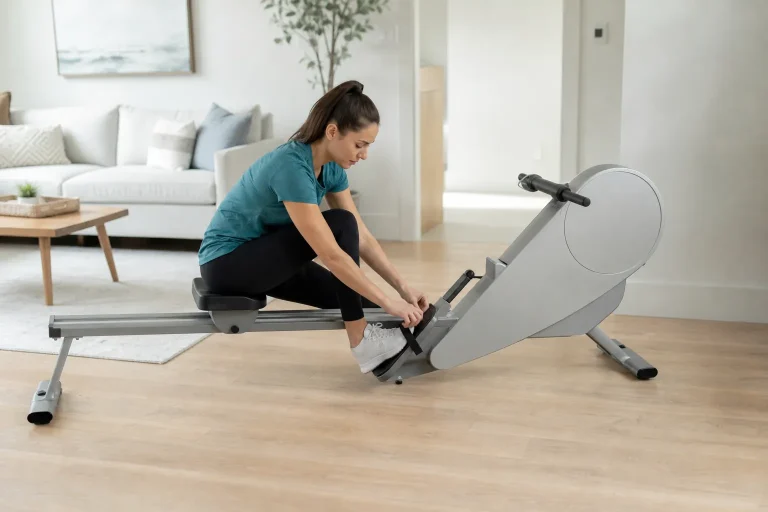
How to Use a Rowing Machine Properly: Form, Technique and Settings (2026)
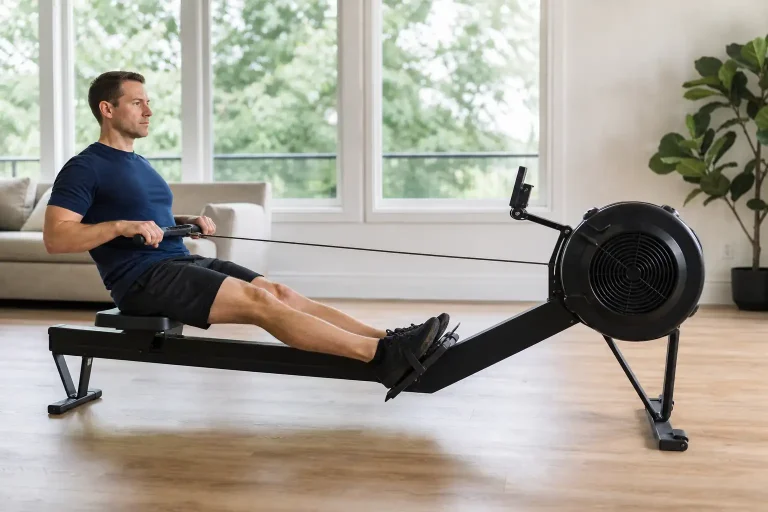
Best Rowing Machine (2026): 5 Top Picks for Home, Ranked
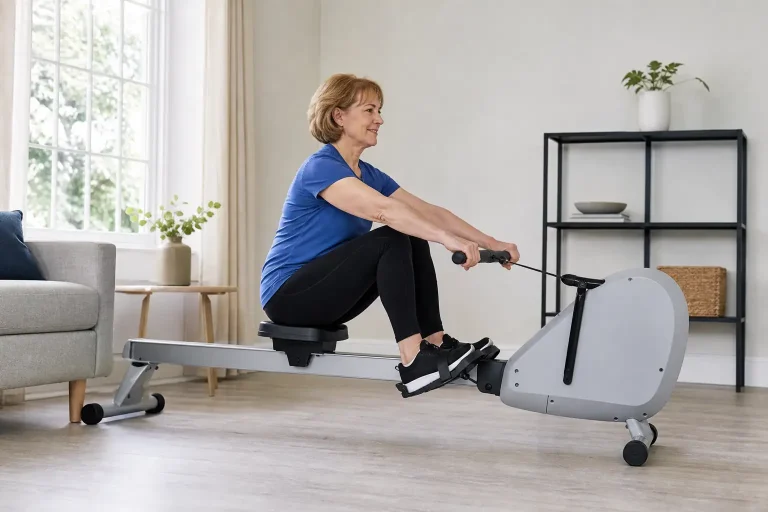
Best Rowing Machine for Beginners (2026): 5 Easy-to-Start Picks
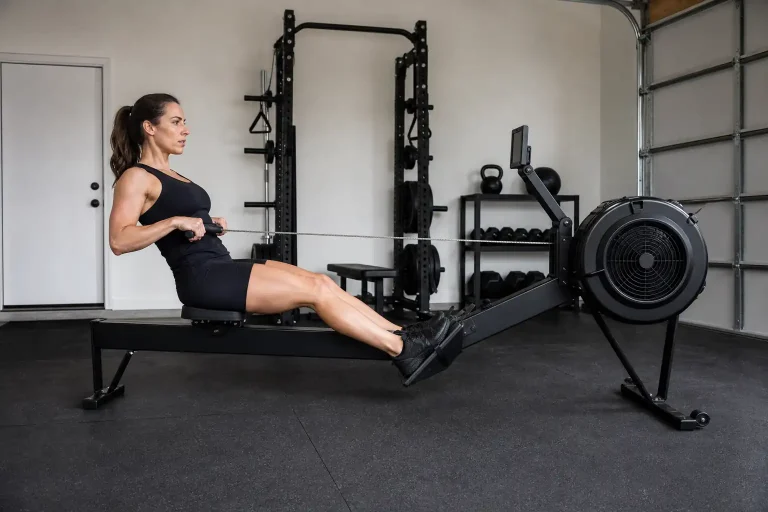
Best Air Rowing Machine (2026): 5 Picks for Hard Training
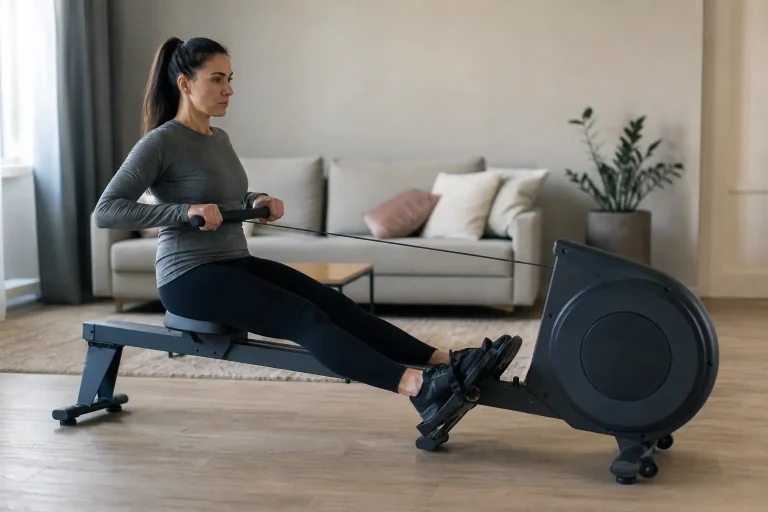
Best Magnetic Rowing Machine (2026): 5 Quiet Picks Ranked
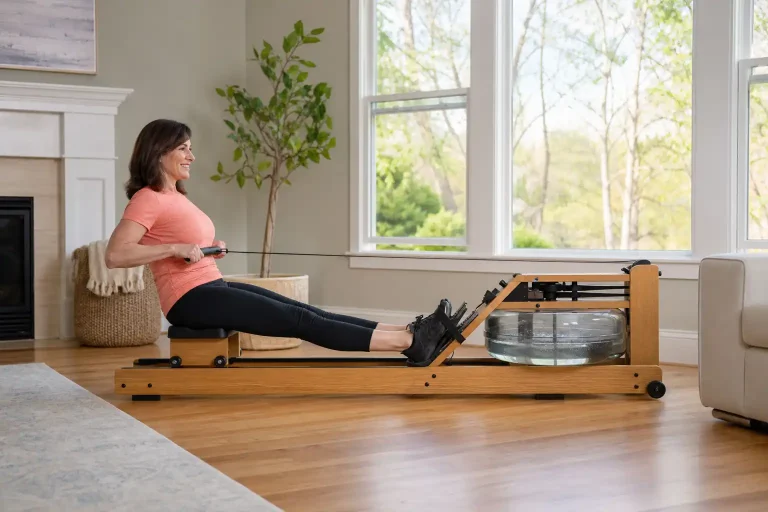
Benefits of a Rowing Machine: 9 Reasons to Row, and the Limits (2026)
This article contains affiliate links. If you click through and make a purchase, we may earn a small commission at no extra cost to you. As an Amazon Associate, we earn from qualifying purchases. We do not show prices because they change constantly: product details and availability can change at any time, so please check the current price and details directly on Amazon. Learn more. Amazon and the Amazon logo are trademarks of Amazon.com, Inc. or its affiliates.
