

Short answer
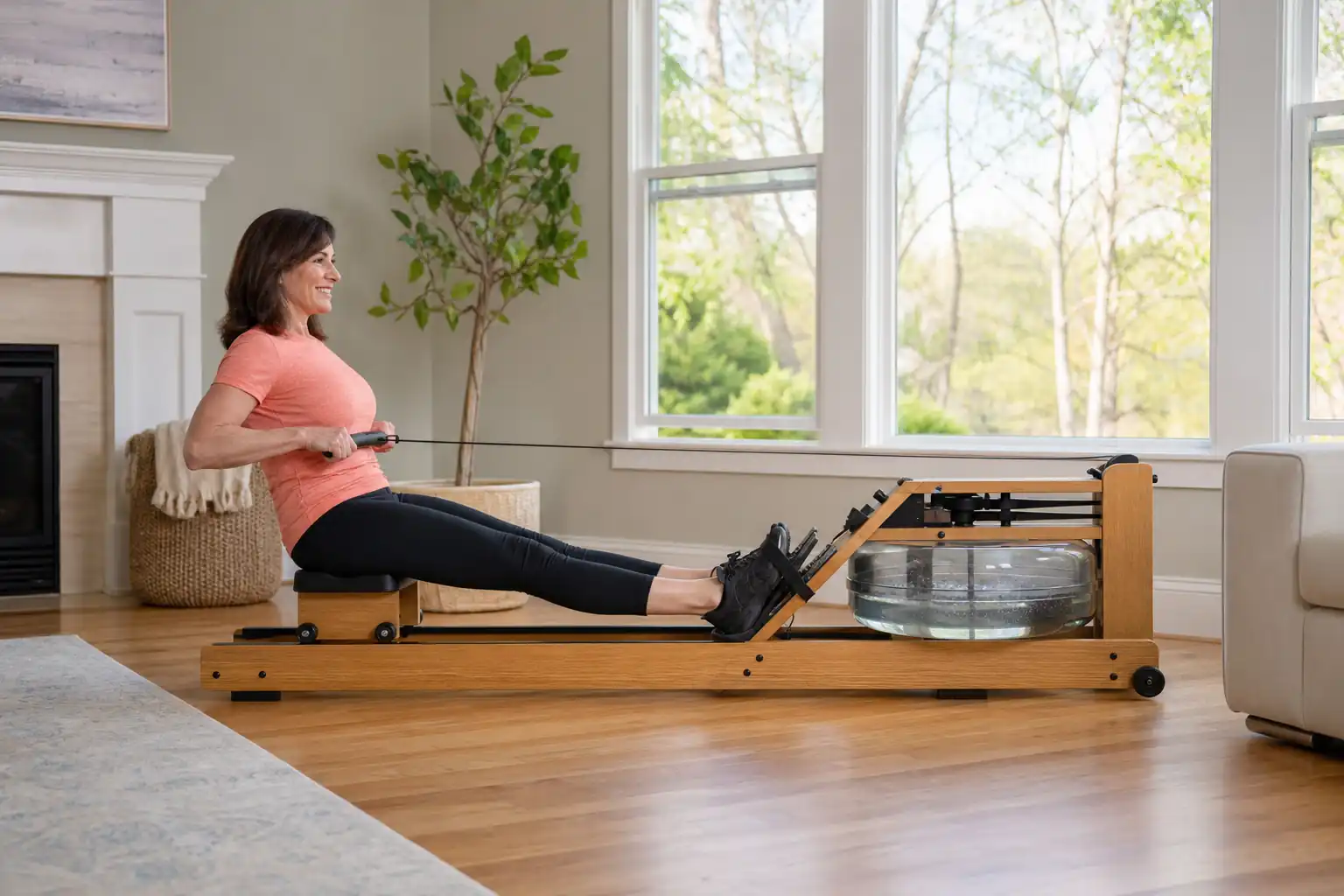
The main benefits of a rowing machine are cardio fitness and full-body muscle work in one low-impact, seated movement. A small 2023 trial found 10 weeks of indoor rowing raised peak aerobic capacity in women in their mid-60s, and a study of 23 muscles showed nearly all of them working harder as rowing power rose. Rowing also counts toward the weekly activity linked by the CDC to lower risk of heart disease, stroke and type 2 diabetes.
Key takeaways
- Rowing improves cardio fitness and works the whole body.
- It is seated and low impact, with no landing forces.
- Regular activity of this kind is linked to lower risk of several chronic diseases.
- Clear monitor data makes progress easy to track.
- Pair rowing with strength work and good eating habits for the full benefit.
People choose a rowing machine for different reasons. Some want cardio that is kinder to their knees than running. Some want one machine that works the whole body. Others want a quiet piece of equipment that fits in an apartment and stands in a corner. All of these are real benefits, but they are not the same thing, and the research behind each one differs.
This guide sorts the benefits of a rowing machine into what studies show, what follows from general exercise guidelines and what is just convenience. It also covers the limits, so you know what rowing will not do. To compare machines, start with our best rowing machine guide.
The Benefits of a Rowing Machine at a Glance
Here is the short list. Each benefit is explained below, with the evidence and the caveats.
| Benefit | What it means | Evidence |
|---|---|---|
| 1. Heart and lung fitness | Raises aerobic capacity over weeks of training | Rowing trial (2023) |
| 2. Full-body muscle work | Legs, hips, core, back and arms in one movement | Muscle activity study (2011) |
| 3. Low impact | Seated, no landing forces | Mechanics of the movement |
| 4. Health benefits of regular activity | Lower risk of several chronic diseases | CDC guidance on physical activity |
| 5. Time efficiency | Moderate or vigorous cardio in one session | Federal activity guidelines |
| 6. Muscular endurance | Hundreds of repetitions per session | Nature of the exercise |
| 7. Clear progress data | Split, stroke rate, watts or calories on the monitor | Machine features |
| 8. Mood and sleep | Linked to regular activity in general | CDC guidance on physical activity |
| 9. Home convenience | Quiet options, upright storage | Machine specs |
Check Amazon for current pricing and availability.
Is a Rowing Machine Good for Cardio?
Yes. Rowing is an aerobic exercise: it raises your heart rate and breathing for as long as you keep rowing. Because the legs, trunk and arms all work, the effort feels high for the pace, and it is easy to reach moderate or vigorous intensity.
A 2023 randomized trial in the International Journal of Environmental Research and Public Health put post-menopausal women on an indoor rowing program of three 30-minute sessions a week at 60 to 80 percent of peak heart rate for 10 weeks. In the 13 women who completed it, average age about 66, peak oxygen uptake rose from about 18.1 to 21.8 mL/kg/min, roughly a 20 percent gain. Heart rate also recovered faster after a maximal test. The control group did not change.
It was a small study in one group, so the exact numbers will not apply to everyone. What it shows is that a simple routine, about 90 minutes a week, can produce measurable cardio gains in a few months, even in people who are not young athletes.
To train by heart rate, our heart rate zone calculator turns your age and resting heart rate into zones, and the VO2 max calculator estimates aerobic capacity.
Full-Body Muscle Work in One Movement
Most cardio machines lean on the legs. Rowing adds the trunk and the upper body. Each stroke pushes with the legs, swings the trunk and pulls with the arms, so muscles from the calves to the forearms take part.
A 2011 study recorded activity in 23 muscles during rowing at three power levels in beginners and trained rowers. Activity rose with power in 22 of the 23 muscles, while the order in which they fired stayed the same. That is the scientific version of a simple idea: row harder and the whole chain works harder.
The work is not spread evenly. The legs and hips do the most; the back and arms finish the stroke. Our rowing machine muscles worked guide breaks it down phase by phase.
Low Impact on the Joints
Running sends a landing force through the feet, knees and hips with every step. Rowing has none: you sit on a seat that slides, and your feet stay on the footplate. That makes rowing a low-impact choice for people who find running uncomfortable, carry extra body weight, or want cardio on days between runs.
Low impact does not mean no strain. The knees and hips bend deeply at the catch, and the lower back works throughout the stroke. People with knee or hip problems that limit deep bending, or with back pain, should ask a healthcare professional whether rowing suits them and start with a shorter slide.
If you are choosing between machines for joint comfort, our rowing machine vs treadmill comparison and treadmill vs elliptical guide set out the trade-offs.
| Machine | Impact | Upper body work | Main muscles |
|---|---|---|---|
| Rowing machine | Low (seated) | Yes, pulling | Legs, hips, core, back, arms |
| Treadmill (running) | High | Little | Legs, hips |
| Treadmill (walking) | Low to moderate | Little | Legs, hips |
| Exercise bike | Low (seated) | Little | Legs, hips |
| Elliptical | Low | Some, with moving handles | Legs, hips, some arms |
The Health Benefits of Regular Activity
Many of the largest health benefits come from being regularly active, whatever the activity. Rowing is one way to get there. The CDC lists the health benefits of physical activity for adults: a single session of moderate to vigorous activity can improve sleep quality, reduce feelings of anxiety and reduce blood pressure. Over the long term, regular activity lowers the risk of heart disease, stroke, type 2 diabetes and 8 cancers, reduces the risk of weight gain, improves bone health and reduces the risk of dementia, depression and falls.
These benefits come from studies of physical activity in general, not from rowing alone. They apply to rowing because it is moderate to vigorous activity when you do it with steady effort. The weekly baseline for adults is 150 minutes of moderate activity or 75 minutes of vigorous activity, plus muscle-strengthening work on 2 or more days.
- Five 30-minute steady rows a week meet the moderate baseline.
- Three 25-minute harder sessions with intervals meet the vigorous baseline.
- Short sessions add up: two 15-minute rows count the same as one 30-minute row.
Watch out: If you have a heart condition, high blood pressure, diabetes or another chronic condition, or you are pregnant, ask a healthcare professional which activity types and amounts suit you before starting.
Time Efficiency and Muscular Endurance
Because rowing uses so much muscle at once, it is easy to raise your effort without high speed or steep hills. A 20-minute session with short, hard pieces can feel as demanding as a much longer walk. For people short on time, that matters: vigorous minutes count roughly double toward weekly activity targets.
Rowing also builds muscular endurance. A 30-minute row at 20 strokes per minute is about 600 repetitions of a leg push and a pull. That trains the legs, back and grip to keep working under fatigue. It is not the same as building strength or size, which needs heavier loads and fewer repetitions, so keep two strength sessions a week in your plan.
Clear Data and Measurable Progress
Rowing monitors give you hard numbers. Most show time, distance, strokes and calories. Better ones add stroke rate, the 500 m split (your pace) and watts (your power). Rowing a fixed distance, such as 2,000 meters, and checking the time every few weeks is a simple, honest fitness test.
That data is a quiet benefit. Seeing your split drop at the same heart rate is a sign your fitness is improving, even when the scale does not move. Our rowing pace calculator converts splits into finish times for any distance.
Monitors vary a lot. Some entry rowers show only time, distance, strokes and calories. If you want split and watts, check the specs in our Best guides before you buy.
Mood, Sleep and Home Convenience
The CDC links even a single session of moderate to vigorous activity with better sleep and less anxiety. A rowing machine at home removes some of the usual barriers: weather, travel time and gym hours. Rowing has a steady, repetitive rhythm that many people find calming.
Practical details make the habit easier. Magnetic rowers make no fan or water sound, which helps in apartments; see our best magnetic rowing machine guide. Many rowers stand upright or fold after a session, which our best folding rowing machine guide covers. The rowers in our Best guides run from 62 to 96 inches long in use, so measure your space first.
The Limits of Rowing
An honest list of benefits needs its limits. Rowing is a strong all-round exercise, but it does not do everything.
- It is not a full strength program. Rowing trains endurance. Add strength work 2 or more days a week, including pushing exercises for the chest and triceps.
- It does not cause weight loss on its own. Weight change depends on activity and eating habits together. See our rowing machine for weight loss guide.
- It has a technique curve. Poor form shifts work to the lower back. Learn the stroke order before adding intensity.
- It is not weight-bearing. Seated exercise loads the bones less than walking or running. Mix in weight-bearing activity too.
- It needs floor space. The rowers in our Best guides run from 62 to 96 inches long in use. Check length in use and storage options.
Pick a Rower to Get These Benefits
All rowers deliver the core benefits. The choice is about fit and feel. Air rowers suit hard intervals; magnetic rowers are the quietest; water rowers have a smooth, building pull. If storage matters, pick one that folds or stands upright. The cards below come from our best rowing machine and best folding rowing machine guides; each FitScore is from the guide named. How we score explains the method.
Best overall

Concept2 RowErg
FitScore 78.9/100
Joint top score in our best rowing machine guide. Air resistance responds to your effort, the monitor shows split, stroke rate, watts and heart rate, and the listing gives a 500 lb capacity. It is 96 inches long in use and separates in two for storage.
Ranked in our Best Rowing Machine guide
Check Price on AmazonBest quiet pick

Sunny Health & Fitness Smart Magnetic Rowing Machine SF-RW523021
FitScore 78.9/100
Tied on FitScore in our best rowing machine guide. Magnetic resistance with 16 levels runs quietly, and the monitor shows split, stroke rate and heart rate. It takes users up to 300 lb and stands upright when you finish.
Ranked in our Best Rowing Machine guide
Check Price on AmazonBest space saver

YPOO Magnetic Rowing Machine 350 LB
FitScore 84/100
The top pick in our best folding rowing machine guide. It is 65 inches long in use, weighs 44.4 lb, folds and stands upright, with 16 magnetic levels and a 350 lb capacity. The monitor does not show a 500 m split.
Ranked in our Best Folding Rowing Machine guide
Check Price on AmazonGet the Most From Your Rowing Machine
7 checks
Tap a number to check off that step.
- 01
Learn the stroke order first: legs, body, arms.
- 02
Build toward 150 minutes of moderate or 75 minutes of vigorous activity a week.
- 03
Use the talk test or heart rate zones to set effort.
- 04
Retest a fixed distance every few weeks to track progress.
- 05
Add two strength sessions a week, including pushing exercises.
- 06
Mix in weight-bearing activity such as walking.
- 07
Ask a healthcare professional first if you have a chronic condition.
Common Mistakes to Avoid
Mistake 1Expecting rowing to replace strength training.
Mistake 2Rowing with the back and arms instead of the legs.
Mistake 3Starting with long, hard sessions and quitting after a sore week.
Mistake 4Treating monitor calorie counts as exact.
Mistake 5Buying a rower without measuring the space it needs in use.
The Bottom Line
- Rowing is cardio that also uses the legs, hips, core, back and arms.
- It is seated and has no landing impact, unlike running.
- In a 2023 trial, 3 rowing sessions a week for 10 weeks raised peak aerobic capacity by about 20% in older women.
- The CDC links regular activity to better sleep, lower blood pressure and lower risk of heart disease, stroke and type 2 diabetes.
- Rowing does not replace strength training or a healthy diet, and poor form can strain the lower back.
Our Top Picks
 Best overallConcept2 RowErgFitScore78.9/100Check on Amazon
- Best quiet pickSunny Health & Fitness Smart Magnetic Rowing Machine SF-RW523021FitScore78.9/100Check on Amazon
- Best space saverYPOO Magnetic Rowing Machine 350 LBFitScore84/100Check on Amazon
Frequently Asked Questions
Yes. It combines aerobic exercise with work for the legs, hips, core, back and arms, and it is low impact. A 2023 trial found 10 weeks of indoor rowing raised aerobic capacity in older women. Like any exercise, its benefits depend on regular use and good technique.
Neither is better for everyone. Rowing uses more upper body muscle and has no landing impact; running is weight-bearing, which loads the bones, and needs no machine. Many people use both. Choose the one you will do consistently, and consider joint comfort and space at home.
In one trial, three 30-minute sessions a week for 10 weeks produced measurable gains in aerobic capacity. For general health, the CDC baseline is 150 minutes of moderate activity or 75 minutes of vigorous activity a week, plus strength work on 2 or more days.
Rowing works the back muscles, and with good form many people tolerate it well. Poor technique, such as rounding the lower back or pulling with the back before the legs, can strain it. If you have back pain, ask a healthcare professional before starting and keep sessions short at first.
Rowing builds muscular endurance in the legs, back and arms, which can make muscles feel firmer. How defined they look depends mostly on overall body fat, which changes with activity and eating habits over time. For more muscle, add strength training.
It can be: rowing is seated, low impact and easy to scale. The 2023 trial in women around age 66 showed clear cardio gains. Older adults should check with a healthcare professional first, especially with joint, heart or balance concerns, and start with short, easy sessions.
Explore More Rowing Machine Guides
Best Rowing Machine (2026): 5 Top Picks for Home, Ranked
Rowing Machine Muscles Worked: Every Muscle, Phase by Phase (2026)
Rowing Machine for Weight Loss: How Much to Row and What to Expect (2026)
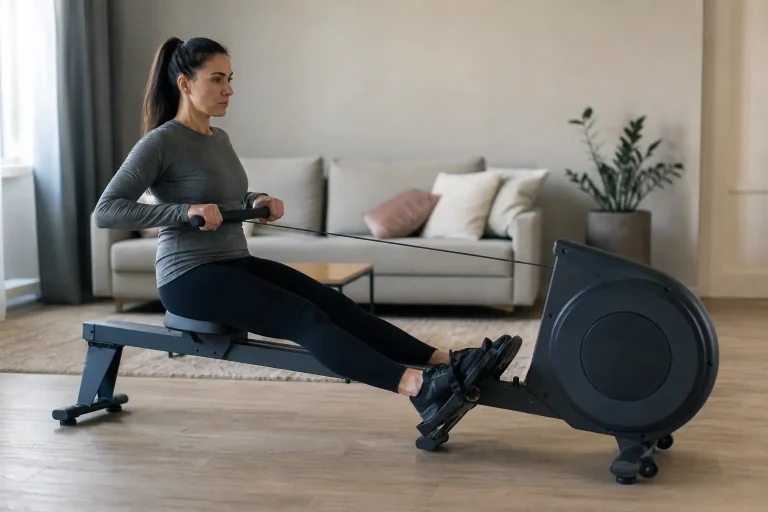
Best Magnetic Rowing Machine (2026): 5 Quiet Picks Ranked
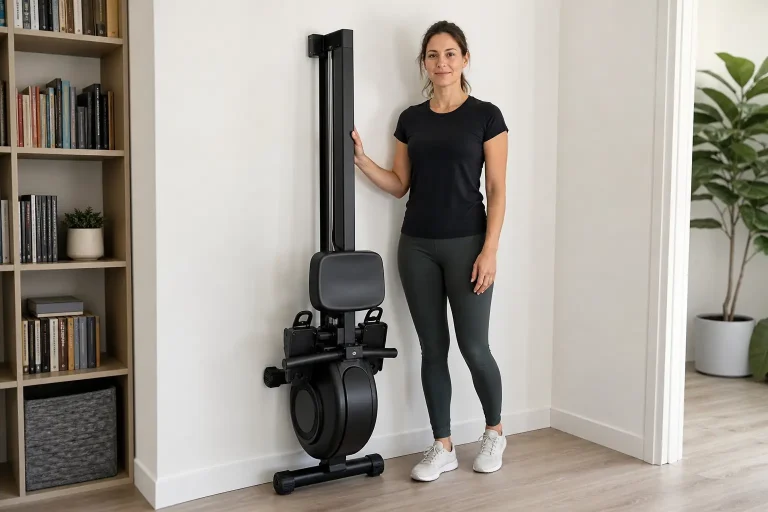
Best Folding Rowing Machine (2026): 5 Space-Saving Picks
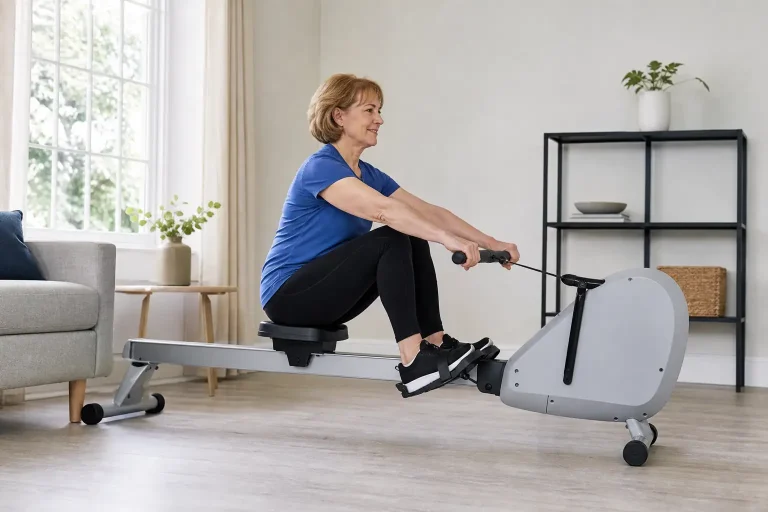
Best Rowing Machine for Beginners (2026): 5 Easy-to-Start Picks
This article contains affiliate links. If you click through and make a purchase, we may earn a small commission at no extra cost to you. As an Amazon Associate, we earn from qualifying purchases. We do not show prices because they change constantly: product details and availability can change at any time, so please check the current price and details directly on Amazon. Learn more. Amazon and the Amazon logo are trademarks of Amazon.com, Inc. or its affiliates.
