

Short answer
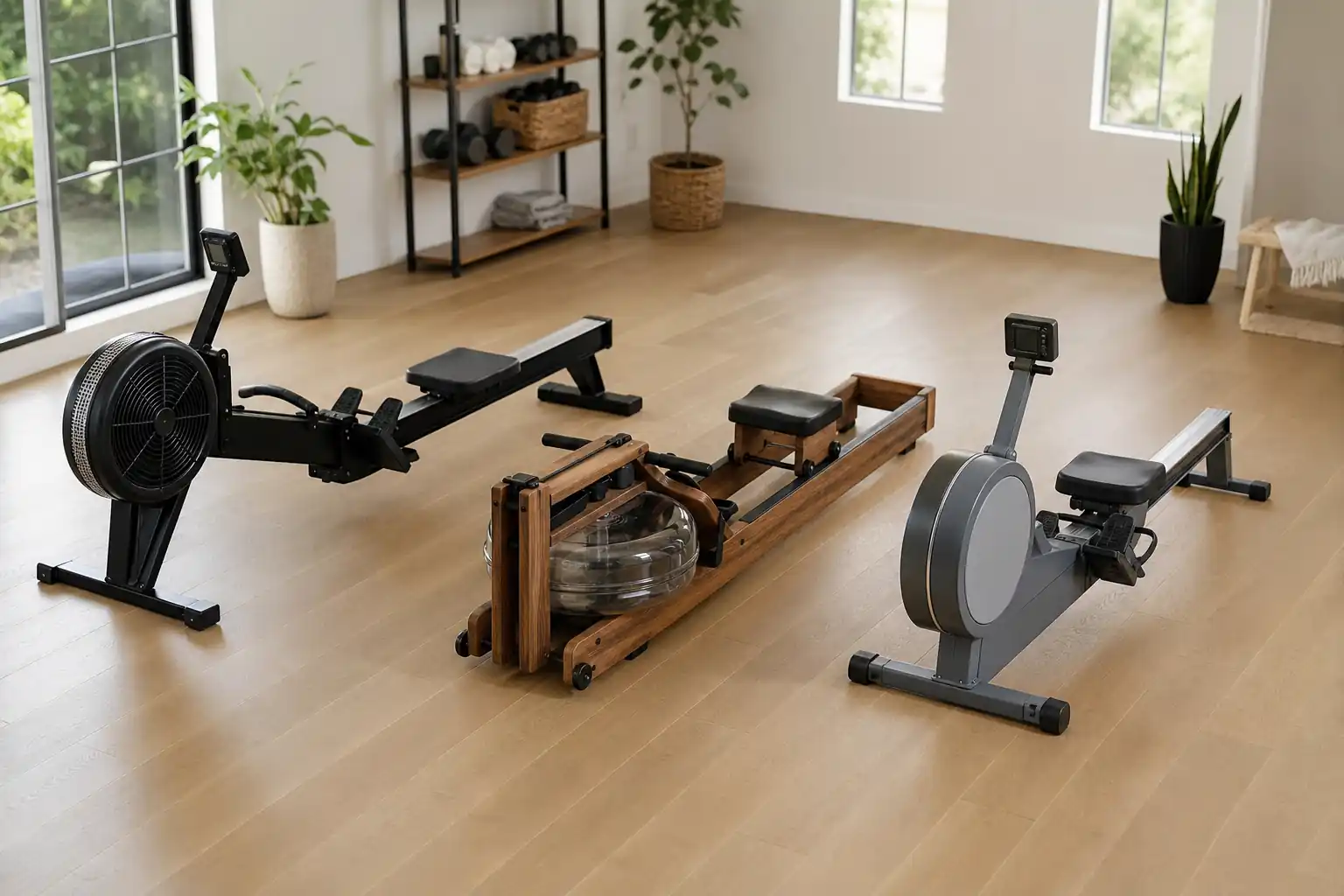
There are five main types of rowing machines: air (a fan), magnetic (magnets near a flywheel, including electromagnetic models), water (paddles in a tank), hydraulic (pistons) and air + magnetic hybrids. Air suits hard training, magnetic is the quietest, water has the most natural feel, and hydraulic is the smallest but the least smooth.
Key takeaways
- The main types of rowing machines are air, magnetic (and electromagnetic), water, hydraulic and air + magnetic hybrids.
- Air and water rowers get harder as you pull harder; magnetic and hydraulic use set levels.
- Magnetic is the quietest and needs the least upkeep; air is the loudest.
- Water gives the most natural feel; hydraulic is the smallest but least even.
- Almost every home rower is stationary; dynamic rowers change stroke rate and force.
Every rowing machine turns your pull into motion against some kind of brake. That brake, the resistance system, decides how the stroke feels, how loud the machine is, how much upkeep it needs and often how big it is. It is the first choice to make, before brand, screen or price tier.
This guide explains the types of rowing machines one by one: how each works, how it feels, how much noise it makes and what it needs to keep running, with examples from the rowers we track. For ranked picks, go straight to our magnetic, water and air rowing machine guides.
Types of Rowing Machines at a Glance
Five resistance systems cover nearly every home rower. Two of them, air and water, are “effort-based”: the load rises as you pull harder and faster, with no levels to choose. Magnetic and hydraulic rowers are “setting-based”: you pick a level with a knob or a screen, and the machine holds it. Hybrids combine a fan with a magnetic brake.
The noise and smoothness columns below are the scales of our FitScore, built from the resistance type, not from sound measurements. They explain why the same rower can rank high in one of our guides and low in another. Read how we score for the full method.
| Type | How it works | Feel | Noise (our score) | Upkeep | Examples we track |
|---|---|---|---|---|---|
| Air | Fan flywheel pushes air | Load rises with effort; damper changes the feel | Loudest (35/100) | Dust the fan cage; chain care per manual | Concept2 RowErg, GMWD Air, Stamina ATS |
| Magnetic | Magnets slow a metal flywheel | Even load at the level you pick | Quietest (100/100) | Very little | Sunny SF-RW523021, Merach Q1S, YPOO |
| Electromagnetic | Electric current sets the magnetic brake | Even; console can change it mid-workout | Quietest (100/100) | Very little; usually needs an outlet | Hydrow Origin, Hydrow Wave |
| Water | Paddles turn in a water tank | Load rises with effort; carries through the stroke | Moderate (65/100) | Treat the water per the manual | YOSUDA, WaterRower Oak, JOROTO |
| Hydraulic | One or two pistons resist the pull | Least even of the five | Low (75/100) | Few parts; check the cylinders | Stamina BodyTrac Glider 1050, FEIERDUN |
| Air + magnetic | Magnetic brake on a fan flywheel | Base load you set, plus fan load | Mid (50/100) | As air | Aviron Strong Series, Sunny Air Magnetic, Merach R60N |
Check Amazon for current pricing and availability.
Air Rowing Machines: How Air Resistance Works
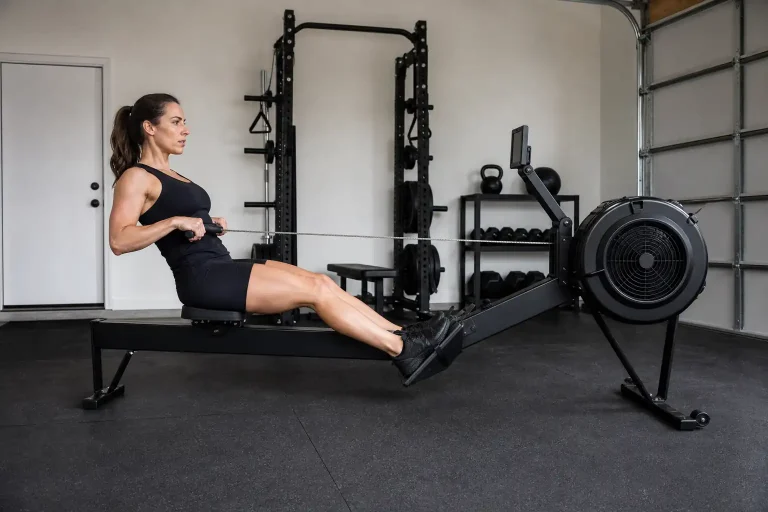
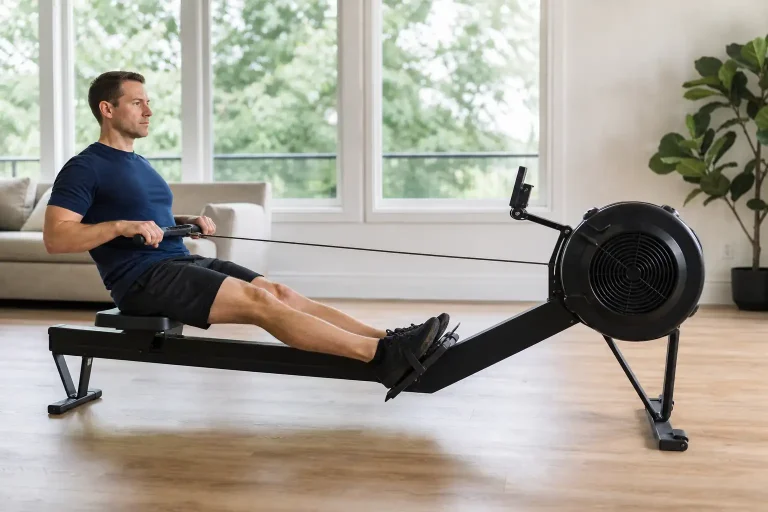
An air rower has a fan flywheel inside a cage at the front. Your pull on the handle spins the fan through a chain, and the blades have to push air out of the way. Air resists more the faster the blades move, so rowing machine air resistance climbs at once when you drive harder and drops when you ease off. A beginner and an athlete can share the same machine at the same setting.
The damper is the lever on the side of the cage. Opening it lets more air in, so each stroke feels heavier, like a lower gear on a bike. It does not make the workout harder by itself: your effort does. Because dust and room conditions change the airflow, the Concept2 PM5 reports a drag factor, a measure of how fast the flywheel slows, so you can set the same feel on any machine.
Air rowers are the long ones: 77 to 96 inches on the listings we track. The fan is the loudest kind of rower, and its whoosh rises with effort. They are the standard for CrossFit, Hyrox and interval training. See our best air rowing machine ranking for picks.
- Good for: hard intervals, benchmark tests, sharing between users of different strength.
- Less good for: shared walls, early-morning rows, small rooms.
- Upkeep: keep the fan cage free of dust and follow the manual for the chain.
Magnetic Rowing Machines
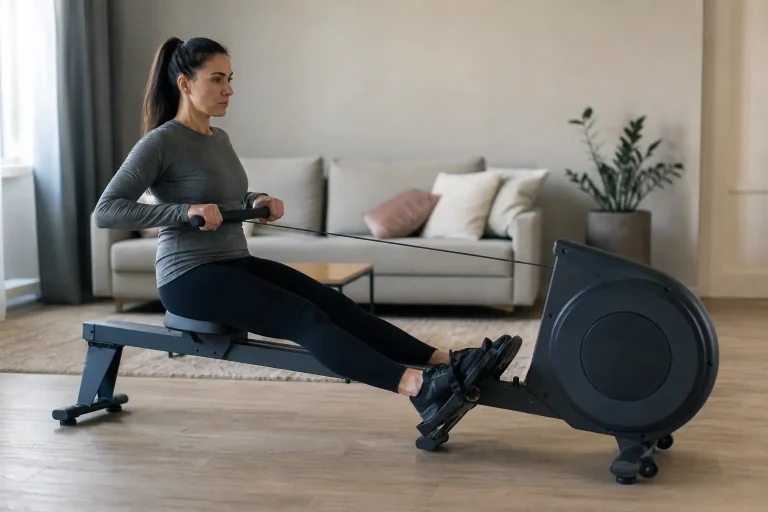
On a magnetic rower, a knob or lever moves magnets toward a metal flywheel. The closer they sit, the stronger the drag. You choose the level and the machine holds it, whatever your stroke speed. Nothing touches the flywheel, so the stroke is close to silent: only the seat rolling on the rail and the strap make sound.
Level counts are not comparable between brands. Sixteen levels split the range into finer steps but say nothing about how strong the top level is. Very strong rowers can outpull the brake at the top setting, which is the main limit of the type. Air and water rowers do not hit a ceiling in the same way.
Magnetic rowers come in the widest range of sizes we track, from compact folding frames under 60 inches long to long-rail models over 80 inches. They need almost no upkeep, which is why they dominate our best rowing machine for beginners and best magnetic rowing machine rankings.
Electromagnetic Rowing Machines
An electromagnetic rower sets its magnetic force with electric current instead of moving the magnets by hand. That lets the console or an app change resistance during a program, and Hydrow’s listings say its electromagnetic drag adapts to your effort in real time to imitate rowing on water.
The trade-offs are power and membership. Most electromagnetic models need an outlet. The Hydrow Origin and Hydrow Wave listings both say the touchscreen, stats and workout library require an active membership after the trial. If you want a rower that works fully on its own, see our best rowing machine without subscription guide.
In our scoring, electromagnetic and manual magnetic rowers share the same top noise score. The difference is control, not sound.
Water Rowing Machines
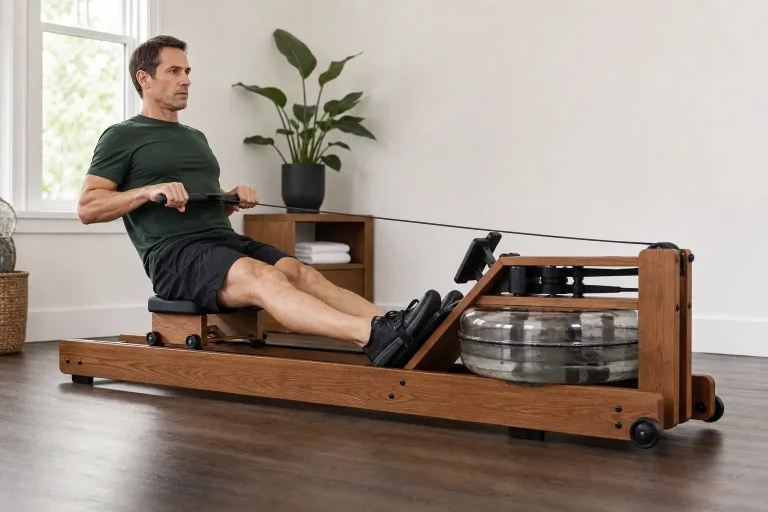
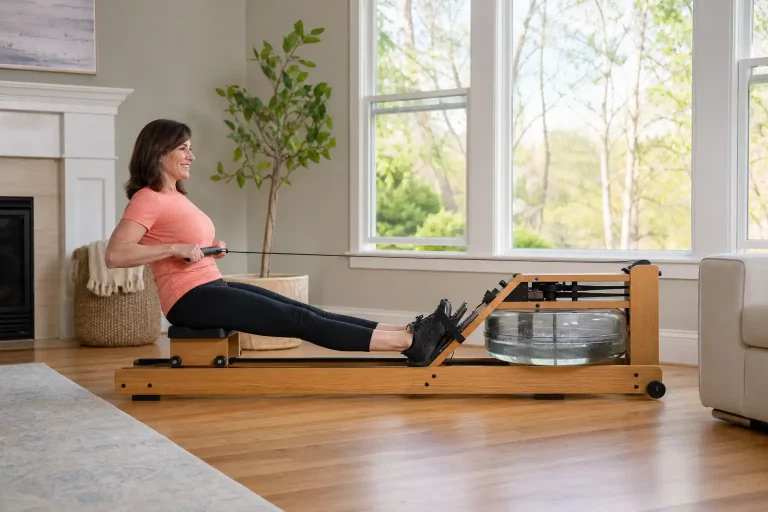
A water rower spins a set of paddles inside a sealed tank. Water resists faster movement more strongly, so the load builds as you drive and eases as you slow. The water keeps moving between strokes, a little like a boat gliding, and that carry-through is what owners mean by a natural feel. In our smoothness scale, water rates highest.
The amount of water sets the base load: a fuller tank feels heavier at the same pace. Most tanks have a level scale on the side. Water rowers are not silent: you hear a steady swish with each stroke, which many owners like. Our noise score places them between magnetic and air.
Upkeep is light but regular. The water sits in the tank for months, so follow the manual for treating it, and check the tank seals now and then. Many water rowers have wood frames that look like furniture; keep them away from heaters and damp corners. Compare picks in our best water rowing machine guide, or read water vs air rowing machine.
| Fill level | How the stroke feels | Good for |
|---|---|---|
| Lower fill | Lighter catch, quicker stroke | Learning technique, long steady rows |
| Mid fill | Balanced load | Most home workouts |
| Higher fill | Heavier catch at the same pace | Stronger rowers, short hard pieces |
Hydraulic Rowing Machines
Hydraulic rowers replace the flywheel with pistons, small cylinders filled with fluid that resist being pushed or pulled. A knob sets the tension. Some, like the Stamina BodyTrac Glider 1050, have two rowing arms that swing out to the sides; others, like the FEIERDUN Hydraulic Rowing Machine and the Sunny Health & Fitness Compact Hydraulic Rower, put the seat on a short track and use a tension knob.
They are the smallest and lightest type we track: the three hydraulic rowers are 57 to 58 inches long and weigh 22.4 to 38 lb on their listings. The Stamina is the widest rower in our data at 42.5 inches because of its arms. The FEIERDUN and Sunny list 12 resistance levels.
The catch is the stroke. Without a spinning flywheel, there is no momentum carried between strokes, and the pull feels less even than on any other type. Our smoothness scale rates hydraulic lowest, and our beginners guide leaves hydraulic rowers out for that reason. Capacities are also lower: 220 to 300 lb on these three listings.
Hybrid Air and Magnetic Rowing Machines
A hybrid puts a magnetic brake on the same fan flywheel. The magnetic level sets a base load you choose; the fan adds load as you speed up. That gives a heavier feel at low stroke rates without opening the damper all the way, and a little less fan noise than a pure air rower in our scoring.
The Aviron Strong Series lists dual air and magnetic resistance of up to 100 lb and a 22-inch touchscreen. The Sunny Health & Fitness Air Magnetic Rower lists 16 magnetic levels and a 52.6-inch rail, and the Merach R60N lists 10 levels, a 53-inch rail and a 500 lb rating. All three appear in our air rowing machine ranking, because they keep a fan.
Stationary vs Dynamic Rowers
One more design split matters to competitive rowers. On a stationary rower, the footplate and flywheel are fixed and only your seat moves. On a dynamic rower, the footplate and flywheel slide too, so your body mass stays more in place, closer to a boat. Nearly all home rowers are stationary.
Research shows the difference is real. In a study of 34 collegiate rowers rowing at 2,000 m race power, the dynamic Concept2 led to a 12.6% higher stroke rate and about 15% lower peak handle force than the stationary model. A 2023 study of 12 NCAA Division I oarswomen found higher stroke rates on the dynamic ergometer, with no difference in peak heart rate or oxygen uptake, and larger trunk and knee movement on the stationary one.
For home fitness, a stationary rower of any resistance type is the practical choice. Dynamic machines matter mainly to crews training for on-water racing.
Which Type of Rowing Machine Should You Choose?
Start with where you will row and who will hear it. Then think about how you like to train, and how much room you have. Most home buyers end up choosing between magnetic, water and air.
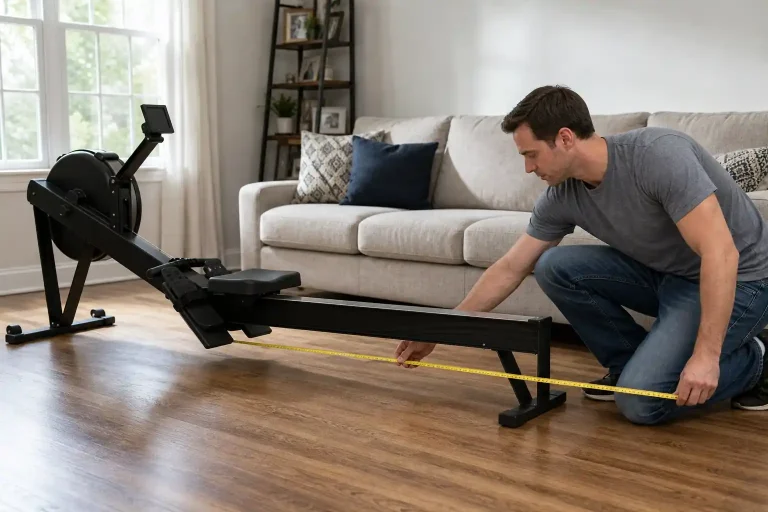
Two pairs are close calls. Read air vs magnetic rowing machine if you want hard training but share walls, and water vs magnetic rowing machine if feel matters but so does quiet. If space decides everything, check the sizes in our rowing machine dimensions table, or the best folding rowing machine picks.
| Your situation | Best type | Why |
|---|---|---|
| Apartment, shared walls, early rows | Magnetic | Quietest in our scoring; little upkeep |
| Intervals, CrossFit, Hyrox, benchmark tests | Air | Load rises with effort; split and watts on the best monitors |
| A natural, boat-like feel | Water | Smoothest in our scoring; carry-through between strokes |
| Classes on a big screen | Electromagnetic or hybrid | Console can change resistance; usually a membership |
| Very small room, light use | Compact magnetic | Under 66 inches long with a smooth stroke; hydraulic only if space rules out all else |
The Top Pick of Each Type
These are the top-ranked rowers of each main type in our guides. Each FitScore comes from the guide named in the card, because a FitScore depends on the buying intent: the same rower scores differently for hard training, quiet use or a water feel.
Top air rower

Concept2 RowErg
FitScore 87.7/100
Number one in our best air rowing machine guide. A fan flywheel with a continuous damper, a PM5 monitor with 500 m split and watts, a 500 lb rating and a 5-year frame warranty on the listing. Amazon reviewers praise the solid build and quick assembly. It needs 96 inches of floor length and is the loudest type.
Ranked in our Best Air Rowing Machine guide
Check Price on AmazonTop magnetic rower

Sunny Health & Fitness Smart Magnetic Rowing Machine SF-RW523021
FitScore 79.9/100
Number one in our best magnetic rowing machine guide. Sixteen magnetic levels, a 50-inch rail, a monitor with 500 m split, stroke rate and heart rate, and upright storage. It is rated for 300 lb and its magnetic brake is the quietest type in our scoring. Like any magnetic rower, its top level has a ceiling that very strong rowers may reach.
Ranked in our Best Magnetic Rowing Machine guide
Check Price on AmazonTop water rower

YOSUDA Foldable Water Rowing Machine
FitScore 79.9/100
Number one in our best water rowing machine guide. A solid beech frame, a 5.8-gallon tank, a 400 lb rating, users up to 6 ft 6 in, and a frame that folds. Owners on Amazon like its smooth glide and the sound of the water. Its monitor shows time, distance, strokes and calories, but no split.
Ranked in our Best Water Rowing Machine guide
Check Price on AmazonTop hybrid rower

Aviron Strong Series Rower
FitScore 79.7/100
Second in our best air rowing machine guide and the top air + magnetic hybrid. Up to 100 lb of combined resistance, a 22-inch touchscreen, users up to 6 ft 8 in and a 507 lb rating on the listing. It stands upright for storage. The membership is optional, but much of the interactive content needs it.
Ranked in our Best Air Rowing Machine guide
Check Price on AmazonChecklist Before You Pick a Type
6 checks
Tap a number to check off that step.
- 01
Decide who will hear the rower, and when you will row.
- 02
Pick effort-based (air, water) or setting-based (magnetic, hydraulic) resistance.
- 03
Measure the floor: air rowers run up to 96 inches long.
- 04
Check the tallest user or rail length on the listing.
- 05
Check whether the screen or programs need a membership.
- 06
Plan the upkeep: fan dust, water treatment or almost none.
Common Mistakes to Avoid
Mistake 1Comparing magnetic level numbers between brands.
Mistake 2Buying an air rower for a shared wall without hearing one first.
Mistake 3Choosing hydraulic for a long-term training plan.
Mistake 4Assuming every electromagnetic rower works fully without a membership.
Mistake 5Forgetting that water tanks need occasional treatment.
The Bottom Line
- Air and water rowers get harder the faster you pull; magnetic and hydraulic rowers use a level you set.
- In our scoring, magnetic and electromagnetic rowers are the quietest and air rowers the loudest.
- Hydraulic rowers are the smallest we track, about 57 to 58 inches long and 22.4 to 38 lb.
- Air + magnetic hybrids put a magnetic brake on a fan flywheel for a heavier base load.
- In a study of 34 collegiate rowers, a dynamic Concept2 led to a 12.6% higher stroke rate than the stationary model at the same power.
Our Top Picks
 Top air rowerConcept2 RowErgFitScore87.7/100Check on Amazon
- Top magnetic rowerSunny Health & Fitness Smart Magnetic Rowing Machine SF-RW523021FitScore79.9/100Check on Amazon
- Top water rowerYOSUDA Foldable Water Rowing MachineFitScore79.9/100Check on Amazon
- Top hybrid rowerAviron Strong Series RowerFitScore79.7/100Check on Amazon
Frequently Asked Questions
The main types are air (fan), magnetic, electromagnetic, water, hydraulic (piston) and air + magnetic hybrids. They differ in how the stroke feels, how loud they are, how much upkeep they need and how big they are.
It depends on your home and training. Magnetic is best for quiet rooms, air for hard intervals and benchmark tests, and water for a natural feel. Hydraulic rowers are the smallest but have the least even stroke, so they suit light use in very small spaces.
Your pull spins a fan flywheel, and the blades push air. Air resists more the faster the fan spins, so the load rises the harder you row. The damper changes how much air reaches the fan, which changes how heavy each stroke feels, not how hard the workout is.
Magnetic and electromagnetic rowers, because nothing touches the flywheel. Water rowers make a steady swish, and air rowers are the loudest, with fan noise that rises with effort.
They are compact and light, about 57 to 58 inches long and 22.4 to 38 lb on the listings we track. But the pull is less even than on flywheel rowers and capacities are lower, so we do not rank them for beginners.
A little. The water sits in a sealed tank for months, so follow the manual for treating it, and check the seals now and then. Wood frames should stay away from heaters and damp areas.
Explore More Rowing Machine Guides
Best Air Rowing Machine (2026): 5 Picks for Hard Training
Best Magnetic Rowing Machine (2026): 5 Quiet Picks Ranked
Best Water Rowing Machine (2026): 5 Picks for a Real Water Feel
Best Rowing Machine (2026): 5 Top Picks for Home, Ranked
Rowing Machine Dimensions (2026): Sizes of 39 Rowers and a Will-It-Fit Calculator
Rowing Machines
This article contains affiliate links. If you click through and make a purchase, we may earn a small commission at no extra cost to you. As an Amazon Associate, we earn from qualifying purchases. We do not show prices because they change constantly: product details and availability can change at any time, so please check the current price and details directly on Amazon. Learn more. Amazon and the Amazon logo are trademarks of Amazon.com, Inc. or its affiliates.
