

Short answer
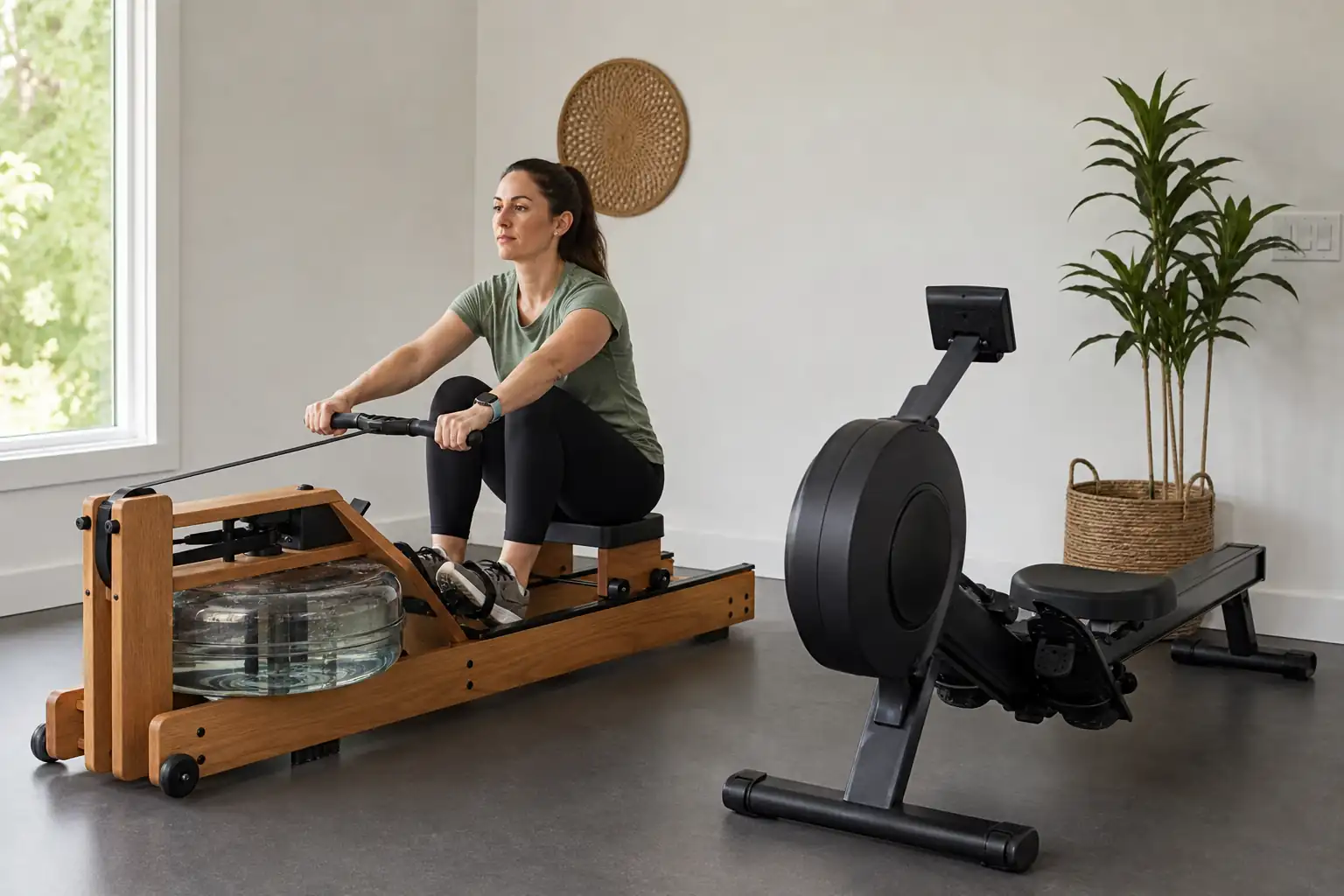
In the water rowing machine vs magnetic choice, pick a water rower if you want a stroke that builds as you pull harder, a wood frame that looks like furniture and the sound of moving water. Pick a magnetic rower if you need the quietest machine, set levels you choose with a knob, a shorter footprint, a 500 m split on the monitor (on some models) and no tank to fill or treat.
Key takeaways
- Water resistance builds with effort; magnetic resistance holds the level you set.
- Magnetic is the quietest system; water makes a soft swish.
- Water rowers in our guides carry more weight; magnetic ones are shorter and lighter.
- Magnetic rowers need no upkeep; water tanks need filling and treatment.
- The muscles worked are the same on both.
Water and magnetic rowers are the two types most often bought for living rooms and apartments. Both are quieter than an air fan, and both give the same full-body stroke. What separates them is the feel of the pull, the sound, the size and the upkeep. A water rower drags paddles through a tank of water. A magnetic rower slows a metal flywheel with magnets set by a knob.
This comparison uses examples from our best water rowing machine and best magnetic rowing machine guides, with specs from each Amazon US listing, and studies on how rowing machines differ.
Water Rowing Machine vs Magnetic at a Glance
The table compares the two systems, with ranges from the water and magnetic rowers ranked in our guides.
| Criterion | Water rower | Magnetic rower |
|---|---|---|
| How resistance works | Paddles in a tank: load rises with pull speed | Magnets on a flywheel: you set a level |
| How you adjust it | Pull harder; more water gives a heavier base load | Knob or lever (16 levels on the models we rank) |
| Stroke feel | Builds through the drive; water keeps moving between strokes | Even pull at the chosen level |
| Smoothness (our Comfort method) | Top mark for stroke smoothness | High, just below water |
| Noise (our Noise score) | 65/100: a rhythmic swish | 100/100: near silent |
| Length in use | 70.9 to 82 in | 62 to 79.3 in |
| Machine weight | 46.9 to 83.6 lb | 41.4 to 68.2 lb |
| Max user weight | 350 to 700 lb | 300 to 350 lb |
| Frame | Wood on all five we rank (beech or oak on most) | Steel or aluminum |
| Monitor data | Time, distance, strokes, calories; no split listed | 500 m split on both Sunny models; basic metrics on others |
| Upkeep | Fill the tank, add purification tablets | None beyond cleaning |
Check Amazon for current pricing and availability.
Stroke Feel: Building Pull vs Set Level
On a water rower, a strap turns an axle with paddles inside a sealed tank. Water resists faster movement more strongly, so the load builds as you drive harder and eases as you slow down. The amount of water sets the base load: a fuller tank feels heavier at the same pace. Between strokes the water keeps moving, a little like a boat gliding after the oar leaves the water. Our Comfort method gives water the top smoothness mark for that reason.
On a magnetic rower, you choose a level and it holds, whether you pull fast or slow. That makes it easy to start light and stay there while you learn, and to repeat the same session week after week. The trade-off is the ceiling: at the top level, a strong rower can outpull the magnets, and some Merach Q1S owners say the highest levels still feel light.
Do not expect either one to row like a boat. A study comparing ergometer and on-water rowing found that muscle recruitment and stroke timing differed between the machines and the water. Another compared a Concept2 air rower with a WaterRower and found similar force profiles but different hip and pelvis angles through the stroke; the authors drew no conclusion on which machine better simulates rowing on water. The “real water feel” is about sound and rhythm more than proven technique transfer.
| Goal | Water rower | Magnetic rower |
|---|---|---|
| Lighter stroke for learning | Lower water fill; row gently | Low level |
| Steady endurance rows | Mid fill | Middle levels |
| Heavier pull | Higher fill; drive harder | Top levels (limited by the magnets) |
| Change mid-session | Change your pace | Turn the knob |
Noise, Size and Storage
A magnetic rower is the quietest home rower: the brake is silent, and what you hear is the seat on the rail and the strap. Our Noise score gives it 100 out of 100. A water rower scores 65. It makes a rhythmic swish with each drive, louder when you row harder. Many owners like that sound; YOSUDA and Dripex owners on Amazon single it out as a plus. If you row while others sleep, the magnetic rower is the safer pick.
Magnetic rowers are a little shorter and lighter. The magnetic models in our guides measure 62 to 79.3 inches long and weigh 41.4 to 68.2 lb on their listings. The water models run 70.9 inches (JOROTO) to 82 inches (WaterRower Oak) and weigh 46.9 to 83.6 lb on their listings. Water adds weight once filled, so check that a filled rower still tips up easily before you count on upright storage.
Both types store well. Four of the five water rowers we rank stand upright and three of those also fold; the YOSUDA folds. All five magnetic picks stand upright, and the YPOO also folds. Our best folding rowing machine guide ranks both types on storage.
Capacity, Data and Upkeep
Water rowers in our guides carry more weight. Four are rated 350 to 400 lb, and the WaterRower Oak with S4 Monitor is rated 700 lb on its Amazon listing. The magnetic models we rank stop at 300 to 350 lb. If you are near those limits, see our best rowing machine for heavy people guide.
Magnetic rowers win on monitor data in our rankings. Both Sunny Health & Fitness models show a 500 m split, the pace number most rowing workouts use. None of the water rowers we rank lists a split; most show time, distance, strokes and calories, and the WaterRower S4 shows stroke rate and heart rate. If you train to pace targets, check the metrics list before you buy.
Upkeep favors magnetic. A water tank needs filling to the level you want, purification tablets at the interval the maker gives, and a shaded spot away from sun and heat so algae does not grow. Wood frames want a wipe after sweaty sessions and distance from heaters and damp corners. A magnetic rower needs little beyond a wipe down and an occasional check of the strap and seat rollers.
Pro tip: Fill a water rower where it will live. Moving a full tank across the house is harder than the empty weight on the listing suggests.
Same Stroke, Same Muscles
The resistance system does not change which muscles work. Cleveland Clinic describes the same four phases on any rower (catch, drive, finish, recovery), with the legs driving, the core bracing and the arms finishing the pull, working the legs, glutes, hamstrings, upper back, abs, obliques and lower back. It also notes that you control the speed and intensity of every session, which is true of both types.
Form matters more than the brake. Keep the knees tracking straight, push with the legs before you pull with the arms, and bring the handle to the chest, not the chin. To set training zones for steady rows, use our heart rate zone calculator.
Water and Magnetic Examples From Our Rankings
These examples lead or sit near the top of their type in our guides. Each FitScore is the score the rower earns in the guide named in its card, so the scores reflect that guide’s buyer, not a head-to-head test of water against magnetic.
Water example

YOSUDA Foldable Water Rowing Machine
FitScore 79.9/100
FitScore 79.9 in our best water rowing machine guide, where it ranks 1st. A solid beech frame, a 5.8-gallon tank, a 400 lb limit and users up to 6 ft 6 in on the listing. It folds, is 73.6 inches long and pairs with Kinomap, Apple Health and Google Fit. The limits: the monitor shows four basic metrics with no split, and the listing does not mention upright storage. Owners say the seat rolls freely and the water sounds pleasant.
Ranked in our Best Water Rowing Machine guide
Check Price on AmazonShortest water example

JOROTO Foldable Water Rowing Machine
FitScore 79/100
FitScore 79 in our best water rowing machine guide, where it ranks 2nd. At 70.9 inches, the shortest water rower we rank. It folds, stands upright, weighs 52 lb and rolls on wheels. The listing states an oak frame, a 400 lb limit and an inseam limit of 39 inches, and Bluetooth connects to the JOROTO app. The limit: a 1-year warranty on frame and parts.
Ranked in our Best Water Rowing Machine guide
Check Price on AmazonMagnetic example

Sunny Health & Fitness Smart Magnetic Rowing Machine SF-RW523021
FitScore 79.9/100
FitScore 79.9 in our best magnetic rowing machine guide, where it ranks 1st. Sixteen magnetic levels, a 50-inch rail, a monitor with 500 m split, stroke rate and heart rate, and the free SunnyFit app. It stands upright and is 79.3 x 19.7 inches in use. It earns full marks on our Noise line. The limits: a 300 lb user rating and a 6-month parts warranty on the listing.
Ranked in our Best Magnetic Rowing Machine guide
Check Price on AmazonWhich Should You Choose?
To settle the water rowing machine vs magnetic question, decide by noise, data and how the machine fits your room. These profiles cover most buyers.
- You want the quietest rower for an apartment or a sleeping household: magnetic.
- You like a stroke that builds with effort and the sound of water: water.
- You want a rower that looks like furniture in a living room: a wood-frame water rower.
- You weigh more than 350 lb: a water rower rated 400 lb or the 700 lb WaterRower Oak.
- You train to a 500 m split: a magnetic model that lists it, such as the Sunny Health & Fitness SF-RW523021.
- You want zero upkeep: magnetic. No tank to fill or treat.
Checklist Before You Choose
7 checks
Tap a number to check off that step.
- 01
Decide how much sound your home can take: silent or a soft swish.
- 02
Measure the floor: 62 to 82 inches in use plus room at each end.
- 03
Check that a filled water rower can still be tipped up where you store it.
- 04
Compare the max user weight with your weight, with a margin.
- 05
Check the monitor metrics if you train to a split.
- 06
Plan a shaded spot for a water tank, away from heaters and sun.
- 07
Read the frame and parts warranty on the listing.
Common Mistakes to Avoid
Mistake 1Overfilling a water tank to make every stroke heavy.
Mistake 2Placing a water rower in direct sunlight, which helps algae grow.
Mistake 3Expecting a water rower to teach on-water technique exactly.
Mistake 4Setting a magnetic rower to the top level and losing form.
Mistake 5Buying by the number of magnetic levels rather than the feel.
Mistake 6Forgetting the extra weight of water when planning upright storage.
The Bottom Line
- A water rower’s paddles push harder the faster you pull; a magnetic rower holds the level you set.
- Our Noise score rates magnetic rowers 100 out of 100 and water rowers 65.
- Water rowers ranked in our guides are 70.9 to 82 inches long; magnetic ones are 62 to 79.3 inches.
- Water rowers in our guides are rated 350 to 700 lb; magnetic ones 300 to 350 lb.
- Studies show that no ergometer copies on-water rowing exactly, and two ergometer brands produced different body angles.
Our Top Picks
 Water exampleYOSUDA Foldable Water Rowing MachineFitScore79.9/100Check on Amazon
- Shortest water exampleJOROTO Foldable Water Rowing MachineFitScore79/100Check on Amazon
- Magnetic exampleSunny Health & Fitness Smart Magnetic Rowing Machine SF-RW523021FitScore79.9/100Check on Amazon
Frequently Asked Questions
Neither for everyone. A water rower suits buyers who want a stroke that builds with effort, a wood frame and a higher weight rating. A magnetic rower suits buyers who need silence, set levels, a shorter footprint and no upkeep. The YOSUDA leads our water guide and the Sunny Health & Fitness SF-RW523021 leads our magnetic guide.
No. A magnetic rower is the quietest type, with 100 out of 100 on our Noise score. A water rower scores 65: it makes a steady swish that grows louder when you row harder. Many owners like the sound, but it can carry in a quiet home.
It sounds and flows more like a boat, because the water keeps moving between strokes. Research shows no ergometer matches on-water rowing exactly, and a study comparing a WaterRower with a Concept2 found different body angles but drew no conclusion on which is closer to the water.
Pull harder or faster for more load, since water resists faster movement more strongly. For a heavier base feel at every pace, add water to the level marks on the tank; for a lighter stroke, use less. Change the fill in small steps and follow the range in the manual.
A little. Add the purification tablets the maker supplies at the interval in the manual, keep the tank out of direct sunlight and heat, and wipe the wood frame after sweaty sessions. A magnetic rower needs only a wipe and an occasional check of the strap and seat rollers.
Water, in our rankings. Four water rowers we rank are rated 350 to 400 lb and the WaterRower Oak with S4 Monitor is rated 700 lb, while the magnetic models stop at 300 to 350 lb. Check the rating on the listing and leave a margin.
Explore More Rowing Machine Guides
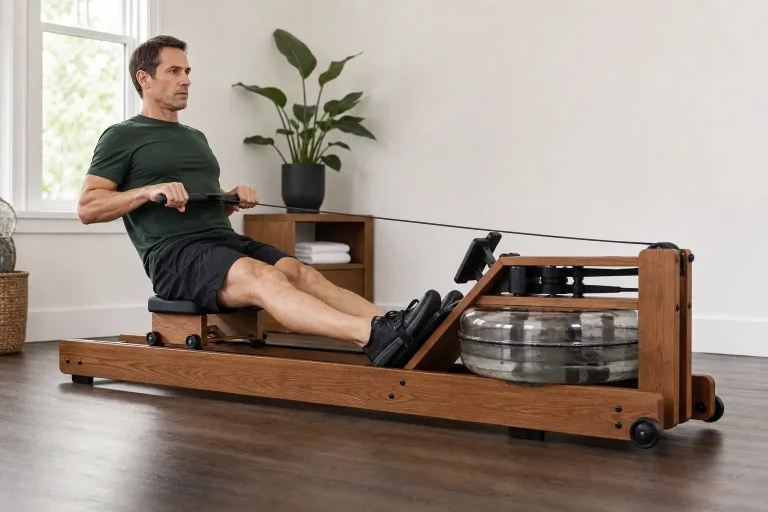
Best Water Rowing Machine (2026): 5 Picks for a Real Water Feel
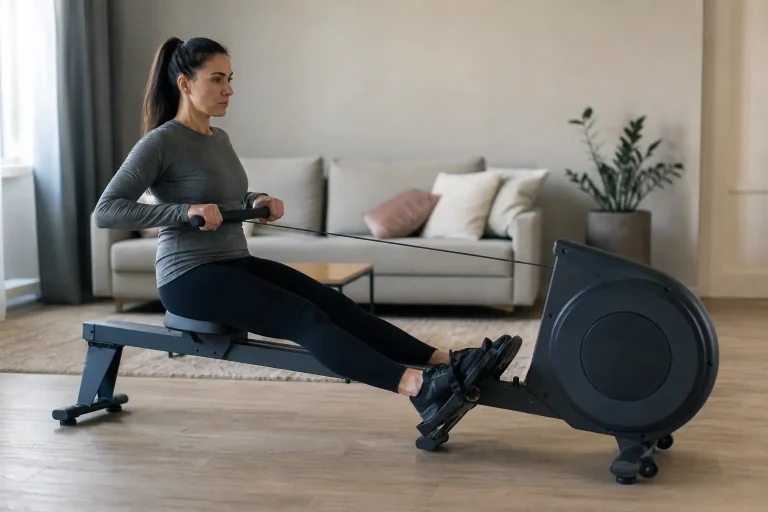
Best Magnetic Rowing Machine (2026): 5 Quiet Picks Ranked
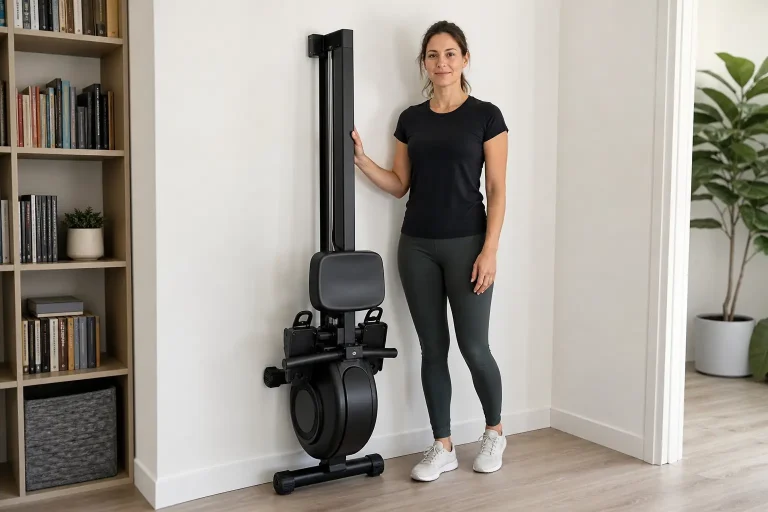
Best Folding Rowing Machine (2026): 5 Space-Saving Picks
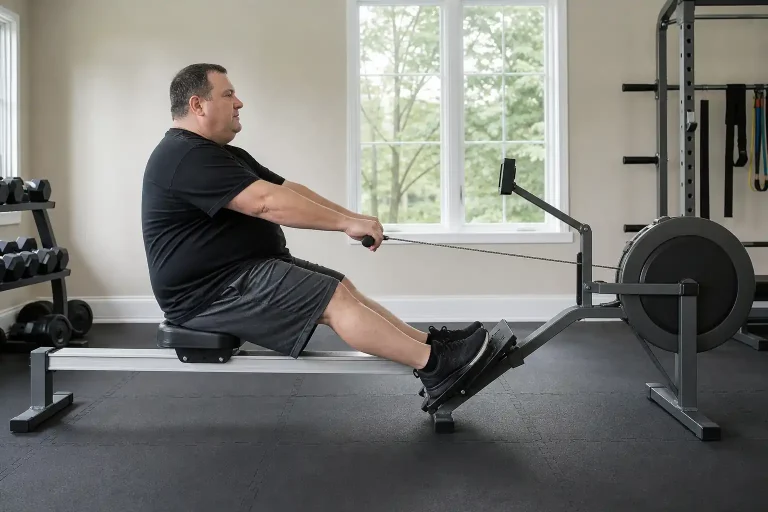
Best Rowing Machine for Heavy People (2026): 5 Picks Rated 300 lb+
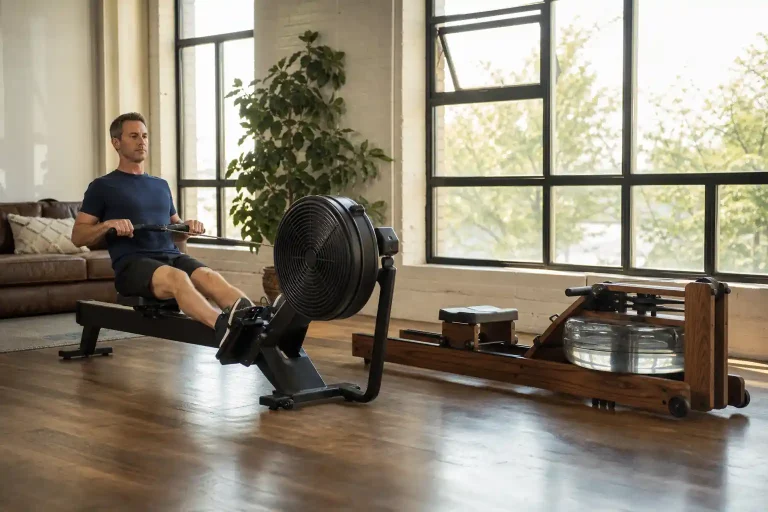
Water Rowing Machine vs Air (2026): Feel, Noise, Data and Verdict
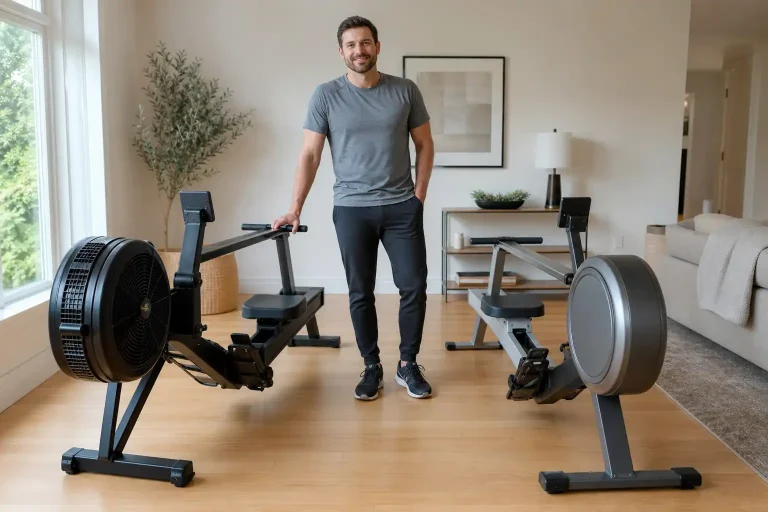
Air Rower vs Magnetic Rower (2026): Feel, Noise and Which to Buy
This article contains affiliate links. If you click through and make a purchase, we may earn a small commission at no extra cost to you. As an Amazon Associate, we earn from qualifying purchases. We do not show prices because they change constantly: product details and availability can change at any time, so please check the current price and details directly on Amazon. Learn more. Amazon and the Amazon logo are trademarks of Amazon.com, Inc. or its affiliates.
