

Short answer
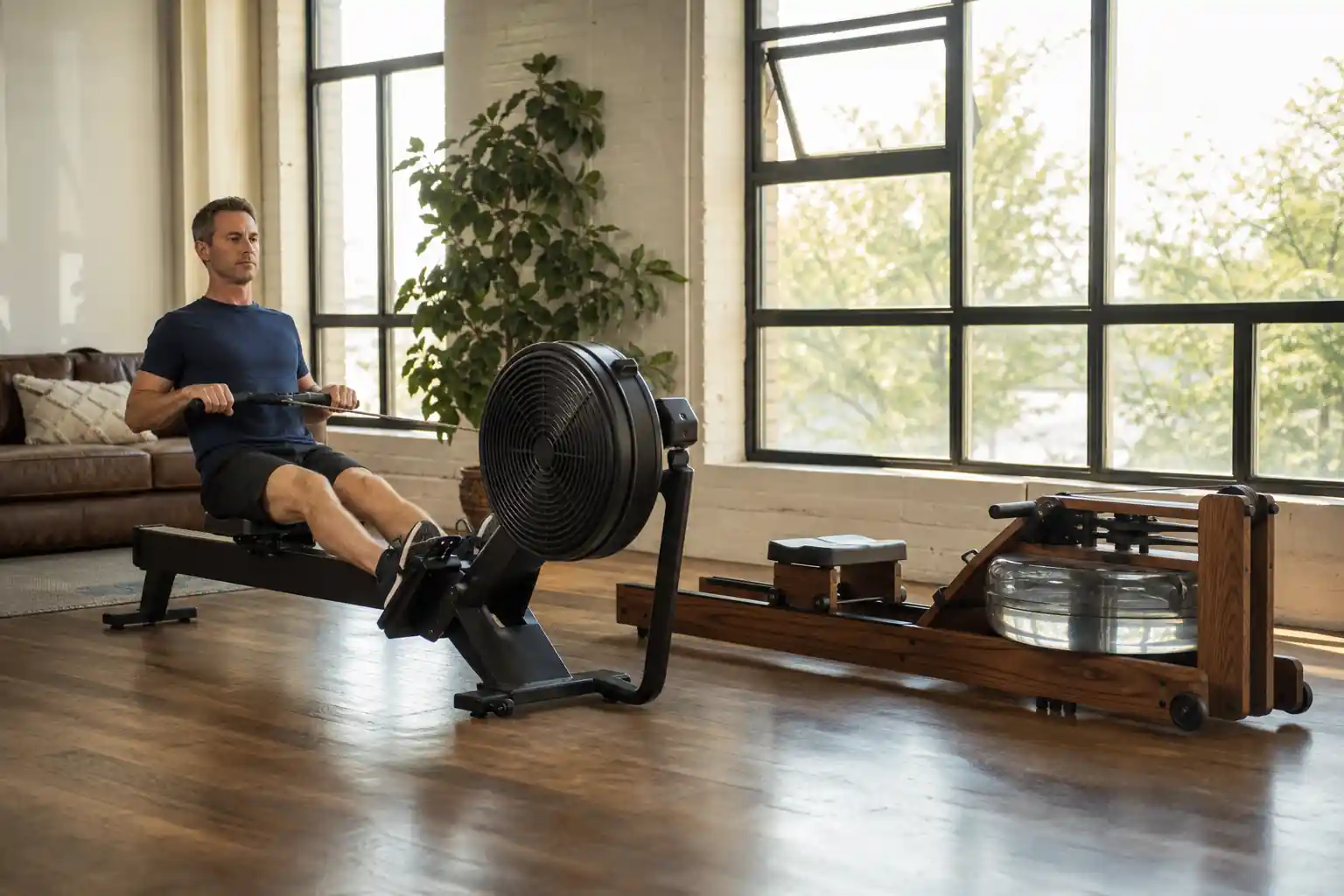
In the water rowing machine vs air choice, pick an air rower if you train to split and watts, run hard intervals or want numbers you can compare with gym machines. Pick a water rower if you want a quieter, flowing stroke, a wood frame for a living room, a shorter footprint and a higher weight rating in our rankings. Both load you more the harder you pull, and both work the same muscles.
Key takeaways
- Both are effort-based: the harder you pull, the more they push back.
- Air rowers lead on data; only the Concept2 lists split and watts in our rankings.
- Water rowers are quieter, shorter and wood-framed, with higher weight ratings in our data.
- The damper and the water level change the feel, not the workout.
- The muscles worked are the same on both.
Air and water rowers are the two effort-based types. Neither has levels: the harder and faster you pull, the more the fan or the paddles push back. That makes the stroke respond to you in a way a set magnetic level does not. The way they deliver that load, and everything around it (sound, size, data, upkeep), is different.
This comparison uses examples from our best water rowing machine and best air rowing machine guides, including the WaterRower Oak and the Concept2 RowErg, a pair many buyers weigh, with specs from each Amazon US listing.
Water Rowing Machine vs Air at a Glance
The table compares the two systems, with ranges from the water and pure air rowers ranked in our guides. Air + magnetic hybrids are left out; our air vs magnetic guide covers them.
| Criterion | Water rower | Air rower |
|---|---|---|
| How resistance works | Paddles in a sealed tank | Fan blades in a cage |
| Load vs effort | Rises as you pull harder | Rises as you pull harder |
| Base setting | Water level in the tank | Damper (drag factor on the Concept2 PM5) |
| Stroke feel | Builds through the drive; water keeps flowing | Light, quick catch that builds with speed |
| Smoothness (our Comfort method) | Top mark of all types | Lowest of the three main types |
| Noise (our Noise score) | 65/100: rhythmic swish | 35/100: fan whoosh that grows with effort |
| Length in use | 70.9 to 82 in | 95 to 96 in |
| Max user weight | 350 to 700 lb | 500 lb on both |
| Frame | Wood on all five we rank | Aluminum and steel (Concept2), alloy steel (GMWD) |
| Monitor data | No split listed; basic metrics | Concept2: 500 m split, watts, heart rate |
| Upkeep | Fill the tank; add purification tablets | Keep the fan cage free of dust |
Check Amazon for current pricing and availability.
How Each One Builds Resistance
A water rower turns paddles inside a sealed tank. Water resists faster movement more strongly, so the load builds through the drive and eases on the return. The water level sets the base load: a fuller tank feels heavier at the same pace, a lower fill quicker and lighter. Between strokes the water keeps swirling, which gives the flowing rhythm owners describe.
An air rower spins a fan. The faster the blades turn, the harder the air pushes back, so the load follows your effort the instant you pull harder. The damper on the side of the cage lets more or less air in. A higher damper feels like a lower gear: a heavier catch and a slower flywheel. It does not make the session harder by itself. On a Concept2, changing the drag factor from 100 to 150 did not change oxygen use, heart rate or lactate at submaximal stages in a 2008 study.
The two machines move your body a little differently too. When researchers had rowers use a Concept2 and a WaterRower, they found similar force profiles but more thigh rotation on the WaterRower and a different pelvis angle at the catch. They could not say which one is closer to rowing on water, so treat “real water feel” as a matter of sound and rhythm rather than proven technique transfer.
| Setting | Water rower | Air rower |
|---|---|---|
| Light | Low water fill | Low damper: quick catch, higher stroke rate |
| Middle | Mid fill: most home rows | Damper 3 to 5, the range Concept2 suggests |
| Heavy | High fill: heavier catch at any pace | High damper: heavy catch, tires the legs sooner |
| Change it | Add or drain water (between sessions) | Move the lever (any time) |
Pro tip: On an air rower, match your usual drag factor rather than a damper number: dust, temperature and altitude change how a given setting feels. A water rower has no drag readout, so mark your fill level and keep it.
Noise, Size and the Room It Lives In
A water rower is the quieter of the two. Our Noise score gives water 65 out of 100 and a pure fan 35. The water makes a rhythmic swish that many owners like, while a fan whoosh grows with every hard stroke and can fill a room or carry downstairs. Neither is silent; if you need silence, our best magnetic rowing machine guide covers the quietest type.
Water rowers are shorter. The ones in our guides run 70.9 inches (JOROTO) to 82 inches (WaterRower Oak) in use, while both pure air rowers are about 8 feet: 95 inches for the GMWD and 96 for the Concept2 RowErg. Storage differs as well. Four of the five water rowers we rank stand upright and three also fold. The Concept2 separates in two; the GMWD folds and stands upright.
Looks matter in a living room. All five water rowers we rank use wood frames: solid oak on the WaterRower, oak on the JOROTO and the Wenoker, solid beech on the YOSUDA and wood on the Dripex. Air rowers use metal frames and a fan cage, which suit a garage or a home gym better than a lounge.
Training, Data and Capacity
For data, the air rower wins clearly in our rankings. The Concept2 PM5 shows 500 m split, watts, stroke rate and heart rate, and reports drag factor so a split means the same effort on any RowErg. That is why many gym and race programs give targets for that machine. None of the water rowers we rank lists a split: most show time, distance, strokes and calories, and the WaterRower S4 shows stroke rate and heart rate.
For steady rowing at home, water is a strong choice. The smooth, flowing stroke suits long sessions, and our Comfort method gives water the top smoothness mark. Use heart rate to pace it; our heart rate zone calculator gives you zones.
Capacity favors water in our rankings. The WaterRower Oak with S4 Monitor is rated 700 lb on its Amazon listing and four other water models 350 to 400 lb. Both pure air rowers are rated 500 lb. Muscles do not change with the system: Cleveland Clinic describes the same leg drive, core brace and arm pull on any rower, working the legs, glutes, hamstrings, upper back, abs, obliques and lower back.
- Air: intervals, benchmark pieces, programs written in split or watts, garages and gyms.
- Water: long steady rows, living rooms, a calmer sound, heavier users.
- Both: effort-based load, the same stroke and the same muscles.
Water and Air Examples From Our Rankings
Each FitScore is the score the rower earns in the guide named in its card. The air and water guides weigh specs differently, so compare each machine with its own type rather than score against score.
Air example

Concept2 RowErg
FitScore 87.7/100
FitScore 87.7 in our best air rowing machine guide, where it ranks 1st. A continuous damper and a PM5 that shows 500 m split, watts and heart rate, with Bluetooth for ErgData and 40+ apps. Its listing states a 500 lb limit, a 5-year frame and 2-year parts warranty, and caster wheels. The limits: 96 inches of floor, two-piece storage instead of folding, and the loudest system in our scoring. Owners praise its solid build and simple assembly.
Ranked in our Best Air Rowing Machine guide
Check Price on AmazonWater example

YOSUDA Foldable Water Rowing Machine
FitScore 79.9/100
FitScore 79.9 in our best water rowing machine guide, where it ranks 1st. A solid beech frame, a 5.8-gallon tank, a 400 lb limit and users up to 6 ft 6 in on the listing. It folds and is 73.6 inches long, and Bluetooth pairs it with Kinomap, Apple Health and Google Fit. The limits: four basic metrics with no split, and no mention of upright storage on the listing. Owners like how freely the seat rolls and the sound of the water.
Ranked in our Best Water Rowing Machine guide
Check Price on AmazonWood classic example

WaterRower Oak with S4 Monitor
FitScore 74.3/100
FitScore 74.3 in our best water rowing machine guide, where it ranks 5th. A solid oak frame rated for 700 lb, users up to 6 ft 6 in, upright storage and an S4 monitor with heart rate and the WaterRower Connect and CITYROW apps. The limits: at 82 inches and 83.6 lb it is the longest and heaviest water rower we rank, and the Amazon listing states a 1-year warranty. Owners praise the smooth seat travel and sturdy oak build.
Ranked in our Best Water Rowing Machine guide
Check Price on AmazonWhich Should You Choose?
To settle the water rowing machine vs air question, start with how you train, then the room. These profiles cover most buyers.
- You follow CrossFit, Hyrox or a program written in split or watts: an air rower that lists both, such as the Concept2 RowErg.
- You row in a living room or a shared home: a water rower; quieter, shorter and built like furniture.
- You weigh more than 500 lb: the WaterRower Oak with S4 Monitor, rated 700 lb on its listing.
- You row mostly long, steady sessions: water, for the flowing stroke.
- You row in a garage or a gym corner and noise is no issue: air, for instant response and comparable numbers.
- You need silence: neither; look at a magnetic rower instead.
Checklist Before You Choose
7 checks
Tap a number to check off that step.
- 01
Decide whether you need split and watts on the monitor.
- 02
Measure the floor: about 71 to 82 inches for water, about 8 feet for pure air, plus room at each end.
- 03
Think about noise: a water swish or a fan whoosh.
- 04
Compare the max user weight with your weight, with a margin.
- 05
Check the rail length or user height on the listing against your inseam.
- 06
Plan a shaded spot for a water tank, away from heaters and sun.
- 07
Read the frame and parts warranty on the listing.
Common Mistakes to Avoid
Mistake 1Treating the damper or the water level as the difficulty of the workout.
Mistake 2Comparing a split from one brand’s monitor with RowErg scores.
Mistake 3Placing a water rower in direct sunlight, which helps algae grow.
Mistake 4Buying an air rower for a quiet apartment without thinking about the fan.
Mistake 5Expecting either machine to copy on-water rowing exactly.
Mistake 6Forgetting that a filled tank adds weight when you tip a water rower up.
The Bottom Line
- Both systems are effort-based: water and air both push back harder the faster you pull.
- Our Noise score rates water rowers 65 out of 100 and pure air rowers 35.
- Water rowers ranked in our guides are 70.9 to 82 inches long; the pure air rowers are 95 to 96 inches.
- A study comparing a Concept2 and a WaterRower found similar force profiles but different hip and pelvis angles.
- Of the rowers we rank, only the Concept2 RowErg lists both 500 m split and watts; none of the water rowers lists a split.
Our Top Picks
 Air exampleConcept2 RowErgFitScore87.7/100Check on Amazon
- Water exampleYOSUDA Foldable Water Rowing MachineFitScore79.9/100Check on Amazon
- Wood classic exampleWaterRower Oak with S4 MonitorFitScore74.3/100Check on Amazon
Frequently Asked Questions
An air rower is better for training to split and watts and for intervals; the Concept2 RowErg leads our air guide. A water rower is better for living rooms, steady rows and heavier users; the YOSUDA leads our water guide and the WaterRower Oak is rated 700 lb. The muscles worked are the same.
Yes. Our Noise score gives water rowers 65 out of 100 and pure air rowers 35. Water makes a rhythmic swish; a fan makes a whoosh that grows with effort. Neither is silent; magnetic rowers are the quietest type.
Neither copies the water exactly. A study comparing the two found similar force profiles but different hip and pelvis angles, and the authors made no claim about which is closer to on-water rowing. The WaterRower sounds and flows more like a boat; the Concept2 is the standard for gym and race numbers.
Yes. Your effort sets the workout on both, since each pushes back harder the faster you pull. The air rower has the edge for interval programs because the PM5 shows split and watts. The water rower has the edge for comfort in our method, with the top smoothness mark.
On both, pulling harder raises the load. For a heavier base feel, add water to the level marks on a water tank, or open the damper on an air rower. The damper changes any time; the water level is changed between sessions.
The water rower. Water models in our guides are 70.9 to 82 inches long and most stand upright, while both pure air rowers are about 8 feet long. The Concept2 separates in two for storage, and the GMWD folds and stands upright.
Explore More Rowing Machine Guides
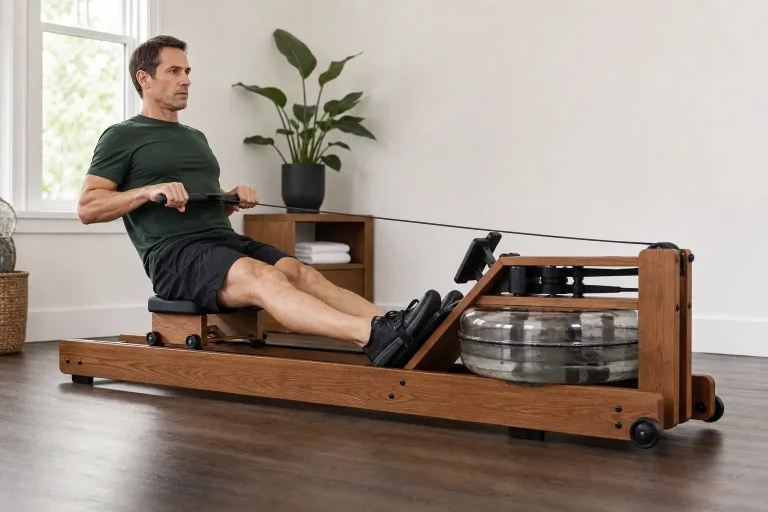
Best Water Rowing Machine (2026): 5 Picks for a Real Water Feel
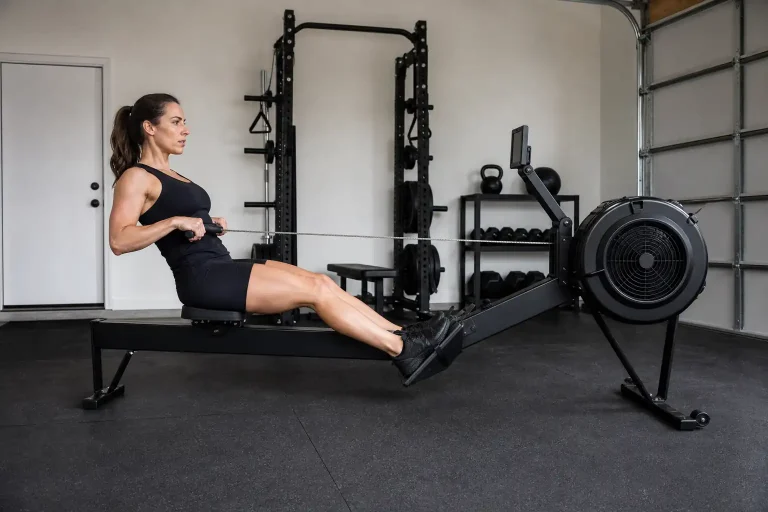
Best Air Rowing Machine (2026): 5 Picks for Hard Training
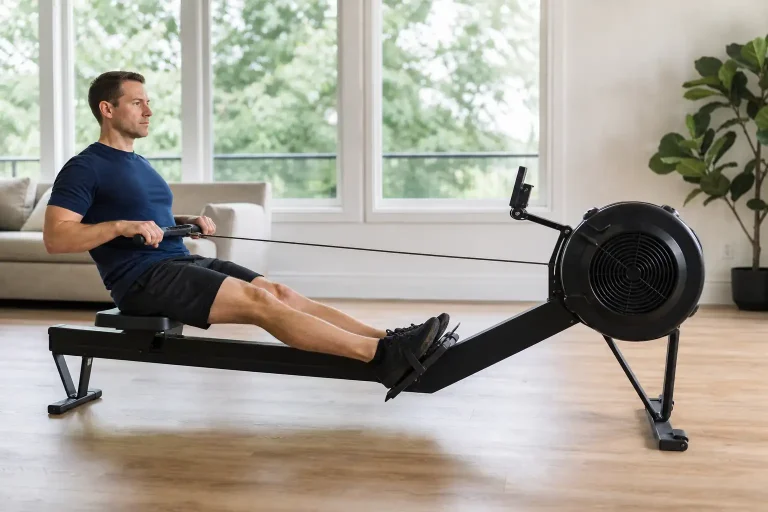
Best Rowing Machine (2026): 5 Top Picks for Home, Ranked
Best Rowing Machine for Heavy People (2026): 5 Picks Rated 300 lb+
Water Rowing Machine vs Magnetic (2026): Feel, Noise and Upkeep
Air Rower vs Magnetic Rower (2026): Feel, Noise and Which to Buy
This article contains affiliate links. If you click through and make a purchase, we may earn a small commission at no extra cost to you. As an Amazon Associate, we earn from qualifying purchases. We do not show prices because they change constantly: product details and availability can change at any time, so please check the current price and details directly on Amazon. Learn more. Amazon and the Amazon logo are trademarks of Amazon.com, Inc. or its affiliates.
