Erg Calculator
1Your row
Your time
–
Stroke rate helper
How you compare with elite athletes
Your split against the indoor world records at your distance and over 2,000 m.
World records: Concept2 world record list for the static RowErg, fastest of all age groups and weight classes, checked November 3, 2026. Watts from the split with the formula rowing monitors use.
Your pace chart: every distance at this split
FitGearHQ is independent and not affiliated with Concept2. Concept2, RowErg and PM5 are trademarks of Concept2, Inc.; the formulas are the ones Concept2 publishes for its monitors, so the numbers match what a PM5 shows.

Free tool · Updated November 3, 2026
Time, distance or split: give two, get the third
The 500 m split is the number every rowing machine monitor shows. This calculator turns it into a finish time for any distance, or tells you the split you need for a target time, with the matching watts.
Short answer
An erg calculator works from one rule: time = 500 m split x distance / 500. A 2:00.0 split over 2,000 m gives 8:00.0; a 1:50.0 split gives 7:20.0 and about 263 watts. Enter any two of time, distance and split below and the calculator returns the third, the watts and a full pace chart.
Key takeaways
- Split, time and distance are linked: know two and the third follows.
- Watts rise with the cube of speed: a split 10% faster needs about 37% more power.
- The pace chart shows what your split means over every common distance, from 500 m to the marathon.
- Stroke rate does not set your speed; power per stroke does. The helper shows meters per stroke.
Rowing machines measure speed as the time to row 500 meters, the split. It is a handy number while you row, and an awkward one when you plan: what split gives a 25-minute 6K, or how far you go in 30 minutes at 2:05? This erg calculator answers both in one step.
Pick what you want to solve, enter the two numbers you know, and read the answer with the watts and monitor calories that match. The pace chart then lays your split across every standard distance, and the stroke rate helper shows how far each stroke moves you.
How the Erg Calculator Works
The math is the same on every rowing machine that shows a 500 m split. Time = split x distance / 500. Split = 500 x time / distance. Distance = time / split x 500. The calculator keeps tenths of a second, like the monitor.
Power comes from the split with the formula rowing monitors use: watts = 2.80 / pace³, where pace is the split in seconds divided by 500. A 2:05.0 split is a pace of 0.25 s/m and gives 179.2 watts. Calories per hour follow the monitor formula, 4 x watts / 1.1639 + 300, which assumes a 175 lb rower.
Monitor watts are an estimate from the flywheel. In a 2006 study in the International Journal of Sports Medicine, the displayed power tracked power measured at the handle closely but read lower, by about 25 W, mostly when the pace changed. Use the watts to compare your own rows, not as a precise measurement.
| You knowSolve | Example | CalculationMath | WattsW |
|---|---|---|---|
| Solve the time | 2,000 m at a 1:50.0 split | 1:50.0 x 2,000 / 500 = 7:20.0 | 263.0 W |
| Solve the split | 5,000 m in 20:00.0 | 500 x 1,200 / 5,000 = 2:00.0 | 202.5 W |
| Solve the distance | 30:00.0 at a 2:05.0 split | 1,800 / 125 x 500 = 7,200 m | 179.2 W |
Your Split Against the Indoor World Records
The calculator also sets your split against the fastest times ever rowed on a static rowing machine, from the Concept2 world record list (all age groups and weight classes, checked November 3, 2026). The men’s 2,000 m record of 5:33.4 by Simon von Dorp averages 1:23.4 per 500 m, about 604 watts; the women’s record of 6:21.1 by Brooke Mooney averages 1:35.3, about 405 watts.
The percentage is your speed as a share of the record speed, so it also tells you how far you would be when the record holder finishes.
- 500 m: men 1:09.8 (Phil Clapp, 1:09.8 /500 m); women 1:24.5 (Olena Buryak, 1:24.5 /500 m)
- 1,000 m: men 2:38.0 (Andrea Panizza, 1:19.0 /500 m); women 3:04.9 (Olena Buryak, 1:32.4 /500 m)
- 2,000 m: men 5:33.4 (Simon von Dorp, 1:23.4 /500 m); women 6:21.1 (Brooke Mooney, 1:35.3 /500 m)
- 5,000 m: men 14:53.8 (Oliver Zeidler, 1:29.4 /500 m); women 16:49.4 (Georgie Rowe, 1:40.9 /500 m)
- 6,000 m: men 18:04.7 (Nikolaj Pimenov, 1:30.4 /500 m); women 20:17.7 (Olena Buryak, 1:41.5 /500 m)
- 10,000 m: men 31:05.2 (Eric Murray, 1:33.3 /500 m); women 35:33.0 (Emma Twigg, 1:46.6 /500 m)
- Half marathon: men 1:07:22.7 (Conlin McCabe, 1:35.8 /500 m); women 1:17:42.2 (Emma Twigg, 1:50.5 /500 m)
- Marathon: men 2:20:06.9 (Joel Naukkarinen, 1:39.6 /500 m); women 2:42:18.3 (Avery Ericksen, 1:55.4 /500 m)
Rowing Pace Chart: 500 m Split to Finish Time
Find your usual split in the left column and read across for the finish time at each distance. Times up to 2,000 m keep the tenths, like the monitor; longer times are rounded to the second. The last column is the power the split takes.
| Split /500 mSplit | 500 m500 | 1,000 m1k | 2,000 m2k | 5,000 m5k | 6,000 m6k | 10,000 m10k | Half marathonHalf | MarathonFull | WattsW |
|---|---|---|---|---|---|---|---|---|---|
| 1:40.0 | 1:40.0 | 3:20.0 | 6:40.0 | 16:40 | 20:00 | 33:20 | 1:10:19 | 2:20:39 | 350 |
| 1:45.0 | 1:45.0 | 3:30.0 | 7:00.0 | 17:30 | 21:00 | 35:00 | 1:13:50 | 2:27:41 | 302 |
| 1:50.0 | 1:50.0 | 3:40.0 | 7:20.0 | 18:20 | 22:00 | 36:40 | 1:17:21 | 2:34:43 | 263 |
| 1:55.0 | 1:55.0 | 3:50.0 | 7:40.0 | 19:10 | 23:00 | 38:20 | 1:20:52 | 2:41:45 | 230 |
| 2:00.0 | 2:00.0 | 4:00.0 | 8:00.0 | 20:00 | 24:00 | 40:00 | 1:24:23 | 2:48:47 | 203 |
| 2:05.0 | 2:05.0 | 4:10.0 | 8:20.0 | 20:50 | 25:00 | 41:40 | 1:27:54 | 2:55:49 | 179 |
| 2:10.0 | 2:10.0 | 4:20.0 | 8:40.0 | 21:40 | 26:00 | 43:20 | 1:31:25 | 3:02:51 | 159 |
| 2:15.0 | 2:15.0 | 4:30.0 | 9:00.0 | 22:30 | 27:00 | 45:00 | 1:34:56 | 3:09:53 | 142 |
| 2:20.0 | 2:20.0 | 4:40.0 | 9:20.0 | 23:20 | 28:00 | 46:40 | 1:38:27 | 3:16:55 | 128 |
| 2:25.0 | 2:25.0 | 4:50.0 | 9:40.0 | 24:10 | 29:00 | 48:20 | 1:41:58 | 3:23:57 | 115 |
| 2:30.0 | 2:30.0 | 5:00.0 | 10:00.0 | 25:00 | 30:00 | 50:00 | 1:45:29 | 3:30:58 | 104 |
| 2:35.0 | 2:35.0 | 5:10.0 | 10:20.0 | 25:50 | 31:00 | 51:40 | 1:49:00 | 3:38:00 | 94 |
| 2:40.0 | 2:40.0 | 5:20.0 | 10:40.0 | 26:40 | 32:00 | 53:20 | 1:52:31 | 3:45:02 | 85 |
Stroke Rate and Distance per Stroke
Stroke rate, in strokes per minute (spm), is how often you pull. It does not decide your speed on its own: the same split at a lower rate means each stroke carries more power and moves you further. The helper in the calculator divides your speed by your rate to show meters per stroke.
Competitive 2,000 m races are rowed hard and fast: Silva-Alonso and colleagues (2018) report rates of about 30 to 42 strokes per minute, with 210 to 230 strokes for the distance. Steady training rows use lower rates; if your split only holds when the rate climbs, work on a stronger leg drive before rating higher.
- Plan a 2K. Pick a goal time, solve the split, then check it in our 2K row time calculator against others your age.
- Train by power. The watts to split calculator converts a power target into the split to hold.
- Count calories. The rowing calorie calculator adjusts the monitor figure to your body weight.
- Mix it with your week. Rowing counts toward the 150 minutes of moderate activity in the CDC physical activity guidelines; use the heart rate zone calculator to keep easy rows easy.
Share, Embed or Cite This Calculator
Coaches, clubs and box owners are welcome to link to or embed this erg calculator; the result link keeps the numbers entered.
Share this calculator
Send it to a friend, a training partner or your followers. These buttons share the calculator itself, not your results.
Use this calculator like an app
Put Rowing Pace Calculator on your phone’s home screen: it opens full screen in one tap, like a native app, with no download from a store.
- iPhone (Safari)Tap Share , then Add to Home Screen, then Add.
- Android (Chrome)Tap the menu ⋮, then Add to home screen or Install app.
- ComputerBookmark the page, or in Chrome and Edge use the install icon in the address bar.
Embed the interactive calculator
For websites and blogs. Paste this code where you want the calculator: your visitors use it right on your page. It resizes itself and shows a credit link to FitGearHQ.
Add a link card
For blogs, newsletters and pages that do not allow scripts: a clean card with a picture and one link.
Cite this calculator
- TitleRowing Pace Calculator
- PublisherFitGearHQ
- URLhttps://fitgearhq.com/rowing-pace-calculator/
- Updated
More Free Fitness Tools
See them all on Fitness Calculators, compare rowing machines or browse every free fitness tool.
Checklist Before You Plan Your Row
4 checks
Tap a number to check off that step.
- 01
Read the average split, not the last strokeThe workout summary shows the average /500m for the whole piece.
- 02
Enter seconds with tenthsA monitor shows 1:52.4: enter 1 minute and 52.4 seconds.
- 03
Check the distance unitThe calculator works in meters; a half marathon is 21,097 m.
- 04
Pick a realistic stroke rateUse the rate you actually hold, shown as spm on the monitor.
Common Mistakes to Avoid
Mistake 1Averaging splits by hand
Instead: Two halves at 2:00 and 2:10 do not average 2:05 over time; enter the total time instead.
Mistake 2Expecting watts to scale with split
Instead: Watts follow the cube of speed, so small split gains cost a lot of power.
Mistake 3Rowing at a high rate to go faster
Instead: Without more power per stroke the split barely moves.
Mistake 4Comparing splits across machines
Instead: Air, magnetic and water rowers can read differently; compare rows on the same machine.
The Bottom Line
- Split = 500 x time / distance; watts = 2.80 / (split / 500)^3, the formulas used by rowing monitors.
- Works with the /500m split shown on a PM5 and most rowing machine monitors.
- Pace chart for 500 m, 1,000 m, 2,000 m, 5,000 m, 6,000 m, 10,000 m, half marathon and marathon.
- Free, no sign-up; the link keeps your numbers.
Frequently Asked Questions
Divide the time by the distance and multiply by 500. A 5,000 m row in 20:00 (1,200 seconds) is 500 x 1,200 / 5,000 = 120 seconds, a 2:00.0 split.
It depends on age, sex and fitness. A 2:00 split is a solid steady pace for many adults; fit rowers race 2,000 m at 1:30 to 1:50. Compare your 2K time by age with our 2K row time calculator.
About 202.5 watts. Watts = 2.80 / (120 / 500)^3. A 1:45 split takes about 302 watts and a 2:30 split about 104 watts.
Yes. It uses the same split, time, distance and watts formulas that Concept2 publishes for its monitors, so the numbers line up with a PM5. It is an independent FitGearHQ tool.
Most steady rows sit in the low to mid 20s strokes per minute; 2,000 m races run about 30 to 42. If a higher rate does not improve your split, focus on power per stroke.
At a 2:00 split, 8:00. At 2:10, 8:40. At 1:50, 7:20. Use the calculator or the pace chart above for any other split.
Explore More Rowing Machine Guides
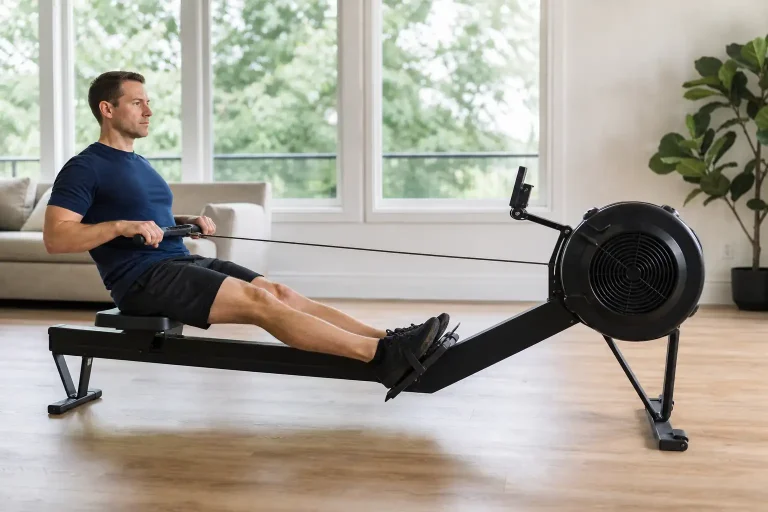
Best Rowing Machine (2026): 5 Top Picks for Home, Ranked
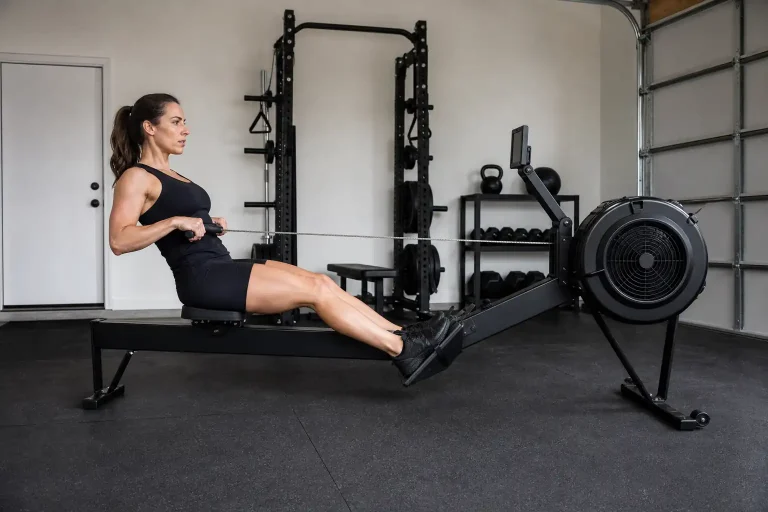
Best Air Rowing Machine (2026): 5 Picks for Hard Training
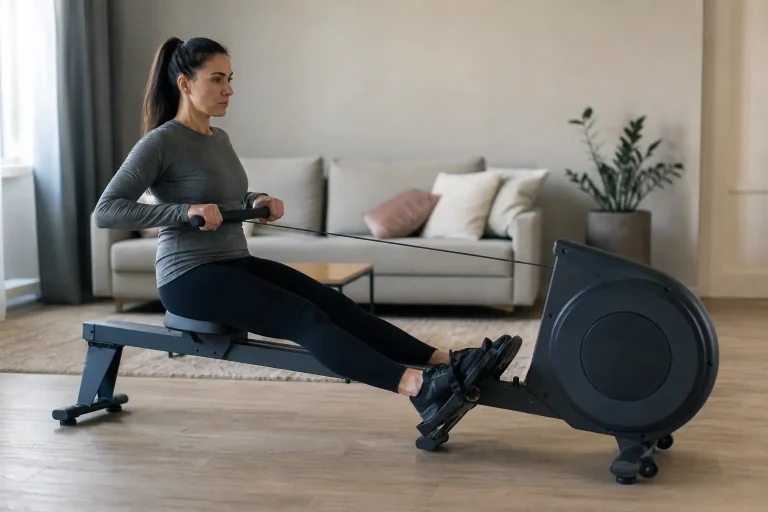
Best Magnetic Rowing Machine (2026): 5 Quiet Picks Ranked
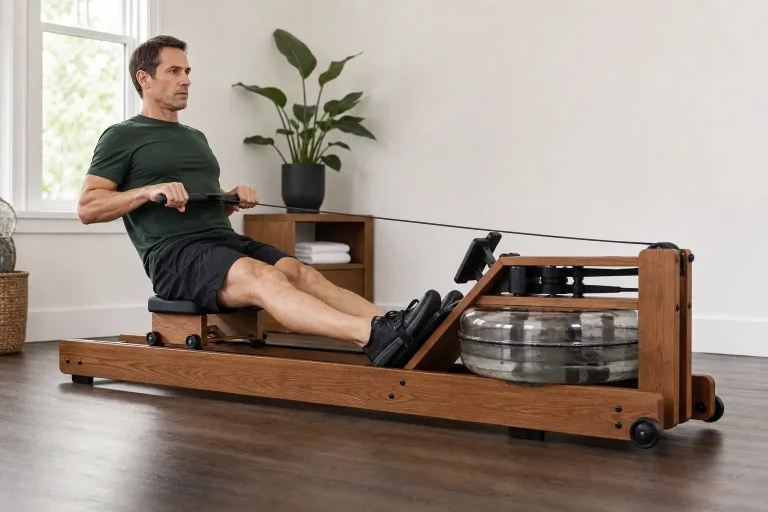
Best Water Rowing Machine (2026): 5 Picks for a Real Water Feel
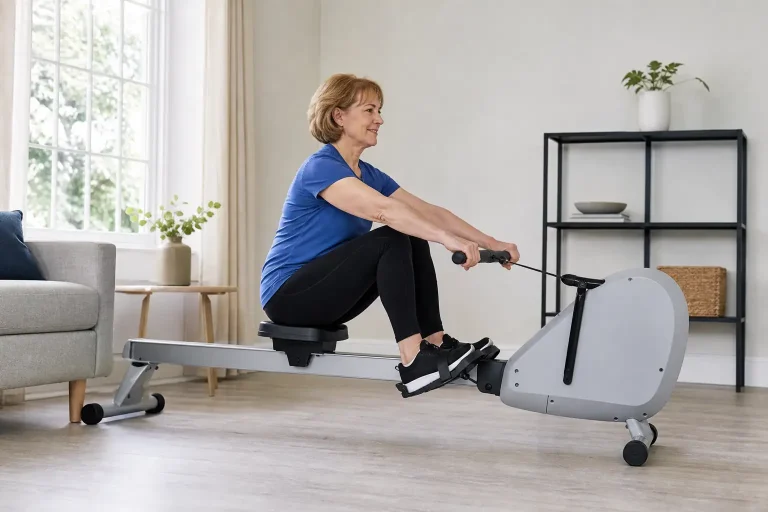
Best Rowing Machine for Beginners (2026): 5 Easy-to-Start Picks