

Short answer
The benefits of vibration plate training that research supports are modest and specific: stronger legs and a higher jump when you exercise on the plate for at least 5 weeks, better basic balance and walking tests in older adults, and some weight and fat loss when it is paired with a reduced-calorie diet. Standing still on a plate does little on its own, and it does not replace walking, cardio or strength training.
Key takeaways
- The best-supported benefit is extra leg strength and jump power from exercising on the plate.
- Older adults improved basic balance and walking tests, mostly in supervised programs.
- Weight loss appeared mainly when a plate was combined with a reduced-calorie diet.
- The extra energy use is small: about 1.5 calories per minute in one lab study.
- Most home oscillating plates run well below the 25-40 Hz used in many studies.
Vibration plates are sold with long lists of benefits: fat burning, toning, better circulation, faster recovery and more. Some of these claims come from studies, some from marketing, and many from studies done on lab platforms that behave differently from a home plate.
This guide keeps only the benefits that controlled studies measured, says how big they were and on which settings, and checks those settings against the 44 plates in our database. If you already know you want one, our best vibration plate guide ranks them.
Benefits of Vibration Plate: The Benefits of a Vibration Plate at a Glance
Here is what the research supports, how strong the evidence is, and what it took to get there. Every row is explained below.
| Benefit | What studies found | Evidence | What it took |
|---|---|---|---|
| Leg strength | Extra gains in knee extension strength vs the same exercise without vibration | Meta-analysis, 10 trials (2013) | Exercise on the plate, 5+ weeks |
| Jump power | Higher countermovement jump | Meta-analysis, 7 trials (2013) | Exercise on the plate, 5+ weeks |
| Balance in older adults | Better Tinetti and Timed-Up-and-Go scores | Review of 13 trials (2012) | Supervised programs, frailer people gained most |
| Weight and fat in adults with obesity | About 5-10% weight loss in 8 of 18 studies | Systematic review, 18 studies (2018) | Mostly with a reduced-calorie diet, 10+ weeks |
| Energy use | About 4.5 mL of oxygen per kg per minute more than the same posture | Lab study, 12 adults (2001) | 26 Hz, 6 mm, standing or squatting |
Check Amazon for current pricing and availability.
Benefit 1: Stronger Legs and a Higher Jump
This is the best-supported benefit. A 2013 meta-analysis in the Journal of Musculoskeletal and Neuronal Interactions pooled randomized trials that lasted at least 5 weeks and compared the same exercise with and without vibration. Adding vibration produced larger gains in knee extension strength (10 studies, 314 participants) and in countermovement jump height (7 studies, 249 participants). Both effects were moderate to large in statistical terms.
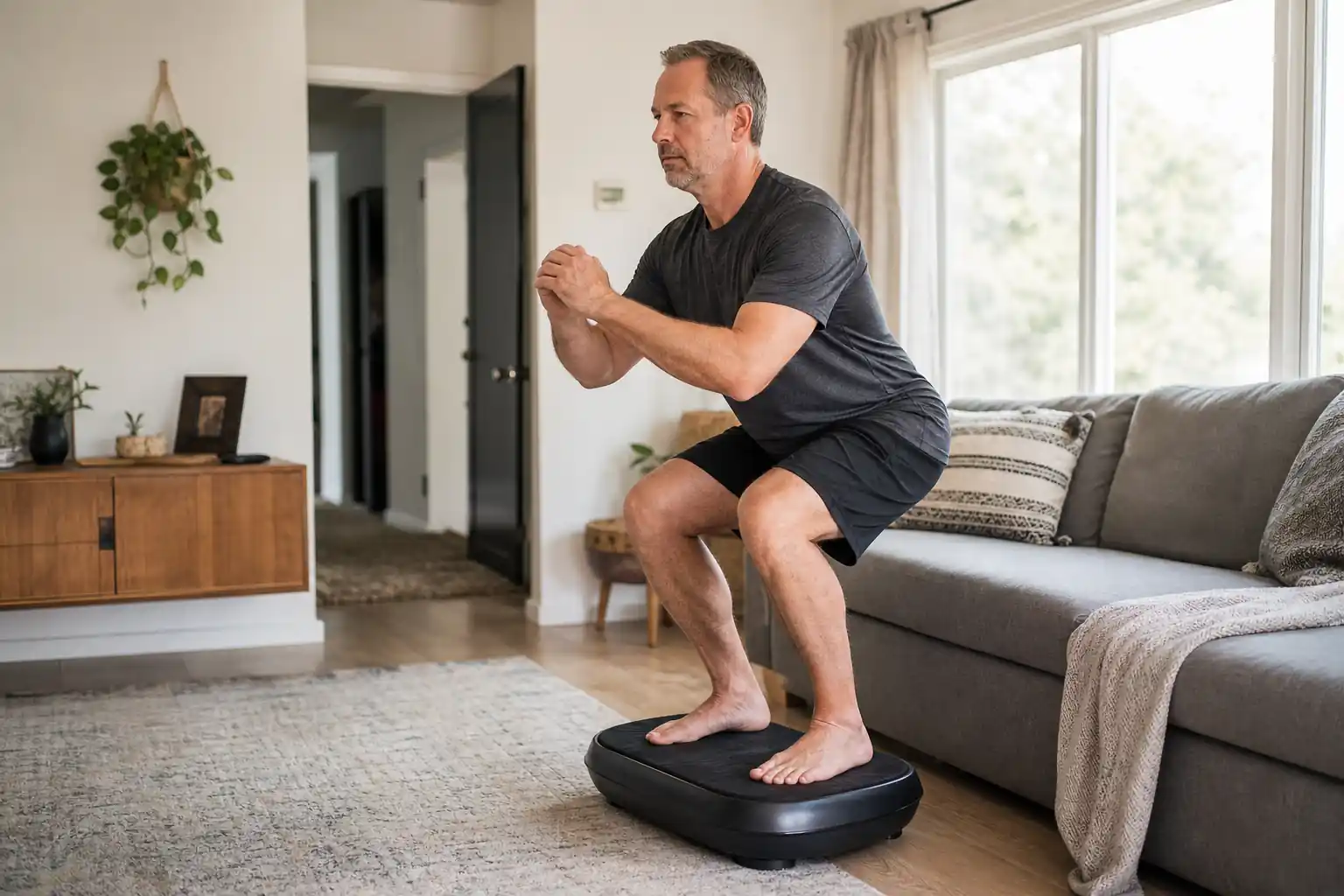
The word that matters is “exercise”. In these trials people squatted, lunged or held positions on the plate. The vibration makes the leg muscles contract reflexively many times per second, which adds to the work of the movement itself. It is a booster for leg exercise, not a substitute for it.
A 2023 review of 34 studies in older adults reached a similar but narrower verdict: lower-body strength improved compared with doing nothing, but not compared with other exercise, and there was no gain in upper-body strength, leg power or endurance. So the plate helps legs most, and mainly people who were not training before.
Benefit 2: Balance and Walking Tests in Older Adults
For older adults, a 2012 review in Maturitas found 13 trials that met its criteria. Pooled results showed better scores on the Tinetti balance test and the Timed-Up-and-Go test, a timed stand, walk and sit. The authors noted the gains were in fairly basic balance and mobility and were clearest in frailer participants. The effect on the number of falls was not clear.
These programs were usually supervised, with a handlebar to hold. That is why our best vibration plate for seniors guide only ranks plates with a handlebar: just 7 of the 44 plates in our database have one.
Watch out: Balance studies screened their participants first. If you have a heart, joint, balance or inner-ear condition, ask your doctor before you start.
Benefit 3: Weight and Fat Loss, With a Diet
Weight loss is the most advertised benefit, and the evidence is the most conditional. A 2018 systematic review in PLOS ONE looked at 18 studies of adults with obesity, 321 people in total, mostly women. Body weight fell by roughly 5 to 10% in 8 studies and did not change in 5. Fat mass fell by about 2 to 6% in seven studies, and waist size by 2 to 10 cm in four.
The authors tied the larger effects to programs of 10 weeks or more combined with a reduced-calorie diet. The typical session was squats and calf raises on a plate at 25 to 40 Hz, three times a week. The studies were small, and the review could not separate the effect of the plate from the effect of the diet in every case.
Mayo Clinic gives the same message in plain words: weight loss from whole-body vibration has only been seen alongside cutting calories, and regular aerobic and strength exercise is still the base. For plates ranked for this goal, see our best vibration plate for weight loss guide.
Benefit 4: A Little Extra Energy Use
Vibration does raise energy use, but by a small amount. In a 2001 lab study, 12 adults stood or squatted on a plate at 26 Hz and 6 mm. The vibration added about 4.5 mL of oxygen per kilogram per minute compared with the same position without vibration.
For a 154 lb (70 kg) adult, that works out to roughly 1.5 to 1.6 extra calories per minute, by our arithmetic at about 5 calories per liter of oxygen. Ten minutes on a plate at those settings adds about the energy of a short, easy walk. It is real, but it will not drive weight loss on its own.
Two details matter at home: that study used 26 Hz, and a 2002 follow-up found the oxygen cost rose with frequency and amplitude. Most home oscillating plates run far below 26 Hz (next section).
Why Your Plate Settings Matter
The studies above mostly used 25 to 40 Hz. In our database of 44 plates, 20 state a frequency, and only 10 of those reach 25 Hz. The rest, mostly oscillating plates, top out between 6 and 15 Hz, with deeper side-to-side movement instead.
That does not make low-frequency plates useless: some balance trials used side-alternating platforms, which move at lower frequencies with larger amplitude. It does mean you cannot assume a home plate reproduces the effect of a study done on a lab platform. Our oscillating vs linear vibration plate guide explains the two motion types and what each one was tested for.
| Motion type | Plates with a stated frequency | Highest stated frequency |
|---|---|---|
| Oscillating only | 9 | 6 Hz, 9.6 Hz, 11.5 Hz, 12 Hz, 15 Hz, 34.6 Hz |
| Linear only | 5 | 14 Hz, 35 Hz, 40 Hz, 60 Hz |
Claims That Lack Good Evidence
Several popular claims rest on small, short or uncontrolled studies, or none at all. We do not count them as benefits:
- Spot fat loss or “toning” a body part: no study shows a plate removes fat from one area.
- Results from standing still: most strength results came from exercise on the plate, not passive standing.
- Replacing cardio: the energy cost is small next to a brisk walk or cycling.
- Medical uses: claims about bone, joint, nerve, lymphatic or skin conditions are questions for a doctor, not for a product page. We do not cover them.
Plates That Fit These Benefits
To get the strength and balance benefits, you need a plate you can exercise on safely: enough room to squat, a stable base and, for older users, a handlebar. These three come from our ranked guides.
Best for leg exercise

Merach CV55 4D
FitScore 74.1/100
It runs both oscillating and linear motion with a stated range of 5 to 45 Hz, one of the few home plates that reaches the 25 to 40 Hz used in most studies. Resistance bands are included for upper-body moves, and it is rated for 440 lb. Ranked #1 in our best vibration plate guide, FitScore 74.1 for that intent.
Check Price on AmazonBest with a handlebar

Lifepro Rhythm
FitScore 67.8/100
A fixed handlebar, a 27 by 29 inch platform and a 60.4 lb base make it the steadiest plate we rank for balance work. It is a low-frequency oscillating plate (2 to 6 Hz) with a large stated amplitude. Ranked #1 in our best vibration plate for seniors guide, FitScore 67.8 for that intent.
Check Price on AmazonEasiest to start

Merach MR-2490H1 4D
FitScore 72.3/100
Both motion types, 7 preset programs, a remote and a display, so a first session needs no setup. The 28.1 inch deck leaves room for a wide squat stance, and it is rated for 450 lb. Ranked #1 in our best vibration plate for beginners guide, FitScore 72.3 for that intent.
Check Price on AmazonHow to Get the Benefits That Are Real
7 checks
Tap a number to check off that step.
- 01
Exercise on the plate: squats, lunges and calf raises, not just standing.
- 02
Keep your knees slightly bent; never lock them.
- 03
Start with short bouts of 30 to 60 seconds and rest between them.
- 04
Aim for about three sessions a week, as in most studies.
- 05
Keep walking, cardio and strength training as your base.
- 06
For weight loss, pair it with a reduced-calorie diet.
- 07
Ask your doctor first if you are pregnant or have a health condition.
Common Mistakes to Avoid
Mistake 1Expecting fat loss from standing on the plate while watching TV.
Mistake 2Locking your knees, which sends more vibration toward your head.
Mistake 3Starting at the highest setting for long sessions.
Mistake 4Assuming a 10 Hz home plate matches a 30 Hz lab platform.
Mistake 5Treating marketing claims about medical conditions as proven.
The Bottom Line
- A 2013 meta-analysis of randomized trials found extra gains in knee extension strength (10 studies, 314 people) and jump height (7 studies, 249 people) when squats were done on a vibrating plate.
- In older adults, a 2012 review of 13 trials found better balance and Timed-Up-and-Go scores, mostly in frailer people; the effect on falls was unclear.
- Weight loss of about 5 to 10% was reported in 8 of 18 studies of adults with obesity, which mostly combined the plate with a reduced-calorie diet.
- Most studies used 25 to 40 Hz with squats and calf raises, three times a week, for 6 to 12 weeks.
- Only 10 of the 20 plates in our database that state a frequency reach 25 Hz or more.
Our Top Picks
 Best for leg exerciseMerach CV55 4DFitScore74.1/100Check on Amazon
- Best with a handlebarLifepro RhythmFitScore67.8/100Check on Amazon
- Easiest to startMerach MR-2490H1 4DFitScore72.3/100Check on Amazon
Frequently Asked Questions
Yes, but less than the marketing suggests. Exercising on a plate for 5 weeks or more added leg strength and jump height in pooled trials, and older adults improved basic balance tests. Weight loss showed up mainly with a reduced-calorie diet. Standing still on a plate does little on its own.
The strength trials lasted at least 5 weeks, and the weight studies in adults with obesity ran 6 to 12 weeks, with larger effects after 10 weeks combined with a diet. Most programs used about three sessions a week.
Ten minutes of squats and calf raises on a plate is a reasonable short leg session. The extra energy use from the vibration itself is small, roughly 15 calories for a 154 lb adult in one lab study, so count it as strength work rather than cardio.
Studies in older adults found better balance and walking test scores, mainly in frailer people and in supervised programs with a handlebar. Older adults should check with a doctor first and choose a plate with a handlebar.
No. Mayo Clinic notes it is not clear that vibration matches the benefits of walking, cycling or swimming, and the measured energy cost is small. Use it as an add-on to your usual activity.
Both were used in studies. Linear (vertical) plates more often reach the 25 to 40 Hz used in strength studies, while side-alternating (oscillating) plates move less vibration to the head. Our oscillating vs linear guide compares them in detail.
Explore More Vibration Plate Guides
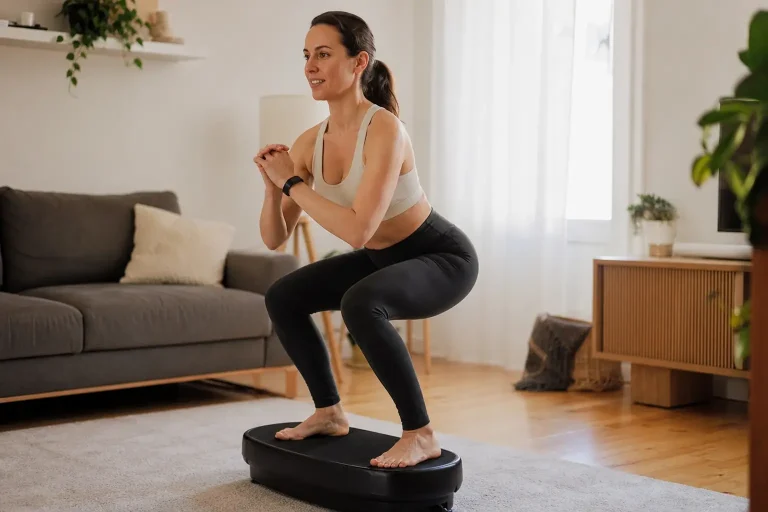
Best Vibration Plate (2026): 5 Top Picks for Home, Ranked
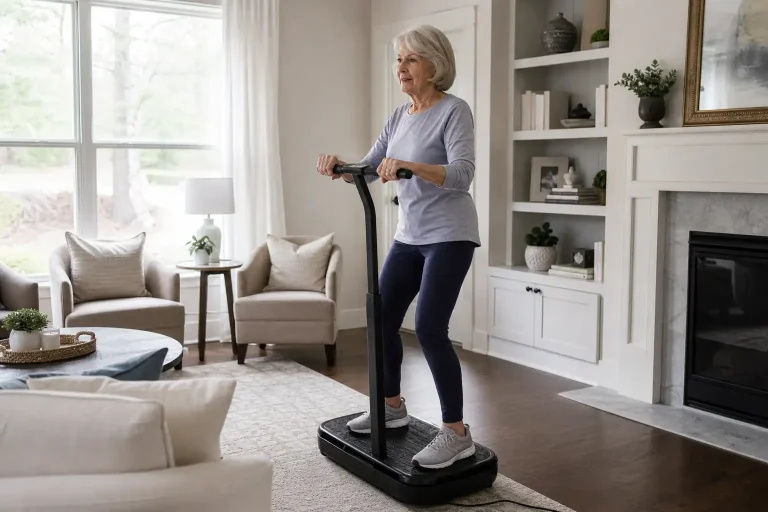
Best Vibration Plate for Seniors (2026): 5 Picks With Handlebars
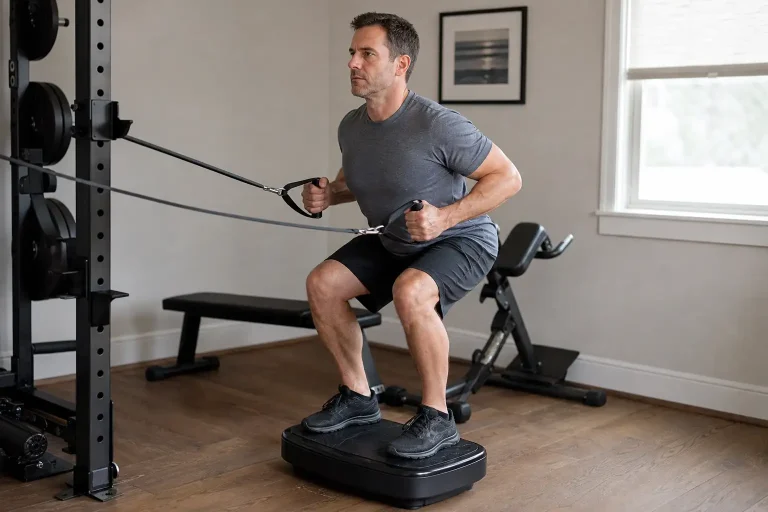
Best Vibration Plate for Weight Loss (2026): 5 Picks to Train On
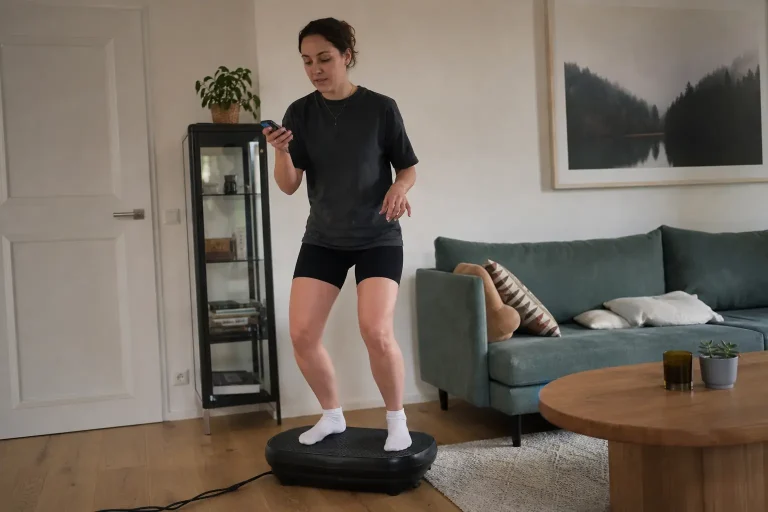
Best Vibration Plate for Beginners (2026): 5 Easy-to-Start Picks
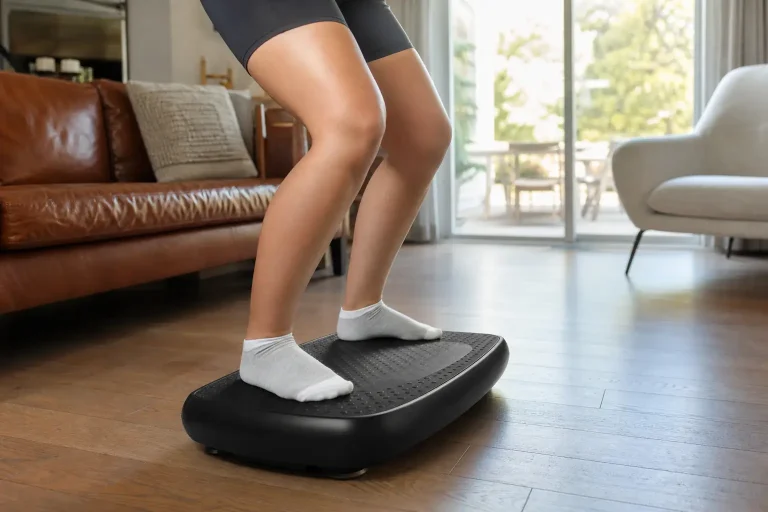
Best Oscillating Vibration Plate (2026): 5 Side-Alternating Picks
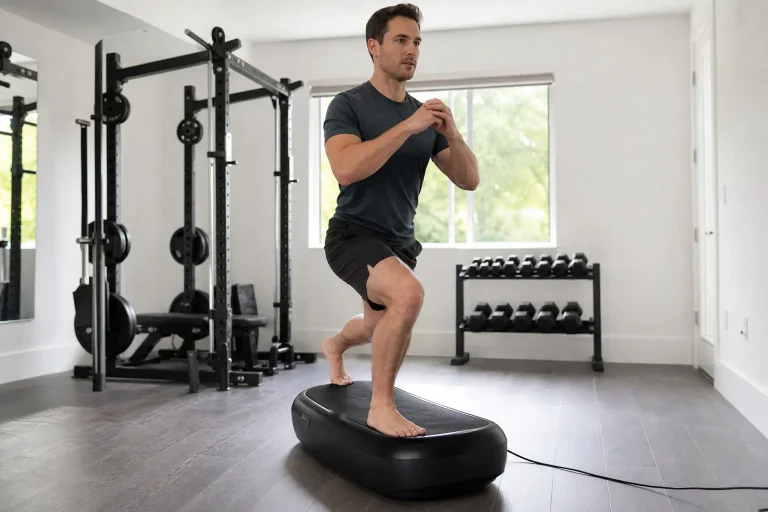
Best 4D Vibration Plate (2026): 5 Multi-Motion Picks, Ranked
This article contains affiliate links. If you click through and make a purchase, we may earn a small commission at no extra cost to you. As an Amazon Associate, we earn from qualifying purchases. We do not show prices because they change constantly: product details and availability can change at any time, so please check the current price and details directly on Amazon. Learn more. Amazon and the Amazon logo are trademarks of Amazon.com, Inc. or its affiliates.
