

Recumbent vs upright at a glance
Recumbent for comfort and an easy step-on; upright for a smaller footprint and a road-bike posture.
Medians of the bikes we track on Amazon US. Details below.
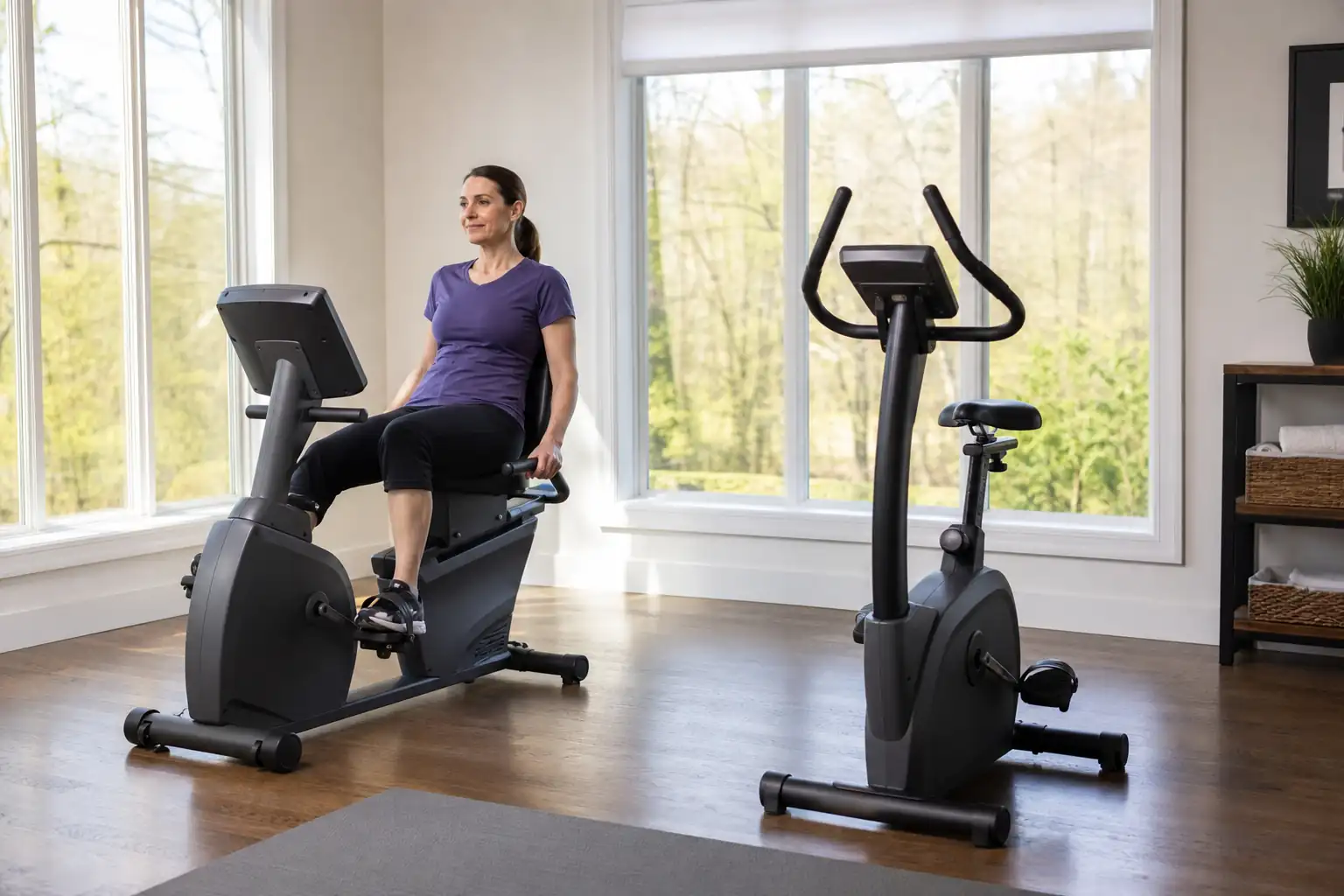
Short answer
Choose a recumbent bike if comfort, back support and an easy step-on matter most; choose an upright bike if you want a road-bike posture, more muscle use from the core and a smaller footprint. In our pool, recumbents have a median length of 55.5 in against 43.6 in for uprights. At the same effort, both burn about the same calories.
Key takeaways
- Recumbent = comfort and access; upright = posture and space.
- Median length 55.5 in vs 43.6 in.
- Same effort, about the same calories.
- Spin bikes are a third option for hard rides.
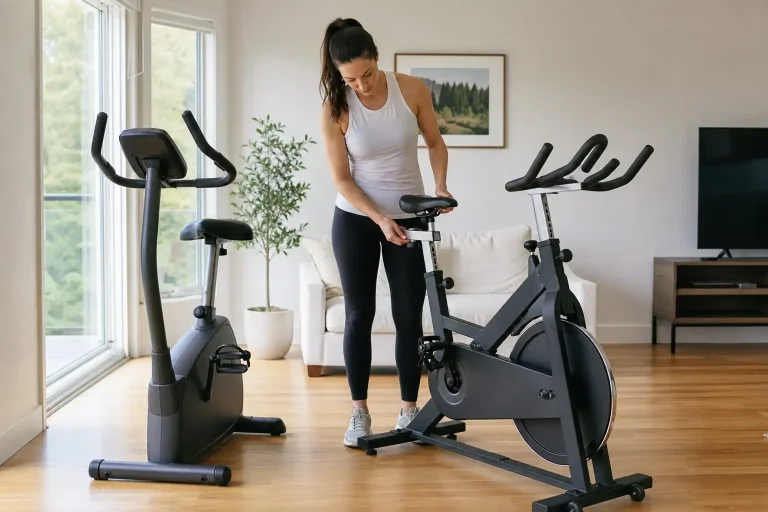
“Exercise bike vs recumbent bike” is really upright vs recumbent: both are exercise bikes, and the difference is how you sit. On an upright, the seat is above the pedals; on a recumbent you sit back in a chair-like seat with the pedals in front.
This guide compares the two on comfort, access, space, workout and price tier, with figures from the bikes we track, then says who should pick which.
Exercise bike vs recumbent bike: Recumbent vs Upright: the Short Comparison
Median length (in), our pool
Amazon US listings tracked by FitGearHQ, 2026-11-05.
| Recumbent | Upright | |
|---|---|---|
| Seat | Wide seat with backrest | Saddle or wide seat, no backrest |
| Getting on | Step-through frame | Leg over the frame on most |
| Median length | 55.5 in | 43.6 in |
| Median width | 25.4 in | 22.4 in |
| Median unit weight | 80 lb | 74.2 lb |
| Max rider weight (range) | 265-400 lb | 242.5-330 lb |
| Moving arm handles | 4 of 16 | 0 of 6 |
| Standing climbs | No | Possible on some |
Check Amazon for current pricing and availability.
Comfort and Access
The recumbent wins on comfort: the backrest carries part of your weight and the wide seat spreads the rest. The step-through frame means no leg swing, which helps riders with limited hip mobility or balance. An upright puts more weight on the saddle and asks more of the core to stay upright.
Workout and Calories
At the same effort, the seat changes little in calories: Harvard Health estimates about 252 calories in 30 minutes of moderate stationary cycling at 155 lb, whatever the bike. An upright lets you rise out of the saddle on some models and uses more core; a recumbent makes longer seated rides easier. Both count toward the CDC 150 weekly minutes.
Space at Home
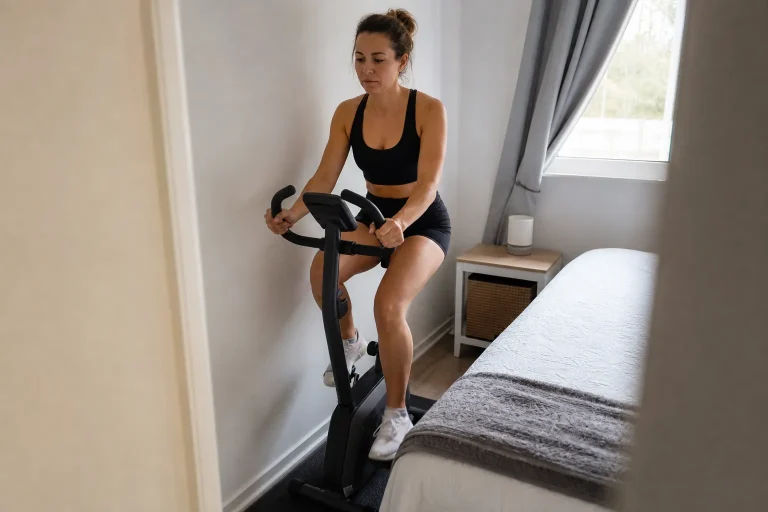
Uprights are shorter: a median of 43.6 in against 55.5 in for recumbents, which need a long seat rail. Add about 2 feet beside either to get on and off. Short-frame recumbents exist; see exercise bikes for small spaces.
Who Should Choose Which
- Recumbent: back support, an easy step-on, longer seated rides, older riders, riders recovering their fitness.
- Upright: a smaller footprint, a road-bike posture, more core work, short and harder rides.
- Spin bike: standing climbs and intervals: see spin bike vs exercise bike.
Our Top Picks of Each Type
Top recumbent

pooboo W216
FitScore 64.9/100
A short recumbent with moving arm handles and a high rider limit. Ranked #1 in our best recumbent bike guide, FitScore 64.9 for that intent.
Check Price on AmazonTop upright

Sunny Health & Fitness SF-B2883SMART
FitScore 58.3/100
A short upright with 24 programs, wheels and a belt drive. Ranked #3 in our best exercise bike for small spaces guide, FitScore 58.3 for that intent.
Check Price on AmazonRecumbent with programs

Schwinn 230
FitScore 56.4/100
Built-in programs, pulse grips and a long frame warranty. Ranked #2 in our best exercise bike without subscription guide, FitScore 56.4 for that intent.
Check Price on AmazonChecklist Before You Buy
5 checks
Tap a number to check off that step.
- 01
Decide on comfort vs posture first.
- 02
Measure the floor: recumbents are longer.
- 03
Check the rider height range.
- 04
Check the rider limit with a margin.
- 05
Try the step-on if you can.
Common Mistakes to Avoid
Mistake 1Buying an upright when getting on is hard.
Mistake 2Buying a recumbent for standing climbs.
Mistake 3Forgetting the length of the seat rail.
Mistake 4Assuming one type burns more calories at the same effort.
The Bottom Line
- Every one of the 16 recumbents we track has a backrest and a step-through frame; 1 of 6 uprights is step-through.
- Median length: 55.5 in for recumbents, 43.6 in for uprights.
- Rider limits: recumbents 265 to 400 lb, uprights 242.5 to 330 lb.
- Calories depend on effort and body weight, not on the seat: about 252 in 30 moderate minutes at 155 lb (Harvard Health).
- Spin bikes are a third type: see spin bike vs exercise bike.
Our Top Picks
 Top recumbentpooboo W216FitScore64.9/100Check on Amazon
- Top uprightSunny Health & Fitness SF-B2883SMARTFitScore58.3/100Check on Amazon
- Recumbent with programsSchwinn 230FitScore56.4/100Check on Amazon
Frequently Asked Questions
Neither is better for everyone: a recumbent is more comfortable and easier to get on; an upright is shorter and works the core more.
At the same effort, about the same; you may simply ride harder or longer on the one you find more comfortable.
Both are low impact; ask your doctor or physical therapist, and keep resistance light at first.
Often yes: the backrest and step-through frame make it the easier bike to use safely.
Usually the upright: a median of 43.6 in long against 55.5 in for recumbents in our pool.
Explore More Exercise Bike Guides
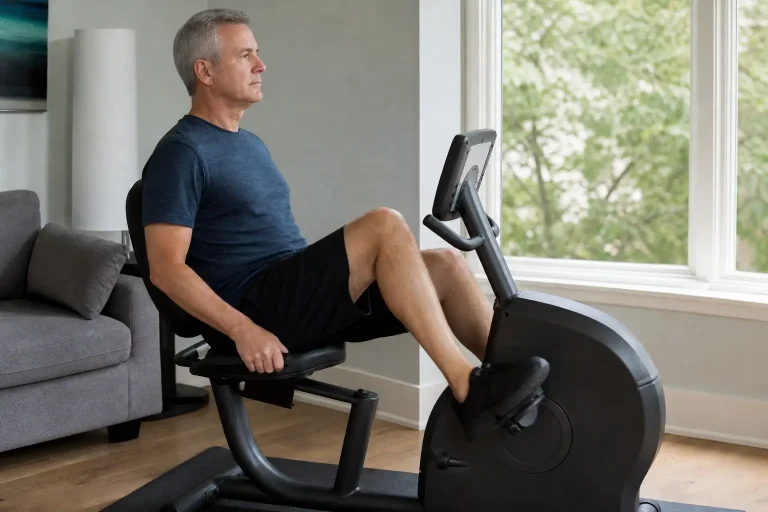
Best Recumbent Bike (2026): 5 Picks for Comfortable Home Cardio
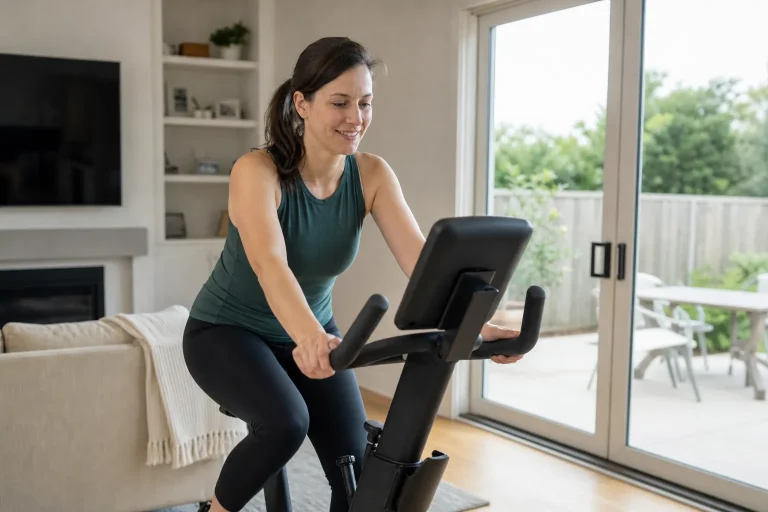
Best Exercise Bike for Home (2026): 5 Spin and Upright Picks Ranked
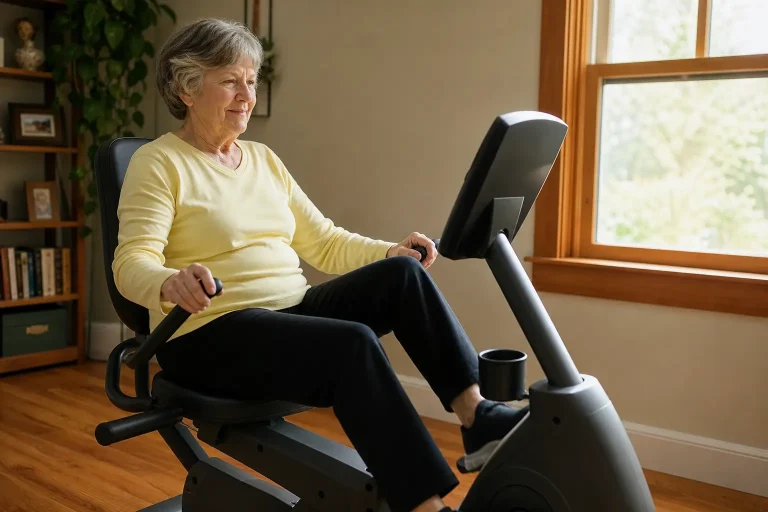
Best Exercise Bike for Seniors (2026): 5 Easy-Access Picks
Spin Bike vs Exercise Bike: What Is the Difference and Which to Buy? (2026)
Best Exercise Bike for Small Spaces (2026): 5 Short, Quiet Picks
Benefits of an Exercise Bike: What Regular Riding Does (and Does Not Do) (2026)
This article contains affiliate links. If you click through and make a purchase, we may earn a small commission at no extra cost to you. As an Amazon Associate, we earn from qualifying purchases. We do not show prices because they change constantly: product details and availability can change at any time, so please check the current price and details directly on Amazon. Learn more. Amazon and the Amazon logo are trademarks of Amazon.com, Inc. or its affiliates.
