

Short answer
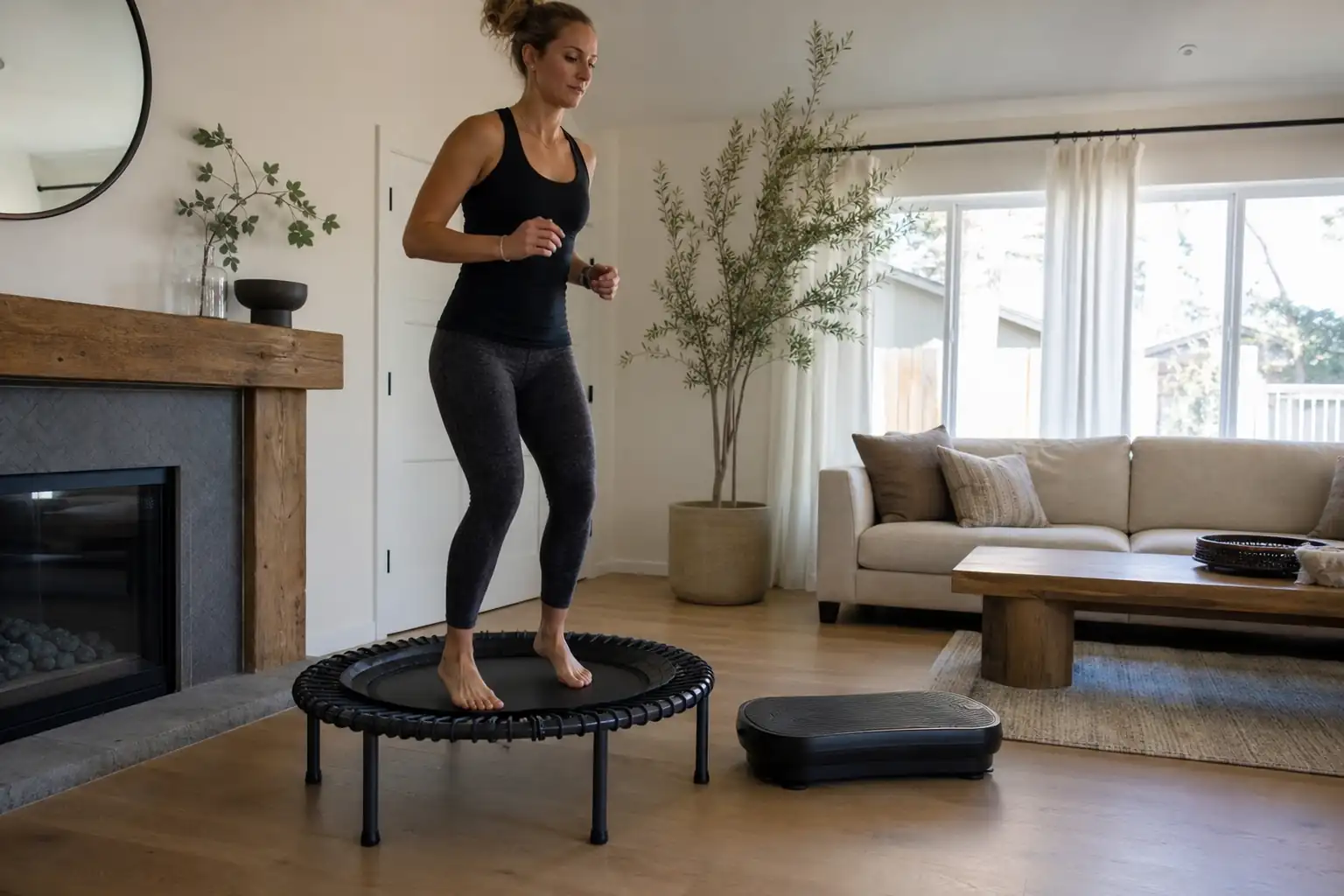
In the vibration plate vs rebounder choice, pick a rebounder if you want a real cardio workout: jumping on a mini-trampoline is active exercise, and in one study a running game done on a mini-trampoline reached vigorous intensity. Pick a vibration plate if you want a low-effort, standing or squatting session that takes little floor space and no jumping: the plate does the moving, and in a 2001 study vibration added only a modest amount of effort to standing or squatting. Anyone pregnant or with a health condition should ask a doctor first.
Key takeaways
- On a rebounder you do the moving; on a vibration plate the machine does.
- Running in place on a mini-trampoline reached vigorous intensity in a 2018 study.
- Vibration adds a small, measurable effort to standing and squatting.
- Plates take less floor space and no headroom; rebounders need no power.
- Ask a doctor first if you are pregnant or have a health condition.
Both fit in a corner, both promise a workout without a gym, and both show up in the same searches. But a vibration plate and a rebounder work in opposite ways: on a rebounder you do the moving, on a plate the machine does.
This guide compares them on how they work, effort, impact, space, noise and safety, using published studies and the specs of the 44 vibration plates in our database. For ranked plates, see our best vibration plate, best vibration plate for beginners and best compact vibration plate guides.
Vibration Plate vs Rebounder at a Glance
The main differences, from the studies cited below and the plates we rank.
| Vibration plate | Rebounder (mini-trampoline) | |
|---|---|---|
| What moves | The platform: it tips side to side or moves up and down | You: you bounce, jog or jump on a sprung mat |
| Effort | Low: vibration adds a modest amount to standing or squatting | Moderate to vigorous, depending on how you bounce |
| Impact | No jumping; constant vibration through the feet | Repeated landings, cushioned by the mat |
| Typical use | Short standing sessions, squats, holds, stretches | Cardio sessions: bouncing, jogging in place, jumping jacks |
| Footprint | Median 24.215 in long in our database; slides under many beds | A round frame wider than a plate, plus headroom to bounce |
| Power | Plugs into the wall | None |
| Ranked guide | Best vibration plate | Not ranked (no rebounders in our database) |
Check Amazon for current pricing and availability.
How Each One Works
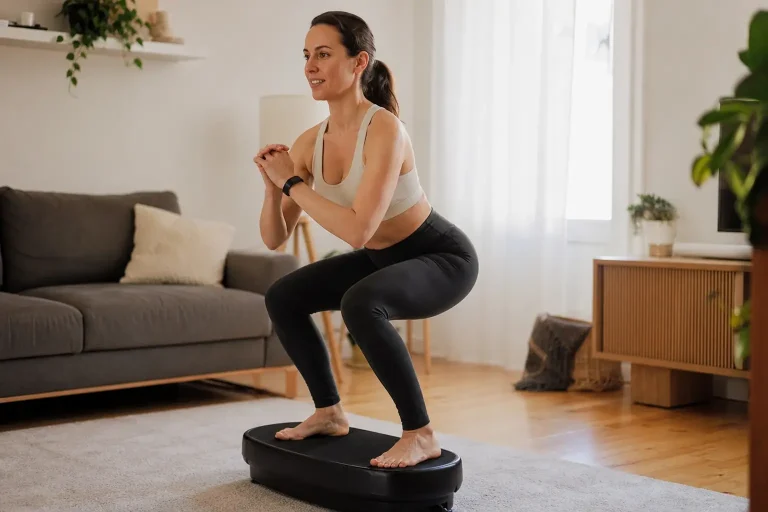
A vibration plate is a motorized platform. Oscillating plates tip side to side around a center pivot, linear plates move straight up and down, and many plates sold as 3D or 4D do both. You stand on it, usually with soft knees, and your muscles react to the shaking. See our oscillating vs linear vibration plate guide for the difference.
A rebounder is a small trampoline, a sprung or bungee-corded mat on legs. Nothing moves unless you do: you bounce gently with your feet on the mat, jog in place, or jump. The mat gives under you and pushes you back up.
Effort and Calories
On a rebounder, you are exercising. In a 2018 study in Biology of Sport, 19 healthy men played a running-in-place video game with and without a mini-trampoline; on the trampoline, heart rate, oxygen uptake and METs were higher in every measure, and the session was classed as vigorous intensity, against moderate to vigorous without it.
On a plate, the effort comes from the position you hold. In a 2001 study in the European Journal of Applied Physiology, vibration at 26 Hz added about 4.5 mL of oxygen per kg of body weight per minute to standing or squatting: measurable, but small next to jogging. A plate makes a squat or a hold harder; it does not replace a cardio session.
Impact on Your Joints
Neither is high impact in the way running on pavement is. In a NASA study published in 1980, eight young men ran on a treadmill and jumped on a trampoline at several heights. At similar heart rates and oxygen uptake, trampoline jumping spread the acceleration more evenly from the ankle to the back and head, while running put the highest peaks at the ankle (up to 12 G, against up to 7 G jumping).
A vibration plate has no landings at all, but it sends vibration up through the body continuously. Keep your knees slightly bent on a plate, and land softly with bent knees on a rebounder.
Space, Noise and Storage
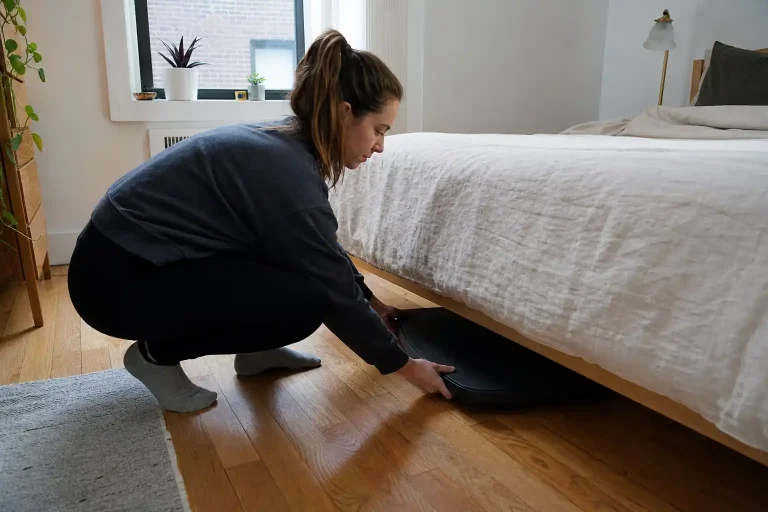
Vibration plates are compact: the 44 plates we track are a median 24.215 inches long, 5.95 inches tall and 23.45 lb, and those without a handlebar slide under many beds. They need an outlet and make a motor hum that a mat under the plate can soften.
A rebounder takes more room: a round frame wider than a plate, plus enough ceiling height to bounce without hitting anything. Folding models exist, but they still need space to open. It needs no power, and the noise is the creak of springs or cords and your landings.
Safety: Who Should Ask a Doctor First
Mayo Clinic says whole-body vibration can be harmful in some situations and advises checking with your doctor before you start, especially if you are pregnant or have a health condition. Our who should not use a vibration plate guide lists the usual cautions.
Rebounding is jumping, so the same common sense applies: ask your doctor first if you are pregnant, have a health condition or have balance problems, and choose a rebounder with a handle bar if you are unsteady. Whichever you choose, start gently and stop if anything hurts.
Can You Use Both?
Yes, and they cover different needs. A rebounder is a cardio tool: a few minutes of bouncing raises your heart rate. A vibration plate is a standing-strength and mobility tool: squats, holds and stretches on a moving surface. If you only have room for one, decide which of those you want most.
If You Choose a Vibration Plate
The #1 pick of three of our ranked guides. Each FitScore is the one of the guide named, with that guide’s weights.
Top pick for most homes

Merach CV55 4D
FitScore 74.1/100
Oscillating + linear motion, rated for 440 lb, 33 lb, 26.4 in long, no handlebar and remote control. Ranked #1 in our best vibration plate guide, FitScore 74.1 for that intent.
Check Price on AmazonTop pick for beginners

Merach MR-2490H1 4D
FitScore 72.3/100
Oscillating + linear motion, rated for 450 lb, 35.3 lb, 28.1 in long, no handlebar and remote control. Ranked #1 in our best vibration plate for beginners guide, FitScore 72.3 for that intent.
Check Price on AmazonTop pick for small spaces

Merach CV30 Pro
FitScore 74.3/100
Oscillating motion, rated for 400 lb, 16.27 lb, 23 in long, no handlebar and remote control. Ranked #1 in our best compact vibration plate guide, FitScore 74.3 for that intent.
Check Price on AmazonWhich Should You Choose?
Match the machine to what you want from it.
- A cardio workout at home: a rebounder.
- Low-effort standing sessions, squats and stretches: a vibration plate.
- No jumping, or downstairs neighbors: a vibration plate on a mat.
- Very little floor space: a compact plate; our best compact vibration plate guide ranks plates of 25 lb or less.
- Pregnancy or any health condition: ask your doctor first, whichever you choose.
Checklist Before You Choose
6 checks
Tap a number to check off that step.
- 01
Do you want cardio (rebounder) or standing strength work (plate)?
- 02
Do you have the ceiling height to bounce?
- 03
Is there an outlet where the plate will go?
- 04
Do you need something to hold for balance?
- 05
Is the weight rating above your body weight?
- 06
Have you asked your doctor if you are pregnant or have a health condition?
Common Mistakes to Avoid
Mistake 1Expecting a vibration plate to replace a cardio workout.
Mistake 2Bouncing hard on a rebounder on day one.
Mistake 3Standing with locked knees on a plate.
Mistake 4Putting a rebounder under a low ceiling or a light fixture.
Mistake 5Ignoring the user weight rating of either one.
The Bottom Line
- A rebounder is a mini-trampoline you bounce or jog on; a vibration plate shakes while you stand, squat or hold a position.
- Running in place on a mini-trampoline reached vigorous intensity in a 2018 study of 19 adults.
- Vibration added about 4.5 mL of oxygen per kg per minute to standing or squatting in a 2001 study: real, but small.
- Trampoline jumping spread the landing load more evenly from ankle to head than running in a NASA study.
- The 44 plates we track are a median 24.215 inches long and 5.95 inches tall.
Our Top Picks
 Top pick for most homesMerach CV55 4DFitScore74.1/100Check on Amazon
- Top pick for beginnersMerach MR-2490H1 4DFitScore72.3/100Check on Amazon
- Top pick for small spacesMerach CV30 ProFitScore74.3/100Check on Amazon
Frequently Asked Questions
It depends on what you want. A rebounder gives you a cardio workout, because you do the jumping. A vibration plate gives you a low-effort standing session where the plate does the moving. Pick a rebounder for cardio, a plate for squats, holds and stretches in a small space.
A rebounder, because bouncing is active exercise. In a 2018 study, running in place on a mini-trampoline reached vigorous intensity. In a 2001 study, vibration added only a modest amount of effort to standing or squatting.
In a NASA study, trampoline jumping spread the landing acceleration more evenly from ankle to head than treadmill running, which put the highest peaks at the ankle. A vibration plate has no landings at all.
A vibration plate. The plates we track are a median 24.215 inches long and 5.95 inches tall, and many slide under a bed. A rebounder needs a round frame wider than a plate and room overhead to bounce.
Yes. They do different things: a rebounder for cardio, a plate for standing strength work and stretches. Ask your doctor first if you are pregnant or have a health condition.
No. A trampoline or rebounder is a sprung mat you bounce on yourself. A vibration plate is a motorized platform that shakes while you stand on it.
Explore More Vibration Plate Guides
Best Vibration Plate (2026): 5 Top Picks for Home, Ranked
Best Vibration Plate for Beginners (2026): 5 Easy-to-Start Picks
Best Compact Vibration Plate (2026): 5 Light, Easy-to-Store Picks
Best Oscillating Vibration Plate (2026): 5 Side-Alternating Picks
Best Vibration Plate for Seniors (2026): 5 Picks With Handlebars
Best 4D Vibration Plate (2026): 5 Multi-Motion Picks, Ranked
This article contains affiliate links. If you click through and make a purchase, we may earn a small commission at no extra cost to you. As an Amazon Associate, we earn from qualifying purchases. We do not show prices because they change constantly: product details and availability can change at any time, so please check the current price and details directly on Amazon. Learn more. Amazon and the Amazon logo are trademarks of Amazon.com, Inc. or its affiliates.
