

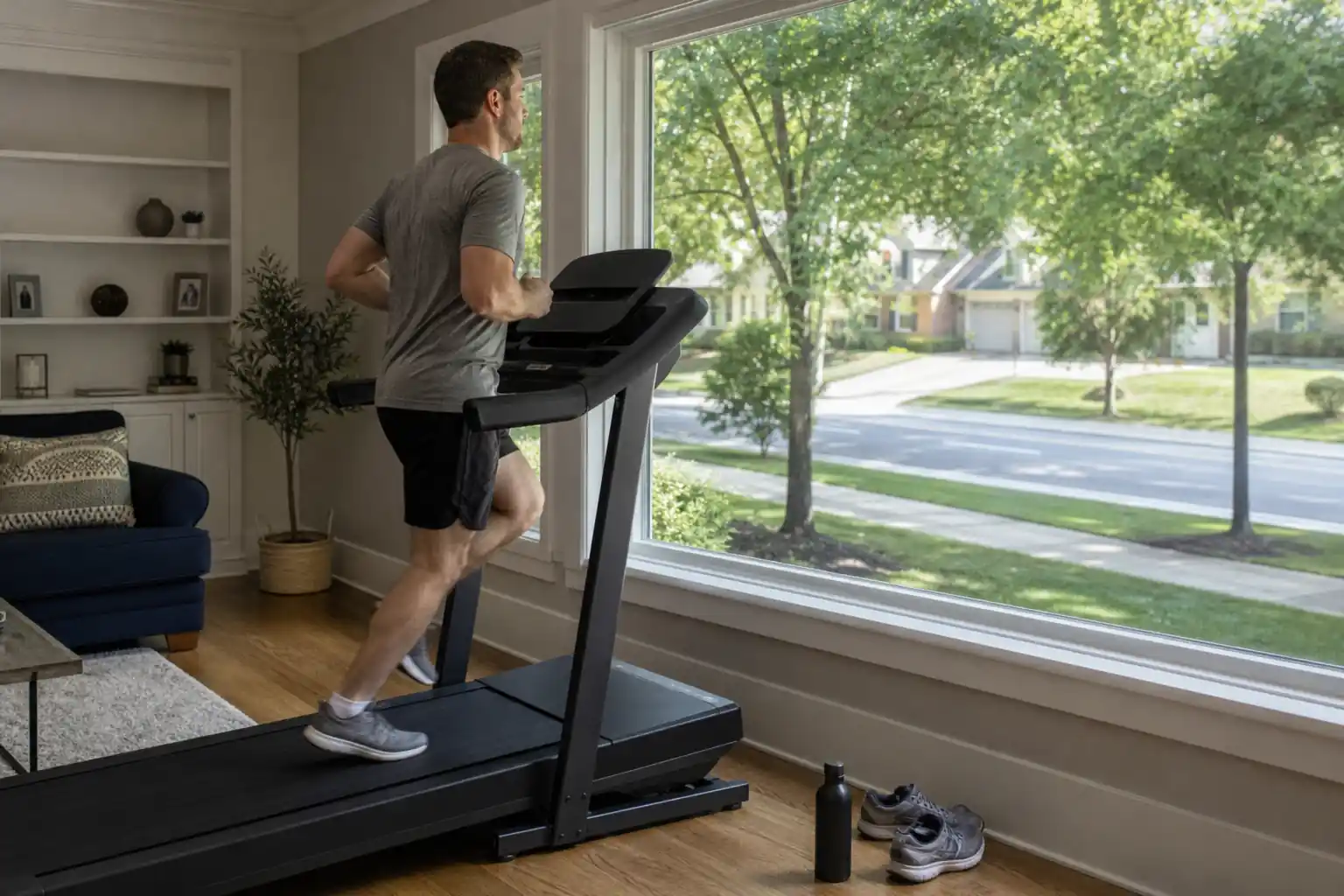
Short answer
Run outside when you are training for a road race, want varied terrain or enjoy the scenery. Use a treadmill for controlled pace, softer landings, heat, cold, darkness or poor air. Treadmill and outdoor running are biomechanically similar, and a 1% incline roughly offsets missing air resistance at moderate speeds, so most runners do well mixing both.
Key takeaways
- A 1% incline roughly offsets missing air resistance at moderate speeds.
- Treadmill and outdoor running are biomechanically very similar.
- Treadmill decks absorb more shock than tracks, turf and pavement.
- Treadmill effort and performance can differ, so use effort for hard sessions.
- Weather and air quality are the strongest reasons to run indoors.
- Mixing both gives you control and race specificity.
Running on a treadmill and running outside train the same engine, but they are not identical. Outside, you push through air, handle hills, turns and uneven ground, and set your own pace. On a treadmill, the belt sets the pace, the deck gives a little under each step, and weather never cancels a workout.
This guide answers the questions runners actually ask: whether you need a 1% incline, why treadmill paces can feel harder or easier, how the two compare for joints and injury risk, and when weather or air quality should move you indoors. If you are shopping, our best treadmill for running guide ranks full-size running decks, and the picks below suit runners replacing some road miles.
Treadmill vs Running Outside at a Glance
The table compares the two on the points that usually decide where a run happens. Neither is better across the board; each wins on different days and for different goals.
| Criteria | Treadmill | Running outside |
|---|---|---|
| Air resistance | None; add 1% incline to compensate | Yes, more noticeable at faster paces and in wind |
| Pace control | Exact and steady | Self-paced; varies with terrain and fatigue |
| Surface | Uniform, shock-absorbing deck | Varies: asphalt, concrete, trail, track |
| Hills | Programmable incline; decline on some models | Real ups and downs, including descents |
| Turns and balance | None | Corners, curbs and uneven ground |
| Weather and air quality | Not a factor | Heat, cold, rain, ice, smoke and ozone |
| Safety | Controlled; needs a safety key and clear space | Traffic, lighting and footing |
| Best for | Pace work, bad weather, joint comfort, busy schedules | Race specificity, variety, long runs |
Check Amazon for current pricing and availability.
Should You Set the Treadmill to 1% Incline?
Usually, yes, if you want treadmill effort to match flat outdoor running. Indoors there is no air resistance, so the same speed costs less energy. The classic study on this, from 1996, found that a 1% treadmill grade most accurately reflected the energy cost of outdoor running at speeds from about 6.5 to 11.2 mph, over runs of about 5 minutes.
Newer work suggests 1% is a good rule of thumb, not an exact match. High-level distance runners showed better running economy on a track than on a treadmill set to 1%, and a 2026 study of trained runners found that outdoor track running still cost more energy than treadmill running at 1% grade. At easy jogging speeds the difference is small; at faster speeds and in wind, outdoor running costs more.
In practice: use 1% for steady runs when you want outdoor-like effort, use 0% for very easy recovery runs if you prefer, and judge hard sessions by effort or heart rate rather than speed alone. If you want models with precise incline steps, see our best treadmill with incline and automatic incline guides.
Pro tip: Set 1% at the start of every run so the habit sticks. Many treadmills remember your last incline or let you save a custom workout.
Pace and Effort: Why Treadmill Running Feels Different
Many runners find the same pace harder on a treadmill, and research partly backs that up. A meta-analysis of crossover studies found that heart rate and perceived effort on a motorized treadmill were higher at faster submaximal speeds and lower at slower speeds than overground, and that endurance performance was poorer on the treadmill. Indoor heat and the fixed belt speed may add to that feeling.
Two practical points follow. First, do not expect your treadmill 5K pace to equal your road 5K pace; use treadmill sessions to build fitness and use outdoor runs or races to set goal paces. Second, treadmill speed readouts can drift as belts and sensors age, so compare effort, heart rate and a footpod or watch reading over time. Calibration and belt care are covered in our treadmill maintenance guide.
The upside of the belt is control. Intervals, tempo runs and progression runs are easy to execute exactly, which makes the treadmill useful for speed work in winter. Our best treadmill for HIIT picks favor fast speed changes. Use the table to convert treadmill speeds to pace per mile.
| Treadmill speed (mph) | Pace per mile | Pace per km |
|---|---|---|
| 5.0 | 12:00 | 7:27 |
| 6.0 | 10:00 | 6:13 |
| 6.5 | 9:14 | 5:44 |
| 7.0 | 8:34 | 5:20 |
| 7.5 | 8:00 | 4:58 |
| 8.0 | 7:30 | 4:40 |
| 9.0 | 6:40 | 4:09 |
| 10.0 | 6:00 | 3:44 |
Running Form on a Treadmill vs Outside
Your stride does not change much. A systematic review of 33 studies concluded that spatiotemporal, kinematic, kinetic and muscle measures are largely comparable between motorized treadmill and overground running. The main differences were small: a flatter foot angle at landing, slightly longer ground contact and less up-and-down movement of the body on the treadmill.
What the treadmill cannot copy is variety. Outside, you corner, step off curbs, run downhill and adjust to uneven ground, which trains balance and the muscles that control descents. A treadmill with decline can partly simulate downhills; the Sole TT8 and Sole F89 go to 6% decline, and the NordicTrack Commercial 2450 to 3%. If a race has long descents, include some outdoor downhill running too.
Belt length matters for form. A short deck can make you shorten your stride at faster speeds, so runners should look for a 60-inch deck. Taller and heavier runners can check our best treadmill for tall runners and heavy runners guides.
Impact, Joints and Injury Considerations
A treadmill deck is softer than most outdoor surfaces. In tests of 77 treadmills, treadmills showed the highest shock absorption of all surfaces measured, ahead of athletics tracks and artificial turf, and the authors note their properties also differ from asphalt and concrete. A separate gait study measured lower average weight-bearing during treadmill jogging than overground jogging (175% versus 201% of body weight), though the speeds were not matched.
That does not prove treadmill running prevents injuries. Running injuries have many causes, and research has not shown that one surface consistently wins. A sensible view: the treadmill can make it easier to keep running through sore spells, while outdoor variety spreads load across different muscles and angles. Mixing both is a reasonable middle path.
If joint comfort is your main reason for running indoors, deck cushioning varies a lot between models. Some decks let you adjust firmness, which helps if you share the machine or want a road-like feel before race day. Our best cushioned treadmill and best treadmill for bad knees guides compare decks, and the treadmill cushioning guide explains the systems.
Best Adjustable Cushioning

NordicTrack T Series 16
FitScore 87.7/100
SelectFlex cushioning switches between softer and firmer settings on a 20 × 60-inch deck with 0–12% incline; iFIT needs a membership. Read our review.
Ranked in our Best Cushioned Treadmill for Walking guide
Check Price on AmazonBest Premium Cushioning

Sole F89
FitScore 84.5/100
A cushioned 22 × 60-inch deck with a 4 HP motor, 15% incline and 6% decline for downhill practice, plus lifetime frame and motor coverage. Read our review.
Ranked in our Best Cushioned Treadmill for Walking guide
Check Price on AmazonBest Cushioned Value
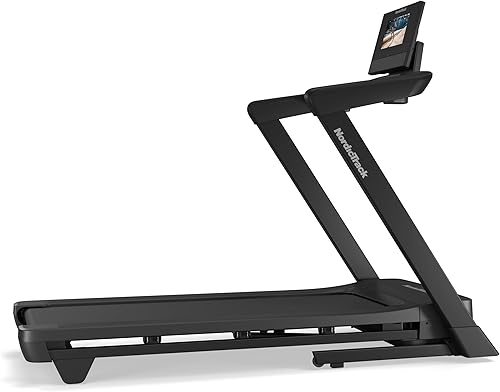
NordicTrack T Series 10
FitScore 87.3/100
Adjustable SelectFlex cushioning, a 3 HP motor, 0–12% incline and a 20 × 60-inch deck for easy runs and walks. Read our review.
Ranked in our Best Cushioned Treadmill for Walking guide
Check Price on AmazonWeather, Air Quality and Safety
Weather is the treadmill’s strongest argument. In heat, the CDC advises athletes to schedule workouts earlier or later in the day, drink more water than usual and stop if they feel faint or weak. On hot afternoons, an indoor run with a fan lets you keep the session without the risk. In ice, snow or darkness, a treadmill removes slips, poor visibility and traffic.
Air quality matters too. The CDC recommends checking the Air Quality Index and, on days with high ozone, shortening your run, walking instead or running indoors on a treadmill. If wildfire smoke or pollution is common where you live, a home treadmill keeps training consistent.
Treadmills bring their own safety rules. The U.S. Consumer Product Safety Commission has recalled treadmills after child entrapment incidents, so always use the safety key, remove it after each run, keep children and pets away, and leave clear space behind the deck. Our best treadmill for apartments guide notes footprint and clearance for each pick.
Watch out: Clip the safety key to your clothing on every run, and straddle the belt before starting it. Never let children play near a treadmill, even when it is off.
Which Should You Choose?
Most runners get the best results from both: outdoor runs for race specificity and variety, treadmill runs for control and bad days. Use the profiles below to set your balance.
- You are training for a road race: do most long runs and race-pace work outside; use the treadmill for intervals and bad weather. See our marathon training treadmill picks.
- You run in extreme heat, cold or poor air: treadmill on those days, outside when conditions allow.
- You want gentler landings or are returning from soreness: treadmill on a cushioned deck, building back gradually with your clinician’s guidance.
- You are a new runner: treadmill for easy, steady run-walk sessions; add outdoor runs as you build confidence.
- You train for trail races or hilly courses: outdoors for descents and footing; treadmill incline and decline for repeatable climbs.
- You run early, late or alone: treadmill for safety and lighting; see our quiet treadmill picks for early mornings.
Best for Most Runners

Horizon 7.4 AT
FitScore 89.9/100
A 3.5 CHP motor, 22 × 60-inch deck, 0–15% incline and QuickDial controls for fast interval changes; lifetime frame and motor coverage. Read our review.
Ranked in our Best Treadmill for Running guide
Check Price on AmazonBest for Hills and Descents

Sole TT8
FitScore 89.2/100
A non-folding 4 HP running deck with 15% incline and 6% decline, a 22 × 60-inch belt and a 400-lb rating. Read our review.
Ranked in our Best Treadmill for Running guide
Check Price on AmazonBest for Virtual Routes

NordicTrack Commercial 2450
FitScore 86.3/100
Up to 14 mph with a -3% to 12% range on a 22 × 60-inch deck; with an iFIT membership, workouts can adjust speed and incline for you. Read our review.
Ranked in our Best Treadmill for Running guide
Check Price on AmazonHow to Mix Treadmill and Outdoor Running
A simple split works for most recreational runners: keep long runs and race-pace sessions outside when you can, and move intervals, recovery runs and bad-weather days to the treadmill. Both count toward the CDC’s 75 minutes of vigorous activity a week, the running target in its adult guidelines.
When you switch surfaces, treat the first week as an adjustment. Moving from treadmill to road, start with shorter, easier runs; moving from road to treadmill, use 1% incline and run by effort. Weekly totals matter more than where the miles happen; see our best treadmill for beginners if you are just starting.
| Runner | Treadmill sessions | Outdoor sessions |
|---|---|---|
| New runner (3 days) | 2 run-walk sessions at 1% incline | 1 easy run on a flat route |
| 5K to 10K training (4 days) | 1 interval session, 1 easy run | 1 tempo run, 1 long run |
| Half or full marathon (5 days) | 1 interval or hill session, 1 recovery run | Long run, tempo run, easy run |
| Joint-sensitive runner (3 to 4 days) | 2 to 3 runs on a cushioned deck | 1 run on a softer trail or track |
Checklist Before You Choose
- Decide your goal: race training, general fitness, weight loss or joint comfort.
- Use 1% incline for outdoor-like effort on steady treadmill runs.
- Judge hard treadmill sessions by effort or heart rate, not speed alone.
- For running at home, look for a 22 × 60-inch or at least 20 × 60-inch deck.
- Check top speed and incline range against your workouts.
- Consider decline if your races include long downhills.
- Check the AQI and heat forecast before outdoor runs.
- Use the safety key and keep children and pets away from the treadmill.
Common Mistakes to Avoid
- Expecting treadmill paces to match road race paces exactly.
- Running at 0% incline and assuming it equals outdoor effort at faster speeds.
- Holding the handrails while running.
- Doing every run indoors before a road race with long descents.
- Running outside in extreme heat or poor air instead of moving indoors.
- Ramping up weekly mileage quickly after switching surfaces.
The Bottom Line
- A classic study found a 1% treadmill grade best matched outdoor energy cost at moderate running speeds; newer studies suggest outdoor running can still cost slightly more.
- A meta-analysis found most running biomechanics are comparable on a motorized treadmill and overground, with a flatter foot strike on the treadmill.
- Treadmill decks absorbed more shock than athletics tracks and artificial turf in a test of 77 treadmills.
- Endurance performance was poorer on a motorized treadmill than overground in a meta-analysis, so treadmill paces do not always transfer one-to-one.
- The CDC suggests running indoors on a treadmill on high-ozone days and scheduling outdoor workouts for cooler hours in heat.
Our Top Picks
 Best Adjustable CushioningNordicTrack T Series 16FitScore87.7/100Check on Amazon
- Best Premium CushioningSole F89FitScore84.5/100Check on Amazon
- Best Cushioned ValueNordicTrack T Series 10FitScore87.3/100Check on Amazon
- Best for Most RunnersHorizon 7.4 ATFitScore89.9/100Check on Amazon
- Best for Hills and DescentsSole TT8FitScore89.2/100Check on Amazon
- Best for Virtual RoutesNordicTrack Commercial 2450FitScore86.3/100Check on Amazon
Frequently Asked Questions
Slightly, at the same speed, because there is no air resistance. Setting a 1% incline roughly evens it out at moderate speeds, though many runners still find treadmill runs feel harder.
A 1% incline is the standard recommendation, based on a study that found it best matched outdoor energy cost at moderate speeds. At faster speeds, outdoor running may still cost a little more.
The deck absorbs more shock than most outdoor surfaces, which some runners find more comfortable. Research has not shown that treadmill running prevents injuries, so build mileage gradually either way.
The distance is the same, but effort differs slightly because of air resistance, terrain and turns. Use 1% incline and remember that treadmill readouts can drift.
Treadmill running often feels harder at faster speeds, indoor heat builds up and the belt pace does not let you surge and settle. Run by effort and compare races outdoors.
Yes, many runners do much of their training indoors, but include some outdoor long runs to practice pacing, turns, descents and fueling on the move.
Slightly more outside at the same speed, mainly from air resistance. A 1% incline narrows the gap.
Explore More Treadmill Guides and Comparisons
Best Treadmill for Running (2026): Top 5 Picks
Best Treadmill for Marathon Training (2026): Top 5 Picks
Best Cushioned Treadmill for Walking (2026): Top 5 Picks
How to Maintain a Treadmill (2026): The Complete Home Care Guide
Treadmill Buying Guide (2026): How to Choose the Right Home Treadmill
NordicTrack 1750 vs 2450 (2026): Is the Bigger Screen Worth It?
This article contains affiliate links. If you click through and make a purchase, we may earn a small commission at no extra cost to you. As an Amazon Associate, we earn from qualifying purchases. We do not show prices because they change constantly: product details and availability can change at any time, so please check the current price and details directly on Amazon. Learn more. Amazon and the Amazon logo are trademarks of Amazon.com, Inc. or its affiliates.
