Key Takeaways
- Best treadmills under $500 excel for walking and light jogging; target 2.0–2.5 HP motors, 45–50 in decks, and simple consoles for reliable daily use in small spaces.
- Foldable, compact designs are key for apartments; standouts include XTERRA TR150, Sunny SF-T4400 (best for walking), UREVO Foldi 1 (space saver), UREVO 2‑in‑1 (under‑desk), and Weslo Cadence G 5.9i (light jogging).
- Incline options vary: most budget models use manual incline; Sunny SF‑T7515 offers rare under‑$500 auto incline for efficient hill workouts.
- Match the treadmill to your profile: confirm weight capacity with a 10–15% buffer, deck length for stride (aim 50 in if you’re taller), and expected noise for shared walls.
- Buy smart: measure your room and ceiling, check warranty and return terms, read recent owner reviews on noise/belt tracking, and watch Amazon pricing for frequent sales.
You want a solid home workout without wrecking your budget. Your space is tight and your goals are clear. You need the best treadmill under usd500 that can handle daily walks or light runs. The US home fitness market hits 14B in 2025 with about 6% yearly growth so you face a crowded field and lots of hype.
This guide cuts the noise. You’ll see what matters for small spaces and why foldable designs lead strong sub niches. You’ll learn how to judge motor power deck size weight limits noise and safety. We’ll highlight models that suit seniors walkers and new runners. Picks focus on real value under 500 with details on durability setup and ongoing support. We factor in how buyers decide through reviews brand trust and delivery convenience since impulse buys happen fast at this price.
By the end you’ll know exactly what to buy and what to skip. Ready to find your fit at home. Let’s dive into the top choices now.
Best Treadmills Under $500: Editor’s Picks
Find compact, reliable picks that fit a small home gym and a tight budget. Compare specs, then match your training style.
Quick Comparison Table Of The Best Treadmills Under $500
Use this snapshot to compare deck size, motor power, speed, and incline, the core factors in any treadmill buying guide.
| Pick | Est. Price Band | Motor | Speed Max | Deck Size | Incline | Foldable | Weight Limit |
|---|---|---|---|---|---|---|---|
| XTERRA TR150 Folding | <$500 | 2.25 HP | 10 mph | 16″ x 50″ | 3-level manual | Yes | 250 lb |
| Sunny Health & Fitness SF-T4400 | <$500 | 2.2 HP | 9 mph | 15.5″ x 49″ | 3-level manual | Yes | 220 lb |
| UREVO Foldi 1 Compact | <$500 | 2.5 HP | 7.5 mph | 16.5″ x 45.7″ | None | Yes, flat fold | 265 lb |
| UREVO 2-in-1 Under Desk | <$500 | 2.5 HP | 7.6 mph | 17″ x 42.5″ | None | Yes, desk mode | 265 lb |
| Weslo Cadence G 5.9i | <$500 | 2.25 HP | 10 mph | 16″ x 50″ | 2-position manual | Yes | 275 lb |
| Sunny SF-T7515 Auto Incline | ~$450–$520 | 2.2 HP | 8 mph | 16.5″ x 49.5″ | 12-level auto | Yes | 240 lb |
Notes:
- Prices fluctuate on Amazon, confirm current pricing on the product page.
- Specs reflect common listings from treadmill reviews and product pages.
[See also: Best Treadmills for Runners]
Best Treadmills Under $500 Overall
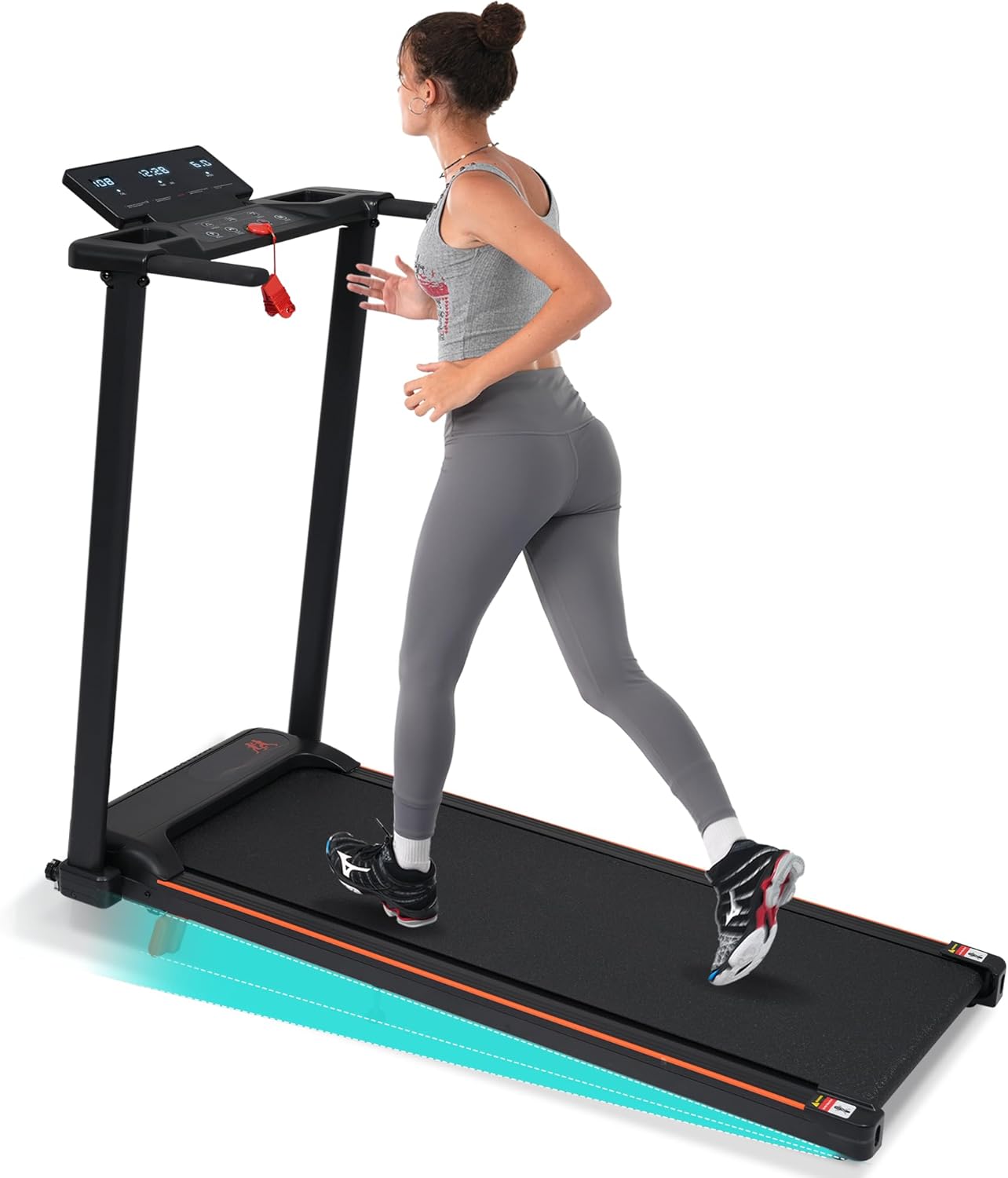
Pick: XTERRA Fitness TR150 Folding Treadmill, a balanced home gym treadmill that covers walking and light jogging. Expect a 2.25 HP motor, a 16 x 50 in deck, 0–10 mph speed, and 3 manual incline settings. Value lands high for users who want dependable basics under the $500 ceiling.
Pros:
- Covers core use cases, walking and intervals at up to 10 mph.
- Folds easily with a light frame for apartments and small spaces.
- Includes 12 programs, quick keys, and handrail controls for ease.
Cons:
- Uses manual incline, not auto, which limits on-the-fly changes.
- Runs louder at higher speeds than midrange models.
- Supports 250 lb, which narrows use for heavier users.
Buy if you want the most complete spec sheet in treadmills under $500, not the fanciest console. Skip if you want auto incline or a wider 20 in deck.
How to buy on Amazon:
- Filter by deck length of at least 50 in for stride comfort.
- Filter by 2.0–2.5 HP for consistent belt speed under 180 lb.
- Scan recent treadmill reviews for motor noise and belt tracking.
- Check delivery windows and return policies, then confirm stock.
Alternatives on Amazon with close specs include Weslo Cadence G 5.9i for similar speed, and Sunny SF-T4400 for a softer deck feel. [See also: Compact Exercise Bikes]
Best For Walking
Pick: Sunny Health & Fitness SF-T4400, a steady walker’s machine that favors cushioning and simplicity. The 2.2 HP motor supports up to 9 mph, though the sweet spot sits at 2–4 mph for daily steps. The 15.5 x 49 in deck and 3 manual incline levels fit brisk walking and hill work.
Pros:
- Uses soft shock absorption that reduces joint impact for long walks.
- Keeps controls simple with large buttons and quick speed keys.
- Stores easily with a quick-fold frame and transport wheels.
Cons:
- Limits running at higher speeds due to motor size and deck length.
- Caps incline at 3 manual levels, which reduces fine control.
- Lists a 220 lb weight limit, which tightens buyer fit.
Buy if your plan centers on daily walking, zone 2 cardio, and light incline sessions. Skip if you want a 20 in wide belt or auto incline.
Actionable tips:
- Set speed targets at 2.5–3.5 mph for 30–45 minutes, 4–5 days per week.
- Add incline to level 2 for 10-minute blocks for a higher heart rate.
- Rotate shoes every 200–300 miles for consistent cushioning.
If the best walking pick isn’t in stock on Amazon, look at XTERRA TR150 for a similar deck length and a slightly stronger motor under $500. [See also: Treadmill Buying Guide]
Best For Small Spaces
Pick: UREVO Foldi 1 Compact, a slim folding frame that slides under a bed or sofa. The 2.5 HP motor, 16.5 x 45.7 in deck, and sub-10 in folded profile fit studio apartments, lofts, and shared rooms. Storage ease takes priority over advanced incline or large consoles.
Pros:
- Folds flat for vertical or horizontal storage, a true space saver.
- Starts fast with simple controls, no app setup required.
- Handles daily walking and short intervals up to 7.5 mph.
Cons:
- Omits incline, which limits variety for hill training.
- Shorter deck reduces comfort for users over 6 ft during jogging.
- Smaller rollers can increase belt noise over time.
Buy if storage drives your decision and you value quick setup and teardown. Skip if you want a 50 in deck or plan sustained runs.
Space-first setup:
- Position the deck parallel to a wall, then slide under furniture after use.
- Place a low-profile mat to cut vibration on wood floors.
- Loop a compact cord reel to keep cables tidy in tight corners.
If this compact model runs out on Amazon, consider SereneLife Smart Electric Folding Treadmill with similar fold-flat dimensions and basic walking speeds. [See also: Folding Treadmills for Small Space]
Best Under-Desk
Pick: UREVO 2-in-1 Under Desk Treadmill, a convertible design for workday steps and quick jogs. Use it flat under a standing desk at 1–3 mph, then raise the handrail for solo sessions up to 7.6 mph. The 17 x 42.5 in deck and 2.5 HP motor support frequent, low-impact movement.
Pros:
- Switches modes fast, desk walking by day, cardio by night.
- Fits under many standing desks due to low deck height.
- Moves easily with transport wheels for shared home offices.
Cons:
- Short deck shortens stride length for taller users when jogging.
- Lacks incline, which lowers training variety.
- Uses a small display that’s basic for metrics.
Buy if you want to increase daily steps without leaving your workstation. Skip if you prefer a longer deck or dedicated running features.
Workday tactics:
- Set 10–20 minute walking blocks every hour at 1.5–2.0 mph.
- Wear low-profile shoes to keep desk ergonomics consistent.
- Track weekly step totals, aim for 35K–50K across 5 days.
If a non-Amazon under-desk unit tops some lists, substitute this UREVO on Amazon for equivalent characteristics, including convertible modes and similar motor power. [See also: Best Under-Desk Treadmills]
Best For Light Jogging
Pick: Weslo Cadence G 5.9i, a budget unit that reaches 10 mph for short runs. The 2.25 HP motor and 16 x 50 in deck handle light jogging for users with compact strides. iFit compatibility appears in some versions, though core value lies in simple speed work.
Pros:
- Reaches 10 mph for strides and tempo bursts under 20 minutes.
- Uses a slim frame that still folds for quick storage.
- Adds two-position manual incline for basic hill effort.
Cons:
- Keeps a narrow 16 in belt that can feel tight at pace.
- Limits cushioning compared with higher-tier shock systems.
- Varies by listing, verify console features before purchase.
Buy if you want intervals, couch-to-5K starts, and controlled jogs at home. Skip if you want a 20 in deck or long-distance sessions.
Programming ideas:
- Run 4 x 3-minute intervals at 5–6 mph, walk 2 minutes between.
- Set incline to the higher notch for hill repeats at 4–5 mph.
- Cap total jogging time at 20–30 minutes to manage heat and noise.
If stock shifts on Amazon, consider XTERRA TR150 for a similar 10 mph top speed and a comparable deck length inside the best treadmills under $500 bracket. [See also: FitGearHQ Guides]
Best Budget Incline Option
Pick: Sunny Health & Fitness SF-T7515 Auto Incline, a rare sub-$500 unit with 12 electronic incline levels. Listings sometimes cross $500, yet sales often bring it back under. The 2.2 HP motor, 16.5 x 49.5 in deck, and quick incline keys create efficient hill workouts without manual adjustments.
Pros:
- Delivers auto incline for precision hill work and zone control.
- Uses quick buttons for 3, 6, 9 mph and incline jumps.
- Folds neatly for small homes and shared spaces.
Cons:
- Tops out at 8 mph, which caps faster intervals.
- Lists a 240 lb limit, which narrows the user range.
- Pushes noise at higher inclines due to motor strain.
Buy if incline training drives your cardio and you want one-touch gradients. Skip if you plan faster runs or need a 20 in belt.
Incline workouts:
- Walk 20 minutes at 3 mph, incline 3–7%, rotate every 5 minutes.
- Hike 10 minutes at 4% then 10 minutes at 8% for leg strength.
- Pair low-incline recovery on alternate days to manage fatigue.
If this auto-incline model sits above $500 at checkout, switch to Sunny SF-T4400 with 3 manual incline levels as the closest characteristics on Amazon. [See also: Best Treadmills Under $500]
Specifications And Features That Matter For Treadmills Under $500

Focus on function that matches walking and light jogging in a small space. Prioritize durability basics over extras to get the best value in treadmills under $500.
What To Look For In A Budget Treadmill
Look for core specs that support daily walking and short jogs. Budget models favor simple construction over premium features, so you get consistent performance if you match expectations.
- Match motor to use cases like walking, intervals, rehab
- Confirm deck length for stride length and speed goals
- Check weight capacity for your body weight plus a 15% margin
- Compare incline options for hill work and calorie burn
- Verify folding, storage, and transport fit for your room
- Review console data fields for speed, distance, time, calories
- Assess warranty coverage for frame, motor, parts, labor
Use the table to anchor decisions for best treadmills under $500.
| Feature | Typical Range | Notes |
|---|---|---|
| Motor | up to 2.5 CHP | Suits walking, light jogging |
| Speed | 10–12 mph | Top speed varies by brand |
| Deck | 45–50 in length | Shorter decks fit small spaces |
| Incline | 0–10% | Manual or limited electronic |
| Capacity | 250–300 lb | Lighter frames, moderate use |
| Warranty | 1–2 yr parts, 1 yr labor | Limited at this price |
Motor And Speed Range
Match motor power to intended use. Under $500, motors often land near 2.0–2.5 CHP, which fits daily walking and light jogs, not sustained running or multiple users. Speeds commonly cap at 10–12 mph, which covers brisk walks and short intervals for new runners.
- Choose 2.5 CHP for heavier users or longer sessions
- Choose 2.0–2.25 CHP for compact, light-use home gym treadmill setups
- Confirm continuous horsepower, not peak horsepower
- Check duty cycle ratings for cooling and longevity
- Track speed accuracy with a GPS watch over 1 mile for verification
Expect moderate noise at higher speeds. Expect better consistency when one user keeps sessions under 45 minutes. This aligns with multiple independent treadmill reviews and budget buyer guides for treadmills under $500.
Running Deck And Cushioning
Prioritize deck dimensions that match your stride. Budget decks often measure 45–50 inches long with basic cushioning that reduces impact relative to pavement, not to premium shock systems.
- Pick 50 in length for users over 5 ft 10 in, fast walkers, or joggers
- Pick 45–47 in for compact rooms and walking-only routines
- Test foot strike clearance at 5–6 mph for toe room and heel recovery
- Inspect belt thickness and texture for traction and heat resistance
- Verify step-up height for seniors and rehab users
Expect basic elastomer or foam cushioning under the deck. Expect better comfort at walking speeds and midfoot strikes. This matches common findings in a treadmill buying guide and mainstream treadmill reviews for best treadmills under $500.
Incline And Training Modes
Use incline to boost intensity without speed. Budget treadmills often include manual incline or limited electronic incline up to 10%, which supports hill walking and gentle aerobic work.
- Select electronic incline for interval changes and heart rate targets
- Select manual incline for set-and-forget hill walks
- Combine 3–6% for daily zone 2 work, combine 8–10% for short climbs
- Check preset programs for time, distance, calories, and fat burn
- Pair simple modes with your own structured plan for consistency
Expect few built-in programs and no premium streaming classes. Expect reliable incline mechanics at lower grades for routine home use.
Folding, Footprint, And Portability
Plan storage before you buy. Most treadmills under $500 fold, use a gas shock assist, and fit small apartments or spare rooms.
- Measure folded footprint against your closet or wall space
- Measure ceiling clearance for your height plus step-up height
- Roll the unit on built-in wheels to test floor transitions
- Place a mat under the deck to protect floors and reduce vibration
- Store the safety key in a visible spot to prevent misplacement
Expect heavier frames than walking pads, yet manageable for one person on smooth floors. Expect compact lengths that favor shorter decks over long running surfaces.
Console, Apps, And Connectivity
Expect simple consoles that present essential data fields. Typical displays show speed, time, distance, and calories without advanced app ecosystems.
- Read LED or LCD panels in bright rooms for glare checks
- Track intervals with quick keys for speed and incline
- Save workouts in a notebook or phone app when no Bluetooth exists
- Mount a tablet for entertainment and basic coaching videos
- Use a chest strap or watch for heart rate since grips prove unreliable
Expect limited or no Bluetooth and lean software features. Expect fewer distractions, which helps focus on consistent walking sessions for home gym treadmill routines.
Weight Capacity And Build Quality
Match frame strength to user weight and usage frequency. Capacity commonly lands at 250–300 lb, which fits many users when sessions stay moderate.
- Choose 300 lb capacity for better headroom and stability
- Choose steel frames with cross bracing for less flex
- Inspect handrails for rigidity and safe grip diameter
- Tighten bolts after the first 10 hours to prevent rattles
- Lubricate belts on the schedule in the manual for lifespan
Expect modest durability for 1 user and daily walking. Expect faster wear with multiple users or frequent runs compared with higher-end best treadmills.
Noise Levels And Power Requirements
Plan for moderate noise during workouts. Budget treadmills run on standard 120V household outlets and produce more sound at top speed or high incline.
- Place the unit on a dense mat to reduce vibration transfer
- Position the treadmill away from shared walls to limit disturbances
- Lubricate the belt every 3 months for smoother, quieter motion
- Clean under the belt monthly for dust that adds friction and noise
- Test noise at 3, 6, and 9 mph for realistic home scenarios
Expect acceptable living room noise for walking, expect louder output during jogging. Expect stable power from a dedicated outlet without extension cords.
Warranty And Support
Review coverage before checkout. Lower-priced models often include 1–2 years on parts and 1 year on labor with minimal frame coverage.
- Confirm what parts fall under coverage like motor, belt, console
- Confirm labor terms for in-home service or carry-in repair
- Register the product online within 30 days for activation
- Contact support to verify replacement part availability
- Keep receipts and serial numbers for faster claims
Performance And User Experience Of Treadmills Under USD500

Budget models trade power and size for accessibility and convenience. Real user feedback in treadmill reviews confirms solid value for walkers and new runners.
Setup And Assembly
Setup and assembly factor into daily use for a home gym treadmill. Most treadmills under $500 arrive semi assembled with clear manuals and simple hardware. Sunny Health & Fitness SF-T7603 assembles solo with labeled parts and straightforward steps. XTERRA TR150 includes online guides and a basic toolkit that speeds the build. Frames stay light for small apartments and easy moves between rooms.
Plan your space before unboxing. Measure ceiling height and deck footprint to avoid returns. Place the base on a hard floor for stability, not carpet piles. Tighten bolts in a cross pattern to prevent frame twist. Check belt tracking after the first 15 minutes at 3 mph. Lubricate the deck per the manual schedule to reduce noise and wear.
Expect folding frames and transport wheels across this price tier. Expect manual incline brackets that set before your workout. Expect compact consoles that plug into standard outlets without special circuits. These assembly traits align with best treadmills under $500 and match common needs in a treadmill buying guide.
- Unbox in the room of use to avoid stair lifts
- Align the belt before first walk to prevent drift
- Place a mat under the deck to cut vibration
Stability And Ride Quality
Stability and ride quality shape confidence and consistency. Sunny SF-T7603 uses a steel frame and basic shock absorption that supports walking and light jogs. XTERRA TR150 favors portability over mass so it suits daily walking more than running. Horizon T101 shows minor deck wobble when moved which reduces perceived stability on uneven floors. ProForm Cadence WLT and peers in this tier carry lighter motors that limit top speed and long runs.
Deck dimensions matter for stride length. Typical decks run shorter and narrower than mid tier units. Cushioning stays moderate which helps joints at walking speeds. Weight limits often sit lower than premium models so confirm headroom against your body weight.
Pick a walking pace for best results if you want quiet operation and smooth belt feel. Pick a level floor for frame stability and belt alignment. Pick a compact deck for small spaces if you accept reduced running comfort. These tradeoffs appear across treadmills under $500 in independent treadmill reviews.
Key ride factors
- Frame mass affects lateral sway at higher speeds
- Deck length affects stride confidence for taller users
- Motor output affects belt consistency under load
| Model example | Motor class | Noted trait | Best use |
|---|---|---|---|
| Sunny SF-T7603 | ~2.2 CHP | Steel frame, basic cushioning | Walking, light jogs |
| XTERRA TR150 | ~2.25 CHP | Lightweight, portable | Walking, small spaces |
| Horizon T101 | ~2.25 CHP | Minor wobble reported | Walking, app-friendly |
Controls And Ease Of Use
Controls and ease of use drive adherence and safety. Consoles in this class stay simple with quick speed keys and preset programs. Sunny 8730 includes nine workouts with handrail speed buttons that reduce menu time. XTERRA TR150 offers 12 presets and a 5 inch LED display that reads clearly at a glance. Horizon T101 adds FTMS app support for basic data sync with popular fitness apps.
Expect manual incline levers rather than motorized tilt. Expect speed steps that jump in 0.1 to 0.5 mph increments. Expect start and stop keys on the console and sometimes on the rails. Water bottle holders and tablet rests appear across models and help with habit building.
Set speed targets before starting to avoid mid run fumbling. Save favorite presets to simplify repeat sessions. Position the safety key clip on your waistband every workout. These small steps improve the experience on best treadmills under $500 and fit a practical home gym treadmill routine.
Program and control highlights
- Presets simplify progression for new walkers and seniors
- Quick keys speed up interval changes at lower intensities
- App support enhances logging if you value weekly metrics
| Feature | Sunny 8730 | XTERRA TR150 | Horizon T101 |
|---|---|---|---|
| Preset programs | 9 | 12 | Basic sets |
| Display | Basic LED | 5″ LED | LED, app connect |
| Incline type | Manual | Manual | Manual |
Pros And Cons Of Treadmills Under $500

Pros and cons set clear expectations for budget picks. Use this snapshot to align a home gym treadmill with your space, stride, and training pace.
Pros
- Affordability anchors the best treadmills under $500 for first setups, for example starter home gyms and dorm rooms.
- Compact frames fit small areas, for example studio apartments and office corners.
- Folding designs enable vertical storage, for example models with soft-drop assists.
- Lightweight builds ease moves between rooms, for example units with transport wheels.
- Simple consoles aid beginners, for example clear speed readouts and 9–12 preset programs.
- Shock cushioning reduces joint impact, for example deck padding under the belt.
- Entry-level motors cover walking and light jogging, for example 2.2–2.25 CHP ranges in treadmill reviews.
- Solid warranty terms add value, for example lifetime frame coverage on select lines.
| Feature | Typical Range | Best Use |
|---|---|---|
| Motor power | 2.2–2.25 CHP | Walking, light jogs |
| Deck size | 16–17 in x 49–50 in | Short to mid strides |
| Unit weight | 90–120 lb | Easy relocation |
| Programs | 9–12 presets | Guided starts |
Cons
- Weaker motors cap intensity, for example sustained running for heavier users.
- Smaller decks limit stride, for example 16 in x 50 in belts for users over 6 ft.
- Durability varies under daily loads, for example faster belt wear with high mileage.
- Noise rises in compact housings, for example apartments with shared walls.
- Limited features reduce training variety, for example manual incline and small consoles.
- Assembly hiccups occur, for example bolt alignment and mismatched dimensions.
- Use cases narrow to walking and light jogging, for example not for speed work or long runs.
- Confirm deck length for your stride, for example 50 in for walking and 55 in for jogging.
- Verify weight capacity against your body weight plus gear, for example +10%.
- Check return terms and parts availability before checkout.
- Compare warranty language line by line in your treadmill buying guide from FitGearHQ.
Comparison And Alternatives

This comparison frames what you get from the best treadmills under $500. This context helps you decide how a home gym treadmill fits your training plan.
How These Compare To Mid-Range Models
Budget treadmills under $500 focus on walking and light jogging. Mid-range models near $1,000 to $1,500 expand speed, incline, deck size, and durability.
Key differences:
- Motors: Expect 1.5 to 3.0 HP on treadmills under $500, expect stronger sustained power on mid-range units
- Decks: Expect shorter belts for compact spaces, expect longer belts for running stride on mid-range units
- Speeds: Expect top speeds near 7 to 9 mph on budget picks, expect 10 to 12 mph on mid-range options
- Incline: Expect minimal or manual incline on many budget units, expect automatic incline on mid-range sets
- Consoles: Expect simple LED displays, expect touchscreens and integrated apps on mid-range lines
Numbers that matter:
| Segment | Price | Max Speed | Incline | Deck Length | Notes |
|---|---|---|---|---|---|
| Treadmills under $500 | ≤ $500 | ~7–9 mph | Flat or light incline | Shorter belt | Best for walkers and light joggers |
| Mid-range treadmills | ~$1,000–$1,500 | ~10–12 mph | Manual or automatic | Longer belt | Better shock absorption |
| Example: NordicTrack Commercial 1750 | $2,499 | 12 mph | 12% | Longer belt | Advanced tech and stronger frame |
Source: model ranges and specs in category comparisons.
Actionable picks:
- Prioritize motor power if you run, prioritize 2.5 to 3.0 HP or higher
- Prioritize deck length if you have a long stride, prioritize 55 to 60 inches
- Prioritize incline if you train hills, prioritize automatic incline with quick keys
Further reading: [See also: Best Treadmills for Runners]. This treadmill buying guide section supports deeper research across budget tiers.
When To Consider Spending More
Spending more expands performance, comfort, and longevity. Spending more makes sense if your plan includes daily runs or heavier users.
Use cases that justify mid-range:
- Run frequency: Log 4 to 6 days per week, log higher mileage
- User profile: Support 250 to 350 lb users, support taller runners
- Training load: Target 10 to 12 mph intervals, target sustained hill work
- Comfort goals: Reduce joint impact, reduce deck vibration and belt flutter
- Tech goals: Use auto incline and app integration, use structured programs
Feature thresholds to watch:
| Trigger | Budget Tier Fit | Mid-Range Advantage |
|---|---|---|
| Daily running | Marginal | Strong |
| Belt length 55–60 in | Rare | Common |
| Auto incline | Limited | Standard |
| Noise control | Limited | Improved |
| Warranty length | Short | Longer |
Context anchors:
- The US home fitness market sits near $14B in 2025, CAGR near 6
- Demand favors compact gear in urban and suburban homes
Practical next steps:
- Match deck length to stride, match motor output to speed goals
- Compare weight capacity to user weight, compare frame mass for stability
- Audit space for folding clearance, audit floor load for noise and vibration
Explore more treadmill reviews for alternatives in the best treadmills category. Consider foldable treadmills if space drives your choice.
Buying Tips And Value

Buy the best treadmills under $500 for walking and light jogging. Value comes from fit, space, and warranty, not extras.
How to Choose a Budget Treadmill
- Match use to power. Pick walking or light jog use for treadmills under $500, if you train for running look beyond sub‑$500 motors under 3.0 CHP.
- Measure space. Check footprint and ceiling height with deck raised for foldable frames and soft drop systems.
- Confirm deck size. Choose 47–50 in length for walkers and short strides, choose 50 in minimum for users over 6 ft.
- Check weight capacity. Target 10–15% above user weight to protect the frame and motor.
- Prioritize safety. Look for a safety key, handrail controls, and smooth speed changes from 0.5 mph increments.
- Favor simple consoles. Choose speed, time, distance, and calories displays, choose preset programs for variety.
- Compare warranty. Expect basic coverage on frames and parts at this price, prefer longer motor and parts terms.
- Validate with treadmill reviews. Scan verified buyer feedback on noise, belt tracking, and support response times.
Example picks include Sunny Health & Fitness SF‑T7603 and Weslo Cadence G 5.9 with foldable designs and basic programs. Use this treadmill buying guide to align features with your home gym treadmill plan.
| Spec | Typical value | Notes |
|---|---|---|
| Price | <$500 | Entry tier |
| Primary use | Walking, light jog | Budget motors |
| Motor | <3.0 CHP | Rare at this tier |
| Deck length | 43–50 in | Match stride |
| Weight capacity | 220–275 lb | Check label |
| Warranty | Limited | Frame, parts |
| Console | Basic metrics | Few programs |
Who These Are Best For
- Walkers needing daily steps. Choose compact frames with 43–50 in decks and easy speed control for steady paces.
- Beginners starting at home. Prefer foldable treadmills under $500 with preset programs and clear displays for simple routines.
- Seniors prioritizing safety. Seek low step‑up heights, handrails, and safety keys for stable starts and stops.
- Small‑space owners in apartments. Pick slim fold designs with transport wheels for closets and under‑stairs storage.
- Budget buyers building a home gym. Focus on essentials and warranty coverage for predictable costs.
- Casual joggers doing short intervals. Use 0–6 mph ranges for 10–20 minute sessions if runs are infrequent.
Market context supports fit. The US home fitness market sits at $14B in 2025 with ~6% CAGR. Search volume for treadmill hits 301K per month and “best treadmill under $500” hits 12K per month. Demand favors foldable treadmills and compact builds. Demographics skew 25–55, slightly male at ~60%, with goals to save time and avoid gym fees.
| Metric | Value |
|---|---|
| US home fitness market 2025 | $14B |
| CAGR | ~6% |
| “treadmill” monthly searches | 301,000 |
| “best treadmill under $500” monthly searches | 12,000 |
Common Mistakes To Avoid
- Overestimate performance. Expect walking and light jogging only, if you plan daily runs consider mid‑range options.
- Skip measurements. Verify length, width, and ceiling clearance, if you fold the deck ensure safe soft drop space.
- Ignore weight limits. Leave 10–15% headroom above user weight, if multiple users share check the heaviest user.
- Expect premium features. Accept basic displays and limited incline, if you need auto incline and high top speeds raise budget.
- Overlook warranty fine print. Read motor and parts terms, if service access is slow factor potential downtime.
- Neglect belt care. Center and lubricate belts per manual every 3–6 months, if noise rises inspect tracking.
- Miss safety steps. Use the safety key and clip for every session, if balance is a concern keep hands on rails.
- Skip treadmill reviews. Scan patterns on noise and durability, if returns spike for a model pick an alternative.
Use these tips from FitGearHQ style guidance on treadmills under $500 to narrow your shortlist and protect value.
Final Verdict

Budget treadmills cover walking and light jogging in a compact home gym treadmill setup. The best treadmills under $500 trade peak power and longevity for price, space savings, and simple controls.
What this price tier gets you
This price tier delivers core cardio at home with basic performance and compact frames. Motors range from 1.25 to 3.0 HP with 3.0 HP appearing rarely on treadmills under $500. Top speed spans 5 to 9 mph with 9 mph on select slim designs like the Sunny Health & Fitness Asuna 8730. Consoles log speed, time, and calories with nine preset workouts on many models. Frames often fold for storage and include tablet and bottle holders. Weight limits run 250 to 350 lb. Durability stays limited under heavy use, so warranty terms and material quality vary by brand.
Key specs at a glance:
| Spec | Typical Range | Example Notes |
|---|---|---|
| Motor power | 1.25–3.0 HP | 3.0 HP rare |
| Max speed | 5–9 mph | 9 mph on SF Asuna 8730 |
| Built-in programs | 9 | Common on budget models |
| User weight capacity | 250–350 lb | 350 lb on DeerRun A1 Pro |
| Foldability | Yes | Flat or upright fold |
| Intended use | Walk, light jog | Not for intense running |
Pros:
- Compact frames for small apartments and offices
- Low entry cost for daily walking
- Simple consoles that reduce setup friction
Cons:
- Weaker motors and smaller decks that limit stride and pace
- Shorter warranties and mixed durability for daily runners
- Fewer incline options and lighter cushioning
Actionable advice:
- Match pace goals to speed range for realistic training
- Match body weight to capacity with a 10–15% buffer
- Verify folded footprint against storage depth
- Prioritize clear warranties for motor and frame
[See also: Best Treadmills for Runners]
Who should buy and how to choose
This tier fits beginners, walkers, and older adults who value accessible cardio at home. Light joggers and users with limited space also benefit. Heavy runners and high mileage athletes face compromises in motor power, deck length, and heat management.
Use this treadmill buying guide to filter choices:
- Choose motor power by use case. Choose 3.0 CHP equivalent for running and 1.25–2.5 HP for walking.
- Confirm deck length for stride. Confirm 50–55 in for walkers and 55–60 in for tall joggers.
- Check weight capacity with margin. Check 250–350 lb ratings and add 10–15% headroom.
- Measure space before ordering. Measure unfolded area and folded storage path.
- Validate durability and support. Validate warranty terms for motor, parts, and labor.
- Prefer practical features. Prefer nine preset programs, quick keys, safety key, and simple display.
- Consider noise for apartments. Consider motor size, belt lubrication, and floor mats.
Example picks from treadmill reviews and budget lineups:
- Walkers and seniors. Favor steady 5–8 mph caps, low step-up heights, and clear buttons.
- Small spaces. Favor flat-fold frames and transport wheels for closets and under-bed storage.
- Heavier users. Favor 325–350 lb ratings and reinforced frames.
Actionable steps:
- Set a speed and stride target and shortlist models that meet both
- Read verified owner feedback for reliability and service
- Track price drops on major retailers for value timing
Treadmills Under $500 FAQs
You’re ready to choose with confidence. Focus on your goals and the space you have. Pick the machine you’ll actually use day after day.
Set a start date and a simple weekly plan. Track minutes not miles at first. Bump time or pace only when it feels smooth and steady.
Keep your routine fun. Rotate playlists and try virtual runs. Celebrate small wins and stay patient. Your budget friendly treadmill can fuel real progress without stretching your wallet.
Frequently Asked Questions
What is the best treadmill under $500?
The best treadmill under $500 is the one that matches your space, stride, and fitness goals. Top picks include the XTERRA TR150, Sunny SF-T4400, UREVO Foldi 1, UREVO 2-in-1 Under Desk, Weslo Cadence G 5.9i, and Sunny SF-T7515. Check motor power (1.25–3.0 HP), deck size, weight capacity, warranty, and reviews before buying.
Are treadmills under $500 good for running?
They’re best for walking and light jogging. Most have smaller decks and weaker motors, typically maxing at 5–9 mph. If you plan to run regularly or you’re a heavier user, consider a mid-range treadmill for stronger motors, longer decks, and better durability.
What motor power should I look for?
Match motor to use: 1.25–1.75 HP for walking, 2.0–2.5 HP for light jogging, and 2.5–3.0 HP minimum if you’re near the top speed often. DC motors are common in this range; aim for continuous-duty ratings when available.
What deck size is best for my stride?
For walking, 45–50 inches can work. For light jogging or taller users, look for 50–55 inches if possible. Widths of 16–18 inches are typical under $500. Always match deck length to your stride and test if you’re over 6 feet tall.
How much weight can budget treadmills hold?
Most budget treadmills support 220–265 pounds. Check the listed weight capacity and choose a model with at least a 10–20% buffer over your body weight for better longevity and stability.
Are compact treadmills stable and safe?
Yes, if used within their limits. Look for a solid frame, adequate deck dimensions, handrails, an emergency stop key, and non-slip belt. Heavier frames often feel more stable. Keep speeds conservative on smaller decks.
Do folding treadmills save space?
Absolutely. Many under-$500 models fold upright or flat and include transport wheels. Measure your space before buying and plan for clearance around the deck when unfolded and for storage when folded.
Are these treadmills noisy?
Budget treadmills can be louder due to lighter frames and smaller motors. Noise also depends on flooring. Use a treadmill mat, keep the belt lubricated, and place the unit on a level surface to reduce vibration and sound.
Is incline worth it on a budget treadmill?
Yes—incline adds intensity for walkers without needing higher speeds. Manual incline is common and cheaper; automatic incline (like on the Sunny SF-T7515) is more convenient. Even 2–10% incline can boost calorie burn and engagement.
Which treadmills suit seniors or beginners?
Look for simple consoles, lower top speeds, clear safety key placement, reliable handrails, and good cushioning. Models like the XTERRA TR150 and Sunny SF-T4400 are popular for walking, ease of use, and gentle shock absorption.
Are under-desk treadmills good for daily steps?
Yes. 2-in-1 and under-desk models like the UREVO 2-in-1 are great for steady walking while working. They’re compact and quiet, but not built for running. Check speed range, deck width, and remote controls for convenience.
How hard is assembly?
Most arrive semi-assembled with clear instructions. Two people make it easier. Unbox near the final spot, attach the uprights and console, tighten all bolts, and test the belt. Keep tools handy and follow the manual for calibration.
What maintenance do they need?
Regularly center and tension the belt, vacuum under and around the deck, and lubricate per the manual (often every 2–3 months with silicone). Check bolts and the safety key. Use a mat to protect floors and reduce dust.
What warranties should I expect?
Typical coverage: 1-year frame, 90 days to 1 year for parts and labor. Verify terms, what’s excluded, and how service is handled. Prioritize brands with responsive customer support and readily available replacement parts.
How do budget treadmills compare to mid-range models?
Mid-range treadmills offer stronger motors (2.5–3.5+ CHP), longer decks (55–60 inches), higher speeds, better cushioning, and richer consoles. If you run often, are taller, or need more durability, spending more improves performance and longevity.
How do I choose the right treadmill under $500?
- Match motor to use (walking vs. light jogs).
- Confirm deck length for your stride.
- Check weight capacity with a safety buffer.
- Look for folding and transport features.
- Prioritize safety, warranty, and brand reviews.