

Short answer
Choose an electric treadmill if you want set speeds, adjustable incline, a full-size deck for walking or running and the widest choice of models. Choose a manual treadmill if you want a light, plug-free walker for short sessions, or a curved self-powered deck for sprints. For most homes, electric is the more versatile buy.
Key takeaways
- Electric treadmills are the most versatile choice for walking, jogging and running.
- Flat manual treadmills are light, plug-free walkers with a fixed incline.
- Curved manual treadmills are heavy self-powered machines for sprints and HIIT.
- Self-powered belts raise effort at a given speed, measured clearly on curved models.
- Compare deck size and warranty, not only power source.
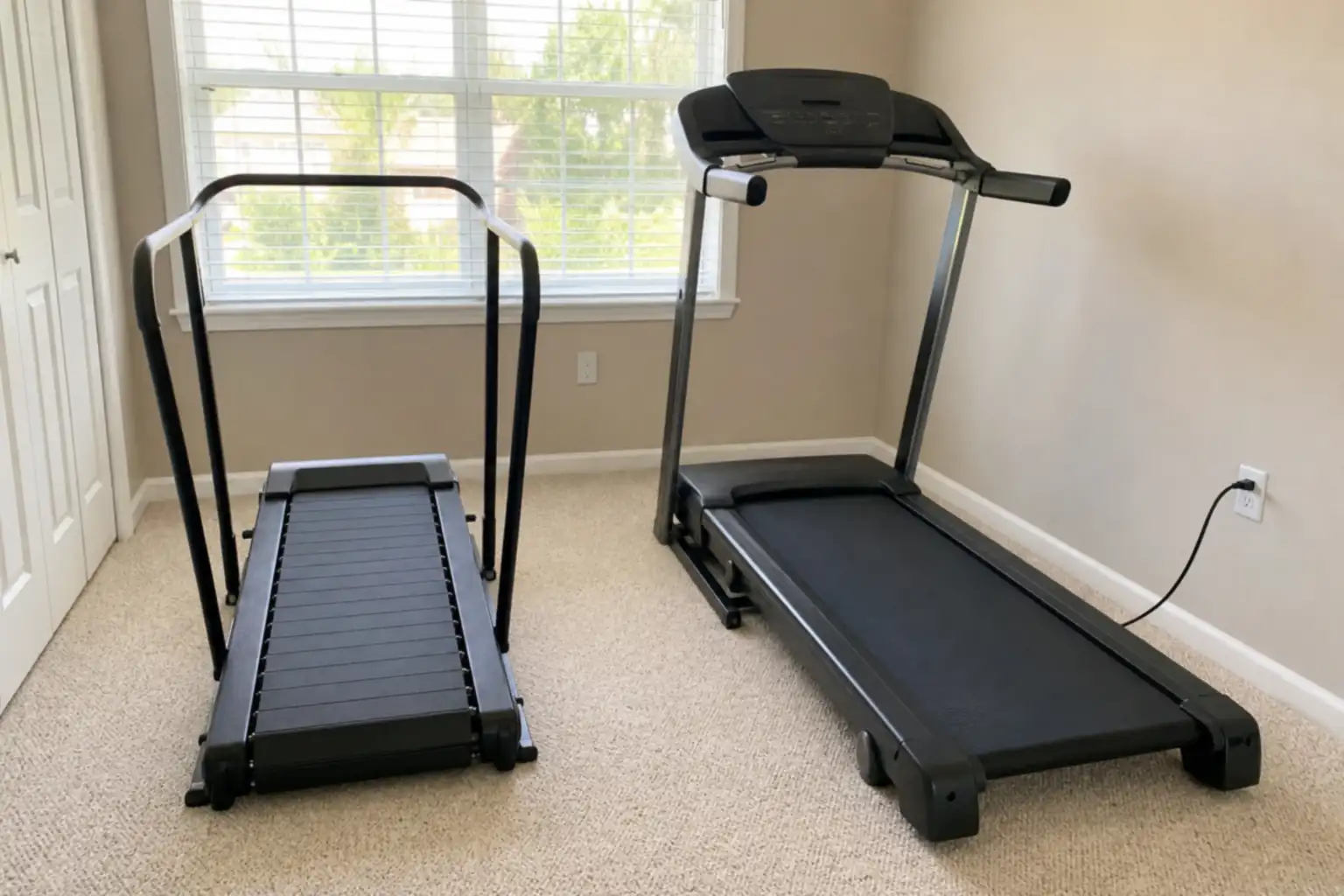
Manual treadmills come in two very different forms. Flat manual treadmills are light, folding walkers with a fixed incline and a flywheel, built for short walks. Curved manual treadmills are heavy, self-powered running machines built for sprints. Electric treadmills use a motor to move the belt at the speed you set and usually add power incline, programs and a cushioned deck.
This comparison covers effort, speed and incline, deck size, power needs, noise, maintenance, warranty and safety, using models from our best manual treadmill guide and our budget electric rankings. The final section matches each type to the buyers it suits. For the curved side in more depth, see our best curved treadmill guide.
Manual vs Electric Treadmill at a Glance
The table compares the three types you will see when shopping: flat manual, curved manual and electric. Ranges reflect the models we rank and review.
Most shoppers comparing manual and electric are looking at flat manual walkers against entry-level electric treadmills. That is the comparison this guide focuses on, with notes on curved models where they differ. Our treadmill buying guide covers every type.
| Criterion | Flat manual | Curved manual | Electric |
|---|---|---|---|
| Motor | None (self-powered) | None (self-powered) | About 2.25 to 4 HP on home models |
| Speed | User-paced, walking | User-paced, no fixed top speed | Set by console, about 8.5 to 12 mph top speed |
| Incline | Fixed (14% on the SF-T1407) | None; resistance on some models | Power incline on many models, about 10–15% |
| Deck (models we rank) | About 13 × 42 in | About 15.75–19 in wide slat belts | About 16 × 50 to 20 × 60 in |
| Weight | About 47 lb | About 110–290 lb | About 97–320 lb |
| Needs an outlet | No | No for the belt | Yes |
| Best for | Short walks, small rooms | Sprints, HIIT | Walking, jogging, running, incline |
Check Amazon for current pricing and availability.
How Manual and Electric Treadmills Work
On a flat manual treadmill, your feet push the belt backward. The deck is tilted at a fixed angle so that each step helps the belt move, and a flywheel keeps it rolling between strides. The Sunny Health & Fitness SF-T1407, our top manual pick, uses a dual flywheel and a fixed 14% incline, so every session is an uphill walk.
A curved manual treadmill uses a concave slat belt on bearings. You speed up by moving toward the front of the curve and slow down by drifting back. These are running machines, and models such as the Sunny Health & Fitness SF-X7110 add magnetic resistance for harder efforts.
An electric treadmill uses a motor to drive the belt at the speed you choose. You can walk, jog or run at a steady pace, change incline from the console and use programs. That is why electric treadmills cover a much wider range of users and workouts.
Effort, Speed and Incline
Self-powered belts make you work harder at a given pace, because you supply the force that moves the belt. On curved models this is well measured: a 2017 study found running at matched speeds on a curved non-motorized treadmill took about 16% more of maximal oxygen uptake and raised heart rate by about 22 beats per minute compared with a motorized treadmill, and a 2018 study reported similarly higher heart rates and perceived effort. We found no comparable study for flat manual walkers, so treat their extra effort as likely but unmeasured.
Electric treadmills give you control. Budget models such as the BORGUSI CTM5103 reach 8.5 mph with 15% automatic incline, and the Horizon T202 reaches 12 mph with 12% incline. A flat manual walker has one incline setting and no way to hold a set pace.
For general fitness, the CDC counts walking at 2.5 mph or faster as moderate intensity and jogging or running as vigorous. A flat manual walker covers brisk walking. An electric treadmill covers walking, jogging and running.
Pro tip: A fixed 14% incline makes a short walk feel hard quickly. Start with a few minutes and build up, and use the handrails for balance, not to hold your weight.
Deck Size, Weight and Storage
Flat manual treadmills are small and light. The SF-T1407 has a walking surface of about 13 × 42 inches, weighs about 47 lb and folds to about 19 inches deep with transport wheels. That makes it easy to store in a closet or behind a door, but the narrow deck is tight for wide or long strides.
Electric treadmills are larger. The compact XTERRA TR150 has a 16 × 50-inch belt and weighs about 97 lb; the Horizon T202 has a 20 × 60-inch belt. Our buying guide recommends about 50 to 55 inches of belt length for walking and 60 inches for running, which flat manual walkers do not reach.
Curved manual treadmills are the heaviest of all, at about 110 to 290 lb for the full-size models we rank, and most do not fold. If storage is the deciding factor, compare our most compact treadmill and best lightweight folding treadmill picks.
Power, Noise and Maintenance
A manual treadmill needs no outlet for the belt, so you can use it in any room, a garage or a space without a nearby plug. Some manual models use battery-powered consoles, and the SF-T1407 also pairs with the SunnyFit app. Electric treadmills need a grounded outlet, and many manufacturers recommend a dedicated circuit for larger models.
Without a motor, manual treadmills avoid motor hum, but the belt, rollers and flywheel still make noise, and footfall noise reaches the floor below on any treadmill. Electric treadmills add motor and incline noise; our best quiet treadmill guide ranks models that keep it down.
Fewer electronics mean fewer things to fail on a manual treadmill, but the belt still needs to stay clean and aligned. Electric treadmills need regular belt lubrication and tension checks. Our treadmill maintenance guide covers both.
Best Manual Walker

Sunny Health & Fitness SF-T1407
FitScore 71.7/100
Our top manual pick: self-powered, 14% fixed incline, dual flywheel, about 47 lb and folds with wheels.
Ranked in our Best Manual Treadmill guide
Check Price on AmazonBest Folding Curved

rongle QZDXJ-003
FitScore 58.3/100
A self-powered curved deck that folds, with a 350-lb rating and 2-year coverage.
Ranked in our Best Manual Treadmill guide
Check Price on AmazonBest Built Manual

Sole C80
FitScore 48.1/100
Heavy curved slat deck with a 62-inch running surface and a lifetime frame warranty.
Ranked in our Best Manual Treadmill guide
Check Price on AmazonWarranty, Durability and Safety
Warranty terms on manual treadmills tend to be short beyond the frame. The SF-T1407 lists a 3-year frame and 180 days on other parts. Curved models vary more: the Sole C80 lists a lifetime frame with 1-year parts.
Electric treadmills range from 1-year coverage on value models such as the BORGUSI CTM5103 to a lifetime frame and motor warranty on the Horizon T202 and a lifetime frame warranty on the XTERRA TR150. Check the current terms on the product page, and see our best durable treadmill guide for models built for years of use.
Safety differs too. A manual belt moves only when you push it, which limits the risk of a belt running on its own, though a flywheel or curved belt can coast briefly. Electric treadmills use a safety key, and the CPSC has advised owners to unplug the treadmill when not in use and keep the safety key away from children.
Which Should You Choose?
Match the type to how you plan to train each week.
- Short daily walks in a small room: flat manual treadmill, such as the SF-T1407.
- Walking at different speeds and inclines: electric treadmill with power incline. See our best treadmill for walking guide.
- Jogging or running: electric treadmill with a 55- to 60-inch belt. See our best treadmill for running guide.
- Sprints and HIIT: curved manual treadmill.
- No outlet nearby: manual treadmill, flat or curved.
- Tight budget: compare a flat manual walker with entry-level electric picks in our best cheap treadmill guide.
- Balance concerns or joint issues: electric treadmill with full handrails and adjustable incline that starts at 0%; check with your doctor first.
Best Budget Electric

BORGUSI CTM5103
FitScore 84.8/100
3.0 HP motor, 0.5 to 8.5 mph and 15% automatic incline on a folding frame that weighs about 103 lb.
Ranked in our Best Cheap Treadmill guide
Check Price on AmazonBest Full-Size Electric

Horizon T202
FitScore 77.3/100
20 × 60-inch belt, 12 mph, 12% incline and a lifetime frame and motor warranty.
Ranked in our Best Budget Treadmill guide
Check Price on AmazonBest Compact Electric

XTERRA Compact Series – TR150
FitScore 74.1/100
Compact folding frame at about 97 lb with a 16 × 50-inch belt and 10 mph top speed.
Ranked in our Best Treadmill for Small Spaces guide
Check Price on AmazonCommon Mistakes to Avoid
- Buying a flat manual walker for running; the deck and design are for walking.
- Ignoring the fixed incline; a 14% slope is hard for beginners and cannot be lowered.
- Assuming manual means maintenance-free; belts and rollers still need care.
- Choosing a curved manual for long, easy walks; it is built for intervals.
- Skipping warranty terms; 180 days of parts coverage is short for daily use.
The Bottom Line
- Manual treadmills have no motor: motor = None (self-powered). Your stride moves the belt.
- Flat manual treadmills usually have a fixed incline; the Sunny Health & Fitness SF-T1407 is set at 14%.
- Electric treadmills we rank offer about 8.5 to 12 mph and power incline of about 10 to 15% on many models.
- Our top flat manual pick weighs about 47 lb with a 13 × 42-inch deck; full electric decks run about 20 × 55 to 20 × 60 inches.
- Our top manual treadmill scores 71.7 in its guide; our top budget electric pick scores 84.8.
Our Top Picks
 Best Manual WalkerSunny Health & Fitness SF-T1407FitScore71.7/100Check on Amazon
- Best Folding Curvedrongle QZDXJ-003FitScore58.3/100Check on Amazon
- Best Built ManualSole C80FitScore48.1/100Check on Amazon
- Best Budget ElectricBORGUSI CTM5103FitScore84.8/100Check on Amazon
- Best Full-Size ElectricHorizon T202FitScore77.3/100Check on Amazon
- Best Compact ElectricXTERRA Compact Series – TR150FitScore74.1/100Check on Amazon
Frequently Asked Questions
Only for specific needs: a flat manual model for short, plug-free walks in a small space, or a curved manual model for sprints. For most users an electric treadmill is more versatile.
At the same speed, self-powered belts take more effort; studies on curved non-motorized treadmills show higher oxygen uptake and heart rate. Total calories depend on how long and how hard you train.
There is no good evidence either way for flat manual walkers. Their fixed incline and pushing motion can feel hard, so start slowly and talk to your doctor if you have knee problems.
Not on a flat manual walker, which has a short deck and fixed incline. Curved manual treadmills are designed for running and sprinting.
The slope helps your stride move the belt, so the deck stays tilted. On the SF-T1407 the incline is fixed at 14%.
Not for the belt. Some consoles use batteries or connect to an app, so check the listing.
Explore More Treadmill Comparisons
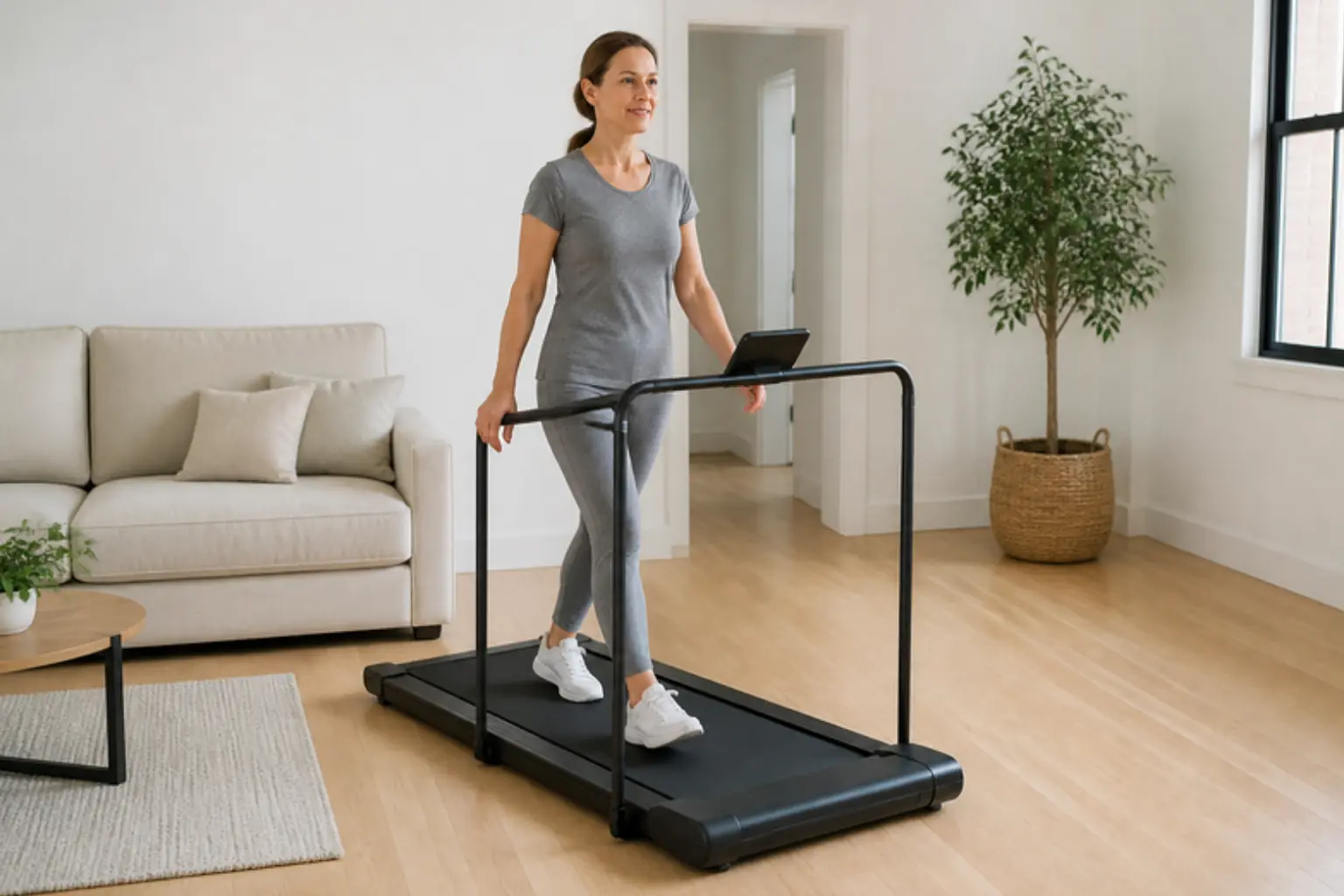
Best Manual Treadmill (2026): 5 Self-Powered Picks for Home
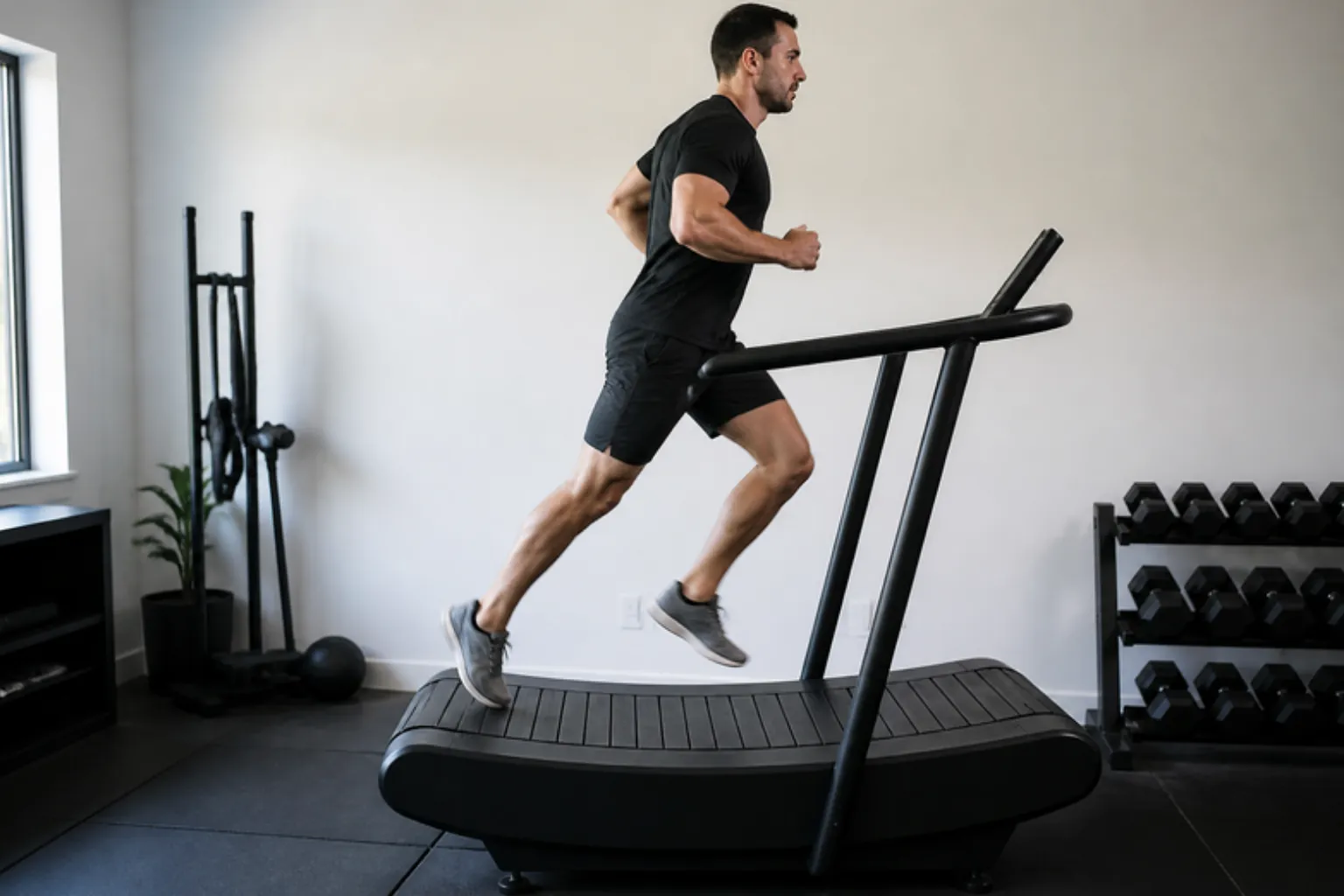
Best Curved Treadmill (2026): 5 Self-Powered Picks for Home
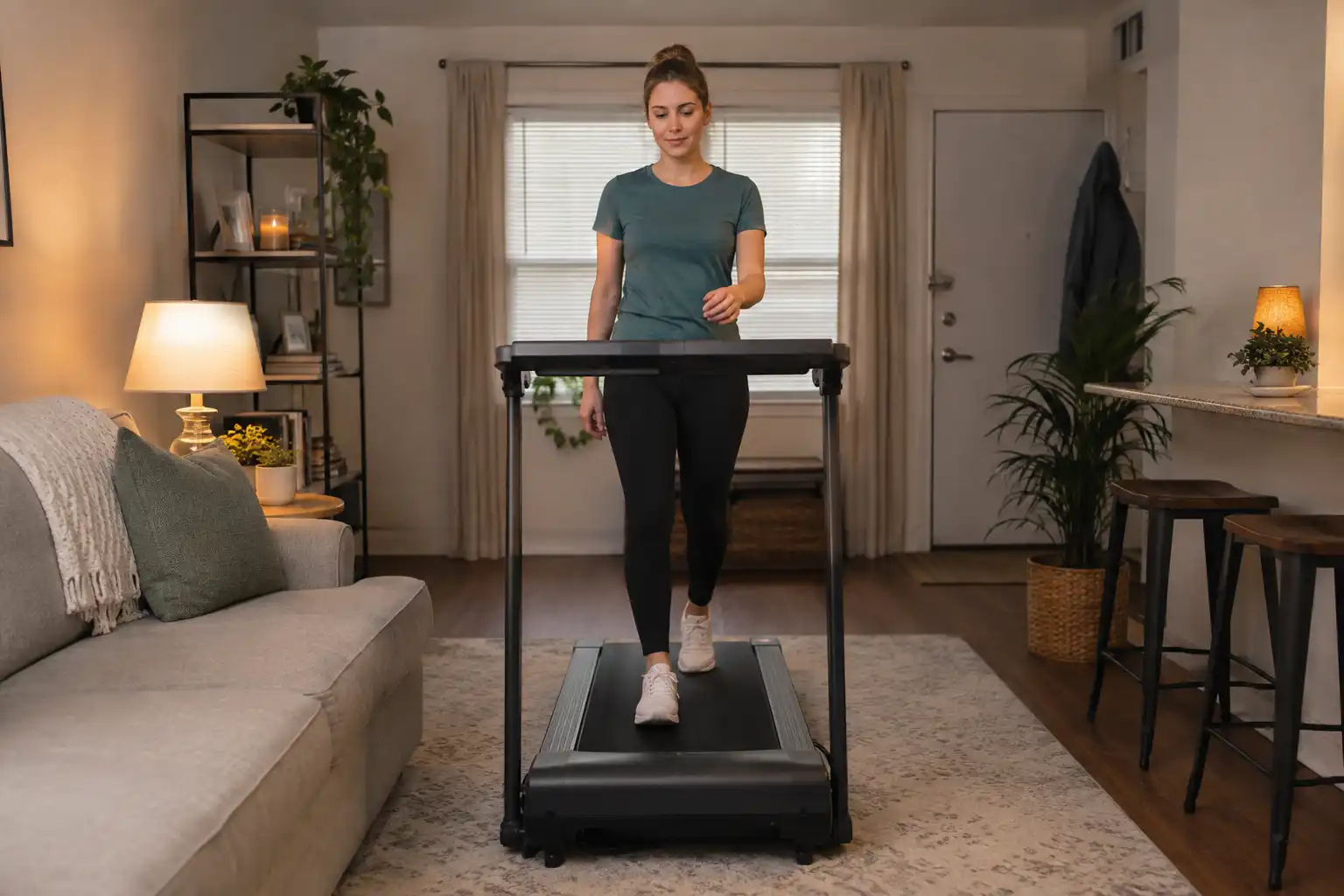
Best Budget Treadmill (2026): 5 Affordable Picks Ranked
Best Cheap Treadmill (2026): 5 Affordable Picks Ranked
Treadmill Buying Guide (2026): How to Choose the Right Home Treadmill
How to Maintain a Treadmill (2026): The Complete Home Care Guide
This article contains affiliate links. If you click through and make a purchase, we may earn a small commission at no extra cost to you. As an Amazon Associate, we earn from qualifying purchases. We do not show prices because they change constantly: product details and availability can change at any time, so please check the current price and details directly on Amazon. Learn more. Amazon and the Amazon logo are trademarks of Amazon.com, Inc. or its affiliates.
