

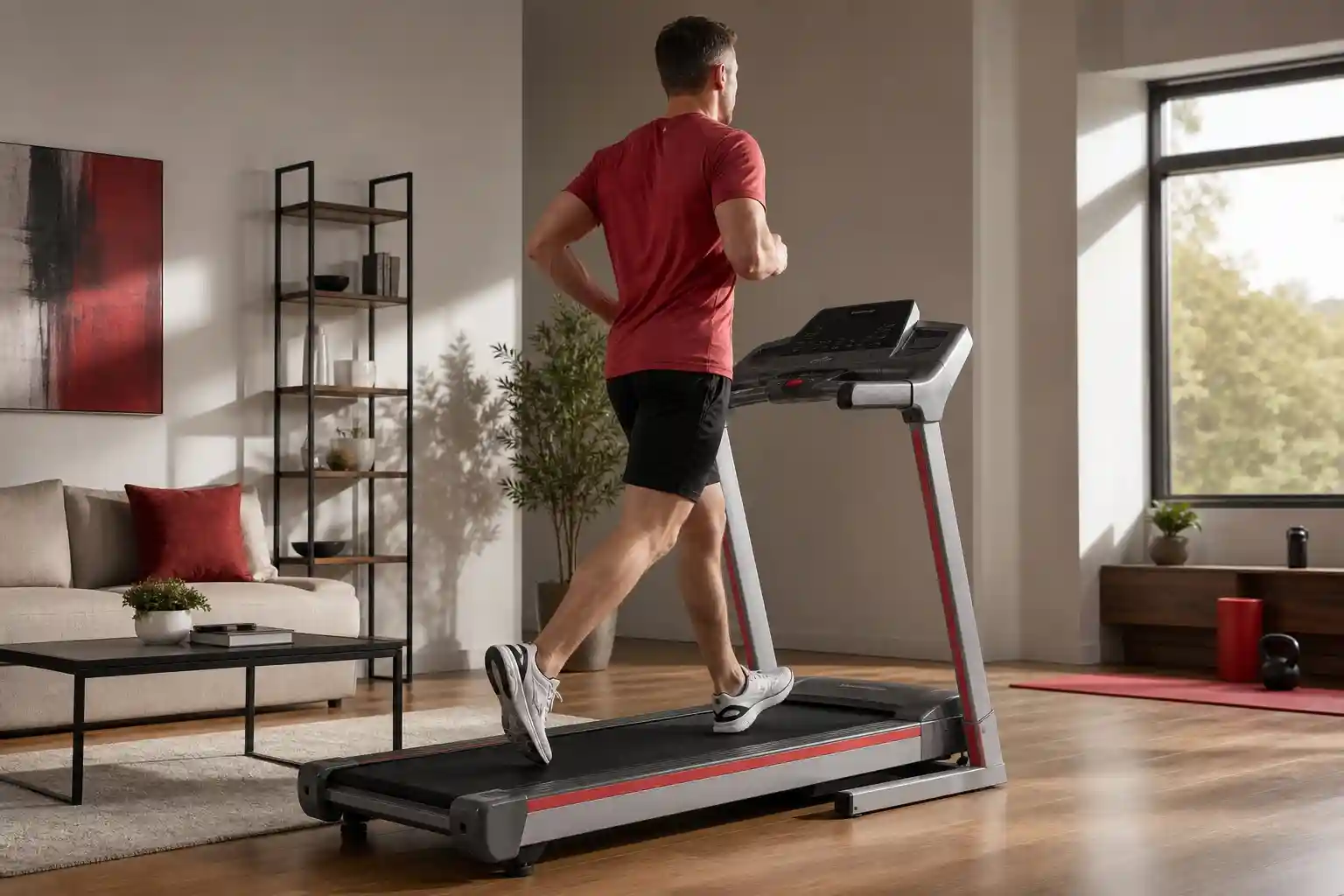
UREVO Strol 2E is our lightest overall pick in the best lightweight folding treadmill category. This guide excludes ultra-thin walking pads as the core recommendation set because the goal is a treadmill that still offers conventional training capability.
“Lightweight” is useful only in context. A machine can be easier to roll but less stable under running; a folding deck can reduce storage footprint but still be awkward to lift; and a short belt can make a treadmill portable by sacrificing stride room. We rank the full trade-off.
Comparison Table
SYSURO S Series | XTERRA Compact Series – TR150 | BORGUSI CTM5103 | Schwinn Fitness SFT3.1 | Proform Carbon TL | |
|---|---|---|---|---|---|
 |  |  |  |  | |
Best For | Lightest Overall | Best Traditional Lightweight | Best Incline Option | Best Compact Alternative | Best Full-Size Alternative |
FitScore | 69.8/100 | 74.0/100 | 79.5/100 | 74.6/100 | 69.9/100 |
Machine weight | 37.5 lb | 97 lb | 103 lb | 110 lb | 166.2 lb |
Folding | Yes | Yes | Yes | Yes | Yes |
Belt | 19.3 × 46.8 in | 16 × 50 in | 17.5 × 45.3 in | 16 × 50 in | 18 × 55 in |
Capacity | 265 lb | 250 lb | 300 lb | 250 lb | 300 lb |
Check Amazon for current pricing and availability.
Key Takeaways
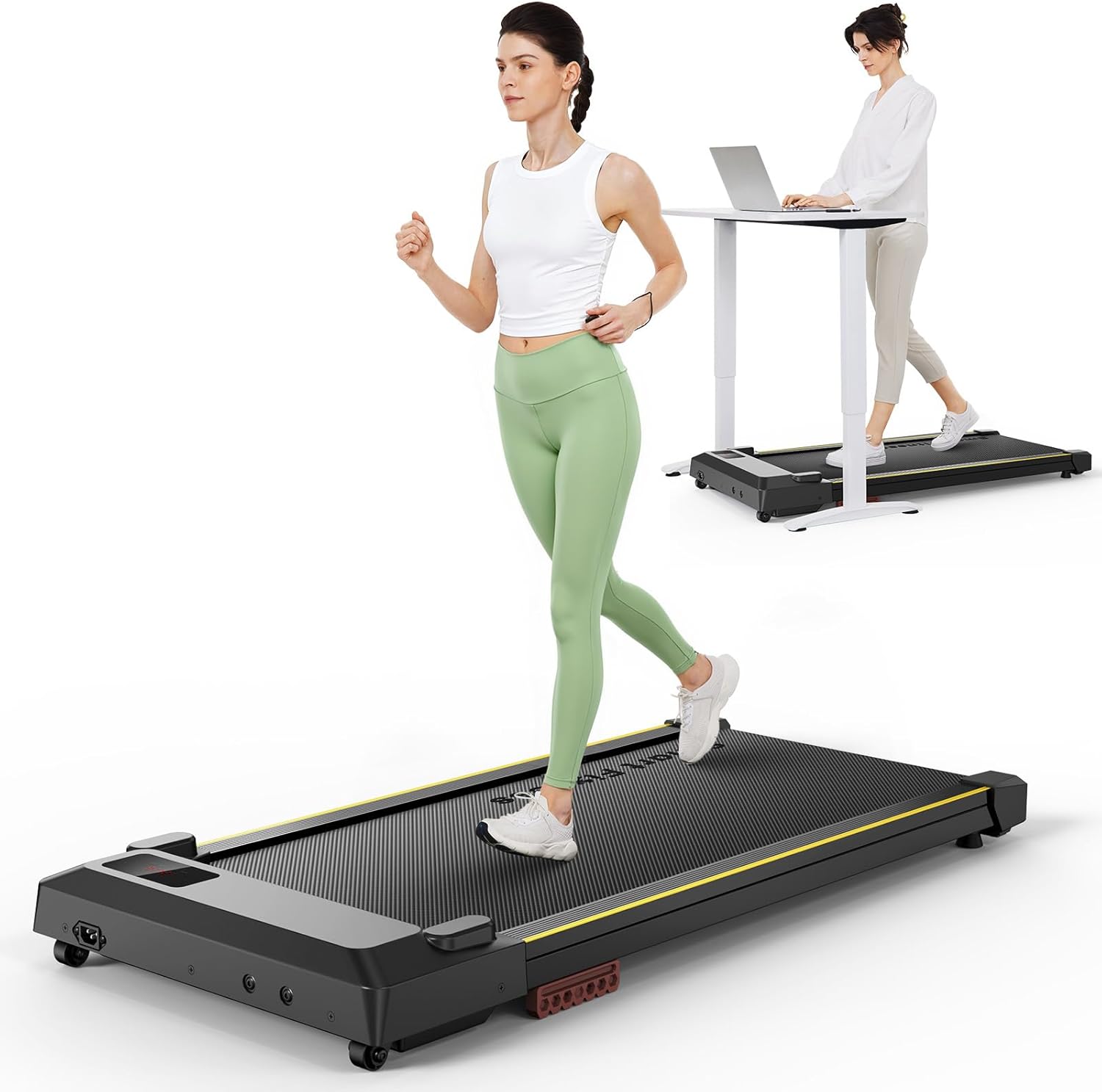
- Lightest Overall: SYSURO S Series — 69.8/100. At just 37.5 lb, it is dramatically easier to move than every other treadmill here; choose it when portability is the non-negotiable requirement.
- Best Traditional Lightweight: XTERRA Compact Series – TR150 — 74.0/100. At 97 lb, it is much heavier than the SYSURO but still relatively manageable while offering a more conventional treadmill format.
- Best Incline Option: BORGUSI CTM5103 — 79.5/100. The highest FitScore in the group; its 103-lb weight is still reasonable if incline capability matters more than being the absolute lightest.
- Best Compact Alternative: Schwinn Fitness SFT3.1 — 74.6/100. A 110-lb compromise for buyers who want compactness without moving all the way to an ultra-light design.
- Best Full-Size Alternative: ProForm Carbon TL — 69.9/100. At 166.2 lb it is not truly lightweight relative to the others; pick it only if full-size training feel matters more than portability.
- Machine weight and folded size solve different problems. Weight determines how realistic it is to move the treadmill; folded dimensions determine whether it fits where you plan to store it.
- Do not assume transport wheels make a heavy treadmill portable. Wheels help on a flat floor, but stairs, thresholds and frequent room changes can turn a 100+ lb machine into a poor fit.
Lightest Overall: SYSURO S Series
SYSURO S Series scores 69.8/100 and is our Lightest Overall.
- Machine weight: 37.5 lb
- Folding: Yes
- Belt: 19.3 × 46.8 in
FitScore for Lightweight Folding Treadmills
Why Choose This Treadmill
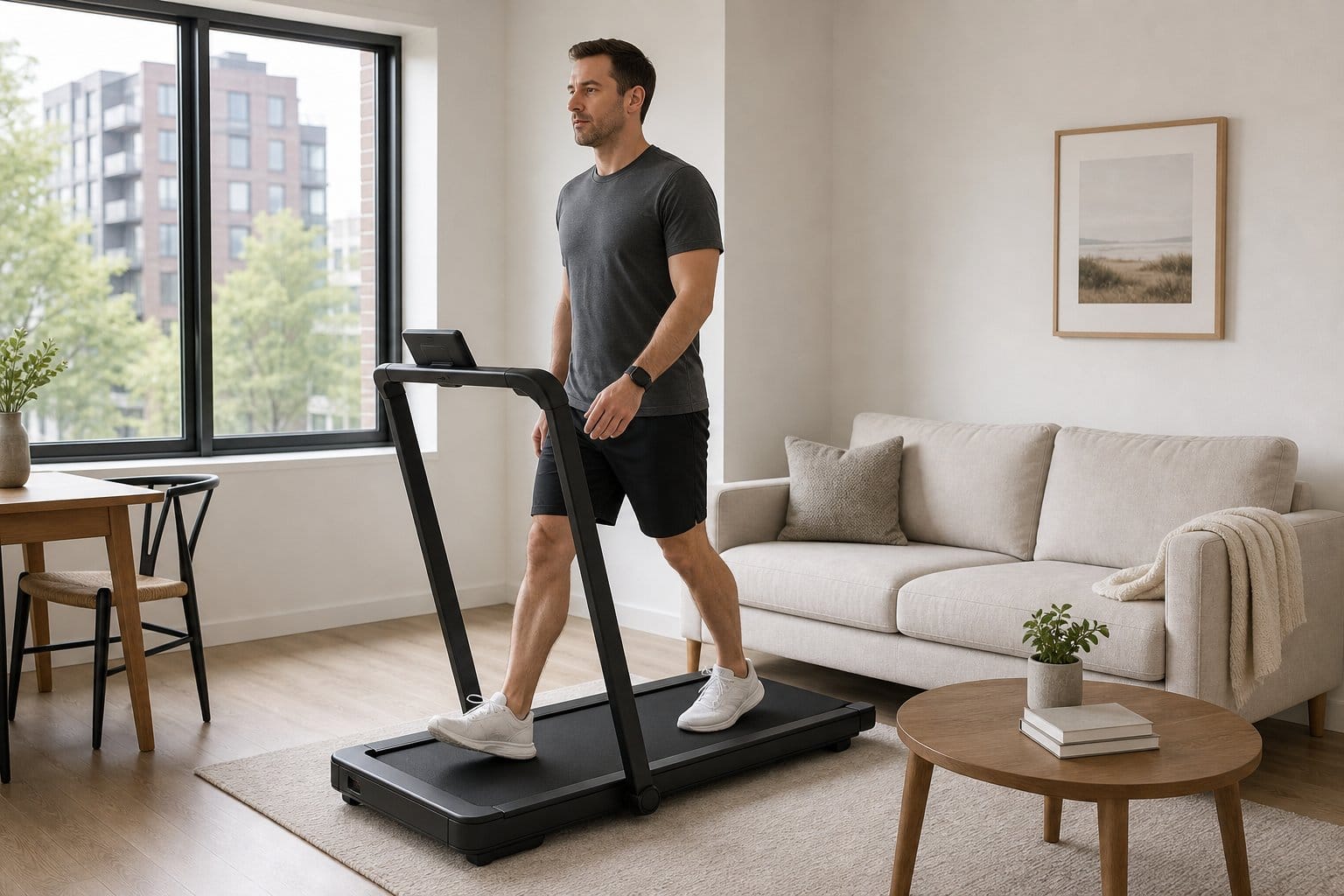
SYSURO S Series earns Lightest Overall because its 37.5-lb machine weight is not just slightly lower — it is less than half the weight of every conventional alternative in this list.
It still folds and supports up to 265 lb, but the 19.3 × 46.8 in belt is the price of that portability.
Choose it when moving and storing the treadmill frequently is more important than having a long running deck.
Best Usage
- best lightweight folding treadmill
- Regular home cardio within listed limits
- Buyers comparing this specific feature or constraint
Key Specs
- Motor: 2.5 HP
- Speed: 6 mph
- Incline: 9%
- Belt: 19.3 × 46.8 in
- Capacity: 265 lb
- Machine weight: 37.5 lb
- Folding: Yes
- Belt: 19.3 × 46.8 in
For
- Shoppers whose priority matches this guide
- Users comparing published specifications
- Households planning regular weekly use
Pros
- Only 37.5 lb, making it exceptionally easy to reposition or store between workouts.
- Folding design helps reclaim floor space when the treadmill is not in use.
- 19.3 × 46.8 in belt keeps the machine compact while remaining usable for walking and light jogging.
Not For
- Buyers whose main need belongs to another category
- Anyone who has not checked room dimensions and capacity
- Users expecting unlisted features
Cons
- 37.5-lb machine weight affects moving
- 19.3-inch belt may be narrower than premium alternatives
- Availability and features can change by revision
Best Traditional Lightweight: XTERRA Compact Series – TR150
XTERRA Compact Series – TR150 scores 74.0/100 and is our Best Traditional Lightweight.
- Machine weight: 97 lb
- Folding: Yes
- Belt: 16 × 50 in
FitScore for Lightweight Folding Treadmills
Why Choose This Treadmill
XTERRA Compact Series – TR150 earns Best Traditional Lightweight because it keeps a familiar treadmill format while staying under 100 lb.
The 16 × 50 in belt is better suited to walking and light jogging than hard running, and the 250-lb capacity is lower than some alternatives.
Choose it when you want something that feels like a conventional treadmill but is still realistic to reposition occasionally.
Best Usage
- best lightweight folding treadmill
- Regular home cardio within listed limits
- Buyers comparing this specific feature or constraint
Key Specs
- Motor: 2.25 HP
- Speed: 10 mph
- Incline: 2%
- Belt: 16 × 50 in
- Capacity: 250 lb
- Machine weight: 97 lb
- Folding: Yes
- Belt: 16 × 50 in
For
- Shoppers whose priority matches this guide
- Users comparing published specifications
- Households planning regular weekly use
Pros
- At 97 lb, it remains relatively manageable for a traditional folding treadmill.
- Folding frame reduces the storage footprint between sessions.
- 16 × 50 in belt gives a more conventional walking and light-jogging feel than ultra-compact designs.
Not For
- Buyers whose main need belongs to another category
- Anyone who has not checked room dimensions and capacity
- Users expecting unlisted features
Cons
- 97-lb machine weight affects moving
- 16-inch belt may be narrower than premium alternatives
- Availability and features can change by revision
Best Incline Option: BORGUSI CTM5103
BORGUSI CTM5103 scores 79.5/100 and is our Best Incline Option.
- Machine weight: 103 lb
- Folding: Yes
- Belt: 17.5 × 45.3 in
FitScore for Lightweight Folding Treadmills
Why Choose This Treadmill
BORGUSI CTM5103 earns Best Incline Option because it adds a stronger training feature without turning into a full-size heavyweight machine.
At 103 lb it remains relatively manageable, folds for storage and supports up to 300 lb. The 17.5 × 45.3 in belt is still compact, so this is a better fit for incline walking and jogging than long-stride running.
Choose it when incline matters more than shaving every possible pound.
Best Usage
- best lightweight folding treadmill
- Regular home cardio within listed limits
- Buyers comparing this specific feature or constraint
Key Specs
- Motor: 3 HP
- Speed: 8.5 mph
- Incline: 15%
- Belt: 17.5 × 45.3 in
- Capacity: 300 lb
- Machine weight: 103 lb
- Folding: Yes
- Belt: 17.5 × 45.3 in
For
- Shoppers whose priority matches this guide
- Users comparing published specifications
- Households planning regular weekly use
Pros
- 103-lb machine weight balances easier ownership with more planted training feel than ultra-light models.
- Folding frame makes storage more practical in multipurpose rooms.
- 17.5 × 45.3 in belt keeps the overall machine compact while supporting incline-focused walking and jogging.
Not For
- Buyers whose main need belongs to another category
- Anyone who has not checked room dimensions and capacity
- Users expecting unlisted features
Cons
- 103-lb machine weight affects moving
- 17.5-inch belt may be narrower than premium alternatives
- Availability and features can change by revision
Best Compact Alternative: Schwinn Fitness SFT3.1
Schwinn Fitness SFT3.1 scores 74.6/100 and is our Best Compact Alternative.
- Machine weight: 110 lb
- Folding: Yes
- Belt: 16 × 50 in
FitScore for Lightweight Folding Treadmills
Why Choose This Treadmill
Schwinn Fitness SFT3.1 earns Best Compact Alternative because it stays relatively light at 110 lb while preserving a straightforward folding-treadmill layout.
Its 16 × 50 in belt and 250-lb capacity make it better for walking and moderate jogging than larger or heavier users seeking serious running space.
Choose it when compact ownership and familiar controls matter more than maximum deck size.
Best Usage
- best lightweight folding treadmill
- Regular home cardio within listed limits
- Buyers comparing this specific feature or constraint
Key Specs
- Motor: 2 HP
- Speed: 10 mph
- Incline: 6%
- Belt: 16 × 50 in
- Capacity: 250 lb
- Machine weight: 110 lb
- Folding: Yes
- Belt: 16 × 50 in
For
- Shoppers whose priority matches this guide
- Users comparing published specifications
- Households planning regular weekly use
Pros
- 110-lb weight is still manageable enough for occasional repositioning.
- Folding construction helps reduce its footprint after training.
- 16 × 50 in belt provides familiar treadmill proportions for walking and moderate jogging.
Not For
- Buyers whose main need belongs to another category
- Anyone who has not checked room dimensions and capacity
- Users expecting unlisted features
Cons
- 110-lb machine weight affects moving
- 16-inch belt may be narrower than premium alternatives
- Availability and features can change by revision
Best Full-Size Alternative: Proform Carbon TL
Proform Carbon TL scores 69.9/100 and is our Best Full-Size Alternative.
- Machine weight: 166.2 lb
- Folding: Yes
- Belt: 18 × 55 in
FitScore for Lightweight Folding Treadmills
Why Choose This Treadmill
ProForm Carbon TL earns Best Full-Size Alternative because its larger 18 × 55 in belt and 300-lb capacity provide more conventional training room than the lighter picks.
The trade-off is obvious: at 166.2 lb it is by far the least portable treadmill in this comparison.
Choose it when you still want folding storage but are willing to give up easy movement for a roomier, more planted workout platform.
Best Usage
- best lightweight folding treadmill
- Regular home cardio within listed limits
- Buyers comparing this specific feature or constraint
Key Specs
- Motor: 2.6 HP
- Speed: 10 mph
- Incline: 10%
- Belt: 18 × 55 in
- Capacity: 300 lb
- Machine weight: 166.2 lb
- Folding: Yes
- Belt: 18 × 55 in
For
- Shoppers whose priority matches this guide
- Users comparing published specifications
- Households planning regular weekly use
Pros
- Heavier 166.2-lb build gives a more planted feel than the lighter alternatives.
- Folding design still lets you recover some room despite the fuller-size chassis.
- 18 × 55 in belt provides noticeably more stride room than the lightest compact picks.
Not For
- Buyers whose main need belongs to another category
- Anyone who has not checked room dimensions and capacity
- Users expecting unlisted features
Cons
- 166.2-lb machine weight affects moving
- 18-inch belt may be narrower than premium alternatives
- Availability and features can change by revision
How We Selected the Best Lightweight Folding Treadmill
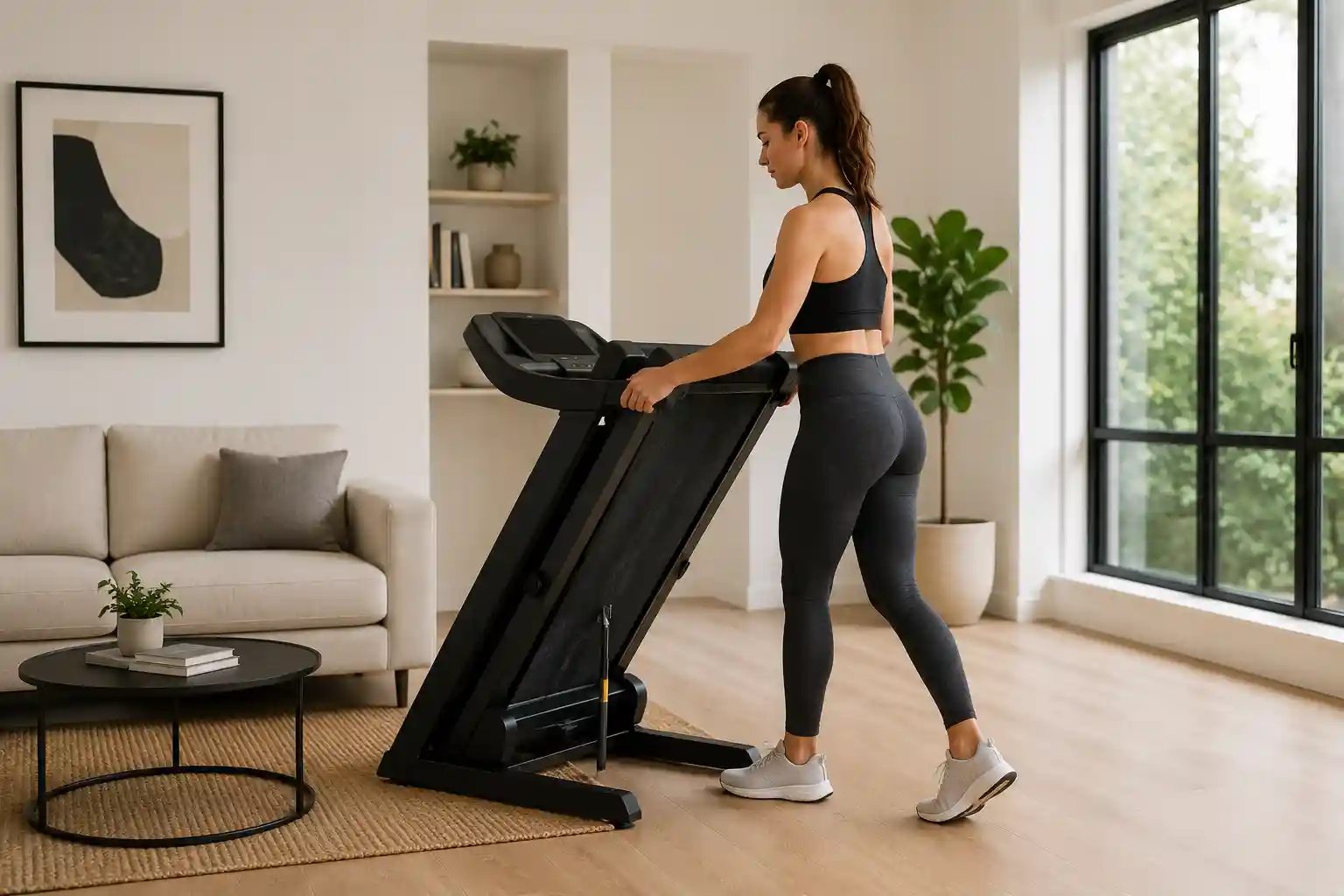
We started with the search intent itself: low machine weight plus meaningful folding storage. Products that do not satisfy that primary requirement are filtered or penalized before secondary features are considered.
Within the eligible set, we give extra weight to machine weight, folded footprint, transport practicality, belt size, speed, capacity and stability. The six FitScore dimensions—Performance, Durability, Comfort, Practicality, Features, and Affordability—are interpreted through this use case rather than treated as identical across every Best guide.
We also model the trade-offs explicitly. Folding without manageable weight is not truly lightweight. A treadmill can therefore rank below a generally stronger model when its advantages do not match the buyer intent on this page.
Finally, we verify specifications against the exact product revision or ASIN wherever possible, including capacity, belt dimensions, speed, incline, machine weight, folding dimensions, connectivity and current price data. Similar model names are not treated as interchangeable, and ambiguous specifications are left unverified rather than inferred. These rankings are research- and specification-based; they do not imply hands-on testing unless we explicitly say so.
How to Choose the Best Lightweight Folding Treadmill
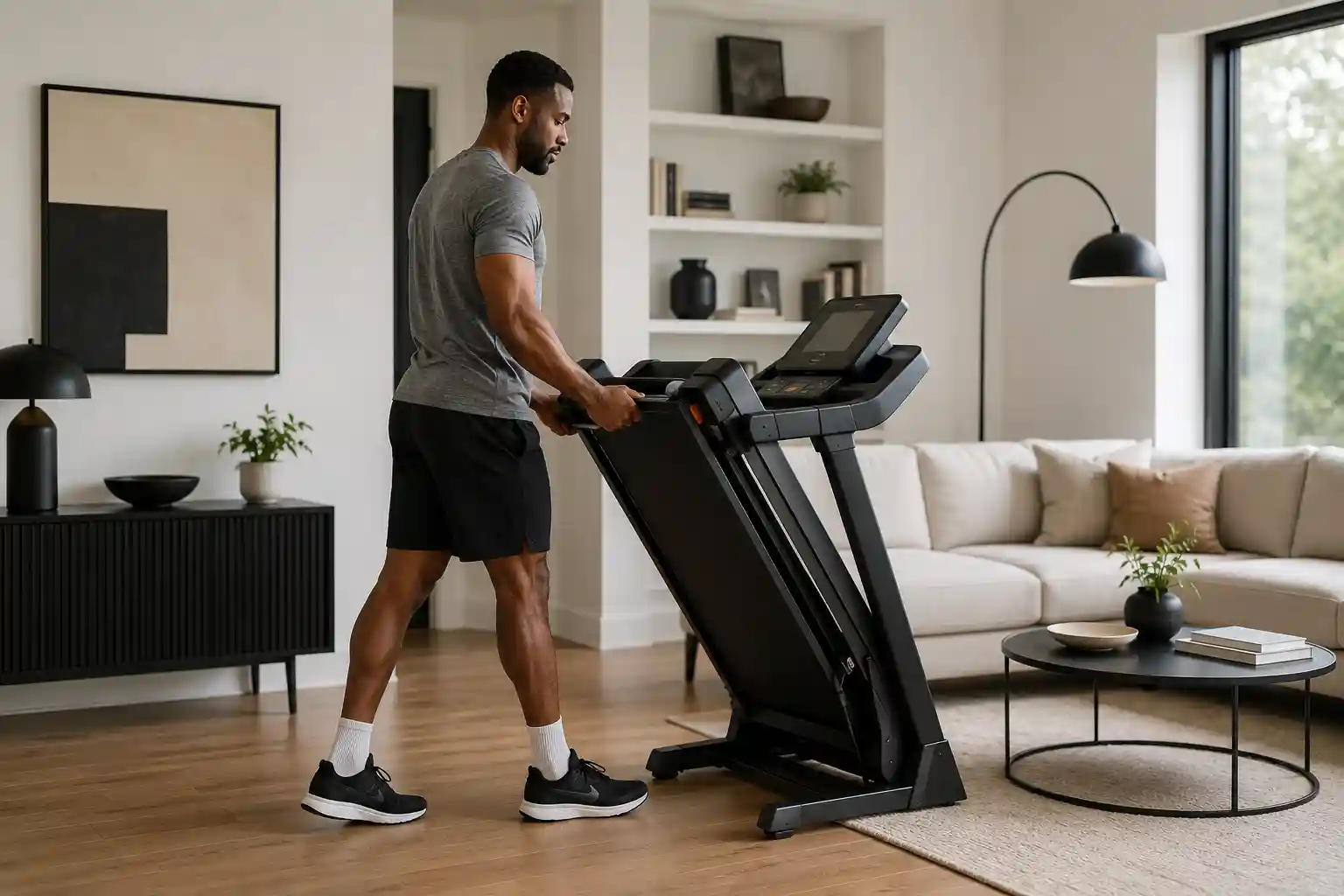
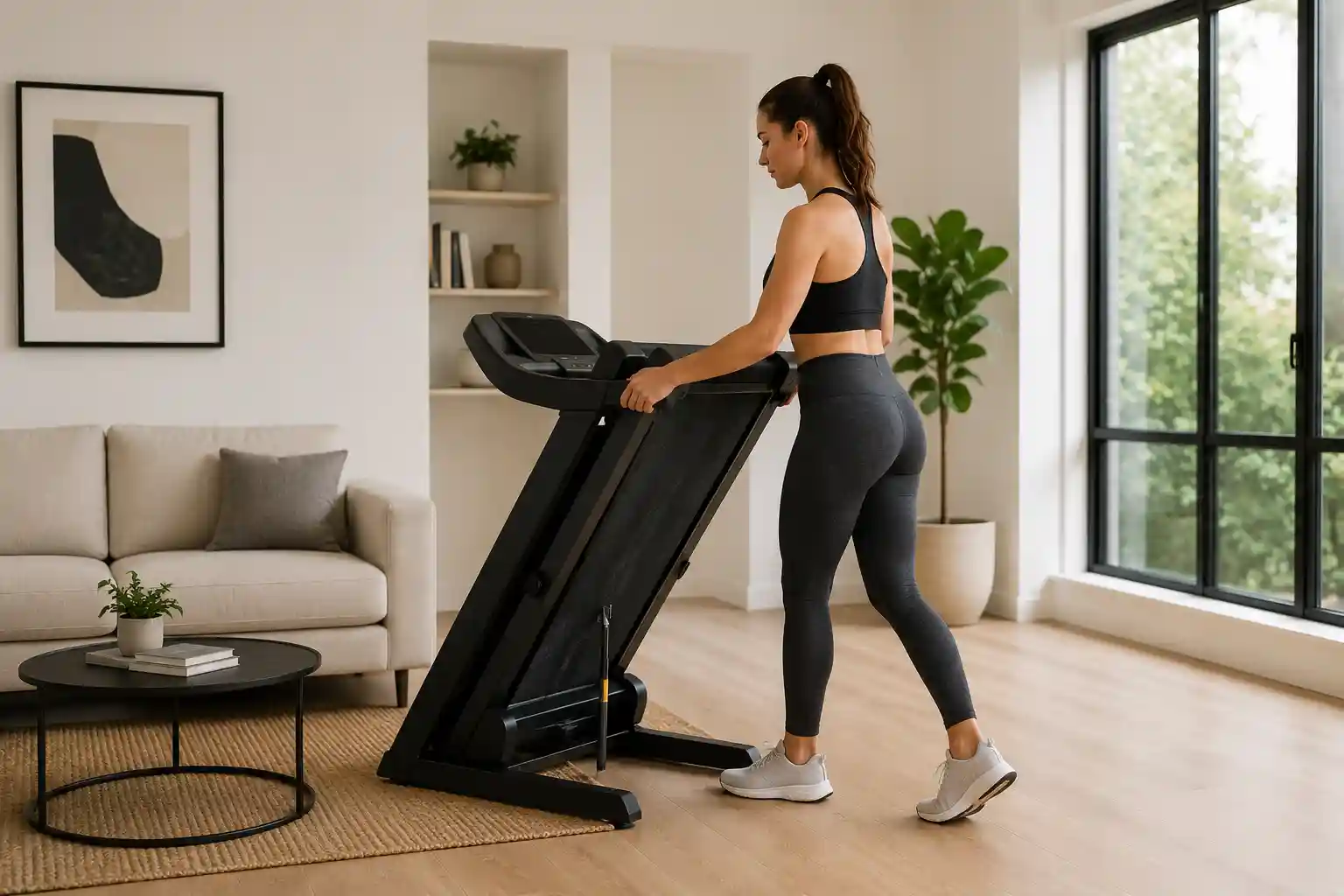
If you will move the treadmill after every session, focus on the tilting and rolling motion, not just total weight. A 100-lb machine can still be awkward if the center of mass is far from the wheels.
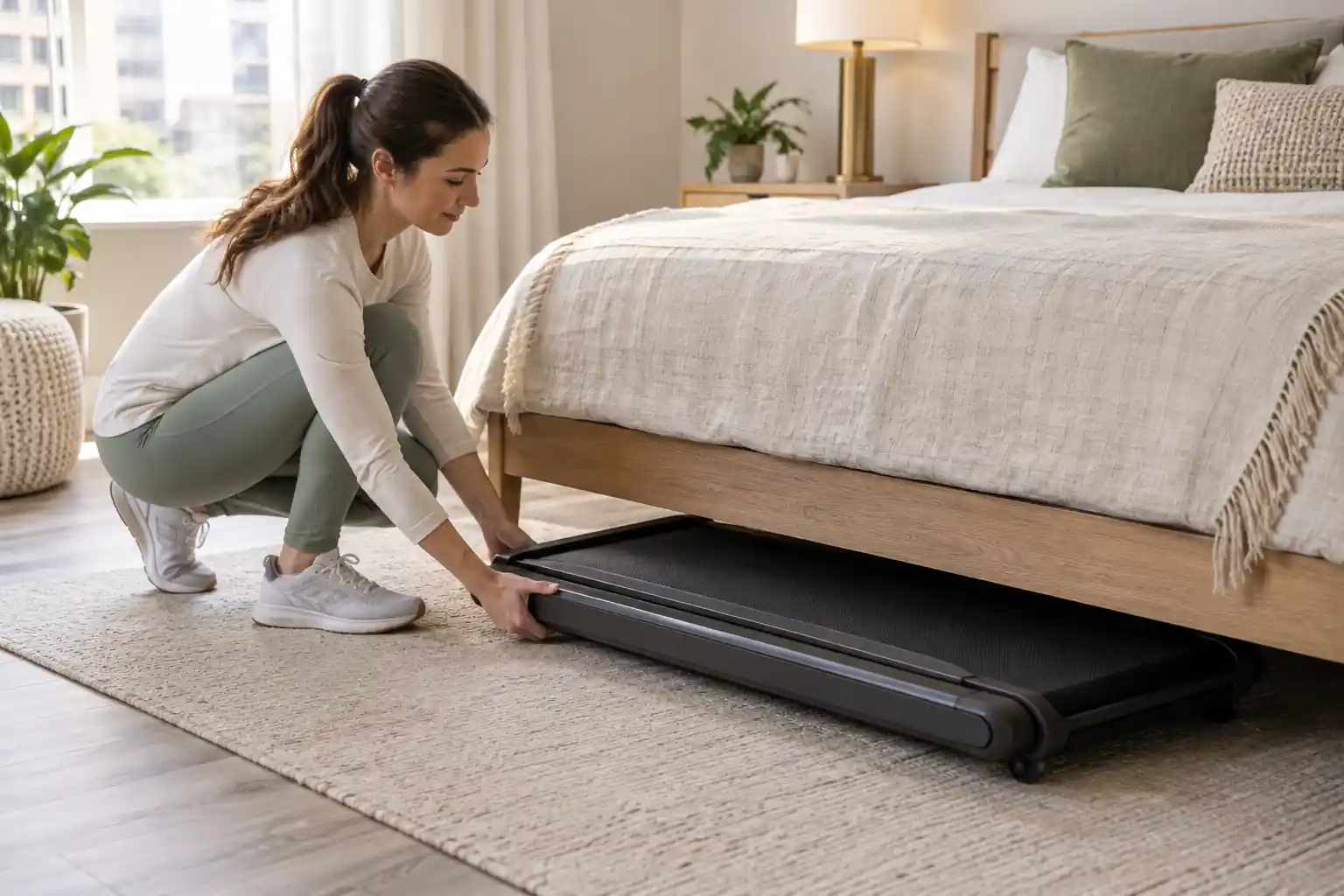
Measure folded dimensions in the orientation you will actually store it. Some treadmills fold upward; others flatten; those are different storage problems.
For jogging or running, protect belt length and frame stability before chasing the lowest possible weight. Taller users in particular should not buy a short deck solely because it is easier to move.
Check whether the folding mechanism is assisted. Gas-shock or hydraulic assistance can make a heavier deck easier and safer to raise/lower than a lighter unassisted deck.
If stairs are involved, treat the treadmill as a two-person moving job unless the manufacturer clearly supports otherwise. Transport wheels help on level floors, not staircases.
Decision Shortcuts
- Lightest Overall: SYSURO S Series — 37.5 lb; the clear choice for frequent repositioning and the least physical effort to store.
- Best Traditional Lightweight: XTERRA Compact Series – TR150 — 97 lb; choose it when conventional treadmill feel matters more than ultra-low weight.
- Best Incline Option: BORGUSI CTM5103 — 103 lb; strongest FitScore here when incline capability justifies carrying more mass.
- Best Compact Alternative: Schwinn Fitness SFT3.1 — 110 lb; middle-ground option when you want compact dimensions without going ultra-light.
- Best Full-Size Alternative: ProForm Carbon TL — 166.2 lb; only choose it if full-size hardware matters more than easy movement.
Final Verdict
SYSURO S Series is the portability-first winner at 37.5 lb, even though its 69.8/100 FitScore is not the highest score in the table. That distinction matters: this guide is specifically about lightweight folding treadmills, and the SYSURO is vastly easier to move than the 97–166.2 lb alternatives.
If you want a more conventional treadmill, the XTERRA TR150 at 97 lb is the cleaner compromise. If incline matters more than minimum weight, the BORGUSI CTM5103 earns the highest FitScore here at 79.5/100 while remaining a manageable 103 lb. The ProForm Carbon TL is the least convincing choice for a buyer whose real priority is portability because it weighs 166.2 lb.
Before buying, compare the actual route between storage and workout position — including stairs, thresholds and tight turns — not just whether the treadmill has transport wheels.
Frequently Asked Questions About the Best Lightweight Folding Treadmill
There is no universal threshold. This guide compares relative machine weight among conventional folding treadmills rather than mixing them with ultra-thin walking pads.
Not always, but lower mass can reduce inertial stability. Frame design and footprint also matter, especially during running.
Often on a level floor using transport wheels, but it depends on weight distribution and the folding design. Stairs usually require more caution and assistance.
Some are, but deck length, width, speed and frame stability must still suit running. Many of the lightest models are better for walking or jogging.
No. Folding mainly reduces storage footprint. The treadmill still needs its full open dimensions plus safety clearance during use.
Only if your main priority is walking and ultra-low storage height. A conventional folding treadmill is more appropriate if you need rails, higher speeds, incline or a longer deck.
This article contains affiliate links. If you click through and make a purchase, we may earn a small commission at no extra cost to you. As an Amazon Associate, we earn from qualifying purchases. Product information, prices, and availability are collected manually and may change at any time. For the most accurate and current details, please check directly on Amazon. Learn more. Amazon and the Amazon logo are trademarks of Amazon.com, Inc. or its affiliates.
