

Short answer
Choose a curved treadmill if you want self-paced sprints and intervals with no motor and no top speed, and you accept a harder effort at any pace. Choose a flat motorized treadmill if you want set paces, power incline, long steady runs or walks, folding and a wider choice of models. Most home users are better served by flat.
Key takeaways
- Curved treadmills are self-powered, have no fixed top speed and suit sprints and HIIT.
- Research shows running at a given speed on a curved deck is notably harder than on a motorized treadmill.
- Flat motorized treadmills are better for walking, steady runs, incline and shared use.
- Most curved models do not fold; many flat home treadmills do.
- Warranties vary widely in both categories, so compare frame and parts coverage.
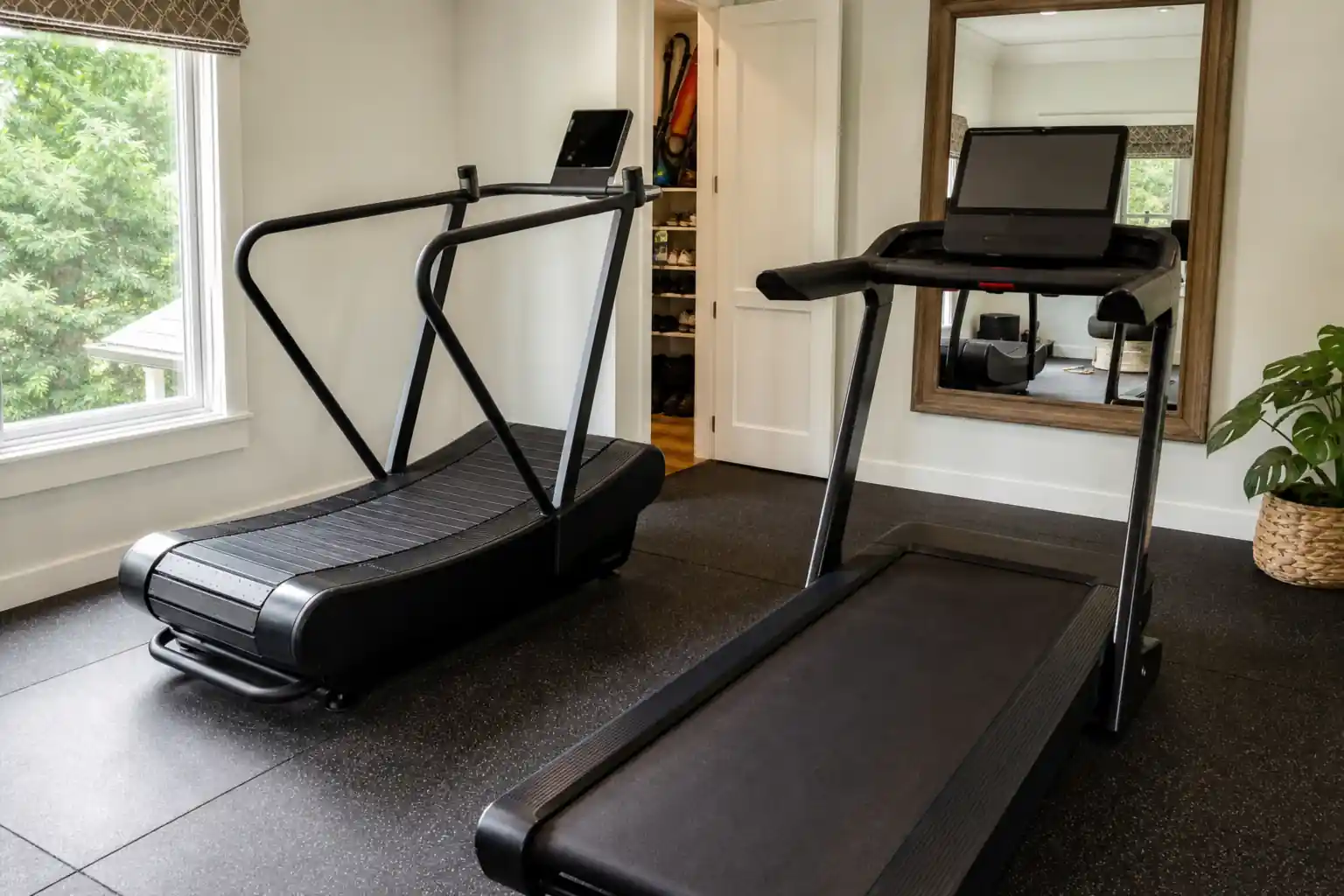
Curved treadmills look like a shallow half-pipe: a concave slat deck that you drive with your own legs. Step toward the front of the curve and the belt speeds up; drift back and it slows down. A flat treadmill uses a motor to move a belt at the speed you set, usually with power incline and a cushioned deck.
This comparison covers how each type feels, what the research says about effort, and how they differ on speed, incline, space, durability and warranty. The specs come from the models ranked in our best curved treadmill and best treadmill for HIIT guides, and the last section tells you which type fits your training.
Curved vs Flat Treadmill at a Glance
The table shows typical ranges for the curved models and flat motorized treadmills we rank. Flat treadmills are a much larger category, so their ranges cover more models and price levels.
The short version: curved treadmills are specialist tools for intervals and sprint work. Flat treadmills are general-purpose machines for walking, steady running and incline training. Our treadmill buying guide compares all treadmill types in one place.
| Criterion | Curved treadmill | Flat motorized treadmill |
|---|---|---|
| Power | None (self-powered) | Electric motor, about 2.5 to 4 HP on home models |
| Speed control | Your position on the curve; no fixed top speed | Console buttons; about 10 to 12 mph top speed |
| Incline | None; the curve sets the feel | About 10–15% power incline; some models add decline |
| Effort at a given speed | Higher (see the research section) | Baseline |
| Running surface (models we rank) | Slat belts about 15.75–19 in wide | About 20–22 × 55–60 in |
| Folding | Rare (one of our five curved picks folds) | Common on home models |
| Best for | Sprints, HIIT, self-paced runs | Walking, steady runs, incline, programs |
Check Amazon for current pricing and availability.
How Each Type Works and Feels
On a curved treadmill you set the pace with your body. Running higher on the front of the curve pulls the belt faster, and moving toward the middle slows it. Most people need a few sessions to learn it, and a 2018 study measured a slightly higher cadence on a curved deck than on a motorized treadmill at the same speeds.
A flat treadmill holds the speed you choose, whether you are fresh or tired. That makes it better for pacing work, long steady runs and walking, where you want to switch off and keep moving. You can also change incline without breaking stride, which a curved deck cannot do.
Biomechanics research suggests neither type perfectly copies running outdoors. A 2023 study of recreational runners in the Journal of Sports Sciences found curved non-motorized treadmill running differed more from overground running in joint kinematics than motorized treadmill running did, although the authors noted the changes were likely not functionally relevant for training.
Effort and Intensity: What the Research Shows
Curved treadmills are harder at the same speed. In a 2017 study in Frontiers in Physiology, trained runners on a curved non-motorized treadmill used about 16% more of their maximal oxygen uptake and had heart rates about 22 beats per minute higher than on a motorized treadmill at matched speeds. Lighter runners had to work relatively harder to overcome belt resistance.
A 2018 study in the Journal of Science and Medicine in Sport found similar results: relative oxygen uptake was about 32% higher on the curved treadmill, heart rate and perceived effort were also higher, and none of the 13 trained runners could complete a 4-minute run at 80% of the top speed they reached on a motorized treadmill.
In practice, this means you should not copy pace targets from a flat treadmill or a road run onto a curved deck. Use heart rate or perceived effort instead. If your goal is general fitness, the CDC recommends 150 minutes of moderate activity or 75 minutes of vigorous activity a week, and either type can deliver it. Our best treadmill for cardio guide ranks flat models for that kind of training.
Pro tip: On a curved treadmill, set your intervals by time and effort, not by mph. Expect your usual pace to feel noticeably harder.
Speed, Sprints and Intervals
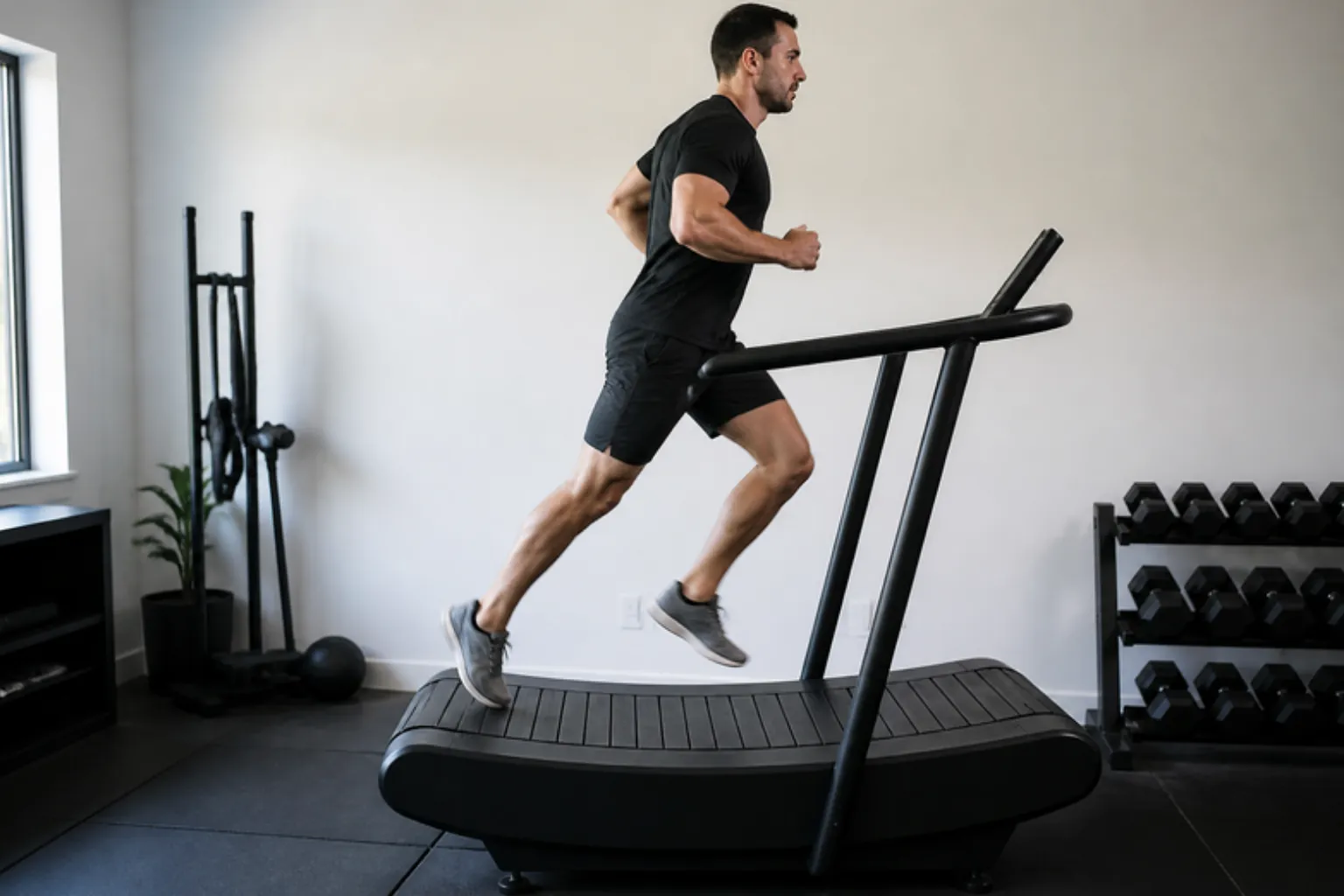
Sprints are where curved treadmills shine. There is no motor to accelerate, so you go from jog to all-out sprint as fast as your legs can, and the belt slows as soon as you ease off. That makes short, repeated intervals feel natural, and there is no speed cap to hit.
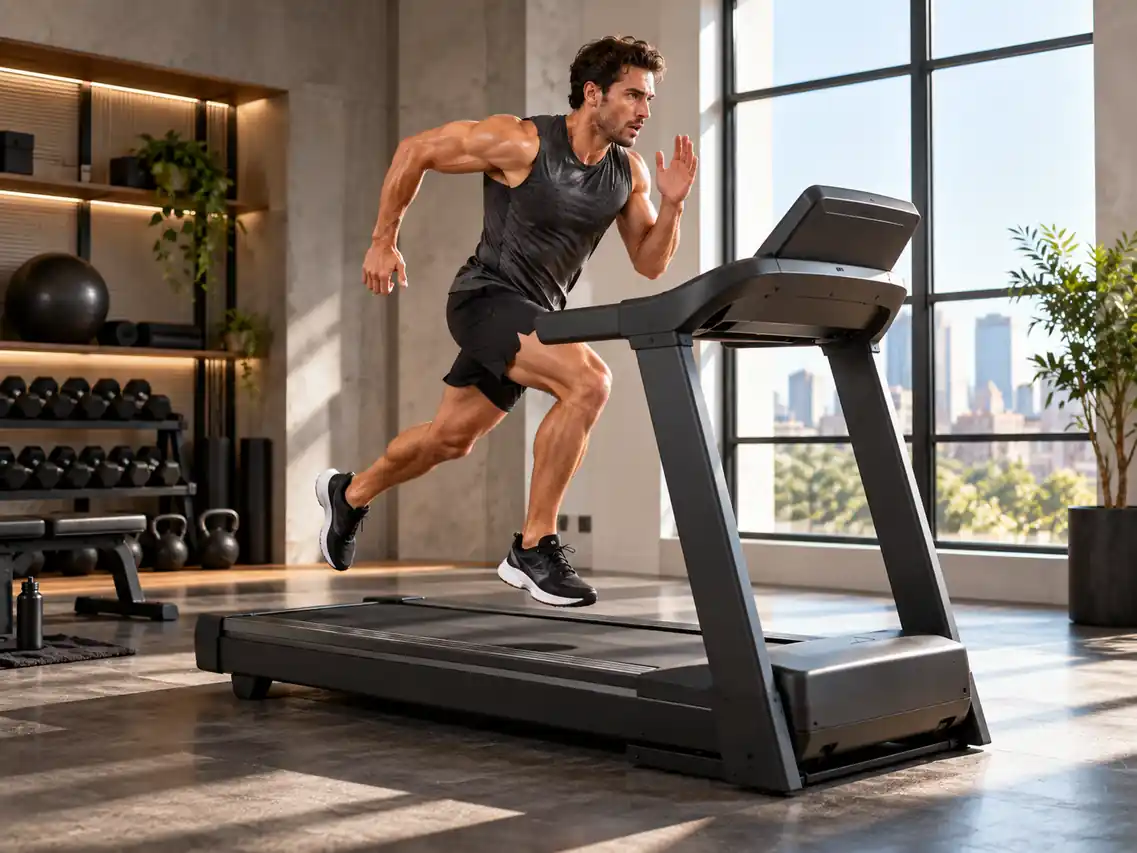
Flat treadmills need a few seconds to change speed, and most home models top out at 10 to 12 mph. For long interval sessions at fixed paces, though, a flat motorized treadmill is easier to program. Our best treadmill for HIIT picks, such as the Horizon 7.4 AT with quick-change speed and incline keys, keep interval transitions fast.
Some curved models add adjustable belt resistance for sled-push and hill-style efforts. The Sunny Health & Fitness SF-X7110 offers 8 magnetic resistance levels, which partly replaces the incline a curved deck cannot provide.
Best Curved Overall

Sole C80
FitScore 53/100
Our top curved pick: a long 62-inch slat surface, a 330-lb rating and a lifetime frame warranty.
Ranked in our Best Curved Treadmill guide
Check Price on AmazonBest Folding Curved

rongle QZDXJ-003
FitScore 51.6/100
The only folding model among our curved picks, at about 110 lb with a 350-lb rating.
Ranked in our Best Curved Treadmill guide
Check Price on AmazonBest Connected Curved

Sunny Health & Fitness SF-X7110
FitScore 49/100
8 magnetic resistance levels and Bluetooth tracking in the SunnyFit app on a 59-inch slat deck.
Ranked in our Best Curved Treadmill guide
Check Price on AmazonIncline, Walking and Steady Runs
Flat treadmills win for walking and incline work. Mid-range models offer power incline of about 10 to 15%, and some add decline, such as the Sole F89 with 6% decline. Dedicated incline trainers in our best incline trainer guide go much steeper. A curved deck has no incline setting at all.
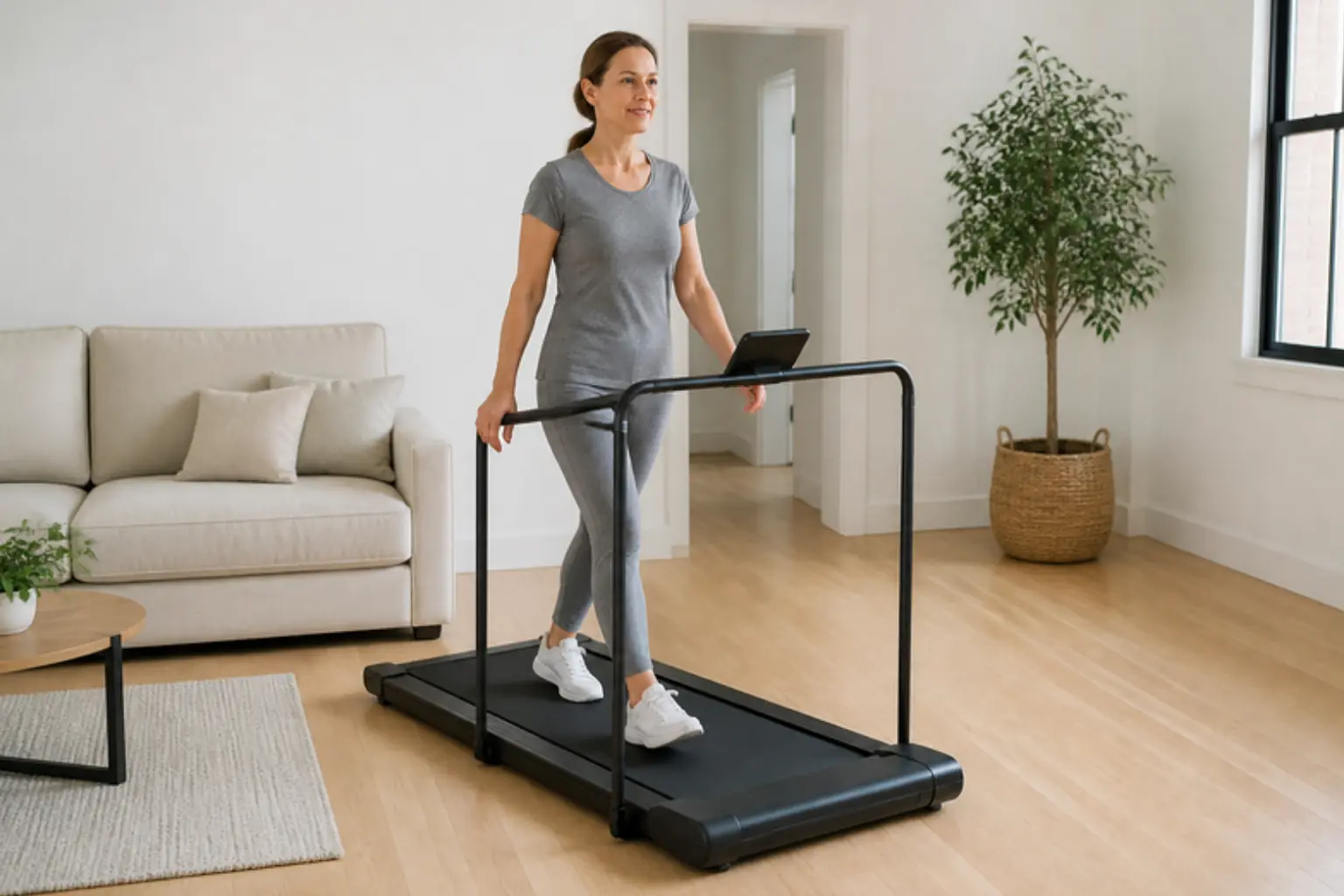
Slow walking on a curved treadmill is possible, but it takes constant attention to stay in the right spot on the curve. For long, easy walks or incline walking, a flat treadmill lets you set a pace and hold it. The curved model ranked best for walking in our guide, the JOROTO F50PRO, is a short walking-pad style deck, not a full running curve.
For long steady runs, a flat deck with cushioning is also easier on your legs over an hour or more. Our best treadmill for marathon training guide ranks flat treadmills for high mileage, led by the Sole F89.
Space, Power and Practical Setup
Curved treadmills need no outlet for the belt to move, which lets you put them in a garage or room without a nearby plug. The console may still need batteries or power, so check the listing. Flat motorized treadmills need a grounded outlet, and many manufacturers recommend a dedicated circuit for larger models.
Curved models are heavy and rarely fold. The full-size curved models in our ranking weigh about 110 to 290 lb, and only the rongle QZDXJ-003 folds. Many flat home treadmills fold upright, and our best folding treadmill guide ranks the best of them. If space is tight, a flat folding model is usually easier to live with.
Safety basics apply to both. The CPSC has advised treadmill owners to keep small children and pets away from the machine and store the safety key out of their reach. A self-powered curved belt can keep spinning briefly after you step off, so keep the area around the deck clear.
Durability, Warranty and Choice
Curved treadmills use slat belts on bearings rather than a belt sliding over a deck, so there is no motor to fail and no deck lubrication schedule. Warranties on the curved models we rank still vary widely: the Sole C80 lists a lifetime frame with 1-year parts, the RUNOW 6310CB 5 years on the frame and 3 years on parts, and the Sunny SF-X7110 a 3-year frame with 180 days on other parts.
Flat treadmills have more parts that wear, but leading brands back them with long coverage. The Horizon 7.4 AT carries a lifetime frame and motor warranty with 5-year parts, and the XTERRA TR75 lifetime frame and motor with 2-year parts. Our treadmill maintenance guide explains the belt and deck care that keeps a flat treadmill running.
Choice is the other gap. Flat treadmills come in far more sizes, deck lengths and feature sets, from compact folding models to touchscreen machines with classes. Curved treadmills are a small category. Check the current warranty on the product page before you buy either type.
Which Should You Choose?
Base the choice on the workouts you will repeat every week.
- Sprinter, field athlete or HIIT fan: curved treadmill. See our best curved treadmill picks.
- Distance runner: flat motorized treadmill with a 20 × 60-inch cushioned deck.
- Walker or incline walker: flat treadmill with power incline.
- Garage gym without an outlet: curved treadmill, or a flat manual treadmill for walking.
- Small apartment: flat folding treadmill; most curved models do not fold.
- Shared household: flat treadmill, because each user can set a pace and incline without learning the curve.
Best for HIIT

Sole F89
FitScore 89.3/100
Our top HIIT pick: a 4.0 HP motor, 22 × 60-inch deck, 15% incline and 6% decline for structured intervals.
Ranked in our Best Treadmill for HIIT guide
Check Price on AmazonBest Stability

Horizon 7.4 AT
FitScore 88.9/100
A 22 × 60-inch deck, 15% incline and quick-change keys that make interval switches fast.
Ranked in our Best Treadmill for HIIT guide
Check Price on AmazonBest Value Flat

XTERRA Sport Series – TR75
FitScore 83.7/100
A 20 × 60-inch deck, 12 mph, 12% incline and a 350-lb rating with lifetime frame and motor coverage.
Ranked in our Best Treadmill for HIIT guide
Check Price on AmazonCommon Mistakes to Avoid
- Using road or flat-treadmill paces on a curved deck; the same speed is much harder.
- Buying a curved treadmill mainly for walking; holding a slow, steady pace on the curve takes effort.
- Expecting incline on a curved treadmill; resistance levels are the closest substitute.
- Forgetting weight and folding; most curved models are heavy and need a permanent spot.
- Assuming no motor means no maintenance; slat belts and bearings still need checks.
The Bottom Line
- The curved treadmills we rank are all self-powered: your stride moves the belt, so there is no motor and no fixed top speed.
- In a 2017 study, running at a set speed on a curved non-motorized treadmill took about 16% more of runners’ maximal oxygen uptake than a motorized treadmill.
- Flat motorized treadmills add power incline (about 10 to 15% on mid-range models), programs and steady pacing.
- The full-size curved models we rank weigh about 110 to 290 lb, and only one of our five curved picks folds.
- Our top curved treadmill scores 53 in its guide; our top flat treadmill for HIIT scores 89.3.
Our Top Picks
 Best Curved OverallSole C80FitScore53/100Check on Amazon
- Best Folding Curvedrongle QZDXJ-003FitScore51.6/100Check on Amazon
- Best Connected CurvedSunny Health & Fitness SF-X7110FitScore49/100Check on Amazon
- Best for HIITSole F89FitScore89.3/100Check on Amazon
- Best StabilityHorizon 7.4 ATFitScore88.9/100Check on Amazon
- Best Value FlatXTERRA Sport Series – TR75FitScore83.7/100Check on Amazon
Frequently Asked Questions
It is better for sprints and self-paced intervals. A flat motorized treadmill is better for walking, long runs, incline training and most home users.
At the same speed, studies show curved non-motorized treadmills raise oxygen uptake and heart rate compared with motorized ones, which means more energy use per mile. Total calories still depend on how long and how hard you train.
They work for walking but are less comfortable for long, slow sessions because you have to manage your position on the curve. A flat treadmill is easier for walking.
Not for the belt, which you power yourself. Some consoles use batteries or need power, so check the product listing.
There is not enough evidence to say so. A 2023 study found curved treadmill running changed joint kinematics compared with overground running, but not in a way the authors considered functionally relevant.
No. The speed follows your position on the curve, so you control pace by effort. A flat treadmill is the better choice for pace-based training.
Explore More Treadmill Comparisons
Best Curved Treadmill (2026): 5 Self-Powered Picks for Home
Best Manual Treadmill (2026): 5 Self-Powered Picks for Home
Best Treadmill for HIIT (2026): 5 Interval-Ready Picks
Best Treadmill for Running (2026): Top 5 Picks
Treadmill Buying Guide (2026): How to Choose the Right Home Treadmill
Best Treadmill for Marathon Training (2026): Top 5 Picks
This article contains affiliate links. If you click through and make a purchase, we may earn a small commission at no extra cost to you. As an Amazon Associate, we earn from qualifying purchases. We do not show prices because they change constantly: product details and availability can change at any time, so please check the current price and details directly on Amazon. Learn more. Amazon and the Amazon logo are trademarks of Amazon.com, Inc. or its affiliates.
