

Short answer
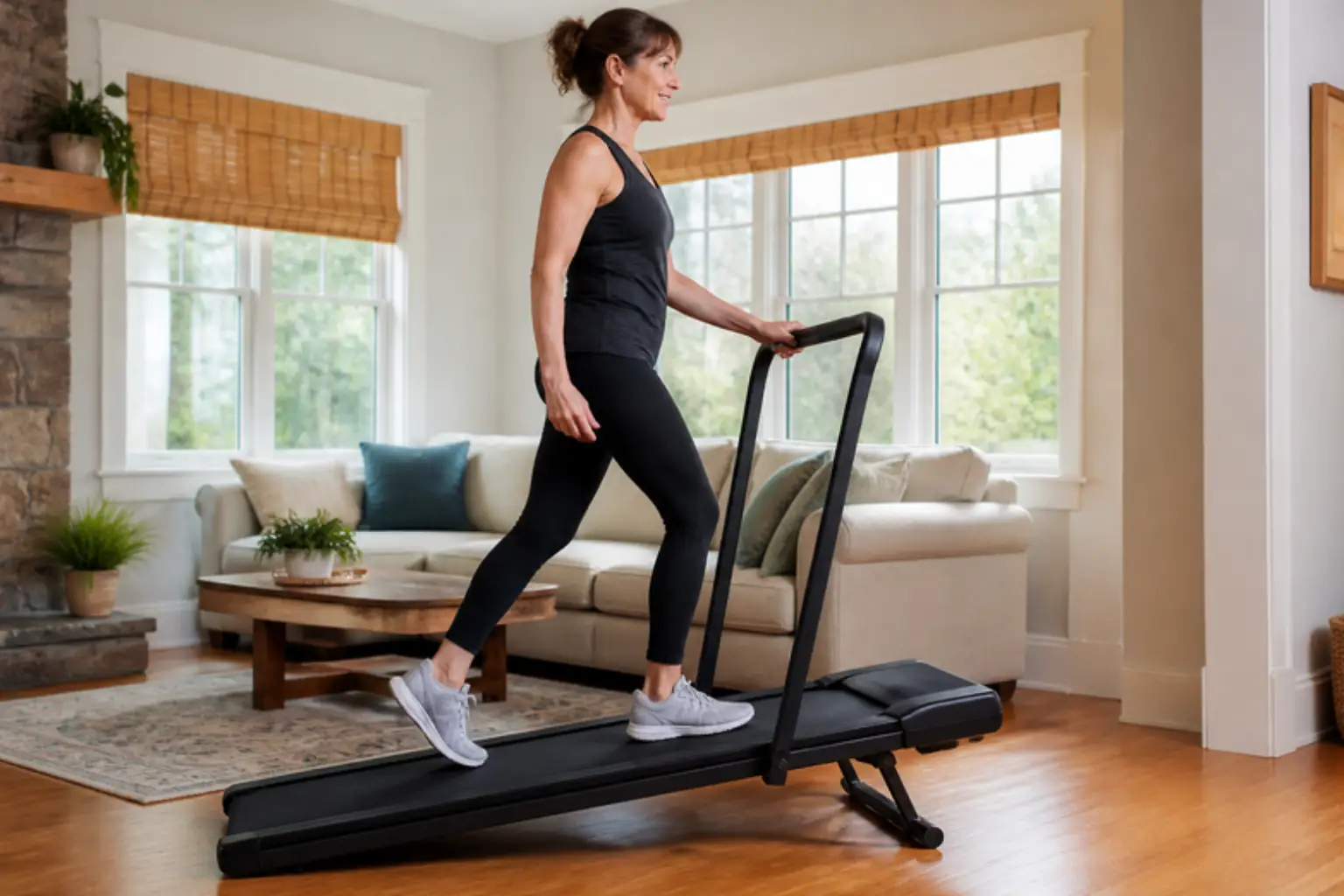
What is a walking pad? A slim, low-profile treadmill built for slow walking, usually under a desk, that folds flat and tops out near 4 mph; 2-in-1 models raise a handlebar for light jogging.
Key takeaways
- A walking pad trades running speed and belt length for a slim, foldable, quiet frame.
- Walking-only pads stop near 4 mph; 2-in-1 pads raise a handlebar for jogging at 6 mph or more.
- Check belt length, weight rating and noise before top speed or incline.
- Pick a full treadmill instead if you plan to run regularly.
This guide covers the types, the specs that matter and who it suits.
What Is a Walking Pad: What a Walking Pad Is
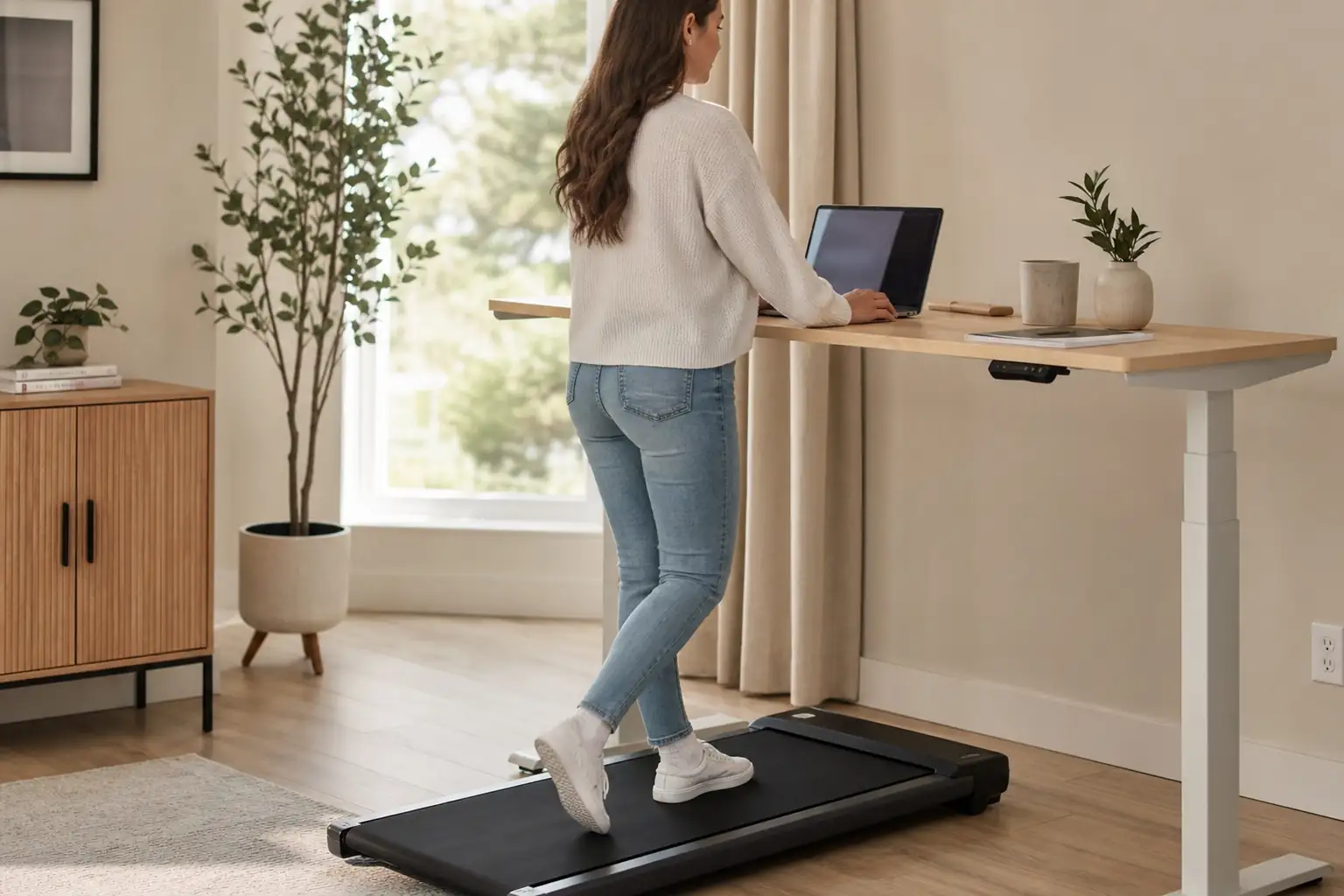
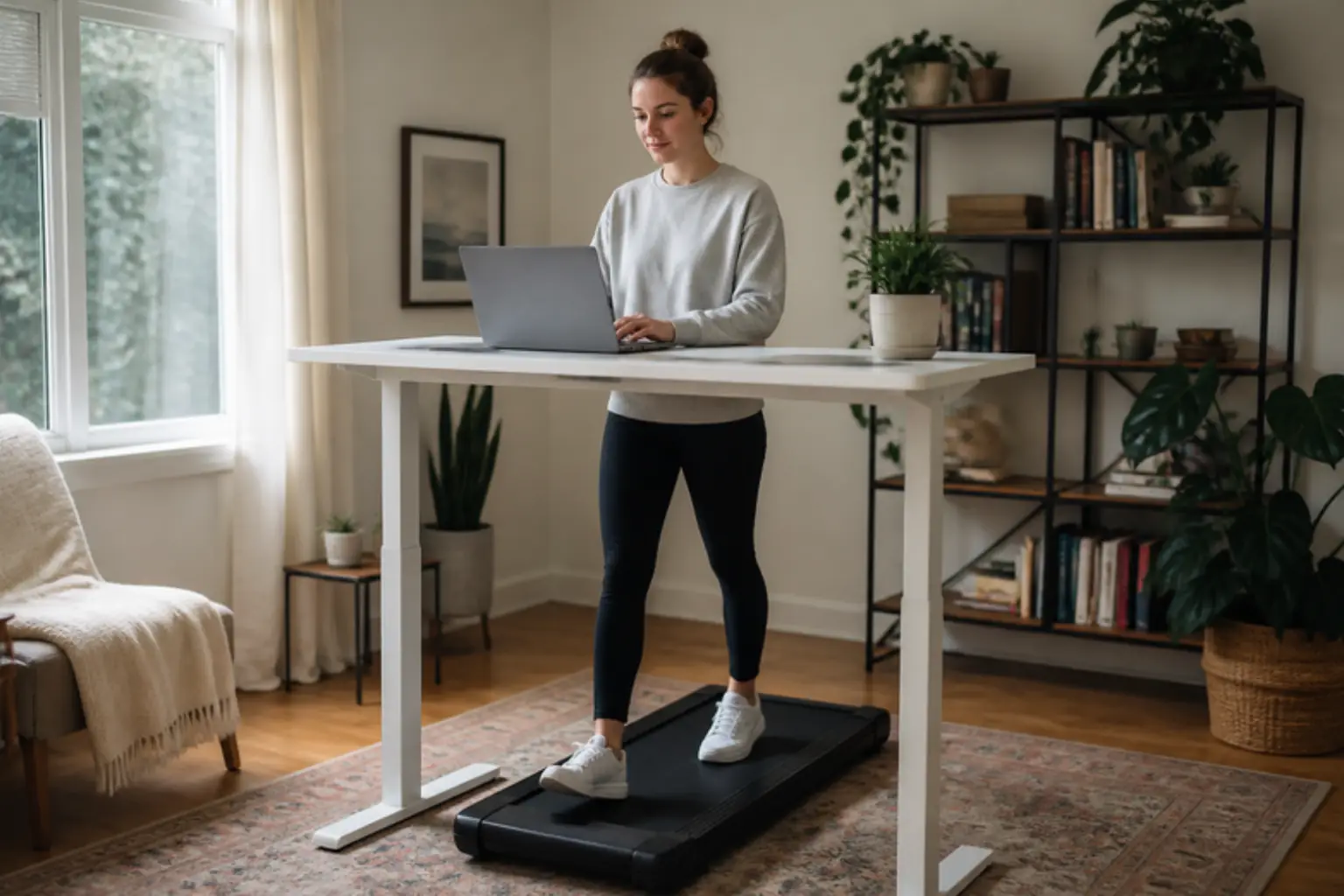
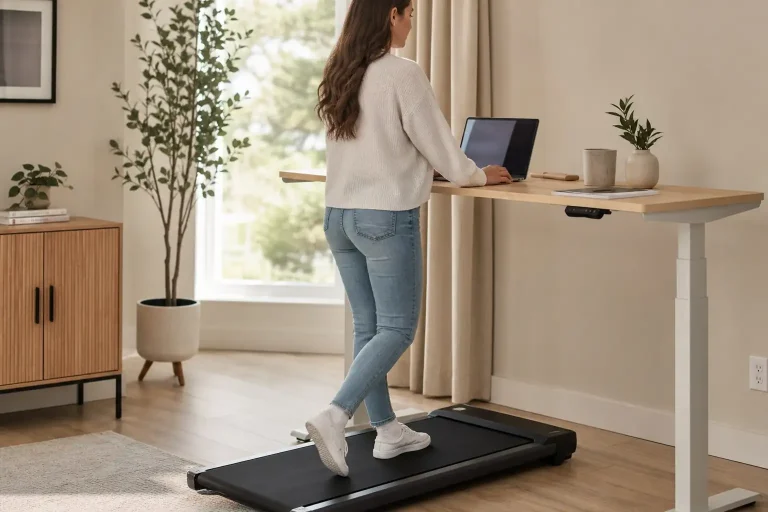
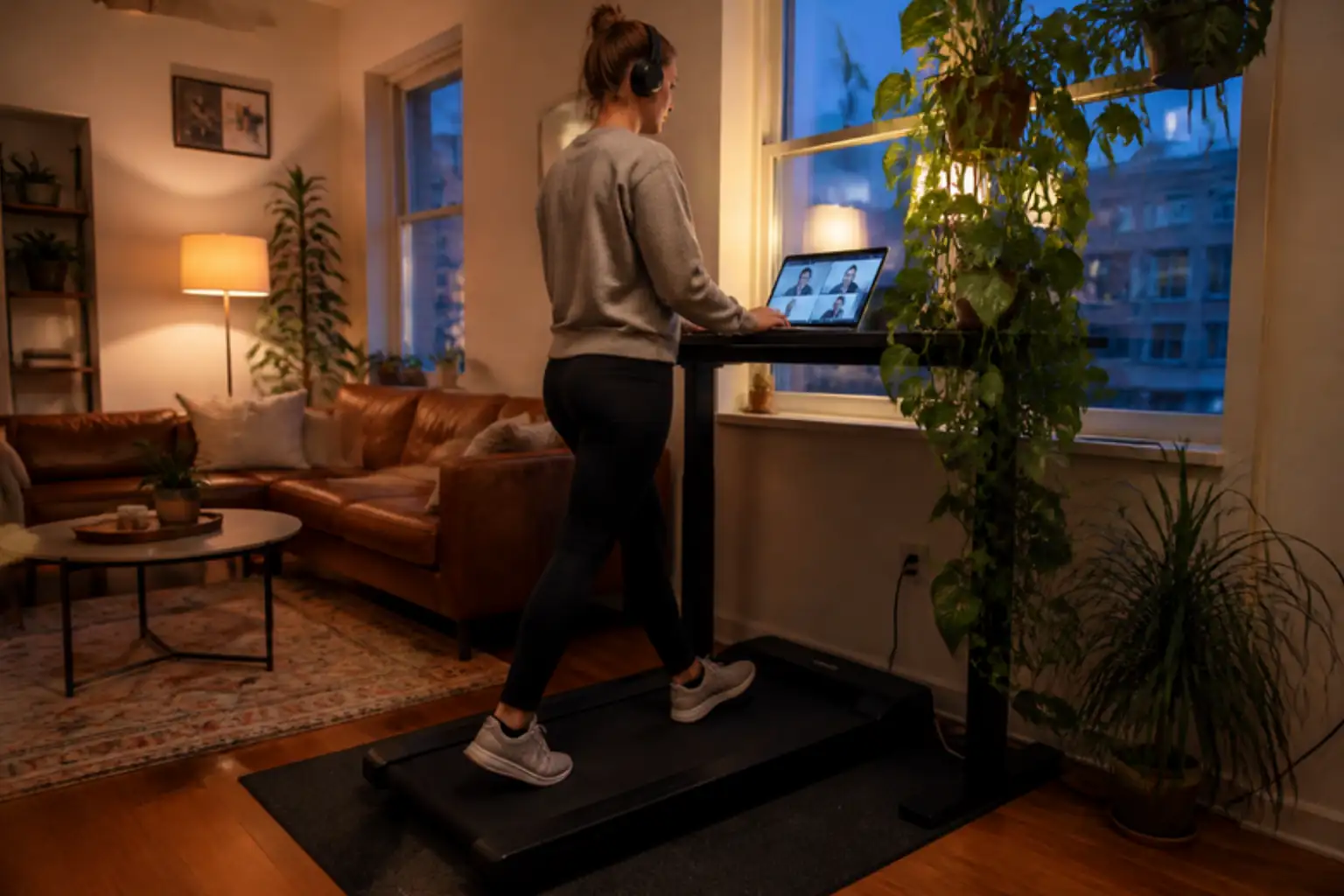
A walking pad is a very low, compact treadmill designed for walking, most often while you work at a standing desk. It has a motorized belt and a simple console or remote, but it usually leaves out the handrails, the upright console tower and the long deck of a standard treadmill. That keeps the frame light enough to slide under a bed or sofa, or to stand against a wall.
The idea is to add steady, low-intensity movement to a sitting day rather than to deliver a hard workout. A 2021 meta-analysis of treadmill desk studies found that walking at a treadmill desk burned about 105 more calories per hour than sitting in controlled studies. The speeds are slow on purpose: a comfortable desk pace is often around 1 to 2 mph, well below the 4 mph that most flat pads can reach.
The Main Types of Walking Pad
Walking pads fall into three practical groups, and most models blend two of them. The table shows how the 10 pads in our rankings split by the features that change how you use them.
| Type | Top speed in our rankings | Typical extras | Example |
|---|---|---|---|
| Walking-only pad | 3.75 to 4 mph | Slim frame and no raised handlebar; some add a small manual incline | WalkingPad P1, XBD 480J-A |
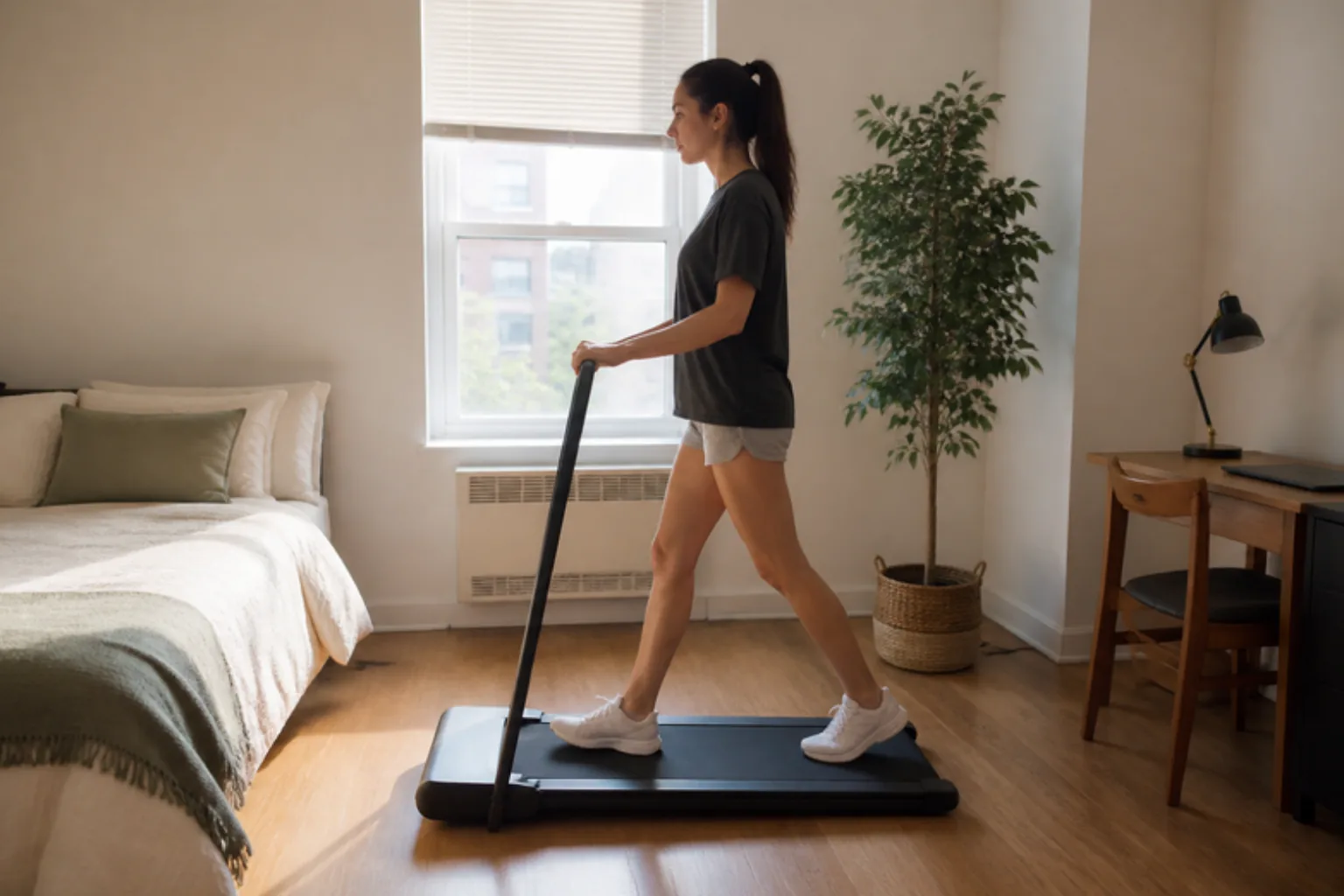
| 2-in-1 pad with a handlebar | 6 to 7.6 mph | Handlebar folds down for walking and raises for light jogging; manual incline | THERUN X1 Basic, THERUN X2 Starter, TREAFLOW 3100 |
| Walking pad with auto incline | 4 to 7.5 mph | Incline up to 12% or 15% set from the console or remote | Trisomy D2, Acezoe P14, AKLUER TW140L |
Check Amazon for current pricing and availability.
Walking Pad vs Treadmill in One Minute
A walking pad is a treadmill with the running features taken out. The belts are shorter, 34 to 40 inches in our rankings against 50 to 60 inches on the treadmills in our guides, so a longer stride feels cramped. Top speeds are lower, and the motors are sized for slow, steady use.
In return you get a machine that weighs a fraction of a full treadmill, fits in a closet and is usually easier to live with. If you want to run, train on steep inclines or share a machine between tall or heavy users, a full treadmill is the better tool. Our treadmill vs walking pad guide compares the two in detail.
Specs to Check Before You Buy a Walking Pad
Spec sheets for walking pads are short, but the numbers decide how the pad feels every day. These are the ones worth reading first.
- Belt length and width. Our pads run 34 to 40 inches long and 14 to 16.5 inches wide. Taller walkers and anyone who plans to jog should look at the long end; see walking pads for tall people.
- Weight rating. Ratings run from 220 to 450 lb. Choose a pad rated well above your body weight; walking pads for plus size ranks the high-capacity models.
- Top speed and handlebar. Walking-only pads stop around 4 mph. If you want to jog, pick a 2-in-1 with a handlebar that raises, and read can you run on a walking pad first.
- Incline. A mild incline makes slow walking harder without more speed. Auto incline is set from the console; manual incline is set by hand and is lighter and simpler.
- Noise. Some pads are much louder than others, and a mat helps. Our quiet walking pad ranking covers the quieter models for calls and shared rooms.
- Warranty. Coverage is mostly 1 year on the pads we rank; the Trisomy D2 lists 2 years. The FTC explains how to read a product warranty.
Our Top Walking Pad Picks
These three show the range: the best overall pad, the pick for light jogging and the lightest budget pad. Each ranks in our buying guides by FitScore.
Best overall walking pad

Trisomy D2
FitScore 66.5/100
A 450-lb rating, a 3.5 HP motor, 15% auto incline and a 2-year warranty.
Ranked in our Best Walking Pad guide
Read our Trisomy D2 review
Check Price on AmazonBest for light jogging

Acezoe P14
FitScore 65.9/100
Up to 7.5 mph with a 15% auto incline on a 40-inch belt.
Ranked in our Best Walking Pad guide
Read our Acezoe P14 review
Check Price on AmazonLightest budget pad

THERUN X1 Basic
FitScore 68.2/100
About 38 lb with a handlebar that raises for jogging up to 6.2 mph.
Ranked in our Best Walking Pad Under $200 guide
Read our THERUN X1 review
Check Price on AmazonWho a Walking Pad Suits and Who Should Skip It
A walking pad suits people who work at a desk, live in a small space or want easy daily steps at home. It also works as a gentle option for older adults when it has a handle; see walking pads for seniors. The Physical Activity Guidelines for Americans list moving more and sitting less as a first guideline for adults, with 150 to 300 minutes of moderate activity a week.
Skip a walking pad if you mainly want to run, need steep inclines or want a console with classes. Our best treadmill for running guide covers those machines. If you are unsure, the best walking pad ranking is the place to start.
Checklist Before You Buy
6 checks
Tap a number to check off that step.
- 01
You mainly want slow, steady walking, not running.
- 02
The belt is long and wide enough for your stride.
- 03
The weight rating is well above your body weight.
- 04
You have a place to use it and a place to store it.
- 05
The noise level suits your room or your calls.
- 06
You have read the seller, warranty and return terms.
Common Mistakes to Avoid
Mistake 1Buying a flat walking-only pad when you want to jog.
Mistake 2Choosing on top speed or incline and ignoring belt length and noise.
Mistake 3Using it at a pace too fast for typing and reaching for the handles.
The Bottom Line
- Across the 10 walking pads we rank, top speeds run from 3.75 to 7.6 mph, against 10 to 12 mph on most full-size treadmills.
- Belts are 34 to 40 inches long, against 50 to 60 inches on the treadmills in our guides.
- Weight ratings range from 220 to 450 lb; the machines themselves weigh about 29 to 65 lb.
- Eight of the 10 fold flat, to between 4 and 6.4 inches tall.
- Nine list an incline, from 5% to 15%; three have an auto incline you set from the console or remote.
Our Top Picks
 Best overall walking padTrisomy D2FitScore66.5/100Check on Amazon
- Best for light joggingAcezoe P14FitScore65.9/100Check on Amazon
- Lightest budget padTHERUN X1 BasicFitScore68.2/100Check on Amazon
Frequently Asked Questions
A walking pad is a slim, low-profile treadmill built for walking, usually under a standing desk. It has a short belt, a simple remote or console and often folds flat for storage.
It is a type of treadmill, but with a shorter belt, lower top speed and no handrails on most models. Full treadmills suit running; walking pads suit walking.
In our rankings, walking-only pads stop at 3.75 to 4 mph and 2-in-1 pads with a handlebar reach 6 to 7.6 mph.
Many do. Nine of the 10 pads we rank list an incline from 5% to 15%, and three of them adjust it automatically.
Most are about 45 to 50 inches long and 22 to 28 inches wide in use, and the folding models store at 4 to 6.4 inches tall.
Ratings on the 10 pads we rank run from 220 to 450 lb. Choose one rated well above your body weight; the Trisomy D2 has the highest rating at 450 lb.
It is worth it if you will use it daily at a slow pace. Start with short sessions and build up, and see our best walking pad ranking for models by use.
Explore More Treadmill Guides
Best Walking Pad (2026): 5 Picks for Home and Under-Desk Walking
Best Walking Pad Desk (2026): 5 Picks and How to Get the Height Right

Treadmill vs Walking Pad (2026): Which One Fits Your Home and Goals?
Best Walking Pad Under $200 (2026): 5 Affordable Picks
Best Quiet Walking Pad (2026): 5 Picks for Shared Spaces
Best Walking Pad With Incline (2026): 5 Picks for Uphill Walking at Home
This article contains affiliate links. If you click through and make a purchase, we may earn a small commission at no extra cost to you. As an Amazon Associate, we earn from qualifying purchases. We do not show prices because they change constantly: product details and availability can change at any time, so please check the current price and details directly on Amazon. Learn more. Amazon and the Amazon logo are trademarks of Amazon.com, Inc. or its affiliates.
