

Folding vs non folding treadmill at a glance
Most home treadmills now fold; a fixed frame trades floor space for mass.
Figures from the full-size treadmills we rank. Comparison below.
Short answer
Folding vs Non Folding Treadmill: Choose a folding treadmill if you need the floor back between workouts: the best ones now carry 60-inch belts, 300 to 350-lb ratings and lifetime frame warranties. Choose a non-folding treadmill for the heaviest frame and the most stable deck in a room you can dedicate to it.
Key takeaways
- Most full-size home treadmills now fold: 33 of the 37 we rank.
- Folding saves about 2.5 feet of depth, but the folded deck stands about 5 feet tall.
- Non-folding frames suit dedicated rooms, heavy daily running and the highest ratings.
- Compare belt size, weight rating and warranty before frame type.
For specific picks, see our best folding treadmill guide.
Folding vs Non Folding Treadmill at a Glance
The table compares the two types on the points that decide most purchases. Figures come from the full-size motorized treadmills we rank: 33 folding models and 4 non-folding models.
Folding is now the norm at home, so the real question is whether you need the extra mass and stability of a fixed frame, or the floor space a folding deck gives back. Our treadmill buying guide covers the other choices.
| Criterion | Folding treadmill | Non-folding treadmill |
|---|---|---|
| Share of the models we rank | 33 of 37 | 4 of 37 |
| Depth in use | About 75 in (median) | About 57 to 83 in |
| Depth folded | About 44 in (median) | Does not fold |
| Height folded | About 61 in (median), up to 71 in | Not applicable |
| Belt | Median 20 × 60 in | 20 × 51 to 22 × 60 in |
| Weight rating | Median 325 lb, up to 500 lb | 300 to 400 lb |
| Machine weight | Median 203 lb, from 97 lb | 130 to 296 lb |
| Best for | Shared rooms, apartments, walking and running | Dedicated home gyms, heavy daily running |
Check Amazon for current pricing and availability.
How Folding and Non-Folding Treadmills Differ
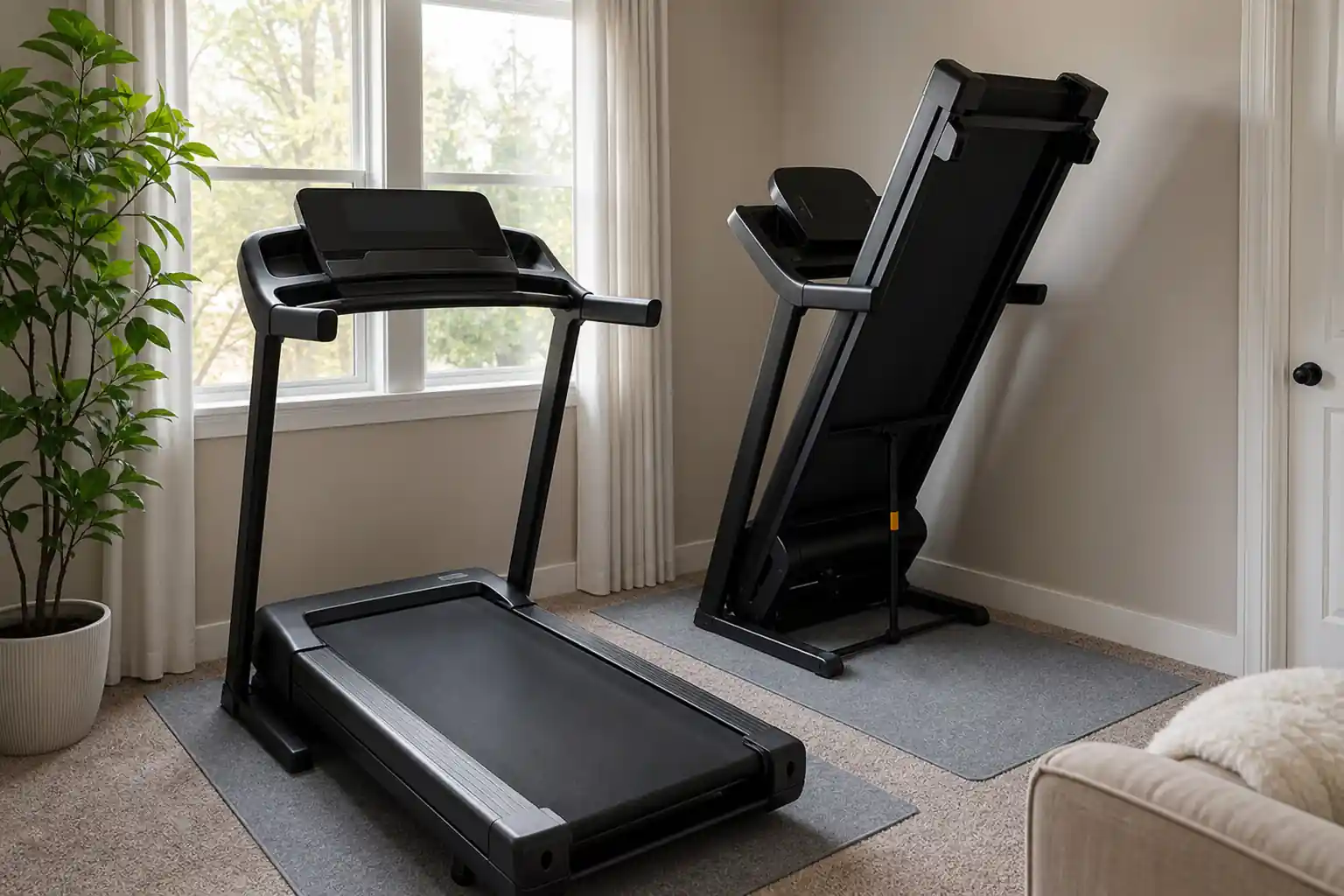
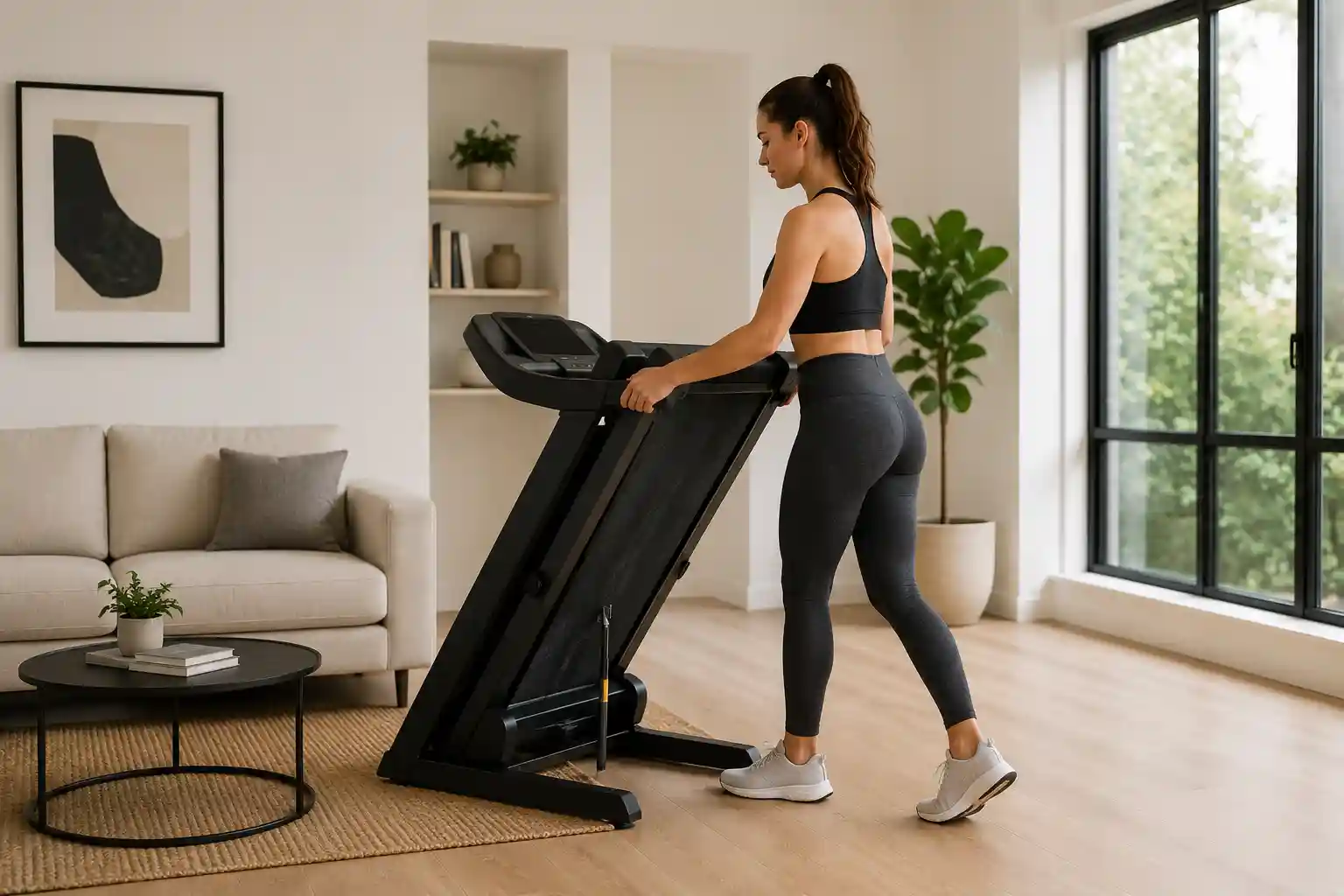
Most folding treadmills lift the deck upright against the console. A latch holds it in place, and many models lower it slowly with a gas strut so the deck does not drop on your feet. Transport wheels at the front let you tip the folded machine and roll it to a wall.
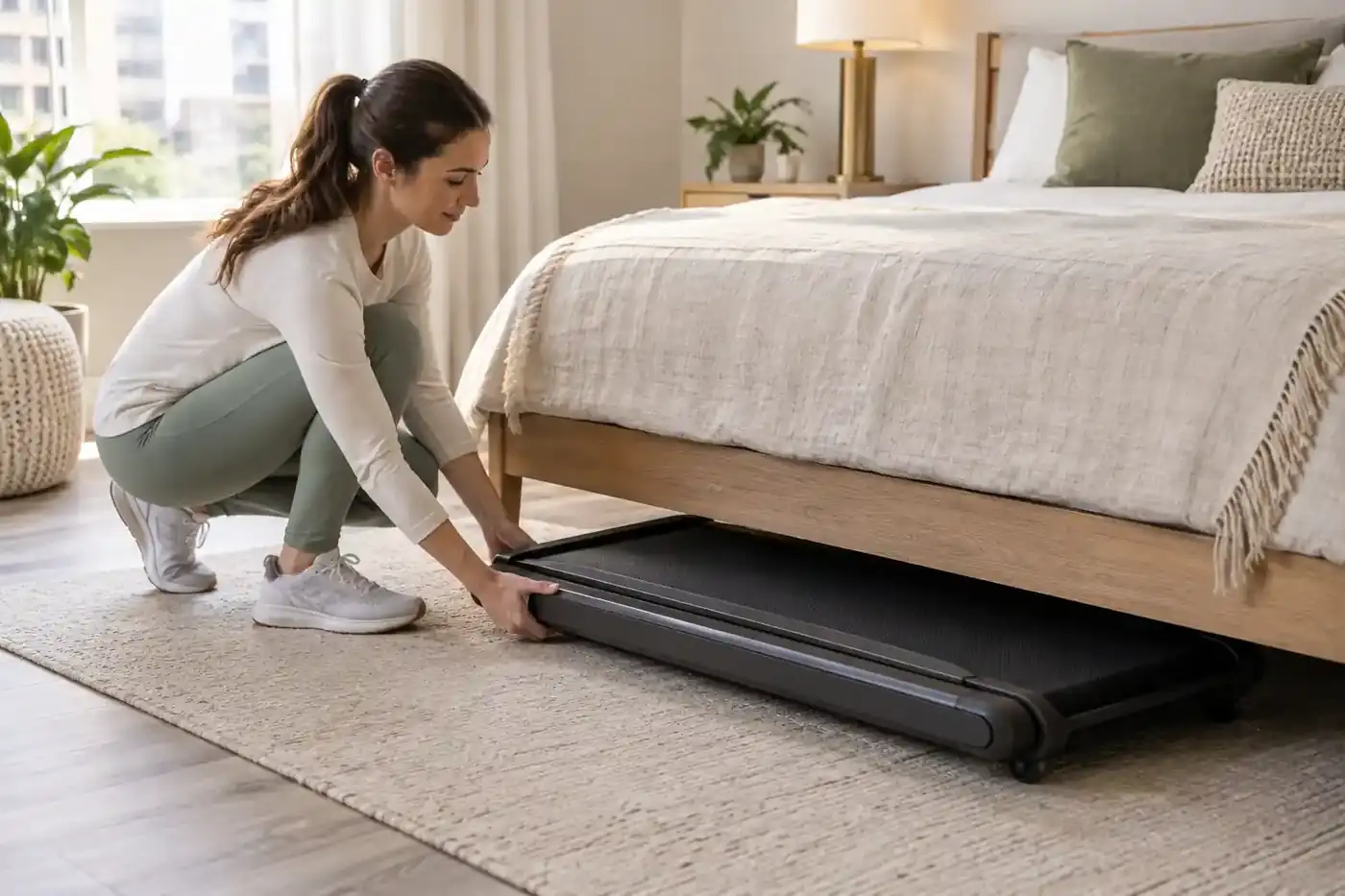
A smaller group folds flat: the console or handrail drops down onto the deck so the whole machine can slide under a bed or a sofa. These are compact walkers rather than running treadmills; the Goplus SuperFit 2-in-1 folds to about 5 inches tall on a 16 × 39.3-inch belt.
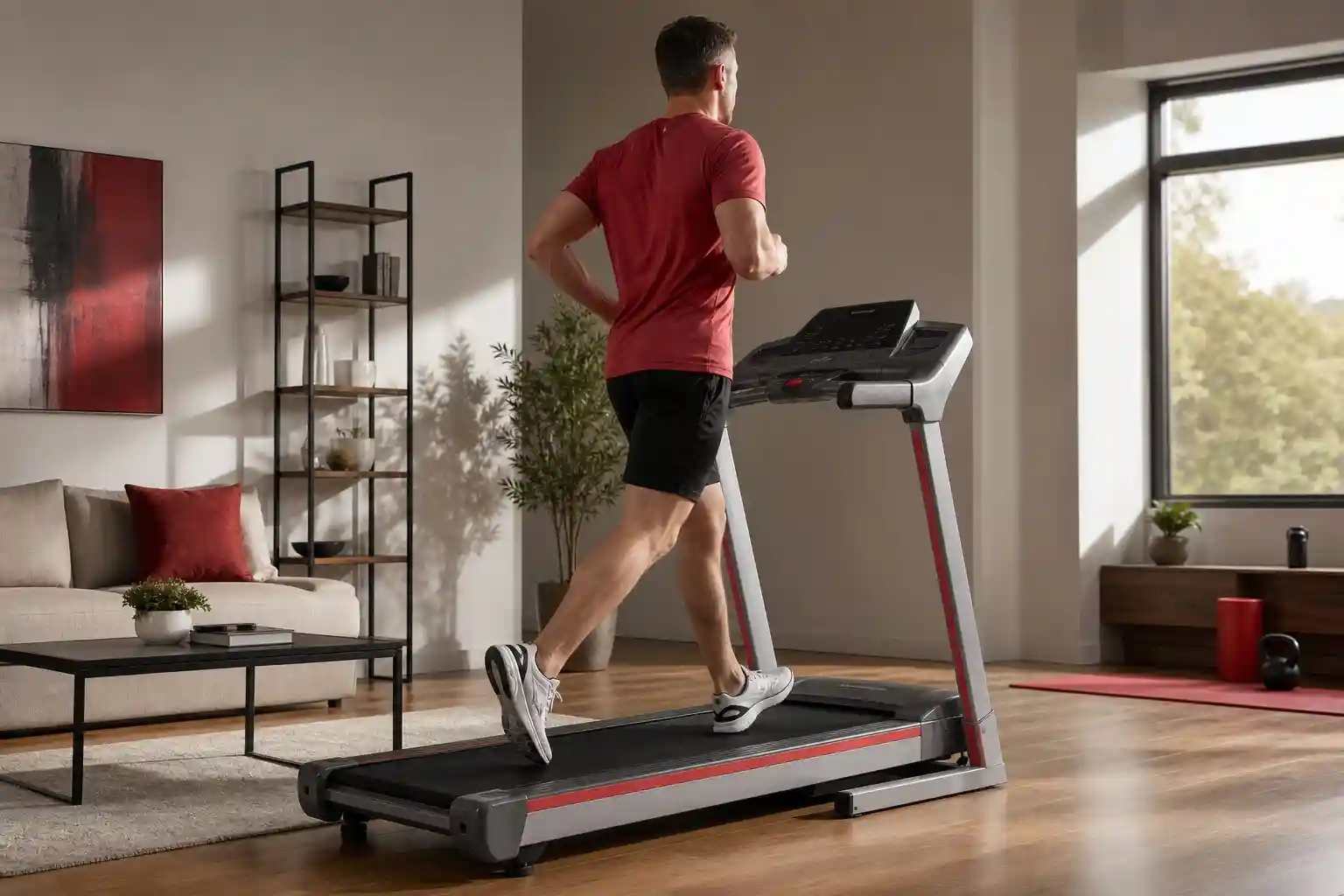
A non-folding treadmill keeps the deck bolted to the frame. There is no hinge, latch or lift system, so the frame can be heavier and simpler. The Sole TT8 is the clearest example in our rankings: 296 lb, a 4 HP motor and a 22-inch-wide belt.
Floor Space and Storage
This is the reason most people buy a folding treadmill. Across the folding models we rank, the median depth drops from about 75 inches in use to about 44 inches folded, which gives back roughly 2.5 feet of floor. The Sole F80 goes from 77 to 48 inches deep; the Horizon T202 from 76 to 48 inches.
Height is the catch. A folded full-size deck stands about 61 inches tall at the median and up to 71 inches on the tallest models, so check it against window sills, shelves and sloped ceilings. Our treadmill ceiling height calculator covers the room you need in use.
A non-folding treadmill needs its full footprint all the time, plus clear space behind the deck. The Sole TT8 takes about 82.5 × 38 inches; the Peloton Tread about 68 × 33 inches. In a room you can dedicate to training, that is not a problem; in a living room it usually is.
Pro tip: Measure the folded height as well as the folded depth. A deck that fits behind a door can still block a window.
Stability, Capacity and Running Feel
A fixed frame has fewer moving joints, which is why non-folding treadmills are often built heavier. The Sole TT8 carries a 400-lb rating on a 296-lb frame. That mass, close to 300 lb, is what keeps a deck planted under a heavy runner.
Folding no longer means flimsy, though. The best folding models we rank have the same 20 × 60-inch belt as most fixed-frame treadmills, a median 325-lb rating and up to 500 lb on the heaviest. The Sole F80 folds yet carries a 350-lb rating on a 223-lb frame, and the NordicTrack Commercial 1750 folds with a 400-lb rating and a 22-inch-wide belt: on full-size models the frame weight and the motor matter far less than the hinge.
Where folding does cost you is at the light end. Compact folding treadmills under about 100 lb have shorter, narrower belts and lower ratings, so they suit walking and easy jogging more than daily running. Check the weight rating against your own weight with a margin, as our treadmill weight capacity guide explains.
Motor, Incline and Features
Folding does not limit the drive. Folding models we rank run 10 to 14 mph with up to 25% incline, and the median motor is 3 HP. Non-folding models add a few extras at the top: the Sole TT8 reaches 15% incline and 6% decline on a 4 HP motor.
Consoles and apps follow the price, not the frame type. The Peloton Tread does not fold and is built around its screen and classes, while folding NordicTrack and ProForm models carry large touchscreens too. If classes matter, compare our best treadmill with screen picks.
Regular running at home counts toward the CDC guideline of 150 minutes of moderate activity a week whatever the frame. The treadmill you can leave set up, or put away in seconds, is the one you are most likely to use.
Check your numbers with our free tools
Weight, Moving and Warranty
A folding treadmill still has to be lifted and rolled. The median folding model we rank weighs about 203 lb; most fold with one person, but the first assembly and any move between floors need two. Compact folders from about 97 lb are the ones you can move every day.
A non-folding treadmill is placed once. At 258 to 296 lb, the Peloton Tread and the Sole TT8 are machines to install in their final spot, ideally on a mat.
Warranties vary by brand more than by type. Sole, Horizon and XTERRA give lifetime frame terms on folding models such as the Sole F80, the Horizon T202 and the XTERRA TR150, the same frame term as the fixed-frame Sole TT8. Check the motor, parts and labor terms too, and our best durable treadmill guide for models built for years of use.
Check the warranty terms before you buy: the FTC explains how to read a product warranty.
Folding Mechanisms and Safety at Home
A folding deck is a heavy panel on a hinge, so how it locks and lowers matters in a home with children or pets. Look for a latch that clicks firmly into place when the deck is up, and a gas strut that lowers it slowly once you release the latch, so the deck never drops on its own.
Fold the deck only with the belt stopped and the machine unplugged, and keep the safety key away from the treadmill when it is not in use. A non-folding treadmill avoids the hinge altogether, but its open deck still needs the same care: unplug it after each session and keep the area behind the rear roller clear.
- Check the latch: it should lock with an audible click and need a deliberate action to release.
- Lower slowly: guide the deck down with one hand, even on assisted models.
- Mind the wheels: roll a folded treadmill on a flat floor and lock it in place against a wall.
Noise, Floors and Upstairs Rooms
Frame type has less effect on noise than the floor under it. Both types pass footfall and motor sound into the floor, which matters most in apartments and upstairs rooms. A dense rubber treadmill mat cuts vibration and protects the floor, and on a folding model it also keeps the deck from creeping when you fold and unfold it.
Heavier frames tend to sound more solid at running speed, which is one reason fixed-frame treadmills such as the Sole TT8 feel planted. Full-size folders around 200 lb or more behave much the same; very light compact folders can rattle a little at higher speeds, so they suit walking and easy jogging best.
Which Should You Choose?
Match the type to your room and how you train each week.
- Shared living room or apartment: a folding treadmill with a 60-inch belt if you run, or a compact folder if you walk.
- Under a bed or sofa: a flat-folding walker; see our best folding treadmill under bed guide.
- Dedicated home gym: either type; a non-folding frame suits heavy daily running and the highest weight ratings.
- Heavier users: compare weight ratings first; folding models reach 500 lb, fixed frames like the Sole TT8 400 lb.
- Low ceilings: check the folded height and the step-up height in use; see our best treadmill for low ceilings guide.
- Classes on a big screen: frame type matters less than the console; the Peloton Tread is fixed, many NordicTrack models fold.
Flat-folding walker

Goplus SuperFit 2-in-1
FitScore 68/100
A 2-in-1 walking treadmill that folds to about 5 inches tall, with a 16 × 39.3-inch belt and a 265-lb rating.
Ranked in our Best Treadmill for Low Ceilings guide
Check Price on AmazonChecklist Before You Buy
6 checks
Tap a number to check off that step.
- 01
Measure the room in use: deck depth plus clear space behind.
- 02
Measure the folded depth and the folded height.
- 03
Check the belt: 20 × 60 inches for running.
- 04
Check the weight rating with a margin.
- 05
Check the machine weight against how often you will move it.
- 06
Read the frame, motor, parts and labor terms.
Common Mistakes to Avoid
Mistake 1Measuring the folded depth and forgetting the folded height.
Mistake 2Buying a light compact folder for daily running.
Mistake 3Assuming a non-folding treadmill is always sturdier than a full-size folder.
Mistake 4Planning to fold and move a 200-lb treadmill every day.
Mistake 5Skipping the motor, parts and labor terms because the frame warranty is long.
The Bottom Line
- 33 of the 37 full-size motorized treadmills we rank fold; 4 do not.
- Folding a deck cuts its depth from about 75 inches to about 44 inches (medians of the folding models we rank).
- Folded, most full-size treadmills stand about 61 inches tall, and the tallest reach 71 inches.
- Non-folding models we rank include the Sole TT8 (400-lb rating, 296 lb) and the Peloton Tread (300-lb rating, 258 lb).
- The folding models we rank have a median 20 × 60-inch belt and a 325-lb rating.
Our Top Picks
 Flat-folding walkerGoplus SuperFit 2-in-1FitScore68/100Check on Amazon
Frequently Asked Questions
Full-size folding models are close: the ones we rank have a median 20 × 60-inch belt, a 325-lb rating and, on brands like Sole and Horizon, lifetime frame warranties. Fixed frames keep an edge in mass and stability for heavy daily running.
Light compact folders under about 100 lb have shorter belts and lower ratings, so they suit walking. Full-size folders around 200 lb or more carry 60-inch belts and 325 to 400-lb ratings; the frame weight matters more than the hinge.
About 2.5 feet of depth on the models we rank: the median drops from about 75 inches in use to about 44 inches folded. The folded deck stands about 61 inches tall.
Not by default. Warranties vary by brand more than by type, and folding models from Sole and Horizon carry the same lifetime frame term as the fixed-frame Sole TT8.
Yes, on full-size models with a 60-inch belt and a 3 HP motor or more. Compact folders with shorter belts suit walking and easy jogging.
Among the treadmills we rank: the Sole TT8, the Peloton Tread, the NordicTrack T Series 5 and the Sunny Health & Fitness SF-X7210.
Not when they are used within their rating. The hinge and latch add parts that need an occasional check, but full-size folding treadmills from established brands carry the same lifetime frame terms as fixed frames.
Yes, that is what the latch is for. Unplug it and keep it on a flat floor; some makers suggest lowering the deck now and then so the belt and cushioning stay in shape.
For heavy daily running, a fixed frame like the Sole TT8 gives the most mass and the highest rating. For most runners, a full-size folder with a 60-inch belt and a strong motor runs just as well.
Most full-size folding treadmills only ask you to lift the deck, not the whole machine, and many use a gas strut to help. Rolling the folded machine on its wheels is the heavier part, at about 200 lb for a full-size model.
The full footprint plus clear space behind the deck and at the sides. For the Sole TT8, plan about 82.5 × 38 inches for the machine itself, then add room behind it to step off safely.
Explore More Treadmill Comparisons
Best Folding Treadmill (2026): 5 Space-Saving Picks That Make the Decision Easy
Best Folding Treadmill Under Bed (2026): 5 Compact Picks
Best Lightweight Folding Treadmill (2026): 5 Easier-to-Move Picks
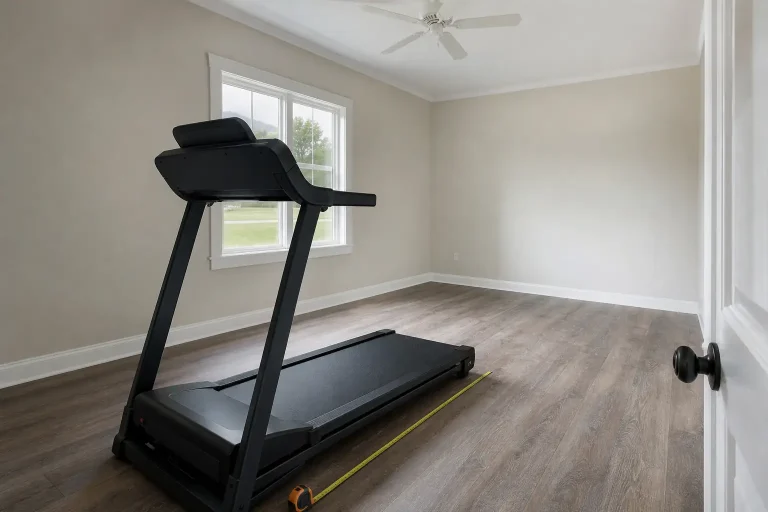
Treadmill Dimensions Guide (2026): Footprint, Folded Size and Ceiling Height
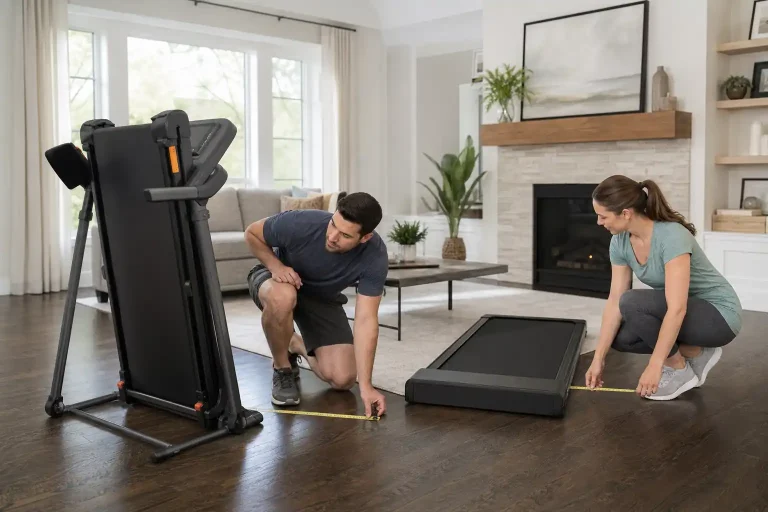
Treadmill Buying Guide (2026): How to Choose the Right Home Treadmill
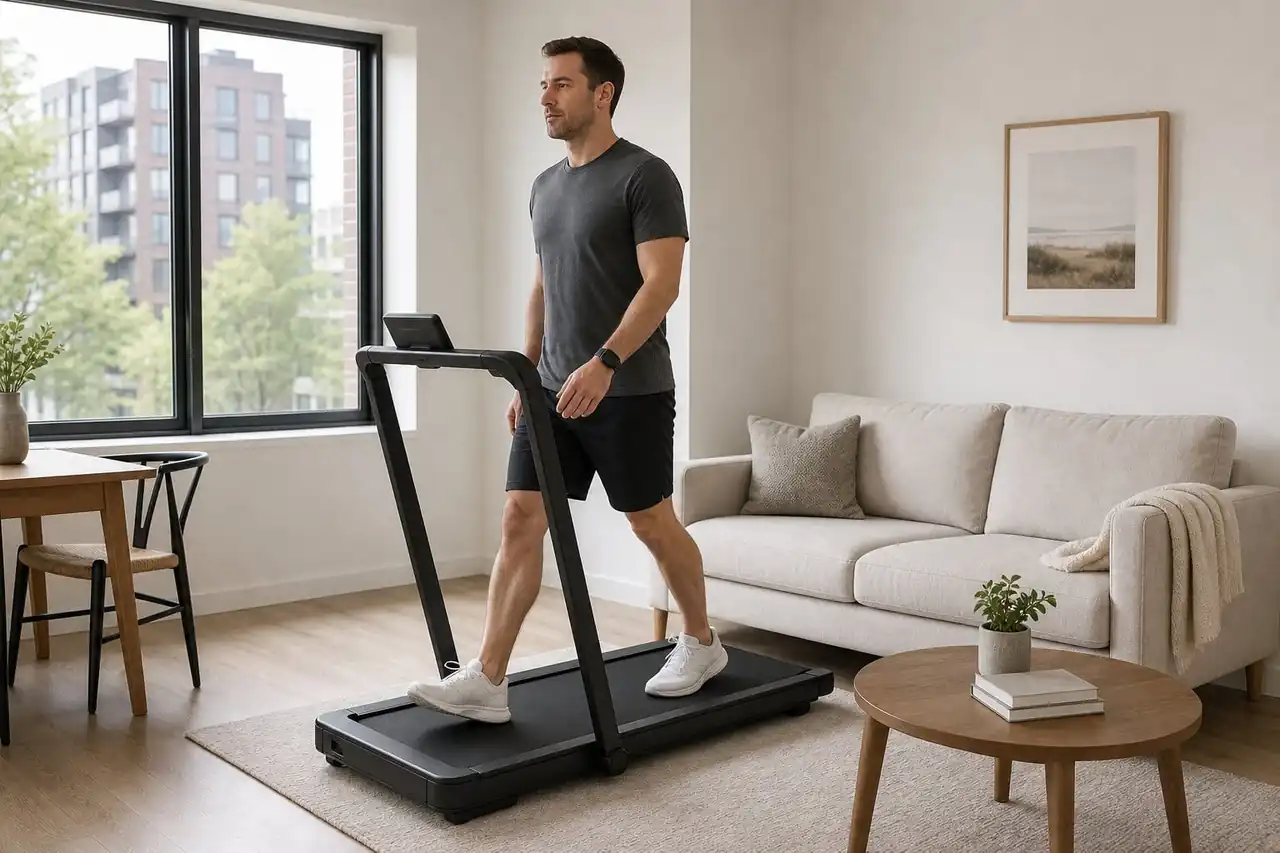
Best Treadmill for Small Spaces (2026): The 5 Picks Worth Your Money
This article contains affiliate links. If you click through and make a purchase, we may earn a small commission at no extra cost to you. As an Amazon Associate, we earn from qualifying purchases. We do not show prices because they change constantly: product details and availability can change at any time, so please check the current price and details directly on Amazon. Learn more. Amazon and the Amazon logo are trademarks of Amazon.com, Inc. or its affiliates.
