

Rowing machine vs StairMaster at a glance
Stair climber for legs and glutes; rower for full-body cardio at home.
From a JAMA study, Harvard Health estimates and the Compendium of Physical Activities.
Short answer
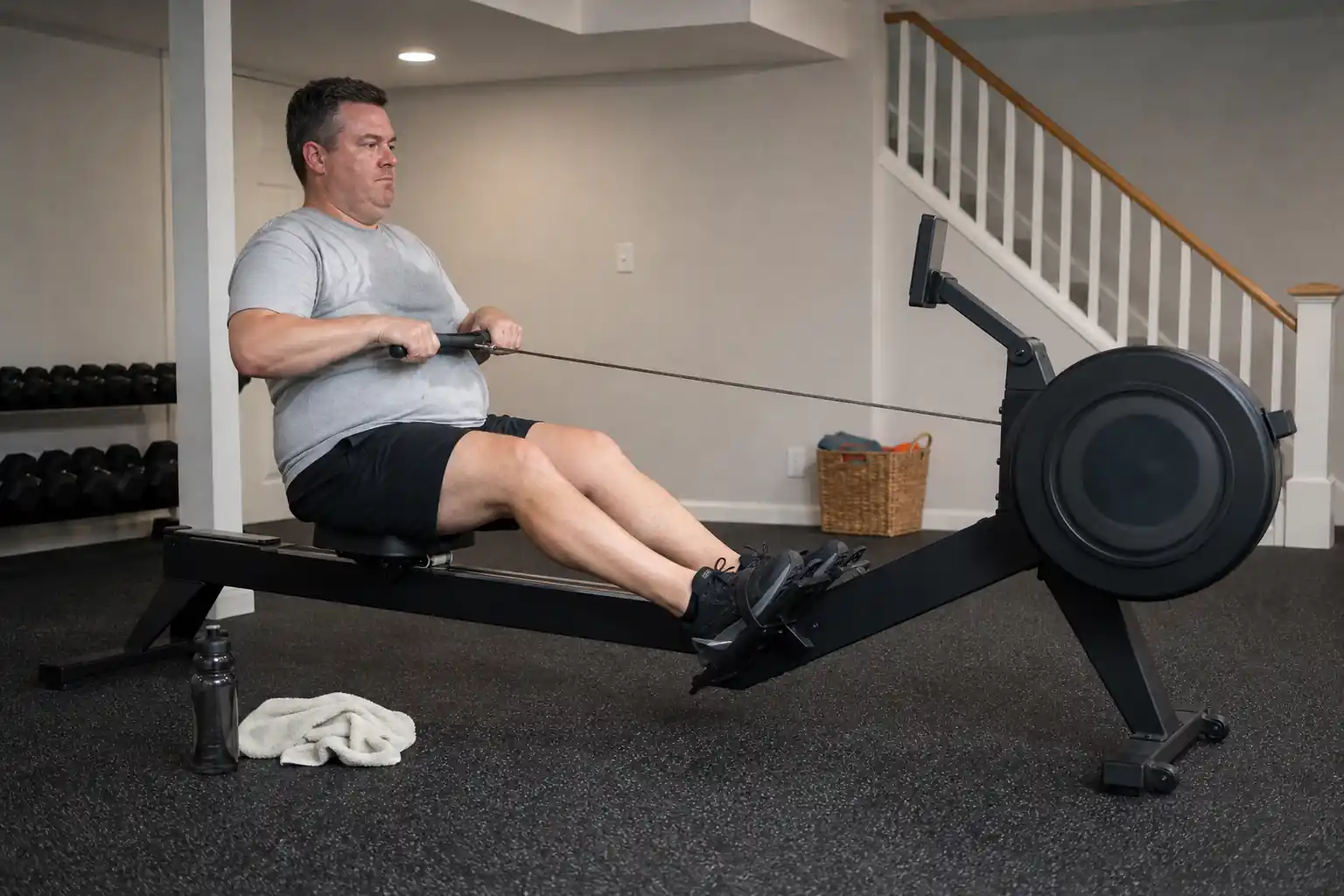
In the rowing machine vs StairMaster choice, pick a stair climber for the hardest leg and glute work per minute, usually at the gym. Pick a rowing machine for full-body, seated cardio with less knee load that fits a home and stores away.
Key takeaways
- Both are hard machines; a lab study put them in the same energy group.
- Stair climber: legs and glutes, standing, mostly a gym machine.
- Rower: full body, seated, less knee load, stores at home.
- Pick the one you will hold longest, week after week.
Our best rowing machine guide ranks the rowers you can buy for home.
Rowing Machine vs StairMaster at a Glance
StairMaster is a brand name that most people use for any revolving-stair climber. The table compares that type of machine with a rowing machine; rower figures come from the rowers ranked in our guides.
| Criterion | Rowing machine | StairMaster (stair climber) |
|---|---|---|
| Energy at the same perceived effort | Same group as the stair stepper, above the bikes (JAMA study) | Same group as the rower; highest heart rate with the treadmill |
| Calories, 30 min at 155 lb (Harvard Health) | About 252 moderate, 369 vigorous | About 216 (stair step machine) |
| Muscles | Legs, glutes, back, core, arms | Quads, glutes, hamstrings, calves |
| Position | Seated, no landing | Standing, weight-bearing, no landing |
| Knees | Deep bend at the catch, low load | Repeated bends under full body weight |
| Learning curve | A few sessions to learn the stroke | None, but hard to hold for long |
| Home fit | 62 to 96 in long; most fold or stand upright | Few home models; tall and heavy |
| Noise | Magnetic near silent; water swish; air fan loud | Motor hum and footfalls |
Check Amazon for current pricing and availability.
Calories: Rowing vs StairMaster
One study had adults train on six indoor machines at the same levels of perceived effort. The rowing machine and the stair stepper landed in the same group: both used more energy than a stationary bike and an air bike, and only the treadmill used more. The stair stepper drove the highest heart rates with the treadmill, and the stepper and the rower produced the most blood lactate, a sign of how hard both feel.
Per 30 minutes, Harvard Health estimates about 216 calories on a stair step machine for a 155-lb person and 252 at 185 lb, against about 252 for moderate rowing at 155 lb and 369 for vigorous rowing. The Compendium of Physical Activities rates a stair treadmill at 9.3 METs and rowing at 7.5 METs at 100 to 149 watts and 11.0 at 150 to 199 watts. In short, both are hard machines; what you burn depends on how long you can hold the effort.
| Activity | 155 lb | 185 lb |
|---|---|---|
| Stair step machine | About 216 | About 252 |
| Stationary rowing, moderate | About 252 | About 294 |
| Stationary rowing, vigorous | About 369 | About 440 |
Pro tip: Console calories are estimates on both machines. Track minutes and heart rate over weeks; our rowing machine calories calculator uses your watts or pace and body weight.
Muscles Worked and Glutes
A stair climber is a leg machine. Each step lifts your body weight with the quads and glutes, and the calves and hamstrings help. That is why it is popular for glute training, as long as you stand tall and keep your hands light on the rails; leaning on them takes weight off the legs.
A rowing machine spreads the work. The legs push first, which also works the glutes and hamstrings, then the back swings and the arms pull. The upper back, lats, core and arms work on every stroke, which a stair climber does not train.
- Rower: quads, glutes, hamstrings, lats, upper back, core, biceps.
- StairMaster: quads, glutes, hamstrings, calves.
- Both: heart and lungs at a high effort for the time you put in.
Knees, Back and Comfort
Neither machine has a landing, but the knee load differs. Using an instrumented knee implant, researchers found that knee compressive load was highest during stair ascent and descent among the daily activities they tested. A stair climber only goes up, but each step is a bend under full body weight. A rower bends the knee deeply at the catch while the seat carries your weight.
The back is the rower’s weak point: lean from the hips with a long spine and drive with the legs first. A stair climber keeps the trunk upright. Getting on and off differs too: a rower seat sits low, and a stair climber needs balance on moving steps with the rails nearby. Our rowing machine for back pain guide covers back-friendly settings.
Watch out: With knee, hip or back pain, ask your doctor or a physical therapist which machine and settings fit your condition before you start.
Space, Noise and Home Use
This decides it for most homes. Revolving-stair climbers are tall, heavy machines made mainly for gyms, and they lift you well above the floor, so you need ceiling height too. Rowers are long but low: the rowers in our guides measure 62 to 96 inches in use, and most fold, stand upright or split in two between sessions.
A rower has no drive motor, so it needs no heavy-duty outlet, and a magnetic rower is close to silent. A stair climber adds motor hum and footfalls. If you like the stair burn but want a home machine, a steep incline treadmill gets close; see our treadmill vs StairMaster comparison.
Rowing Machine Examples for Home Use
If the rower wins your comparison, these three examples cover the most common home situations. Each FitScore is the score the rower earns in the guide named in its card.
Hardest training pick

Concept2 RowErg
FitScore 83.4/100
FitScore 83.4 in our best rowing machine guide, where it ranks 1st. An air rower with a damper and a PM5 monitor that shows the 500 m split, watts and heart rate, for intervals as hard as a stair session. It has a 500 lb limit and a 5-year frame warranty, and it is 96 inches long.
Ranked in our Best Rowing Machine guide
Check Price on AmazonQuiet apartment pick

Sunny Health & Fitness SF-RW523021
FitScore 79.1/100
FitScore 79.1 in our best magnetic rowing machine guide, where it ranks 1st. A magnetic rower with 16 levels, a 50-inch rail and a monitor that shows the 500 m split and stroke rate. It stands upright to store.
Ranked in our Best Magnetic Rowing Machine guide
Check Price on AmazonWater feel pick

YOSUDA Water Rower
FitScore 79.2/100
FitScore 79.2 in our best water rowing machine guide, where it ranks 2nd. A water rower with a 400 lb limit and users up to 6 ft 6 in. It folds and is 73.6 inches long.
Ranked in our Best Water Rowing Machine guide
Check Price on AmazonWhich Should You Choose?
Match the machine to your goal, your knees and your room. These profiles cover most buyers.
- You want the hardest leg and glute work: a stair climber, usually at the gym.
- You want full-body cardio at home: a rowing machine.
- Repeated knee bends under load hurt: a rower, where the seat carries your weight.
- Forward bending hurts your back: a stair climber or a recumbent bike.
- You need to store the machine: a rower that folds or stands upright; see our best rowing machine for small spaces.
- You use both: stairs at the gym, a rower at home for the days in between.
Checklist Before You Choose
5 checks
Tap a number to check off that step.
- 01
Decide whether you want leg-only or full-body cardio.
- 02
Check how your knees feel climbing stairs and in a deep bend.
- 03
Measure floor length for a rower, ceiling height for a stair climber.
- 04
Pick a quiet rower type if you share walls.
- 05
Compare the max user weight with your weight, with a margin.
Common Mistakes to Avoid
Mistake 1Leaning on the stair climber rails.
Mistake 2Comparing console calories across machines.
Mistake 3Pulling with the arms first on a rower.
Mistake 4Buying a gym-size stair climber without checking the ceiling.
Mistake 5Going all out on the first session on either machine.
The Bottom Line
- In a JAMA study of six indoor machines, the rowing machine and the stair stepper landed in the same group for energy at the same effort, above the bikes.
- Harvard Health puts 30 minutes on a stair step machine at about 216 calories for a 155-lb person; moderate rowing is about 252 and vigorous rowing about 369.
- The Compendium of Physical Activities rates a stair treadmill at 9.3 METs and rowing at 7.5 METs at 100 to 149 watts.
- A stair climber works mostly the legs and glutes while standing; a rower adds the back, core and arms while seated.
- Home stair climbers are rare and tall; most rowers in our guides fold, stand upright or split in two.
Our Top Picks
 Hardest training pickConcept2 RowErgFitScore83.4/100Check on Amazon
- Quiet apartment pickSunny Health & Fitness SF-RW523021FitScore79.1/100Check on Amazon
- Water feel pickYOSUDA Water RowerFitScore79.2/100Check on Amazon
Frequently Asked Questions
For home cardio, a rowing machine: it works the whole body, is easier on the knees and stores away. For the hardest leg and glute work, a stair climber, usually at the gym.
At the same perceived effort, a lab study put the two in the same group. Harvard Health lists about 216 calories in 30 minutes on a stair step machine and about 252 to 369 for moderate to vigorous rowing at 155 lb.
Yes, the leg drive works the glutes and hamstrings, but a stair climber targets them harder. Add hip and glute strength work if glutes are your main goal.
Usually the rower: the seat carries your weight. Stair climbing loads the knee under full body weight with every step.
For cardio, yes. For the same leg burn, raise the resistance and add short, hard intervals, or use a steep incline treadmill.
Explore More Rowing Machine Guides
Best Rowing Machine (2026): 5 Top Picks for Home, Ranked
Rowing Machine vs Treadmill (2026): Which Is Better for Your Home?
Rowing Machine vs Elliptical Trainer (2026): Which Fits Your Goals?
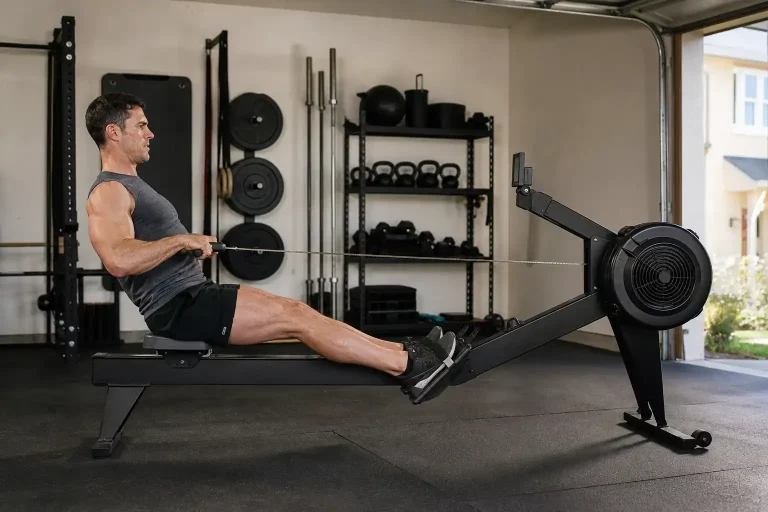
Rowing Machine Muscles Worked: Every Muscle, Phase by Phase (2026)
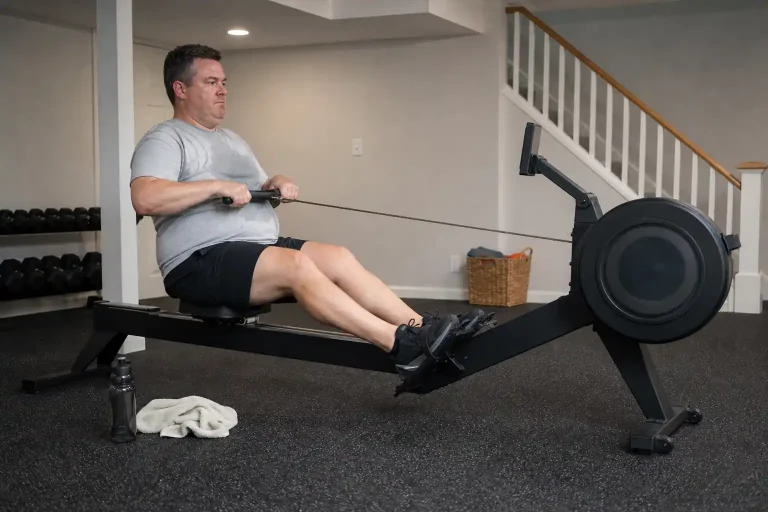
Rowing Machine for Weight Loss: How Much to Row and What to Expect (2026)

Treadmill vs StairMaster (2026): Incline Walking, Calories and Knees Compared
This article contains affiliate links. If you click through and make a purchase, we may earn a small commission at no extra cost to you. As an Amazon Associate, we earn from qualifying purchases. We do not show prices because they change constantly: product details and availability can change at any time, so please check the current price and details directly on Amazon. Learn more. Amazon and the Amazon logo are trademarks of Amazon.com, Inc. or its affiliates.
