

Rowing machine for back pain at a glance
Legs first, a light load, and stop before fatigue.
What the research found about the catch and fatigue, and the settings that lighten the load. Details below.
Short answer
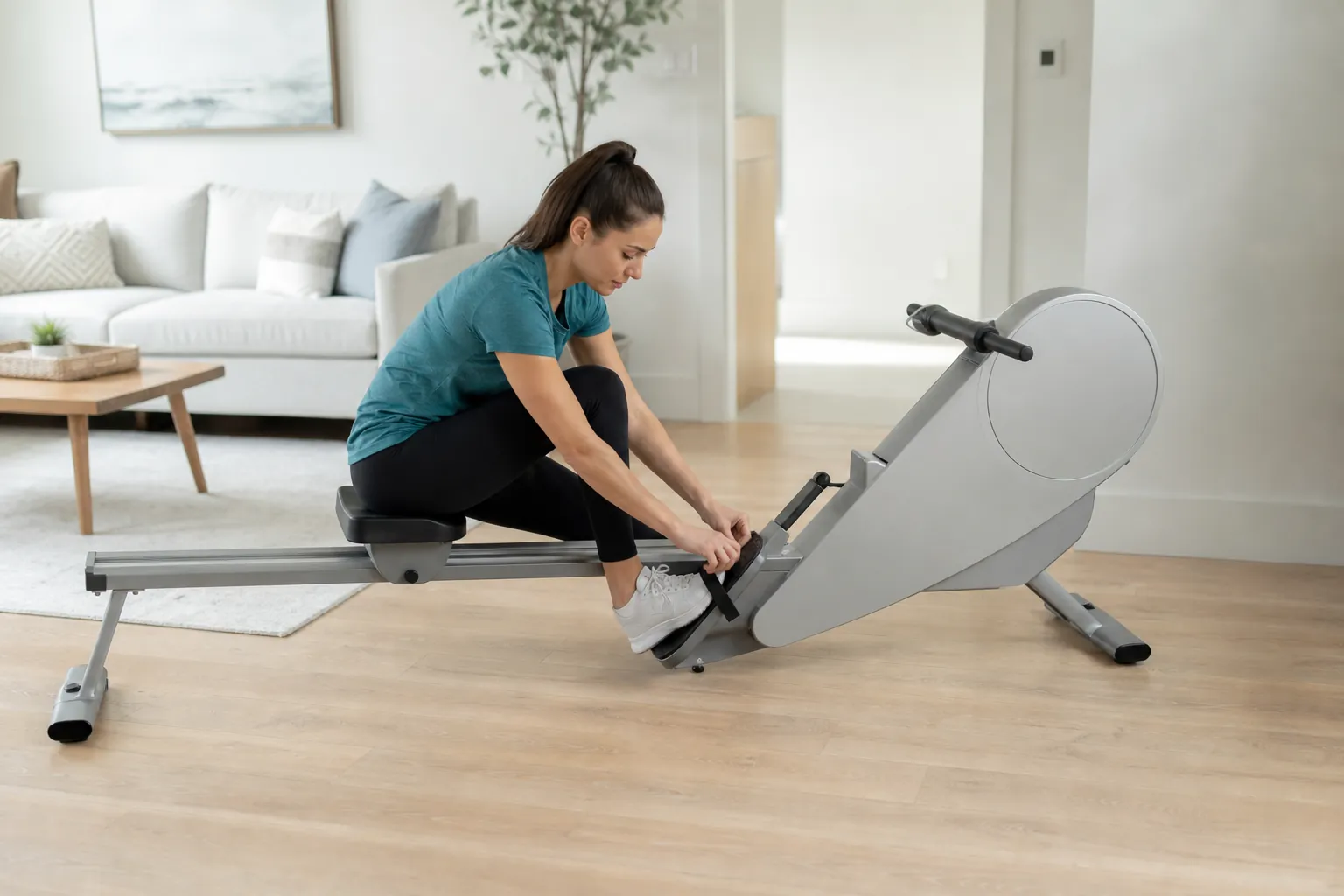
A rowing machine for back pain can be a low-impact way to stay active if you drive with the legs, keep the spine long and the load light. Check with your doctor or physical therapist first.
Key takeaways
- Drive with the legs and hinge at the hips with a long spine.
- Keep the load light and the pace relaxed, and stop before fatigue.
- Pick a rower with a light first level, a rail that fits and a seat you can get up from.
- Ask your doctor or physical therapist first; this page is not medical advice.
This guide turns “easy on the back” into rowing settings and machine features you can check, and links the rankings that fit them.
Rowing Machine for Back Pain: Is a Rowing Machine Good for Back Pain?
It can be. Rowing is seated and has no landing impact, and it trains the legs, hips, back and core together. Cleveland Clinic notes that the upper back gets a postural workout and that the lower back, abs and glutes all work, but it also warns that poor form can strain the upper and lower back. For many people with everyday back stiffness, staying active helps: NIH health guidance on low back pain says bed rest does not help acute back pain and encourages gentle movement instead.
Research points at form and fatigue rather than at the machine itself. A 2021 systematic review in the British Journal of Sports Medicine pooled 22 studies (429 participants) and found that rowers with low back pain tended to tilt the pelvis backward at the catch, while pain-free rowers kept it neutral or tipped forward with a flatter lower back. Fatigue increased lower-back rounding at the catch in both groups, and more on a rowing machine. This is not medical advice: if you have a diagnosed back condition, a recent surgery, or pain that spreads down a leg, ask your doctor or physical therapist before you row.
- Legs drive first: the push starts from the feet, so the back only passes the force on to the handle.
- Hinge at the hips: lean from the hips with a long spine instead of rounding the lower back.
- Light load: a low damper or level keeps each stroke easy to control.
- Short, fresh sessions: stopping before you tire keeps the form clean.
- Easy seat height and fit: getting on and off a low seat and a rail that fits your legs matter as much as the stroke.
Which Rowing Machines Have the Features That Matter
We track 39 rowing machines. This is how the resistance types compare on what changes the load on your back:
| Type | Models | How you make it lighter | Stroke feel | Median user rating |
|---|---|---|---|---|
| Magnetic | 18 | Pick a low level (8 to 32 levels) | Even and quiet from the first pull | 350 lb |
| Water | 8 | Row more slowly; the water pushes back less | Smooth, builds through the stroke | 400 lb |
| Air | 5 | Set the damper low and ease off the pace | Light at a low damper, loud when hard | 440 lb |
| Air + magnetic or electromagnetic | 5 | Lower the level or let the program set it | Even; set by the console | 375 lb |
| Hydraulic | 3 | Turn the piston dial down | Short, choppy stroke; harder to learn good form | 250 lb |
Check Amazon for current pricing and availability.
How to Row Without Straining Your Back
Coaches and experienced indoor rowers give the same short list, and it matches what the research found about the catch and fatigue.
- Legs, then body, then arms: push with the legs first; swing the body back only as the legs finish, then pull the handle to the lower ribs. Reverse the order on the way back. Our how to use a rowing machine guide shows each phase.
- Do not overreach at the catch: stop when the shins are about vertical, chest tall and leaning slightly forward from the hips. Reaching past the feet rounds the lower back.
- Set the damper low: on an air rower, a low damper setting lets the legs carry the stroke; a high one feels heavy and pulls the back in. Choose a light level on a magnetic rower.
- Keep the pace relaxed: long, smooth strokes at an easy rate are easier on the back than short, hard intervals while you learn.
- Stop before fatigue: end the session while your form still looks the same as in the first minute, then build the time slowly.
- Check your form: a side-on phone video or a mirror shows a rounded back or an overreach right away.
- Stop if it hurts: sharp pain, or numbness or tingling in a leg, means stop and ask a clinician.
Features to Check Before You Buy
Use the product page to confirm each feature, because the same product name can cover several versions.
- Lowest resistance: a magnetic rower with 16 or more levels, or an air rower with a damper, lets you start very light.
- Seat height: rowing seats sit low, often around 14 inches or less; if standing up from a low seat is hard, look for a raised frame or try one in person.
- Rail length and inseam: a rail too short for your legs stops you at full extension and changes your posture at the finish.
- Footrests: adjustable foot plates and wide straps help you reach a vertical shin at the catch without overreaching.
- Monitor: stroke rate and the 500 m split let you keep the pace steady and easy; you do not need a big screen.
- Returns: if the seat or the stroke does not suit you, you will want an easy return window.
Rowing Machines to Look At First
Three picks from our rankings that match the features above.
Lightest first level

Sunny Health & Fitness SF-RW523021
FitScore 79.1/100
A magnetic rower with 16 resistance levels, a 50-in rail, a monitor that shows stroke rate and the 500 m split, and a 300-lb user rating. It stands upright to store.
Ranked in our Best Magnetic Rowing Machine guide
Check Price on AmazonDamper you can set low

Concept2 RowErg
FitScore 83.4/100
An air rower with a 14-in seat height, a 54-in rail for inseams up to 38 in, a damper you can set low and a monitor that shows stroke rate, split and watts. It is 96 in long.
Ranked in our Best Rowing Machine guide
Check Price on AmazonSmooth water stroke

JOROTO MR280PRO
FitScore 78.6/100
A water rower whose resistance follows your pace, with a 400-lb user rating and inseams up to 39 in. It folds and stands upright.
Ranked in our Best Rowing Machine for Seniors guide
Check Price on AmazonHow Much to Row
Start with 10 easy minutes, two or three times a week, and add a few minutes each week while the stroke stays clean. National guidelines count 150 minutes of moderate activity a week for adults, and rowing can be part of it alongside walking or cycling. Pair rowing with core and hip strength work on other days. Our rowing machine workout for beginners gives a gentle four-week plan.
Checklist Before You Buy
6 checks
Tap a number to check off that step.
- 01
Ask your doctor or physical therapist before you start.
- 02
Learn the legs, body, arms order at a slow pace.
- 03
Set the damper or level low.
- 04
Stop at vertical shins at the catch; do not overreach.
- 05
End the session before your form fades.
- 06
Stop and ask a clinician if pain is sharp or spreads down a leg.
Common Mistakes to Avoid
Mistake 1Pulling with the arms and back before the legs.
Mistake 2Setting the damper to the top.
Mistake 3Reaching past the feet at the catch.
Mistake 4Rowing hard intervals before the technique is solid.
Mistake 5Rowing through sharp pain.
The Bottom Line
- A 2021 systematic review of 22 studies found that fatigue increases lower-back rounding at the catch, more on a rowing machine than in a boat.
- Rowers with low back pain tended to tilt the pelvis backward at the catch; rowers without pain kept it neutral or tipped forward.
- NIH health guidance says bed rest does not help acute low back pain; gentle movement does.
- Magnetic rowers in our pool of 39 offer 8 to 32 resistance levels, so the first step can be very light.
Our Top Picks
 Lightest first levelSunny Health & Fitness SF-RW523021FitScore79.1/100Check on Amazon
- Damper you can set lowConcept2 RowErgFitScore83.4/100Check on Amazon
- Smooth water strokeJOROTO MR280PROFitScore78.6/100Check on Amazon
Frequently Asked Questions
It can be a low-impact way to stay active and strengthen the back, hips and core, as long as the legs drive the stroke and the load stays light. Ask your doctor or physical therapist first if you have a back condition.
Common causes are rounding the lower back at the catch, overreaching, a damper set too high, pulling with the arms first, or rowing on after your form fades. Lower the load, shorten the session and check your form on video.
A low one. A lower damper makes each stroke lighter so the legs can carry it; raise it only when your technique stays clean.
A recumbent bike supports the back the whole time; a rower trains the back muscles but asks for good form. See our rowing machine vs exercise bike comparison.
Ask your doctor or physical therapist first. Pain that spreads down a leg, numbness or weakness needs a clinician before you train.
Explore More Rowing Machine Guides
How to Use a Rowing Machine Properly: Form, Technique and Settings (2026)
Benefits of a Rowing Machine: 9 Reasons to Row, and the Limits (2026)
Best Rowing Machine for Seniors (2026): 5 Smooth, Steady Picks
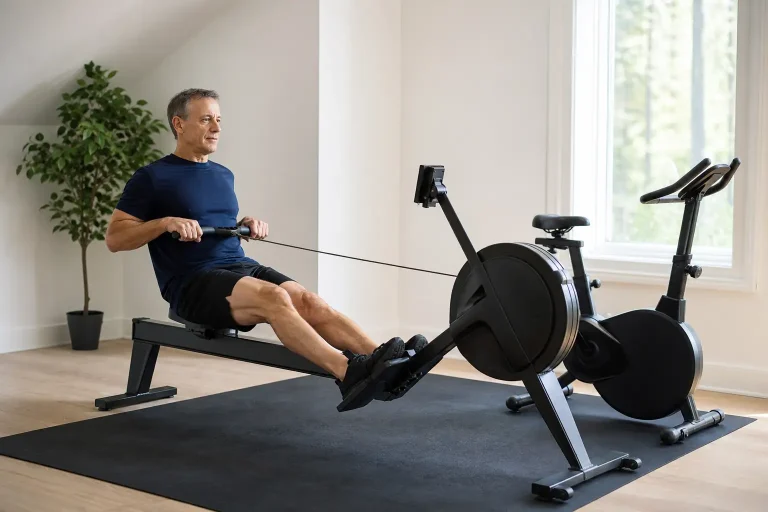
Rowing Machine vs Exercise Bike (2026): Which Home Cardio Machine Wins?
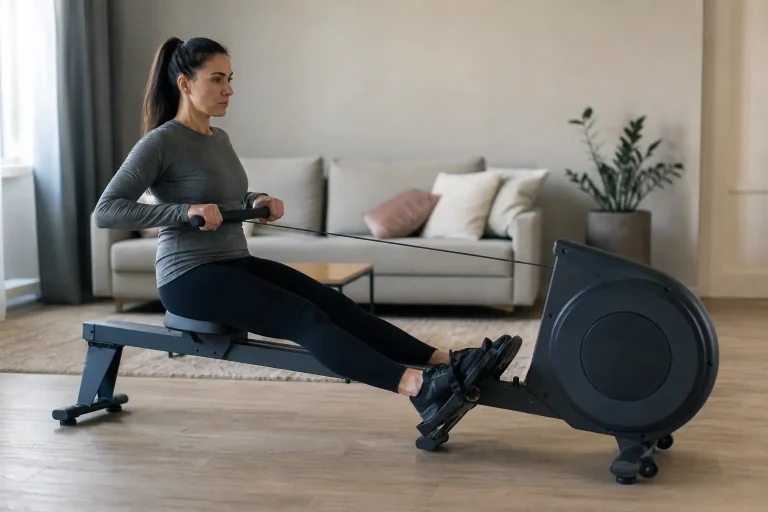
Best Magnetic Rowing Machine (2026): 5 Quiet Picks Ranked
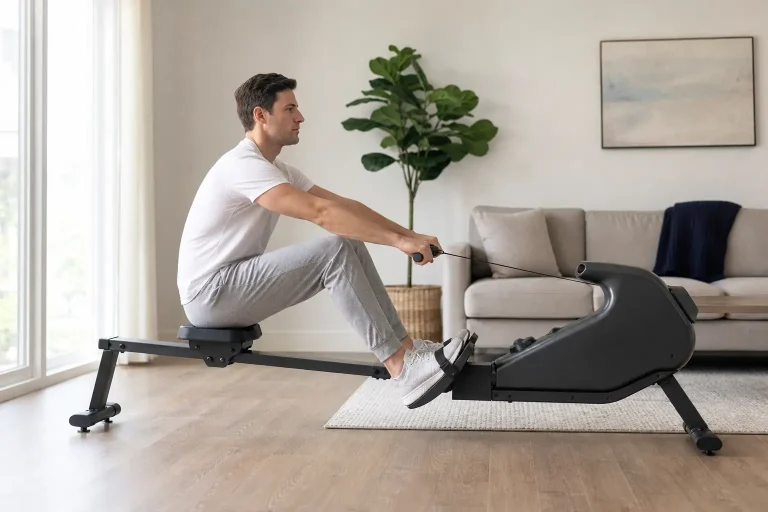
Rowing Machine Workout for Beginners (2026): A 4-Week Plan
This article contains affiliate links. If you click through and make a purchase, we may earn a small commission at no extra cost to you. As an Amazon Associate, we earn from qualifying purchases. We do not show prices because they change constantly: product details and availability can change at any time, so please check the current price and details directly on Amazon. Learn more. Amazon and the Amazon logo are trademarks of Amazon.com, Inc. or its affiliates.
