

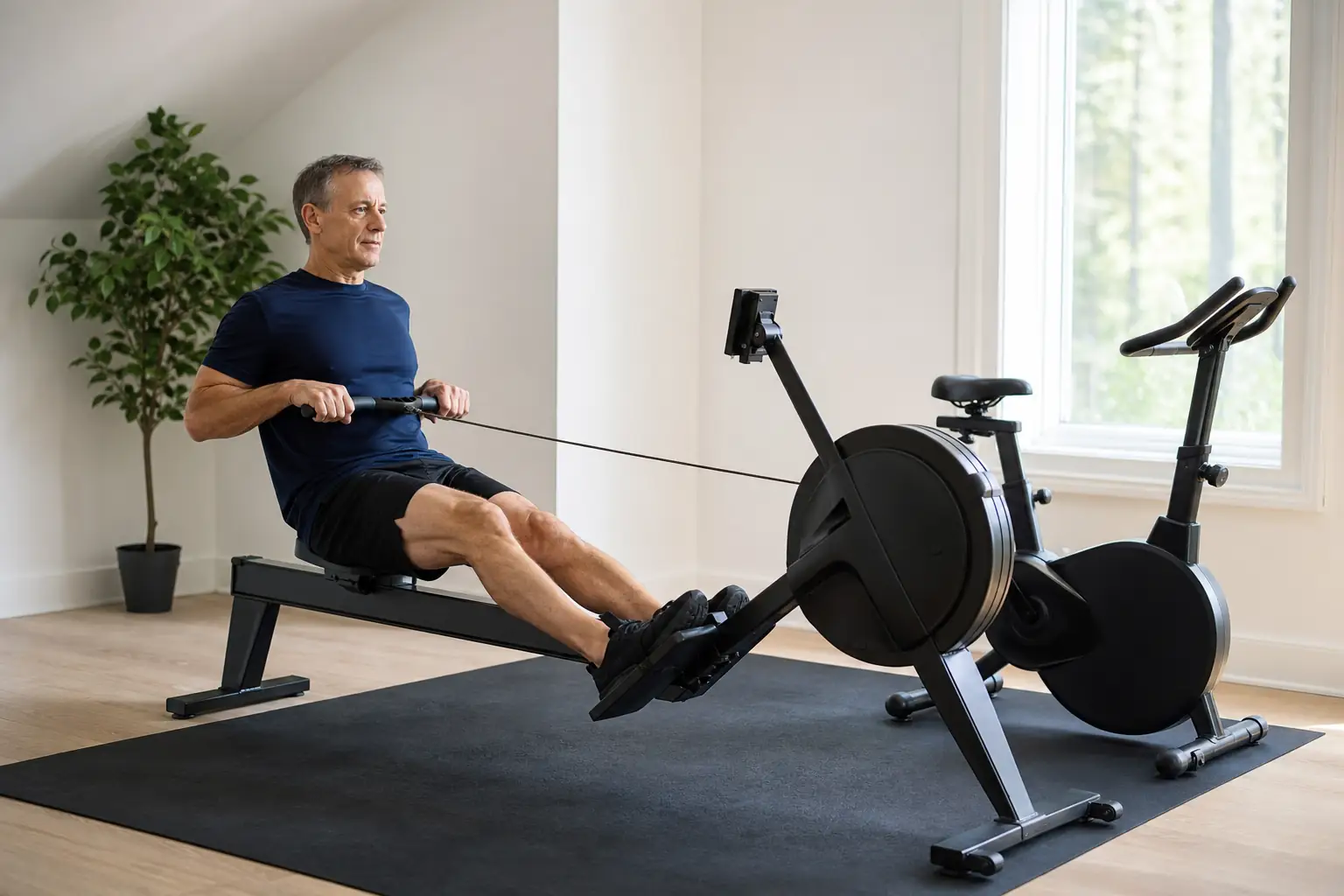
Short answer
In the rowing machine vs exercise bike choice, pick a rower if you want your back, arms and core working with your legs, and more energy used at the same perceived effort. Pick an exercise bike if you want legs-only cardio with no technique to learn, back support on a recumbent seat, or a machine you can use while reading or watching a screen. Both are seated and impact-free.
Key takeaways
- A rower trains legs, back and arms; a bike trains mostly the legs.
- At the same perceived effort, a rowing ergometer used more energy than a cycle ergometer.
- At matched intensity labels, calorie estimates are about the same.
- A bike is easier to learn and lets you multitask; a rower needs technique.
- A recumbent bike is gentler on the back; a rower stores in less space.
Exercise bikes and rowers are the two seated cardio machines most people consider for a home gym. Neither has the landing impact of running, both can be pushed from easy to all-out, and both work without a gym membership. The big difference is how much of your body joins in. A bike is a leg machine. A rower adds a pull with the back and arms on every stroke.
This comparison covers energy use, muscles, back and knee comfort, noise, space and the learning curve, then maps each type of buyer to a machine. If you are also weighing a treadmill, our treadmill vs exercise bike guide covers that pairing. The rower examples below come from our Best guides, scored from Amazon US listing specs.
Rowing Machine vs Exercise Bike at a Glance
The table sets the two side by side. Exercise bikes vary a lot (upright, recumbent and indoor cycling designs), so the bike column describes a typical upright or recumbent model. The rower figures come from the rowers ranked in our guides.
| Criterion | Rowing machine | Exercise bike |
|---|---|---|
| Muscles | Legs, glutes, back, core, arms | Mostly legs and glutes |
| Energy at the same perceived effort | Higher than a cycle ergometer (JAMA study) | Lower than a rowing ergometer in that study |
| Calories, 30 min at 185 lb (Harvard Health) | About 294 moderate, 440 vigorous | About 294 moderate, 441 vigorous |
| Impact | None: seated, no landing | None: seated, no landing |
| Low back | Forward lean at the catch; form matters | Low load; recumbent seats add back support |
| Knees | Deep bend at the catch | Shorter, repeated bend |
| Learning curve | A few sessions to learn the stroke order | None |
| Multitasking | Hard: arms and eyes are busy | Easy: read or watch a screen |
| Footprint | 62 to 96 in long; often folds or stands upright | Usually shorter; most stay set up |
| Noise | Magnetic quiet, water swish, air fan loud | Usually quiet (magnetic or friction flywheel) |
Check Amazon for current pricing and availability.
Calories and Energy Use
The best data on this question comes from a study that had adults exercise on six indoor machines at the same ratings of perceived exertion. The rowing ergometer used more energy than the cycle ergometer and the Airdyne at each fixed effort level, and only the treadmill used more. Put simply, a session that feels “somewhat hard” on a rower tends to cost more energy than one that feels the same on a bike.
The study did not test why, but the setup differs in an obvious way. A rower spreads the work across the legs, back and arms. On a bike, the legs carry it all, so a hard ride often ends with burning thighs rather than a whole-body effort.
At matched intensity labels the estimates converge. Harvard Health lists about 294 calories for 30 minutes of moderate stationary rowing and the same 294 for moderate stationary cycling at 185 lb, and about 440 versus 441 at vigorous effort. The machine does not set the number; the effort you hold does.
| Activity | Moderate | Vigorous |
|---|---|---|
| Stationary rowing | About 294 | About 440 |
| Stationary cycling | About 294 | About 441 |
Pro tip: Console calories are estimates on both machines. Track minutes and heart rate over weeks instead; our heart rate zone calculator gives you zones to hold.
Muscles Worked: Pull Plus Push vs Push Only
Each rowing stroke starts with a leg drive, then the body swings back and the arms pull the handle to the chest. Cleveland Clinic points out that the legs do much of the work at heavier settings, that the upper back gets a postural workout, and that the abs, obliques, lower back, glutes and hamstrings all work during a session. The upper-body pull is what sets a rower apart from almost every other cardio machine.
A standard exercise bike works the quads, glutes, hamstrings and calves in a repeated push. The upper body mostly holds still. Air bikes with moving handles are the exception, adding a push and pull for the arms, but most home upright and recumbent bikes are legs only.
Neither machine replaces strength training. If you sit at a desk all day, the rower’s pull for the upper back is a real plus. If you want to save your arms for weight training on other days, the bike keeps them fresh.
- Rower: legs, glutes, hamstrings, lats, upper back, shoulders, biceps, abs and lower back.
- Exercise bike: quads, glutes, hamstrings and calves.
- Both: heart and lungs at the effort you choose.
Back, Knees and Comfort
Both machines are seated, so neither has a landing phase. The load on the back is where they part. At the catch on a rower you lean forward with knees bent, then brace the trunk to drive. Cleveland Clinic warns that poor form can strain the upper and lower back and that pulling toward the chin rather than the chest strains the shoulders. A recumbent bike supports your back the whole time.
Knees bend further on a rower: at the catch your shins are close to vertical and your knees are deeply flexed. A bike keeps the knees in a shorter arc, repeated many more times. If deep bending hurts, a bike is often the easier start. If the bike saddle is the problem, a rower’s wide seat may suit you better.
Getting on and off is easier on a bike. A rower seat sits low; the listings in our guides that state a seat height give 9 to 17.7 inches. If standing up from a low seat is hard, try one in person first or look at a recumbent bike.
Watch out: If you have back or knee pain, or a recent joint surgery, ask your doctor or a physical therapist which machine and settings fit your condition.
Space, Noise and Daily Use
A rower is long. The rowers in our guides measure 62 inches (Dripex magnetic) to 96 inches (Concept2 RowErg) in use, plus room at each end. Most fold, stand upright on their end or split in two, so the floor is free between sessions. An exercise bike is shorter, but most models stay set up where you put them. For a corner of a bedroom, measure both the floor and how you will store each one.
Noise follows the resistance system on both machines. Magnetic rowers and magnetic bikes are close to silent; magnetic systems earn full marks on our Noise line. A water rower makes a rhythmic swish. Air rowers and air bikes spin fans that get loud as you push. For apartments, compare our best magnetic rowing machine picks.
Daily use differs most in focus. On a bike, you can read, answer messages or watch a show while you pedal. On a rower, your hands are on the handle and your attention is on the stroke. Some people find that a plus because sessions feel more focused; others ride more often because they can multitask.
Rowing Machine Examples for Home Use
If the rower wins your comparison, these three examples cover the most common home situations. Each FitScore is the score the rower earns in the guide named in its card, because the FitScore changes with the buying intent.
Best all-round example

Concept2 RowErg
FitScore 78.9/100
FitScore 78.9 in our best rowing machine guide, where it ranks 1st. An air rower with a continuous damper and a PM5 monitor that shows 500 m split, watts and heart rate, with Bluetooth for ErgData and 40+ apps. Its listing states a 500 lb limit and a 5-year frame warranty. The limits: it is 96 inches long, splits in two instead of folding, and the fan is loud at hard efforts.
Ranked in our Best Rowing Machine guide
Check Price on AmazonBeginner example

Merach Q1S Magnetic Rowing Machine
FitScore 80.5/100
FitScore 80.5 in our best rowing machine for beginners guide, where it ranks 1st. A magnetic rower with 16 levels, a 350 lb limit and users up to 6 ft 5 in on the listing. It stands upright on a 25.2 x 19.2-inch base and weighs 42 lb. The monitor shows time, distance, strokes and calories, with no split. Amazon reviewers say it is quiet enough that the next room hears nothing.
Ranked in our Best Rowing Machine for Beginners guide
Check Price on AmazonSmall-room example

YPOO Magnetic Rowing Machine 350 LB
FitScore 84/100
FitScore 84 in our best folding rowing machine guide, where it ranks 1st. A magnetic rower with 16 levels that folds and stands upright, at 65 inches long and 44.4 lb. The listing states a 350 lb limit, a 46-inch rail, users up to 6 ft 3 in and Kinomap support. The limits: a 1-year warranty, and the under-25 dB noise figure is the maker’s claim, not an independent measurement.
Ranked in our Best Folding Rowing Machine guide
Check Price on AmazonWhich Should You Choose?
Match the machine to how you like to train and to your body. These profiles cover most buyers.
- You want the most work from every minute: a rowing machine. More muscle shares the load, and energy use was higher at the same effort in the JAMA study.
- You want to read, work or watch a show while you train: an exercise bike.
- Your back needs support, or forward bending hurts: a recumbent exercise bike.
- You sit all day and want upper-back work in your cardio: a rower.
- You need the floor back after each session: a rower that folds or stands upright; see our best folding rowing machine guide.
- You are new to exercise and want zero technique: an exercise bike, or a magnetic rower set to a light level while you learn the stroke.
Checklist Before You Choose
7 checks
Tap a number to check off that step.
- 01
Decide whether you want upper-body work in your cardio.
- 02
Check how your back feels in a seated forward lean.
- 03
Measure the floor: a rower needs 62 to 96 inches plus room at each end.
- 04
Plan storage: folding or upright rower, or a bike that stays put.
- 05
Pick a quiet system (magnetic) if you share walls.
- 06
Compare the max user weight with your weight, with a margin.
- 07
Decide whether you want to multitask during sessions.
Common Mistakes to Avoid
Mistake 1Comparing calorie readouts across brands and machines.
Mistake 2Pulling with the arms first on a rower instead of driving with the legs.
Mistake 3Setting a magnetic rower to the top level and losing form.
Mistake 4Buying an air rower or air bike for a quiet apartment.
Mistake 5Ignoring the low seat of a rower if standing up is hard.
Mistake 6Skipping strength work because cardio feels like a full workout.
The Bottom Line
- In a JAMA study of six indoor machines, the rowing ergometer used more energy than a cycle ergometer at the same perceived effort.
- Harvard Health gives the same estimate for moderate rowing and moderate stationary cycling: about 294 calories in 30 minutes at 185 lb.
- A rowing stroke trains the legs, back, core and arms; a standard exercise bike trains mostly the legs.
- Both machines are seated, so neither has a landing impact.
- Rowers ranked in our guides are 62 to 96 inches long; most fold, stand upright or split in two.
Our Top Picks
 Best all-round exampleConcept2 RowErgFitScore78.9/100Check on Amazon
- Beginner exampleMerach Q1S Magnetic Rowing MachineFitScore80.5/100Check on Amazon
- Small-room exampleYPOO Magnetic Rowing Machine 350 LBFitScore84/100Check on Amazon
Frequently Asked Questions
Neither causes weight loss by itself; your total activity and what you eat decide it. A rower used more energy than a cycle ergometer at the same perceived effort in a JAMA study, which can make each session count more. A bike is easier to use often. Pick the one you will stick with.
At the same perceived effort, rowing used more energy in a study of six indoor machines. At matched intensity labels the estimates are close: Harvard Health lists about 294 calories for 30 minutes of moderate rowing or cycling at 185 lb, and about 440 for vigorous rowing.
It feels harder at first because more muscles work and the stroke needs coordination. Once you learn it, you control the effort on both machines. Many people find a hard rowing piece leaves their whole body tired, while a hard ride tires mainly the legs.
A bike usually is, because it keeps the knees in a shorter arc with no deep bend. A rower bends the knees fully at the catch. If deep bending is painful, start on a bike and ask a physical therapist before you row.
With good form, rowing trains the back muscles. The forward lean at the catch loads the lower back, and rounding the spine or yanking with the arms adds strain. Learn the legs, body, arms order at a slow pace. If bending forward hurts, a recumbent bike is the gentler option.
In use, yes: rowers in our guides are 62 to 96 inches long. In storage, often no: most fold, stand upright or split in two, while most bikes stay where they are.
Explore More Rowing Machine Guides
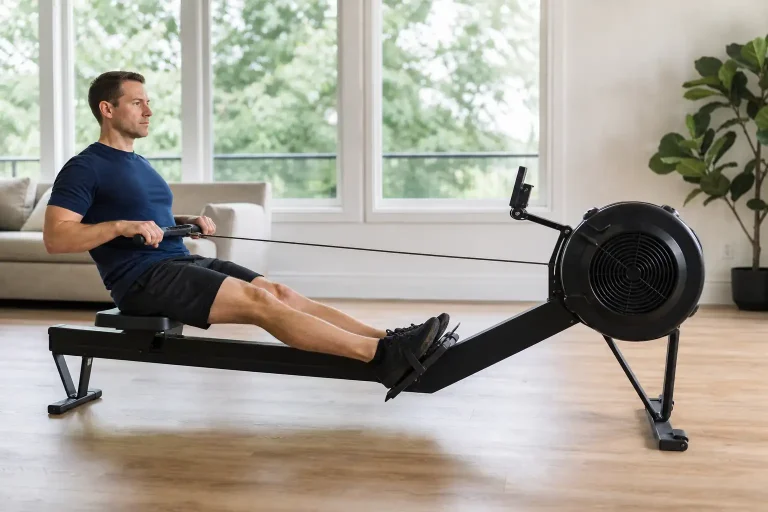
Best Rowing Machine (2026): 5 Top Picks for Home, Ranked
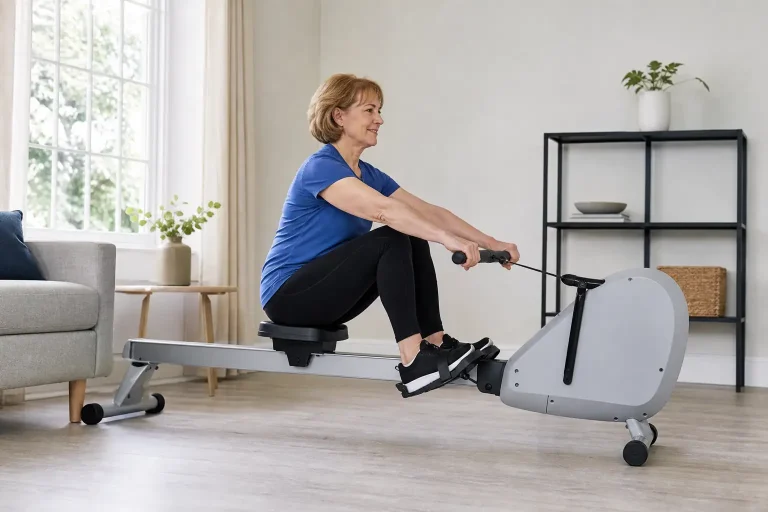
Best Rowing Machine for Beginners (2026): 5 Easy-to-Start Picks
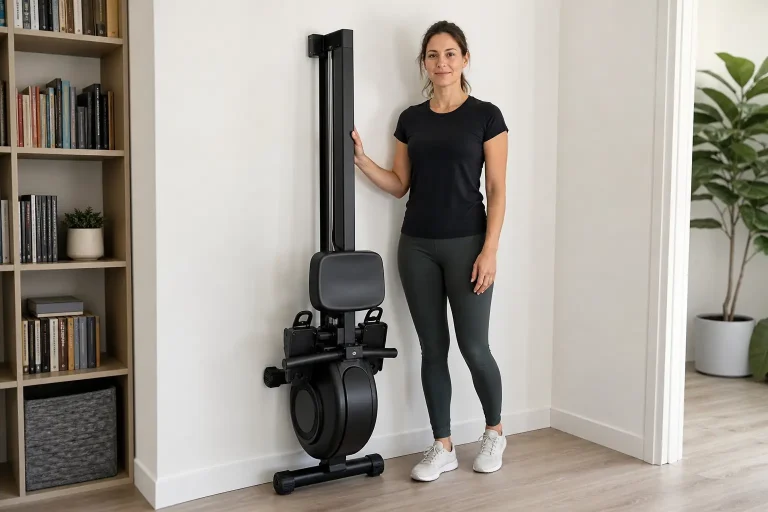
Best Folding Rowing Machine (2026): 5 Space-Saving Picks
Best Magnetic Rowing Machine (2026): 5 Quiet Picks Ranked
Rowing Machine vs Elliptical Trainer (2026): Which Fits Your Goals?
Rowing Machine vs Treadmill (2026): Which Is Better for Your Home?
This article contains affiliate links. If you click through and make a purchase, we may earn a small commission at no extra cost to you. As an Amazon Associate, we earn from qualifying purchases. We do not show prices because they change constantly: product details and availability can change at any time, so please check the current price and details directly on Amazon. Learn more. Amazon and the Amazon logo are trademarks of Amazon.com, Inc. or its affiliates.
