

Rower vs SkiErg at a glance
Rower for leg-led full-body cardio; SkiErg for upper body and core in a small footprint.
From two lab studies, the Compendium of Physical Activities and the rowers we rank.
Short answer
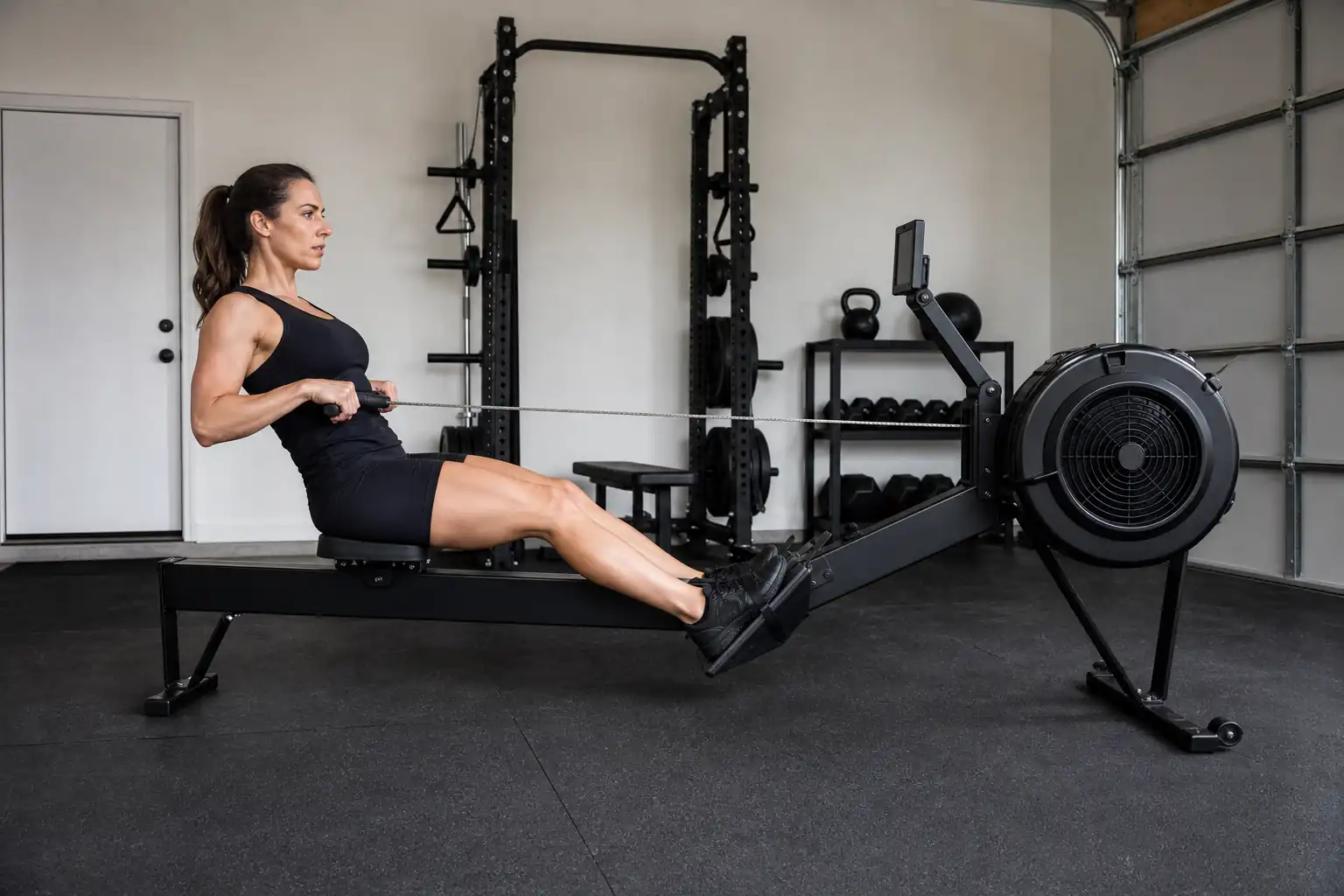
In the rower vs SkiErg choice, pick a rowing machine for a seated, leg-driven full-body stroke and the widest choice of home models. Pick a SkiErg for a standing, upper-body and core pull that takes almost no floor space but needs ceiling height.
Key takeaways
- Rower: leg-led full-body stroke, more home models, needs floor length.
- SkiErg: upper body and core, tiny footprint, needs ceiling height.
- Both beat a bike for energy at the same effort in lab studies.
- Neither has impact; joints and room decide most choices.
Our best rowing machine guide ranks the rowers you can buy for home.
Rower vs SkiErg at a Glance
The table sets the two side by side. Rower figures come from the rowers ranked in our guides; SkiErg figures are for the Concept2 SkiErg, the reference ski erg.
| Criterion | Rowing machine | SkiErg |
|---|---|---|
| Position | Seated on a sliding seat | Standing, feet fixed on the floor or a platform |
| Motion | Legs drive, body swings, arms finish | Arms and lats pull down, hips hinge, knees bend slightly |
| Main muscles | Legs and glutes first, then back, core and arms | Lats, triceps, shoulders and core, with glutes and hamstrings |
| Energy at the same perceived effort | Above a bike (two lab studies) | Above a bike for a ski machine (two lab studies) |
| Impact | None: seated, no landing | None: feet stay down |
| Floor space | 62 to 96 in long in use; most fold or stand upright | About 23.5 x 50 in on a floor stand, or wall-mounted |
| Ceiling | Any room | About 85 in tall on its stand, plus arm reach |
| Learning curve | A few sessions to learn the stroke order | A few sessions to time the hinge with the pull |
| Home choice | Many brands and resistance types | Few models; mostly air |
Check Amazon for current pricing and availability.
Calories and Energy Use
Two lab studies compared indoor machines at the same perceived effort. In the first, a rowing ergometer, a cross-country ski machine and a stair stepper all used more energy than a stationary bike and an air bike at each effort level, and only the treadmill used more. In the second, the ski machine sat at the top with the treadmill in men, and the rowing machine joined them in women. Those ski machines used legs and arms, so read them as a guide to the SkiErg rather than a direct test of it.
The Compendium of Physical Activities gives energy costs by output: rowing at 100 to 149 watts rates 7.5 METs and 150 to 199 watts rates 11.0, while ski erg double poling rates 10.5 METs at a slow to moderate pace and 18.0 when fast. In practice, both machines burn what your effort and minutes allow; the SkiErg tires the arms sooner, so most people hold a hard pace longer on a rower.
Pro tip: On machines that share a monitor, watts compare directly, but the same split feels harder on a ski erg because smaller muscles do the work. Pace each machine on its own numbers; our watts to split calculator converts rower splits.
Muscles Worked: Leg Drive vs Overhead Pull
A rowing stroke starts with the legs pushing the seat back, then the body swings and the arms pull the handle to the ribs. The legs carry most of the work, and the back, core and arms finish it. That spreads the effort over the biggest muscles in the body.
A SkiErg stroke starts with the handles overhead. You pull them down by driving the lats and triceps while the hips hinge and the knees bend slightly, then you stand tall again. Concept2 lists the lats, triceps, shoulders, glutes, hamstrings and core. The upper body and core do far more than on a rower; the legs do less.
- Rower: quads, glutes, hamstrings, lats, upper back, biceps, core.
- SkiErg: lats, triceps, shoulders, abs, glutes and hamstrings through the hinge.
- Both: heart and lungs at the effort you choose, with no impact.
Joints, Back and Comfort
Neither machine has a landing. A rower bends the knees deeply at the catch and asks for a long spine as you lean forward; a SkiErg keeps the knees in a shallow bend but loads the shoulders and asks for a clean hip hinge. If deep knee bending hurts, the SkiErg is often easier; if overhead pulling hurts the shoulders, the rower is.
A SkiErg can also be used seated or from a wheelchair, and Concept2 sells a wider floor stand for that use, which makes it a useful option with a lower-body injury. A rower seat sits low, which some people find hard to get up from. Our rowing machine for back pain guide covers settings that keep the back comfortable.
Watch out: With a shoulder, back or knee condition, ask your doctor or a physical therapist which machine fits before you start.
Space, Ceiling and Noise
This is where the two differ most at home. A SkiErg takes a small rectangle of floor, about 23.5 x 50 inches on its stand, or none at all when wall-mounted, but it stands about 85 inches tall and you reach above it at the top of each stroke. Check the ceiling before anything else.
A rower needs length: the rowers in our guides measure 62 to 96 inches in use, plus room at each end, but most fold, stand upright or split in two between sessions. Air rowers and ski ergs both spin a fan that gets loud at hard efforts; magnetic and water rowers are quieter options with no SkiErg equivalent. See our rowing machine dimensions guide to plan the space.
Rowing Machine Examples for Home Use
If the rower wins your comparison, these three examples cover the most common home situations. Each FitScore is the score the rower earns in the guide named in its card.
Pairs with a skierg

Concept2 RowErg
FitScore 83.4/100
FitScore 83.4 in our best rowing machine guide, where it ranks 1st. An air rower with a damper and the same PM5 monitor family as the SkiErg, showing the 500 m split and watts. It has a 500 lb limit and a 5-year frame warranty. It is 96 inches long and splits in two rather than folding.
Ranked in our Best Rowing Machine guide
Check Price on AmazonQuiet magnetic pick

Sunny Health & Fitness SF-RW523021
FitScore 79.1/100
FitScore 79.1 in our best magnetic rowing machine guide, where it ranks 1st. A magnetic rower with 16 levels, a 50-inch rail and a monitor that shows the 500 m split and stroke rate. It stands upright to store and stays quiet, which no air SkiErg can.
Ranked in our Best Magnetic Rowing Machine guide
Check Price on AmazonSmall-room pick

YPOO RM930
FitScore 82.4/100
FitScore 82.4 in our best folding rowing machine guide, where it ranks 2nd. A magnetic rower with 16 levels that folds and stands upright, at 65 inches long and 44.4 lb, with a 350 lb limit and users up to 6 ft 3 in.
Ranked in our Best Folding Rowing Machine guide
Check Price on AmazonWhich Should You Choose?
Match the machine to your body, your room and your training. These profiles cover most buyers.
- You want one cardio machine for the whole body: a rowing machine. The legs carry the work, so you can hold a hard pace longer.
- You want more upper-body and core work in your cardio: a SkiErg, or add one to a rower.
- Your room is short but tall: a SkiErg on a floor stand or wall mount.
- Your ceiling is low or you share walls: a magnetic or water rower.
- Deep knee bends hurt: a SkiErg; overhead pulling hurts: a rower.
- You train for HYROX or similar races: both appear on race day; a rower first, then a SkiErg when space allows.
Checklist Before You Choose
6 checks
Tap a number to check off that step.
- 01
Measure the ceiling height for a SkiErg, and the floor length for a rower.
- 02
Decide whether you want leg-led or upper-body-led cardio.
- 03
Check how your knees feel in a deep bend and your shoulders overhead.
- 04
Pick a quiet rower type if you share walls.
- 05
Compare the max user weight with your weight, with a margin.
- 06
Plan storage: folding or upright rower, or a wall-mounted SkiErg.
Common Mistakes to Avoid
Mistake 1Buying a SkiErg without checking the ceiling.
Mistake 2Pulling with the arms first on a rower instead of driving with the legs.
Mistake 3Rounding the back instead of hinging at the hips on a SkiErg.
Mistake 4Comparing the same split across both machines.
Mistake 5Buying an air machine for a quiet apartment.
The Bottom Line
- A rower stroke is driven mostly by the legs; a SkiErg stroke is a standing pull down led by the lats, triceps and core.
- In two lab studies, a rowing machine and a cross-country ski machine both used more energy at the same effort than a stationary bike.
- The Compendium of Physical Activities rates rowing at 7.5 METs at 100 to 149 watts and ski erg double poling at 10.5 METs at a slow to moderate pace.
- A SkiErg on a floor stand stands about 85 inches tall on a 23.5 x 50-inch base; rowers in our guides are 62 to 96 inches long.
- Both machines share the same air flywheel and PM5 monitor in the Concept2 line, so splits and watts compare directly.
Our Top Picks
 Pairs with a skiergConcept2 RowErgFitScore83.4/100Check on Amazon
- Quiet magnetic pickSunny Health & Fitness SF-RW523021FitScore79.1/100Check on Amazon
- Small-room pickYPOO RM930FitScore82.4/100Check on Amazon
Frequently Asked Questions
Neither is better in general. A rower spreads the work over the legs, back and arms and suits most home buyers; a SkiErg adds more upper-body and core work and fits a small floor if the ceiling is high enough.
At the same effort the two are close: lab studies put a ski machine and a rowing machine in the same high group, above stationary bikes. Most people hold a hard pace longer on a rower because the legs carry the work.
Yes, once you learn to hinge at the hips and pull with the lats rather than only the arms. Start at an easy pace and short intervals, as you would on a rower.
A SkiErg works the lats, triceps, shoulders and core most, with the glutes and hamstrings in the hinge. A rower works the legs most, then the back, core and arms.
About 23.5 x 50 inches of floor on a floor stand, or none when wall-mounted, but it is about 85 inches tall and you reach above it. A rower needs 62 to 96 inches of length but little height.
Both appear in the race. If you can only have one, a rower trains more of the body and is easier to use for long sessions; add a SkiErg when you can.
Explore More Rowing Machine Guides
Best Rowing Machine (2026): 5 Top Picks for Home, Ranked
Best Air Rowing Machine (2026): 5 Picks for Hard Training
Rowing Machine vs Exercise Bike (2026): Which Home Cardio Machine Wins?
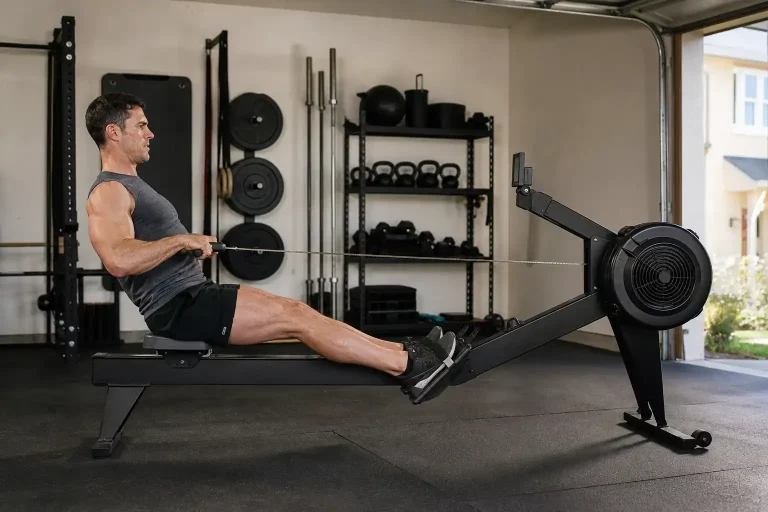
Rowing Machine Muscles Worked: Every Muscle, Phase by Phase (2026)
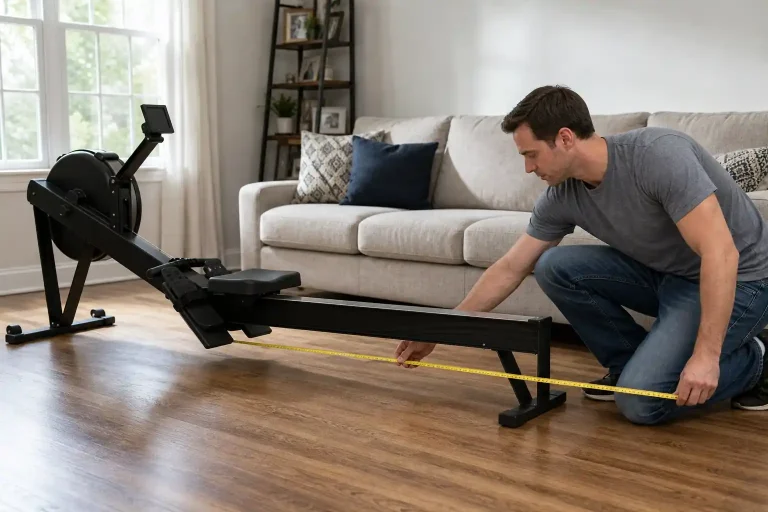
Rowing Machine Dimensions (2026): Sizes of 39 Rowers and a Will-It-Fit Calculator
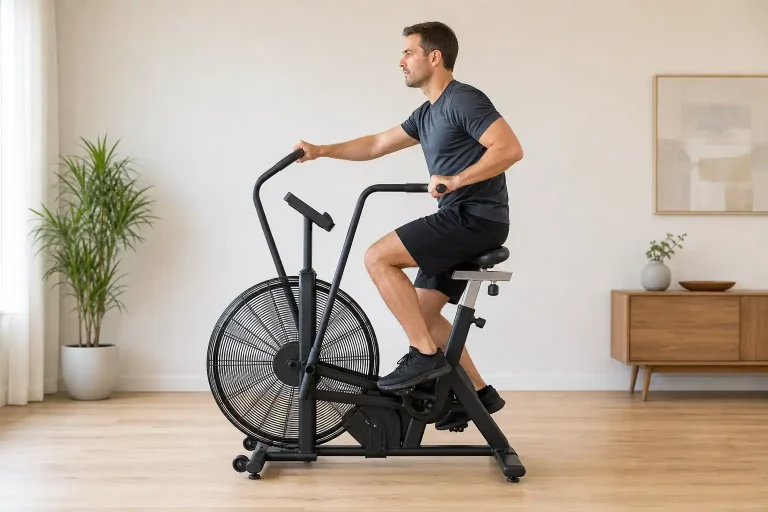
Air Bike vs Rowing Machine (2026): Which Is Better for Home Cardio?
This article contains affiliate links. If you click through and make a purchase, we may earn a small commission at no extra cost to you. As an Amazon Associate, we earn from qualifying purchases. We do not show prices because they change constantly: product details and availability can change at any time, so please check the current price and details directly on Amazon. Learn more. Amazon and the Amazon logo are trademarks of Amazon.com, Inc. or its affiliates.
