

Exercise bike vs walking at a glance
More per minute on the bike; free, weight-bearing and easy on foot.
Calories from Harvard Health, 30 minutes.

Short answer
Exercise Bike vs Walking: An exercise bike burns more per 30 minutes than a 3.5 mph walk and takes your weight off the knees and feet; walking is free, weight-bearing and easy to fit into any day. Choose the bike for harder sessions at home in any weather, walking for a simple daily habit.
Key takeaways
- A moderate ride burns about 1.9 times a 3.5 mph walk per 30 minutes (Harvard, 155 lb).
- A bike takes the load off knees and feet; walking loads the bones.
- Choose the habit you will keep, or mix both.
For models, see our best exercise bikes for home.
Exercise Bike vs Walking at a Glance
| Exercise bike | Walking | |
|---|---|---|
| Calories, 30 min at 155 lb | About 252 (moderate), 378 (vigorous) | About 133 (3.5 mph) |
| Calories, 30 min at 185 lb | About 294 (moderate), 441 (vigorous) | About 159 (3.5 mph) |
| Impact | None: seated, feet stay on the pedals | Low: each step lands |
| Bones | Not weight-bearing | Weight-bearing |
| Equipment | A bike and a corner of a room | Shoes and a route, or a treadmill |
| Weather | Indoors | Outdoors or indoors |
| Multitasking | Easy: read or watch a show | Talk, listen, take in the view |
Check Amazon for current pricing and availability.
Calories: Which Burns More?
Harvard Health Publishing lists about 252 calories in 30 minutes of moderate stationary cycling for a 155-lb person and about 133 for walking at 3.5 mph; at 185 lb the figures are about 294 and 159. Vigorous cycling raises the bike figure to about 378 and 441, and a bike makes that effort easy to reach with a turn of the resistance knob.
Walking faster, uphill or for longer closes much of the gap. A 60-minute walk you enjoy every day adds up to more over a week than a 20-minute ride you skip.
Joints, Bones and Comfort
A bike takes your weight on the seat, so the knees, hips and feet carry no landing at all, and a recumbent adds a backrest. That is why people with sore knees, painful feet or extra weight often find riding easier to keep up than long walks. Our exercise bike for bad knees guide covers the setup.
Walking has its own advantage: it is weight-bearing, and weight-bearing activity loads the bones in a way cycling does not. Many people do both: a bike for harder or bad-weather sessions, walks for daily movement. With a joint or bone condition, ask your doctor or physical therapist which suits you.
Which Should You Choose?
- Exercise bike: you want harder sessions in less time, train in any weather or after dark, have sore knees or feet, or like to watch a show while you ride; see exercise bike benefits.
- Walking: you want zero cost and zero setup, time outdoors and weight-bearing activity; incline walking raises the effort.
- Both: the CDC counts both toward 150 minutes of moderate activity a week, so you can mix them.
- Weight loss: the session you repeat most often wins; see how to lose weight on an exercise bike.
Exercise Bikes to Start With
Top exercise bike

Schwinn IC3
FitScore 65.2/100
An indoor cycling bike with a 40-lb flywheel, 100 resistance levels, 4-way seat and handlebar adjustment and Bluetooth for app rides. Ranked #1 in our best exercise bike for home guide, FitScore 65.2 for that intent.
Check Price on AmazonTop seated bike

Horizon 5.0R
FitScore 69.5/100
A step-through recumbent with a backrest, 100 magnetic resistance levels and a lifetime frame warranty, for riders who want the easiest bike to get on and off. Ranked #1 in our best recumbent bike guide, FitScore 69.5 for that intent.
Check Price on AmazonChecklist Before You Buy
4 checks
Tap a number to check off that step.
- 01
Pick the one you will repeat.
- 02
Aim for 150 minutes a week.
- 03
Start with 20 minutes.
- 04
Raise the resistance or the pace over time.
Common Mistakes to Avoid
Mistake 1Comparing a short ride with a long walk.
Mistake 2Dropping walks entirely: they load the bones.
Mistake 3Buying a bike you will not use.
The Bottom Line
- Harvard Health, 30 minutes at 155 lb: moderate stationary cycling about 252 calories, walking at 3.5 mph about 133.
- At 185 lb: about 294 on a bike at a moderate pace against about 159 walking at 3.5 mph.
- A bike is seated with no landing; walking is weight-bearing, which loads the bones.
- Brisk walking and cycling both count toward the CDC’s 150 weekly minutes.
Our Top Picks
 Top exercise bikeSchwinn IC3FitScore65.2/100Check on Amazon
- Top seated bikeHorizon 5.0RFitScore69.5/100Check on Amazon
Frequently Asked Questions
It burns more per 30 minutes and has no landing impact, but walking is free, weight-bearing and easy to repeat. Choose the one you will keep doing, or mix both.
Harvard Health lists about 252 against about 133 calories in 30 minutes at 155 lb (moderate cycling against walking at 3.5 mph).
It has no landing, and a recumbent adds back support, so many people with sore knees find it easier; ask your doctor if you have a joint condition.
At those Harvard Health figures, about 16 minutes of moderate cycling match 30 minutes of walking at 3.5 mph for the same person.
For aerobic minutes, yes: both count toward the CDC weekly goal. Keep some walking or other weight-bearing activity for your bones.
Explore More Exercise Bike Guides
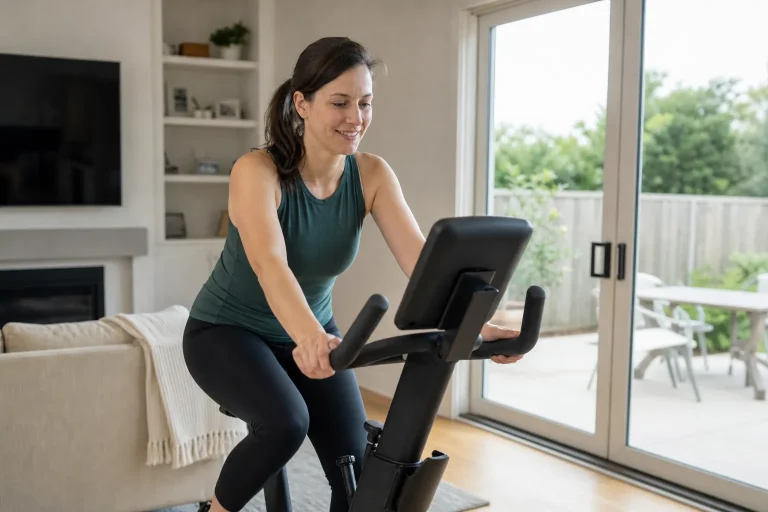
Best Exercise Bike for Home (2026): 5 Picks Ranked by FitScore

Benefits of an Exercise Bike: What Regular Riding Does (and Does Not Do) (2026)

How to Lose Weight on an Exercise Bike: Minutes, Effort and a 12-Week Plan (2026)
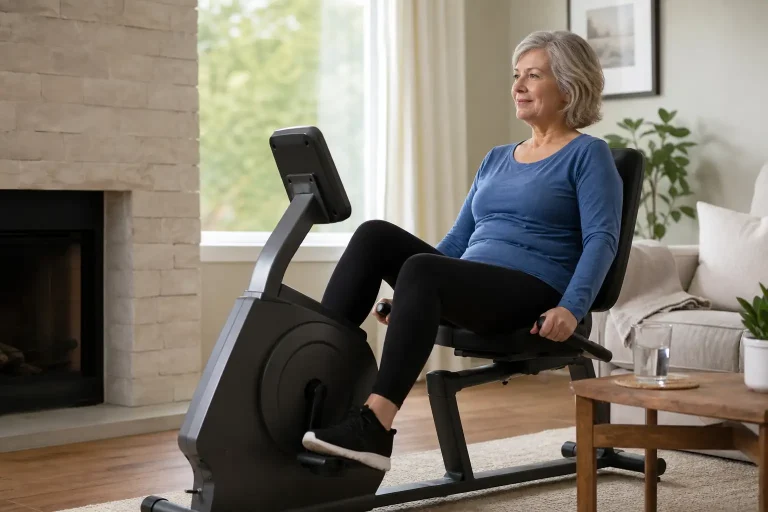
Exercise Bike for Bad Knees: What to Look For and Which Bikes Fit (2026)
Elliptical vs Walking: Calories, Joints and Who Should Choose Which (2026)
Incline Walking (2026): Benefits, 6-Week Treadmill Plan, Technique
This article contains affiliate links. If you click through and make a purchase, we may earn a small commission at no extra cost to you. As an Amazon Associate, we earn from qualifying purchases. We do not show prices because they change constantly: product details and availability can change at any time, so please check the current price and details directly on Amazon. Learn more. Amazon and the Amazon logo are trademarks of Amazon.com, Inc. or its affiliates.
