Short answer
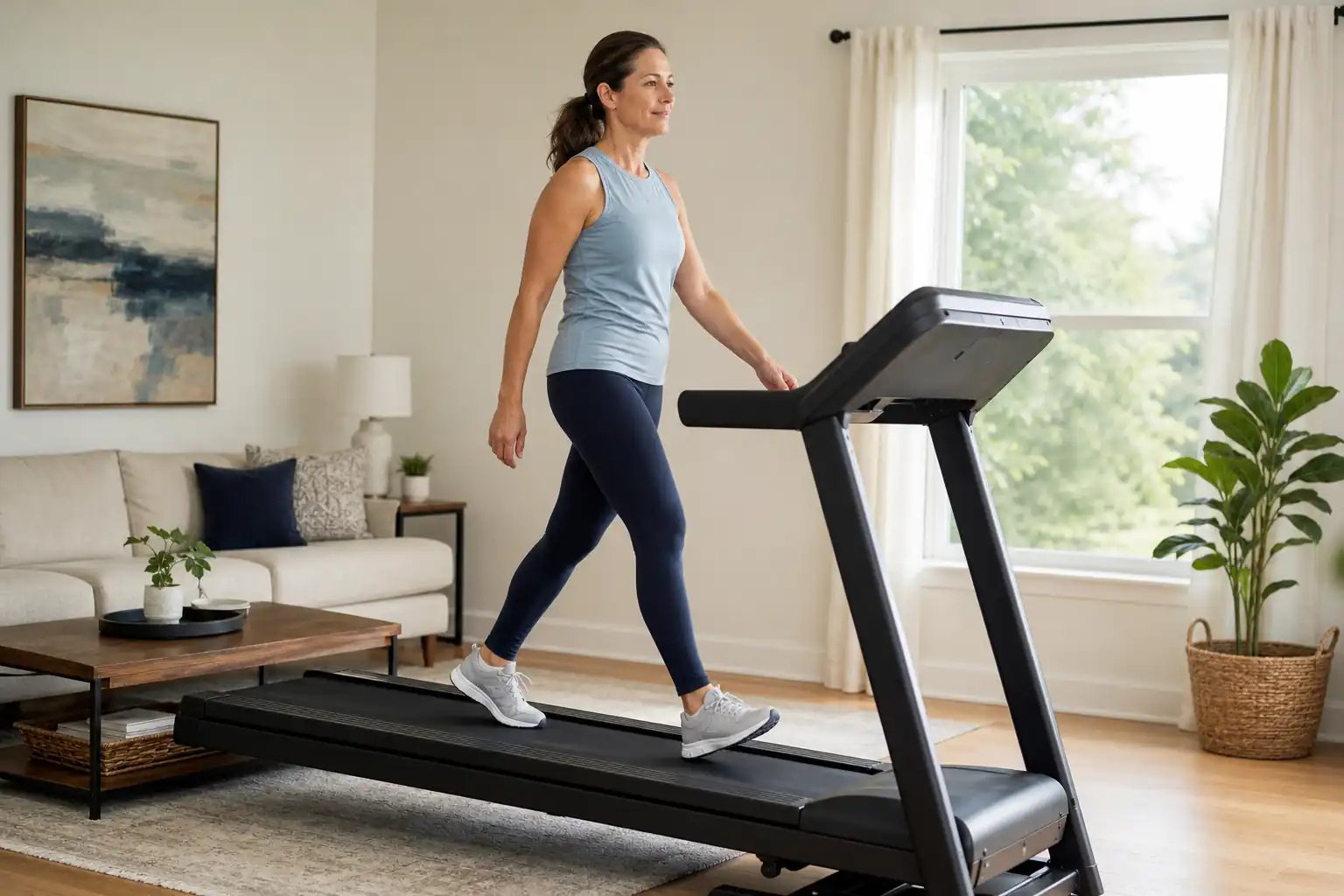
Incline walking means walking on a treadmill set to a slope, usually 3% to 12%. It raises the effort of an easy walk to moderate or vigorous intensity without the impact of running: at 3 mph, moving from 0% to 9% incline roughly doubles the energy you burn. Start at 2% to 4% for 15 to 20 minutes, add 1% to 2% or 5 minutes a week, keep your hands off the rails and stop at the incline where you can still speak in short sentences.
Key takeaways
- Each 1% of incline at walking pace adds about as much effort as a big jump in speed, with less impact.
- Beginners do best with a gradual plan: time first, then incline, then speed.
- Holding the handrails cuts the real workload; slow down or lower the incline instead.
- For weight loss, steady weekly minutes matter more than one hard session.
- Calves and Achilles tendons need time to adapt to steep inclines.
Incline walking is the simplest way to turn a treadmill walk into real training. You keep a comfortable walking speed, raise the deck, and your heart, lungs and legs work harder with each percent of slope. It suits beginners, walkers coming back from a break, people who want to avoid running and runners looking for an easy day that still counts.
This guide covers what the research says about walking on an incline, a 6-week plan to build up safely, the speed and incline settings for each effort level, how to walk with good posture on a slope and the mistakes that cause sore calves or a stalled routine. Our treadmill calorie calculator and pace converter show the numbers for your own speed and incline.
What Is Incline Walking and Why Does It Work?
On a flat treadmill belt, walking at 3 mph is light to moderate work for most adults. Raise the deck and you lift your body weight a little with every step, so the energy cost climbs quickly while the speed, and the impact on your joints, stays the same. The American College of Sports Medicine walking equation, used by exercise physiologists to estimate oxygen use, puts 3 mph on the flat at about 3.3 METs (multiples of resting energy use). The same speed at 6% incline is about 5.8 METs, and at 12% about 8.3 METs, the level of an easy run.
Federal guidelines class 3 to 5.9 METs as moderate and 6 METs or more as vigorous. That makes incline the easiest dial on a treadmill for walkers: you can move from light to vigorous effort without ever breaking into a jog. Our guide to treadmill incline levels lists good settings by goal if you want a quick reference.
Benefits of Incline Walking
The main benefit is more training effect for the same speed. In a Colorado State University study published in 2013, adults with obesity walking slowly uphill (about 1.7 mph at a 6 degree slope, roughly 10.5%) used about as much energy as when they walked fast on the flat (about 3.4 mph). For many people a slow, steep walk is easier to sustain than a fast flat one, and it keeps the speed of each footstrike low.
- Heart and lungs: moderate to vigorous walking counts toward the 150 minutes a week recommended by the CDC physical activity guidelines.
- Calories: 30 minutes at 3 mph and 9% incline burns about 270 calories for a 160 lb walker, more than double the flat walk.
- Legs and hips: uphill walking asks more of the calves, hamstrings and glutes than flat walking; it complements strength training rather than replacing it.
- Lower impact than running: you stay in a walking gait, with one foot always on the belt.
- Longevity: in a 2022 analysis of 15 cohorts, the lowest risk of early death leveled off around 6,000 to 8,000 daily steps for adults 60 and older, and 8,000 to 10,000 for younger adults. A 30-minute treadmill walk adds about 3,000 to 3,500 steps.
A 6-Week Incline Walking Plan for Beginners
This plan suits healthy adults who can already walk 15 minutes comfortably. Do three to four sessions a week on non-consecutive days at first. Change one thing at a time: time first, then incline. If a week feels hard, repeat it before moving on. Each session starts with 3 to 5 minutes of flat walking and ends with 3 to 5 minutes of easy flat walking.
| Week | Sessions | Time | Speed | Incline | How it should feel |
|---|---|---|---|---|---|
| 1 | 3 | 15 min | 2.5 to 3.0 mph | 2% | Easy, full sentences |
| 2 | 3 | 20 min | 2.5 to 3.0 mph | 3% to 4% | Warm, breathing a little deeper |
| 3 | 3 to 4 | 20 min | 2.8 to 3.2 mph | 5% | Moderate, short sentences |
| 4 | 3 to 4 | 25 min | 2.8 to 3.2 mph | 6% to 7% | Moderate |
| 5 | 4 | 25 to 30 min | 2.8 to 3.2 mph | 8% | Moderate to hard |
| 6 | 4 | 30 min | 2.8 to 3.2 mph | 8% to 10% | Hard but steady, a few words at a time |
Pro tip: Use the talk test from the CDC: at moderate effort you can talk but not sing; at vigorous effort you can only say a few words before taking a breath.
Incline Walking Settings by Effort Level
Speed and incline work together. The table shows common walking settings, their estimated effort and the calories a 160 lb person burns in 30 minutes, from the ACSM walking equation. A heavier walker burns more, a lighter walker less; enter your own weight in our treadmill calorie calculator. A review of walking cadence research found that about 100 steps per minute marks moderate intensity for most adults, a useful check if your watch counts cadence.
| Speed | Incline | Effort (METs) | Intensity | Calories in 30 min |
|---|---|---|---|---|
| 3.0 mph | 0% | 3.3 | Moderate (low end) | About 125 |
| 3.0 mph | 3% | 4.5 | Moderate | About 175 |
| 3.5 mph | 5% | 6.1 | Vigorous (low end) | About 230 |
| 3.0 mph | 6% | 5.8 | Moderate (high end) | About 220 |
| 2.5 mph | 10% | 6.4 | Vigorous | About 240 |
| 3.0 mph | 9% | 7.0 | Vigorous | About 270 |
| 3.0 mph | 12% | 8.3 | Vigorous | About 315 |
How to Walk on an Incline: Technique and Posture
Good form keeps the work in your legs and off your lower back. Most problems on steep settings come from holding on, leaning forward from the waist or taking long, heavy strides.
- Stand tall: lean very slightly forward from the ankles, not the hips; keep your chest open and your eyes ahead, not on the console.
- Take shorter, quicker steps: shorter strides keep you over your feet and reduce the strain on calves and shins.
- Swing your arms: elbows bent near 90 degrees, hands relaxed, moving front to back rather than across your body.
- Hands off the rails: holding on supports part of your weight and lowers the workload; if you need the rails, lower the incline or speed.
- Land softly: roll from heel or midfoot to toes; on steep slopes you will land flatter, which is normal.
- Stay near the front of the belt: close enough to reach the stop key and the safety clip, without kicking the motor hood.
- Wear walking or running shoes with a flexible forefoot; stiff or worn-out shoes make calves work harder.
Incline Walking for Weight Loss
Weight loss comes from a steady calorie deficit, and incline walking helps by raising the calories of each session without making it harder on your joints. It works best as a routine: four 30-minute sessions at 3 mph and 8% to 10% incline burn roughly 1,000 calories a week for a 160 lb walker, on top of your normal day.
Exercise alone rarely beats a large calorie surplus, so pair it with a realistic eating target. Our TDEE calculator estimates how many calories you burn in a day and sets a moderate deficit; the treadmill weight loss guide adds 12-week plans for walkers and runners. If you want a structured steep session, the 12-3-30 treadmill workout is a popular next step once 10% feels controlled.
Who Should Be Careful With Incline Walking
Incline walking is low impact, but steep slopes load the calves, Achilles tendons and lower back. Build up gradually if you have had calf or Achilles problems, plantar heel pain or lower back pain, and keep the incline moderate until a full session feels easy. If you have a heart, lung or joint condition, are pregnant, or have been inactive for a long time, talk to your doctor before starting a new exercise plan. Stop and get help if you feel chest pain, dizziness or unusual shortness of breath.
This guide is general information, not medical advice.
Choosing a Treadmill for Incline Walking
For walking, look for a deck of at least 50 to 55 inches, a motor that holds speed at high incline, an incline range of 10% to 15% and quick incline keys. Walking pads are compact, but most stay flat or offer only a few percent of incline. Our best treadmill for walking and best treadmill with incline guides rank models that suit this kind of training, and the best walking pad with incline covers compact options.
Checklist Before Your First Incline Walk
6 checks
Tap a number to check off that step.
- 01
Check with your doctor if neededEspecially with a heart, lung or joint condition, during pregnancy or after a long inactive period.
- 02
Wear proper shoesWalking or running shoes with a flexible forefoot and good grip.
- 03
Clip the safety keyAttach it to your clothing and know where the stop button is.
- 04
Warm up on the flatThree to five minutes of easy walking before you raise the incline.
- 05
Pick a starting inclineTwo to four percent for your first week, at a speed you can hold without the rails.
- 06
Plan your progressionAdd time or incline, one at a time, once a week at most.
Common Mistakes to Avoid
Mistake 1Starting too steep: jumping to 10% or more in week one is the quickest route to sore calves and shins.
Mistake 2Holding the handrails, which lowers the real workload and pulls your posture out of line.
Mistake 3Leaning forward from the waist instead of standing tall and leaning slightly from the ankles.
Mistake 4Taking long, heavy strides instead of shorter, quicker steps.
Mistake 5Raising speed and incline at the same time instead of one at a time.
Mistake 6Skipping the warm-up and cool-down on the flat.
Mistake 7Walking every day at maximum incline with no easier days for recovery.
Mistake 8Trusting the console calorie count without your weight; use a calculator with your real numbers.
The Bottom Line
- Moderate intensity is about 3 to 5.9 METs; 3 mph at 3% to 6% incline sits in that range.
- 3 mph at 12% incline is about 8.3 METs, vigorous intensity, roughly 315 calories in 30 minutes for a 160 lb walker.
- Adults need at least 150 minutes a week of moderate activity, per federal guidelines.
- About 100 steps per minute is a practical marker of moderate-intensity walking.
- Our free calculators turn any speed and incline into calories, pace and heart rate zones.
Frequently Asked Questions
Yes, if you build up gradually. Start at 2% to 4% for 15 to 20 minutes and add 1% to 2% or about 5 minutes each week.
For most walkers, 3% to 6% is moderate exercise and 8% to 12% is vigorous. Start low and raise it as sessions start to feel easy.
Not better, different. Running burns a set number of calories faster; incline walking reaches similar effort with less impact, which suits beginners and people with sore joints.
Build up to 30 to 45 minutes, three to five times a week. That covers the 150 weekly minutes in federal activity guidelines.
About 220 to 315 calories in 30 minutes at 3 mph and 6% to 12% incline for a 160 lb person. Use our treadmill calorie calculator for your own weight.
It works the glutes, hamstrings and calves more than flat walking, which helps endurance and tone, but strength training is still the better way to build muscle size.
For most people it is gentle on the knees because you walk slower and the impact stays low. Go easy on very steep settings if your knees, calves or lower back are sensitive.
Explore More Treadmill Walking Guides
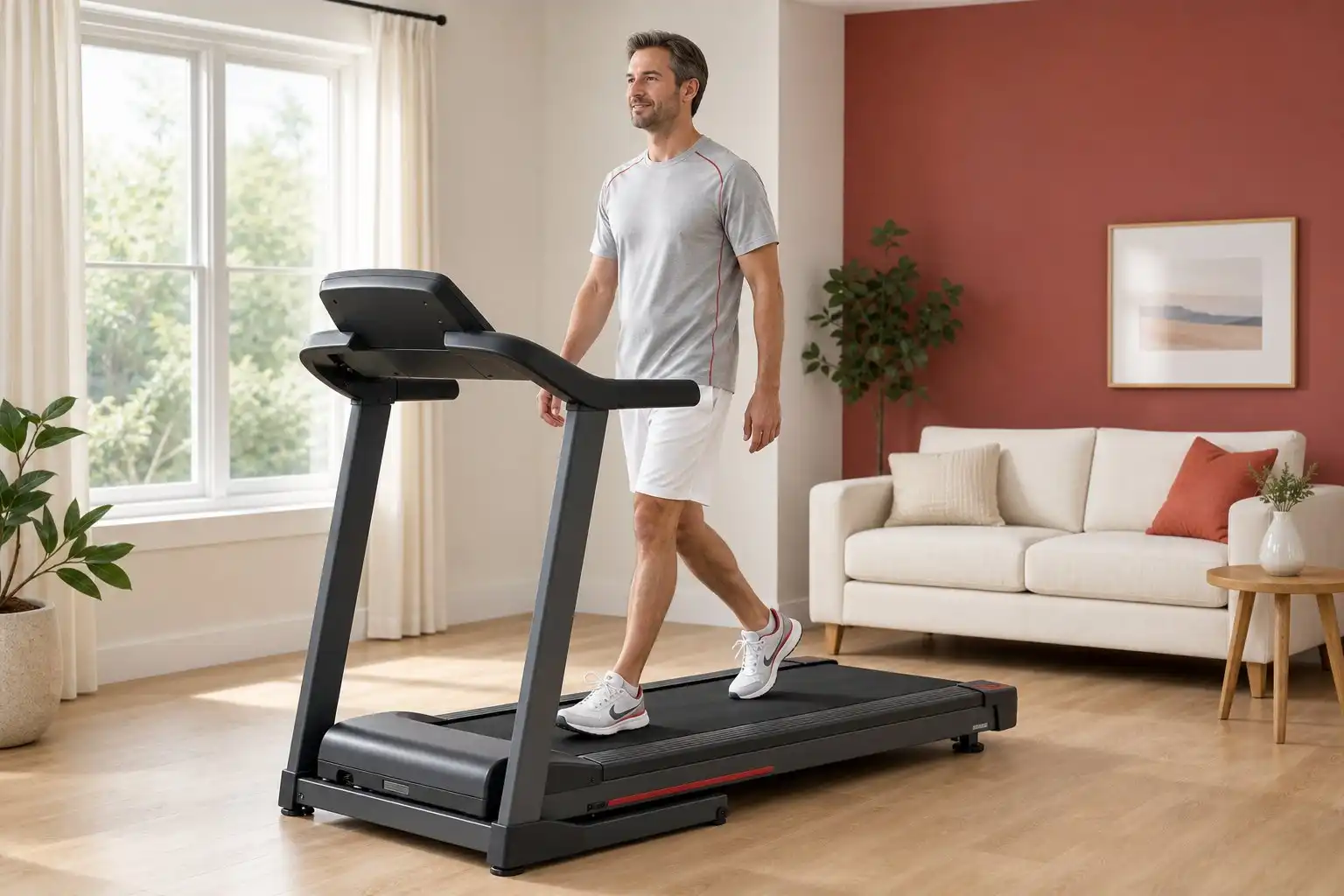
Best Treadmill for Walking: 5 Standout Home Picks for 2026
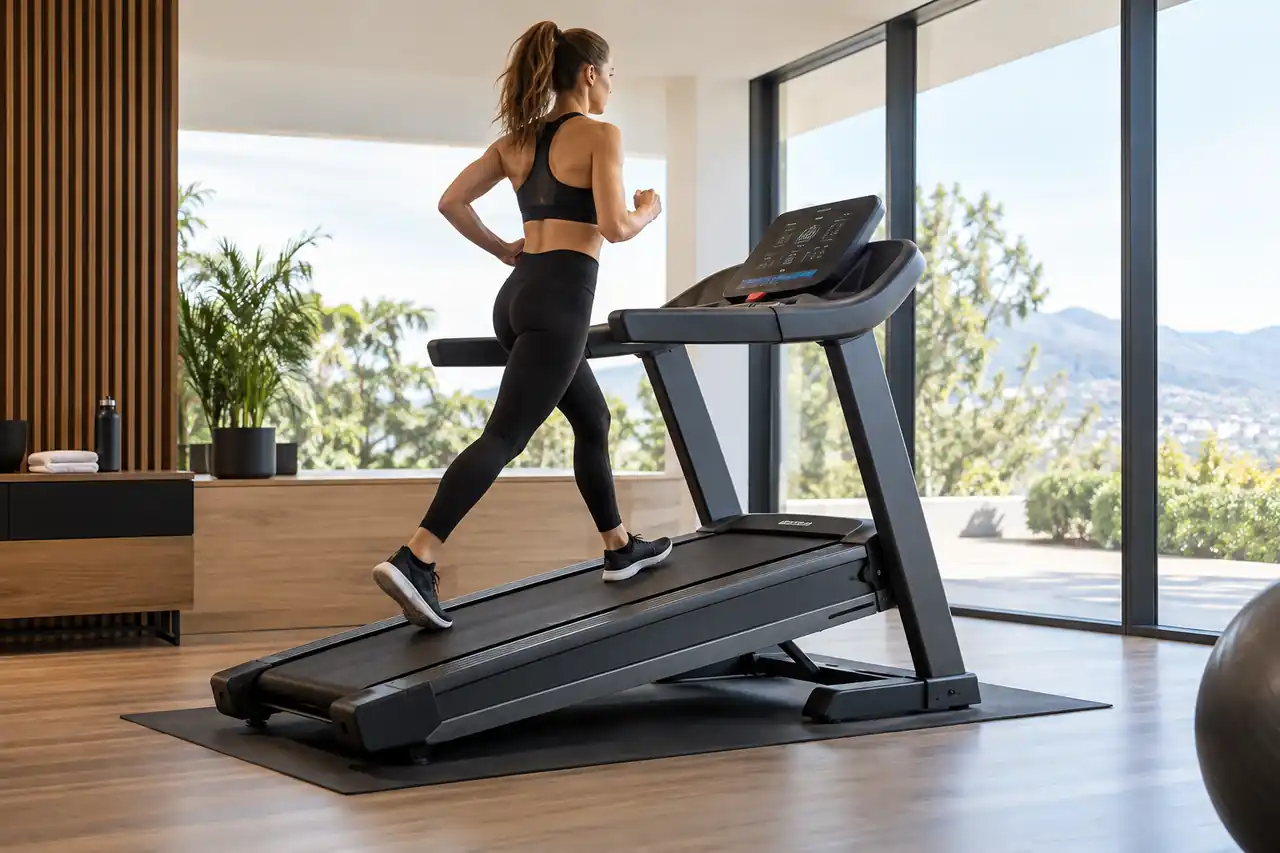
Best Incline Treadmill (2026): Top 5 Treadmills With Incline
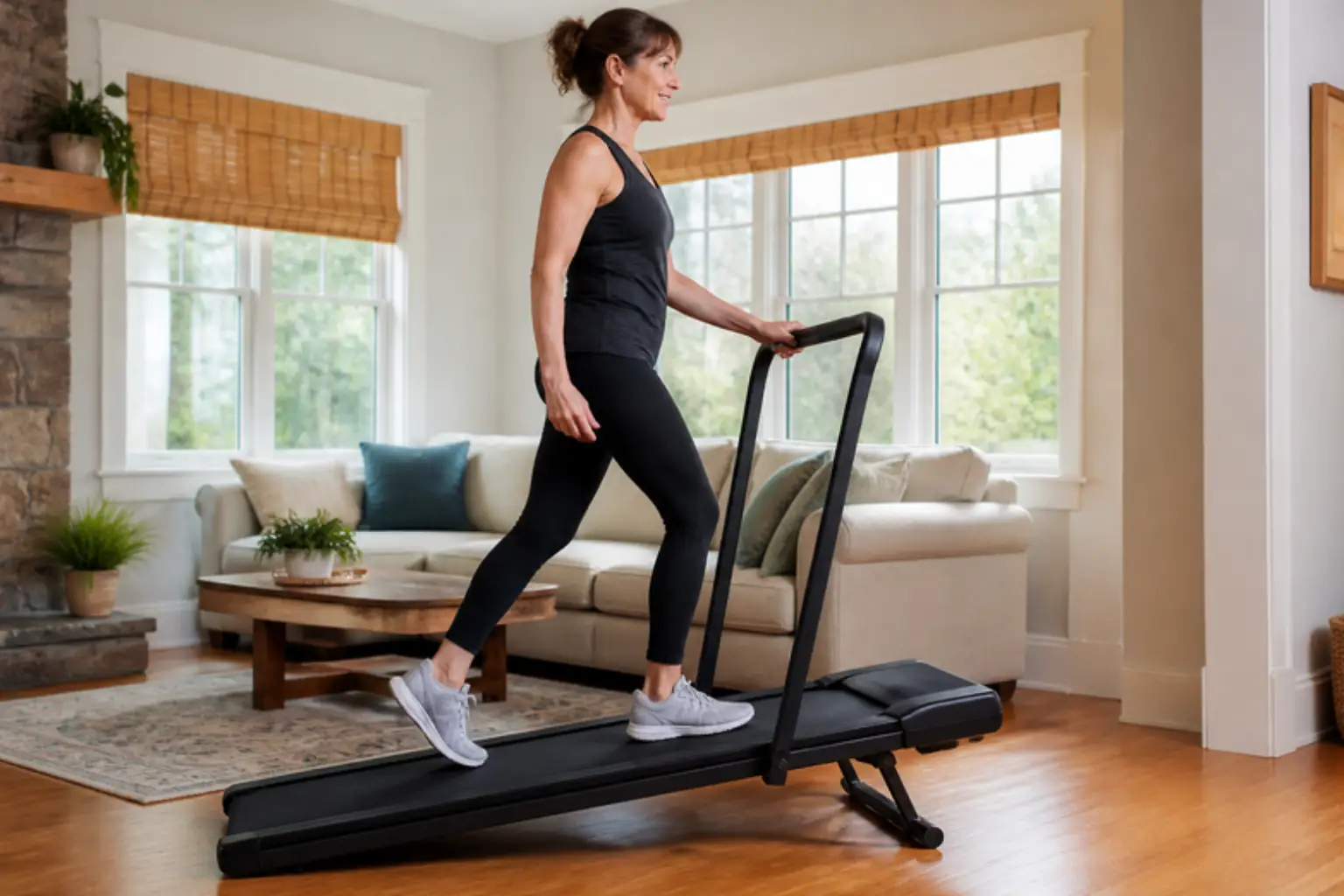
Best Walking Pad With Incline (2026): 5 Picks for Uphill Walking at Home
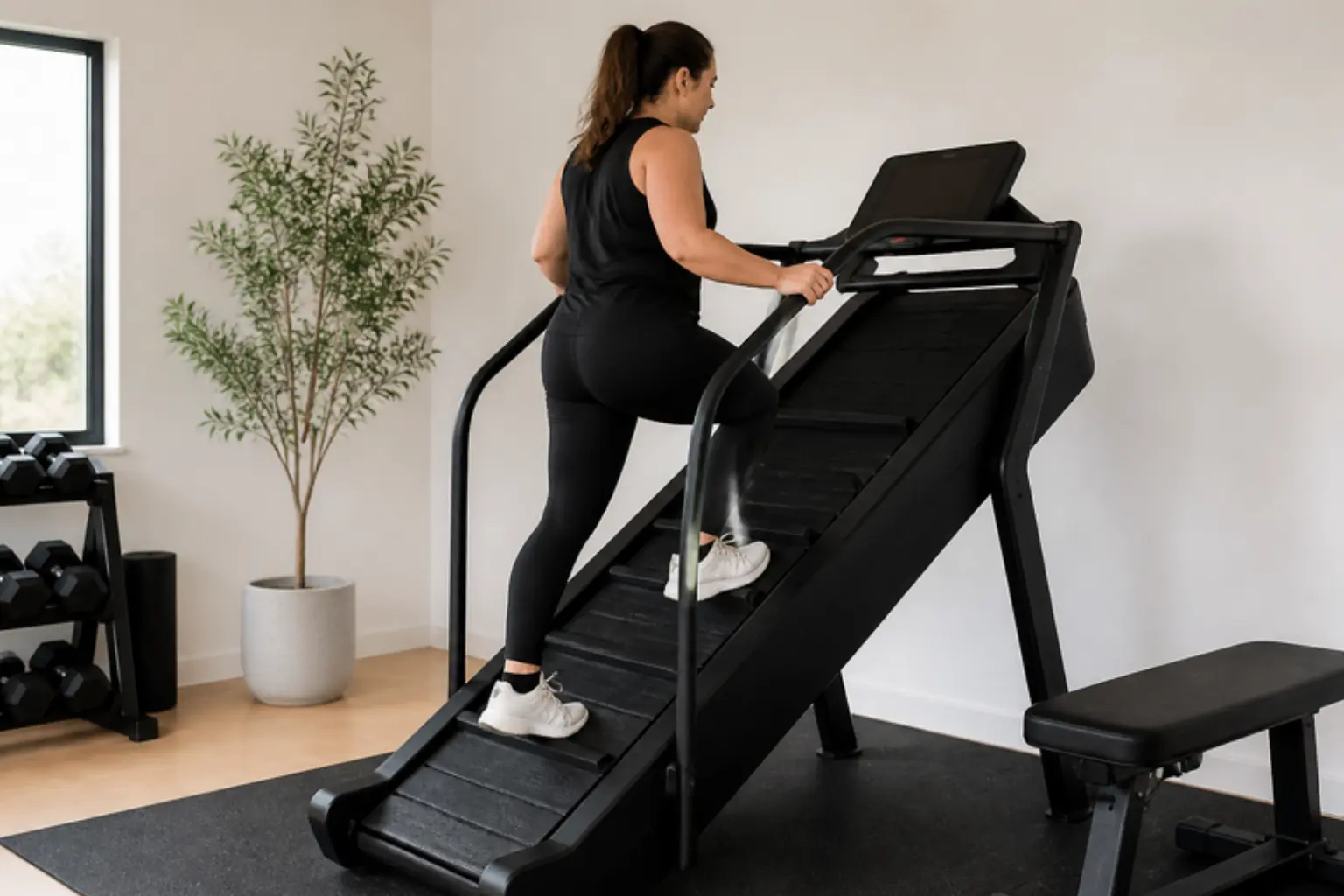
Best Incline Trainer (2026): 5 High-Incline Treadmills Compared
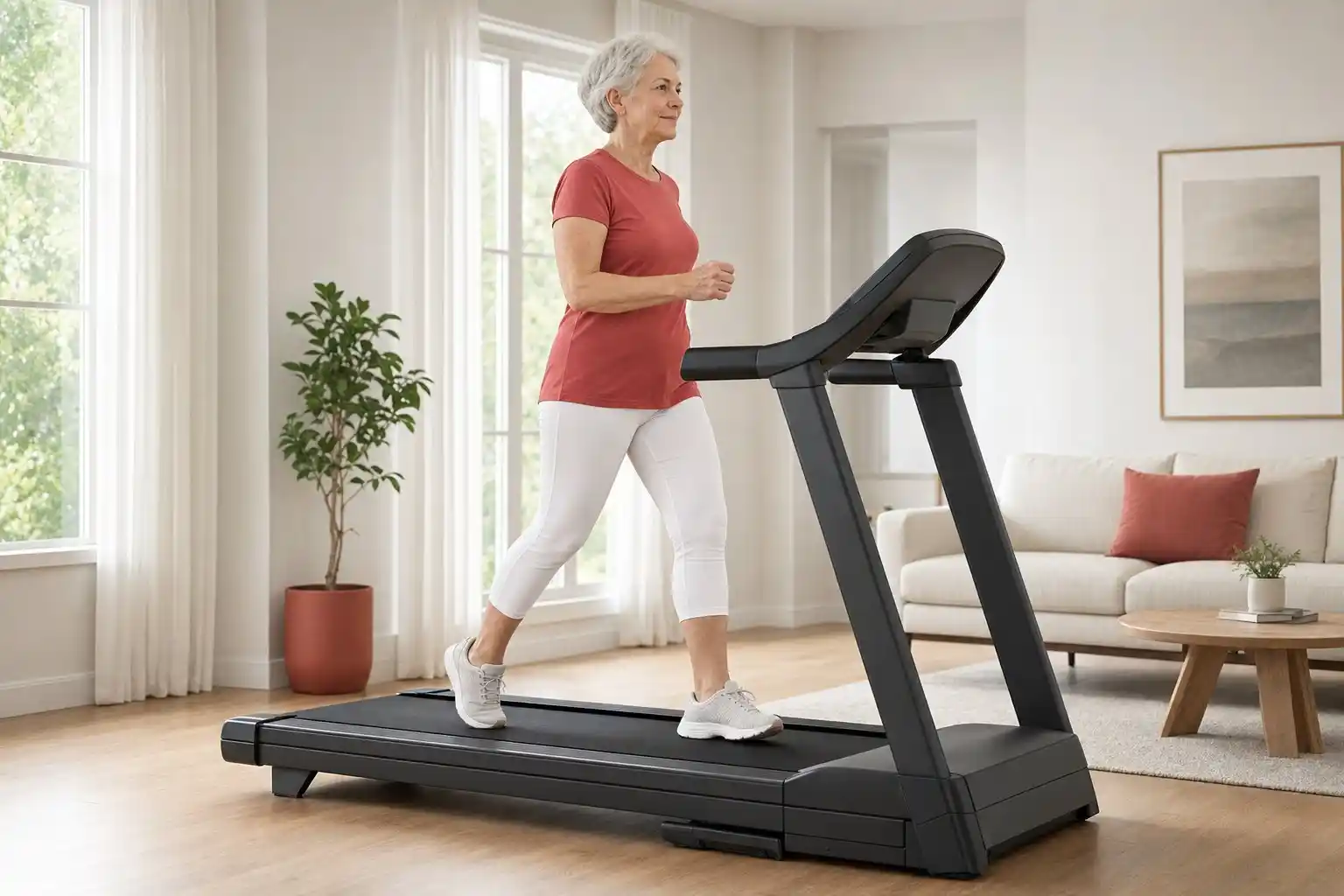
Best Treadmill for Seniors: 5 Supportive Home Models Worth Buying in 2026