

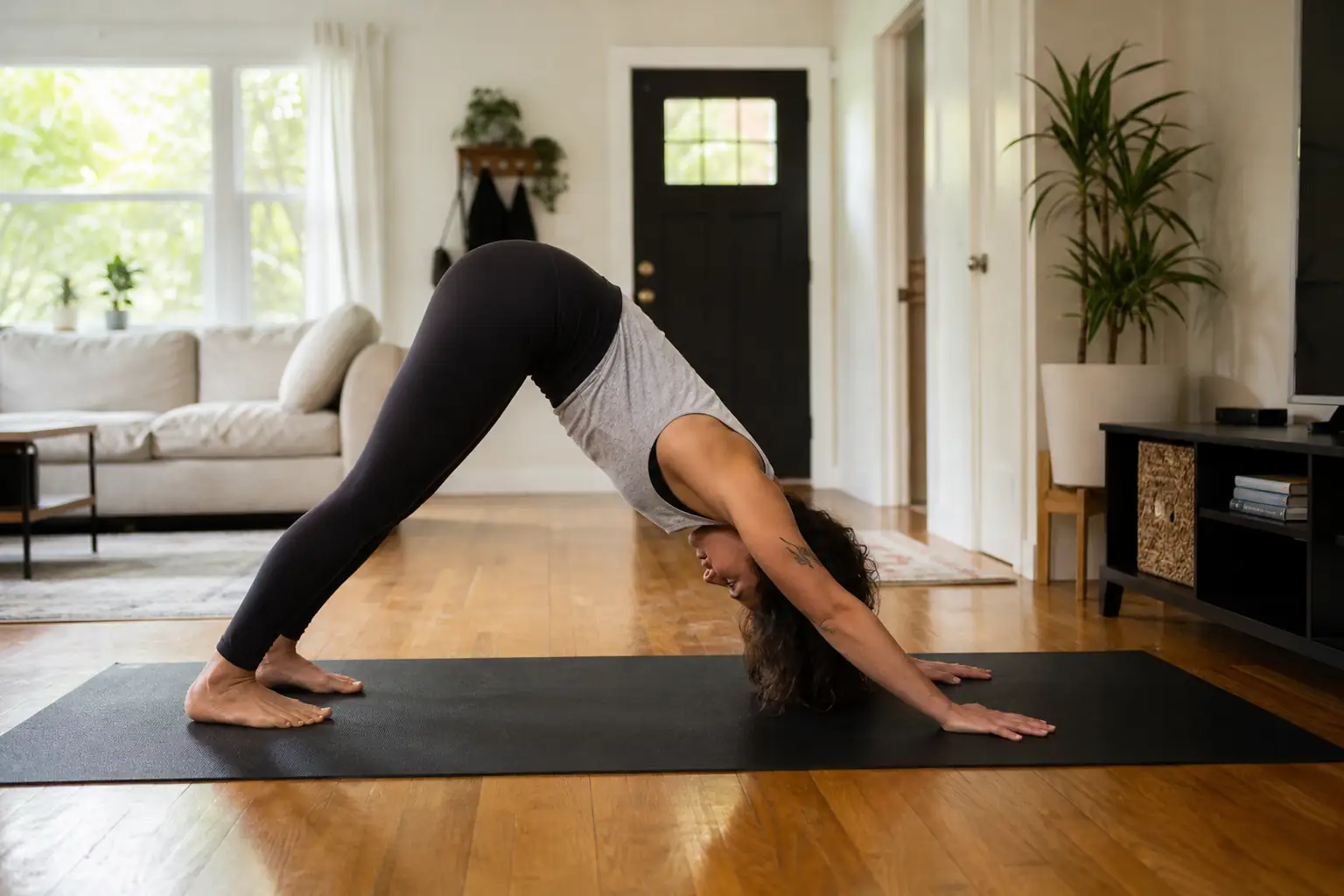
Best Yoga Mat: Our top yoga mat is the Gaiam Performance Dry-Grip 5mm (FitScore 68.9/100): a 5 mm mat with a moisture-wicking topcoat, a lifetime guarantee and a fair price.
Full-size mats ranked by FitScore; sweating a lot: see our best hot yoga mats; sore knees: see our best thick yoga mats.
Comparison Table
| Compareat a glance | TOP PICK | Pick 2 | Pick 3 | Pick 4 | Pick 5 |
|---|---|---|---|---|---|
| Best For | Best Overall | Best Grip | Best Alignment Guides | Most Durable | Best Value |
| Material | PVC with a moisture-wicking topcoat | Polyurethane over natural rubber | Polyurethane over natural rubber | PVC | PVC |
| Thickness | 5 mm | 5 mm | 4.2 mm | 6 mm | 6 mm |
| Size | 68 x 24 in | 71 x 26 in | 72.8 x 26.8 in | 71 x 26 in | 68 x 24 in |
| Weight | 4.25 lb | 5.5 lb | 5.5 lb | 7.5 lb | 3.3 lb |
| Warranty | Lifetime | – | – | Lifetime | Lifetime |
| Check Price | Check Price on Amazon | Check Price on Amazon | Check Price on Amazon | Check Price on Amazon | Check Price on Amazon |
Check Amazon for current pricing and availability.
Key Takeaways
- Grip matters most: polyurethane and wicking tops hold best when you sweat.
- Dense PVC lasts longest but is heavy and slick when wet.
- Sore knees? Thicker mats help, but foam wobbles in balances.
Best Overall: Gaiam Performance Dry-Grip 5mm
Presentation
Best overall
Editor’s pick
Gaiam Performance Dry-Grip 5mm
Gaiam Performance Dry-Grip 5mm ranks #1 in this guide with a FitScore of 68.9/100. If you want one mat that handles a calm hatha class and a sweaty vinyasa flow alike without costing studio-mat money, the Gaiam Performance Dry-Grip 5mm is the most balanced pick of the 13 full-size mats we scored: 5 mm of cushion, a moisture-wicking topcoat over PVC and a lifetime guarantee.
FitGearHQ FitScore
FitScore for Yoga Mats
How this FitScore was calculated
This FitScore combines six category scores using weights defined for this guide.
Why Choose This Yoga Mat
Read our full Gaiam Performance Dry-Grip 5mm review for specs, owner feedback and alternatives.
If you want one mat that handles a calm hatha class and a sweaty vinyasa flow alike without costing studio-mat money, the Gaiam Performance Dry-Grip 5mm is the most balanced pick of the 13 full-size mats we scored: 5 mm of cushion, a moisture-wicking topcoat over PVC and a lifetime guarantee.
Grip carries 35% of the score here and the topcoat earns 77 of 100, behind only the polyurethane mats, while Durability reaches 82 thanks to the dense PVC base and the lifetime guarantee. At 4.25 lb it is more than a pound lighter than the GRP Adapt below, and its Affordability score of 70 is the best of the top three. The topcoat is made to soak up moisture, and owners like it for warm home sessions and vinyasa classes where a plain PVC mat would slide.
Grip is not as strong as the polyurethane mats below once the surface is really wet, some owners find it less grippy when hands are completely dry, and some report the topcoat wearing after long use; at 68 x 24 in it is shorter and narrower than the Manduka and Liforme mats, which tall yogis notice in long lunges. It has no alignment lines and no strap. If you want one balanced mat at a fair price for most styles of yoga, it is the mat to check first.
In a Nutshell
Best Usage
- Hot yoga and sweaty vinyasa flows
- Yoga and stretching at home
- Low-impact cardio at home
For
- People whose hands sweat in class
- People with a latex allergy
- Buyers keeping one mat for years
Not For
- Users over 6 ft
- Buyers who need a gym floor mat
- Users who prefer training outdoors
Key Specs
- Material: PVC with a moisture-wicking topcoat
- Thickness: 5 mm
- Size: 68 x 24 in
- Weight: 4.25 lb
- Warranty: Lifetime
Pros
- Lifetime guarantee
- Topcoat wicks moisture for grip
- Firm 5 mm support
Cons
- Short 68 in length
- Narrow 24 in width
- Less grippy when fully dry
Best Grip: Manduka GRP Adapt 5mm
Presentation
Best grip
Pick 2
Manduka GRP Adapt 5mm
Manduka GRP Adapt 5mm ranks #2 in this guide with a FitScore of 67.9/100. If your practice is fast, sweaty and you hate putting a towel on your mat, the Manduka GRP Adapt 5mm gives the strongest grip of this ranking: a polyurethane top over natural rubber that scores 95 of 100 on grip, dry and wet.
FitGearHQ FitScore
FitScore for Yoga Mats
How this FitScore was calculated
This FitScore combines six category scores using weights defined for this guide.
Why Choose This Yoga Mat
Read our full Manduka GRP Adapt 5mm review for specs, owner feedback and alternatives.
If your practice is fast, sweaty and you hate putting a towel on your mat, the Manduka GRP Adapt 5mm gives the strongest grip of this ranking: a polyurethane top over natural rubber that scores 95 of 100 on grip, dry and wet.
It also offers a generous 71 x 26 in surface and 5 mm of support, with Comfort at 74, and its FitScore of 67.9 sits about one point from the leader. Owners say it holds hands and feet in down dog and plank even late in a hot class, which is exactly what this design is made for, and the 2.0 version uses 20% recycled materials.
The open-cell top takes in sweat, so it needs a wipe after every session and a deeper clean now and then, and owners mention a rubber smell for the first weeks. At 5.5 lb it is heavier to carry than the Gaiam, it contains natural rubber latex, and its price tier is high, which pulls Affordability down to 43. Choose it if grip matters more to you than weight or price.
In a Nutshell
Best Usage
- Hot yoga and sweaty vinyasa flows
- Yoga and stretching at home
- Low-impact cardio at home
For
- People whose hands sweat in class
- Broad-shouldered users (26 in wide)
- Beginners practicing at home
Not For
- People with a latex allergy
- Buyers who need a gym floor mat
- Users who prefer training outdoors
Key Specs
- Material: Polyurethane over natural rubber
- Thickness: 5 mm
- Size: 71 x 26 in
- Weight: 5.5 lb
- Warranty: –
Pros
- Polyurethane top grips dry and wet
- Firm 5 mm support
- Long, wide 71 x 26 in surface
Cons
- Contains natural rubber latex
- Heavy to carry (5.5 lb)
- Rubber smell when new
Best Alignment Guides: Liforme Original
Presentation
Best alignment guides
Pick 3
Liforme Original
Liforme Original ranks #3 in this guide with a FitScore of 67.1/100. If you are building a home practice and want help placing your hands and feet, the Liforme Original pairs grippy polyurethane over natural rubber with printed alignment guides and a carry bag in the box, on the largest surface of the five (72.8 x 26.8 in).
FitGearHQ FitScore
FitScore for Yoga Mats
How this FitScore was calculated
This FitScore combines six category scores using weights defined for this guide.
Why Choose This Yoga Mat
Read our full Liforme Original review for specs, owner feedback and alternatives.
If you are building a home practice and want help placing your hands and feet, the Liforme Original pairs grippy polyurethane over natural rubber with printed alignment guides and a carry bag in the box, on the largest surface of the five (72.8 x 26.8 in).
Its grip score of 95 ties the GRP Adapt, and Features reaches 45 with the alignment system and the bag. At 4.2 mm it is firmer and thinner than the PVC mats, which keeps standing balances stable, and owners say the surface stays grippy when hands get damp. Its FitScore of 67.1 is within a point of the Manduka GRP Adapt 5mm.
It is not a mat for every budget, though: light colors show marks and stains, owners notice a rubber smell at first, and the natural rubber base means latex. The 4.2 mm cushion is less forgiving on sensitive knees than a 6 mm mat, and its price tier ties the Manduka PRO for the highest in this top five, with Affordability at 30. For a beginner who will use the guides every day, it earns its place.
In a Nutshell
Best Usage
- Hot yoga and sweaty vinyasa flows
- Practicing with alignment guides
- Standing balances on a firm surface
For
- People whose hands sweat in class
- Beginners learning posture
- Broad-shouldered users (26 in wide)
Not For
- People with a latex allergy
- Users who want thick cushioning
- Buyers who need a gym floor mat
Key Specs
- Material: Polyurethane over natural rubber
- Thickness: 4.2 mm
- Size: 72.8 x 26.8 in
- Weight: 5.5 lb
- Warranty: –
Pros
- Polyurethane top grips dry and wet
- Firm 4.2 mm support
- Printed alignment guides
Cons
- Contains natural rubber latex
- Heavy to carry (5.5 lb)
- Rubber smell when new
Most Durable: Manduka PRO 6mm
Presentation
Most durable
Pick 4
Manduka PRO 6mm
Manduka PRO 6mm ranks #4 in this guide with a FitScore of 63.3/100. If you want one mat that keeps its cushion for a decade of daily practice, the Manduka PRO 6mm is the studio classic of the five: 6 mm of dense PVC on a 71 x 26 in surface, made in Germany, OEKO-TEX Standard 100 certified and covered by a lifetime guarantee.
FitGearHQ FitScore
FitScore for Yoga Mats
How this FitScore was calculated
This FitScore combines six category scores using weights defined for this guide.
Why Choose This Yoga Mat
Read our full Manduka PRO 6mm review for specs, owner feedback and alternatives.
If you want one mat that keeps its cushion for a decade of daily practice, the Manduka PRO 6mm is the studio classic of the five: 6 mm of dense PVC on a 71 x 26 in surface, made in Germany, OEKO-TEX Standard 100 certified and covered by a lifetime guarantee.
Its Durability score of 95 and Comfort score of 88 are both the best of the five, because the dense core does not compress under knees the way lighter PVC does. Teachers keep the same PRO for 10 to 20 years, owners see almost no compression after years of daily use, and the closed-cell surface is latex-free and wipes clean, with Features at 55.
Grip is its weak point at 50 of 100: the surface is slick until it is broken in and slippery when wet, so sweaty vinyasa usually needs a towel. At 7.5 lb it is the heaviest mat here, and its price ties the Liforme for the highest of the five, with Affordability at 30. Choose it if you practice at home several times a week and want to buy one mat for the long run.
In a Nutshell
Best Usage
- Daily home or studio practice
- Kneeling poses on hard floors
- Yoga and stretching at home
For
- Users with sensitive knees or wrists
- People with a latex allergy
- Broad-shouldered users (26 in wide)
Not For
- People who practice hot yoga
- Users who carry the mat daily
- Buyers who need a gym floor mat
Key Specs
- Material: PVC
- Thickness: 6 mm
- Size: 71 x 26 in
- Weight: 7.5 lb
- Warranty: Lifetime
Pros
- Lifetime guarantee
- 6 mm of cushioning
- OEKO-TEX Standard 100 certified
Cons
- Heavy to carry (7.5 lb)
- Slippery when wet
- Grip needs a break-in period
Best Value: Gaiam Premium 6mm
Presentation
Best value
Pick 5
Gaiam Premium 6mm
Gaiam Premium 6mm ranks #5 in this guide with a FitScore of 62.3/100. If you want a cushioned, latex-free mat for gentle classes at the lowest price of the five, the Gaiam Premium 6mm gives 6 mm of PVC, a lifetime guarantee and a light 3.3 lb build that is easy to carry to a studio.
FitGearHQ FitScore
FitScore for Yoga Mats
How this FitScore was calculated
This FitScore combines six category scores using weights defined for this guide.
Why Choose This Yoga Mat
If you want a cushioned, latex-free mat for gentle classes at the lowest price of the five, the Gaiam Premium 6mm gives 6 mm of PVC, a lifetime guarantee and a light 3.3 lb build that is easy to carry to a studio.
Its Affordability score of 92 is the best of the five and Durability reaches 90 with the guarantee, second only to the Manduka PRO above. The soft 6 mm feel is gentle on knees and wrists in hatha, yin and restorative sessions, it is the lightest mat of the ranking, and owners like it as a reliable everyday mat with many prints to choose from.
Grip is its limit: 50 of 100, because plain PVC slides once hands sweat, so a power or warm class can feel slippery. The lighter PVC compresses more under knees than the denser PRO, with Comfort at 66, it measures 68 x 24 in, short for tall users, and there are no alignment marks. Pick it for calm classes on a small budget, and a grippier top if your practice gets sweaty.
In a Nutshell
Best Usage
- Daily home or studio practice
- Kneeling poses on hard floors
- Yoga and stretching at home
For
- Users with sensitive knees or wrists
- People with a latex allergy
- Buyers keeping one mat for years
Not For
- People who practice hot yoga
- Users over 6 ft
- Buyers who need a gym floor mat
Key Specs
- Material: PVC
- Thickness: 6 mm
- Size: 68 x 24 in
- Weight: 3.3 lb
- Warranty: Lifetime
Pros
- Lifetime guarantee
- 6 mm of cushioning
- Latex-free
Cons
- Slippery when wet
- Short 68 in length
- Narrow 24 in width
How We Selected the Best Yoga Mat
Grip leads at 35 points, then Durability and Comfort at 20 each, Practicality and Affordability at 10 each and Features at 5. That balance favors mats that hold you in place and keep their shape for years.
Every full-size mat 3 mm thick or more counts; a brand holds at most two places. 13 yoga mats qualified. Our FitScore method explains every criterion.
| Category | Weight | What it measures for this buyer |
|---|---|---|
| Performance | 35 | Grip, dry and wet, from the surface material: the first thing a yoga mat must do |
| Durability | 20 | The warranty and how long the material lasts |
| Comfort | 20 | Thickness and density: cushion for knees and wrists without losing stability |
| Practicality | 10 | Weight to carry, folding, a strap or bag included, and an easy-to-clean surface |
| Affordability | 10 | How the price compares with the other yoga mats in the guide |
| Features | 5 | Material, named certification, latex-free build and alignment lines |
How to Choose the Best Yoga Mat
The surface material decides most of how a mat feels: how it grips dry and wet, how heavy it is and how long it lasts.
PVC: dense, durable and easy to clean; slick until broken in and slippery when wet.
Natural rubber: very grippy when dry, heavier, with a rubber smell at first; contains latex.
Polyurethane over rubber: the strongest grip dry and wet; shows marks and needs regular cleaning.
Microfiber towel top: grips better as it gets wet; made for hot yoga and washed often.
Cork over rubber: grips better as it gets damp and resists odors; heavy and can feel slick in a cool room.
Foam (NBR): thick and cheap, soft for floor work, unstable in standing balances.
Pro tip: Practicing on carpet or on a treadmill-room floor? Firm, dense mats move less; see our best treadmill mat for equipment flooring.
Grip comes first: your hands and feet must stay put in down dog and lunges, dry or sweaty. Then cushion and stability: 4 to 6 mm suits most practices, thicker foam helps knees but wobbles in balances. Durability depends on the material and the warranty, and a weight under 5 lb matters if you carry the mat to class.
Calories: Harvard Health Publishing estimates about 120 to 168 calories in 30 minutes of hatha yoga for people of 125 to 185 lb.
Size: a standard mat is about 68 x 24 in; taller users are more comfortable on 71 in or longer.
Benefits: Harvard Health Publishing describes the physical and mental benefits of a regular practice.
Checklist Before Buying a Yoga Mat:
- Match the surface to how much you sweat: polyurethane, microfiber or a wicking topcoat for sweaty practice.
- Pick 4 to 6 mm for most practices; more only for floor work.
- Check the length: 71 in or more if you are over 5 ft 10 in.
- Avoid natural rubber if anyone at home has a latex allergy.
- Weigh the mat if you carry it: under 5 lb is easy on a commute.
- Plan the care: open-cell and towel tops need regular washing.
Common mistakes to avoid:
- Buying the thickest mat for a balance-heavy practice.
- Choosing a PVC mat for hot yoga without a towel.
- Ignoring the length when you are tall.
- Forgetting a latex allergy with a rubber mat.
- Cleaning a rubber mat with harsh products or leaving it in the sun.
Decision Shortcuts
Pick the grip you need first, then the cushion and the weight.
Best Overall: You want one mat for every class, sweaty or not: choose Gaiam Performance Dry-Grip 5mm, with its moisture-wicking topcoat.
Best Grip: You want the strongest grip without a towel: choose Manduka GRP Adapt 5mm.
Best Alignment Guides: You are learning poses at home: choose Liforme Original, with printed alignment guides.
Most Durable: You want one mat that lasts for years: choose Manduka PRO 6mm, dense 6 mm PVC.
Best Value: You want a cushioned mat for gentle classes at a low price: choose Gaiam Premium 6mm, 3.3 lb.
Final Verdict
Gaiam Performance Dry-Grip 5mm is our first choice for most people shopping for a yoga mat. 13 full-size yoga mats were scored on grip, cushion, durability, portability, materials and price. Grip carries the most weight here (35%): a mat that slips in down dog fails at its main job. Polyurethane tops grip best dry and wet; cork grips better as it gets damp; dense PVC lasts longest. CDC guidance includes muscle-strengthening activity twice a week for adults; yoga can count toward it.
For most buyers, Gaiam Performance Dry-Grip 5mm is the best yoga mat we would check first, after confirming its current price and availability.
Frequently Asked Questions about the Best Yoga Mat
In our ranking, the Gaiam Performance Dry-Grip 5mm (FitScore 68.9/100): 5 mm thick, with a moisture-wicking topcoat and a lifetime guarantee.
Cork over natural rubber grips better as it gets damp, resists odors and gives a firm, natural surface; it is heavier than PVC, can feel slick in a cool room until your hands warm up, and the rubber base contains latex.
About 4 to 6 mm suits most practices: enough cushion for knees, firm enough for balances. 10 to 12 mm foam mats are best for floor work and pilates.
Polyurethane over natural rubber grips best dry and wet; natural rubber grips very well dry; PVC grips once broken in but slips when wet.
Natural rubber contains latex proteins, and makers advise people with a latex allergy to avoid it. PVC, TPE and foam mats are latex-free.
A cheap foam or light PVC mat often lasts a year or two of regular use; dense PVC mats can last many years, and some carry a lifetime guarantee.
If you practice several times a week, a better grip and a denser material usually pay off; for occasional stretching, a budget mat is enough.
Explore More Yoga Mat Guides
Best Hot Yoga Mat (2026): 5 Mats That Grip When You Sweat
Best Thick Yoga Mat (2026): 5 Cushioned Mats Ranked
Best Yoga Mat for Beginners (2026): 5 Picks Ranked by FitScore
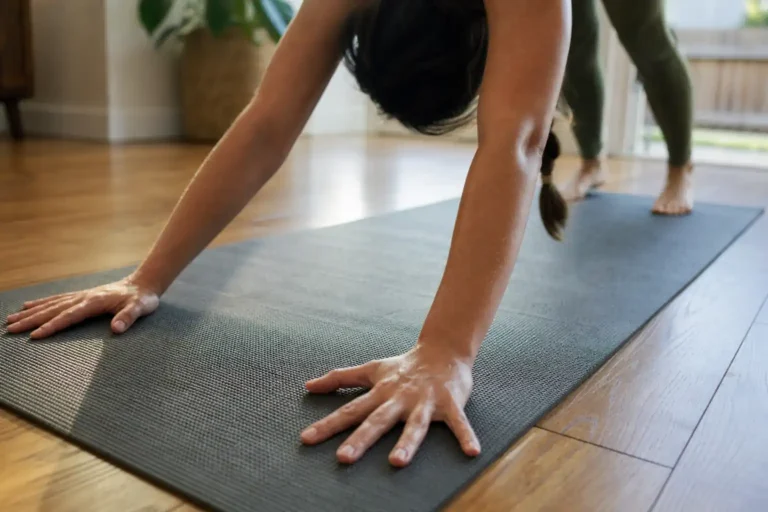
Best Non Slip Yoga Mat (2026): 5 Grippy Mats Ranked by FitScore
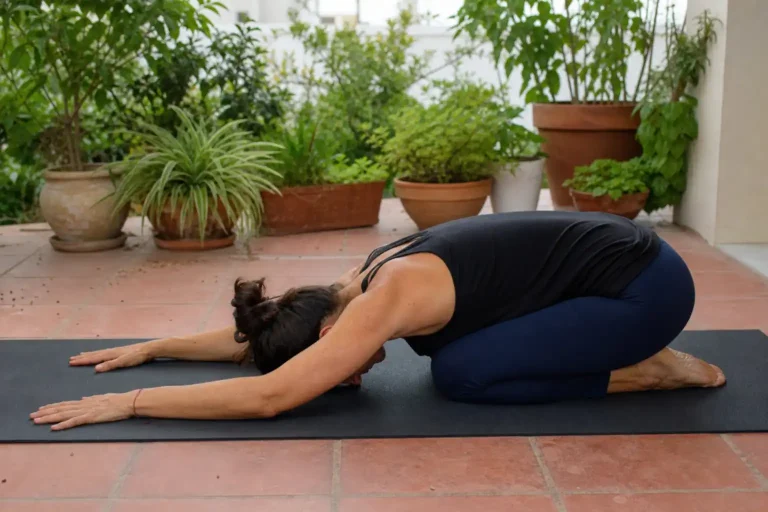
Best Eco Friendly Yoga Mat (2026): 5 Natural Mats Ranked
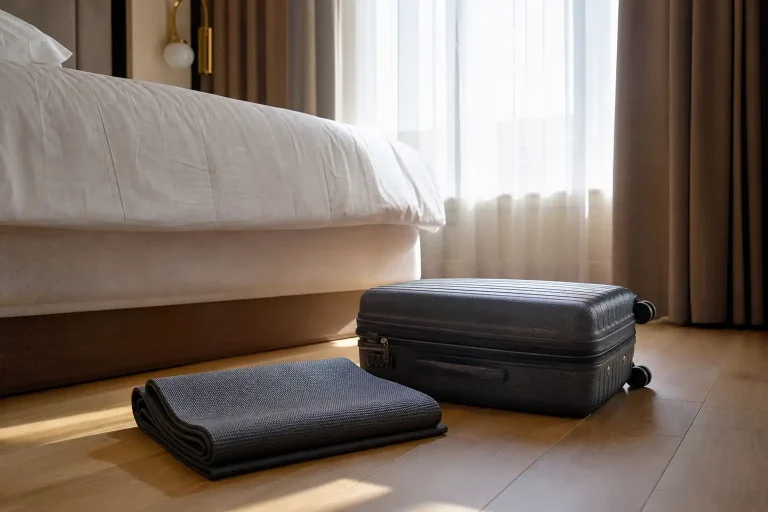
Best Travel Yoga Mat (2026): 5 Light, Foldable Mats Ranked
This article contains affiliate links. If you click through and make a purchase, we may earn a small commission at no extra cost to you. As an Amazon Associate, we earn from qualifying purchases. We do not show prices because they change constantly: product details and availability can change at any time, so please check the current price and details directly on Amazon. Learn more. Amazon and the Amazon logo are trademarks of Amazon.com, Inc. or its affiliates.
