

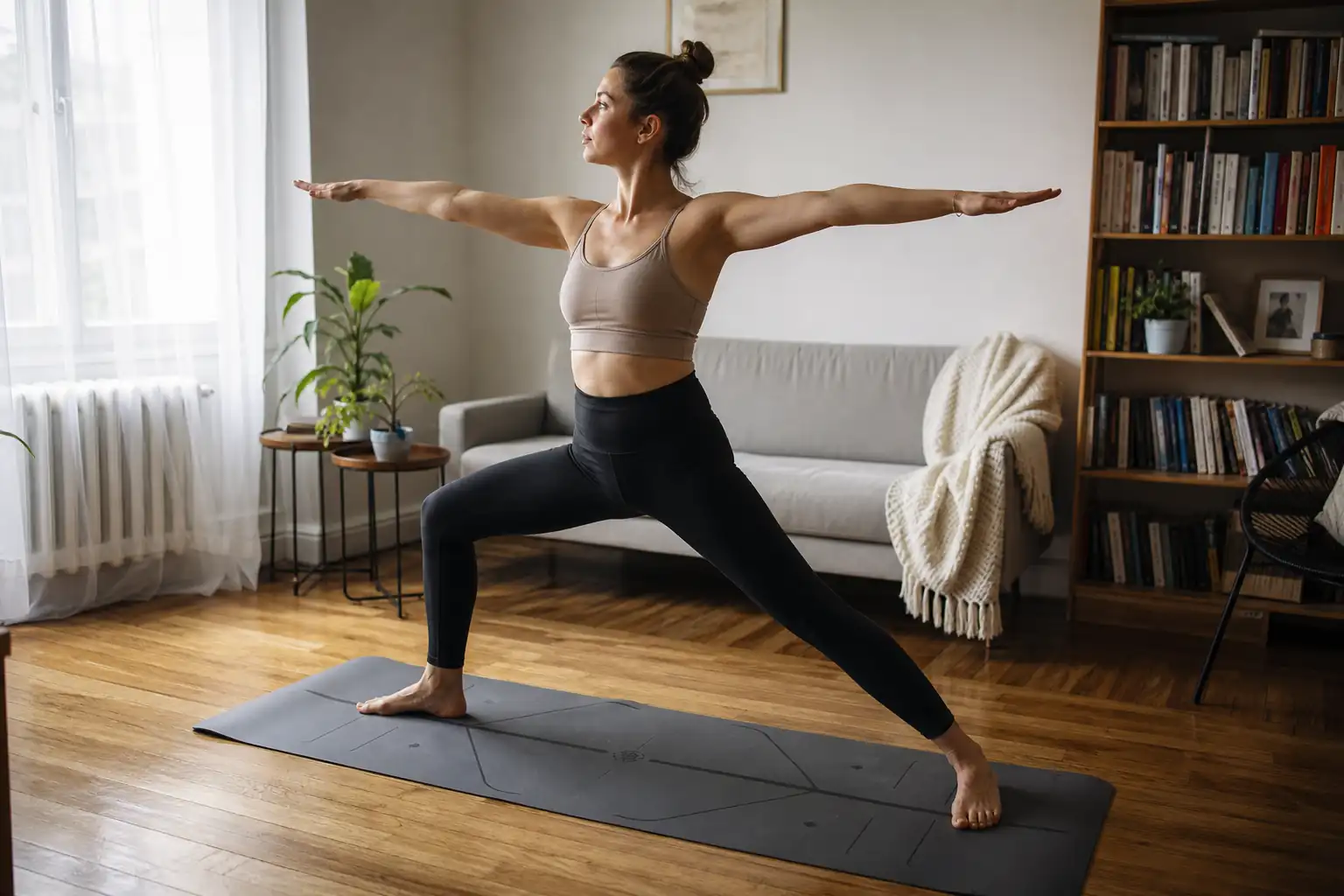
Our best yoga mat for beginners is the Gaiam Premium 6mm (FitScore 63.3/100): 6 mm of latex-free PVC with a lifetime guarantee at a low price.
Five full-size mats for a first yoga practice. Want the overall ranking: see our best yoga mats; on a tight budget, our best budget yoga mats.
Comparison Table
| Compareat a glance | TOP PICK | Pick 2 | Pick 3 | Pick 4 | Pick 5 |
|---|---|---|---|---|---|
| Best For | Best Overall | Best for Sweaty Hands | Best for the Long Run | Best Natural Rubber | Best Cushioned Rubber |
| Material | PVC | PVC with a moisture-wicking topcoat | PVC | Natural rubber | Natural rubber |
| Thickness | 6 mm | 5 mm | 6 mm | 4.8 mm | 5 mm |
| Size | 68 x 24 in | 68 x 24 in | 71 x 26 in | 68 x 24 in | 71 x 26 in |
| Weight | 3.3 lb | 4.25 lb | 7.5 lb | 5 lb | 7 lb |
| Warranty | Lifetime | Lifetime | Lifetime | – | – |
| Check Price | Check Price on Amazon | Check Price on Amazon | Check Price on Amazon | Check Price on Amazon | Check Price on Amazon |
Check Amazon for current pricing and availability.
Key Takeaways
- Beginners need cushion, a fair price and a mat that stays put.
- Alignment marks help you repeat poses the same way.
- Heavy cork and rubber mats suit home; light PVC suits a commute.
Best Overall: Gaiam Premium 6mm
Presentation
Best overall
Editor’s pick
Gaiam Premium 6mm
Gaiam Premium 6mm ranks #1 in this guide with a FitScore of 63.3/100. If you want a cushioned first mat that costs little and forgives a slow start, the Gaiam Premium 6mm is the best beginner mat we scored: 6 mm of latex-free PVC, a lifetime guarantee and a light 3.3 lb build that is easy to take to a class.
FitGearHQ FitScore
FitScore for Beginner Yoga Mats
How this FitScore was calculated
This FitScore combines six category scores using weights defined for this guide.
Why Choose This Yoga Mat
If you want a cushioned first mat that costs little and forgives a slow start, the Gaiam Premium 6mm is the best beginner mat we scored: 6 mm of latex-free PVC, a lifetime guarantee and a light 3.3 lb build that is easy to take to a class.
Its Affordability score of 92 is the best of the five, and Affordability carries 25% of the score for a beginner. Durability reaches 90 with the guarantee, and the soft 6 mm feel is gentle on knees and wrists in a first gentle class. Owners like it as a starter mat and for its many prints, and it is the lightest mat of the five, so it goes to a first class under one arm.
Grip is its limit: 50 of 100, because plain PVC slides once hands sweat, so a power or warm class can feel slippery. The lighter PVC compresses more under knees than the denser mats here, with Comfort at 66, the lowest of the five, it measures 68 x 24 in, short for tall users, and there are no alignment marks. Pick it for a low-cost start, then upgrade if yoga becomes a habit.
In a Nutshell
Best Usage
- Daily home or studio practice
- Kneeling poses on hard floors
- Yoga and stretching at home
For
- Users with sensitive knees or wrists
- People with a latex allergy
- Buyers keeping one mat for years
Not For
- People who practice hot yoga
- Users over 6 ft
- Buyers who need a gym floor mat
Key Specs
- Material: PVC
- Thickness: 6 mm
- Size: 68 x 24 in
- Weight: 3.3 lb
- Warranty: Lifetime
Pros
- Lifetime guarantee
- 6 mm of cushioning
- Latex-free
Cons
- Slippery when wet
- Short 68 in length
- Narrow 24 in width
Best for Sweaty Hands: Gaiam Performance Dry-Grip 5mm
Presentation
Best for sweaty hands
Pick 2
Gaiam Performance Dry-Grip 5mm
Gaiam Performance Dry-Grip 5mm ranks #2 in this guide with a FitScore of 62.5/100. If your hands sweat in down dog and you do not want to start with a towel on your mat, the Gaiam Performance Dry-Grip 5mm adds a moisture-wicking topcoat over PVC, 5 mm of cushion and a lifetime guarantee.
FitGearHQ FitScore
FitScore for Beginner Yoga Mats
How this FitScore was calculated
This FitScore combines six category scores using weights defined for this guide.
Why Choose This Yoga Mat
Read our full Gaiam Performance Dry-Grip 5mm review for specs, owner feedback and alternatives.
If your hands sweat in down dog and you do not want to start with a towel on your mat, the Gaiam Performance Dry-Grip 5mm adds a moisture-wicking topcoat over PVC, 5 mm of cushion and a lifetime guarantee.
Its grip score of 77 is the best of the five, and Durability at 82 and Comfort at 74 are both solid, so it covers a gentle class as well as a faster vinyasa session. At 4.25 lb it is light enough to carry, and owners like how it handles warm, sweaty home sessions where a plain PVC mat would slide.
Some owners find the surface less grippy when hands are completely dry, and one comparison found grip dropping once the mat is really wet. It measures 68 x 24 in, which tall beginners notice in long lunges, and it has no alignment marks or strap, with Features at 30. It is the safe pick if sweaty hands are your first problem.
In a Nutshell
Best Usage
- Hot yoga and sweaty vinyasa flows
- Yoga and stretching at home
- Low-impact cardio at home
For
- People whose hands sweat in class
- People with a latex allergy
- Buyers keeping one mat for years
Not For
- Users over 6 ft
- Buyers who need a gym floor mat
- Users who prefer training outdoors
Key Specs
- Material: PVC with a moisture-wicking topcoat
- Thickness: 5 mm
- Size: 68 x 24 in
- Weight: 4.25 lb
- Warranty: Lifetime
Pros
- Lifetime guarantee
- Topcoat wicks moisture for grip
- Firm 5 mm support
Cons
- Short 68 in length
- Narrow 24 in width
- Less grippy when fully dry
Best for the Long Run: Manduka PRO 6mm
Presentation
Best for the long run
Pick 3
Manduka PRO 6mm
Manduka PRO 6mm ranks #3 in this guide with a FitScore of 58.2/100. If you already know yoga is for you and want to buy one mat for the next decade, the Manduka PRO 6mm is the studio classic: 6 mm of dense PVC, made in Germany, OEKO-TEX Standard 100 certified and covered by a lifetime guarantee.
FitGearHQ FitScore
FitScore for Beginner Yoga Mats
How this FitScore was calculated
This FitScore combines six category scores using weights defined for this guide.
Why Choose This Yoga Mat
Read our full Manduka PRO 6mm review for specs, owner feedback and alternatives.
If you already know yoga is for you and want to buy one mat for the next decade, the Manduka PRO 6mm is the studio classic: 6 mm of dense PVC, made in Germany, OEKO-TEX Standard 100 certified and covered by a lifetime guarantee.
It has the best Comfort of the five at 88 and the best Durability at 95, because its density keeps the cushion from compressing. Teachers keep the same PRO for 10 to 20 years, owners see almost no compression after years of daily use, and it is latex-free with a closed-cell surface that wipes clean.
For a beginner the trade-offs are real, but they fade with time: the surface is slick until broken in and slippery when wet, with grip at 50, it weighs 7.5 lb, and its price is the highest here, so Affordability falls to 30. Choose it if you will practice several times a week and want to skip the upgrade later.
In a Nutshell
Best Usage
- Daily home or studio practice
- Kneeling poses on hard floors
- Yoga and stretching at home
For
- Users with sensitive knees or wrists
- People with a latex allergy
- Broad-shouldered users (26 in wide)
Not For
- People who practice hot yoga
- Users who carry the mat daily
- Buyers who need a gym floor mat
Key Specs
- Material: PVC
- Thickness: 6 mm
- Size: 71 x 26 in
- Weight: 7.5 lb
- Warranty: Lifetime
Pros
- Lifetime guarantee
- 6 mm of cushioning
- OEKO-TEX Standard 100 certified
Cons
- Heavy to carry (7.5 lb)
- Slippery when wet
- Grip needs a break-in period
Best Natural Rubber: JadeYoga Harmony
Presentation
Best natural rubber
Pick 4
JadeYoga Harmony
JadeYoga Harmony ranks #4 in this guide with a FitScore of 56.8/100. If you want a natural rubber mat with a tacky, cushioned feel that holds your hands in down dog, the JadeYoga Harmony gives an open-cell rubber surface that owners rank among the grippiest when dry, 4.8 mm thick and made in the USA.
FitGearHQ FitScore
FitScore for Beginner Yoga Mats
How this FitScore was calculated
This FitScore combines six category scores using weights defined for this guide.
Why Choose This Yoga Mat
If you want a natural rubber mat with a tacky, cushioned feel that holds your hands in down dog, the JadeYoga Harmony gives an open-cell rubber surface that owners rank among the grippiest when dry, 4.8 mm thick and made in the USA.
Its grip score of 70 ties the eKO below for second best and its Comfort of 75 trails only the two Manduka mats, so it covers slow hatha and longer holds well, and Features reaches 35. Owners say the open cells give a slightly cushioned, sticky feel that many prefer to synthetic tops, which helps beginners who still shift their hands in plank and down dog.
It is not built for hot rooms: the open cells absorb sweat, so heavy sweaters usually add a towel, and owners report a rubber smell at first and wear or flaking after years of heavy use. The maker warns against use with a latex allergy, Durability sits at 48, the lowest of the five, and the standard 68 x 24 in size is short for tall beginners. Choose it for calm home or studio classes if you are not allergic to latex.
In a Nutshell
Best Usage
- Long holds that need a firm grip
- Standing balances on a firm surface
- Yoga and stretching at home
For
- Buyers who want a natural material
- Beginners practicing at home
- People who want cardio at home
Not For
- People with a latex allergy
- Users over 6 ft
- Buyers sensitive to a rubber smell
Key Specs
- Material: Natural rubber
- Thickness: 4.8 mm
- Size: 68 x 24 in
- Weight: 5 lb
- Warranty: –
Pros
- Firm 4.8 mm support
- Natural rubber grips well dry
- Natural rubber, no PVC
Cons
- Contains natural rubber latex
- Open-cell rubber absorbs sweat
- Heavy to carry (5 lb)
Best Cushioned Rubber: Manduka eKO 5mm
Presentation
Best cushioned rubber
Pick 5
Manduka eKO 5mm
Manduka eKO 5mm ranks #5 in this guide with a FitScore of 56/100. If you want a natural rubber mat with real cushion that grips from the first class, the Manduka eKO 5mm gives 5 mm of closed-cell natural rubber on a 71 x 26 in surface, as wide as the Manduka PRO.
FitGearHQ FitScore
FitScore for Beginner Yoga Mats
How this FitScore was calculated
This FitScore combines six category scores using weights defined for this guide.
Why Choose This Yoga Mat
If you want a natural rubber mat with real cushion that grips from the first class, the Manduka eKO 5mm gives 5 mm of closed-cell natural rubber on a 71 x 26 in surface, as wide as the Manduka PRO.
Its Comfort of 82 is second only to the PRO, and grip reaches 70, tied with the JadeYoga behind the Gaiam Dry-Grip. Owners say it grips well without a break-in, even in hot classes, and feels cushier than the Manduka PRO; one owner reports two years of near-daily use. The closed cells keep sweat on top, so a beginner can wipe it clean after class.
At 7 lb it is heavy to carry, owners notice a strong rubber smell at first that fades after airing, and lint and dust stick to the surface. It contains natural rubber latex, and its price keeps Affordability at 43, a criterion that weighs 25% for a beginner. Choose it if you want a natural surface with cushion and are not allergic to latex.
In a Nutshell
Best Usage
- Daily home or studio practice
- Yoga and stretching at home
- Low-impact cardio at home
For
- Buyers who want a natural material
- Broad-shouldered users (26 in wide)
- Beginners practicing at home
Not For
- People with a latex allergy
- Users who carry the mat daily
- Buyers sensitive to a rubber smell
Key Specs
- Material: Natural rubber
- Thickness: 5 mm
- Size: 71 x 26 in
- Weight: 7 lb
- Warranty: –
Pros
- Firm 5 mm support
- Natural rubber grips well dry
- Closed-cell surface wipes clean
Cons
- Heavy to carry (7 lb)
- Contains natural rubber latex
- Rubber smell when new
How We Selected the Best Yoga Mat for Beginners
Comfort and Affordability lead at 25 points each, then Grip and Features at 15 each, Durability and Practicality at 10 each. That balance favors mats that cushion, cost a fair price and help you learn, over the stickiest studio surfaces.
Every full-size mat 3 mm thick or more counts; a brand holds at most two places. 13 yoga mats qualified. Our FitScore method explains every criterion.
| Category | Weight | What it measures for this buyer |
|---|---|---|
| Comfort | 25 | Thickness and density: cushion for knees and wrists while you learn the poses |
| Affordability | 25 | How the price compares with the other yoga mats in the guide |
| Performance | 15 | Grip, dry and wet, from the surface material |
| Features | 15 | Alignment marks, latex-free build and named certifications: help for a first practice |
| Durability | 10 | The warranty and how long the material lasts |
| Practicality | 10 | Weight to carry, folding, a strap or bag included, and an easy-to-clean surface |
How to Choose the Best Yoga Mat for Beginners
A first mat has three jobs: cushion knees and wrists while you learn poses, stay put under your hands and feet, and help you find the same position each time. Thickness between 4.5 and 6 mm covers most beginners; markings on the surface turn a plain mat into a quiet guide.
Cushion: 6 mm of a dense material is gentle on knees without making balances wobbly.
Grip: a mat that slips makes down dog feel harder than it is; cork and rubber hold better than plain PVC once hands get warm.
Alignment marks: a centre line and hand and foot marks help you place your body the same way every time.
Price: a first mat does not need to be the most expensive; lifetime-guaranteed PVC mats cost little.
Pro tip: Unsure how thick to go? Our yoga mat thickness guide explains what 4, 5 and 6 mm feel like.
Short, regular sessions build the habit: 15 to 20 minutes three times a week is a realistic start. Practice on a firm floor rather than on thick carpet, keep the mat flat and clean, and add a towel only if your hands sweat.
Calories: Harvard Health Publishing estimates about 120 to 168 calories in 30 minutes of hatha yoga for people of 125 to 185 lb.
Benefits: Harvard Health Publishing describes the physical and mental benefits of a regular practice.
Space: a standard mat is about 68 x 24 in; leave an arm span free on each side.
Checklist Before Buying a First Yoga Mat:
- Choose 4.5 to 6 mm: enough cushion for knees, firm enough for balances.
- Look for alignment marks if you practice alone at home.
- Check the length: 71 in or more if you are over 5 ft 10 in.
- Avoid natural rubber and cork-on-rubber mats with a latex allergy.
- Plan where it lives: heavy mats suit home, light ones suit a commute.
- Keep the first mat simple: a fair price beats premium extras you will not use.
Common mistakes to avoid:
- Buying the thickest foam mat and wobbling in every balance.
- Practicing on thick carpet, which makes any mat unstable.
- Choosing a slippery mat and blaming yourself in down dog.
- Forgetting a latex allergy with a rubber or cork mat.
- Cleaning the mat with harsh sprays that strip its grip.
Decision Shortcuts
Start with cushion and price, then grip and the marks on the surface.
Best Overall: You want a cheap, cushioned first mat: choose Gaiam Premium 6mm, 6 mm and 3.3 lb.
Best for Sweaty Hands: Your hands sweat in down dog: choose Gaiam Performance Dry-Grip 5mm, with its moisture-wicking topcoat.
Best for the Long Run: You want one mat for years: choose Manduka PRO 6mm, dense 6 mm PVC.
Best Natural Rubber: You like a natural, tacky rubber feel: choose JadeYoga Harmony, 4.8 mm.
Best Cushioned Rubber: You want natural rubber with more cushion: choose Manduka eKO 5mm, 5 mm.
Final Verdict
Gaiam Premium 6mm is our first choice for most people shopping for a yoga mat for beginners. 13 full-size yoga mats were scored for a beginner: cushion, price, alignment marks, grip and durability. Comfort and Affordability carry 25% each: a first mat must be kind to knees and to the budget. Printed alignment lines help you place hands and feet the same way every session. CDC guidance includes muscle-strengthening activity twice a week for adults; yoga can count toward it.
For most buyers, Gaiam Premium 6mm is the best yoga mat for beginners we would check first, after confirming its current price and availability.
Frequently Asked Questions about the Best Yoga Mat for Beginners
In our ranking, the Gaiam Premium 6mm (FitScore 63.3/100): 6 mm of latex-free PVC, light to carry and covered by a lifetime guarantee.
About 4.5 to 6 mm: enough cushion for knees and wrists, firm enough for standing balances. Very thick foam makes balances harder to learn.
No. A lifetime-guaranteed PVC mat costs little and works well for gentle classes; a premium mat pays off once you practice several times a week.
They help you place hands and feet the same way every session, which is useful when you practice alone at home without a teacher.
A 6 mm mat of a dense material, such as cork over rubber or dense PVC; fold the mat under your knees in kneeling poses.
Cork grips better as it gets damp and resists odors; it is heavier than PVC and can feel slick in a cool room until your hands warm up.
Explore More Yoga Mat Guides
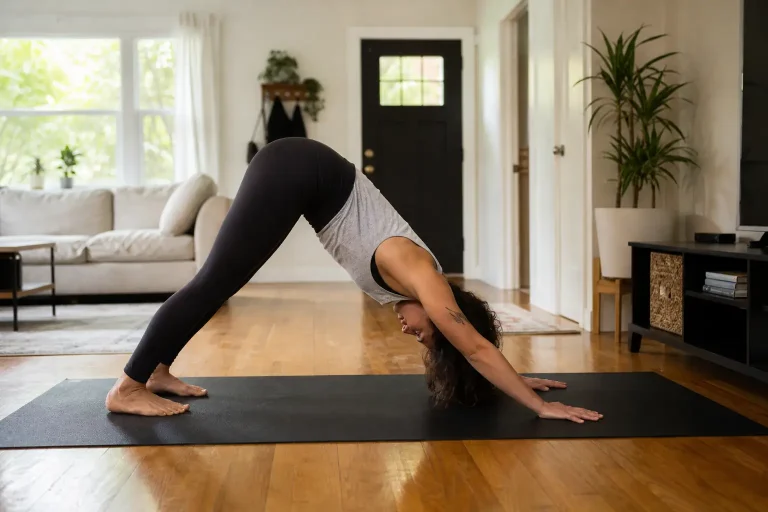
Best Yoga Mat (2026): 5 Yoga Mats Ranked by FitScore
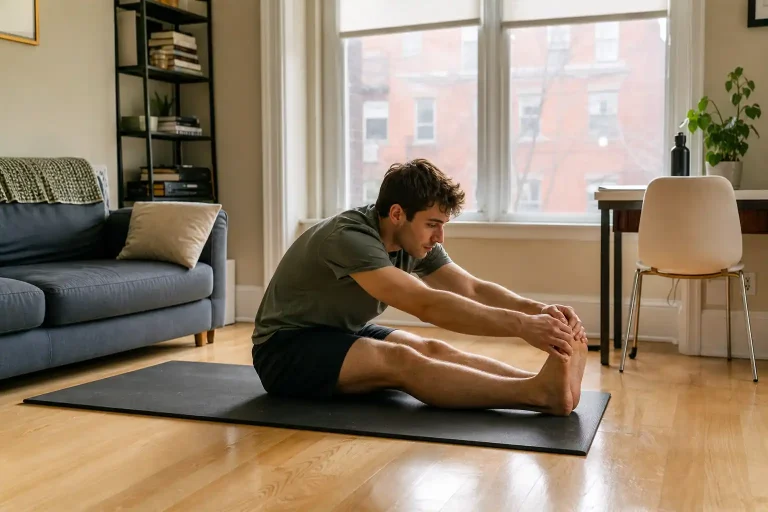
Best Budget Yoga Mat (2026): 5 Cheap Yoga Mats Ranked by FitScore
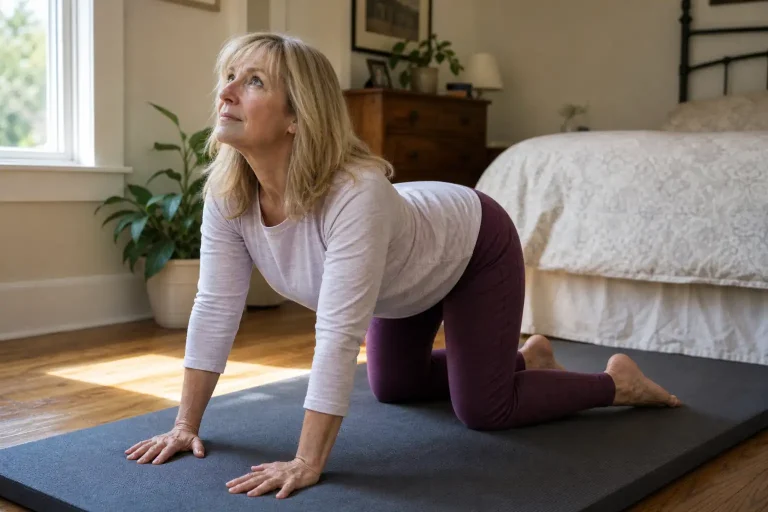
Best Thick Yoga Mat (2026): 5 Cushioned Mats Ranked
Best Non Slip Yoga Mat (2026): 5 Grippy Mats Ranked by FitScore
Yoga Mat Thickness Guide (2026): How Thick Should a Yoga Mat Be?

How We Score Treadmills: The FitScore Method Explained
This article contains affiliate links. If you click through and make a purchase, we may earn a small commission at no extra cost to you. As an Amazon Associate, we earn from qualifying purchases. We do not show prices because they change constantly: product details and availability can change at any time, so please check the current price and details directly on Amazon. Learn more. Amazon and the Amazon logo are trademarks of Amazon.com, Inc. or its affiliates.
