

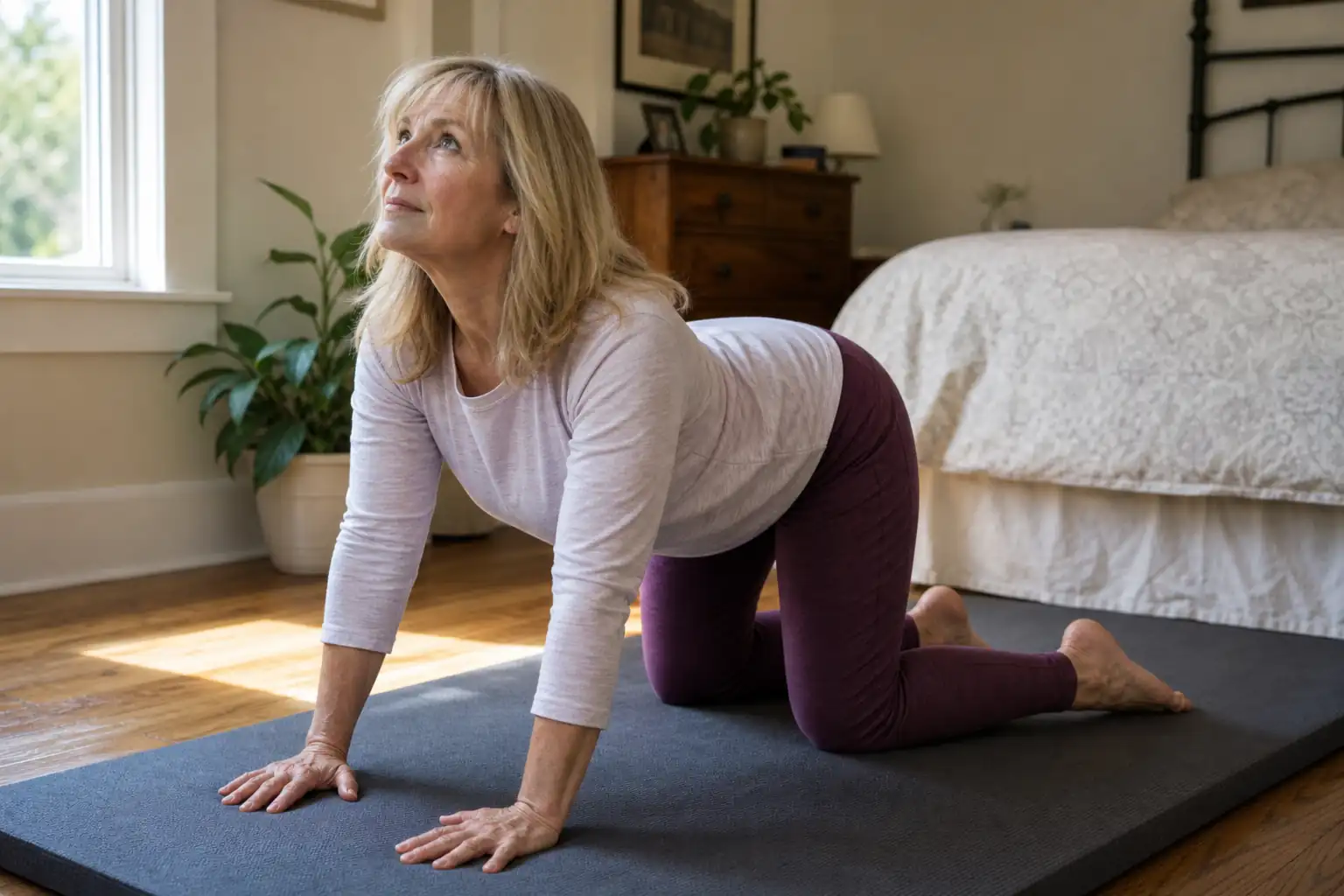
Best Thick Yoga Mat: Our top thick yoga mat is the Manduka PRO 6mm (FitScore 70.9/100): 6 mm of dense PVC that cushions knees without the wobble of foam.
Thick mats ranked by FitScore; need grip for sweaty classes: see our best hot yoga mats; want an all-round mat: see our best yoga mats.
Comparison Table
| Compareat a glance | TOP PICK | Pick 2 | Pick 3 | Pick 4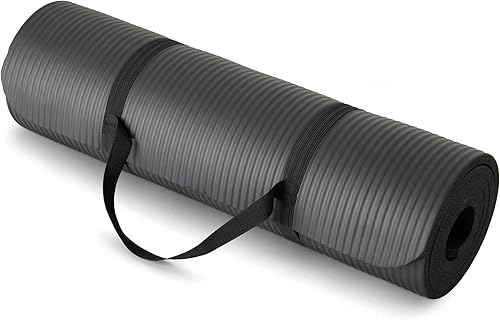 | Pick 5 |
|---|---|---|---|---|---|
| Best For | Best Overall | Best Value | Best Foam Mat | Longest Thick Mat | Best Textured Foam |
| Material | PVC | PVC | High-density foam | High-density foam | High-density foam |
| Thickness | 6 mm | 6 mm | 10 mm | 12.7 mm | 12.7 mm |
| Size | 71 x 26 in | 68 x 24 in | 72 x 23.6 in | 74 x 24 in | 71 x 24 in |
| Weight | 7.5 lb | 3.3 lb | – | – | – |
| Warranty | Lifetime | Lifetime | Lifetime | – | – |
| Check Price | Check Price on Amazon | Check Price on Amazon | Check Price on Amazon | Check Price on Amazon | Check Price on Amazon |
Check Amazon for current pricing and availability.
Key Takeaways
- Dense 6 mm cushions without losing stability.
- Foam mats of 10 to 12.7 mm are softest but wobble.
- For sore knees, cushion helps; persistent pain needs a professional.
Best Overall: Manduka PRO 6mm
Presentation
Best overall
Editor’s pick
Manduka PRO 6mm
Manduka PRO 6mm ranks #1 in this guide with a FitScore of 70.9/100. If your knees and wrists need cushion but you still want a stable base for balances and inversions, the Manduka PRO 6mm is the best thick mat we scored: 6 mm of dense PVC that does not flatten under you, on a 71 x 26 in surface.
FitGearHQ FitScore
FitScore for Thick Yoga Mats
How this FitScore was calculated
This FitScore combines six category scores using weights defined for this guide.
Why Choose This Yoga Mat
Read our full Manduka PRO 6mm review for specs, owner feedback and alternatives.
If your knees and wrists need cushion but you still want a stable base for balances and inversions, the Manduka PRO 6mm is the best thick mat we scored: 6 mm of dense PVC that does not flatten under you, on a 71 x 26 in surface.
Comfort carries 40% of the score here, and the PRO’s 88 of 100 is the best of the five, because its density keeps the cushion from compressing; Durability reaches 95, the best of the five by far, with a lifetime guarantee and an OEKO-TEX Standard 100 certification. Teachers keep the same PRO for 10 to 20 years, and long-term users see no compression under knees after years of daily practice. It is also latex-free, and the closed-cell surface wipes clean.
At 7.5 lb it suits a mat that stays at home. The PVC surface is slick until broken in and slippery when wet, so grip sits at 50, and the maker asks for cleaning with water or its own cleaner to keep the guarantee. Its price is among the highest here, with Affordability at 30. If you want cushion without the wobble of foam, this is the one to buy.
In a Nutshell
Best Usage
- Daily home or studio practice
- Kneeling poses on hard floors
- Yoga and stretching at home
For
- Users with sensitive knees or wrists
- People with a latex allergy
- Broad-shouldered users (26 in wide)
Not For
- People who practice hot yoga
- Users who carry the mat daily
- Buyers who need a gym floor mat
Key Specs
- Material: PVC
- Thickness: 6 mm
- Size: 71 x 26 in
- Weight: 7.5 lb
- Warranty: Lifetime
Pros
- Lifetime guarantee
- 6 mm of cushioning
- OEKO-TEX Standard 100 certified
Cons
- Heavy to carry (7.5 lb)
- Slippery when wet
- Grip needs a break-in period
Best Value: Gaiam Premium 6mm
Presentation
Best value
Pick 2
Gaiam Premium 6mm
Gaiam Premium 6mm ranks #2 in this guide with a FitScore of 65.5/100. If you want 6 mm of cushion for gentle classes and stretching at a starter price, the Gaiam Premium 6mm offers latex-free PVC, a lifetime guarantee and a light 3.3 lb build.
FitGearHQ FitScore
FitScore for Thick Yoga Mats
How this FitScore was calculated
This FitScore combines six category scores using weights defined for this guide.
Why Choose This Yoga Mat
If you want 6 mm of cushion for gentle classes and stretching at a starter price, the Gaiam Premium 6mm offers latex-free PVC, a lifetime guarantee and a light 3.3 lb build.
It has the same thickness as the PRO but a lighter, airier PVC, so Comfort is 66 against 88 for the PRO; Durability still reaches 90 with the guarantee, and its Affordability score of 92 is far above the PRO. Owners like the soft feel under knees and the many prints, and it is easy to carry to a class.
Owners find it short on grip once hands sweat, and the softer PVC compresses more under knees than the PRO. At 68 x 24 in it is shorter than the other four, and it has no strap. It is the budget way to get a cushioned yoga mat that still works for standing poses.
In a Nutshell
Best Usage
- Daily home or studio practice
- Kneeling poses on hard floors
- Yoga and stretching at home
For
- Users with sensitive knees or wrists
- People with a latex allergy
- Buyers keeping one mat for years
Not For
- People who practice hot yoga
- Users over 6 ft
- Buyers who need a gym floor mat
Key Specs
- Material: PVC
- Thickness: 6 mm
- Size: 68 x 24 in
- Weight: 3.3 lb
- Warranty: Lifetime
Pros
- Lifetime guarantee
- 6 mm of cushioning
- Latex-free
Cons
- Slippery when wet
- Short 68 in length
- Narrow 24 in width
Best Foam Mat: Gaiam Essentials 10mm
Presentation
Best foam mat
Pick 3
Gaiam Essentials 10mm
Gaiam Essentials 10mm ranks #3 in this guide with a FitScore of 54.5/100. If most of your floor time is kneeling, core work, pilates or stretching, the Gaiam Essentials 10mm doubles the cushion of a standard mat with 10 mm of foam, a carrying sling and a lifetime guarantee, on a 72 x 23.6 in surface.
FitGearHQ FitScore
FitScore for Thick Yoga Mats
How this FitScore was calculated
This FitScore combines six category scores using weights defined for this guide.
Why Choose This Yoga Mat
If most of your floor time is kneeling, core work, pilates or stretching, the Gaiam Essentials 10mm doubles the cushion of a standard mat with 10 mm of foam, a carrying sling and a lifetime guarantee, on a 72 x 23.6 in surface.
Its Durability of 54 is well above the two half-inch foam mats thanks to the lifetime guarantee, and Affordability reaches 96. Comfort sits at 67: the foam is soft under knees and spine, and at 72 in it is longer than the PRO and the Gaiam Premium. Owners describe it as very soft for floor work, and the sling makes it easy to move between rooms.
Hands and feet sink into soft foam in standing balances, so it is less stable than the PVC mats, and grip is only 30 of 100. Owners say foam marks and dents more easily than PVC, especially under shoes or furniture, and at 23.6 in it is the narrowest mat here. Pick it for floor sessions, and a firmer mat for flowing or balance-heavy yoga.
In a Nutshell
Best Usage
- Floor work, pilates and core sessions
- Yoga and stretching at home
- Low-impact cardio at home
For
- Users with sensitive knees or wrists
- People with a latex allergy
- Taller users (72 in long)
Not For
- Users who hold long standing balances
- People who practice hot yoga
- Buyers who need a gym floor mat
Key Specs
- Material: High-density foam
- Thickness: 10 mm
- Size: 72 x 23.6 in
- Weight: –
- Warranty: Lifetime
Pros
- 10 mm of cushioning
- Lifetime guarantee
- Latex-free
Cons
- Soft foam grips less in poses
- Foam dents and tears sooner
- Thick foam feels unstable in balances
Longest Thick Mat: Amazon Basics 1/2-Inch Extra Thick
Presentation
Longest thick mat
Pick 4
Amazon Basics 1/2-Inch Extra Thick
Amazon Basics 1/2-Inch Extra Thick ranks #4 in this guide with a FitScore of 50.7/100. If you want the thickest cushion for the lowest price, the Amazon Basics 1/2-Inch Extra Thick gives 12.7 mm of foam on a 74 x 24 in surface, the longest of the five, with a carrying strap.
FitGearHQ FitScore
FitScore for Thick Yoga Mats
How this FitScore was calculated
This FitScore combines six category scores using weights defined for this guide.
Why Choose This Yoga Mat
If you want the thickest cushion for the lowest price, the Amazon Basics 1/2-Inch Extra Thick gives 12.7 mm of foam on a 74 x 24 in surface, the longest of the five, with a carrying strap.
Its Affordability score of 100 is the best of the five, and its Comfort of 70 ties the Fitvids for the softest cushion here. The 74 in length helps taller users lying down for core work and stretching, and owners call it cushy and easy to roll up with the strap, which makes it a simple second mat for a home gym corner.
Owners report dents and tears with heavy use and a slippery feel in standing poses; grip is 30 of 100 and Durability 27, the lowest of the five. Like any half-inch foam mat it wobbles in tree pose, and the strap is basic. Buy it as a floor and stretching mat, not as your main yoga mat.
In a Nutshell
Best Usage
- Floor work, pilates and core sessions
- Yoga and stretching at home
- Low-impact cardio at home
For
- Users with sensitive knees or wrists
- People with a latex allergy
- Taller users (74 in long)
Not For
- Users who hold long standing balances
- People who practice hot yoga
- Buyers who need a gym floor mat
Key Specs
- Material: High-density foam
- Thickness: 12.7 mm
- Size: 74 x 24 in
- Weight: –
- Warranty: –
Pros
- 12.7 mm of cushioning
- Latex-free
- Carrying strap or bag included
Cons
- Foam dents and tears sooner
- Soft foam grips less in poses
- Thick foam feels unstable in balances
Best Textured Foam: Fitvids 1/2-Inch Extra Thick
Presentation
Best textured foam
Pick 5
Fitvids 1/2-Inch Extra Thick
Fitvids 1/2-Inch Extra Thick ranks #5 in this guide with a FitScore of 50.1/100. If you want half-inch foam with a grippy texture on both sides for floor work at a low price, the Fitvids 1/2-Inch Extra Thick gives 12.7 mm of high-density foam on a 71 x 24 in surface, with a carry strap.
FitGearHQ FitScore
FitScore for Thick Yoga Mats
How this FitScore was calculated
This FitScore combines six category scores using weights defined for this guide.
Why Choose This Yoga Mat
If you want half-inch foam with a grippy texture on both sides for floor work at a low price, the Fitvids 1/2-Inch Extra Thick gives 12.7 mm of high-density foam on a 71 x 24 in surface, with a carry strap.
Its Comfort of 70 ties the Amazon Basics for the softest cushion of the five, and Affordability reaches 92. The maker describes a two-sided textured surface that resists slipping and a moisture-repellent foam that wipes clean with soapy water, which suits buyers who use it for stretching, pilates and core work on a hard floor.
Grip is only 30 of 100 and Durability 28, because soft foam dents and loses shape sooner than PVC or rubber, and hands and feet sink in standing balances. At 71 x 24 in it is shorter than the Amazon Basics and has no alignment marks. Choose it as a cushioned floor mat, and a firmer mat for flowing yoga.
In a Nutshell
Best Usage
- Floor work, pilates and core sessions
- Yoga and stretching at home
- Low-impact cardio at home
For
- Users with sensitive knees or wrists
- People with a latex allergy
- Beginners practicing at home
Not For
- Users who hold long standing balances
- People who practice hot yoga
- Buyers who need a gym floor mat
Key Specs
- Material: High-density foam
- Thickness: 12.7 mm
- Size: 71 x 24 in
- Weight: –
- Warranty: –
Pros
- 12.7 mm of cushioning
- Latex-free
- Carrying strap or bag included
Cons
- Foam dents and tears sooner
- Soft foam grips less in poses
- Thick foam feels unstable in balances
How We Selected the Best Thick Yoga Mat
Comfort leads at 40 points, then Durability at 20, Grip at 15, Practicality and Affordability at 10 each and Features at 5. That weighting rewards cushion that lasts.
Only mats 6 mm thick or more count; a brand holds at most two places. 5 yoga mats qualified. Our FitScore method explains every criterion.
| Category | Weight | What it measures for this buyer |
|---|---|---|
| Comfort | 40 | Thickness and density: cushion for knees and wrists that does not collapse under you |
| Durability | 20 | The warranty and how long the material lasts |
| Performance | 15 | Grip from the surface material: thick foam is often slick in standing poses |
| Practicality | 10 | Weight to carry, folding, a strap or bag included, and an easy-to-clean surface |
| Affordability | 10 | How the price compares with the other yoga mats in the guide |
| Features | 5 | Material, named certification, latex-free build and alignment lines |
How to Choose the Best Thick Yoga Mat
Thickness is a trade-off between cushion and stability. Here is how the common thicknesses feel.
4 to 5 mm: the standard; stable for balances, light cushion for knees.
6 mm: noticeably softer under knees and wrists; dense 6 mm mats stay stable.
10 mm: very soft for floor work, pilates and stretching; hands sink in standing poses.
1/2 in (12.7 mm): maximum cushion for floor exercises; least stable for yoga balances.
Pro tip: Kneeling poses hurt even on a thick mat? Fold the mat end over or add a pad under the knees. Our yoga mat thickness guide compares 2 to 12.7 mm.
Density matters as much as thickness: a dense mat spreads your weight and keeps its shape, while light foam compresses under a knee or a hand. Check the grip too, because thick foam is often slick in standing poses, and the weight if you carry it: dense mats are heavy.
Activity: CDC guidance for adults includes muscle-strengthening activity at least twice a week; floor work counts.
Benefits: Harvard Health Publishing describes the physical and mental benefits of a regular practice.
Knee pain: cushion helps comfort, but a painful knee deserves a doctor or physical therapist first.
Checklist Before Buying a Thick Yoga Mat:
- Choose 6 mm for yoga with balances, 10 mm or more for floor work.
- Prefer a dense mat if you do standing poses.
- Check the grip: thick foam can be slick in down dog.
- Weigh it if you carry it: dense 6 mm PVC and cork mats weigh 7 to 10 lb.
- Check the length: 72 in or more if you are tall.
- Keep foam mats away from shoes and furniture legs.
Common mistakes to avoid:
- Buying half-inch foam for a balance-heavy practice.
- Judging cushion by thickness alone, not density.
- Expecting foam to last like PVC or rubber.
- Ignoring knee pain that cushion does not fix.
- Leaving foam in direct sun or a hot car.
Decision Shortcuts
Pick the thickness for your practice first, then the material.
Best Overall: You want cushion and stable balances: choose Manduka PRO 6mm, 6 mm of dense PVC.
Best Value: You want a cushioned yoga mat on a budget: choose Gaiam Premium 6mm, 6 mm and 3.3 lb.
Best Foam Mat: You mostly kneel, stretch and do pilates: choose Gaiam Essentials 10mm, 10 mm of foam.
Longest Thick Mat: You are tall and want the longest thick mat: choose Amazon Basics 1/2-Inch Extra Thick, 74 x 24 in.
Best Textured Foam: You want half-inch foam with a textured surface: choose Fitvids 1/2-Inch Extra Thick, 12.7 mm.
Final Verdict
Manduka PRO 6mm is our first choice for most people shopping for a thick yoga mat. 5 yoga mats 6 mm thick or more qualified, from dense 6 mm PVC to half-inch foam. Comfort carries 40% of the score: thickness and density, so a mat that cushions without collapsing. Dense 6 mm mats stay stable in balances; 10 to 12.7 mm foam is softer but wobbles. Foam mats are the cheapest cushion and wear fastest.
For most buyers, Manduka PRO 6mm is the best thick yoga mat we would check first, after confirming its current price and availability.
Frequently Asked Questions about the Best Thick Yoga Mat
In our ranking, the Manduka PRO 6mm (FitScore 70.9/100): 6 mm of dense PVC with a lifetime guarantee.
For floor work and pilates it is comfortable; for standing balances it feels unstable because hands and feet sink in.
6 mm of a dense material is a good start; 10 mm or more of foam is softer but less stable. Fold the mat under the knees in kneeling poses.
A 6 mm mat is a comfortable first mat; very thick foam can make balance poses harder to learn.
Foam marks and dents faster than PVC or rubber; dense PVC mats can last many years.
Yes, for floor exercises and stretching; avoid shoes and heavy equipment on foam, which dents it.
Explore More Yoga Mat Guides
Best Yoga Mat (2026): 5 Yoga Mats Ranked by FitScore
Best Hot Yoga Mat (2026): 5 Mats That Grip When You Sweat
Best Budget Yoga Mat (2026): 5 Cheap Yoga Mats Ranked by FitScore
Best Large Yoga Mat (2026): 5 Long and Wide Mats Ranked
Yoga Mat Thickness Guide (2026): How Thick Should a Yoga Mat Be?
Best Yoga Mat for Beginners (2026): 5 Picks Ranked by FitScore
This article contains affiliate links. If you click through and make a purchase, we may earn a small commission at no extra cost to you. As an Amazon Associate, we earn from qualifying purchases. We do not show prices because they change constantly: product details and availability can change at any time, so please check the current price and details directly on Amazon. Learn more. Amazon and the Amazon logo are trademarks of Amazon.com, Inc. or its affiliates.
