

Yoga mat materials at a glance
The surface decides the grip; the base decides cushion, weight and latex.
Six materials, compared on grip, weight and care. Details below.
Short answer
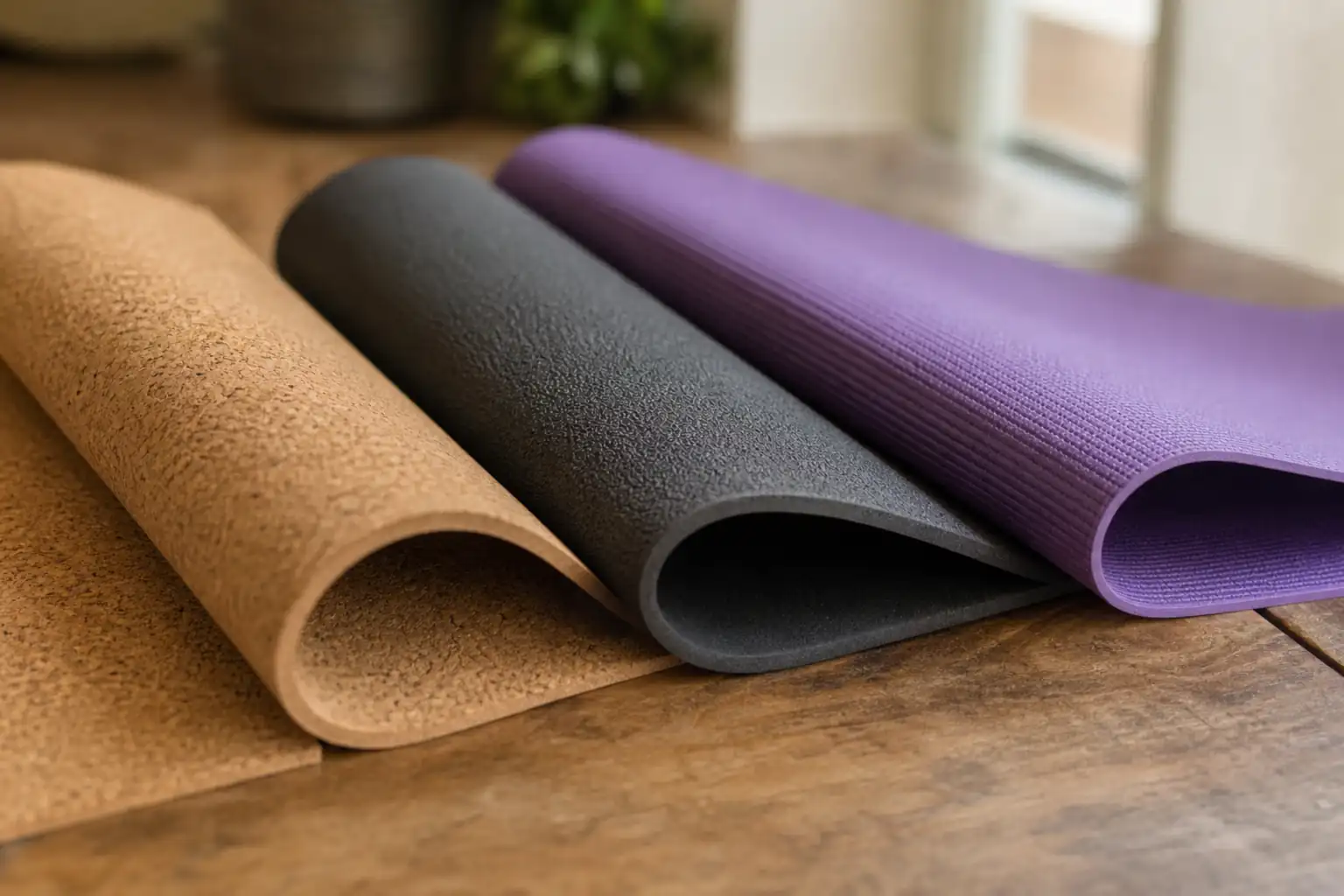
Yoga Mat Materials: Polyurethane over natural rubber grips best dry and wet; natural rubber grips very well dry; cork grips better as it gets damp; PVC lasts longest but slips when wet; TPE and foam are light and cheap but wear sooner. Natural rubber contains latex.
Key takeaways
- Polyurethane over rubber grips best, dry and wet.
- PVC lasts longest but slips when wet.
- Natural rubber contains latex; cork over foam does not.
To pick a mat once you know the material, start with our best yoga mats.
Yoga Mat Materials Compared
| Material | Dry grip | Wet grip | Weight | Latex | Mats in our pool |
|---|---|---|---|---|---|
| PVC | Good once broken in | Poor | Light to heavy (density) | No | 5 |
| Natural rubber | Very good | Fair | Heavy | Yes | 4 |
| Polyurethane over rubber | Excellent | Excellent | Medium | Yes | 4 |
| Cork over rubber or foam | Fair to good | Very good | Light (foam) to heavy (rubber) | Yes on rubber, no on foam | 1 |
| Microfiber towel top | Fair | Excellent | Medium | Yes (rubber base) | 2 |
| Foam (NBR, TPE) | Fair | Poor | Light | No | 3 |
Check Amazon for current pricing and availability.
PVC Yoga Mats
PVC is the classic studio material: closed-cell, so sweat stays on top and a damp cloth cleans it, and very durable when dense. It is slick until broken in and slippery when wet. Light PVC mats are cheap and easy to carry; dense PVC mats are heavy and keep their cushion for years.
Natural Rubber Yoga Mats
Natural rubber is tapped from rubber trees. Open-cell rubber is among the grippiest surfaces when dry and heavy enough to stay put on the floor; it smells of rubber at first, dislikes sun and harsh cleaners, and contains latex. MedlinePlus explains that latex allergy is a reaction to proteins in natural rubber latex: people with a latex allergy should avoid these mats.
Polyurethane Over Rubber
A thin polyurethane top over a natural rubber base gives the strongest grip of all, dry and wet, which is why it leads our hot yoga rankings. The top shows marks and sweat stains, needs a wipe after every class, and the rubber base still contains latex.
Cork Yoga Mats
Cork is bark harvested from cork oaks without cutting the tree. A cork top grips better as it gets damp, resists odors and needs little cleaning. On natural rubber it is dense and heavy; on plant-based foam it is light and latex-free. In a cool room cork can feel slick until hands warm up.
TPE, Foam and Towel Tops
- TPE: a light, latex-free synthetic, often sold as eco-friendly; cheap, less grippy and less durable than rubber.
- Foam (NBR): thick, soft and cheap, for floor work and pilates; unstable in balances and dents with use.
- Microfiber towel top: fused to a rubber base, it grips better as it gets wet; made for hot yoga and washed often.
Which Material Fits Your Practice
- Hot or sweaty yoga: polyurethane over rubber, a microfiber top or cork.
- Dry, slow practice: natural rubber or PVC.
- Latex allergy: PVC, TPE, foam or cork over foam.
- Natural materials: cork or natural rubber; see our best eco friendly yoga mats.
- Low budget: light PVC or foam; see our best budget yoga mats.
- The National Center for Complementary and Integrative Health advises talking with a health provider about a health condition before starting yoga.
Yoga Mats to Start With
One pick per material from our rankings.
Polyurethane over rubber

Manduka GRP Adapt 5mm
FitScore 71.8/100
The grippiest surface, dry and wet. Ranked #1 in our best non slip yoga mat guide, FitScore 71.8 for that intent.
Check Price on AmazonDense pvc

Manduka PRO 6mm
FitScore 70.9/100
Latex-free, closed-cell and built to last. Ranked #1 in our best thick yoga mat guide, FitScore 70.9 for that intent.
Check Price on AmazonCork over rubber

Yoga Design Lab Travel Cork 1.5mm
FitScore 56.8/100
Grips as it gets damp, resists odors. Ranked #4 in our best travel yoga mat guide, FitScore 56.8 for that intent.
Check Price on AmazonChecklist Before You Buy
5 checks
Tap a number to check off that step.
- 01
Pick the surface for your sweat: polyurethane or cork for sweaty practice.
- 02
Avoid natural rubber with a latex allergy.
- 03
Check the base: rubber cushions and stays put, foam is light.
- 04
Weigh the mat if you carry it: rubber and cork are heavy.
- 05
Plan the care each material needs.
Common Mistakes to Avoid
Mistake 1Buying natural rubber with a latex allergy.
Mistake 2Choosing PVC for hot yoga.
Mistake 3Expecting TPE to last like rubber.
Mistake 4Cleaning rubber with oils or alcohol.
Mistake 5Leaving rubber or cork in the sun.
The Bottom Line
- Our pool of 19 yoga mats covers PVC, natural rubber, polyurethane, cork, microfiber towel tops and foam.
- 8 of them are latex-free; every mat with a natural rubber layer contains latex.
- The surface decides grip; the base decides cushion, weight and how the mat stays on the floor.
- Cork and natural rubber are renewable; PVC is the hardest to recycle.
Our Top Picks
 Polyurethane over rubberManduka GRP Adapt 5mmFitScore71.8/100Check on Amazon
- Dense pvcManduka PRO 6mmFitScore70.9/100Check on Amazon
- Cork over rubberYoga Design Lab Travel Cork 1.5mmFitScore56.8/100Check on Amazon
Frequently Asked Questions
For grip, polyurethane over natural rubber; for durability, dense PVC; for a natural surface, cork or natural rubber; for a low price, light PVC or foam.
Natural rubber grips better from day one and is renewable; PVC lasts longer, is latex-free and easier to clean.
They are light, latex-free and cheap, but less grippy and less durable than rubber or dense PVC.
Yes: natural rubber contains latex proteins, so people with a latex allergy should avoid it.
Cork grips better when damp and resists odors; rubber grips better dry and cushions more. Many cork mats sit on a rubber base.
Look for a named certification such as OEKO-TEX Standard 100 or an FSC or USDA biobased label, and air out any new mat in a ventilated room.
Explore More Yoga Mat Guides
Best Yoga Mat (2026): 5 Yoga Mats Ranked by FitScore
Best Eco Friendly Yoga Mat (2026): 5 Natural Mats Ranked

Best Large Yoga Mat (2026): 5 Long and Wide Mats Ranked
Best Non Slip Yoga Mat (2026): 5 Grippy Mats Ranked by FitScore
How to Clean a Yoga Mat (2026): Daily Wipe and Deep Clean by Material
Yoga Mat Thickness Guide (2026): How Thick Should a Yoga Mat Be?
This article contains affiliate links. If you click through and make a purchase, we may earn a small commission at no extra cost to you. As an Amazon Associate, we earn from qualifying purchases. We do not show prices because they change constantly: product details and availability can change at any time, so please check the current price and details directly on Amazon. Learn more. Amazon and the Amazon logo are trademarks of Amazon.com, Inc. or its affiliates.
