

Damper setting at a glance
Start at 3 to 5; set the drag factor, not the lever number.
Reference values from Concept2 guidance, national testing and two studies. Details below.
Short answer
The best rowing machine damper setting for most people is 3 to 5, which usually gives a drag factor of about 110 to 130. The damper changes how each stroke feels, not how hard the workout is: your pull sets the intensity.
Key takeaways
- The damper sets the feel of the stroke; your pull sets the intensity.
- Most people row best at damper 3 to 5, about drag 110 to 130.
- Use the drag factor to set the same feel on any machine.
- Save damper 10 for short power strokes.
Below: what the damper and the drag factor mean, a reference chart, and how to set yours on the monitor.
Rowing Machine Damper Setting: What the Damper Does, and What It Does Not
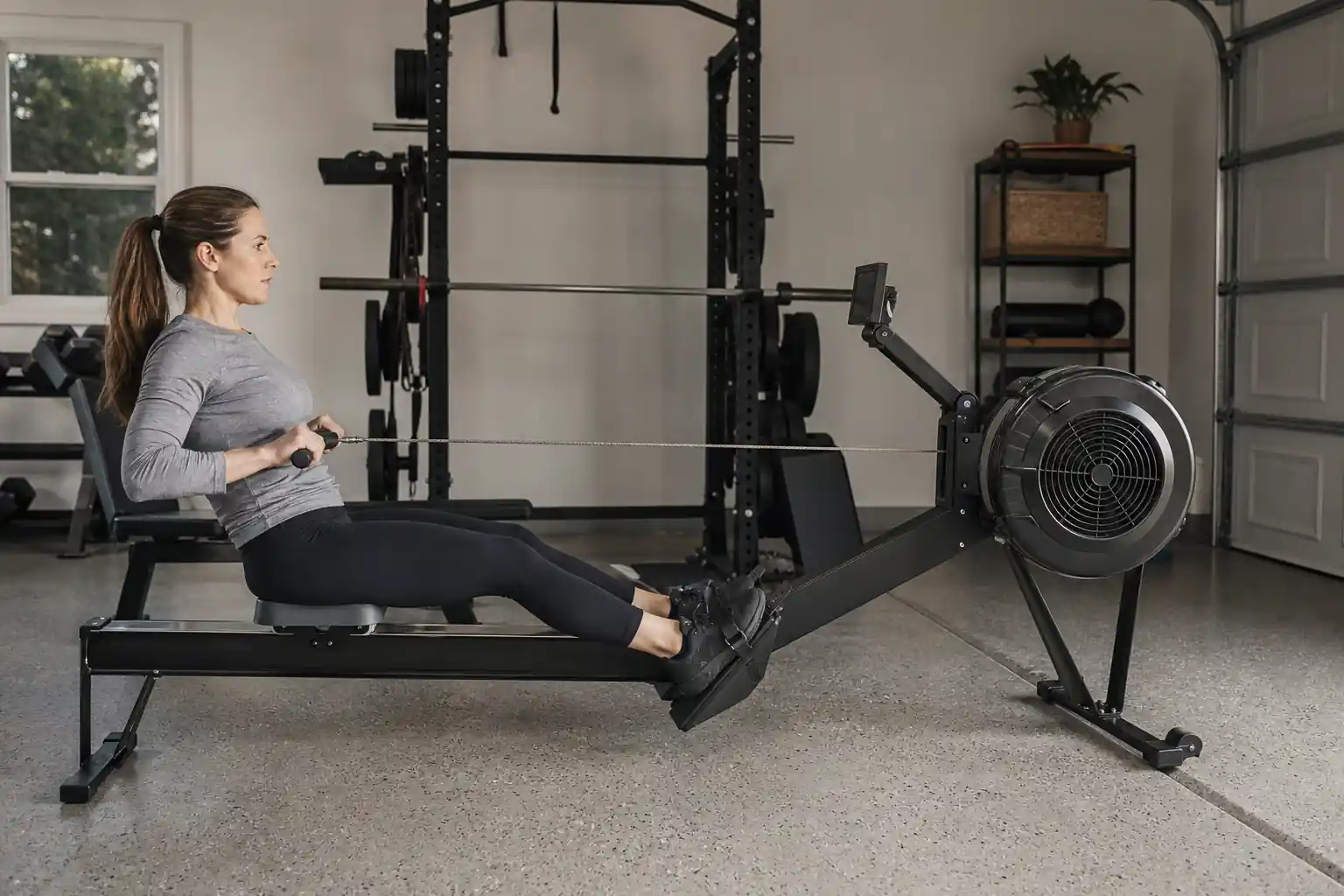
The damper is the lever on the side of the fan cage of an air rower, numbered 1 to 10. A higher number lets more air into the cage, so the fan slows down faster between strokes and each drive feels heavier, like rowing a big, slow boat. A lower number lets in less air and feels like a light racing shell.
What it does not do is set how hard the workout is. Concept2 compares it to bike gears: on any setting, the harder and faster you pull, the more resistance you feel. Many beginners set 10 to “work harder” and end up with tired legs and back before their heart and lungs get much work. Our how to use a rowing machine guide covers the stroke itself.
Damper Setting vs Drag Factor
The number on the lever is not the same on every machine. Dust and lint in the fan cage, air temperature and altitude all change how much air the fan moves, so damper 3 on one rower can feel like 4 on another. The drag factor fixes that: the monitor measures how fast the flywheel slows between strokes and turns it into a number. Two machines set to the same drag factor feel the same, whatever the lever says.
- On a Concept2 PM5: open More Options, then Display Drag Factor, and row at an easy pace for a few strokes; the number updates as you move the lever.
- Adjust in small steps: move the lever, row three or four strokes, read the number again.
- Clean the fan cage: a dusty cage lowers the drag factor at the same lever setting; cleaning it brings the numbers back.
- Other air rowers: many show only the lever number; use the same lever setting each time, and compare by feel and split.
Drag Factor Chart: Reference Settings
There is no single right number, but these reference points show where most people row. Damper numbers are approximate, since the same lever setting gives a different drag factor on each machine.
| Use | Drag factor | Approximate damper | Where the value comes from |
|---|---|---|---|
| Learning the stroke, easy rows | About 100 to 120 | 3 to 4 | Concept2 advice to start at 3 to 5 |
| National erg testing, women (New Zealand) | 110 | About 3 | Standard test setting |
| Two-time Olympic champion, women’s eight | About 125 | About 4 | Her usual training drag |
| National erg testing, men (New Zealand) | 130 | About 4 to 5 | Standard test setting |
| Long steady rows, college heavyweight crew | About 140 | About 5 | A head coach’s preferred setting |
| Short power strokes only | About 200 | 10 | Strength-style pieces of 10 to 20 strokes |
Check Amazon for current pricing and availability.
Pro tip: If your split gets worse when you raise the damper, the setting is too heavy for you. Pick the drag factor where your split is best for the same effort.
What the Research Says About Drag Factor
A 2008 study of 14 club rowers compared drag factors of 100 and 150 in step tests on an air rower and found no difference in oxygen use, heart rate or blood lactate at any submaximal stage, and stroke rate tended to be higher at the lighter setting. A 2013 study of 12 club rowers found the same trade-off: drag 100 brought higher stroke rates and heart rates, while drag 150 gave slightly better rowing economy for trained rowers.
For a home rower, the practical point is simple: the setting changes how you reach an effort, not how fit the workout makes you. Choose the drag that lets you keep good form for the whole session, then train with your split and heart rate.
Which Damper Setting to Use for Your Workout
- Beginners: damper 3 to 5 while you learn the legs, body, arms order; see our rowing machine workout for beginners.
- Steady rows of 20 minutes or more: a drag factor around 110 to 130, light enough to keep the stroke smooth for the whole session.
- Intervals: the same or slightly higher; keep the stroke rate up rather than pulling a heavy fan.
- Power strokes: damper 10 only for short pieces of 10 to 20 strokes with full rest, as a strength drill.
- Sensitive back: stay low; a heavy setting pulls the back into the stroke. Our rowing machine for back pain guide covers the details.
- Races and tests: use the drag factor the event sets, and train at it in the weeks before.
Damper vs Levels on Magnetic, Water and Hybrid Rowers
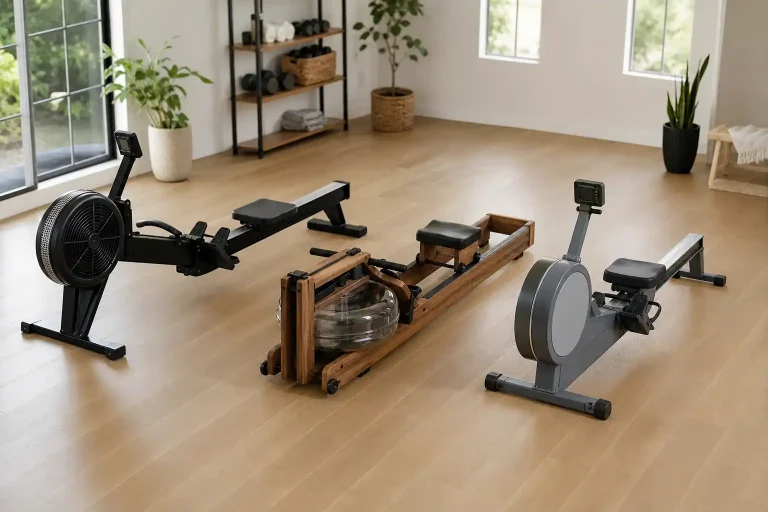
Only air rowers have a damper in the strict sense. A magnetic rower has numbered levels that move a magnet closer to the flywheel, so a higher level really is more resistance at the same pace; start in the lower third. A water rower has no lever: the pull follows your speed, and the amount of water in the tank changes the feel the way a damper does. Hybrid air and magnetic rowers combine a fan with a magnetic brake. Our types of rowing machines guide explains each system.
Air Rowers With an Adjustable Damper
Three air rowers from our rankings with a damper or numbered air settings.
Check the warranty terms before you buy: the FTC explains how to read a product warranty.
Shows the drag factor

Concept2 RowErg
FitScore 87.1/100
FitScore 87.1 in our best air rowing machine guide, where it ranks 1st. An air rower with a 1 to 10 damper and a PM5 monitor that displays the drag factor, the 500 m split, watts and heart rate. It has a 500 lb limit and a 5-year frame warranty; it is 96 inches long and splits in two.
Ranked in our Best Air Rowing Machine guide
Check Price on Amazon10-Level air damper

GMWD RM02
FitScore 75.9/100
FitScore 75.9 in our best air rowing machine guide, where it ranks 5th. An air rower with a 10-level damper, a 500 lb limit and a monitor that shows stroke rate. It folds and stands upright, with a 2-year warranty.
Ranked in our Best Air Rowing Machine guide
Check Price on AmazonAir with a screen

Merach R50 Aura
FitScore 77.5/100
FitScore 77.5 in our best air rowing machine guide, where it ranks 4th. An air rower with 10 settings, a 15.6-inch screen, a 440 lb limit and a monitor that shows the 500 m split and stroke rate. It folds and stands upright.
Ranked in our Best Air Rowing Machine guide
Check Price on AmazonChecklist Before You Buy
6 checks
Tap a number to check off that step.
- 01
Start at damper 3 to 5.
- 02
Check your drag factor on the monitor, not only the lever number.
- 03
Pick the drag where your split is best for the same effort.
- 04
Keep the same drag factor from session to session.
- 05
Clean the fan cage when the numbers drop.
- 06
Save damper 10 for short power strokes.
Common Mistakes to Avoid
Mistake 1Setting damper 10 to “work harder”.
Mistake 2Comparing lever numbers across machines.
Mistake 3Changing the damper every session.
Mistake 4Ignoring a dusty fan cage.
Mistake 5Pulling a heavy fan with a rounded back.
The Bottom Line
- The damper lever (1 to 10) lets more or less air into the fan cage; it works like bike gears, not like a resistance knob.
- The drag factor is how fast the flywheel slows between strokes; the same drag factor feels the same on any air rower.
- Concept2 recommends starting at damper 3 to 5 and warns against setting it too high.
- New Zealand standardizes national erg testing at drag factor 130 for men and 110 for women.
- In a study of club rowers, drag factor 100 and 150 gave the same oxygen use and heart rate at submaximal efforts.
Our Top Picks
 Shows the drag factorConcept2 RowErgFitScore87.1/100Check on Amazon
- 10-Level air damperGMWD RM02FitScore75.9/100Check on Amazon
- Air with a screenMerach R50 AuraFitScore77.5/100Check on Amazon
Frequently Asked Questions
Start at 3 to 5. Most people row best there, which usually means a drag factor of about 110 to 130. Pick the setting where your split is best for the same effort.
For most adults, about 110 to 130. New Zealand uses 130 for men and 110 for women in national erg tests, and many trained rowers stay between 120 and 140.
It feels heavier on each stroke, but it does not make the workout harder by itself: your effort does. Most people get a worse split and tire their muscles sooner at 10.
Dust in the fan cage, air temperature and altitude change how much air the fan moves. Set the drag factor, not the lever number, to get the same feel.
Open More Options, choose Display Drag Factor, row a few easy strokes and move the lever until you reach the number you want.
No. It has numbered levels that add real resistance. Start in the lower third and raise it as your technique improves.
Explore More Rowing Machine Guides
How to Use a Rowing Machine Properly: Form, Technique and Settings (2026)
Erg Calculator (2026): Rowing Pace, 500 m Split and Time
Best Air Rowing Machine (2026): 5 Picks for Hard Training
Types of Rowing Machines (2026): Air, Magnetic, Water, Hydraulic and Hybrid Explained
Rowing Machine Workout Library (2026): Steady, HIIT, Pyramid and 15 to 30-Minute Sessions
Air Rower vs Magnetic Rower (2026): Feel, Noise and Which to Buy
This article contains affiliate links. If you click through and make a purchase, we may earn a small commission at no extra cost to you. As an Amazon Associate, we earn from qualifying purchases. We do not show prices because they change constantly: product details and availability can change at any time, so please check the current price and details directly on Amazon. Learn more. Amazon and the Amazon logo are trademarks of Amazon.com, Inc. or its affiliates.
