

Elliptical for bad knees at a glance
Choose by fit and start gently.
Stride, seated frames, resistance steps and posture, with the Arthritis Foundation and research behind them. Details below.
Short answer
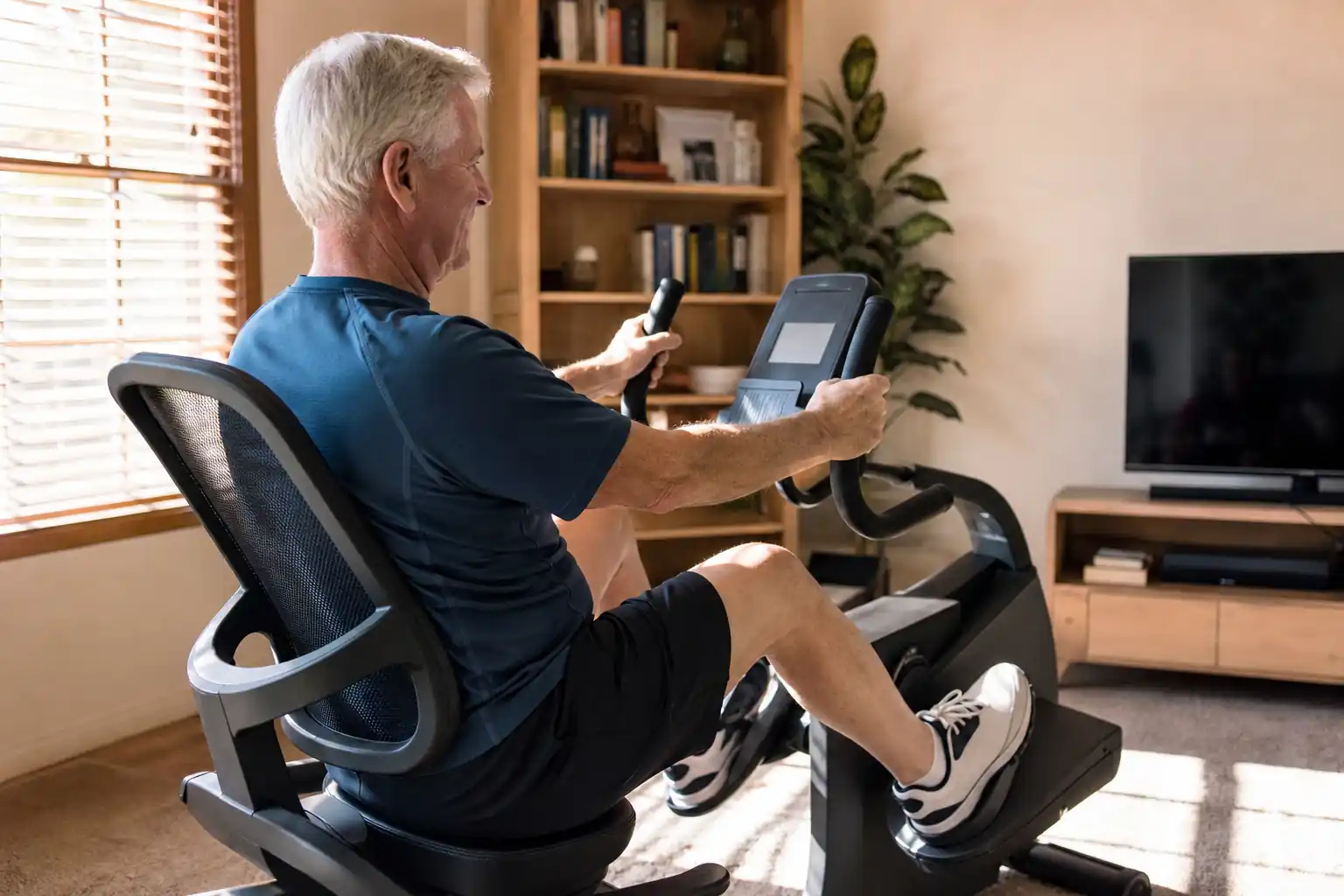
The best elliptical for bad knees keeps both feet on the pedals, fits your stride, starts at a light first level and lets you sit if standing hurts. Check with your doctor or physical therapist first.
Key takeaways
- Choose by fit: stride length, a light first level and a seated frame if needed.
- Start with 5 to 10 easy minutes and build toward 30 on most days.
- Keep the heels down, the knees soft and the grip light.
- Ask your doctor or physical therapist first; this page is not medical advice.
This guide turns “easy on the knees” into elliptical features you can check, and links the rankings that fit them.
Elliptical for Bad Knees: What “Easy on the Knees” Means on an Elliptical
An elliptical is low impact because your feet never leave the pedals, so nothing lands on the joints. The Arthritis Foundation describes it as a machine that goes easy on the joints, with less pounding on the knee than walking or running, and it still trains the heart and the leg muscles. The Johns Hopkins Arthritis Center makes the same point: the knee is held fairly stable through the motion.
Low impact does not mean no knee work. A 2007 biomechanics study of 15 adults found lower vertical loading on an elliptical than in level walking, but greater knee extensor moments, so the thigh muscles around the knee work harder. The 2019 osteoarthritis guideline from the American College of Rheumatology and the Arthritis Foundation strongly recommends exercise for knee osteoarthritis without naming one best machine. This is not medical advice: ask your doctor or physical therapist whether and how to use an elliptical.
- Stride that fits you: a stride too short for your height makes the motion choppy and bends the knee in a tighter arc.
- Seated option: a recumbent elliptical lets you work the same motion with a backrest if standing is hard.
- Light first level: a low starting resistance and small steps let you build slowly.
- Stable frame: a user rating well above your weight and a frame that does not rock make stepping on safer.
- Moving handles: arm work shares the effort, but the legs should still lead.
Which Elliptical Types Have the Features That Matter
We track 47 ellipticals. This is how the types compare on the features above:
| Type | Models | Median stride | Stride 18 in or more | Backrest | Median user rating |
|---|---|---|---|---|---|
| Standing (full-size) | 27 | 17.4 in | 12 of 27 | No | 350 lb |
| Compact | 4 | 14 in | 1 of 4 | No | 300 lb |
| Seated (recumbent) | 6 | 11 in stepping stride | Not applicable | 6 of 6 | 300 lb |
Check Amazon for current pricing and availability.
How to Use an Elliptical to Be Gentle on the Knees
The Arthritis Foundation gives a short list for using an elliptical comfortably, and coaches and long-time owners add the same few points.
- Stand tall: keep the body straight and the shoulders back, especially as you tire, and hold the handles lightly for balance rather than leaning on them.
- Keep the heels down: push through the whole foot; rising onto the toes moves the load to the front of the knee.
- Soft knees: never lock them at the bottom of the stride, and keep them in line with your toes.
- Start small: 5 to 10 minutes at a light level after a short warm-up, building toward 30 minutes on most days.
- Use reverse stride: pedaling backward shifts the work toward the hamstrings and the back of the thighs, according to the Arthritis Foundation.
- Stop if it hurts: ease off the resistance or end the session, and add strength and flexibility work on other days.
Features to Check Before You Buy
Use the product page to confirm each feature, because the same product name can cover several versions.
- Stride length: full-size models in our pool run from 11 to 20 in; most adults are more comfortable at 18 in or more, and taller users at 20 in. Our stride length calculator gives a starting point.
- Step-on height: a low pedal height makes getting on and off easier; check it if climbing a step is hard.
- Resistance steps: the first level should feel light; 16 to 20 levels give smaller jumps than 8.
- Pedals: wide, cushioned pedals with room to move your feet help if your feet go numb on long sessions.
- Incline: a power ramp shifts work toward the glutes, but keep it low while your knees settle in.
- Returns: if the stride does not suit you, you will want an easy return window.
Ellipticals to Look At First
Three picks from our rankings that match the features above.
Seated, easiest to start

Teeter FreeStep LT7
FitScore 70.7/100
A seated stepper with a backrest, moving arm handles, 20 resistance levels and a 350-lb user rating. Ranked #1 in our best elliptical for seniors guide, FitScore 70.7 for that intent.
Check Price on AmazonLongest stride
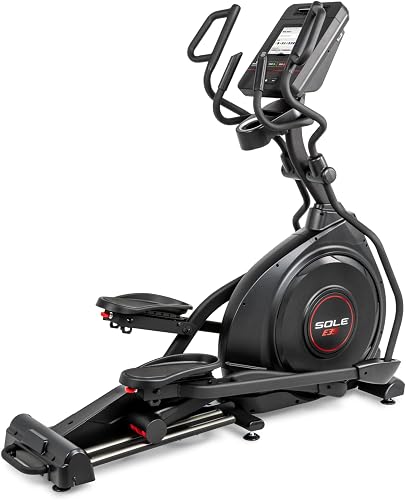
Sole E35
FitScore 72.2/100
A rear-drive elliptical with a 20-in stride, 20 resistance levels, a power incline and a 400-lb user rating. Ranked #1 in our best elliptical for home guide, FitScore 72.2 for that intent.
Check Price on AmazonSeated with 16 levels

Sunny Health & Fitness SF-RBE4886SMART
FitScore 62.5/100
A recumbent elliptical with a backrest, moving arm handles, 16 resistance levels and a 300-lb user rating. Ranked #2 in our best recumbent elliptical guide, FitScore 62.5 for that intent.
Check Price on AmazonHow Much to Use It
Build from the Arthritis Foundation’s 5 to 10 minutes toward 150 minutes of moderate activity a week, the adult target in national guidelines, in sessions as short as you need. Let comfort set the pace, and keep strength work for the thighs and hips in the week, since an elliptical is not weight-bearing the way walking is. Our elliptical benefits guide covers what regular sessions do for fitness.
Checklist Before You Buy
5 checks
Tap a number to check off that step.
- 01
Ask your doctor or physical therapist before you start.
- 02
Pick a stride that fits your height, or a seated model if standing is hard.
- 03
Check the lowest resistance and the size of each step.
- 04
Keep the heels down and the knees soft.
- 05
Start with 5 to 10 easy minutes and stop if it hurts.
Common Mistakes to Avoid
Mistake 1Buying a short-stride machine for a long-legged user.
Mistake 2Rising onto the toes as you tire.
Mistake 3Leaning on the handles.
Mistake 4Starting at a high level or a steep incline.
The Bottom Line
- The Arthritis Foundation describes the elliptical as easy on the joints because both feet stay on the pedals, and advises starting with 5 to 10 minutes and building to 30 on most days.
- The 2019 American College of Rheumatology and Arthritis Foundation guideline strongly recommends exercise for people with knee osteoarthritis.
- A 15-adult study found lower vertical loading on an elliptical than in level walking, with more work for the knee extensors.
- The 27 full-size ellipticals we track have a median stride of 17.4 in; all 6 seated (recumbent) models have moving arm handles and a backrest.
Our Top Picks
 Seated, easiest to startTeeter FreeStep LT7FitScore70.7/100Check on Amazon
- Longest strideSole E35FitScore72.2/100Check on Amazon
- Seated with 16 levelsSunny Health & Fitness SF-RBE4886SMARTFitScore62.5/100Check on Amazon
Frequently Asked Questions
For many people, yes: both feet stay on the pedals, so there is no landing impact. The thigh muscles still work, so start light and ask your doctor or physical therapist first.
One with a stride that fits your height and a light first level, or a seated recumbent elliptical if standing is hard; see our best elliptical for seniors and best recumbent elliptical rankings.
Both are low impact. A bike lets you sit; an elliptical works you standing and adds the arms. Our exercise bike for bad knees guide covers the bike side.
Common causes are a stride too short for your height, rising onto the toes, locking the knees or too much resistance. Lower the level, keep the heels down, and stop and ask a clinician if the pain stays.
The Arthritis Foundation suggests starting with 5 to 10 minutes and building to at least 30 minutes on most days.
Explore More Elliptical Guides
Best Elliptical for Seniors (2026): 5 Seated, Easy-Access Picks
Best Recumbent Elliptical (2026): 4 Seated Cross Trainers Ranked
Elliptical Benefits: What Regular Elliptical Training Does (and Does Not Do) (2026)
Elliptical vs Walking: Calories, Joints and Who Should Choose Which (2026)
Exercise Bike for Bad Knees: What to Look For and Which Bikes Fit (2026)
Best Elliptical for Home (2026): 5 Standing Ellipticals Ranked
This article contains affiliate links. If you click through and make a purchase, we may earn a small commission at no extra cost to you. As an Amazon Associate, we earn from qualifying purchases. We do not show prices because they change constantly: product details and availability can change at any time, so please check the current price and details directly on Amazon. Learn more. Amazon and the Amazon logo are trademarks of Amazon.com, Inc. or its affiliates.
