

Vibration plate circulation at a glance
Short sessions at about 20 to 30 Hz raised blood flow in the legs and feet for a while.
What controlled studies measured, and on which settings. Details and sources below.
Short answer
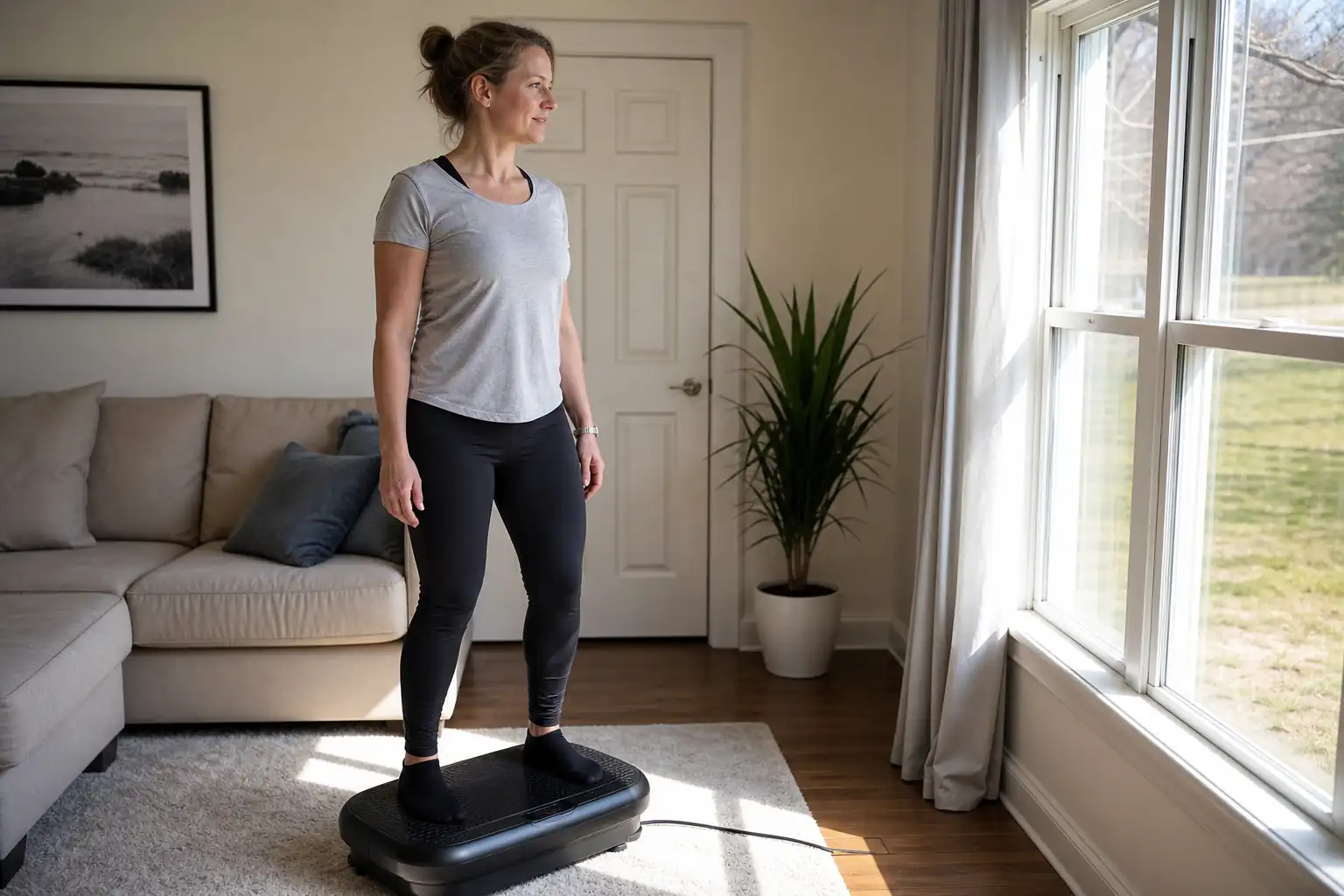
Vibration Plate Circulation: A vibration plate can raise blood flow in the legs and feet for a short time: in studies, sessions at about 20 to 30 Hz increased skin blood flow during and after use. It is a short-term effect, not a treatment for a circulation problem.
Key takeaways
- Blood flow in the legs rose during and after short sessions at about 20 to 30 Hz.
- The effect is short-term; no study tested a plate as a circulation treatment.
- Ask a doctor first if you have clots, heart disease, diabetes or are pregnant.
- Walking and calf raises also move blood in the legs.
Below: the studies, the settings they used, and who should ask a doctor first.
Vibration Plate Circulation at a Glance
Here is what the research on blood flow found, and on which settings. Each line is explained below.
| Study | Who | Settings | What changed |
|---|---|---|---|
| Systematic review (2019) | Controlled studies of whole-body vibration | 30 Hz or less vs 31 to 50 Hz | Better leg blood flow or skin temperature at 30 Hz or less; mixed results above |
| Randomized crossover (2020) | 30 older adults | 15, 20, 25 Hz, 4 mm, 3 bouts of 1 minute | Foot skin blood flow up at 20 and 25 Hz; balance unchanged |
| Crossover vs sham (2014) | 10 adults with diabetes and foot nerve symptoms | Low frequency, low amplitude | Skin blood flow up vs sham; blood nitric oxide unchanged |
| Scoping review (2026) | 46 human studies | Whole-body, leg and hand vibration | More skin blood flow in 26; hand-held tool vibration lowered finger blood flow in 15 |
Check Amazon for current pricing and availability.
Does a Vibration Plate Help Circulation?
For a short time, in the legs, the answer from the research is yes. A 2019 systematic review in Clinical Physiology and Functional Imaging looked at controlled studies of whole-body vibration and peripheral circulation. At 30 Hz or less, exposure improved blood flow, skin temperature or both in the lower legs. Between 31 and 50 Hz the results conflicted. The authors also noted that many studies used vibration stronger than the limits of the ISO 2631-1 standard, and advised staying within them until safe settings are better defined.
What the studies did not show is a lasting change. They measured blood flow during and shortly after a session, not weeks later, and none tested a plate as a treatment for a circulation disease. For strength, balance and weight, see our vibration plate benefits guide.
Pro tip: Cold feet after a long day at a desk? A short walk or a few calf raises also get blood moving in the legs, with no equipment at all.
What Happened in Older Adults
In a 2020 randomized crossover study, 30 older adults stood on a plate for three one-minute bouts with one minute of rest, at 15, 20 or 25 Hz with a 4 mm movement, and once with no vibration. Skin blood flow on the top of the foot rose during and after the 20 and 25 Hz sessions, more at 25 Hz, and the feeling of vibration in the soles improved. Balance did not change.
The authors concluded that 20 Hz, within the recommended limits, was enough to raise blood flow in the feet. That is a useful setting to know, because many home plates go well above it.
What Happened in Adults With Diabetes
A 2014 study in the Journal of Diabetes Science and Technology tested 10 adults with diabetes and reduced feeling in the feet. Each did a low-frequency, low-amplitude vibration session and a sham session a week apart. Skin blood flow in the legs rose after real vibration compared with the sham; blood levels of nitric oxide, a marker of blood vessel widening, did not change.
It is a small, short study, and it does not show that a plate treats nerve damage or foot problems. If you have diabetes, any new device for your feet is a question for your care team first. Our who should not use a vibration plate guide lists the main cautions.
Settings Used in the Blood Flow Studies
These are the settings behind the results above. Most home plates show speed levels rather than hertz; check the manual for the frequency at each level.
- Frequency: about 20 to 30 Hz; the clearest gains came at 30 Hz or less.
- Movement: about 4 mm peak to peak in the study of older adults.
- Time: short bouts, such as three rounds of one minute with one minute of rest.
- Position: standing with soft knees; locked knees send more of the vibration toward the head.
- Hands: holding a vibrating tool lowers finger blood flow; on a plate, keep your hands on a still handlebar or counter.
Who Should Ask a Doctor First
Mayo Clinic advises checking with a doctor before using whole-body vibration, especially if you are pregnant or have a health condition. That matters most here, because people looking for better circulation often have a reason for it.
- Blood clots: a past or current clot in a leg or lung.
- Heart and blood vessels: heart disease, a pacemaker or peripheral artery disease.
- Diabetes: especially with numb feet or foot wounds.
- Recent surgery or implants: joints, spine or eyes.
- Pregnancy.
Watch out: Leg pain, swelling, color changes or wounds that do not heal need a doctor, not a plate.
Plates for Short Standing Sessions
Three plates from our rankings: one that covers the 20 to 30 Hz range used in the studies, one with a handlebar for a steady stance, and one rated for heavier users.
Covers 20 to 30 hz

Merach CV55 4D
FitScore 75.7/100
It runs both oscillating and linear motion over a stated 5 to 45 Hz, so it reaches the settings used in the blood flow studies, with 5 programs and a remote. It is rated for 440 lb. Ranked #1 in our best vibration plate for weight loss guide, FitScore 75.7 for that intent.
Check Price on AmazonSteadiest stance

Lifepro Rhythm
FitScore 67/100
A fixed handlebar and a 27 by 29 inch platform give a steady stance for short standing bouts. It is a low-frequency oscillating plate (2 to 6 Hz) with a large movement, rated for 330 lb. Ranked #1 in our best vibration plate for seniors guide, FitScore 67 for that intent.
Check Price on AmazonHighest weight rating

Merach MR-2490H1 4D
FitScore 69.8/100
Oscillating and linear motion, 7 programs and Bluetooth on a curved deck rated for 450 lb. Keep a counter or chair within reach, since it has no handlebar. Ranked #1 in our best vibration plate for lymphatic drainage guide, FitScore 69.8 for that intent.
Check Price on AmazonHow to Try a Plate for Circulation Safely
6 checks
Tap a number to check off that step.
- 01
Ask your doctor first if you have a health condition or take blood thinners.
- 02
Start at a low setting for one minute, then rest for one minute.
- 03
Stand with soft knees and keep your hands on something still.
- 04
Stay at or below about 30 Hz, where results were clearest.
- 05
Stop if you feel dizzy, numb or in pain.
- 06
Keep walking: it is the simplest way to move blood in the legs.
Common Mistakes to Avoid
Mistake 1Treating a plate as a cure for poor circulation.
Mistake 2Using it with leg pain or swelling that has no diagnosis.
Mistake 3Starting at the top speed for long sessions.
Mistake 4Locking the knees on the plate.
Mistake 5Skipping the doctor check with a clot history.
The Bottom Line
- A 2019 systematic review found that whole-body vibration at 30 Hz or less improved blood flow or skin temperature in the lower legs; results above 30 Hz were mixed.
- In 30 older adults, three one-minute bouts at 20 or 25 Hz raised foot skin blood flow during and after the session, with no change in balance.
- In 10 adults with diabetes and nerve symptoms in the feet, a low-frequency session raised skin blood flow compared with a sham session.
- A 2026 scoping review of 46 papers found more skin blood flow in 26 of them, mostly with whole-body or lower-limb vibration.
- Only 10 of the 20 plates in our database that state a frequency reach 25 Hz or more.
Our Top Picks
 Covers 20 to 30 hzMerach CV55 4DFitScore75.7/100Check on Amazon
- Steadiest stanceLifepro RhythmFitScore67/100Check on Amazon
- Highest weight ratingMerach MR-2490H1 4DFitScore69.8/100Check on Amazon
Frequently Asked Questions
For a short time, yes: studies found more blood flow in the legs and feet during and after sessions at about 20 to 30 Hz. The effect is temporary, and it is not a treatment for a circulation disease.
In the study of older adults, three bouts of one minute with one minute of rest were enough to raise foot blood flow. Longer sessions were not needed in that study.
The clearest results came at 30 Hz or less; in older adults, 20 and 25 Hz raised foot skin blood flow. Results above 30 Hz were mixed.
It can warm the feet and raise skin blood flow for a while after a session. Cold feet that never improve, or that change color, are worth a doctor visit.
Ask your doctor first. Mayo Clinic advises a doctor check before whole-body vibration for anyone with a health condition.
No. Lymph is a separate system from blood circulation; our lymphatic drainage plate guide covers it.
Explore More Vibration Plate Guides
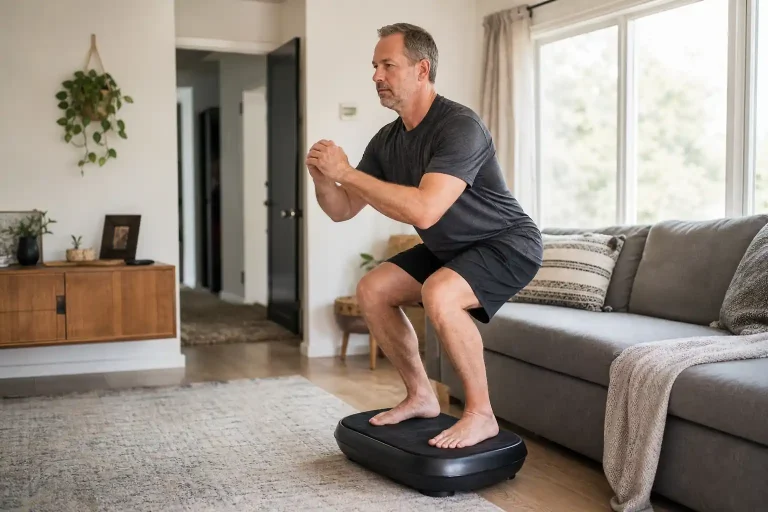
Benefits of Vibration Plate Training: What the Research Shows (2026)
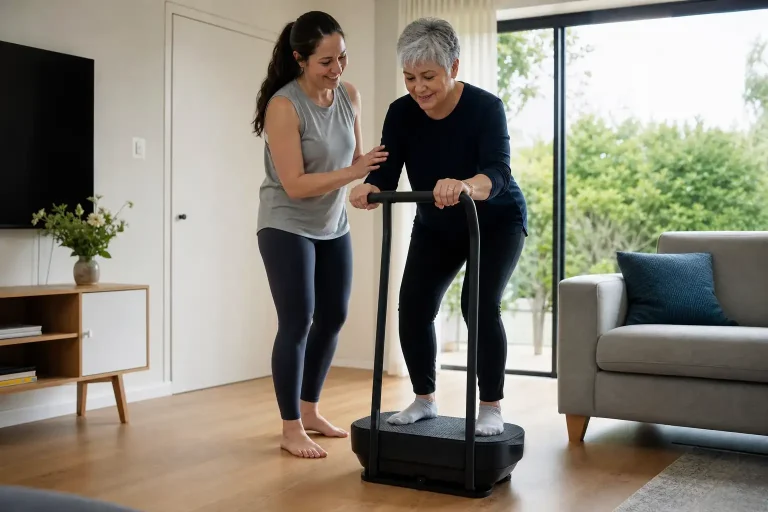
Who Should Not Use a Vibration Plate? Safety Checks Before You Start (2026)
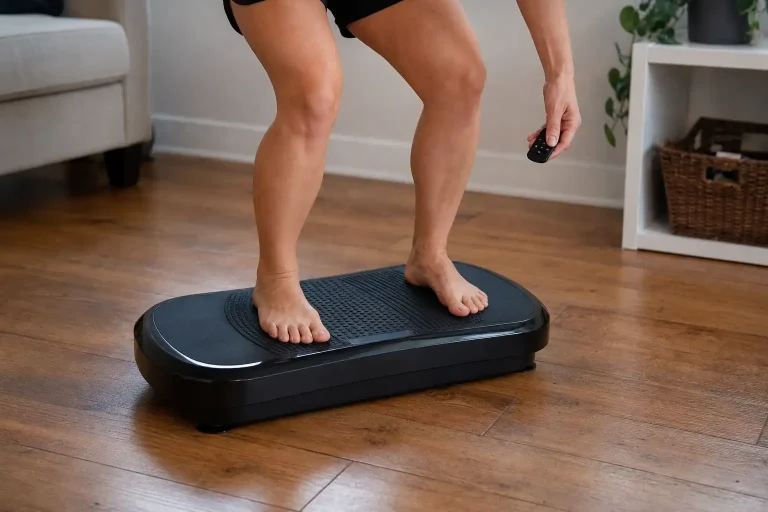
How to Use a Vibration Plate: Setup, Settings and Session Length (2026)
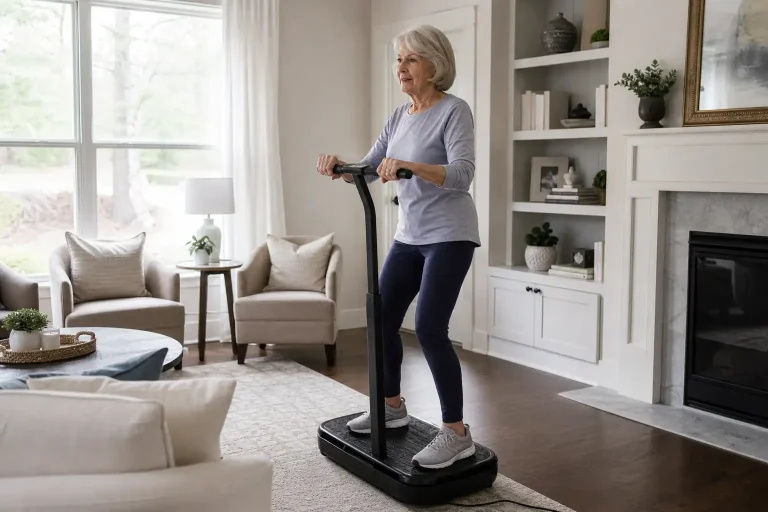
Best Vibration Plate for Seniors (2026): 5 Picks With Handlebars
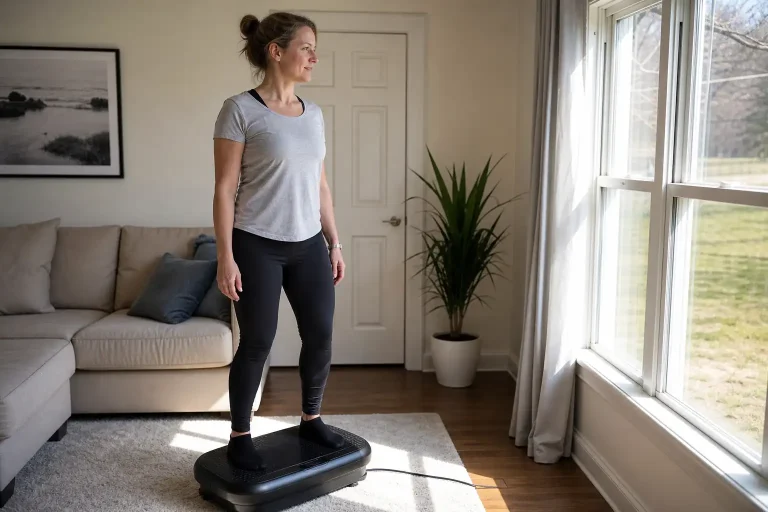
Best Vibration Plate for Lymphatic Drainage (2026): 5 Gentle Picks
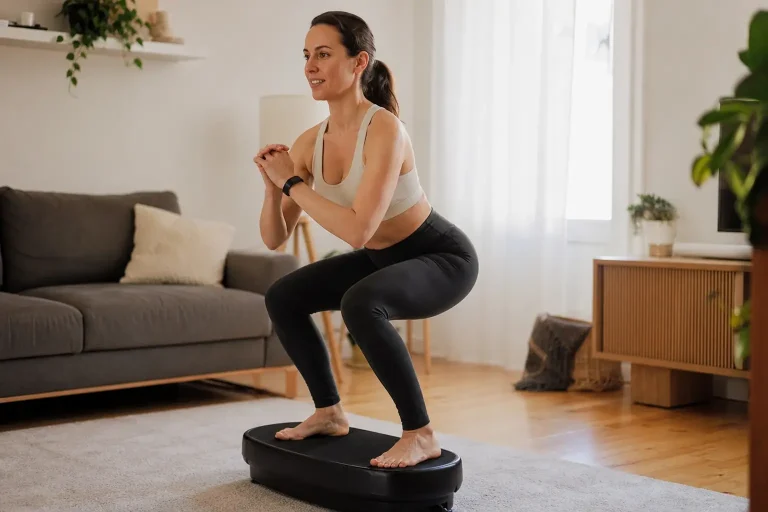
Best Vibration Plate (2026): 5 Top Picks for Home, Ranked
This article contains affiliate links. If you click through and make a purchase, we may earn a small commission at no extra cost to you. As an Amazon Associate, we earn from qualifying purchases. We do not show prices because they change constantly: product details and availability can change at any time, so please check the current price and details directly on Amazon. Learn more. Amazon and the Amazon logo are trademarks of Amazon.com, Inc. or its affiliates.
