

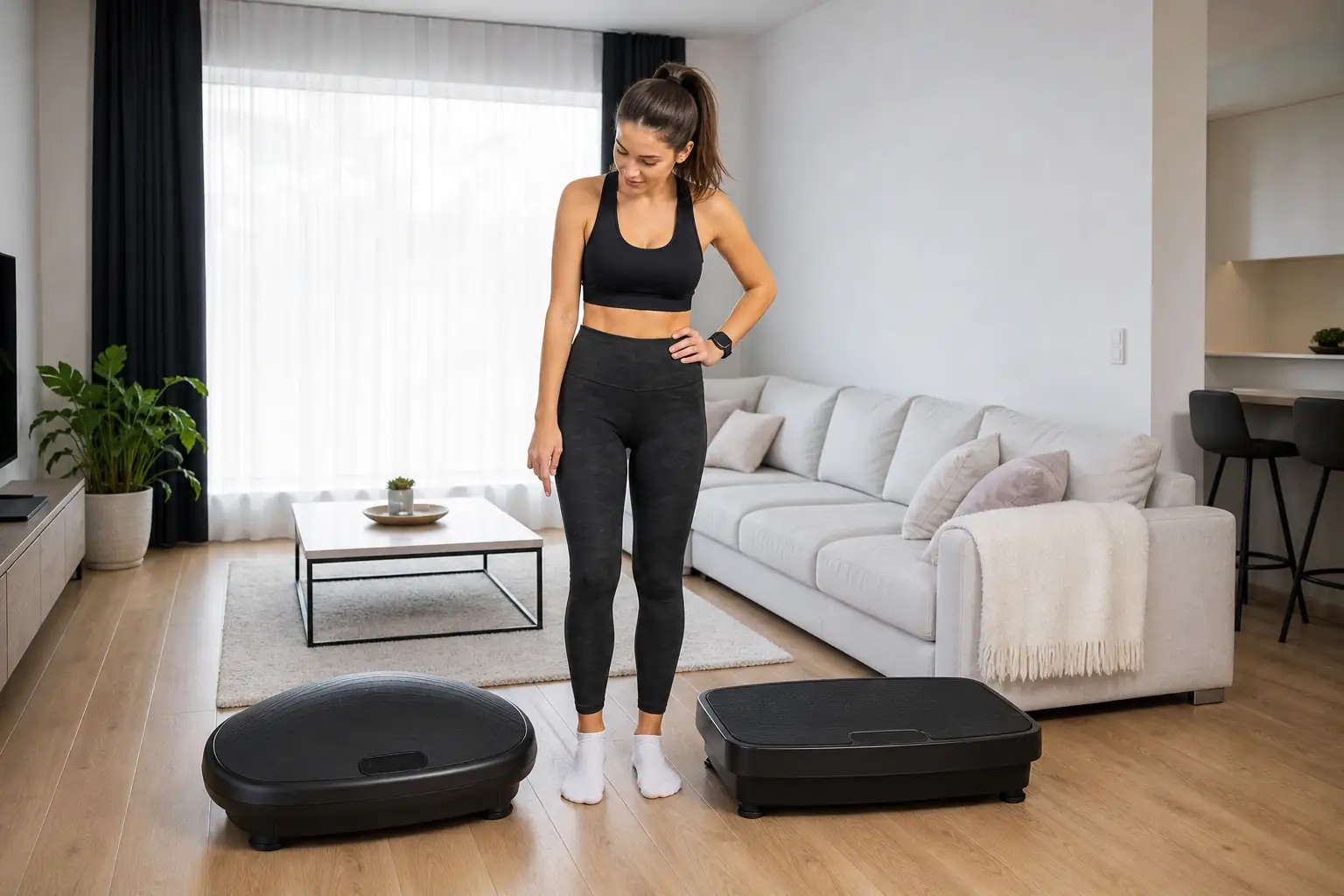
Curved vs flat vibration plate at a glance
The curve comes with oscillating, bands and a lighter body; the evidence for the shape itself is missing.
Medians from the plates in our database that state each spec. Details below.
Short answer
In the curved vs flat vibration plate choice, the deck shape matters less than the motion under it, and we found no study that tests it. In our database the 11 curved plates are mostly large-travel oscillating models, lighter than the flat ones, with no handlebar.
Key takeaways
- 11 of 44 plates in our database are curved, mostly large-travel oscillating models.
- We found no study comparing a curved deck with a flat one.
- None of the curved plates has a handlebar; pick on motion, travel and rating first.
The motion matters more: see our oscillating vs linear vibration plate comparison.
Curved vs Flat Vibration Plate at a Glance
What the 11 curved and 33 flat plates in our database have in common and where they differ. Figures are medians of the plates that state each spec.
| Curved deck | Flat deck | |
|---|---|---|
| Plates in our database | 11 | 33 |
| Oscillating only | 4 of 11 | 15 of 33 |
| Stated travel (amplitude) | 10-15 mm (8 state it) | 2-17 mm (15 state it) |
| Highest stated frequency (median) | 12.75 Hz (6 state it) | 34.8 Hz (14 state it) |
| Weight (median) | 17.6 lb | 27 lb |
| Weight rating (median) | 400 lb | 330 lb |
| Handlebar | 0 of 11 | 7 of 33 |
| Resistance bands | 9 of 11 | 25 of 33 |
Check Amazon for current pricing and availability.
What a Curved Deck Is
A curved deck is a platform whose top surface is domed or rounded instead of level. On an oscillating plate the platform tips around a center pivot, so the curve follows the rocking motion. Listings describe it with words like “curved design” or “ergonomic”, and the maker rarely says what the curve is for.
That is worth knowing before you pay for it. The reporting recommendations of the International Society of Musculoskeletal and Neuronal Interactions ask studies to state motion type, frequency and peak-to-peak displacement. Deck shape is not on the list, and we found no trial that varies it.
What We See in the Database
The curved plates are not a random sample. 4 of the 11 are oscillating only, every one that states its travel gives 10 mm or more, and the 6 that state a top frequency have a median of 12.75 Hz. Flat plates cover a wider spread, from 6 to 60 Hz at the top end.
They are also lighter: a median of 17.6 lb against 27 lb, with a higher median weight rating (400 lb against 330 lb). The two heaviest plates in the database, the ZAAZ 20K and the Power Plate MOVE, are flat. That points to a design style, a compact oscillating plate with bands, more than to a benefit of the curve itself.
Does the Shape Change How It Feels?
On an oscillating plate, how far each foot travels depends on where you stand: the wider the stance, the larger the movement. That comes from the motion, not from the deck shape. In a 2007 study in Medicine & Science in Sports & Exercise, bending the knees about 26 to 30 degrees cut head acceleration on a side-alternating plate; the plates were not curved or flat variants of each other.
So treat comfort claims for a curved deck as the maker’s opinion. A deck you can stand on in a stance that suits you, with a non-slip surface and room for your feet, matters more. Check the platform length and width in the listing: the curved plates that state them run 18.9 to 31.5 in long and 11.3 to 17.7 in wide.
One Plate of Each
Two curved plates and the top flat plate from our main ranking. Each FitScore is the one of the guide named, with that guide’s weights.
Top curved pick

Merach CV55 4D
FitScore 72.9/100
A curved 4D plate with oscillating and linear motion, 440 lb rating and resistance bands. It leads our main ranking. Ranked #1 in our best vibration plate guide, FitScore 72.9 for that intent.
Check Price on AmazonCompact curved pick

Merach CV30 Pro
FitScore 73.6/100
A curved oscillating plate of 16.27 lb with bands and a 400 lb rating, built to store easily. Ranked #1 in our best compact vibration plate guide, FitScore 73.6 for that intent.
Check Price on AmazonTop flat pick

JOROTO JV80 4D
FitScore 66.9/100
The highest-ranked flat deck in the main ranking. Owners and listings matter more than the deck shape here: compare its motion, travel and rating. Ranked #4 in our best vibration plate guide, FitScore 66.9 for that intent.
Check Price on AmazonWhich Should You Choose?
Pick on the specs that change how you use it, then treat the deck shape as a tie-breaker.
- You want a lighter, oscillating plate with bands: most of the curved plates fit.
- You need a handlebar for balance: only flat plates offer one in our database; see our best vibration plate for seniors.
- You want a higher frequency or a very high weight rating: look at flat linear plates.
- You want to switch motions: read our best 4D vibration plate ranking: several top plates are curved.
- Any health condition or pregnancy: ask your doctor first, as the Mayo Clinic advises, whichever deck you choose.
Checklist Before You Choose a Deck
6 checks
Tap a number to check off that step.
- 01
Does the listing name the motion type and the travel in mm?
- 02
Is the platform length and width stated?
- 03
Is the weight rating above your body weight?
- 04
Do you need a handlebar? Curved plates in our database have none.
- 05
Is the surface non-slip?
- 06
Can you store it where you will use it?
Common Mistakes to Avoid
Mistake 1Paying extra for a curve without checking motion, travel and weight rating.
Mistake 2Assuming a curved deck means a gentler plate.
Mistake 3Skipping the platform size and standing with feet too close.
Mistake 4Standing with straight knees on either deck.
The Bottom Line
- 11 of the 44 plates we track have a curved deck; 33 are flat.
- Every curved plate that states its travel gives 10 mm or more; flat plates range from 2 to 17 mm.
- Median weight is 17.6 lb for curved plates and 27 lb for flat ones.
- None of the 11 curved plates has a handlebar; 7 of the 33 flat ones do.
- We found no study that compares a curved deck with a flat one.
Our Top Picks
 Top curved pickMerach CV55 4DFitScore72.9/100Check on Amazon
- Compact curved pickMerach CV30 ProFitScore73.6/100Check on Amazon
- Top flat pickJOROTO JV80 4DFitScore66.9/100Check on Amazon
Frequently Asked Questions
Neither is proven better: we found no study that compares them. Choose on motion type, travel, weight rating and whether you need a handlebar, then use the deck shape as a tie-breaker.
A plate with a domed or rounded top surface instead of a level one. Most curved plates we track are oscillating, so the platform tips from side to side.
Most are. 4 of the 11 curved plates in our database are oscillating only, and several others combine oscillating and linear motion.
None of the 11 curved plates in our database has one. If you need to hold on, look at flat plates with a fixed handlebar.
Makers say so, but we found no research on it. Oscillating plates in general sent less vibration to the head in a 2007 study than vertical plates, and that comes from the motion.
In our database, yes: the median curved plate weighs 17.6 lb against 27 lb for flat ones, though that reflects the compact oscillating plates that use the shape.
Explore More Vibration Plate Guides
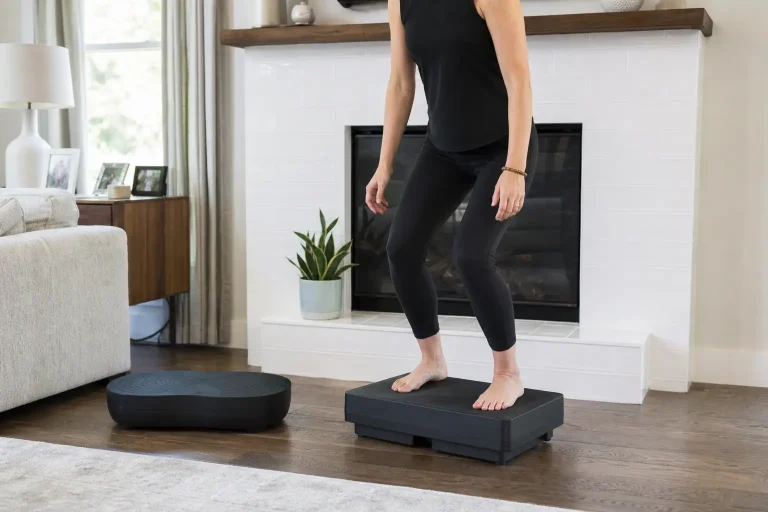
Oscillating vs Linear Vibration Plate (2026): Feel, Settings and Which to Buy
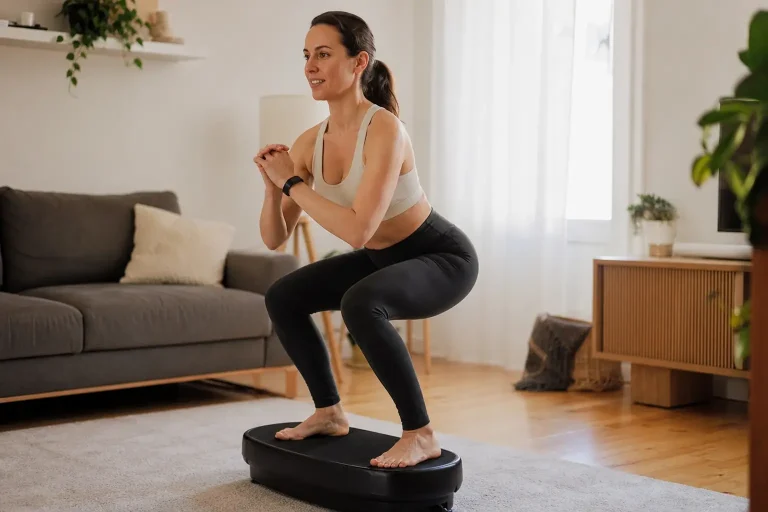
Best Vibration Plate (2026): 5 Top Picks for Home, Ranked
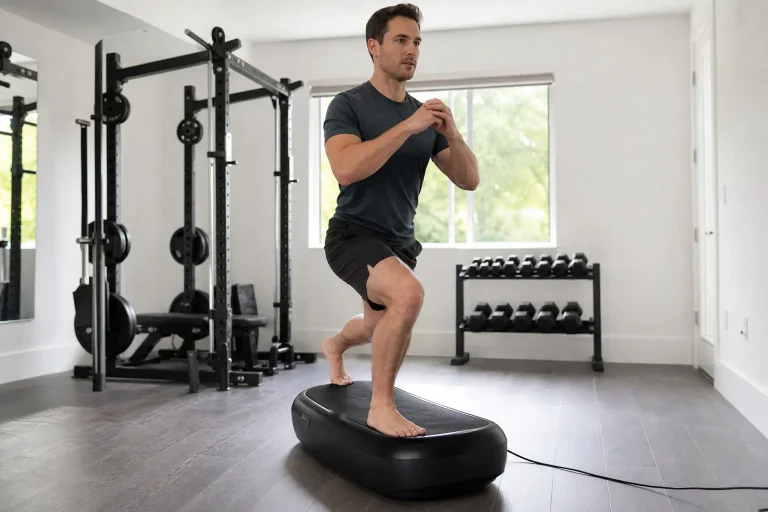
Best 4D Vibration Plate (2026): 5 Multi-Motion Picks, Ranked
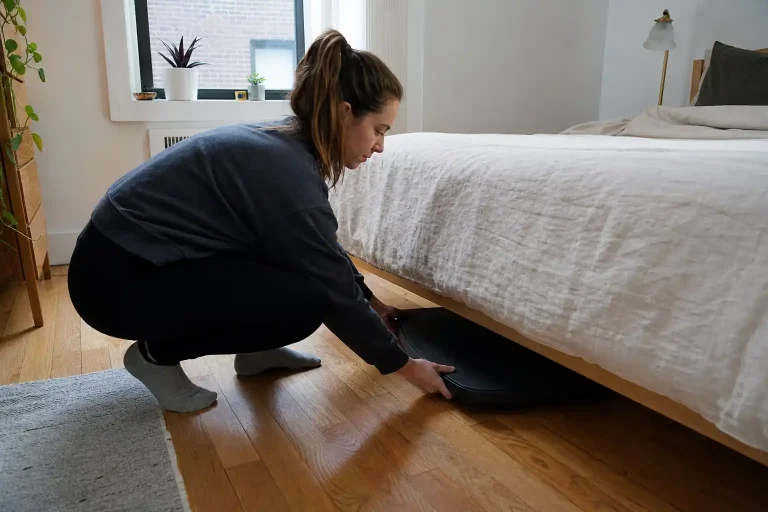
Best Compact Vibration Plate (2026): 5 Light, Easy-to-Store Picks
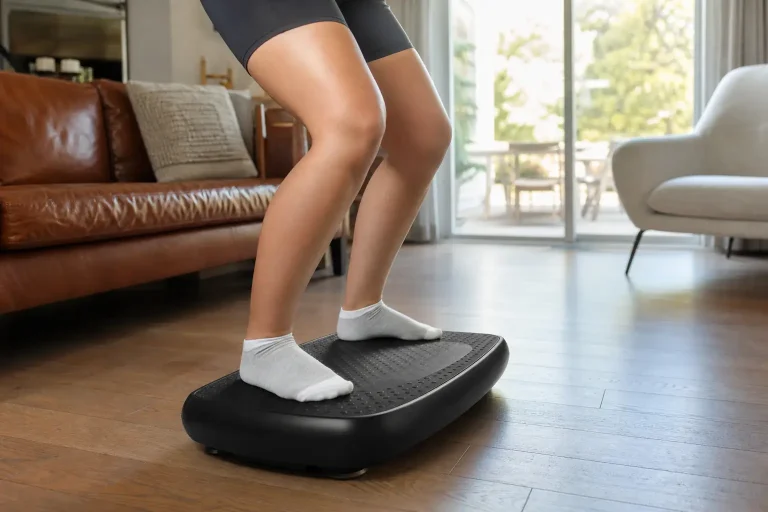
Best Oscillating Vibration Plate (2026): 5 Side-Alternating Picks
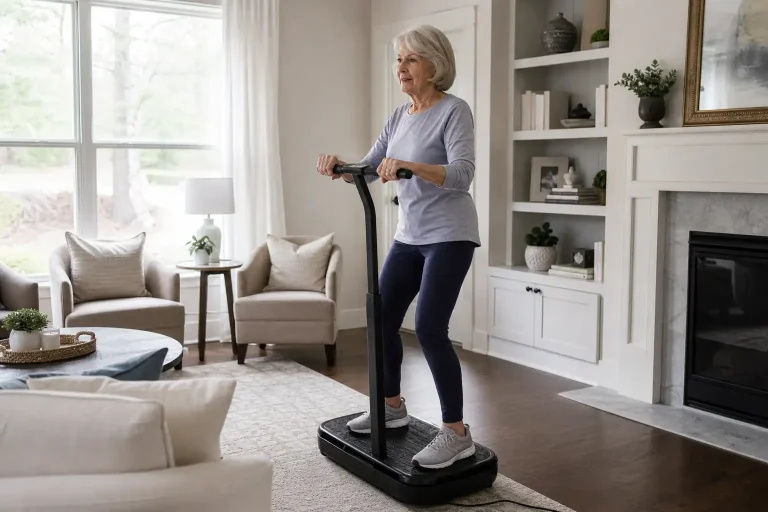
Best Vibration Plate for Seniors (2026): 5 Picks With Handlebars
This article contains affiliate links. If you click through and make a purchase, we may earn a small commission at no extra cost to you. As an Amazon Associate, we earn from qualifying purchases. We do not show prices because they change constantly: product details and availability can change at any time, so please check the current price and details directly on Amazon. Learn more. Amazon and the Amazon logo are trademarks of Amazon.com, Inc. or its affiliates.
