

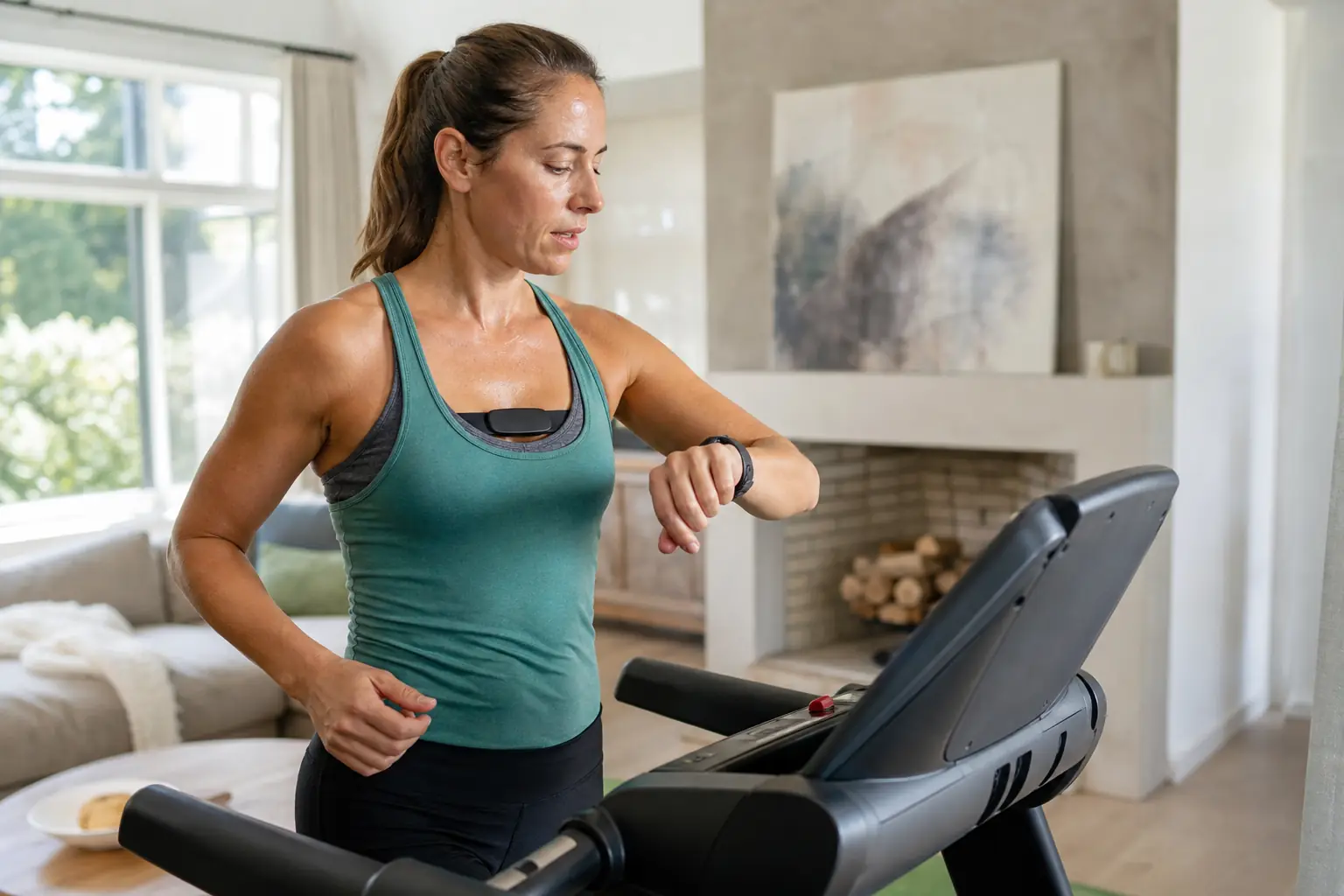
Best Chest Strap Heart Rate Monitor: Our top chest strap heart rate monitor is the Wahoo TRACKR Heart Rate (FitScore 73/100): chest electrodes, HRV, ANT+, three Bluetooth links and a rechargeable battery of over 100 hours.
Chest straps ranked by FitScore; armbands included: see our best heart rate monitors; set your zones with our heart rate zone calculator.
Comparison Table
| Compareat a glance | TOP PICK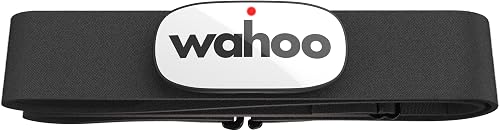 | Pick 2 | Pick 3 | Pick 4 | Pick 5 |
|---|---|---|---|---|---|
| Best For | Best Overall | Best Value | Best for Swimmers and Memory | Best Coin-Cell Strap | Best Budget |
| Type | Chest strap | Chest strap | Chest strap | Chest strap | Chest strap |
| Sensor | Chest electrodes | Chest electrodes | Chest electrodes | Chest electrodes | Chest electrodes |
| Battery | 100 h (rechargeable) | 300 h (coin cell) | 400 h (coin cell) | 400 h (coin cell) | 300 h |
| Water rating | IPX7 | IP67 | WR30 | WR30 | IP67 |
| Connections | ANT+ + Bluetooth (3 Bluetooth links) | ANT+ + Bluetooth | ANT+ + Bluetooth (2 Bluetooth links) | ANT+ + Bluetooth | ANT+ + Bluetooth |
| Warranty | 1 year | 1 year | 2 years | 2 years | 1 year |
| Check Price | Check Price on Amazon | Check Price on Amazon | Check Price on Amazon | Check Price on Amazon | Check Price on Amazon |
Check Amazon for current pricing and availability.
Key Takeaways
- Chest straps give the fastest readings in intervals.
- ANT+ plus Bluetooth covers almost every device.
- Rinse the strap and unclip the sensor after training.
Best Overall: Wahoo TRACKR Heart Rate
Presentation
Best overall
Editor’s pick
Wahoo TRACKR Heart Rate
Wahoo TRACKR Heart Rate ranks #1 in this guide with a FitScore of 73/100. If you want one strap for every device you own, the Wahoo TRACKR Heart Rate is the best of the 5 chest straps we scored: electrodes, HRV with a compatible app, ANT+ + Bluetooth (3 Bluetooth links) and a rechargeable battery of over 100 hours.
FitGearHQ FitScore
FitScore for Heart Rate Monitors
How this FitScore was calculated
This FitScore combines six category scores using weights defined for this guide.
Why Choose This Heart Rate Monitor
If you want one strap for every device you own, the Wahoo TRACKR Heart Rate is the best of the 5 chest straps we scored: electrodes, HRV with a compatible app, ANT+ + Bluetooth (3 Bluetooth links) and a rechargeable battery of over 100 hours.
Sensor and data carry 35% of this guide and its Performance of 100 of 100 is the best here: it can send to a watch, a phone and a bike computer at the same time. Practicality reaches 90 and Comfort 62, the lightest strap of the five at 39 g, which suits users who train indoors and outdoors with different screens.
There is no internal memory or swim mode, so Features are 0; the warranty is 1 year and the rating IPX7, which holds Durability at 53. You need to charge it every week or two of training. Choose it if multi-device pairing matters most.
In a Nutshell
Best Usage
- Interval training where every beat counts
- Recovery checks with HRV in an app
- Pairing a watch, a bike computer and an app
For
- Athletes who train by heart rate zones
- Users who pair a watch and an app at once
- Anyone who wants steadier readings than a wrist watch
Not For
- Users who find chest straps uncomfortable
- Athletes who need a pool swim mode
- Buyers who only want step counts
Key Specs
- Type: Chest strap
- Sensor: Chest electrodes
- Battery: 100 h (rechargeable)
- Water rating: IPX7
- Warranty: 1 year
Pros
- Chest electrodes with HRV output
- ANT+ and Bluetooth
- HRV output for recovery apps
Cons
- Short 1-year warranty
- Strap must sit snug on the chest
- Needs a watch or phone to show data
Best Value: COOSPO H808S
Presentation
Best value
Pick 2
COOSPO H808S
COOSPO H808S ranks #2 in this guide with a FitScore of 71.9/100. If you want strap accuracy and HRV for less, the COOSPO H808S pairs electrodes with ANT+ and Bluetooth, HRV output, an LED status light and a CR2032 coin cell rated for 300 hours.
FitGearHQ FitScore
FitScore for Heart Rate Monitors
How this FitScore was calculated
This FitScore combines six category scores using weights defined for this guide.
Why Choose This Heart Rate Monitor
If you want strap accuracy and HRV for less, the COOSPO H808S pairs electrodes with ANT+ and Bluetooth, HRV output, an LED status light and a CR2032 coin cell rated for 300 hours.
Its Practicality of 100 of 100 ties for the best of the guide and Affordability reaches 80. The coin cell means no charging, and HRV output lets buyers follow recovery in a phone app as well as their workouts.
The warranty is 1 year, which keeps Durability at 56, and it has no memory, so the phone or watch must stay nearby. Choose it if you want most of the features of the leader for a lower price, with a battery you replace once in a long while. The LED shows at a glance whether the strap is paired, which helps users who switch between a phone app, a watch and gym equipment during the week.
In a Nutshell
Best Usage
- Interval training where every beat counts
- Recovery checks with HRV in an app
- Pairing a watch, a bike computer and an app
For
- Athletes who train by heart rate zones
- Anyone who wants steadier readings than a wrist watch
- People who want cardio at home
Not For
- Users who find chest straps uncomfortable
- Athletes who need a pool swim mode
- Buyers who only want step counts
Key Specs
- Type: Chest strap
- Sensor: Chest electrodes
- Battery: 300 h (coin cell)
- Water rating: IP67
- Warranty: 1 year
Pros
- Up to 300 h on a coin cell
- Chest electrodes with HRV output
- Zone LED on the sensor
Cons
- Strap must sit snug on the chest
- Short 1-year warranty
- Needs a watch or phone to show data
Best for Swimmers and Memory: Polar H10
Presentation
Best for swimmers and memory
Pick 3
Polar H10
Polar H10 ranks #3 in this guide with a FitScore of 68.7/100. If you swim or leave the phone behind, the Polar H10 records one session in its memory, carries a WR30 rating and runs up to 400 hours on a coin cell, with ANT+ and dual Bluetooth.
FitGearHQ FitScore
FitScore for Heart Rate Monitors
How this FitScore was calculated
This FitScore combines six category scores using weights defined for this guide.
Why Choose This Heart Rate Monitor
If you swim or leave the phone behind, the Polar H10 records one session in its memory, carries a WR30 rating and runs up to 400 hours on a coin cell, with ANT+ and dual Bluetooth.
Durability reaches 75 of 100 with a 2 years warranty and the water rating, and Practicality ties for the best at 100. Memory lets users train without a phone and sync the session afterward, which pool swimmers and runners who travel light appreciate.
It is one of the most expensive straps here, so Affordability is 36, and its 60 g strap keeps Comfort at 46. Choose it if a durable, water-resistant strap with memory is worth the price. Dual Bluetooth also lets it feed a watch and a phone app at the same time, so buyers do not have to choose between their devices before a session.
In a Nutshell
Best Usage
- Interval training where every beat counts
- Pairing a watch, a bike computer and an app
- Zone training on a treadmill, bike or rower
For
- Athletes who train by heart rate zones
- Runners who leave the phone at home
- Users who pair a watch and an app at once
Not For
- Users who find chest straps uncomfortable
- Buyers who only want step counts
- Users who prefer training outdoors
Key Specs
- Type: Chest strap
- Sensor: Chest electrodes
- Battery: 400 h (coin cell)
- Water rating: WR30
- Warranty: 2 years
Pros
- Up to 400 h on a coin cell
- Chest electrodes for fast readings
- 2-year warranty
Cons
- Strap must sit snug on the chest
- Needs a watch or phone to show data
- Strap needs washing after sweaty sessions
Best Coin-Cell Strap: Polar H9
Presentation
Best coin-cell strap
Pick 4
Polar H9
Polar H9 ranks #4 in this guide with a FitScore of 63.1/100. If you want a no-fuss strap that runs for months, the Polar H9 offers electrodes, Bluetooth LE, ANT+ and 5 kHz, a 400-hour coin cell and a WR30 rating with a 2 years warranty.
FitGearHQ FitScore
FitScore for Heart Rate Monitors
How this FitScore was calculated
This FitScore combines six category scores using weights defined for this guide.
Why Choose This Heart Rate Monitor
If you want a no-fuss strap that runs for months, the Polar H9 offers electrodes, Bluetooth LE, ANT+ and 5 kHz, a 400-hour coin cell and a WR30 rating with a 2 years warranty.
Durability reaches 75 of 100 and Practicality ties for the best at 100, while its price keeps Affordability at 70. The 5 kHz link also lets it talk to older gym equipment, which suits users with a mix of new and older machines at home or at the gym.
It has no memory and no HRV output, so Features are 0 and Performance 55. Choose it if long battery life and a 2-year warranty matter more than extra data. It uses the same strap style as the brand’s premium model, so replacement straps are easy to find, and the sensor clips off for washing after sweaty sessions.
In a Nutshell
Best Usage
- Interval training where every beat counts
- Pairing a watch, a bike computer and an app
- Zone training on a treadmill, bike or rower
For
- Athletes who train by heart rate zones
- Anyone who wants steadier readings than a wrist watch
- People who want cardio at home
Not For
- Users who find chest straps uncomfortable
- Buyers who only want step counts
- Users who prefer training outdoors
Key Specs
- Type: Chest strap
- Sensor: Chest electrodes
- Battery: 400 h (coin cell)
- Water rating: WR30
- Warranty: 2 years
Pros
- Up to 400 h on a coin cell
- 2-year warranty
- Chest electrodes for fast readings
Cons
- No internal memory
- Strap must sit snug on the chest
- Needs a watch or phone to show data
Best Budget: COOSPO H6
Presentation
Best budget
Pick 5
COOSPO H6
COOSPO H6 ranks #5 in this guide with a FitScore of 62.6/100. If price comes first, the COOSPO H6 is the cheapest strap of the guide: electrodes with ANT+ and Bluetooth, a 300-hour battery, IP67 and a 46.4 g strap.
FitGearHQ FitScore
FitScore for Heart Rate Monitors
How this FitScore was calculated
This FitScore combines six category scores using weights defined for this guide.
Why Choose This Heart Rate Monitor
If price comes first, the COOSPO H6 is the cheapest strap of the guide: electrodes with ANT+ and Bluetooth, a 300-hour battery, IP67 and a 46.4 g strap.
Its Affordability of 90 of 100 is the best here and Practicality ties for the best at 100. It pairs with watches, phones, bike computers and gym consoles, and shows zones in the maker’s app, a sensible start for buyers trying zone training.
It has no HRV output or memory, so Performance is 55 and Features 0, and the warranty is 1 year. It is the lowest FitScore of the five. Choose it as a first strap, then upgrade if you start tracking recovery. The low price also makes it a practical spare for a second user in the household or for a bag that stays at the gym, so nobody has to share a sweaty strap.
In a Nutshell
Best Usage
- Interval training where every beat counts
- Pairing a watch, a bike computer and an app
- Zone training on a treadmill, bike or rower
For
- Athletes who train by heart rate zones
- Anyone who wants steadier readings than a wrist watch
- People who want cardio at home
Not For
- Users who find chest straps uncomfortable
- Athletes who need a pool swim mode
- Buyers who only want step counts
Key Specs
- Type: Chest strap
- Sensor: Chest electrodes
- Battery: 300 h
- Water rating: IP67
- Warranty: 1 year
Pros
- Up to 300 h of battery
- Chest electrodes for fast readings
- ANT+ and Bluetooth
Cons
- Strap must sit snug on the chest
- Short 1-year warranty
- Needs a watch or phone to show data
How We Selected the Best Chest Strap Heart Rate Monitor
Sensor and data lead at 35 points, then Durability at 20, Comfort and Practicality at 15 each, Affordability at 10 and Features at 5.
Every chest strap in our pool counts; a brand holds at most two places. 5 chest straps qualified. Our FitScore method explains every criterion.
| Category | Weight | What it measures for this buyer |
|---|---|---|
| Performance | 35 | Sensor and data: electrode strap or optical, HRV output and Bluetooth links |
| Durability | 20 | The warranty, the water rating and the brand record |
| Comfort | 15 | Form and weight: armband or chest strap, grams on the body |
| Practicality | 15 | Battery life and connections: ANT+ and Bluetooth |
| Affordability | 10 | How the price compares with the other heart rate monitors in the guide |
| Features | 5 | Internal memory, swim mode and zone LED |
How to Choose the Best Chest Strap Heart Rate Monitor
Chest straps differ mostly by battery and by what they send.
Coin-cell strap: a replaceable battery that lasts hundreds of hours; nothing to charge.
Rechargeable strap: a battery you charge by cable; no coin cells to buy, more frequent charging.
Strap with memory: records a session without a phone and syncs it later.
Pro tip: Wet the electrodes before you start: the reading settles faster. Chest strap or armband? See chest strap vs armband.
Check both ANT+ and Bluetooth, and how many Bluetooth devices can connect at once if you pair a watch and an app. HRV output matters for recovery apps. Then the battery, the water rating if you swim and a strap that stays put without pinching.
Fit: snug just below the chest muscles, sensor centered.
Care: rinse the strap after sweaty sessions and unclip the sensor.
Battery: keep a spare coin cell in your bag.
Checklist Before Buying a Chest Strap:
- Check ANT+ and Bluetooth.
- Count the devices you will pair.
- Pick coin cell or rechargeable.
- Check HRV output for recovery apps.
- Check the water rating.
- Read the warranty.
Common mistakes to avoid:
- Wearing the strap too loose.
- Starting with dry electrodes.
- Leaving the sensor clipped on after training.
- Buying Bluetooth only for an ANT+ device.
- Machine washing the sensor.
Decision Shortcuts
Pick the battery and the connections first, then the budget.
Check the warranty terms before you buy: the FTC explains how to read a product warranty.
Best Overall: You want a rechargeable strap that feeds three devices at once: choose Wahoo TRACKR Heart Rate.
Best Value: You want HRV and a zone LED for less: choose COOSPO H808S.
Best for Swimmers and Memory: You want memory and a WR30 rating: choose Polar H10.
Best Coin-Cell Strap: You want a 400-hour coin cell and a 2-year warranty for less: choose Polar H9.
Best Budget: You want the lowest-priced strap: choose COOSPO H6.
Final Verdict
Wahoo TRACKR Heart Rate is our first choice for most people shopping for a chest strap heart rate monitor. 5 chest straps were scored on sensor data, durability, comfort, battery, features and price. Sensor and data carry 35% of this ranking: HRV output and simultaneous Bluetooth links set the straps apart. Coin-cell straps run for months; rechargeable straps need a charge every week or two of training. CDC guidance for adults: at least 150 minutes of moderate or 75 minutes of vigorous activity a week.
For most buyers, Wahoo TRACKR Heart Rate is the best chest strap heart rate monitor we would check first, after confirming its current price and availability.
Frequently Asked Questions about the Best Chest Strap Heart Rate Monitor
In our ranking, the Wahoo TRACKR Heart Rate (FitScore 73/100): electrodes, HRV, ANT+, three Bluetooth links and over 100 hours per charge.
They read the electrical signal of the heart, which makes them the reference for training, especially in intervals.
Snug enough not to slide when you move, below the chest muscles, with the sensor centered.
Rinse the strap after each session and hand wash it regularly with the sensor removed; follow the maker’s instructions.
Coin-cell straps in our pool are rated 300 to 400 hours; the rechargeable one over 100 hours per charge.
Most gym equipment and bike computers read ANT+ or Bluetooth straps; check the console’s supported standards.

This article contains affiliate links. If you click through and make a purchase, we may earn a small commission at no extra cost to you. As an Amazon Associate, we earn from qualifying purchases. We do not show prices because they change constantly: product details and availability can change at any time, so please check the current price and details directly on Amazon. Learn more. Amazon and the Amazon logo are trademarks of Amazon.com, Inc. or its affiliates.
