

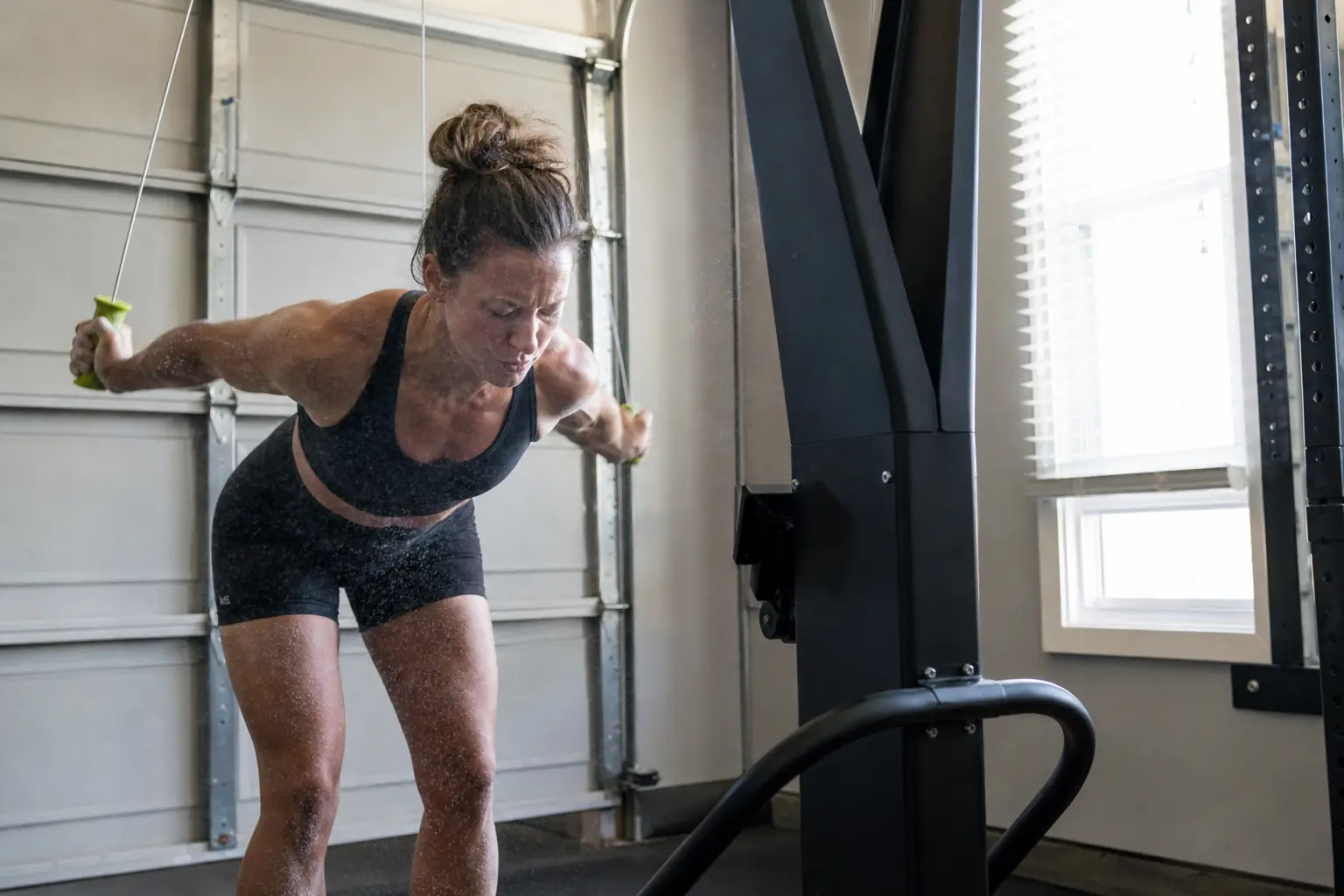
Short answer
Ski Erg Workouts: Start with 10 minutes of easy pulls, add one interval session a week and keep most sessions conversational. The ski erg trains the arms, core and legs in one standing stroke, so short intervals add up quickly.
Key takeaways
- A ski erg stroke is a hip hinge, not an arm curl.
- Keep most sessions easy and add one interval session.
- Pace hard rounds evenly by watts, split or stroke rate.
To pick a machine, see our best ski erg guide, and for the stroke itself see how to use a ski erg.
Before You Start
Warm up for 3 to 5 minutes with easy pulls, then work through the stroke: reach up, pull the handles to your hips and hinge forward at the hips, not at the lower back.
- Damper or resistance level: start in the middle of the range; a higher level is not a harder workout if your pace drops.
- Stroke rate: start around 25 to 35 pulls a minute and adjust by feel.
- Breathing: breathe out as you pull down and in as you reach up.
6 Ski Erg Workouts
Keep most of your week easy and add one hard session; a second one only when the first feels fresh.
| Workout | Structure | Level |
|---|---|---|
| 10-minute starter | 10 minutes of easy pulls, resting when you need to | Beginner |
| Steady cardio | 20 to 30 minutes at a pace you can talk through | All levels |
| 30 on, 30 off | 8 rounds of 30 seconds hard and 30 seconds easy | Intermediate |
| Pyramid | 1, 2, 3, 2, 1 minutes hard with equal rest after each | Intermediate |
| Distance intervals | 5 rounds of 500 m hard with 2 minutes of rest | Advanced |
| Row and ski finisher | 5 rounds of 250 m ski erg and 250 m on a rower | Advanced |
Check Amazon for current pricing and availability.
How to Pace the Hard Efforts
If your monitor shows watts or split time, aim for the same number on every hard round; a fade of more than 10 percent means you started too fast. Without a monitor, use stroke rate and breathing: hard rounds should leave you breathing heavily but able to repeat the next one.
- Even effort: equal rounds beat one fast round followed by slow ones.
- Full recovery: rest until your breathing settles before the next effort.
- Log it: a monitor with an app or a notebook shows progress better than feel.
Pro tip: Training both a rower and a ski erg? See rower vs SkiErg and rowing machine workouts.
Weekly Plan
A simple week for most people: one steady session, one interval session and one short technique session. Total time matters more than any single workout, and the CDC activity guidelines give the weekly target.
- Day 1: steady cardio, 20 to 30 minutes.
- Day 3: 30 on, 30 off or the pyramid.
- Day 5: 10-minute starter with technique focus.
Ski Ergs Worth a Look
An air flywheel with a monitor you can pace by, or a lower-priced model on a wall.
Check the warranty terms before you buy: the FTC explains how to read a product warranty.
Complete air ski erg

Bear KompleX MAX Ski Erg
FitScore 83.1/100
Air flywheel with 10 levels, ergonomic handles, a wheeled floor stand and wall hardware in the box. Ranked #1 in our best ski erg guide, FitScore 83.1 for that intent.
Check Price on AmazonTrain by watts and pace

Concept2 SkiErg with Floor Stand
FitScore 81.5/100
The PM5 monitor shows watts, pace and stroke rate and pairs with heart rate straps and an app. Ranked #3 in our best ski erg guide, FitScore 81.5 for that intent.
Check Price on AmazonLower-priced with a stand

GMWD Air Ski Machine
FitScore 76/100
Fan and magnet resistance, a wall mount and a floor stand, and an LED monitor with watts. Ranked #1 in our best budget ski erg guide, FitScore 76 for that intent.
Check Price on AmazonChecklist Before Your First Ski Erg Workout
6 checks
Tap a number to check off that step.
- 01
Warm up with 3 to 5 minutes of easy pulls.
- 02
Set a mid-range resistance.
- 03
Hinge at the hips and keep the back flat.
- 04
Plan short rounds with full rest.
- 05
Keep water within reach.
- 06
Stop if a shoulder or your lower back hurts.
Common Mistakes to Avoid
Mistake 1Pulling with the arms only and not the hips.
Mistake 2Starting every round at full speed.
Mistake 3Setting the resistance so high that the stroke slows.
Mistake 4Skipping the warm-up.
Mistake 5Doing hard sessions on back-to-back days.
The Bottom Line
- A ski erg stroke is a hip hinge: the arms pull the handles down while the core and legs drive the pull.
- Easy sessions: pull at a pace where you can hold a conversation. Hard sessions: short efforts with full recovery.
- Pace by watts or split if your monitor shows them; otherwise use stroke rate and breathing.
- Adults are advised at least 150 minutes of moderate or 75 minutes of vigorous activity a week.
Our Top Picks
 Complete air ski ergBear KompleX MAX Ski ErgFitScore83.1/100Check on Amazon
- Train by watts and paceConcept2 SkiErg with Floor StandFitScore81.5/100Check on Amazon
- Lower-priced with a standGMWD Air Ski MachineFitScore76/100Check on Amazon
Frequently Asked Questions
Ten minutes of easy pulls, resting when you need to, three times in the first week.
Ten to 30 minutes covers most sessions; intervals can be shorter.
Two to four sessions a week, with at least one easy day between hard ones.
Start in the middle of the range and change it only if the stroke feels too light or you slow down.
It trains the arms, core and legs in one standing stroke, which is why short sessions feel demanding.
Both are good: see our rower vs SkiErg guide for the differences.
Explore More Ski Erg Guides
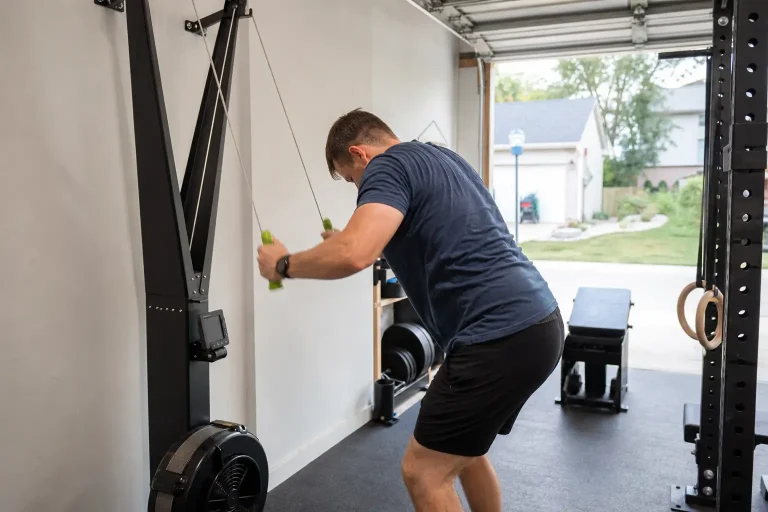
Best Ski Erg (2026): 5 Ski Ergs Ranked by FitScore
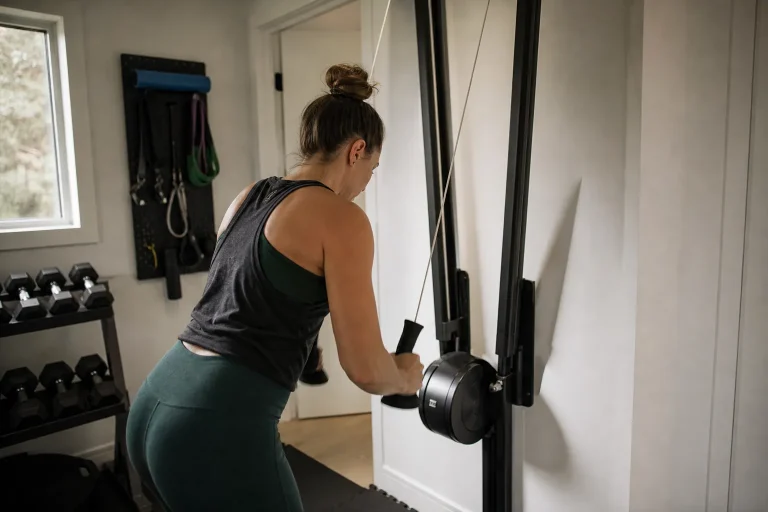
Best Budget Ski Erg (2026): 5 Ski Ergs for Less, Ranked by FitScore
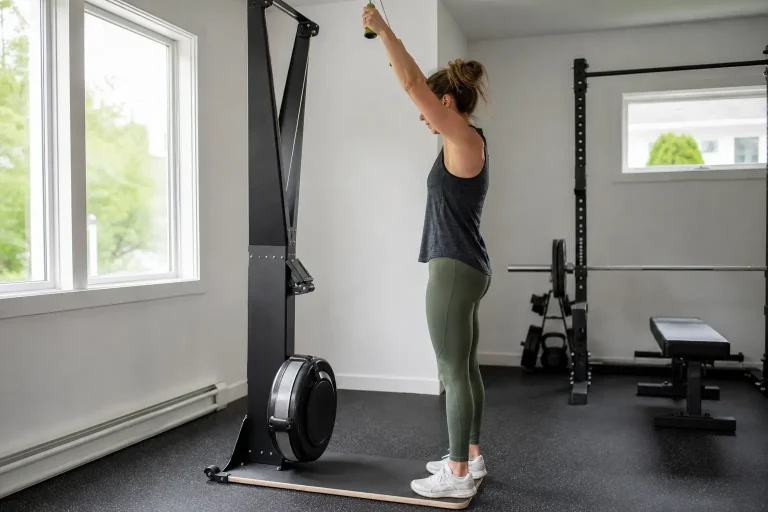
How to Use a Ski Erg (2026): Form, Setup and Common Mistakes
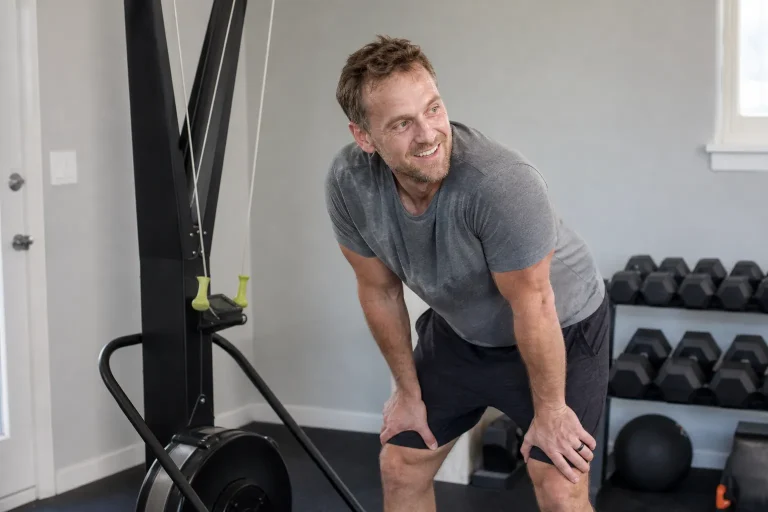
Ski Erg Benefits (2026): Muscles Worked, Cardio and Who It Suits
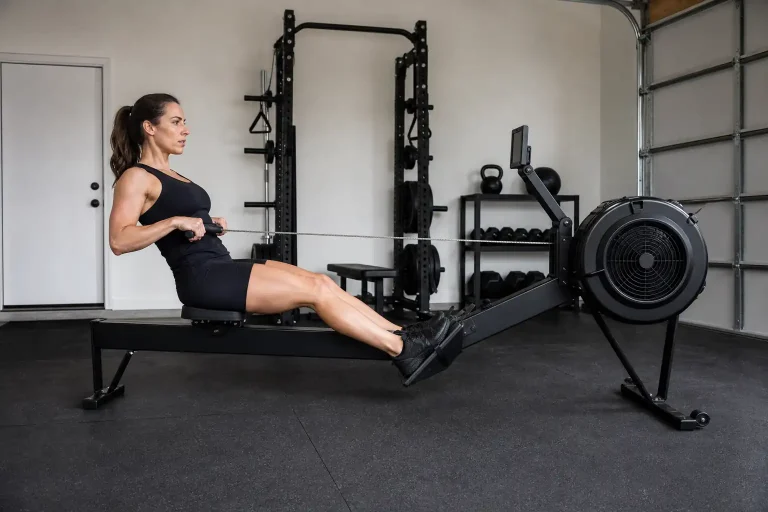
Rower vs SkiErg (2026): Muscles, Calories, Space and Which to Buy
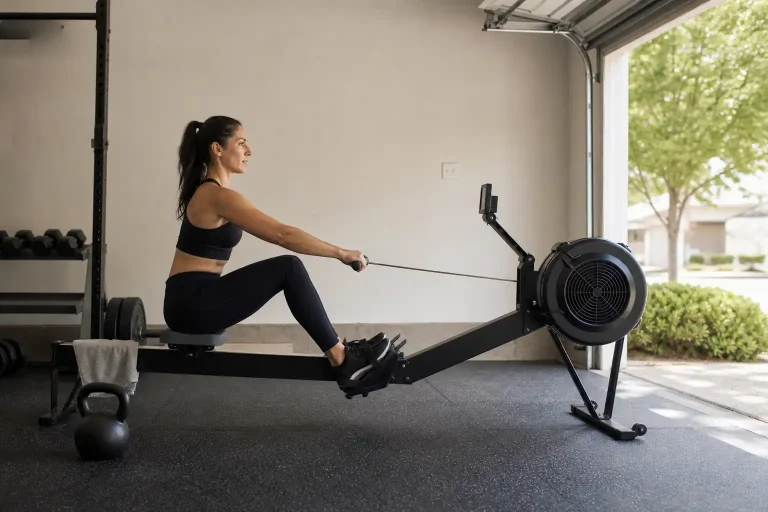
Rowing Machine Workout Library (2026): Steady, HIIT, Pyramid and 15 to 30-Minute Sessions
This article contains affiliate links. If you click through and make a purchase, we may earn a small commission at no extra cost to you. As an Amazon Associate, we earn from qualifying purchases. We do not show prices because they change constantly: product details and availability can change at any time, so please check the current price and details directly on Amazon. Learn more. Amazon and the Amazon logo are trademarks of Amazon.com, Inc. or its affiliates.
