Barbell Plate Calculator
1Your target and your bar
Plates on each side
–
Uses standard plates: 45, 35, 25, 10, 5 and 2.5 lb, or 25, 20, 15, 10, 5, 2.5 and 1.25 kg. Bar weights are typical values: check your own bar.
Short answer
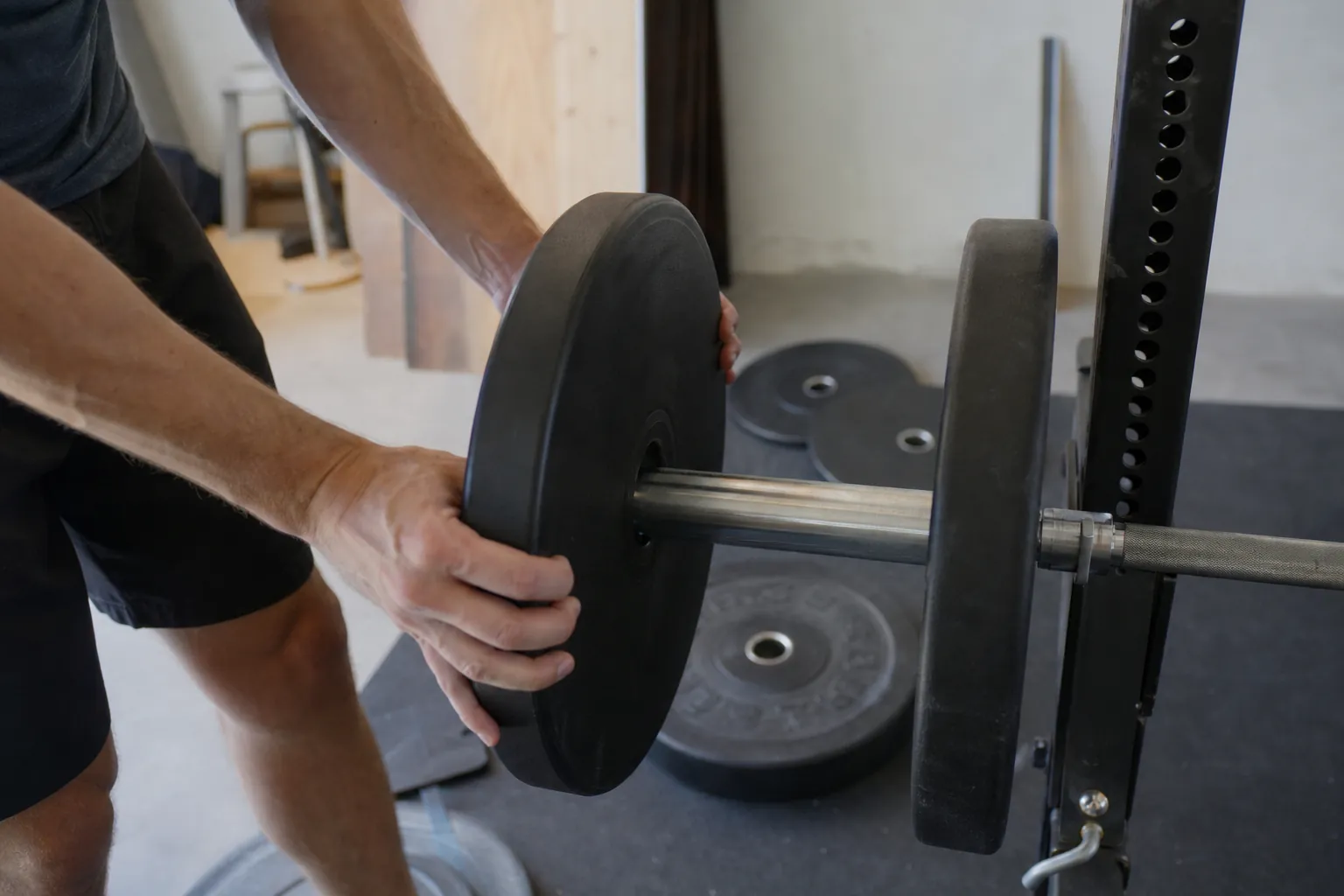
Subtract the bar weight from your target, split the rest in two, and load the largest plates first on each side. For 225 lb on a 45 lb bar, that is two 45 lb plates per side. Enter any weight for your plates.
Key takeaways
- Subtract the bar, halve the rest, then load the largest plates first.
- A men’s Olympic bar weighs 20 kg (44 lb); US gyms count it as 45 lb.
- Collars add about 0.5 to 5 lb a pair: count them if you track every pound.
- If the exact load is not possible, the calculator shows the closest one.
This barbell calculator turns a target weight into the plates to load on each side, for a men’s or women’s Olympic bar, an EZ bar or a trap bar.
Common Barbell Loads in Pounds
Plates per side on a 45 lb bar, without collars.
| Total | Plates per side (lb) |
|---|---|
| 95 lb | 25 |
| 135 lb | 45 |
| 185 lb | 45 + 25 |
| 225 lb | 45 + 45 |
| 275 lb | 45 + 45 + 25 |
| 315 lb | 45 + 45 + 45 |
| 405 lb | 45 + 45 + 45 + 45 |
Common Barbell Loads in Kilograms
Plates per side on a 20 kg bar, without collars.
| Total | Plates per side (kg) |
|---|---|
| 40 kg | 10 |
| 60 kg | 20 |
| 70 kg | 25 |
| 100 kg | 25 + 15 |
| 120 kg | 25 + 25 |
| 140 kg | 25 + 25 + 10 |
| 180 kg | 25 + 25 + 25 + 5 |
How to Load a Barbell
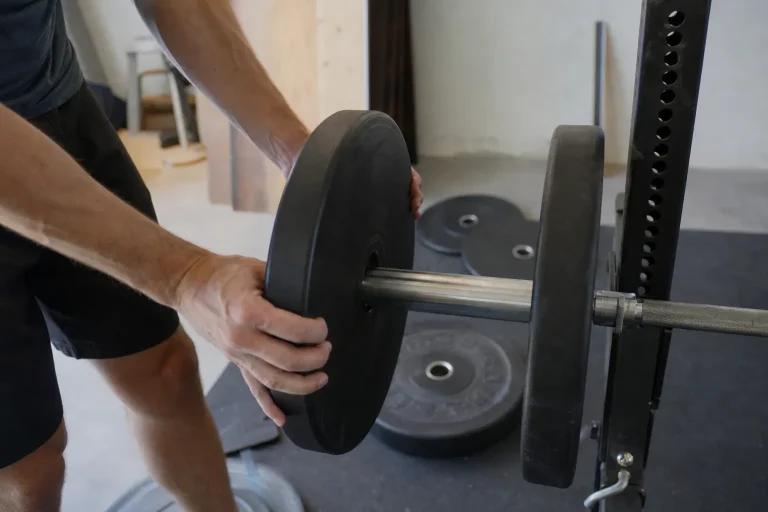
Load the heaviest plates first, inside, then the smaller ones, and lock them with collars. Bar weights follow the standards of the International Weightlifting Federation for Olympic bars; see how much a barbell weighs for specialty bars.
- Same on both sides: match each plate.
- Biggest first: heavy plates sit inside.
- Collars: on every loaded set.
- Rack height: set safeties before you lift.
Choosing the Right Bar
The bar sets the starting weight and the load you can add. The Physical Activity Guidelines for Americans advise muscle-strengthening activity at least 2 days each week. Every bar we rank is on our barbells hub.
- One bar for everything. See the best barbell guide.
- Deadlifts and carries. See the best trap bar guide.
- A lighter bar. See the best women’s barbell guide.
- Compare two or three. Use the barbell comparison tool.
Checklist for Loading a Barbell
4 checks
Tap a number to check off that step.
- 01
Know your bar weightMen’s bars are 20 kg (44 lb).
- 02
Pick lb or kgDo not mix plate units.
- 03
Load largest firstSame plates on both sides.
- 04
Lock with collarsEvery loaded set.
Common Mistakes to Avoid
Mistake 1Forgetting the bar
Instead: The bar counts in the total.
Mistake 2Mixing kg and lb plates
Instead: The total drifts quickly.
Mistake 3Uneven sides
Instead: Check each side before you lift.
The Bottom Line
- Works in pounds or kilograms.
- Men’s, women’s, EZ and trap bars.
- Standard plate sizes from 2.5 to 45 lb or 1.25 to 25 kg.
- Free, no sign-up; the link keeps your weight.
Frequently Asked Questions
Subtract the bar weight from the target, divide by two, then add the largest plates first on each side.
On a 45 lb bar: two 45 lb plates per side.
On a 45 lb bar: one 45 lb plate per side.
On a 20 kg bar: one 25 kg and one 15 kg plate per side.
Competition collars weigh 2.5 kg each; spring clips weigh little. Count them if you track every pound.