

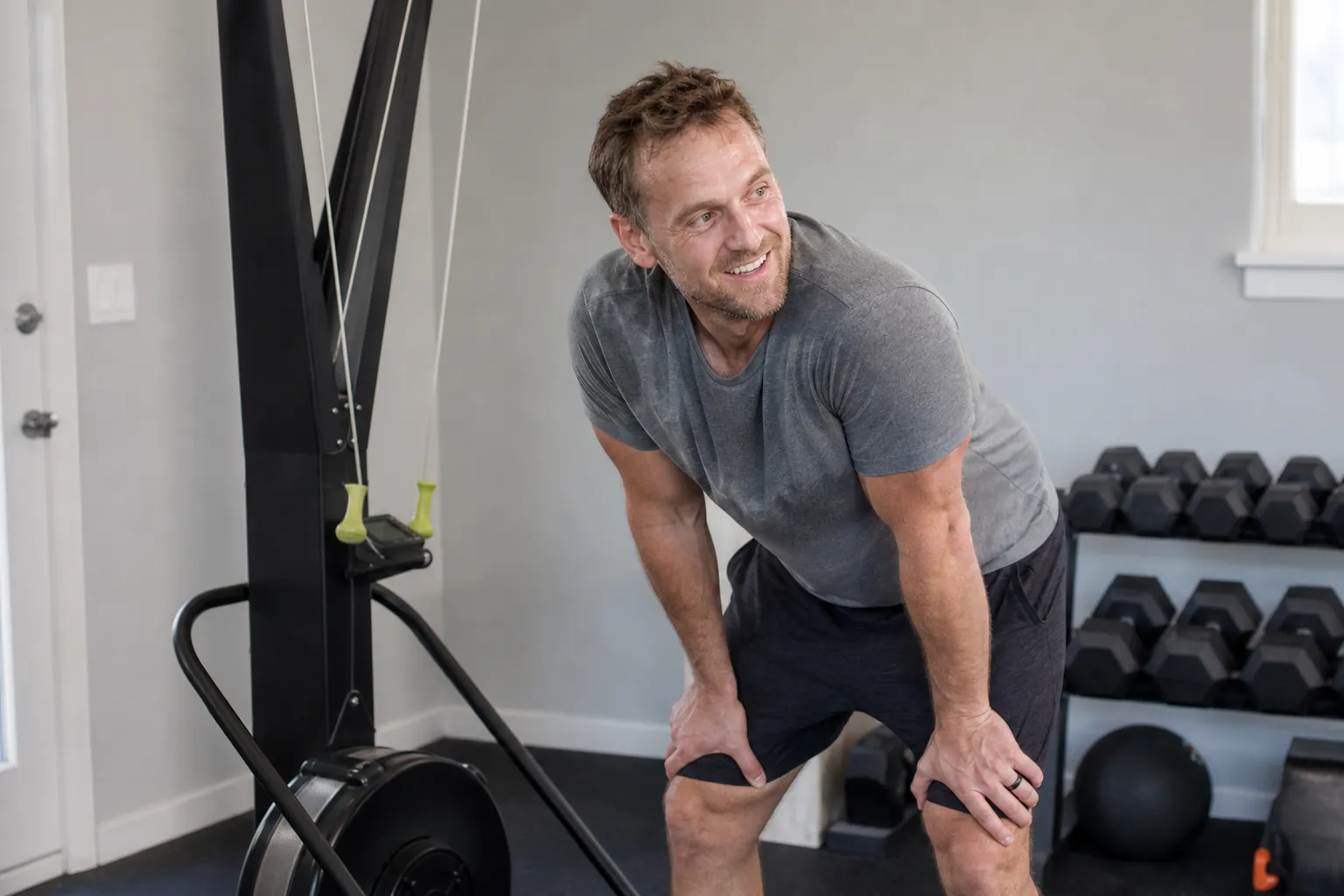
Short answer
Ski Erg Benefits: A ski erg gives full-body, low-impact cardio in a standing stroke: the lats, shoulders, triceps and core pull, while the glutes and legs drive each stroke. It suits people who want a different cardio machine from a rower or a bike.
Key takeaways
- A ski erg gives full-body, low-impact cardio in a standing stroke.
- It works the lats, shoulders, core and legs together.
- Technique and ceiling height decide how well it fits.
To pick a machine, see our best ski erg or browse the ski ergs hub.
Ski Erg Benefits: Main Benefits of a Ski Erg
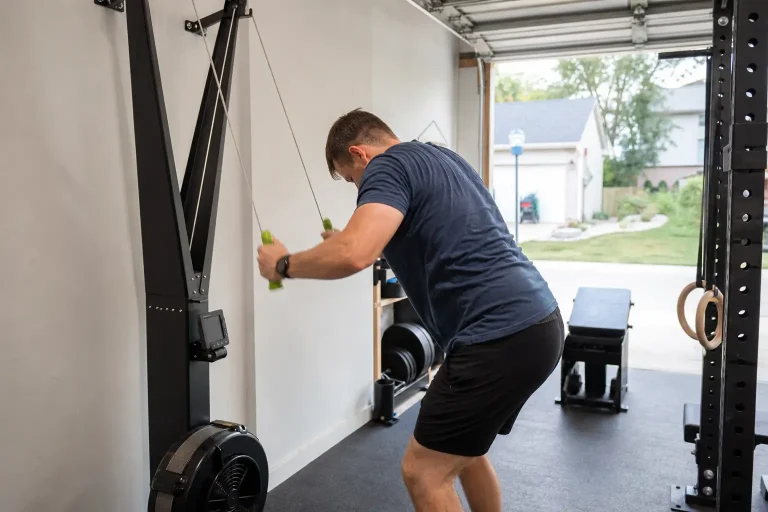
A ski erg repeats a double-pole or alternating pull-down stroke, standing, against air or magnetic resistance.
- Full-body cardio: arms, core and legs all work, so the heart rate climbs fast.
- Upper-body endurance: the pull trains the lats, shoulders and triceps in a way a bike and a treadmill do not.
- Low impact: the feet stay planted, kinder to knees and ankles than running.
- Small footprint: a wall-mounted model needs little floor space.
- Easy to fit in: 10 to 20 minutes at home add up toward weekly activity targets.
What Muscles Does a Ski Erg Work?
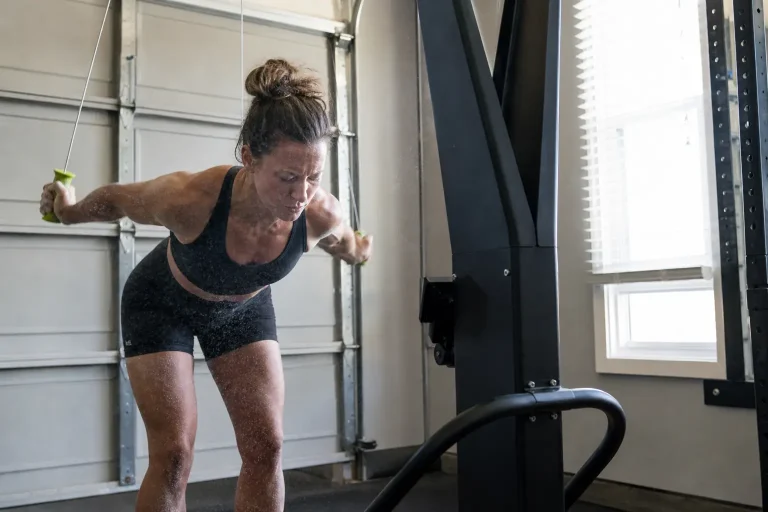
Technique decides which muscles do the work: a hip hinge shares the load with the legs, an arms-only pull tires the shoulders.
| Muscle | Role | How to bias it |
|---|---|---|
| Lats | Pull the handles down | Long pull to the hips |
| Shoulders and triceps | Finish the pull | Keep the elbows close |
| Core | Transfers force from the hips to the arms | Brace and hinge |
| Glutes and quadriceps | Drive the hinge and the squat | Deeper knee bend |
| Back extensors | Keep the spine flat | Hinge at the hips, not the back |
Check Amazon for current pricing and availability.
Ski Erg vs Rowing Machine
A rower pulls back while seated and drives with the legs; a ski erg pulls down while standing and uses the hips and core. See rower vs SkiErg for the full comparison, and a CDC activity guidelines reminder: both count toward weekly activity.
Trade-Offs and How to Start
A ski erg takes technique and some ceiling height, and an air flywheel is audible. Start short and build up.
- Start short: 10 minutes of easy pulls, then add 2 to 5 minutes a week.
- Hinge at the hips: do not pull with the arms alone.
- Check the mounting: a wall mount needs studs, a floor stand needs floor space; see wall mount vs floor stand.
- Mind the shoulders: stop if reaching overhead hurts.
Pro tip: Need sessions to follow? See ski erg workouts.
Ski Ergs Worth a Look
The reference air machine, or a complete package with the stand and wall hardware.
Check the warranty terms before you buy: the FTC explains how to read a product warranty.
The reference ski erg

Concept2 SkiErg with Floor Stand
FitScore 81.5/100
Air flywheel with the PM5 monitor, watts and heart rate links, and a floor stand on casters. Ranked #3 in our best ski erg guide, FitScore 81.5 for that intent.
Check Price on AmazonComplete package

Bear KompleX MAX Ski Erg
FitScore 83.1/100
Air flywheel with ergonomic handles, a wheeled floor stand and wall hardware in the box. Ranked #1 in our best ski erg guide, FitScore 83.1 for that intent.
Check Price on AmazonChecklist Before Your First Ski Erg Session
6 checks
Tap a number to check off that step.
- 01
Warm up with easy pulls.
- 02
Set a mid-range resistance.
- 03
Hinge at the hips and keep the back flat.
- 04
Plan 10 to 15 minutes.
- 05
Check the ceiling clearance.
- 06
Stop if a shoulder hurts.
Common Mistakes to Avoid
Mistake 1Pulling with the arms only.
Mistake 2Starting with a high resistance.
Mistake 3Skipping the warm-up.
Mistake 4Ignoring the ceiling height.
Mistake 5Expecting it to replace all strength training.
The Bottom Line
- Main muscles: lats, shoulders, triceps, core, glutes and legs, in one stroke.
- Low impact: your feet stay planted, with no landing on every stride as in running.
- It needs a free wall or a floor stand, and a ceiling taller than the machine.
- Adults are advised at least 150 minutes of moderate or 75 minutes of vigorous activity a week.
Our Top Picks
 The reference ski ergConcept2 SkiErg with Floor StandFitScore81.5/100Check on Amazon
- Complete packageBear KompleX MAX Ski ErgFitScore83.1/100Check on Amazon
Frequently Asked Questions
Full-body, low-impact cardio, upper-body endurance and a machine that fits a wall or a small floor space.
Mainly the lats, shoulders, triceps and core, with the glutes and legs driving each stroke.
It is vigorous cardio that burns calories; weight loss still depends on your overall activity and diet.
They train different strokes; see our rower vs SkiErg guide.
It is low impact, but reaching overhead can bother sensitive shoulders; stop if it hurts.
This article contains affiliate links. If you click through and make a purchase, we may earn a small commission at no extra cost to you. As an Amazon Associate, we earn from qualifying purchases. We do not show prices because they change constantly: product details and availability can change at any time, so please check the current price and details directly on Amazon. Learn more. Amazon and the Amazon logo are trademarks of Amazon.com, Inc. or its affiliates.
