Dumbbell Weight Calculator
1About you
Dumbbell range you need
–
Starting weight per dumbbell, 8 to 12 reps
Next step: pick dumbbells that cover your whole range, from the lightest raise to the heaviest squat.
See the matching dumbbellsFor general information only, not medical advice. These formulas estimate population averages and can be off for an individual; talk to your doctor or a registered dietitian before changing your diet or training, especially with a health condition, during pregnancy or for anyone under 18.

Free tool · Updated November 18, 2026
What weight dumbbells should you use?
Enter your body weight, sex and experience. The calculator suggests a starting weight per dumbbell for eight common exercises, the range of dumbbells you will need, and the dumbbells that cover it.
Short answer
Most people new to weights start with about 5 to 15 lb per dumbbell for curls and raises and 15 to 35 lb for rows, presses and goblet squats, depending on body weight and sex. Enter your numbers below to get a starting weight for eight exercises and the dumbbell range to plan for.
Key takeaways
- Pick a weight you can lift 8 to 12 times with good form and one or two reps left.
- Small muscles need light dumbbells; legs and back need the heaviest.
- Add weight in small steps when the last reps feel easy.
- Plan dumbbells for your whole range, from raises to squats.
The right dumbbell weight is the one you can move with control for the whole set and still finish with a rep or two in reserve. The calculator gives a conservative starting point for each exercise; your first sessions tell you whether to go up or down.
Dumbbell Weight Chart by Exercise
The chart shows the starting weights the calculator gives for a 170 lb adult. Lateral raises and curls use the smallest muscles, so they start lightest; goblet squats, rows and Romanian deadlifts use the largest muscles and start heaviest.
| Exercise | Man, new to weightsMan | Woman, new to weightsWoman | Man, 6 to 24 monthsMan, 6-24 mo |
|---|---|---|---|
| Biceps curl | 12.5 lb | 7.5 lb | 20 lb |
| Lateral raise | 7.5 lb | 5 lb | 10 lb |
| Seated shoulder press | 17.5 lb | 10 lb | 25 lb |
| Flat bench press | 25 lb | 15 lb | 35 lb |
| One-arm row | 30 lb | 17.5 lb | 40 lb |
| Goblet squat (one dumbbell) | 37.5 lb | 22.5 lb | 52.5 lb |
| Walking lunge | 15 lb | 10 lb | 22.5 lb |
| Romanian deadlift | 25 lb | 15 lb | 35 lb |
How to Know the Weight Is Right
Do one set of 8 to 12 reps. If the last two reps slow down but your form holds, the weight is right. If you could do five more reps, go up one step; if your form breaks before rep 8, go down one step.
The Physical Activity Guidelines for Americans advise adults to do muscle-strengthening activity at least 2 days each week.
Which Dumbbells Cover Your Range
- Up to about 25 lb: a light adjustable pair; see the best adjustable dumbbells for beginners.
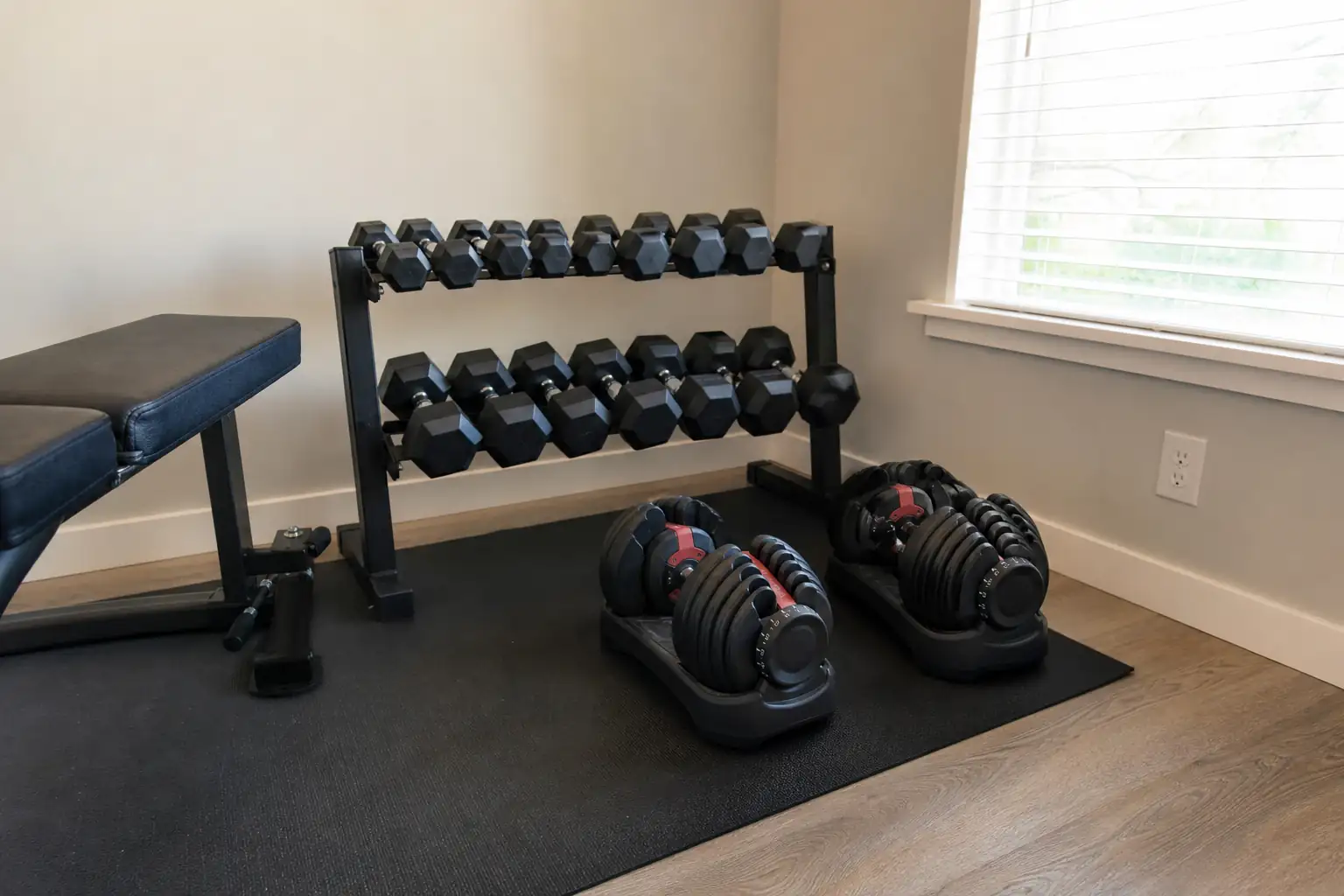
- Up to 50 or 55 lb: a full adjustable pair; see the best adjustable dumbbells or a dumbbell set with a rack.
- 70 lb and more: see the best heavy adjustable dumbbells.
- Unsure which type: read adjustable vs fixed dumbbells or compare pairs with the dumbbell comparison tool.
Share, Embed or Cite This Calculator
You are welcome to link to this calculator. The result link keeps your inputs; the embed code adds a card with a visible link.
Share this calculator
Send it to a friend, a training partner or your followers. These buttons share the calculator itself, not your results.
Embed the interactive calculator
For websites and blogs. Paste this code where you want the calculator: your visitors use it right on your page. It resizes itself and shows a credit link to FitGearHQ.
Add a link card
For blogs, newsletters and pages that do not allow scripts: a clean card with a picture and one link.
Cite this calculator
- TitleDumbbell Weight Calculator
- PublisherFitGearHQ
- URLhttps://fitgearhq.com/dumbbell-weight-calculator/
- Updated
More Free Fitness Tools
See them all on Fitness Calculators, compare dumbbells or browse every free fitness tool.
Checklist Before You Pick a Dumbbell Weight
4 checks
Tap a number to check off that step.
- 01
Warm up firstDo a light set before your working sets.
- 02
Start lightThe first session sets your baseline.
- 03
Count your reps8 to 12 controlled reps with one or two left in reserve.
- 04
Go up in small steps2.5 to 5 lb per dumbbell at a time.
Common Mistakes to Avoid
Mistake 1Starting too heavy
Instead: Form breaks first; strength gains come from steady sets.
Mistake 2Using one weight for every exercise
Instead: Raises need far less than rows or squats.
Mistake 3Skipping small steps
Instead: Big jumps stall progress on shoulder work.
Mistake 4Swinging the weight
Instead: Momentum means the weight is too heavy.
The Bottom Line
- Eight exercises: curl, lateral raise, shoulder press, bench press, row, goblet squat, lunge and Romanian deadlift.
- Starting weights from body weight, sex and experience.
- The dumbbell range you need, with the matching dumbbell guide.
- US and metric units; the link keeps your inputs.
Frequently Asked Questions
Light enough for 8 to 12 controlled reps: often 5 to 15 lb for curls and raises and 15 to 35 lb for rows and squats.
Start with the calculator result for your body weight; many women start with 5 to 10 lb for arms and shoulders and 15 to 25 lb for legs.
Many men new to weights start with 10 to 20 lb for arms and shoulders and 25 to 40 lb for rows and squats.
When you can do more than 12 good reps on every set, add one small step.
No. It gives starting estimates for healthy adults; check with a doctor if you have an injury or a condition.