Medicine Ball Weight Calculator
1Your ball, level and group
Starting weight
–
A starting point drawn from maker guidance and race standards, not a prescription. Drop the weight if your form or speed slips.
Short answer
Most people start slam balls at 10 to 15 lb, wall balls at 6 to 14 lb and rubber medicine balls at 4 to 8 lb, then move up when every rep stays fast and clean. Pick your ball and level for a starting weight.
Key takeaways
- Slam balls run heavier than wall balls and rubber medicine balls.
- Pick a weight you can move fast for every rep.
- Race standards use 14 lb and 20 lb wall balls.
- Move up one step when the last reps feel easy.
This medicine ball weight chart turns the type of ball, your training level and your group into a starting weight, then shows the next step up.
Medicine Ball Weight Chart by Type and Level
Use the chart as a starting point: the right weight is the one you can move with good form and speed for the whole set.
| Ball | Level | Women | Men |
|---|---|---|---|
| Slam ball | Beginner | 10 lb | 15 lb |
| Slam ball | Intermediate | 15 to 20 lb | 20 to 30 lb |
| Slam ball | Advanced | 25 to 30 lb | 30 to 50 lb |
| Wall ball | Beginner | 6 to 8 lb | 10 to 12 lb |
| Wall ball | Intermediate | 10 lb | 14 lb |
| Wall ball | Advanced | 14 lb | 20 lb |
| Medicine ball | Beginner | 4 to 6 lb | 6 to 8 lb |
| Medicine ball | Intermediate | 6 to 8 lb | 10 to 12 lb |
| Medicine ball | Advanced | 10 to 12 lb | 14 to 20 lb |
How to Know the Weight Is Right
Test the weight on your first set.
- Speed: every slam or throw stays fast.
- Form: your back stays flat on every pick-up.
- Too heavy? The ball slows down or falls short of the target.
- Too light? The last reps feel easy: go one step up.
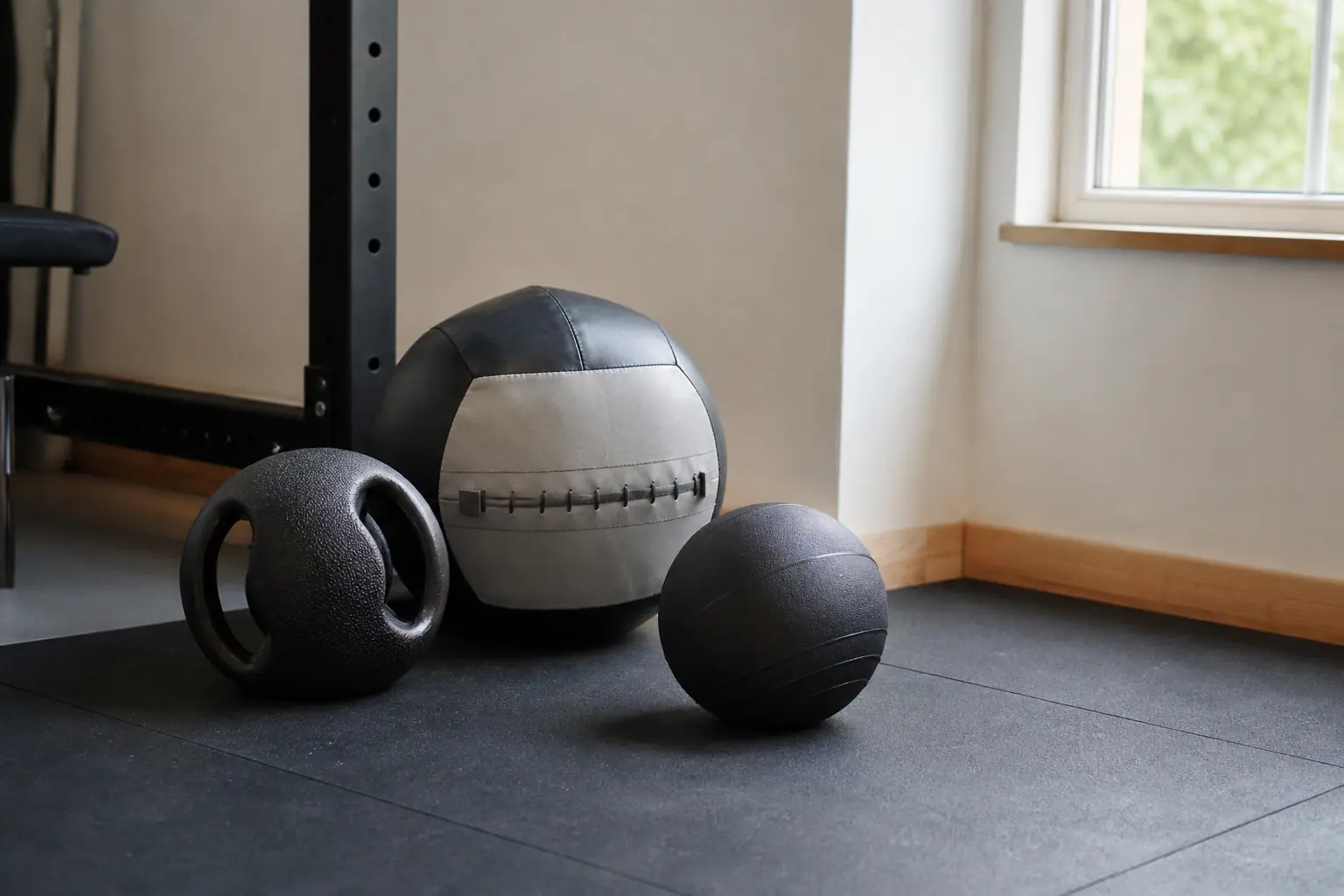
How to Choose the Ball Itself
The weight is only one check; the type of ball decides the moves you can do. The Physical Activity Guidelines for Americans and the CDC adult activity guidelines advise muscle-strengthening activity at least 2 days a week. Every ball we rank is on our medicine balls hub.
- For slams. A sand-filled ball that does not bounce: see the best slam ball.
- For wall throws. A soft 13 to 14 in ball: see the best wall ball and the HYROX wall ball weight guide.
- For passes and twists. A rubber ball that bounces: see the best medicine ball.
- Not sure which type? Read slam ball vs medicine ball.
More Free Medicine Ball Tools
Checklist for Choosing a Medicine Ball Weight
4 checks
Tap a number to check off that step.
- 01
Pick the type of ballSlam, wall or medicine ball.
- 02
Pick your levelBe honest about your form.
- 03
Test one setEvery rep fast and clean.
- 04
Plan the next stepMove up when the last reps feel easy.
Common Mistakes to Avoid
Mistake 1Starting too heavy
Instead: A slow slam or a short throw means the ball is too heavy.
Mistake 2Using one weight for every move
Instead: Twists and passes need a lighter ball than slams.
Mistake 3Slamming a wall ball
Instead: Use a sand-filled slam ball for slams.
The Bottom Line
- Three ball types, three levels, two groups.
- Weights in lb with the kg equivalent.
- Built from maker guidance and race standards.
- Free, no sign-up; the link keeps your choice.
Frequently Asked Questions
Many people start rubber medicine balls at 4 to 8 lb, wall balls at 6 to 14 lb and slam balls at 10 to 15 lb.
About 10 lb for women and 15 lb for men, as most makers suggest 10 to 15 lb to learn the slam.
Common standards are 14 lb for women and 20 lb for men; HYROX uses 4, 6 and 9 kg balls by division.
Most medicine balls weigh 2 to 30 lb; slam balls often go to 50 lb or more.
When the last reps of every set still feel fast and easy.