Sandbag Fill Calculator
1Your target weight and filler
Filler volume you need
–
An estimate from approximate bulk densities, not a measurement: weigh each filler bag on a bathroom scale before you close it.
Short answer
Dry all-purpose sand weighs about 100 lb per cubic foot, so a 100 lb sandbag needs about 1 cubic foot of sand, or two 50 lb bags. Enter your target weight for your numbers.
Key takeaways
- About 1 cubic foot of dry sand weighs 100 lb.
- Two 50 lb bags of sand fill a 100 lb workout sandbag.
- Fill filler bags to about 80% so the load can move.
- Weigh each filler bag on a scale before you close it.
This sandbag fill calculator turns the weight you want into the volume of filler, the bags of sand to buy and the bag size to look for, for a workout or strongman sandbag.
How Much Sand for Each Sandbag Weight
Dry all-purpose sand at about 100 lb per cubic foot; buy sand in 50 lb bags and weigh as you fill.
| Sandbag weight | Dry sand | Liters | 50 lb bags |
|---|---|---|---|
| 25 lb (11 kg) | 0.25 cu ft | 7 L | 1 |
| 50 lb (23 kg) | 0.50 cu ft | 14 L | 1 |
| 75 lb (34 kg) | 0.75 cu ft | 21 L | 2 |
| 100 lb (45 kg) | 1.00 cu ft | 28 L | 2 |
| 150 lb (68 kg) | 1.50 cu ft | 42 L | 3 |
| 200 lb (91 kg) | 2.00 cu ft | 57 L | 4 |
How to Fill a Workout Sandbag
Fill the inner filler bags, not the outer shell, and close every flap before a set.
- Use dry sand: all-purpose sand in its bag stays clean; wet sand leaks and weighs more.
- Weigh as you go: set a filler bag on a bathroom scale and stop at the target.
- Leave room: about 80% full lets the load shift, which is the point of a sandbag.
- Avoid sharp gravel: rough stones can tear the liners.
Pick a Bag That Holds Your Weight
A bag rated well above your target weight leaves room to grow. A sandbag also helps you follow the Physical Activity Guidelines for Americans, and the CDC adult activity guidelines, which advise muscle-strengthening activity at least 2 days each week. Every bag we rank is on our sandbags hub.
- See the ranked picks. Our best sandbag for working out guide scores each bag with FitScore.
- For carries and loads. See the best strongman sandbag.
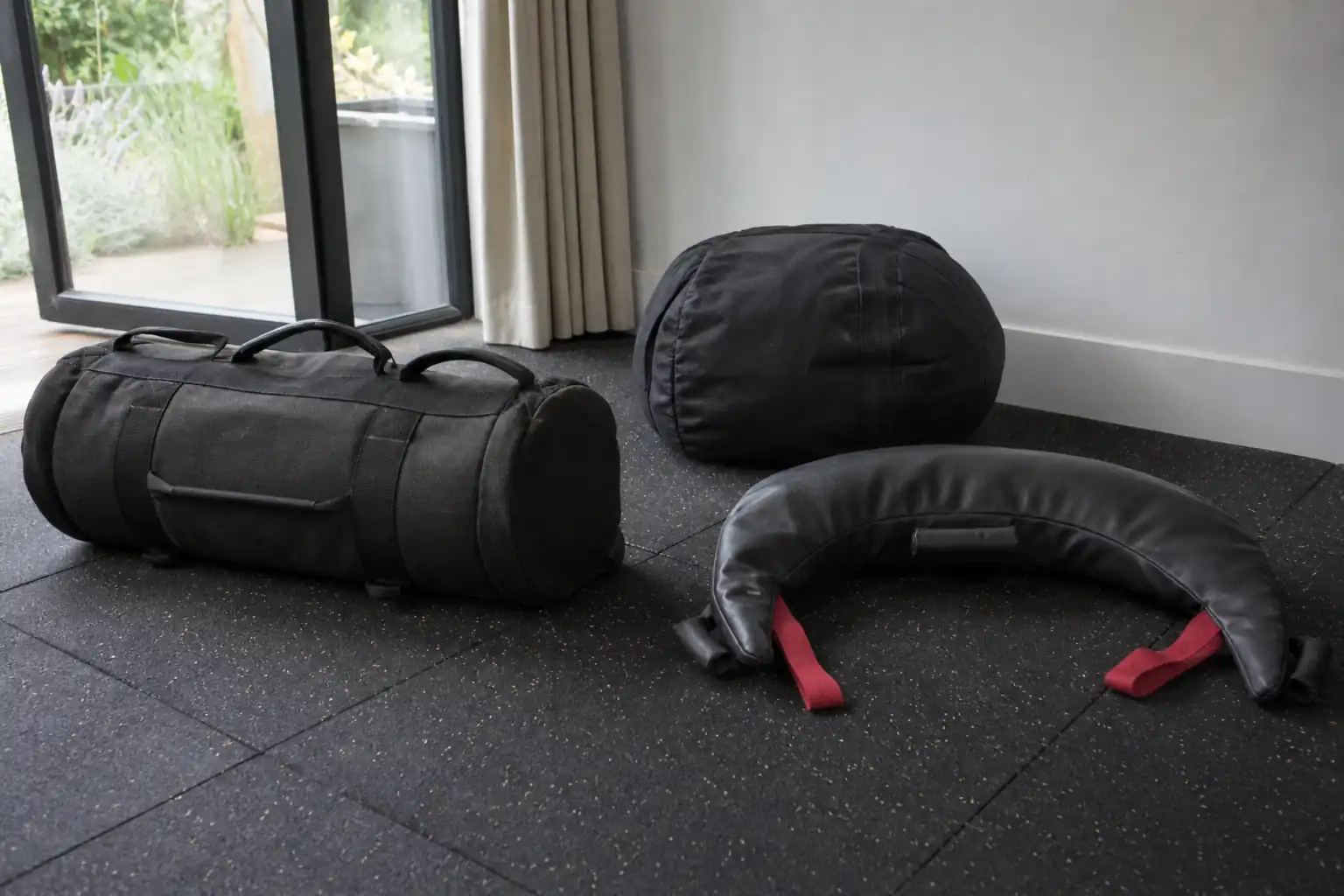
- For swings. Most Bulgarian bags ship pre-filled: see the best Bulgarian bag.
- Compare two or three. Use the sandbag comparison tool.
More Free Sandbag Tools
Checklist Before You Fill a Workout Sandbag
4 checks
Tap a number to check off that step.
- 01
Set your target weightStart with a load you can clean with control.
- 02
Buy dry sandIn 50 lb bags.
- 03
Weigh each filler bagOn a bathroom scale.
- 04
Close every flapBefore each set.
Common Mistakes to Avoid
Mistake 1Filling the outer shell
Instead: Use the filler bags so sand stays contained.
Mistake 2Using wet sand
Instead: It weighs more and leaks.
Mistake 3Filling to the brim
Instead: Leave about 20% so the load can move.
The Bottom Line
- Dry all-purpose sand and pea gravel: about 100 lb per cubic foot.
- Rubber mulch: about 30 lb per cubic foot, so it takes far more room.
- Wet sand is heavier and can leak: use it dry.
- Free, no sign-up; the link keeps your weight.
Frequently Asked Questions
About 1 cubic foot of dry sand, or two 50 lb bags.
About 100 lb when dry; wet sand weighs more.
Dry all-purpose sand in the filler bags; pea gravel weighs about the same, rubber mulch far less.
About 80% of its capacity, so the load can shift.
One 50 lb bag of sand.